If you have ever stood in a tent at 9 p.m. holding a wide-awake toddler and wondering where exactly this small person is supposed to sleep, you are not alone. Sleep is the part of camping with toddlers that worries parents most, and it makes or breaks the whole trip: a toddler who sleeps well wakes up ready for pancakes and puddle-stomping.
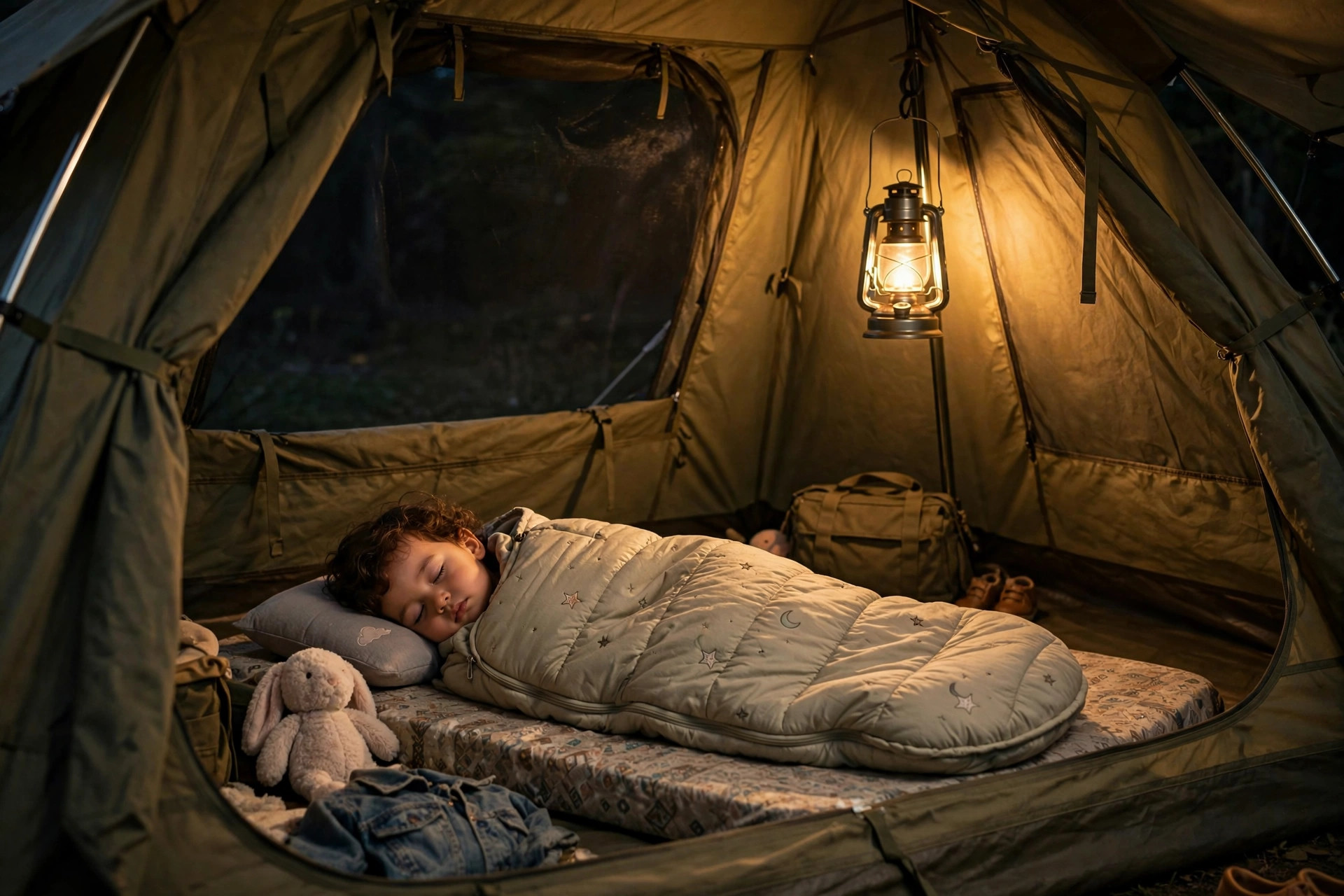
The good news is that toddler camping sleep is mostly a logistics problem, and logistics can be solved. The short version: a safe, contained sleep surface they cannot roll off, a wearable sleep sack or toddler sleeping bag matched to the night temperature, and pajamas layered for the coldest part of the night, which is usually around 4 a.m., not bedtime. Still gathering kit? Our guide to camping with toddlers essentials covers the rest.
Sleep Surface Options: Where Your Toddler Will Actually Sleep
The right surface depends mostly on your child's age and how much tent space you have.
A Pack-and-Play or Travel Crib
For babies and younger toddlers, this is the gold standard: a contained space your child already knows from home, sides that keep a rolling sleeper in one place, and a firm, flat sleep surface with no gaps. The downsides are bulk and tent size: a pack-and-play eats floor space, suits a spacious family tent, and is car camping only. Measure your tent floor before the trip, and do a practice nap in it at home first.
A Toddler Air Mattress with Raised Sides
For toddlers who have outgrown the travel crib, an inflatable toddler travel bed with raised edges is the most popular next step. The bumpers act like gentle rails, keeping a wiggly sleeper from rolling onto the tent floor at 2 a.m., and it feels like a real "big kid" camping bed. Two practical notes: inflate it in the living room first and let your child nap on it, so the bed is not new on night one; and remember that air mattresses sleep cold, so always add a fitted sheet plus a blanket or pad on top for insulation.
A Simple Foam Pad or Camping Mat
A closed-cell foam pad or a short self-inflating mat on the tent floor is the lightest, cheapest setup. There is nowhere to fall from, foam insulates far better than air, and it packs down to almost nothing. The trade-off is containment: nothing stops a mobile toddler from crawling off the pad and touring the tent, so this works best for babies who are not rolling yet (on a firm pad, following the safe sleep rules below) or older toddlers who stay put once sleepy.
A Sleeping Pad Next to Yours
Once your toddler is around 2.5 to 3, sleeping on their own pad right next to yours is a lovely milestone. Many families add a short pad beside theirs to make one big family sleep platform. Just mind the gaps: pads that separate during the night leave a dip a small child can roll into, so a large flat sheet over the whole setup, tucked in around the edges, keeps everything together. Our guide on how to choose a sleeping bag for camping explains temperature ratings and insulation in plain language.
Sleep Sack or Sleeping Bag?
This is the question parents ask most, and the answer depends on age.
Wearable Sleep Sacks: Best for Under 2s and Wiggly Sleepers
A sleep sack is a wearable blanket that zips or snaps closed, so it cannot be kicked off and cannot end up over your child's face. For babies and young toddlers it is the safest, easiest tent option: warmth without loose bedding. For camping, look for fleece sacks for cool nights and insulated, outdoors-style sacks for cold weather; buy for the coldest night you realistically expect, then adjust the pajamas underneath. If your toddler walks around the tent before bed, choose a sack with foot openings to avoid face-plants.
Toddler Sleeping Bags: Best from Around Age 2-3
A proper toddler sleeping bag makes a 2- or 3-year-old feel like a real camper. Toddler bags are also shorter than adult bags, which matters: a small body cannot warm up a big bag full of empty air, so a right-sized bag is genuinely warmer.
About temperature ratings: a bag rated to 30°F should keep an average sleeper comfortable near that temperature in the right conditions, but ratings vary between brands, so treat the number as a rough guide. Buy a bag rated at least 10-15 degrees colder than the coldest night you expect, dress your child in warm base layers inside it, and remember the pad underneath does half the warming work. Check the fit, and do a home test run on the living room floor first.
What to Dress Them In: Layering by Temperature
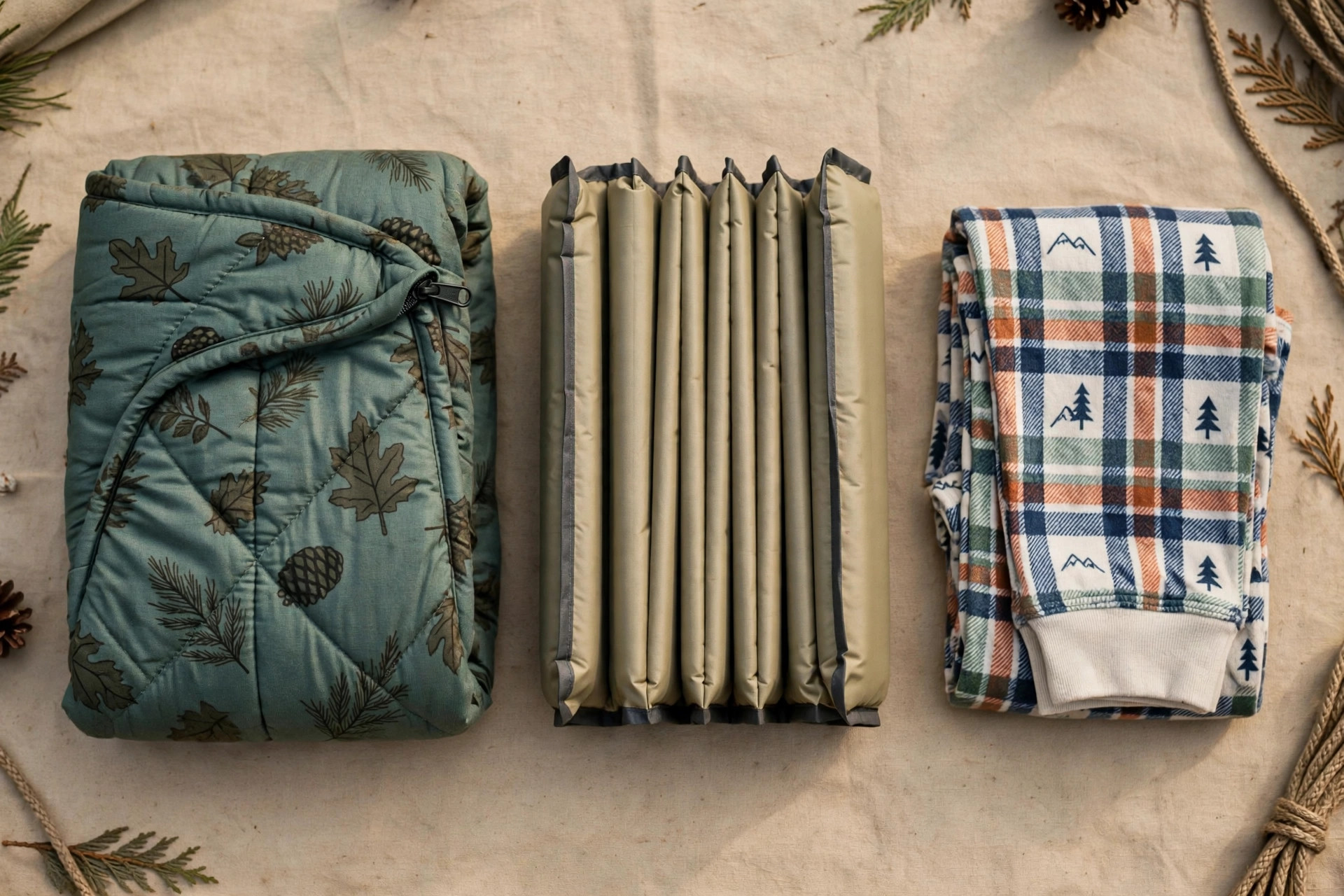
Tents do not hold heat, and temperatures drop steadily through the night. Dress your toddler for the coldest hour, not for bedtime. Adjust the table for your child; some toddlers run warm and some run cool.
| Night temperature | What to wear under a sleep sack / in a sleeping bag |
|---|---|
| Above 70°F (21°C) | Light cotton pajamas or a short-sleeve bodysuit; light or no sleep sack |
| 60-70°F (16-21°C) | Footed pajamas or long-sleeve pajamas with a light sleep sack |
| 50-60°F (10-16°C) | Long-sleeve pajamas plus warm socks, with a fleece or mid-weight sleep sack |
| 40-50°F (4-10°C) | Merino or synthetic base layer set, fleece pajamas over the top, warm insulated sleep sack or toddler bag, plus a soft hat and socks |
| Below 40°F (below 4°C) | Experienced families only: full base layers, insulated suit or high-warmth bag rated well below the forecast, hat and mittens; with an under-2, most families call this a stay-home night |
A few rules that never change. Avoid cotton in cold weather, because damp cotton loses its warmth fast; merino wool and synthetics stay warm and dry. Check your child's temperature by feeling their chest or the back of their neck, not their hands, which always feel cool at night. Sweaty or flushed means too many layers; a cool chest means add one.
Safe Sleep Rules for Under-2s in a Tent
Camping does not suspend the safe sleep rules, so read this section twice if your camper is under 2. The American Academy of Pediatrics (AAP) guidance for home applies in a tent too, and their parent guide to safe sleep is worth bookmarking before your first trip.
- Put babies down on their back, on a firm, flat surface, for every sleep, naps included
- Keep the sleep space bare: no loose blankets, pillows, stuffed animals, or soft padding for under-2s; use a wearable sleep sack instead of blankets
- Dress for warmth instead of adding covers; a kicked blanket can end up over a baby's face
- Do not let a baby sleep on a soft adult air mattress or inside your sleeping bag; soft inflatable surfaces and adult bags are not made for infants, and overheating and entrapment are real risks
- Keep the sleep surface away from tent walls in wet weather, since condensation forms on the fabric and can drip onto bedding
- Never use a heater inside a closed tent with a sleeping child, and keep lanterns and stoves out of the sleep area entirely
If your baby is still very young, our dedicated guide to tent camping with a baby covers the whole first-trip checklist.
Keeping a Toddler in the Tent at Night
Every parent of a 2-year-old has the same 3 a.m. fear: the sound of a zipper. Plan for it.
- Zip the door fully and park the zipper pulls up high, near the top of the door, where little hands cannot reach them from inside
- Put your own sleeping spot between your toddler and the door whenever the layout allows it
- Set up their bed in the far corner of the tent, away from the entrance
- Tire them out properly: a big afternoon of exploring or trail time is the most reliable sleep aid there is; our roundup of the best toddler hiking gear helps you kit them out
- Do a calm "tent tour" at bedtime and repeat the simple rule: we stay in our bed until Mom or Dad says it is morning
Most toddlers, once warm, dark, and tired, sleep surprisingly well outdoors, and many families find the second night easier than the first. Do not judge the whole idea by night one.
Darkness, White Noise, and Familiar Sleep Cues
Home has blackout curtains and a sound machine; a summer campsite has light until 9 p.m. and a chorus of neighbors, birds, and the occasional raccoon working the trash cans. Bridge the gap with a few tricks.
Hang a dark blanket or towel over the tent's mesh panels to dim evening and early-morning light, or pitch in the shadiest spot you can. A small portable white noise machine, or a phone app playing the same sound your child hears at home, masks campsite noises remarkably well; keep the volume modest and the device out of the sleep space itself for babies. Most powerful of all: pack the exact lovey or pajamas from home, because familiar smells tell a toddler's brain that this strange glowing room is, in fact, bed.
A Bedtime Routine That Works Away from Home
Do not invent a new routine at the campsite; shrink the home one.
- Start earlier than you think; camp bedtime routines take longer, especially the first night
- Do a warm wash or wipe-down and change into pajamas and a fresh diaper or pull-up
- Offer a small bedtime snack and drink; nobody sleeps well hungry
- Brush teeth at the water spigot together, same as home
- Get into the tent, zip up, and switch to lantern light only
- Read the same one or two familiar books you read at home
- Sing the usual song, say the usual goodnight words, lights out
- Stay nearby and boring until they settle; lying beside the pad with your own book beats repeated exits and re-entries
Keep expectations gentle. A later bedtime on a camping trip is fine; protect the total hours of sleep, not the clock time.
Common Mistakes That Wreck Toddler Camping Sleep
- Dressing for bedtime temperature instead of the 4 a.m. low, so your toddler wakes cold at the worst hour
- Skipping insulation under the child; a warm bag on a cold air mattress still sleeps cold
- Buying a huge "grow into it" sleeping bag that a small body cannot warm up
- Trying a brand-new sleep setup for the first time at the campsite, with no home practice run
- Letting naps disappear entirely, so your toddler reaches bedtime overtired and wired instead of sleepy
- Giving up after one rough first night; for most families, night two is dramatically better
Frequently Asked Questions
Can a toddler sleep in a sleeping bag with a parent?
Snuggling in for stories is fine, but for actual sleep, give your toddler their own bag or sack on their own pad next to you. Adult bags are soft and roomy in ways that are not safe for babies and small toddlers, who can slide down inside or overheat. Children under 2 should always have their own firm, flat sleep surface.
What temperature is too cold for a toddler to sleep in a tent?
There is no single official cutoff, but most families find their comfort limit somewhere in the 40s °F with the right gear, and many skip tent nights below about 40°F (4°C) with a child under 2. Check the National Weather Service cold safety guidance before cold-weather trips, and never be embarrassed about bailing to the car or heading home.
How do I stop my toddler from waking up at dawn in the tent?
You may not stop it entirely, but you can buy time: darken the tent with a blanket over the mesh, pitch in shade, keep white noise running, and keep a quiet basket of books and soft toys by their bed. Many camping parents simply lean into it; an early start means first pick of the pancake line.
Is a sleep sack or a sleeping bag better for a 3-year-old?
By 3, most children do well in a right-sized toddler sleeping bag. Choose a bag rated colder than your expected nights, and make sure they cannot slide fully inside it. If your 3-year-old is an extreme wiggler who ends up sideways and uncovered every night, a large sleep sack with foot openings is still a perfectly good option.
Should toddlers nap in the tent during the day?
Yes, and it is worth protecting. A tent gets hot in direct sun, so pitch in shade, open vents and mesh for airflow, and never leave a sleeping toddler alone in a tent that is heating up; check on them often and keep naps shorter in hot weather. A shaded hammock nap on a parent is a good backup plan on very warm days.
The Bottom Line
What do toddlers sleep in when camping? A contained, insulated spot they cannot roll out of, a sleep sack or right-sized sleeping bag matched to the coldest hour of the night, and pajamas layered for the temperature, all wrapped in the same bedtime routine they know from home. Get those pieces right and practice once in the living room, and your toddler will very likely sleep better under the stars than anyone expected.

1 comment
[…] layer for a wearable sleep sack or toddler sleeping bag over the base and mid layers. Our guide to what toddlers sleep in when camping walks through the options by temperature, and the packing list in our camping with toddlers […]