The campsite looked perfect in the photos. Then the forecast changed, the nighttime low dropped into the 30s, and suddenly you are wondering whether this trip is a fun family memory in the making or a miserable, freezing mistake. If you have ever asked yourself how cold is too cold for camping with a toddler, you are not being overprotective. You are being a good parent.
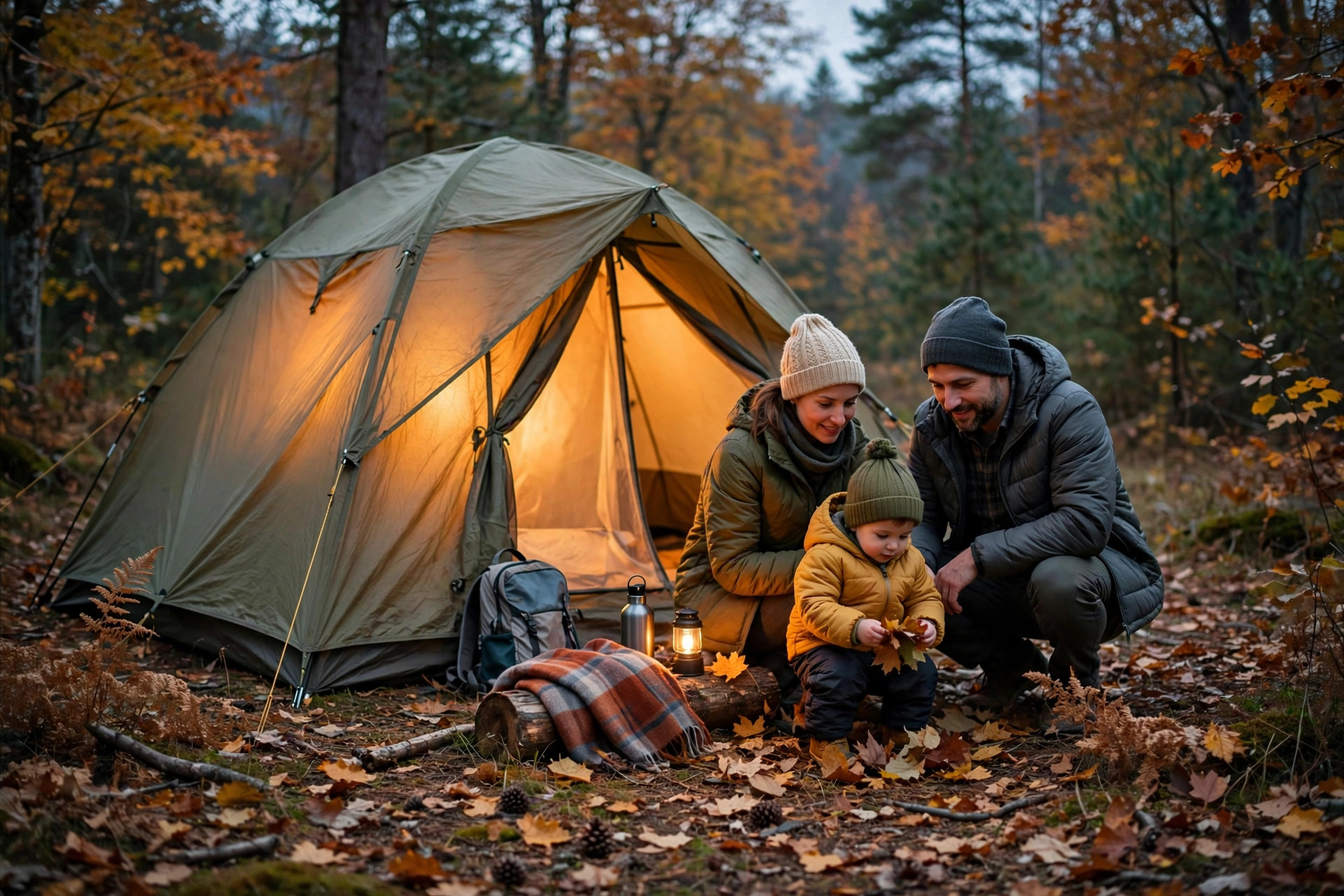
Here is the honest truth: there is no single magic number that works for every family. But there are sensible ranges, and once you understand how toddlers handle cold, what to dress them in, and how to set up their sleep space, you can make the call with confidence instead of anxiety, including knowing when the right answer is simply to stay home.
The Short Answer
For most toddlers, nighttime temperatures in the 40s and low 50s Fahrenheit are very doable with the right clothing and sleep setup. The 30s are possible for experienced families with proper gear and a solid plan, but they leave much less room for error. Once the overnight low drops below freezing (32°F), most families with a 1- to 3-year-old are better off postponing, especially with wind or rain in the forecast.
Age matters a lot here. A sturdy, snack-demanding 3-year-old handles cold far better than a 12-month-old. Your gear matters too: a family with a good sleeping bag and insulated pad can camp comfortably in weather that would be unsafe for a family relying on thin blankets and an air mattress.
| Nighttime Low | Verdict for Toddlers | Notes |
|---|---|---|
| 50°F and above | Go | Normal layers and a good sleep setup are enough |
| 40–49°F | Go, with prep | Full layering system, insulated pad, warm sleep sack or bag |
| 32–39°F | Caution | Experienced families only; best sleep gear, no wind or rain |
| Below 32°F | Skip it | Postpone, especially for under-2s or first cold trips |
Why Toddlers Get Cold Faster Than You
Adults forget how different a small body is. Toddlers lose heat faster than grown-ups because they have more skin surface compared to their body size, and they cannot regulate their temperature as efficiently. They also cannot tell you clearly that they are cold. A chilled toddler often becomes quiet, clingy, or unusually fussy, and by the time shivering starts, they have already been uncomfortable for a while.
Toddlers also burn through energy fast, and a hungry, tired child gets cold much quicker than a fed, rested one. Experienced camping parents obsess less over the thermometer and more over the whole picture: temperature, wind, moisture, food, sleep, and how many dry backup layers they packed.
Temperature Guidance by Age
Babies Under 12 Months
Babies are the most vulnerable campers in cold weather. They cannot shiver effectively to warm themselves, and their temperature regulation is still immature. Stick to nighttime lows in the upper 40s or warmer for a baby's first cold-season trips, keep trips short, and plan a warm bail-out option if the night turns colder than expected. Dress your baby in one more layer than you are wearing, and check their chest and back of the neck regularly; those spots tell you far more than hands and feet, which almost always feel cool.
Toddlers 12 to 24 Months
One-year-olds are sturdier but still limited. They sleep deeply at night and will not wake up reliably to tell you they are freezing. Nighttime lows in the low-to-mid 40s are a reasonable floor for most families at this age, with a proper sleep setup and calm weather. Below that, one wet layer or one kicked-off blanket can ruin the night.
Toddlers 2 to 3 Years
This is where cold-weather camping gets genuinely fun. A healthy 2- or 3-year-old in good layers, with a warm sleeping bag and an insulated pad, can handle nights in the upper 30s on a calm, dry night. They can tell you, loudly, when something is wrong. Colder than the mid-30s stops being a holiday and starts being a survival exercise nobody asked for.
Wind Chill, Rain, and the Factors That Change Everything
The number on the forecast is only half the story. Wind strips heat away fast, so a breezy 42°F night can feel harsher than a still 36°F night. The National Weather Service cold safety guidance is worth a read before any cold trip; its wind chill charts show what your child will actually feel on exposed skin.
Moisture is the other big one. Wet clothing loses its insulating value fast, and a toddler who splashed in a puddle at 5 p.m. can be dangerously chilled by 8 p.m. if nobody changes them. Rain plus cold should move family trips from "go" to "skip," even at temperatures that would otherwise be fine. Always pack a complete spare set of warm, dry clothes sealed in a waterproof bag, including socks. Especially socks.
Altitude plays a role too. Mountain campsites cool off sharply after sunset, often far more than the town forecast suggests, so check the forecast for your campsite's actual elevation.
The Layering System That Actually Works
Forget the single giant puffy suit. Layers trap warm air between them, and they let you adjust as the temperature drops through the evening. Think in three parts.
Base Layer: Warmth Starts at the Skin
- Choose merino wool or synthetic long underwear, top and bottom
- Avoid cotton completely; it absorbs sweat and moisture and then chills the skin
- The fit should be snug but not tight, with no bunching at the ankles or wrists
Mid Layer: The Insulation
- A fleece jacket or fleece one-piece for smaller toddlers works well
- Add fleece pants over the base layer on colder nights
- This is the layer you add or remove as the evening cools
Outer Layer: Wind and Water Protection
- A windproof, water-resistant jacket and pants for time outside the tent
- Warm hat that covers the ears; toddlers lose plenty of heat through an uncovered head
- Mittens rather than gloves, because little fingers stay warmer together
- Warm socks plus insulated booties or boots rated for cold weather
For sleep, most families swap the outer layer for a wearable sleep sack or toddler sleeping bag over the base and mid layers. Our guide to what toddlers sleep in when camping walks through the options by temperature, and the packing list in our camping with toddlers essentials guide covers the clothing basics in one place.
Setting Up a Warm Sleep Space
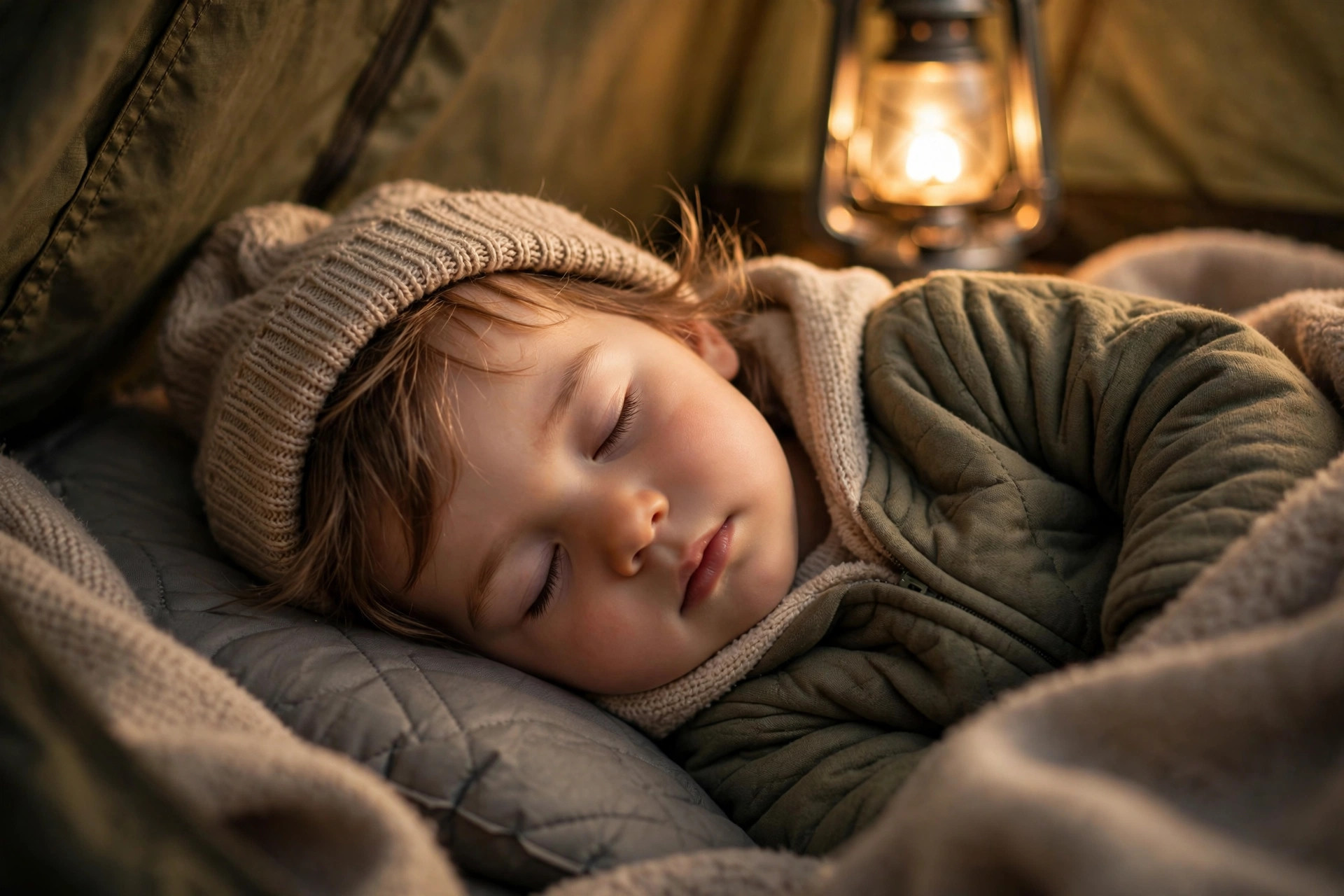
Most cold-night problems are actually sleeping pad problems. The ground pulls heat out of a small body all night, and a standard air mattress makes it worse because the air inside it gets cold and circulates. Put a closed-cell foam pad or a properly insulated pad under your toddler, every time. This single change fixes more cold nights than any other gear swap.
Inside the tent, keep it simple and safe:
- Lay the insulated pad down first; add a warm blanket under the sleeping bag if you have room
- Dress your toddler in their base and mid layers, plus a hat if the night is below the mid-40s
- Use a toddler sleeping bag or warm wearable sleep sack sized so they cannot slip down inside it
- Keep loose blankets away from babies under 12 months, just as you would at home
- Do a final warmth check before you sleep: chest warm, layers dry, hat still on
Where you camp matters too. Sheltered sites out of the wind, with morning sun, make cold nights easier, and our roundup of the best family camping spots in the USA includes plenty of shoulder-season campgrounds with good family facilities.
Warning Signs Your Toddler Is Too Cold
Check your child, not the thermometer, all evening and once overnight. Cold hands and feet are normal and not a reliable signal. Pay attention to these instead:
- Skin on the chest, back, or tummy that feels cool to the touch
- Shivering, or the opposite: a baby who has gone unusually quiet and limp
- Bright red, cold skin, especially on the face
- Unusual fussiness that does not settle with food, cuddles, or a dry diaper
- Lethargy, weak crying, or a toddler who seems oddly uninterested in everything
Shivering that does not stop, very pale or blotchy skin, extreme sleepiness, and slow or shallow breathing are signs of hypothermia, which is a medical emergency. Warm the child gradually with dry layers and body warmth, and seek medical help right away. The parent resources at HealthyChildren.org, from the American Academy of Pediatrics, are worth reviewing before your trip. If something feels off, act first and analyze later.
A Critical Safety Note: Heaters and Carbon Monoxide
Every year, campers are seriously harmed by carbon monoxide, and it is completely preventable. Never use a fuel-burning heater, camp stove, lantern, charcoal, or generator inside a tent, and never run one in a closed vehicle. Carbon monoxide is colorless and odorless, and sleeping children will not wake up and warn you.
If your cold-weather plan depends on heating the tent, the plan is wrong for a toddler trip. The safe formula is boring but it works: better insulation under and over your child, proper layers, and a well-sealed hot water bottle wrapped in cloth for falling asleep. Warm the tent with body heat and the right gear, or pick a warmer weekend.
When to Pack Up and Go Home
Calling a trip is not failure. It is the skill that keeps kids loving camping instead of dreading it. Head home, or to a warm car and a motel, when:
- The temperature drops well below the forecast and you have used every spare layer
- Your toddler's sleep clothes get wet and the backup set is already on
- Your child shows any of the warning signs above and does not warm up quickly
- Wind picks up enough to shake the tent hard or blow in cold rain
- You are awake all night worrying; nobody has fun, and driving home tired is its own risk
Have a Plan B cabin or cheap motel in mind before you leave home. Knowing you can bail makes you more relaxed about going, and kids feed off that calm.
Quick Packing Checklist for Cold Nights
- Wool or synthetic base layer set, plus a sealed spare set
- Fleece mid layer, top and bottom
- Windproof outer layer, warm hat, mittens, and warm socks
- Insulated sleeping pad, not a plain air mattress
- Toddler sleeping bag or warm wearable sleep sack
- Extra snacks and a warm bedtime drink; full bellies sleep warmer
- Headlamp for nighttime warmth checks
If your toddler will be out on the trail during the day, our picks for the best toddler hiking gear cover carriers, footwear, and layers that pull double duty at the campsite.
Frequently Asked Questions
Can a toddler camp in 40-degree weather?
Yes, for most healthy toddlers 40°F is very manageable with the right setup. Full layers, an insulated pad, a warm sleep sack or toddler sleeping bag, dry spare clothes, and a sheltered campsite turn a 40-degree night into a cozy one.
What should a toddler wear to sleep in a tent in cold weather?
Start with a wool or synthetic base layer, add fleece over it, and finish with a warm wearable sleep sack or toddler sleeping bag. Add a hat on nights below the mid-40s. Skip cotton pajamas and loose blankets for under-1s, and always put an insulated pad underneath.
Is 30 degrees too cold for a baby to camp?
For babies under 12 months, yes, treat 30°F as too cold. Babies cannot regulate temperature or shiver effectively, and a night that cold leaves no room for a wet layer or a gear failure. Wait for a milder night in the upper 40s or warmer, and keep the trip short with a warm exit plan.
How can I tell if my toddler is warm enough at night?
Feel their chest or the back of their neck. Warm and dry means you are in good shape. Cool means add a layer. Sweaty means remove one, because damp skin chills fast. Ignore hands and feet; they run cool on almost every toddler, all night long.
What is the single most important piece of cold-weather gear for a toddler?
An insulated sleeping pad. Parents often spend on bags and suits while their child sleeps on a cold air mattress that drains heat all night. Insulation underneath, combined with dry non-cotton layers, does more than any other upgrade.
Cold-weather camping with a toddler is not about toughness. It is about preparation and honest limits: a postponed trip teaches your child nothing bad, but one freezing night might teach them to hate the tent. Start with a mild night, nail the layers and sleep setup, and work your way down the thermometer over a few seasons.
