Best Toddler Hiking Gear: What to Pack to Keep Toddlers Smiling
Last updated: October 2026
Hiking has always been a big part of my life. My family introduced me to the outdoors during days off from school, weekends, and summers — and now, as a parent, I share that same love of hiking with my kids. We hike at least once a week, usually more, exploring the trails closest to our home. After hundreds of family miles, I’ve learned that the secret to a happy toddler hike isn’t walking farther — it’s packing smarter. Toddlers are amazing hiking partners when you’re prepared: curious, resilient, and endlessly motivated by snacks.
Being prepared is key, especially when you’re bringing little explorers along. I’ve learned to be strategic about what I pack for a day hike so I can avoid overpacking and carrying unnecessary weight — because a tired parent with an overstuffed pack makes for a cranky toddler. Below is my complete 2026-updated guide: the toddler hiking gear that actually matters, the safety basics I never skip, and the little comfort items that turn a tough day into a favorite memory.
Quick Answer: The Must-Have Toddler Hiking Gear
| Gear | Why it matters |
|---|---|
| Child carrier | For when little legs give out — the single most important piece of gear |
| Layered clothing | Toddlers can’t regulate body temperature well; layers prevent chills |
| Trail snacks | Fuel and motivation — pack more than you think you’ll need |
| Kid-sized water bottle | Hydration independence keeps toddlers drinking more |
| Sun hat + sunscreen | Sun protection they actually keep on |
| First aid kit (kid version) | Bandaids, kid pain reliever, saline for eyes |
| Comfort item | Stuffed animal, pacifier, or blanket for naps on the go |
| Diapers, wipes, hand sanitizer | Non-negotiable for hiking with toddlers |
What to Pack on a Day Hike: Hiking Gear for Kids
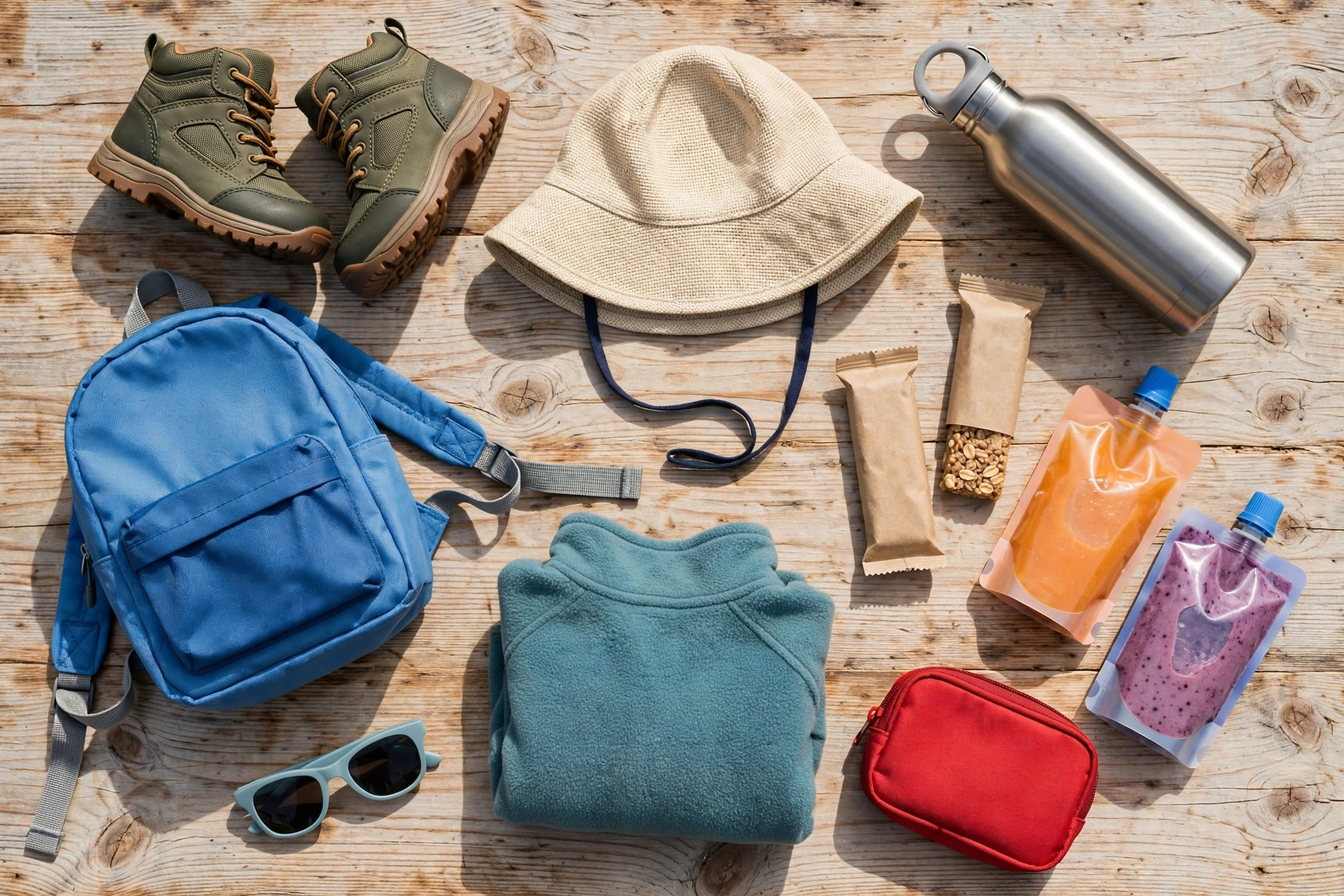
The essentials vary with your child’s age, the length of the hike, and the weather — but a few truths are constant. Keep your pack light, dress for changing weather, and always bring one more snack than feels reasonable. For planning longer family trips, I also recommend checking my family camping checklist so nothing important gets left behind.
Child Carriers: Comfort and Convenience
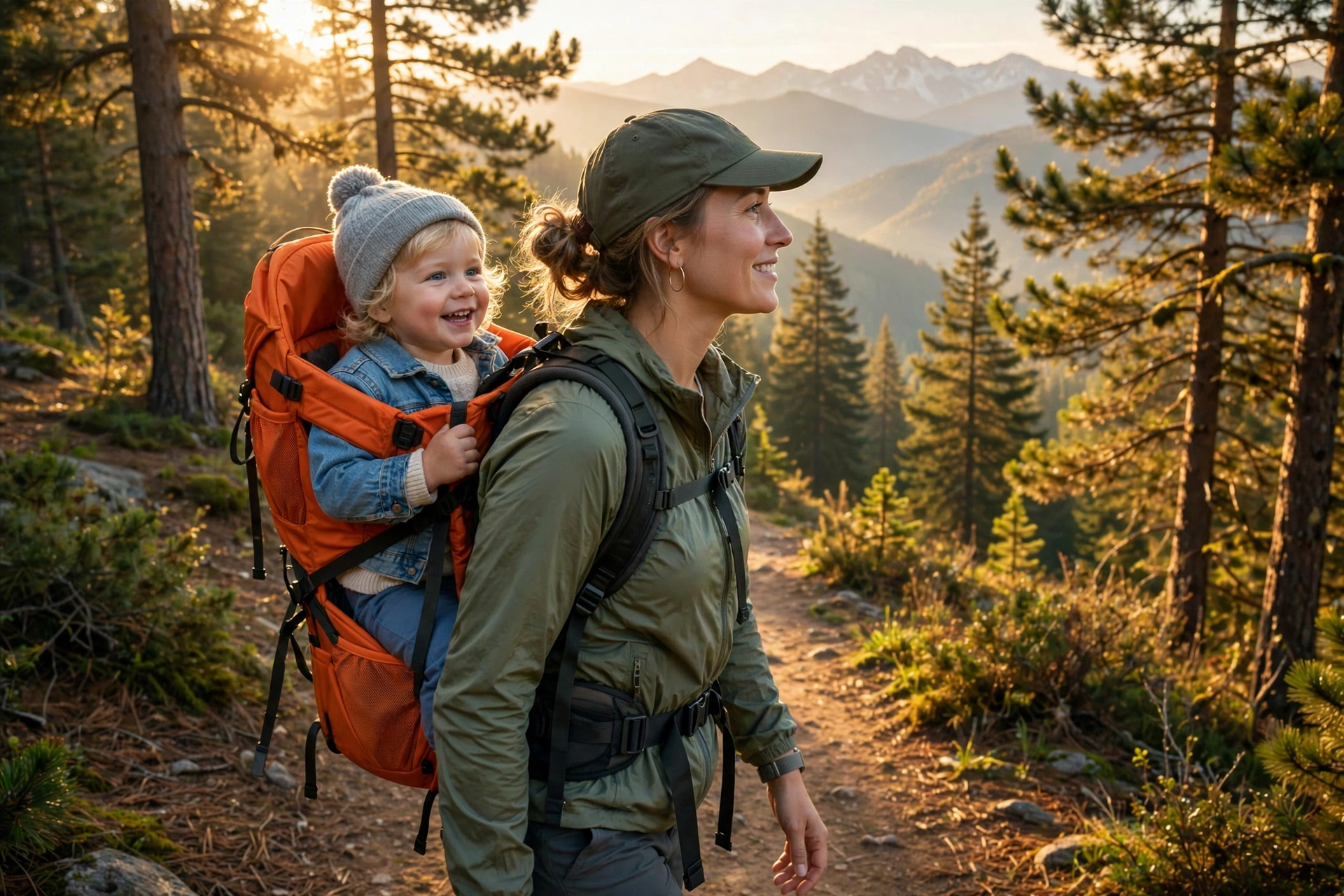
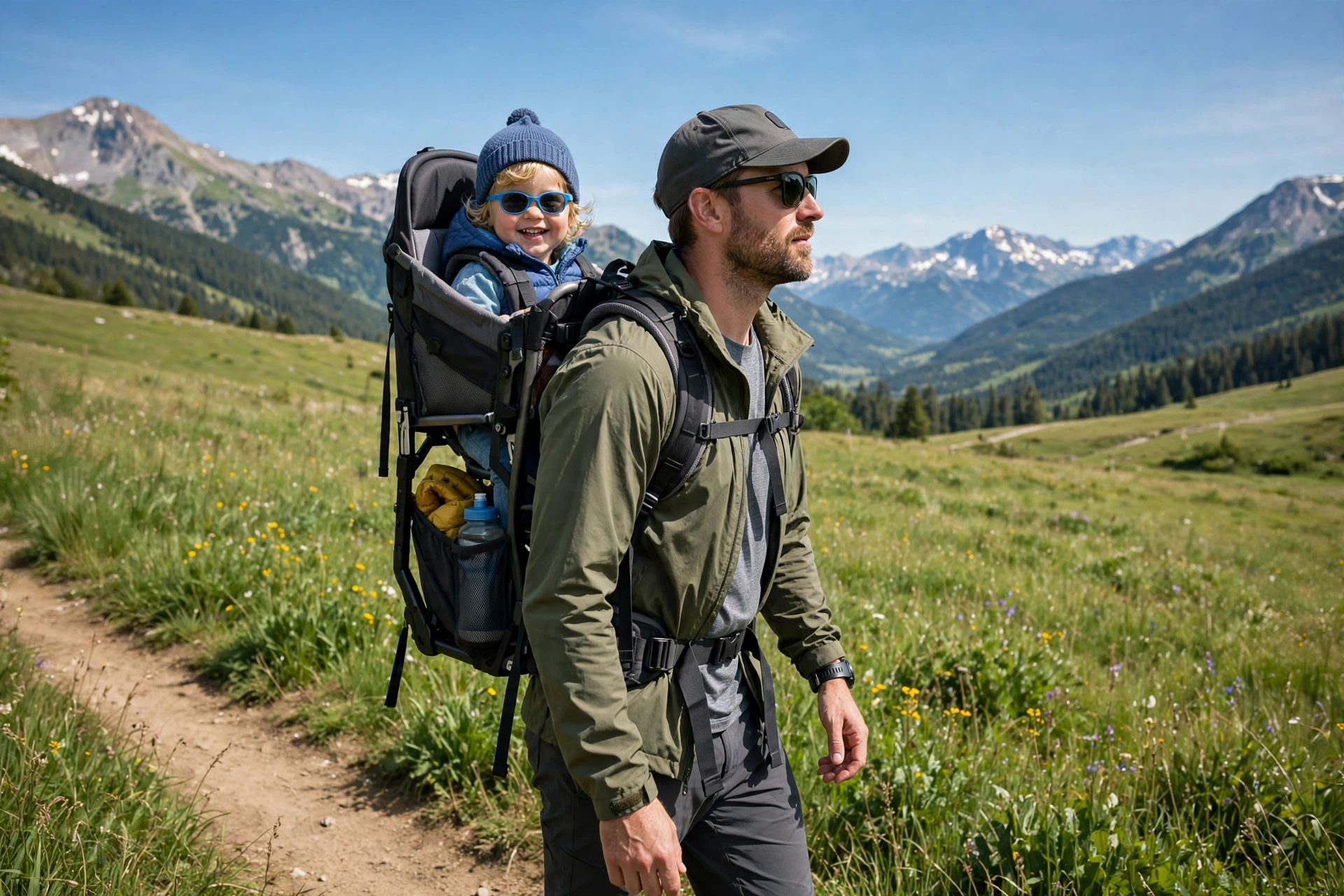
For younger toddlers who can’t walk the whole distance, a child carrier is a game-changer. It needs to be comfortable for both of you, because you’ll be wearing it while navigating uneven terrain. Most framed carriers have a 40-pound weight limit, which comfortably covers the toddler years. The three main types are framed child carriers (best for long hikes and big support), soft structured carriers (lightweight and easy for shorter trails), and hiking-specific backpacking carriers (built for rugged terrain).
If you’re unsure which one suits your family, my guide on how to choose a baby carrier walks through the options. One tip from experience: always try the carrier on with your child before buying, and adjust the hip belt so most of the weight sits on your hips, not your shoulders.
Clothing Layers: Keeping Kids Comfortable
Kids aren’t as efficient at regulating their body temperature as adults, so clothing layers are essential — add and remove them as the weather changes. Start with a moisture-wicking base layer, add a fleece mid-layer, and finish with a wind or rain shell. For colder weather, I love using bunting suits for smaller kids to prevent a draft up their back, plus a beanie and mittens.
Don’t forget sun protection either: a comfortable hat, kid-sized sunglasses, and sunscreen are essential even on cloudy days. And for a deeper dive into cold-weather layering, see my full guide on how to keep kids warm while camping — the same layering system works beautifully on the trail.
Kid-Friendly Snacks: Fuel for Little Explorers
Keeping energy levels high is crucial during a hike. Pack plenty of kid-friendly snacks your children actually enjoy — familiar foods are comforting, and snacks double as motivation when your toddler decides sitting down is more fun than walking. Our favorites include fruit and veggie pouches, granola bars, fruit leather, beef sticks, and homemade protein balls. Pack at least three different types; variety keeps a cranky hiker happy far longer than one big bag of the same thing.
For bigger trail meals and snack-packing strategy, check out my family camp kitchen setup guide.
Comfort Items: Keeping Little Ones Happy
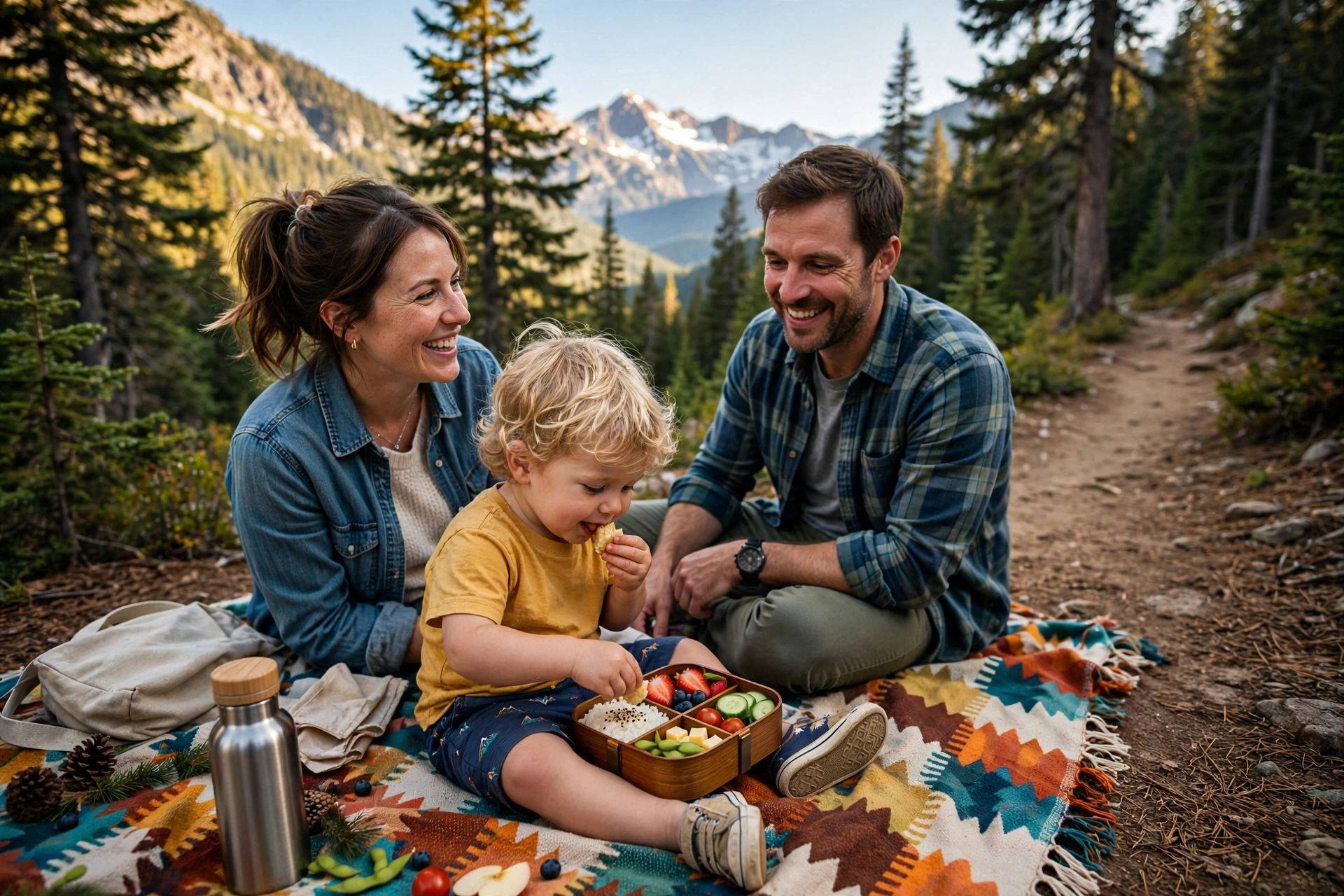
Comfort items can turn a challenging hike into an enjoyable adventure. A pacifier, stuffed animal, or small blanket is especially helpful during nap time — my kids often fall asleep in the carrier, so having something familiar along is a lifesaver. These are personal items, so let your child choose what comes along.
Safety Essentials for Hiking with Toddlers
1. The 10 Essentials (Adapted for Families)
The classic 10 Essentials, created in the 1930s by The Mountaineers, still form the backbone of a safe hike — just with a kid-friendly twist. Always carry: navigation (map and compass or a downloaded offline map), sun protection (sunscreen, sunglasses, hat), insulation (extra kid layers), illumination (headlamp with spare batteries), a kid-stocked first aid kit, fire-starting tools (waterproof matches or lighter), a small repair kit (multitool and duct tape), extra food, extra water (plus a filter or purification method), and emergency shelter (a space blanket or light tarp).
2. Children’s First Aid Kit: Safety First
Safety is my number one concern when packing for a day hike. On top of a standard kit, I add kid-specific items: band-aids with their favorite characters, children’s pain reliever, saline solution to flush debris from eyes, and children’s antihistamine. Keep it in an easy-to-reach pocket — you don’t want to unpack everything when a knee gets scraped.
3. Diapers, Pull-Ups, Wipes, and a Changing Mat
If you’re hiking with toddlers, diapers, pull-ups, and wipes are non-negotiable. Pack more than you think you’ll need, plus a small changing mat or packable blanket for quick diaper changes on the trail. A small wet bag keeps dirty items contained until you get home.
4. Satellite Communicator: Staying Connected
I never hit the trail without my Garmin inReach Mini. It isn’t toddler gear specifically, but I started carrying one the moment I began hiking with my baby. In areas without cell service, it lets me message family members or trigger an SOS to search and rescue. It requires a monthly or yearly subscription, but the peace of mind is worth every penny.
5. Wet Wipes and Hand Sanitizer: Quick Cleanups
A small pack of wet wipes or a little bottle of hand sanitizer is incredibly helpful for quick cleanups after snacks, before meals, or after bathroom breaks. These small items make a big difference in keeping everyone clean and comfortable.
6. Child-Sized Gear: Making Kids Feel Involved
Let your toddler bring their own gear. A mini backpack, fanny pack, their own water bottle, binoculars, or a kid-proof camera makes the hike more fun and gives them a sense of ownership. One of my favorite memories is my daughter insisting on carrying her “treasure bag” — a fanny pack full of pinecones she collected along the trail.
My Favorite Toddler Hiking Products
1. A Kids’ Backpack: Empowering Little Explorers
A kids’ backpack with an 8-liter capacity, breathable back panel, and padded shoulder straps is perfect for letting your toddler carry their own snacks and treasures. Whether you choose a quality option like the Deuter Schmusebär or a fun sequined pack from Target, letting them pack and carry their own gear builds excitement and independence.
2. A Kids’ Water Bottle: Hydration Made Easy
Staying hydrated is key on any hike, and I’ve noticed my kids drink twice as much water from their own bottle compared to sharing mine. Look for a child-specific design that’s easy to hold, with a straw-style spout for little ones who bite while sipping and a spill-proof lid that survives being tossed upside down in a pack.
3. A Comfortable Hat: Sun Protection They’ll Actually Wear
A hat only works if your toddler keeps it on. Look for a flexible brim, soft headband, and an external fit system (like the Sunday Afternoons Fun Bucket, around $29) so it stays comfortable for hours. UPF 50+ fabric is a bonus for high-altitude sun.
4. An Adventure Blanket: Turning Any Spot into a Picnic
A packable blanket with a waterproof bottom — like the Victory blanket from Nemo — transforms any clearing into a snack stop or a cloud-gazing session. It adds a special kind of magic to adventures, and you never have to stress about damp grass soaking through.
Leave No Trace: Teaching Kids to Respect Nature
Leave No Trace’s seven principles promote outdoor ethics, reminding us that our natural spaces are precious resources to preserve for future generations. Kids learn best by doing, so hiking is the perfect classroom: pack out every scrap of trash (including fruit peels and tissues), observe wildlife from a distance and never feed it, stay on established trails and durable surfaces, leave rocks and plants as you found them, minimize campfire impact by using a camp stove, and keep noise down for other hikers. When you plan your trip ahead of time, everything else gets easier — including keeping your impact small.
I love teaching my kids about packing out trash, treating wildlife with respect, and leaving natural objects as they found them. These actions protect our natural spaces and teach kids lasting lessons about respect, responsibility, and stewardship.
Frequently Asked Questions
What is the best age to start hiking with a toddler?
You can start as soon as your child can sit up in a carrier — many families hike with babies from around 6 months old. Walking toddlers (18 months+) often enjoy short, flat trails of a mile or two with plenty of snack stops. Keep hikes short and sweet; ending while they’re still happy builds a love of hiking.
How far can a toddler hike on their own?
Most toddlers can happily walk 0.5 to 2 miles at their own pace, with frequent breaks. A good rule of thumb: plan on covering about half the distance you’d hike alone, and always have a carrier ready for when little legs give out.
What shoes should toddlers wear for hiking?
Proper-fitting, closed-toe shoes with good tread are essential — avoid sandals and floppy shoes. Toddler hiking shoes or sturdy sneakers with ankle support work well for easy trails. Always check for hot spots in the first 15 minutes and carry blister supplies in your kid first aid kit.
How do I keep my toddler warm on a cold hike?
Use the same layering system as adults: a moisture-wicking base layer, a warm mid-layer like fleece, and a windproof or waterproof outer layer. Add a beanie and mittens, and remember that toddlers cool down faster when sitting still in a carrier — tuck a blanket around them during rest stops.
Should I bring a carrier even if my toddler likes to walk?
Yes — always. Even confident walking toddlers get tired, and trails often take longer with kids than expected. A carrier is your backup plan for meltdowns, injuries, bad weather, or running out of daylight.
How much water does a toddler need on a hike?
Plan on about 4–6 ounces of water per hour of hiking for a toddler, more in hot weather. Offer water frequently rather than waiting for them to ask, and pack extra for yourself too — carrying a child on a hot day is hard work.

1 comment
[…] your toddler will be out on the trail during the day, our picks for the best toddler hiking gear cover carriers, footwear, and layers that pull double duty at the […]