
If I had to pick just one baby product, it would be a baby carrier — even over a car seat. Living in the city taught me fast that a car isn’t always necessary, but a carrier? Non-negotiable. It carried me through the leap from one kid to two, and through more airports, trailheads, and grocery runs than I can count.
Since writing the first version of this guide I’ve become a certified babywearing consultant, which means I’ve fit carriers to hundreds of bodies and babies — not just my own. I’ve also updated this post with what’s changed: new models, discontinued favorites, and the lessons that only come from years of daily wearing. Every body is different, so use this guide as a starting map, not a prescription.
Quick Decision Guide: Which Carrier Type Fits Your Life?
| Your situation | Start here | Why |
|---|---|---|
| Newborn (0–4 months), want skin-to-skin | Stretchy wrap | Molds to tiny babies, most womb-like feel |
| Quick errands, up-and-down toddler | Ring sling | Fastest on/off of any carrier |
| One carrier for daily life, newborn to toddler | Soft-structured carrier (SSC) | Longest use window, easiest learning curve |
| You love the wrap feeling but want speed | Meh dai | Custom fit, breathable, packs tiny |
| Hiking, long travel days | Structured hiking carrier | Weight to hips, storage, sunshade |
| Water, beach, or pool time | Water carrier | Quick-dry, saltwater-safe |
1. Stretchy Wraps (0–6 Months) — The Newborn Essential

Why I loved it: When my daughter was born tiny — under most carriers’ weight minimum — a stretchy wrap was a lifesaver. The knit fabric gives that snuggly, womb-like pressure newborns crave, molding to her body without feeling bulky or fussy.
Best for: The fourth trimester (0–4 months), petite babies, and parents who want continuous contact. It’s also one of the few carriers safe and practical for camping with a newborn, when you need your hands free but want baby tucked close.
Pros:
- Distributes weight evenly across shoulders and back
- Compact enough to stuff in a diaper bag
- Breathable in summer — lighter than most structured options
Cons:
- Limited use window — most babies outgrow stretch by 5–6 months
- Sags once baby gets heavy; back-arching babies fight it
Pro tip: Double-weave and reinforced-knit versions offer noticeably more support as baby grows. And if standard wraps leave you with yards of extra fabric, look for brands that sell wrap sizes — petite parents don’t have to wrestle one-size-fits-all.
2. Ring Slings (0–12 Months) — The Quick-Up Solution
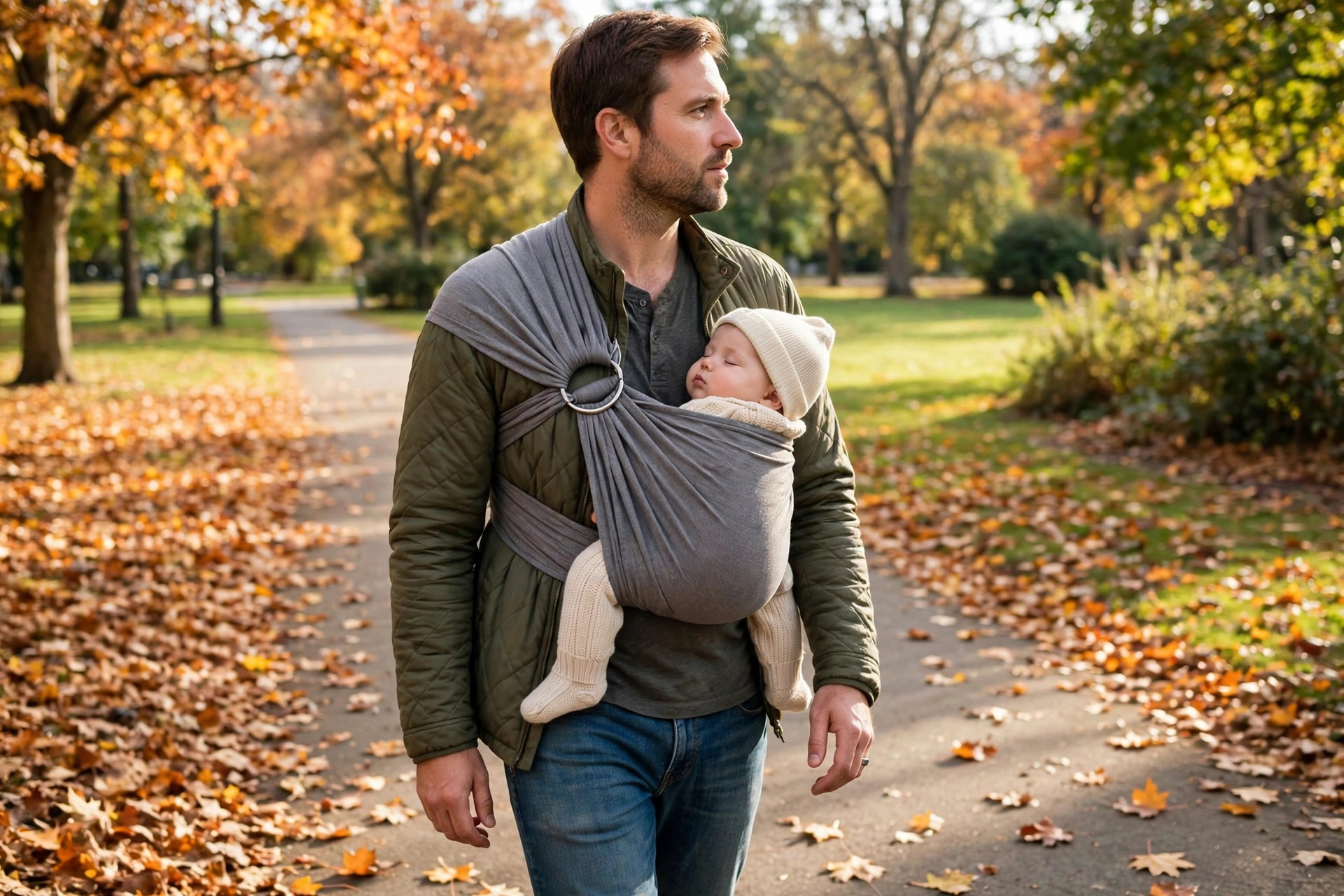
Why I changed my mind: After my consultant training I gave ring slings another try with my third baby. My first attempt failed because a large ring didn’t suit my narrow shoulders — but a properly sized sling with smaller rings changed everything. Fit is the whole game with ring slings.
Best for: Quick errands, discreet nursing, and toddlers who want up and down every five minutes. I keep one in each car for the moment my toddler suddenly refuses to walk.
Pros:
- Fastest on/off of any carrier — seconds, one-handed, once practiced
- Purse-sized when folded
- Beautiful woven fabrics that don’t look like “gear”
Cons:
- One-shoulder weight distribution can strain your back on long carries
- Real learning curve — getting the seat tension right takes practice
Safety note: Always keep baby “close enough to kiss” with a clear airway. See the safety section below for the full checklist.
3. Soft-Structured Carriers (3 Months – Toddler) — The Everyday Workhorse
My journey: I’ve cycled through the big names here, and the lesson was always the same: fit is everything with soft-structured carriers. The one that fits your torso and shoulder shape beats any “best carrier” list.
How to compare models:
- Narrow shoulders? Try carriers with narrower strap spacing or crossable straps; some popular brands slip right off narrow frames.
- Petite frame? Look for apron-style waistbands and adjustable body panels rather than bulky standard panels.
- Plus-size or tall? Seek size-inclusive brands with extended waistbands and longer straps — they exist and are worth hunting down.
Carry positions to plan for:
- Front inward: The workhorse position from the newborn stage onward.
- Front outward: Great for curious babies, but a short-lived window — most babies outgrow it once they get heavy.
- Back carry: Essential once baby hits 15+ lbs. Learn it at home over a bed before trying it out.
- Hip carry: Offered by some meh dai hybrids and a few SSCs; wonderful for toddlers who want to look around.
What I actually used: A linen soft-structured carrier with simple buckles and a discreet pocket — breathable enough for travel and thousands of hours through three kids, including on our longer hikes.
4. Meh Dai Carriers (4 Months – Toddler) — The Perfect Middle Ground
Why I reached for it: When I wanted more structure than a wrap but less bulk than an SSC, a meh dai became my secret weapon. The traditional tie system lets you tighten every strap independently — a custom fit no fixed-buckle carrier can match.
Key advantages:
- Adjustability: Each strap tightens independently for a truly personal fit.
- Breathability: Thin woven-wrap fabric keeps both of you cool in summer.
- Versatility: Front, hip, and back carries with practice.
- Compact: Rolls up smaller than most SSCs — a real travel win.
Learning curve: The first few ties feel awkward. Within a week I could tie mine nearly as fast as buckling a structured carrier. Pro tip: Practice with a doll or pillow before a wiggly baby.
Best uses: Tandem wearing (I carried a newborn in the meh dai while a toddler rode in the SSC), hot climates, and parents who love the wrap feel but need a quicker option.
5. Structured Hiking Carriers (6 Months – 40+ lbs) — For Adventurous Families
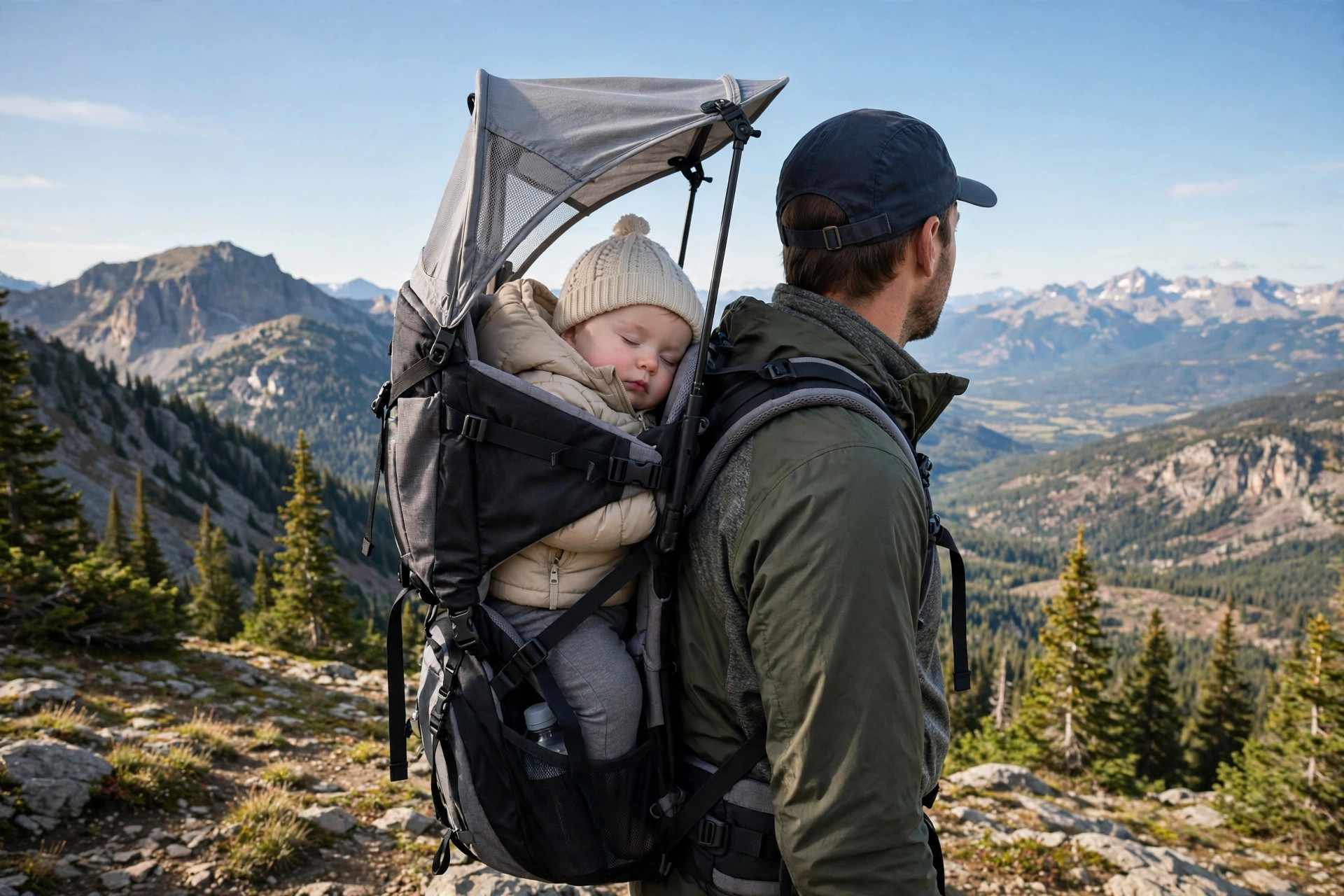
When day hikes get long, a framed hiking carrier earns its place. The padded hip belt transfers weight off your shoulders, and the built-in sunshade plus storage pockets turn it into a mini basecamp on your back.
What to look for:
- Padded hip belt and adjustable torso — the carrier should fit you, not just the baby
- Sunshade/rain cover for weather swings
- Kickstand frame so it stands on its own at rest stops
- Storage pockets for diapers, snacks, and a layer
Trail tested: I’ve carried a 30-lb toddler comfortably for 5-mile hikes in a framed carrier. The rigid frame keeps baby’s weight off your back — though it’s far too bulky for airports or everyday use. For realistic distances by age, see our guide on hiking with toddlers.
Shopping note: Hiking carrier models change yearly, so read current comparisons — our roundup of child carrier backpacks for hiking covers this year’s picks in detail.
6. Hybrid & Specialty Carriers — Unique Solutions
Buckle-wrap hybrids: These combine a soft wrap body with buckle straps — easier than a traditional wrap, cozier than a standard SSC. Best for the newborn-to-4-month window; the price stings for such short use, but wrap-intimidated parents love the gentler learning curve.
Water carriers: A quick-dry mesh carrier is a must for beach vacations (no saltwater damage worries), shower cuddles during solo-parent nights, and swim lessons when baby needs comfort. Bonus: the mesh pockets hold swim diapers and toys.
7. Babywearing Outerwear — Weather Warriors
Babywearing coats: Worth the investment if you babywear through winter. Look for a removable inner layer so the coat works from fall through spring, plus an extra zip-in panel that covers the carrier without bulk — and a cut that doesn’t scream maternity wear.
Babywearing sweatshirts: The grab-and-go option: stretchy front panels that accommodate any carrier type, dual zippers for nursing access, and machine-washable comfort. For real cold, layer the sweatshirt under the coat — and review our layering system for keeping kids warm before any winter trip.
Babywearing Safety: The T.I.C.K.S. Checklist
Before you head out — on a trail or to the grocery store — run through these five rules:
- T — Tight: The carrier should hold baby snug against you, with no slack where baby could slump.
- I — In view at all times: You should always be able to see baby’s face just by glancing down.
- C — Close enough to kiss: Baby’s head should be close to your chin.
- K — Keep chin off chest: A newborn should never be curled so their chin is forced onto their chest — leave at least a finger’s width.
- S — Supported back: In an upright carry, baby’s back is supported in its natural position with tummy and chest against you.
Also: no bulky snowsuits inside the carrier (layer over the carrier instead), skip carriers that dangle baby by the crotch, and give hips the classic “M” seated position with knees higher than bum — especially for developing hips.
Babywearing for Travel: What Actually Works Where
- Flights and airports: A soft-structured carrier is the gold standard — hands free for boarding, and baby often sleeps through the whole flight. Ring slings are a close second for quick security lines.
- Day hikes: Framed hiking carriers once baby can sit up; SSCs before that and for short walks. Pack for the weather with our toddler camping essentials list.
- Camping: A wrap or SSC by day, plus a dedicated sleep system at night (never sleep with baby loose in the carrier). Review the newborn camping safety rules before you go.
- Winter trips: Babywearing coat or a big coat worn open over the carrier — never strap a bulky snowsuit inside. See our skiing with toddlers tips for cold-weather family adventures.
Frequently Asked Questions
What is the best baby carrier for a newborn?
A stretchy wrap is the best starting point for most newborns — it fits babies below the weight minimums of many structured carriers and gives the closest, most womb-like hold. Just plan to transition to a soft-structured carrier around 4–6 months when baby gets heavy.
How long can a baby stay in a carrier?
There’s no universal time limit, but check on baby regularly: reposition every hour or so, watch for overheating, and take breaks on long days. If baby is fussing or you’re both sweaty, take a breather — the carrier will still be there.
Can I breastfeed in a baby carrier?
Yes — ring slings and wraps make discreet nursing easiest. Always reposition baby upright and re-tighten the carrier after feeding, and never nurse with baby’s face pressed into fabric where you can’t see their airway.
Are forward-facing carries safe?
Front-outward carries are fine in moderation once baby has strong head and neck control, but keep them short: baby can’t turn away from stimulation and the position is harder on developing hips. Most families use it sparingly for a few curious months.
Do I need more than one carrier?
Not necessarily — many families use one soft-structured carrier for everything. But a two-carrier setup (a wrap or sling for the newborn months plus an SSC or hiking carrier later) covers every situation with far less compromise.
Final Pro Tips From a Babywearing Consultant
- Try before you buy: Many cities have babywearing libraries or educators who let you test carriers before committing.
- Check secondhand: Barely-used carriers go for half price on resale sites — just inspect buckles and straps carefully.
- Prioritize comfort: If it hurts in the store, it’ll be unbearable after two hours of use.
- Think long-term: Carriers that transition from newborn to toddler are the better investment.
- Trust your instincts: What works for a petite parent with a small baby might not suit a tall parent with a 99th-percentile chunk — and that’s completely normal.
Every family’s babywearing journey looks different — I hope this updated guide helps you find your perfect match.

2 comments
[…] parent who finishes it. If you are choosing between carrier styles in the first place, our guide to how to choose a baby carrier walks through framed versus soft carriers in […]
[…] short walks, a soft-structured baby carrier is perfect. But once hikes stretch past an hour, a framed child carrier backpack earns its place. […]