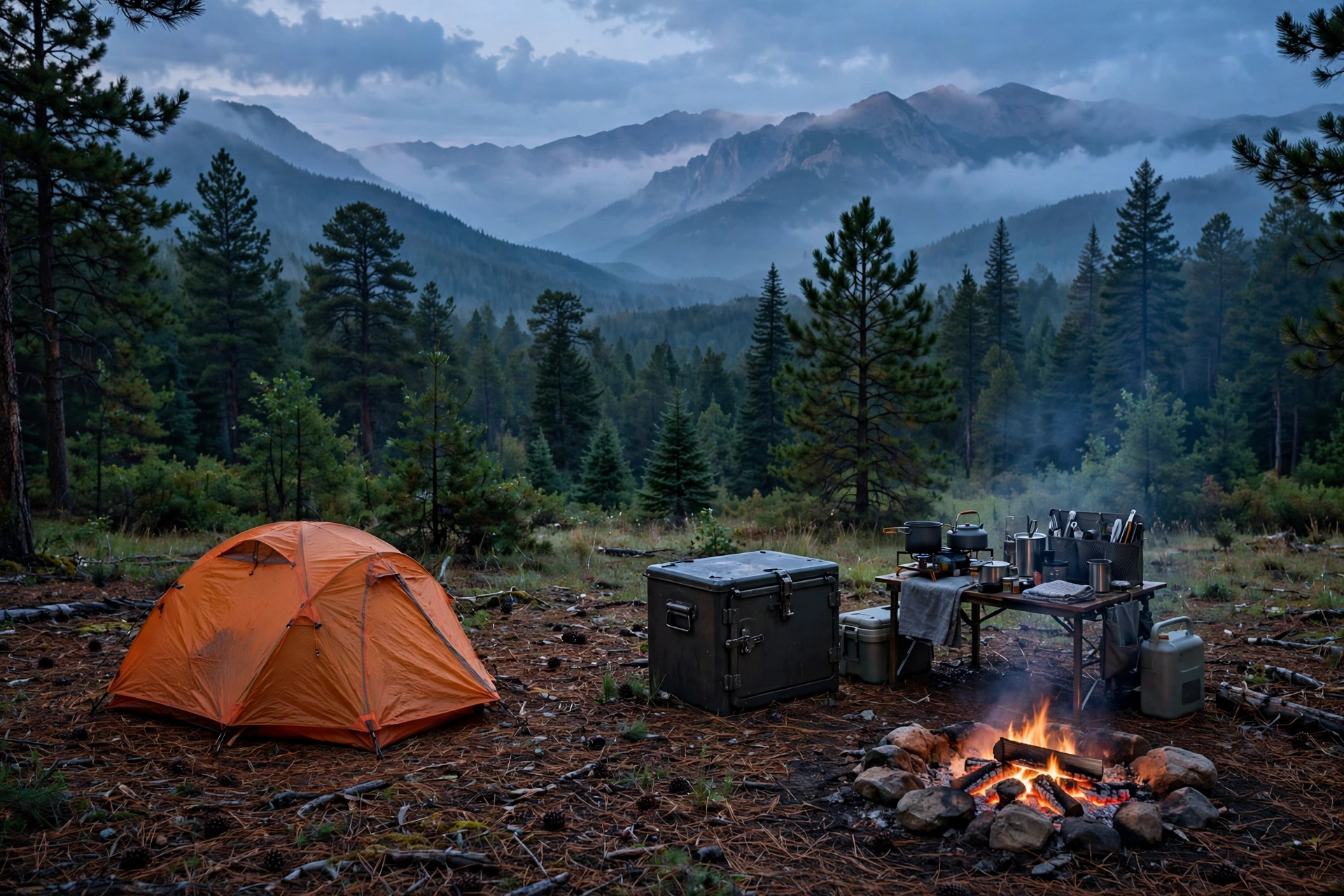
Seeing a bear in the wild is one of those childhood moments kids never forget — but only if everyone stays safe. Camping in bear country with kids adds real stakes to a family trip: your little campers leave crumbs, wander off, and store snacks in their sleeping bags. This guide walks you through exactly how to camp safely in bear territory with children, from bear-proof food storage to the drills your family should practice before the trip.
If you’re heading to a place like Yellowstone or Glacier, pair this guide with our 5-day Yellowstone itinerary for kids — it covers the bear-heavy zones and how to plan around them.
Why Bear Safety Is Different With Kids
Adults can follow a checklist. Kids forget, spill, and explore. That is why camping in bear country with kids demands systems, not just rules:
- Small kids are snack factories. Sticky hands, juice boxes, and pocket pretzels all smell. Bears have a sense of smell roughly 2,100 times better than a human’s, and they count anything with a scent as food — including toothpaste, sunscreen, and baby wipes.
- Kids are prey-sized and unpredictable. Running and screaming can trigger a chase response. Bears rarely see humans as prey, but a small child darting off a trail looks a lot like something to chase.
- Kids don’t read the warning signs. A trailhead sign about recent bear activity means nothing to a 5-year-old. Adults have to build the safety margin around them.
None of this means you should avoid bear country with kids. Millions of families camp in grizzly and black bear habitat every year without incident. It means your safety habits need to be automatic — and this guide makes them so.
The Camp Triangle: Your Most Important Setup Rule
Before you unpack a single bag, set up the camp triangle: three separate zones, each at least 100 yards (about a football field) apart when space allows:
- Cooking/eating zone — where all food handling happens.
- Food storage zone — bear box, bear canister, or your locked vehicle.
- Sleeping zone — tents, sleeping bags, and people. Nothing scented ever crosses into this zone.
In a developed campground the spacing will be tighter — aim for as far apart as the site allows and never let the kitchen and sleeping zones overlap. Teach kids the triangle with a simple phrase: “Eat here, store there, sleep over there.”
Position tents so each has two easy exits, and never set the tent upwind of your cooking area. If cooking smells are drifting onto your sleeping zone, move the kitchen. For the full kitchen layout that keeps food smells contained, see our family camp kitchen setup guide.
Bear-Proof Food Storage: Your 3 Options
Proper food storage is the single most important bear safety habit. A food-conditioned bear — one that learns to associate people with easy meals — is a danger to everyone and is often euthanized because of it. Your storage choice depends on where you’re camping:
| Method | How it works | Best for | Kid-friendly tip |
|---|---|---|---|
| Bear boxes | Metal lockers at developed campsites; latch everything inside | Front-country campgrounds in national parks | Make closing and latching the box a “job” kids do after every meal |
| Bear canisters | Hard plastic containers with bear-defeating lids; stash 100+ yards from the tent | Backcountry, dispersed camping, required in many parks | Let kids decorate their own canister label (no food inside the tent, ever) |
| Hard-sided locked vehicle | All food and scented items inside, windows up, out of sight | Roadside camping where allowed by the park | Do a “car clean-out check” every evening — kids search for forgotten wrappers |
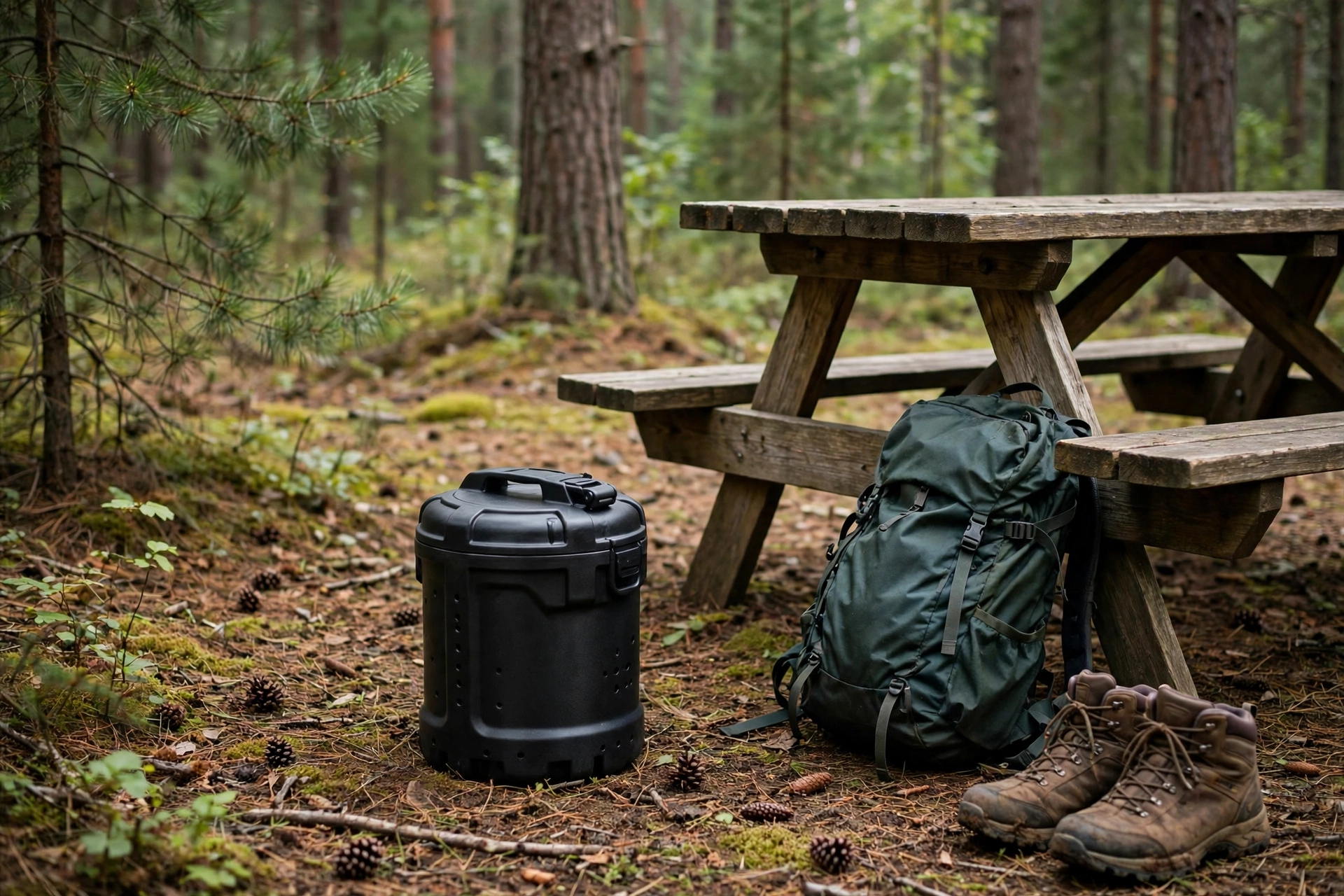
The National Park Service’s rule of thumb is blunt: if it has a scent, it goes in the storage. That includes:
- All food, snacks, and drinks (even canned goods and water bottles with flavor)
- Trash, recyclables, and food-soiled items
- Cooking gear, stoves, fuel, pots, and dirty dishes
- Toiletries: toothpaste, soap, sunscreen, bug spray, lotion, baby wipes
- Clothes you cooked in — change before bed and store the cooking clothes with your food
- Coolers — bears recognize the shape and will break into cars to get them
Check the park’s specific regulations before you go — some parks require bear canisters, others allow hangs, and rules about storing food in vehicles vary park to park. The NPS food storage page is the authoritative reference: nps.gov — Storing Food in Bear Country.
The Bear Hang: A Skill Worth Teaching Older Kids
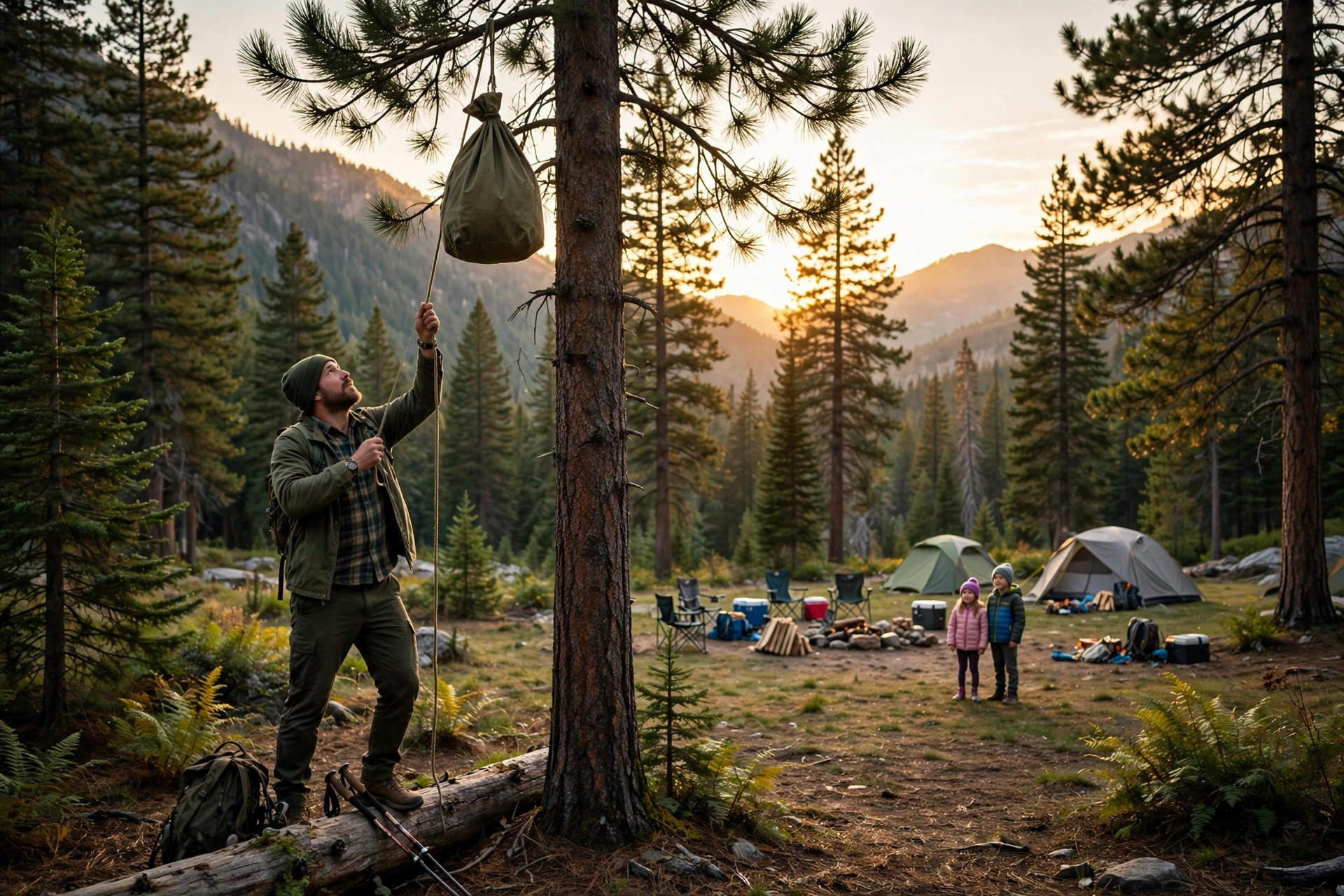
Where canisters aren’t required, the classic “bear hang” suspends your food bag at least 10 feet off the ground and 4 feet from the trunk of any tree. It is a genuinely fun skill for kids aged 8+ to learn: pick the branch, tie the knot, pull the rope. Walk them through it once, then let them run the show while you supervise. It doubles as the kind of hands-on trail skill we cover in teaching kids trail safety by age.
Campsite Habits That Keep Bears Away
Storage is half the battle. The other half is camp hygiene — a clean camp is a boring camp, and boring camps don’t attract bears.
The clean-kitchen routine (do this after every meal)
- Cook only what you will eat — no mystery leftovers sitting out.
- Wash pots and plates immediately, strain dishwater to catch food bits, and pack those bits out with your trash.
- Wipe down the table and stove; grease splatter is an attractant.
- Double-bag trash and move it to the bear box, canister, or locked vehicle right away — never leave trash bags outside overnight.
- Put away the stove, fuel, and clean dishes with the rest of your scented items.
Smell discipline for kids
- Brush teeth at the kitchen zone, far from the tent — never in the sleeping zone.
- No snacks in the tent. Ever. Not even “just this once.” Make it a non-negotiable house rule of camp.
- Sniff-check before bed. Turn it into a game: kids pat their pockets and sniff their hands for food smells before entering the tent.
- Keep the car clean too. Clear crumbs from car seats, collect forgotten wrappers, and remove baby wipes — bears in many parks have learned to check vehicles.
Hiking in Bear Country With Kids
Most bear encounters happen on the trail, and kids change the equation. Here is how to hike bear-smart as a family:
Stay together, stay noisy
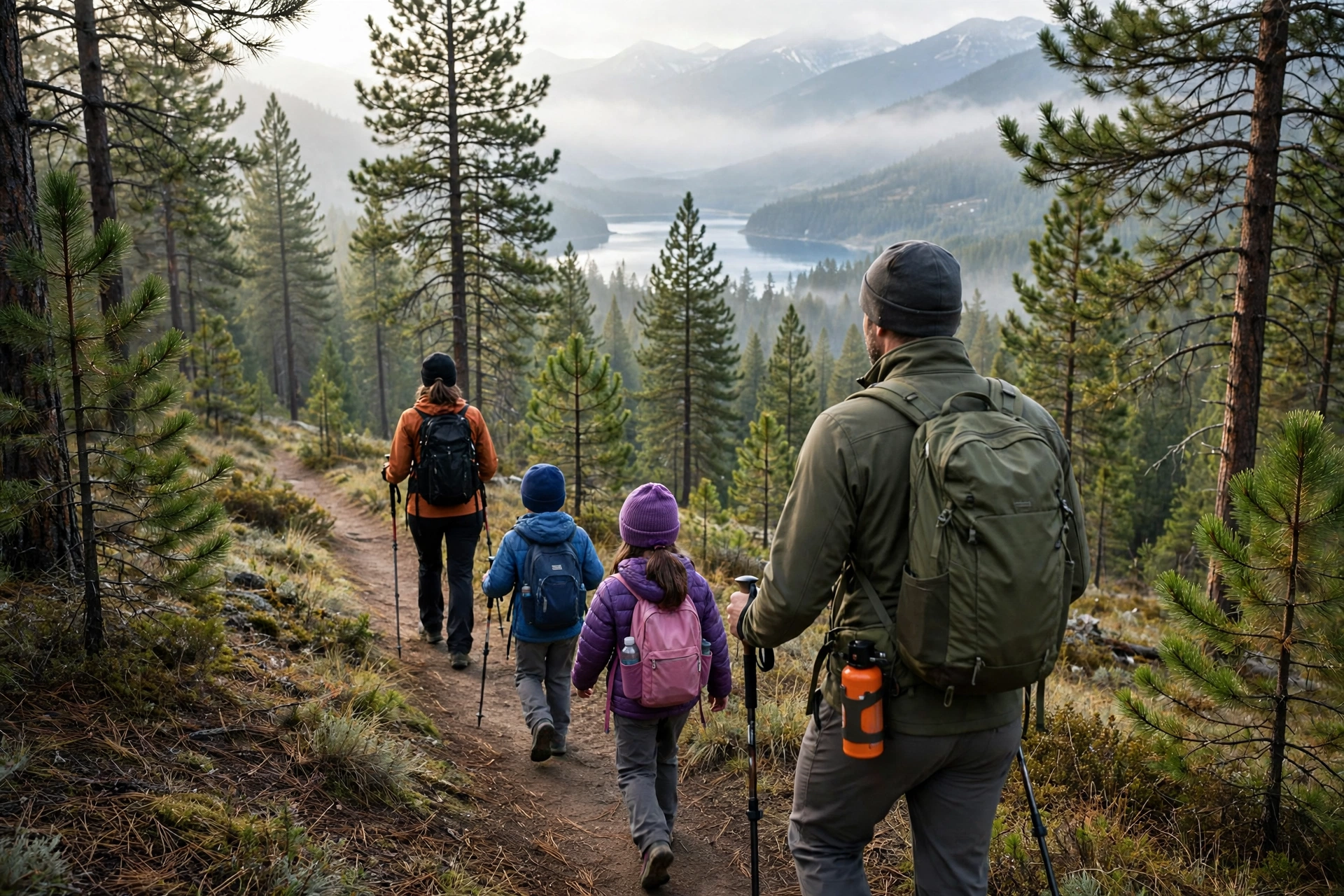
Hike in a tight group — kids between adults, never leading far ahead or lagging far behind. Bears are less likely to approach groups, and they avoid surprises above all. Make noise where visibility is limited: call out around blind corners, near streams, and on windy days when your sound doesn’t carry. For toddlers, this can be a game: “Who can sing the trail song the loudest?”
Carry bear spray — and know how to use it
In grizzly country, bear spray is the single most effective deterrent — studies by the U.S. Fish and Wildlife Service found it stops aggressive bears in the vast majority of charges. Rules that matter:
- Carry it on your hip or chest strap, not buried in your pack. You will have seconds, not minutes.
- Know how the safety tab works before you hike. Practice drawing it at home.
- Check the expiration date and keep it out of extreme heat.
- One canister per adult. Older teens (14+) can carry their own with training.
- If a bear charges, stand your ground, aim slightly downward, and spray a cloud when the bear is 30–60 feet out.
Teach kids the encounter drill
Practice this at the campsite like a fire drill, so panic doesn’t take over:
- Stop. Freeze — never run.
- Come to an adult. Move calmly to the nearest grown-up.
- Be big and calm. Stand tall together, speak in a firm, steady voice.
- Back away slowly, facing the bear, giving it space to leave.
Explain the “why” in kid terms: bears are wild animals who want to be left alone, and our job is to be boring visitors. If you want more on trail discipline by age, our lost-hiker protocol post pairs well with this: what to do if you get lost hiking with kids.
What to Do If a Bear Comes Into Camp
Stay calm and follow this order:
- Gather everyone together. Kids to the middle of the group, adults on the outside.
- Make yourselves big and noisy — raise arms, wave, talk firmly. You want the bear to identify you as humans.
- Do not run. Running can trigger a chase.
- If the bear gets your food, let it have it. No meal is worth a confrontation. Back off, let the bear leave, then secure everything and report the encounter to the campground host or rangers.
- After an encounter, double-check that all scented items are stored and talk through what happened with the kids so it becomes a story about doing the right thing, not a scary memory.
Keep bear spray and a flashlight accessible in your tent at night. And keep a well-stocked kit for every other campsite emergency too — see our family camping first aid kit checklist.
Packing Checklist: Bear Country Edition
Standard family camping gear plus these bear-country essentials:
- ☐ Bear spray (one per adult, accessible on hip/chest)
- ☐ Bear-resistant food canister (where required) or rope for a bear hang
- ☐ Odor-proof bags / double zip bags for food and scented items
- ☐ Dedicated “cook clothes” per person (changed before bed)
- ☐ Headlamps for nighttime bathroom trips — never walk camp in the dark
- ☐ Whistle for each kid (attach to their daypack)
- ☐ Printed park bear regulations (download before you lose cell service)
- ☐ Extra trash bags for double-bagging all scented waste
Book campsites and check current bear activity advisories at recreation.gov before you go — conditions change seasonally.
FAQ
Can I store food in my car in bear country?
Sometimes, but check the park’s rules first. Some parks allow it only with windows fully closed, food out of sight, and only during daylight hours — others require everything out of the car and into lockers. Bears in heavily visited parks have learned to recognize coolers and break into vehicles, so follow local regulations exactly.
What age is safe to take kids camping in bear country?
There is no official minimum age. Families camp in bear country with babies and toddlers regularly — what matters is the adults’ discipline: proper food storage, the camp triangle, keeping kids close on trails, and carrying bear spray. If anything, younger kids are easier to keep close than adventurous 7-year-olds.
Do I need bear spray for black bear areas too?
Bear spray works on both black bears and grizzlies, and rangers recommend carrying it anywhere you are hiking in bear habitat — including black-bear-only areas. It is a last resort, not a substitute for good food storage and noise.
Is a bear hang enough, or do I need a canister?
It depends on the park. Some parks require bear canisters in the backcountry; others permit hangs done correctly (10 feet up, 4 feet from the trunk). Canisters are more foolproof — most failed hangs are hung too low or too close to the trunk. Always follow the specific park’s requirement.
What should I do if my child spots a bear on the trail?
Teach them the drill ahead of time: stop, move calmly to an adult, and stay quiet and still while the adult handles it. Praise the child afterward for doing the right thing — staying calm around wildlife is a skill, and positive reinforcement makes it stick.
Can kids sleep in the same tent as food-free clothes only?
The goal is zero scented items in the tent. Kids sleep in their sleeping clothes; anything worn while cooking, plus toothpaste, snacks, and scented items, stays at the storage zone. A quick “pocket check” before bedtime makes this a fun ritual instead of a rule.
After a safe day in bear country, the reward is a calm night — our parent-tested tips for getting kids to sleep while camping help close out the day right.
