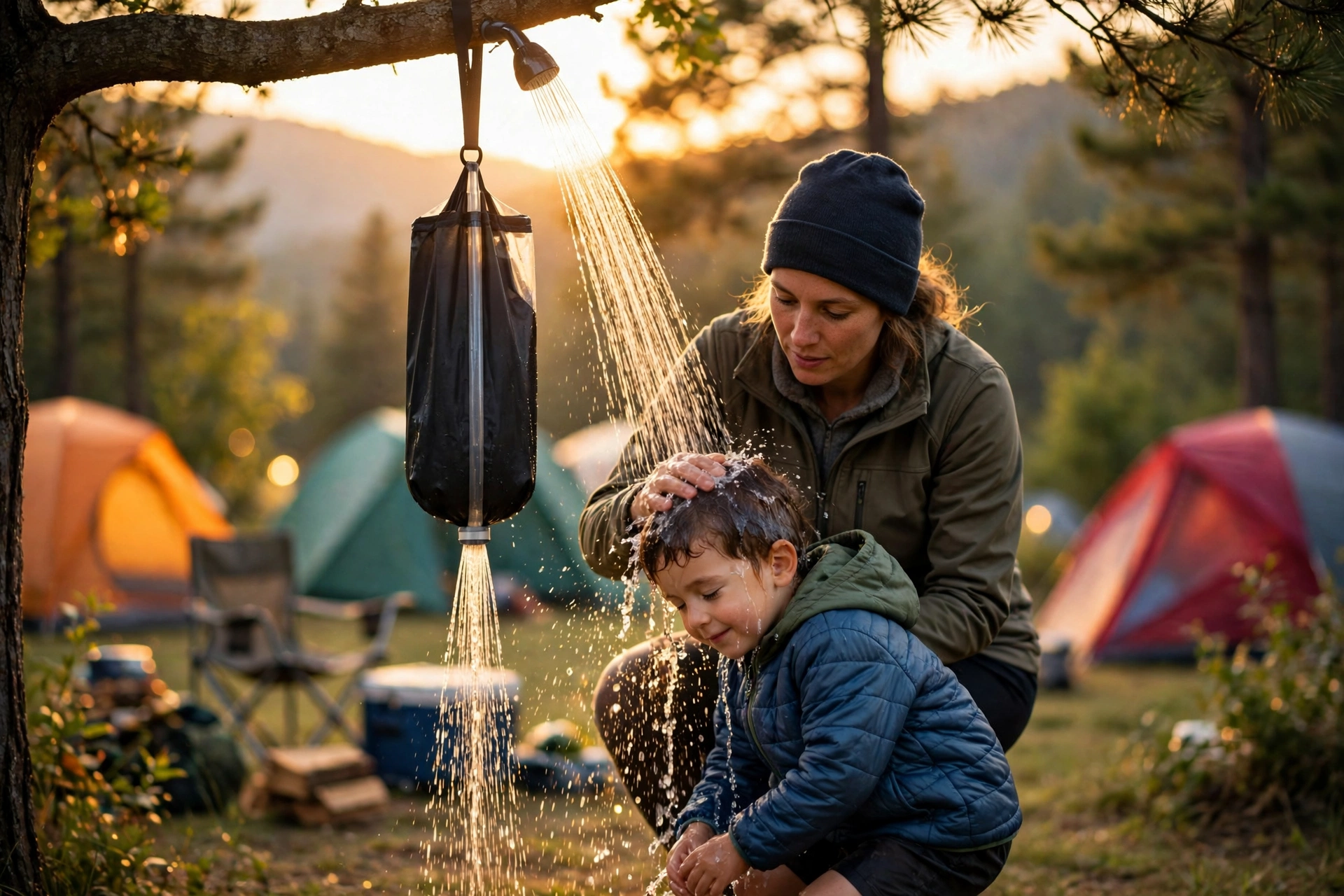
Three days into a family camping trip, the kids are covered in trail dust, marshmallow goo, and sunscreen — and the nearest shower is a 40-minute drive away. If that sounds familiar, this guide is for you. A portable camp shower turns an “I’m itchy and cranky” evening into a quick, easy rinse at your own campsite, and for families with kids, that one small comfort can decide whether the trip feels fun or miserable.
In this guide, I’ll walk you through the six main types of portable camp showers, how to choose one your kids will actually use, the hygiene rules that keep everyone healthy at camp, and a simple setup routine you can copy on your very first trip. No guesswork — just practical advice that works for real families.
Why a Portable Camp Shower Changes Family Trips
Campgrounds with shower houses are wonderful — until you arrive at a first-come-first-served site with none, or the shower house line snakes past the playground at 8 p.m. when your toddler is melting down. A portable shower gives your family freedom from fixed facilities: you can rinse off after swimming, wash off campfire smoke before bed, clean sticky hands after dinner, and handle “emergency” messes (every parent of a young child knows what I mean) without leaving your site.
There’s a sleep angle too: a warm rinse before bed lowers body temperature afterward, which helps kids drift off — the same reason a warm bath works at home. If bedtime at camp is a struggle, read our guide to getting kids to sleep while camping alongside this one.
6 Portable Camp Shower Options Compared
Every option below works for families. The difference is how much water, heat, and effort each one takes — and how patient your kids are.
1. Solar Shower Bags (Simplest and Cheapest)
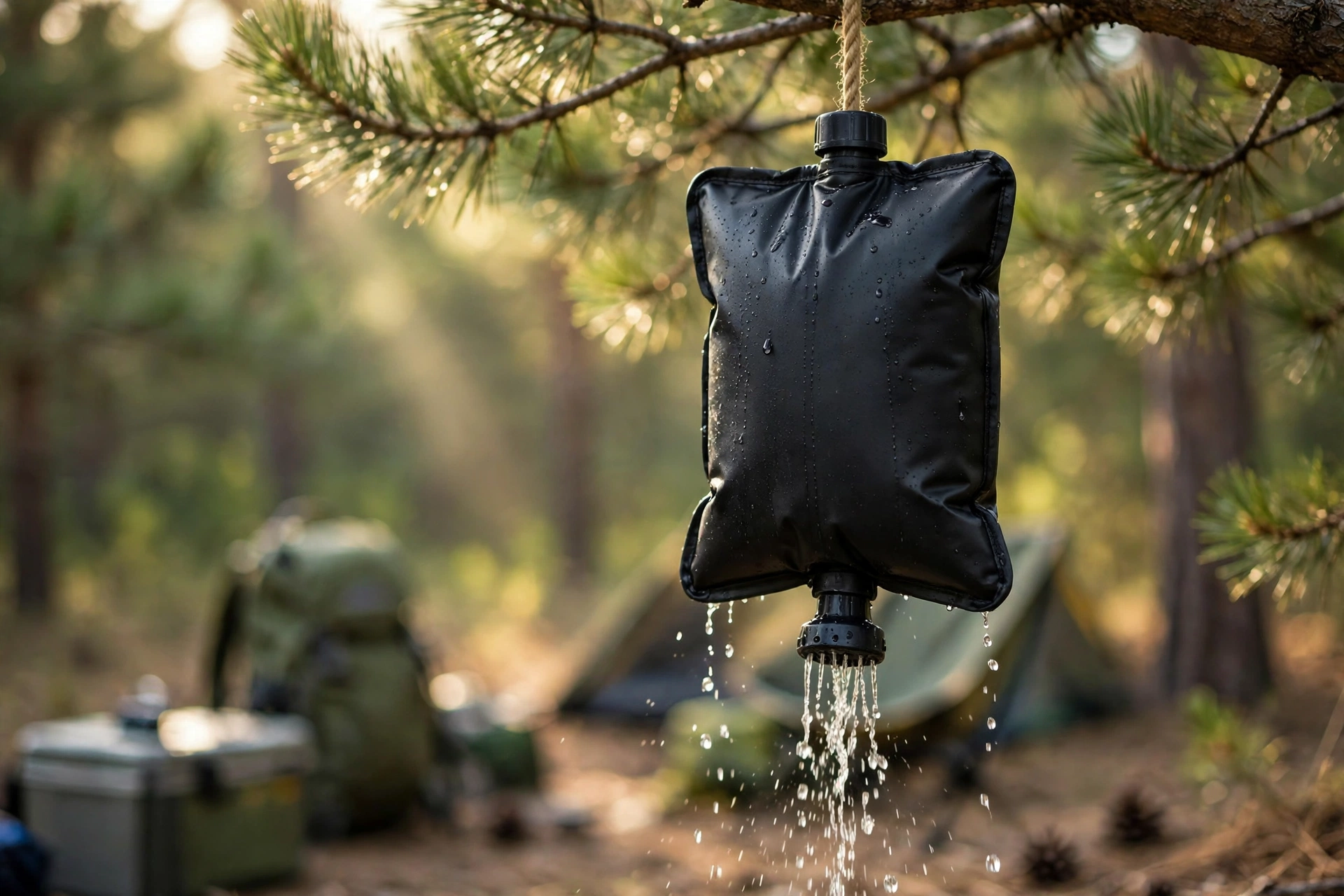
A solar shower is a 5- to 10-liter (about 1.3 to 2.6 gallon) black bag with a hose and shower head. Fill it, leave it in direct sun for a few hours, and gravity does the rest. The classic 5-gallon size gives a family of four short rinses — but not long, hot showers.
Best for: budget trips, warm weather, quick kid rinses.
Watch out for: weak water pressure, lukewarm water on cloudy days, and bags that develop leaks at the seams. Hang the bag above head height for the best flow.
2. Battery-Powered Pump Showers
These have a rechargeable pump on a hose: drop the intake into any water container (a 5-gallon jug, a bucket, even a cooler) and you get steady, on-demand flow. Many come with a shower head that has a built-in on/off switch — perfect for “navy showers” where you wet, soap, and rinse.
Best for: families who want real water pressure with zero pumping.
Watch out for: battery life (bring a power bank or solar charger), and the intake can clog in silty water.
3. Pressurized Tank Showers
Fill the tank, pump the built-in handle a dozen times to pressurize it, and you get a strong, consistent spray until the pressure runs out. Many tanks come in 2- to 3-gallon sizes — a sweet spot for two or three kid rinses.
Best for: families who want good pressure without electronics or heat.
Watch out for: the tank is bulky, and re-pressurizing with one hand while wrangling a toddler is an art form. Pre-heat water on the camp stove for warm rinses.
4. Foot-Pump Showers
Like a garden sprayer with a shower head: you stand on the pump or work it with your foot while someone showers. No batteries, no sun needed, and kids love “helping” with the pumping.
Best for: families who want mechanical simplicity and durability.
Watch out for: someone has to keep pumping for continuous water. Fun for a minute, tiring for a full shower.
5. Propane Portable Water Heaters
These heat water on demand from a small propane canister — connect a water source, and you get a real hot shower anywhere. They are the closest thing to a home shower experience at camp.
Best for: shoulder-season trips or families who shower daily.
Watch out for: higher cost, heavier to carry, propane use and safety rules at campgrounds, and some parks restrict propane appliances during fire bans. Check fire restrictions before you go, and always set the heater well away from tents.
6. The Wash-Basin Method (Free Backup Plan)
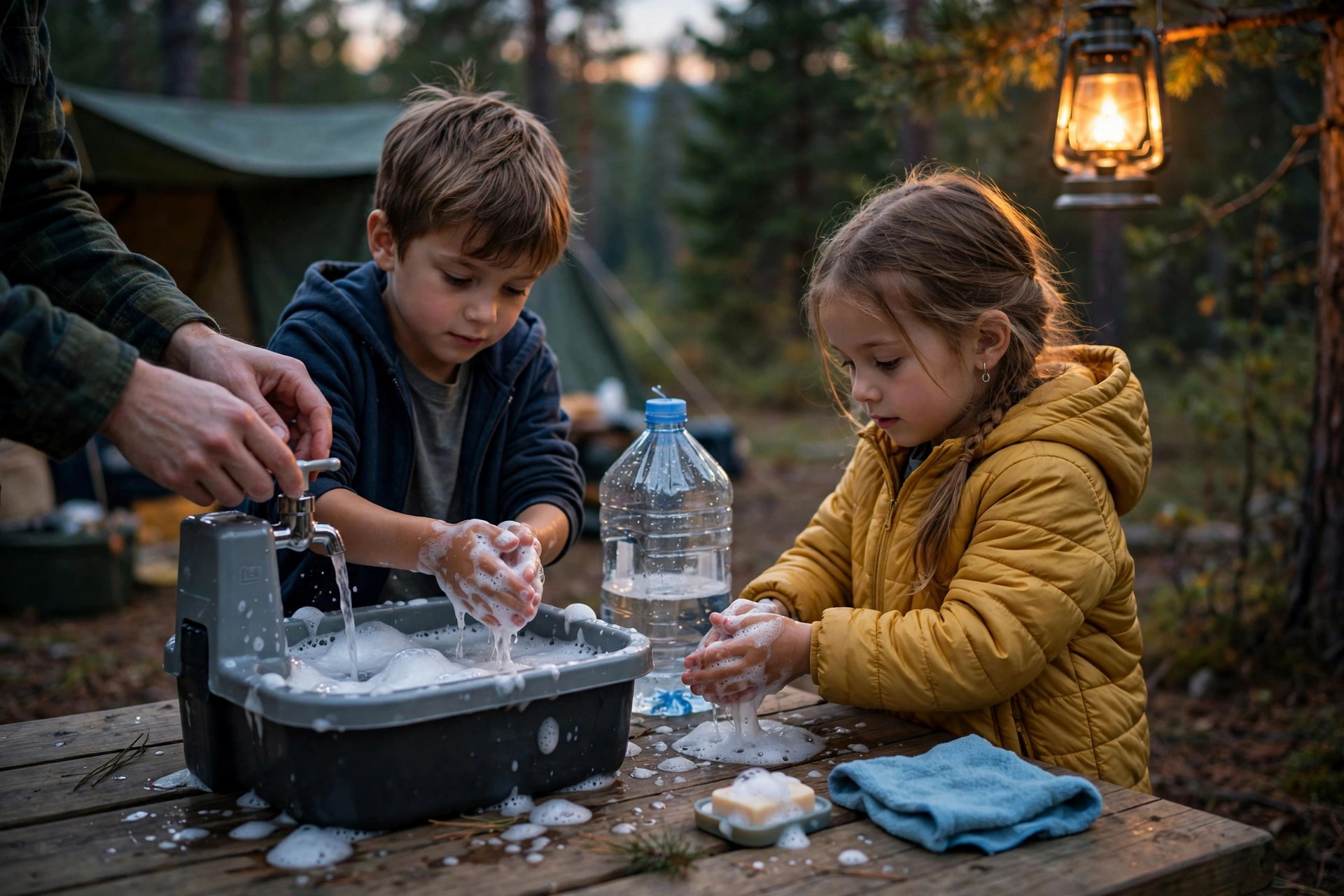
Heat a pot of water on your camp stove, mix it with cold in a basin, and give kids a sponge bath with a washcloth. No gear to buy, no parts to break, and honestly it handles 90% of “kid is dirty” situations.
Best for: every family, as a backup — even if you own a fancy shower.
Watch out for: test the water temperature on your own wrist first, and never leave hot water within reach of small children.
Quick Comparison Table
| Type | Approx. Water Capacity | Heat Source | Best For |
|---|---|---|---|
| Solar bag | 5–10 L (1.3–2.6 gal) | Sun | Budget warm-weather rinses |
| Battery pump | Any container you bring | Pre-heated water | Good pressure, zero effort |
| Pressurized tank | 8–12 L (2–3 gal) | Pre-heated water | Strong spray, no electronics |
| Foot pump | 10–20 L (2.6–5 gal) | Pre-heated water | Simple, durable, kid-friendly |
| Propane heater | Continuous (needs water source) | Propane | Real hot showers anywhere |
| Wash basin | 5–10 L | Camp stove | Free backup for sponge baths |
What to Look for When Buying
Not every “family camp shower” deserves a spot in your car. Check these six things before you buy:
- Capacity: plan on about 1–1.5 gallons per kid for a real rinse. A 5-gallon bag sounds generous until four people share it.
- Kid-height flow: can the shower head reach a child standing in a basin, or does it only work at adult height? An adjustable head or a hand-held head with a shut-off valve wins.
- Water temperature control: solar bags can get scalding in midday sun — always mix in cold water or test first. Battery and pump systems let you start with pre-mixed warm water.
- Setup simplicity: if it takes 15 minutes and two adults to assemble, you’ll skip it on tired evenings. The best family shower sets up in under five minutes.
- Durability: seams, valves, and hoses are the failure points. Read reviews specifically about leaking — it’s the most common complaint across every type.
- Packed size: if you’re already tight on car space, a flat-folding solar bag beats a rigid tank. (For more packing wisdom, see our family camping mistakes beginners make.)
Kid-Safe Hygiene Rules at Camp
A camp shower only keeps kids healthy if you use it safely. These rules are non-negotiable with young children:
- Never leave water unattended around toddlers. Even a bucket or basin of rinse water is a drowning risk. Keep wash setups out of reach when not in active use, and supervise every second.
- Test water temperature on your wrist before every shower. Solar bags in full afternoon sun can reach scalding temperatures. If it feels hot on your wrist, it’s too hot for a child.
- Use biodegradable soap only — and even then, keep soapy water away from lakes, rivers, and streams. Lather at least 200 feet (about 70 big steps) from any water source.
- Warm-weather showers only for small kids. Cold shock from cold water can be dangerous for toddlers and upsetting for older kids. If the water isn’t comfortably warm, warm it on the stove first.
- Footwear matters. Flip-flops or water shoes prevent cuts from gravel and reduce the chance of slipping on wet ground or shower mats.
- Dry ears and skin afterward. Moist skin under a diaper or swimsuit invites rashes. Pat dry, change into dry clothes, and apply the same diaper-cream or moisturizer you’d use at home.
Keep the essentials together: our family camping first aid kit checklist covers the hygiene basics worth packing alongside your shower gear.
How to Set Up a Camp Shower (Step by Step)
- Pick the spot. Choose a flat area with drainage away from your tent and cooking area — ideally a spot that drains toward a gravel patch, not a trail or a neighbor’s site. Respect campground etiquette: nobody wants your runoff flowing through their site.
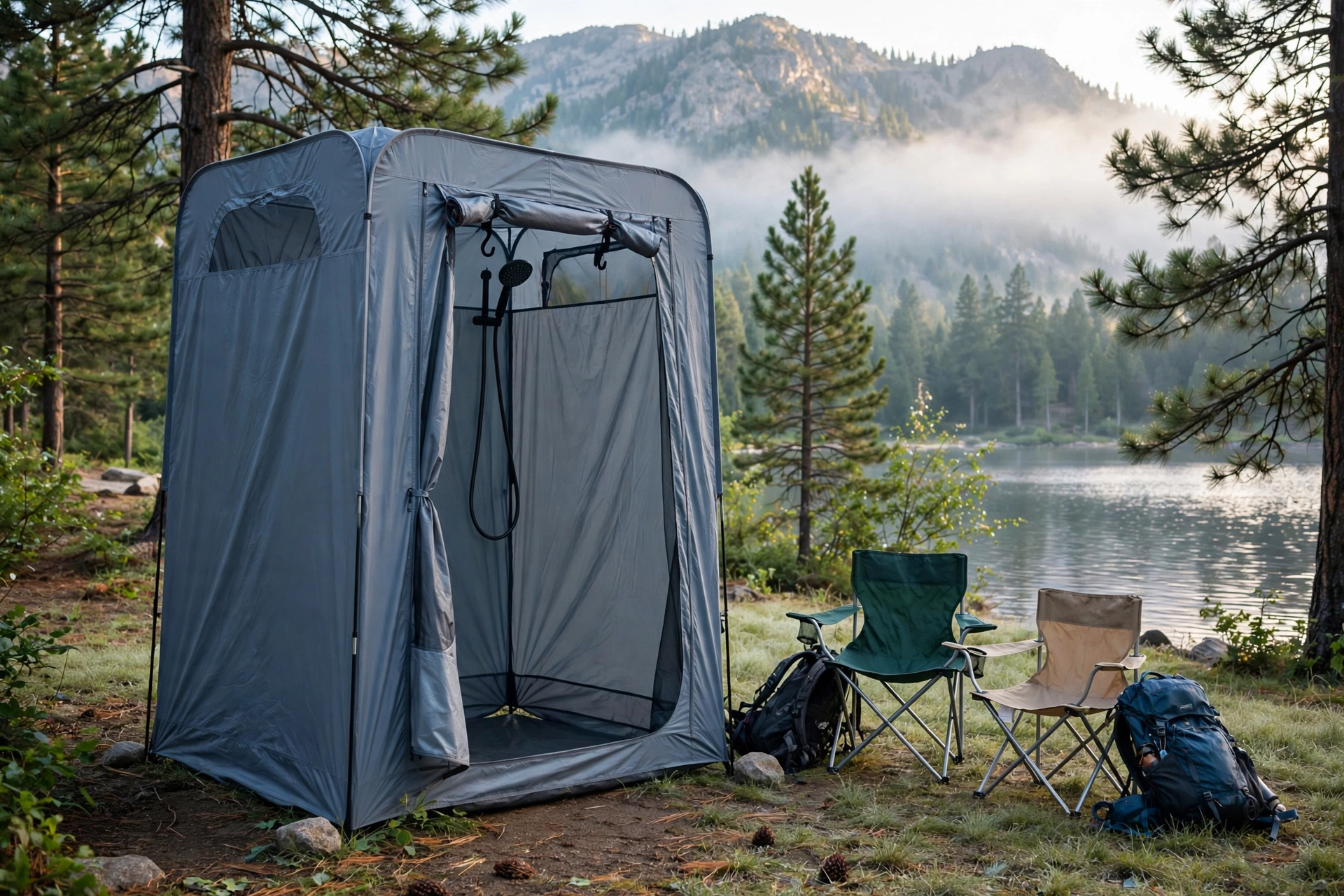
- Set up a privacy shelter or hang towels. A pop-up privacy tent is the gold standard for families; in a pinch, clip towels or a tarp to a clothesline between trees.
- Lay down a ground mat. A cheap foam mat or old tarp keeps feet out of the mud and gives kids a non-slip surface.
- Prepare your water. For solar bags, fill and set in the sun by early afternoon. For pump systems, fill your container and warm it (stove, sun, or both). Test temperature on your wrist.
- Set a shower order. Youngest first while the water is warmest, adults last. Give each child a two-minute “navy shower” briefing: wet, soap, rinse — with the water OFF between steps.
- Post-shower routine. Dry station with towels ready, dry clothes laid out, and the wet ground mat hung to dry. Store the shower gear where it can’t collect mosquitoes overnight — see our guide to keeping bugs away at camp.
- Dispose of grey water correctly. Scatter wash water over a wide area at least 200 feet from streams, lakes, and trails — the Leave No Trace guideline for all wash water, explained by the National Park Service’s Leave No Trace principles. Never dump soapy water directly into a waterway.
Leave No Trace: Grey-Water Rules Every Family Should Know
Camp shower water (grey water) is not “just water” once it has soap, sunscreen, and dirt in it. The Leave No Trace Center for Outdoor Ethics and the National Park Service recommend the same practice: carry wash water at least 200 feet from lakes, rivers, and streams, then broadcast it widely over soil so it filters through instead of pooling. Use only small amounts of biodegradable soap, and keep food particles out of your wash water with a simple strainer. These are the same seven Leave No Trace principles taught to every responsible camper — teaching them to your kids now builds habits for life.
Common Mistakes Families Make with Camp Showers
- Buying too small. A 2.5-gallon bag serves one person — not a family. Size for your whole crew or plan on multiple fills.
- Forgetting the privacy setup. Kids notice when they’re uncomfortable; a simple privacy tent makes showers happen instead of avoided.
- Showering at the wrong time. Late afternoon sun gives the warmest solar-bag water; a 9 p.m. shower in October is a recipe for shivering.
- No plan for used water. Decide where grey water goes BEFORE anyone gets wet — scrambling afterward ends with a muddy, soapy mess at the wrong spot.
- Leaving gear out overnight. Pumps and bags left out attract insects and curious raccoons. Rinse, drain, and store everything after the last shower.
Frequently Asked Questions
Are portable camp showers safe for toddlers?
Yes, with the right precautions: warm (never hot) water tested on your wrist, constant adult supervision, non-slip footing, and no unattended buckets or basins. A sponge bath with a basin is often the safest choice for children under three.
How much water does a family of four need for camp showers?
Plan on roughly 1–1.5 gallons per person for a quick “navy shower” rinse, so 4–6 gallons total. A 5-gallon solar bag plus a backup jug of water covers most families for one evening round.
Can I use a portable shower at any campground?
Usually yes, but check the rules first. Some campgrounds and national parks restrict where grey water can be discharged, and fire bans can affect propane water heaters. When in doubt, ask the camp host — they’re almost always happy to point you to the right spot. You can also check Recreation.gov campsite details for your specific site.
What’s the cheapest way to shower kids at camp?
A $5 wash basin, a pot of warm water from your camp stove, and a washcloth. It’s free of moving parts, works in any weather, and handles most kid messes faster than any gadget.
Do solar camp shower bags really get hot enough?
On a sunny day with temperatures above 75°F (24°C), a black solar bag left in direct sun for 3–4 hours can reach comfortably warm temperatures — sometimes too warm, so always test first. On cloudy days, fill the bag with pre-warmed water from your stove instead.
How do I keep the shower water clean for kids?
Fill from a known-clean source (your drinking-water jugs, not a creek), use clean containers, and if you’re unsure about the water source, treat it the same way you would drinking water. Warm standing water grows bacteria fast, so don’t reuse water left sitting from the day before.
