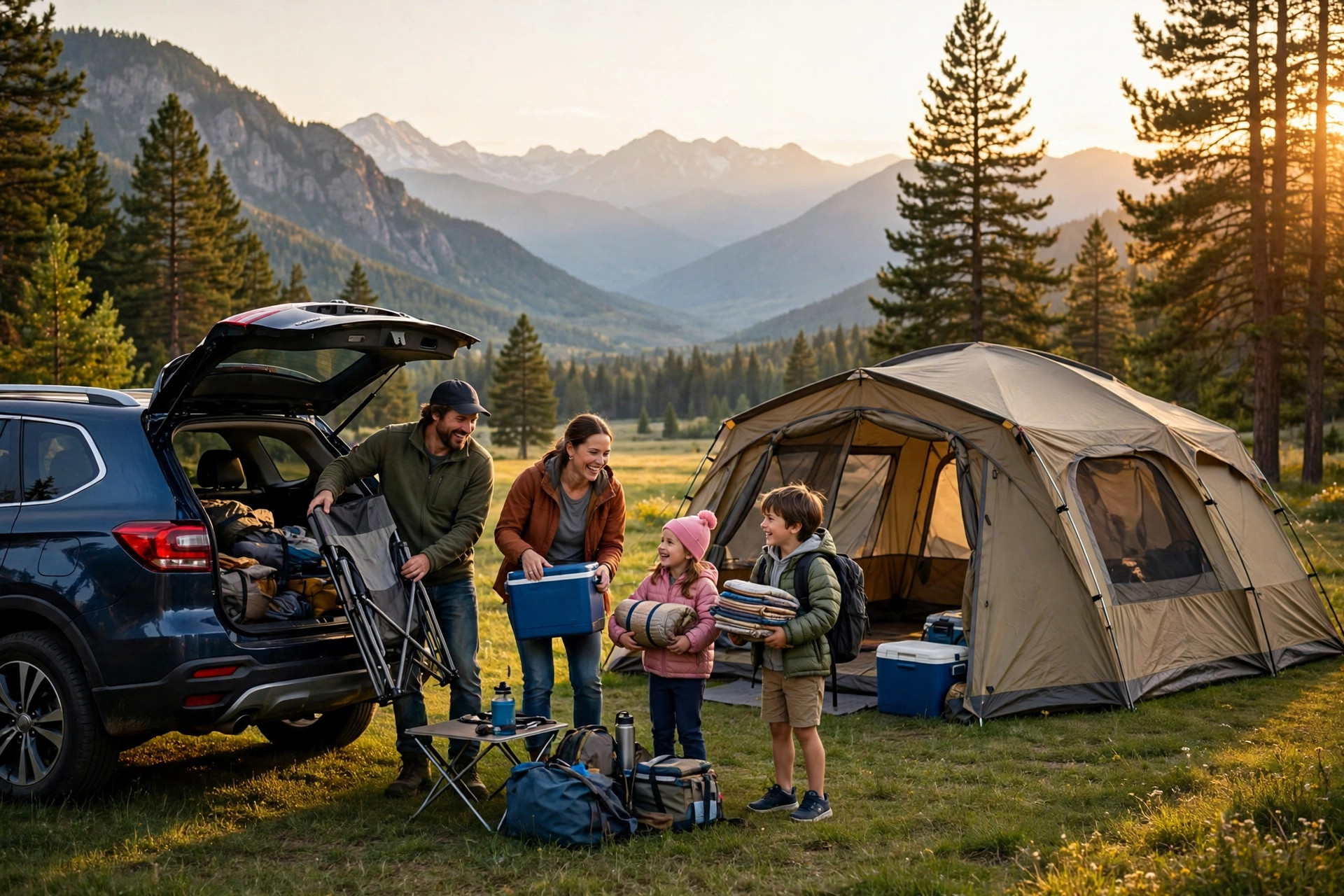
Taking your first family camping trip sounds exciting — and a little scary. Will the kids sleep? What if it rains? Here’s the truth: almost every first-timer overpacks, overplans, and still forgets the one thing that matters. This stress-free weekend action plan fixes that — a concrete Friday-to-Sunday timeline, a packing short list, a simple meal plan, and the safety basics that actually keep kids safe. Follow it step by step, and by Sunday you’ll be a family that camps — not a family that tried once and quit.
Why a Weekend Trip Is the Perfect First Camping Trip
Your first family camping trip should be a weekend — two nights, not a full week. Two nights give everyone time to settle in, but the end is always in sight, which matters enormously for nervous kids and tired parents. A weekend trip keeps packing short, food simple, and stakes low. If something goes wrong, you’re home Sunday morning and can laugh about it over pancakes at home.
Keep expectations honest: trip one won’t be perfect. The tent will take longer to pitch than the box promises, dinner will run late, and one kid will wake up at 5 a.m. delighted by birdsong. That’s fine. The goal of trip one isn’t flawless adventure — it’s proof your family can sleep outside and have fun doing it. Everything after gets easier.
Step 1: Choose the Right Campground (Close and Comfortable)
The single biggest lever on stress is how far you drive. For a first family camping trip, pick a campground within 90 minutes of home. A short drive means a later departure is fine, a forgotten pillow can be fetched, and a true emergency exit is always an option. That safety net alone cuts anxiety in half.
What to look for:
- Drive-up sites — no hiking gear in with tired kids. You want to park next to your site.
- Flush toilets and running water — pit toilets are a rite of passage, but not for trip one. Clean bathrooms near your site make everything easier with small children.
- A flat, grassy site — avoid sites on slopes or gravel pads; kids play on the ground constantly.
- Shade — afternoon sun on a tent turns it into an oven. Trees around the site are worth their weight in gold.
- Quiet hours and family-friendly reviews — check recent reviews for mentions of late-night noise or party crowds.
State parks are the sweet spot: affordable, well-maintained, and designed for families. Before you commit, read our guide on how to choose a family-friendly campground — 12 questions that filter out bad fits fast. Federal campgrounds can be reserved on Recreation.gov, and the National Park Service’s Find a Park tool is the best way to discover parks near you.
Step 2: Pack Smart — The First-Timer’s Short List
First-timers almost always bring too much and forget one critical item. Use this short list — it’s everything a family of four genuinely needs for two nights. (For the full deep-dive version, see our family camping checklist with 47 essentials.)
Sleep
- Tent (sized for your family plus one — a “4-person” tent sleeps two adults and two kids snugly; see our tent size guide before buying)
- Sleeping bags rated for the expected low temperature
- Sleeping pads or air mattresses — this is the item that decides whether you sleep
- Pillows from home (skip “camping pillows” for trip one)
Cook and Eat
- Cooler with ice
- Camp stove + fuel, or a grill grate if the site has a fire ring
- One pot, one pan, cooking utensils, plates, cups, forks and spoons
- Biodegradable soap, sponge, dish towel, trash bags
Stay Comfortable and Safe
- Headlamps or lanterns for every kid — headlamps vs lanterns breaks down what works best
- Warm layers for everyone (temperatures drop fast after sunset)
- Rain jackets, even if the forecast is perfect
- First aid kit, sunscreen, bug spray, any medications
- A mallet for tent stakes, duct tape, a lighter
Kid Comfort Items (Non-Negotiable)
- Favorite stuffed animal or blanket
- Two changes of clothes per kid, in separate zip bags
- Snacks. Then more snacks.
- A comfort routine from home — the same bedtime book, the same lullaby
Step 3: Do a Backyard Trial Run (Seriously)
This is the highest-ROI hour of your entire trip, and it costs nothing. A week before you leave, pitch the tent in the backyard and let the kids play in it for an hour — or even sleep in it overnight.
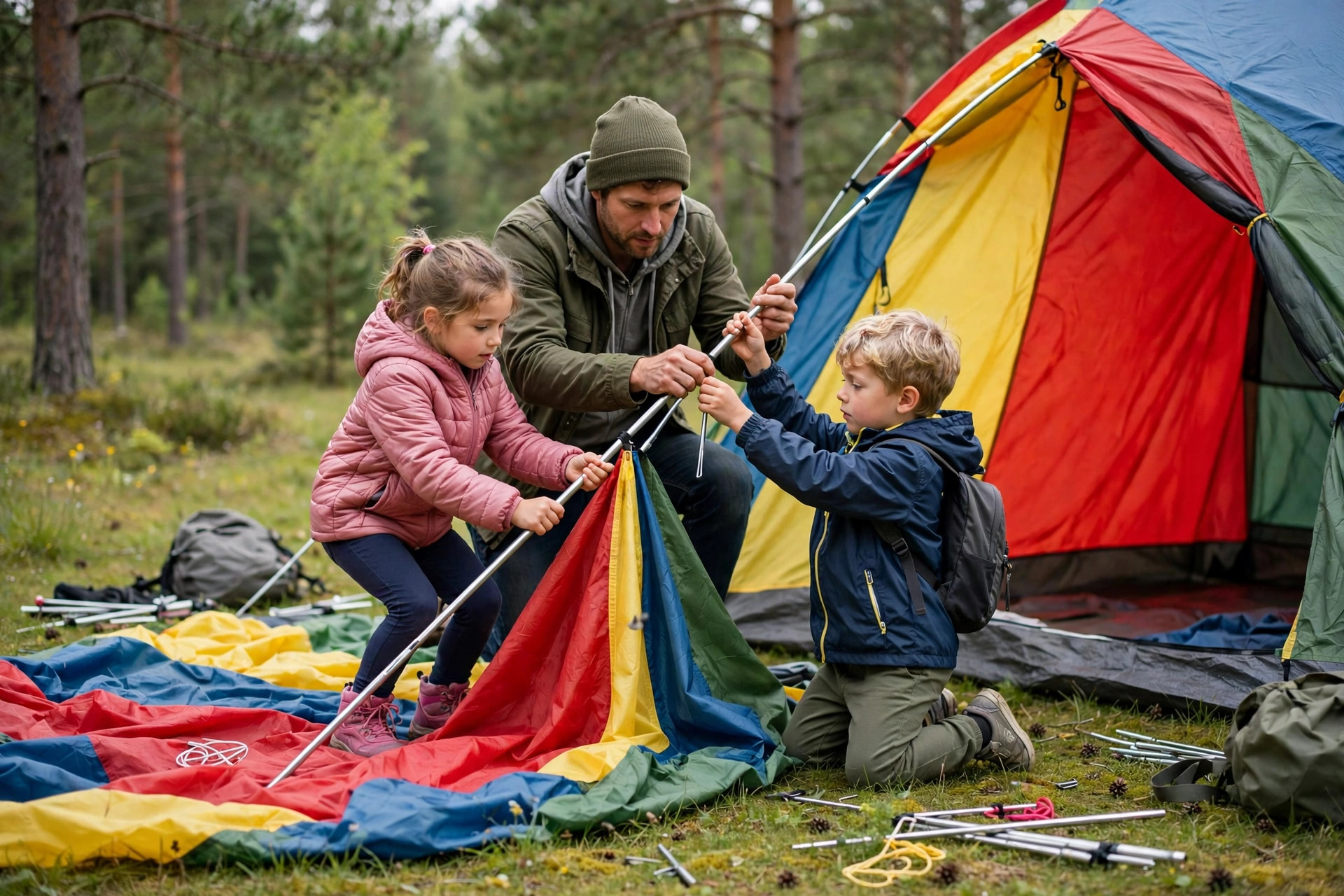
Kids who have already zipped the door and lain in their sleeping bag arrive at the campground with the mystery gone. You’ll also find the missing tent pole and the stuck zipper at home, where solutions exist. Practice collapsing the tent too; Sunday-morning you will thank yourself.
Step 4: The Stress-Free Weekend Timeline
Here’s the flow that keeps a first trip calm. The secret: arrive with daylight, eat simply, and protect sleep.
| Day | Time | What to do |
|---|---|---|
| Friday | 4:00–5:00 PM | Arrive. Let the kids explore the site while one adult pitches the tent. |
| Friday | 5:00–6:00 PM | Set up camp kitchen and sleeping bags. Quick walk to find bathrooms. |
| Friday | 6:00–7:00 PM | Simple dinner (sandwiches, pre-made wraps). Campfire if allowed. |
| Friday | 8:00–8:30 PM | Bedtime routine — same as home, just in a tent. |
| Saturday | 7:00–8:30 AM | Slow breakfast. Let kids wake naturally; no alarms. |
| Saturday | 9:30 AM–12:00 PM | One main activity: short hike, lake swim, or nature scavenger hunt. |
| Saturday | 12:00–2:00 PM | Lunch + quiet/rest time. Kids nap or read; adults rest too. |
| Saturday | 2:00–5:00 PM | Free play, second activity, or just hammock time. |
| Saturday | 5:30–7:30 PM | Dinner over the fire. S’mores. Stories. |
| Saturday | 8:00–8:30 PM | Same bedtime routine again. |
| Sunday | 7:00–9:00 AM | Breakfast, then the 30-minute pack-up (see Step 7). |
| Sunday | 9:30–10:00 AM | Sweep the site, take a final photo, head home by late morning. |
The two rules behind this timeline: arrive before dark (setting up camp in the dark with kids is the number-one trip-ruiner), and one big activity per day is plenty. An overpacked itinerary is how fun turns into meltdowns.
Step 5: Camp Kitchen Without the Chaos
Keep a “cook once, eat twice” mindset. First-trip meals should be boring — nobody remembers what they ate; they remember whether everyone was fed on time.
The first-timer’s meal plan
- Friday dinner: sandwiches, fruit, chips. Zero cooking on arrival night.
- Saturday breakfast: instant oatmeal packets + bananas, or bagels with peanut butter.
- Saturday lunch: quesadillas on the camp stove.
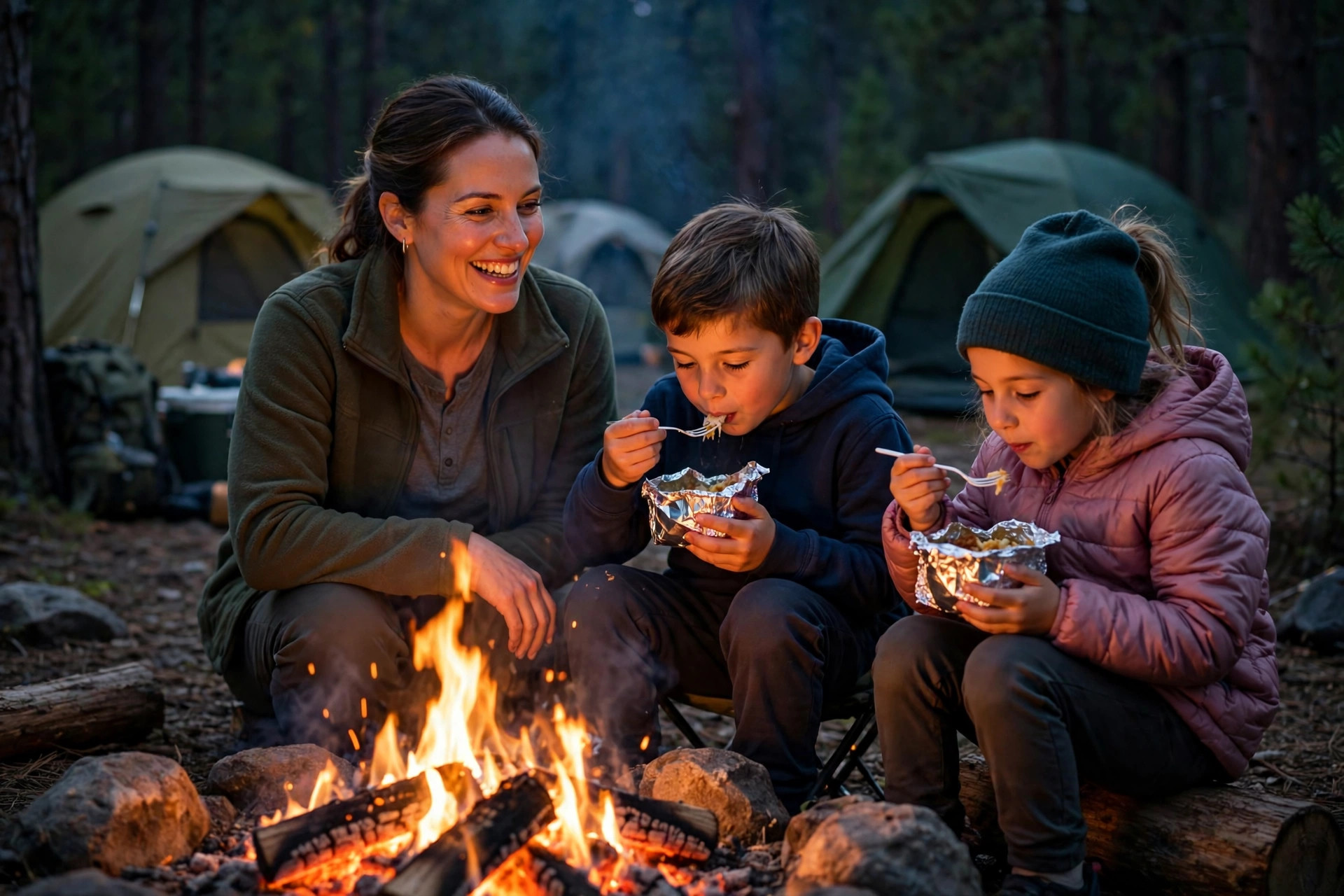
- Saturday dinner: the one “real” meal — foil-packet dinners (chicken, potatoes, veggies in foil on the fire or stove). Kids love unwrapping their own packet.
- Sunday breakfast: cereal and milk, or whatever’s left. Then leave.
Bring twice the snacks you think you need, and pack a “car snack bag” that stays accessible on the drive. Hungry kids in a car seat can sink a whole trip before it starts. For a deeper setup, our camp kitchen setup guide covers the full cooking station layout, and REI’s family camping checklist is a solid reference for gear you might rent instead of buy.
Step 6: Keep Kids Happy with Zero-Planning Activities
You don’t need a suitcase of toys. Nature does the entertaining if you frame it right:
- Nature scavenger hunt: each kid gets a bag and a list — a smooth rock, something red, a pinecone, a feather. Costs nothing, buys an hour.
- Stick fort building: fallen sticks only. Kids will build for astonishingly long stretches.
- Flashlight tag after dark: safe, thrilling, and exhausting — in the good way.
- Star gazing: lie on a blanket, find the Big Dipper, tell one constellation story.
- Campfire stories: take turns adding one sentence each. Always ends silly — that’s the point.
- One short nature walk: under a mile for young kids. Collect leaves, count birds.
Step 7: Safety Basics Every Parent Needs
Camping is statistically very safe for families, but a few rules prevent the small problems that become big ones:
- Buddy system: no child goes anywhere alone — not the bathroom, not “just over there.” Every child always has a buddy, even on a familiar site.
- Fire rules: a kid-free zone around the campfire (an arm’s length plus a step). Only adults tend the fire.
- Water rules: lakes and streams get the same respect as roads. Life jackets for non-swimmers, no exceptions.
- Wildlife: store all food in the car or bear box overnight — never in the tent. Never feed animals.
- Getting lost: the number-one rule for kids — if lost, stay put and make noise. Whistles on lanyards are cheap insurance; see our step-by-step safety plan for getting lost while hiking with kids.
- Night warmth: kids sleep colder than adults. Add a layer beyond what you think they need — our layering system guide explains why.
Walk the site together on arrival and point out the boundaries: “this is how far you can go.” Kids accept clear, simple rules far better than anxious hovering.
Step 8: The 30-Minute Sunday Pack-Up
Sunday morning is where first trips go sideways — everyone’s tired and the car somehow holds half the campsite. Use this sequence and you’ll be driving out in 30 minutes:
- Breakfast first — fed kids cooperate; hungry kids sabotage.
- Collapse sleeping gear while the tent stands. Stuff, don’t fold.
- Shake and pack the tent last. If it’s damp, pack it and air it at home. Never leave a damp tent packed for weeks.
- One trash sweep — walk the whole site with a bag.
- Final gear check: count the big items (tent, cooler, stove, chairs).
Pack the car in reverse order of the drive home: the cooler with drinks and snacks goes in last so it’s reachable at rest stops.
Common First-Trip Mistakes (So You Can Skip Them)
Almost every family makes the same handful of errors on trip one. Ours are documented in 11 family camping mistakes beginners make — the biggest offenders:
- Arriving after dark. Arrive with at least two hours of daylight.
- Buying everything new. Borrow or rent big items for trip one — then buy what you actually want.
- Cooking ambitious meals. Save the Dutch-oven lasagna for trip three.
- No rain plan. A deck of cards and one tent game turn a rainy afternoon from disaster to memory.
- Skipping the trial run. The backyard tent pitch is the difference between a 20-minute setup and a 90-minute stress test.
Frequently Asked Questions
What is the best age for a child’s first camping trip?
There’s no magic age — families camp successfully with babies and teenagers. The sweet spot for a first trip is often ages 4 to 8: sturdy enough for uneven ground, still thrilled by the novelty. With babies or toddlers, pick a site with flush toilets, keep it to one night, and bring their full sleep routine. Our newborn camping safety rules cover the youngest campers.
How much does a first family camping trip cost?
If you borrow or rent the tent and sleeping gear, a weekend for a family of four typically runs $100–$200: campsite fees ($20–$50/night at most state parks), food, and gas. Buying all new gear is what makes camping expensive — so don’t, on trip one.
What should we do if it rains the whole weekend?
Wet camping with kids is genuinely hard — no shame in packing up early. If you stay, keep everyone dry with rain jackets and a tarp over the picnic table for a dry hangout zone. Tent games, card games, and a drive to a nearby town attraction save the day. Seal a full change of dry clothes per person in a plastic bag, no matter the forecast.
Do we need a campfire to have a good trip?
Not at all. Plenty of first trips skip the fire — some campgrounds ban them in dry season anyway. A lantern, flashlight tag, and stargazing deliver the same cozy evening feeling. If you do have a fire, check the campground’s current fire rules on arrival and make sure it’s dead out before bed.
How do kids sleep in a tent for the first time?
Keep bedtime identical to home — same book, same pajamas, same order. Bring their pillow and comfort item. Expect a late bedtime night one (excitement) and an early wake-up (birds). Most kids sleep better on night two — exactly why two nights is the right first-trip length.
Should we bring the dog on our first family camping trip?
Leave the dog home for trip one if you can. A first trip has enough variables already; a pet doubles the management load. Once the routine is down, dogs are fantastic companions — confirm the campground allows pets and bring a tie-out, extra water, and waste bags.
Your Turn: Make It Happen This Month
The biggest obstacle to a first family camping trip isn’t gear, money, or weather — it’s planning that never ends. So this week: pick a campground within 90 minutes, reserve one weekend, pitch the tent in the backyard once, and pack using the short list above. Four actions, one weekend — and your family joins the millions who learned the best memories are made under an open sky. See you out there.
