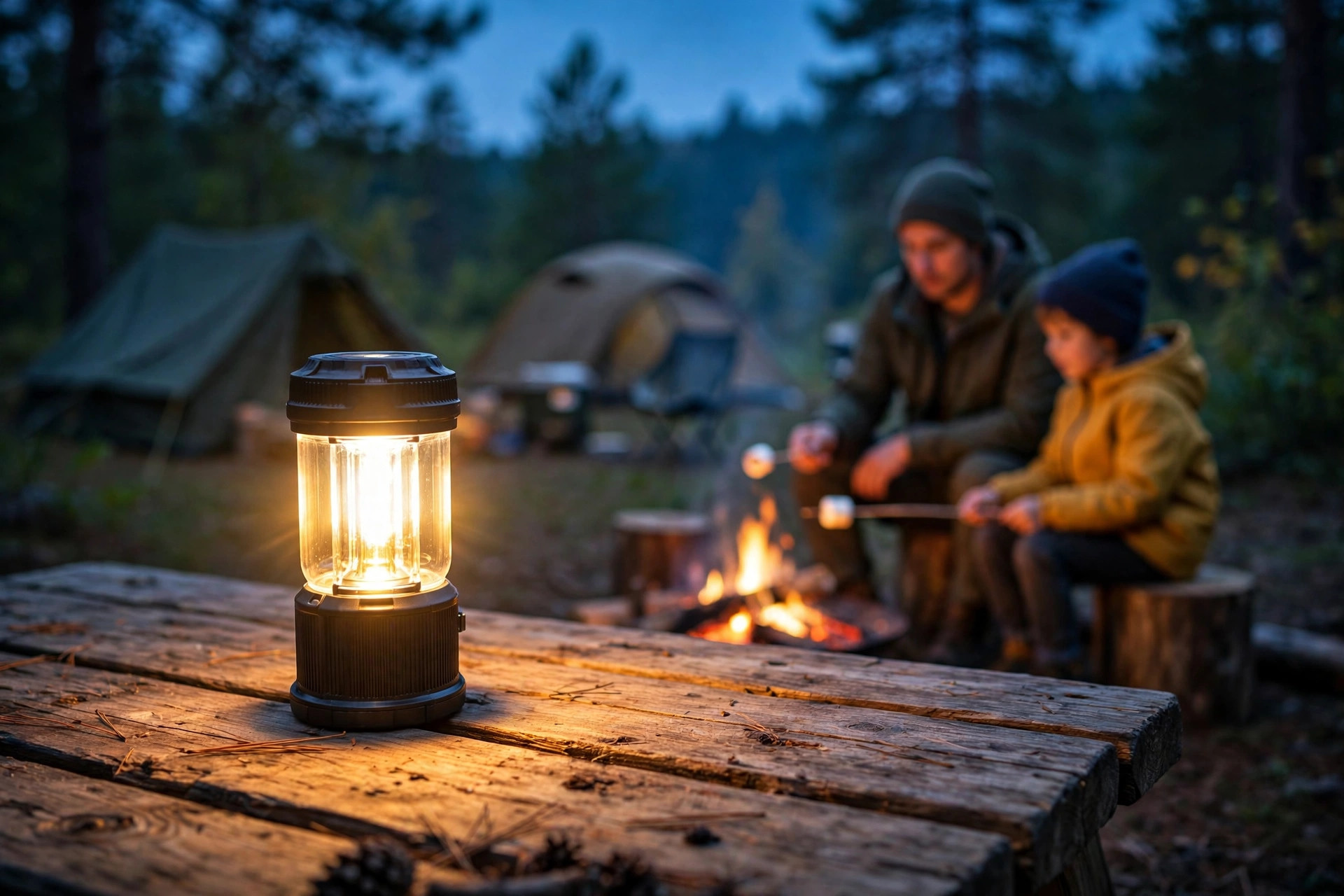
When the sun drops behind the treeline and your campsite dissolves into blue shadow, one question separates a relaxed family evening from a chaotic one: who gets the light? Headlamps vs lanterns is one of the most debated gear choices in family camping, and after years of watching kids trip over tent guylines, spill cocoa, and panic on midnight bathroom runs, I can tell you this — you need both, but in the right roles. This guide compares headlamps and lanterns head-to-head, then shows you the exact campsite lighting setup that works for toddlers, school-age kids, and teens, so everyone stays safe, visible, and (mostly) clean.
Why Campsite Lighting Matters More With Kids
Adults can navigate a dark campsite by memory and moonlight. Kids cannot — and should not have to. A proper lighting plan prevents the three most common nighttime camping mishaps with children: trips and falls, kids wandering off the site boundary, and the 2 a.m. bathroom emergency that ends in tears. Good light also protects the night itself: the National Park Service’s night skies program reminds us that artificial light affects wildlife and other campers, so lighting should be targeted, warm, and dimmed when possible. If you are still assembling your overall kit, our family camping checklist of 47 essentials covers every category beyond lighting.
Headlamps: The Hands-Free Workhorse
A headlamp puts a directed beam exactly where the wearer looks, keeping both hands free for setting up tents, holding a toddler’s hand, cooking dinner, or carrying a sleeping child back to the tent. For parents, a headlamp is non-negotiable. For kids, it is a rite of passage — and a surprisingly good teaching tool for night awareness.
Pros of Headlamps for Families
- Hands stay free. The single biggest advantage. Cooking, tent setup, diaper changes, and midnight first aid all require two hands.
- Light goes where you look. A child with a headlamp naturally scans the trail ahead, which builds good nighttime habits.
- Extremely packable. Most weigh under 3 ounces and disappear into a jacket pocket or pack lid.
- Great for walking and hiking. Trails, campground roads, and bathroom runs are far safer with a personal beam.
- Red-light modes. Many models include a red LED that preserves night vision and disturbs wildlife and neighbors far less than white light.
Cons of Headlamps
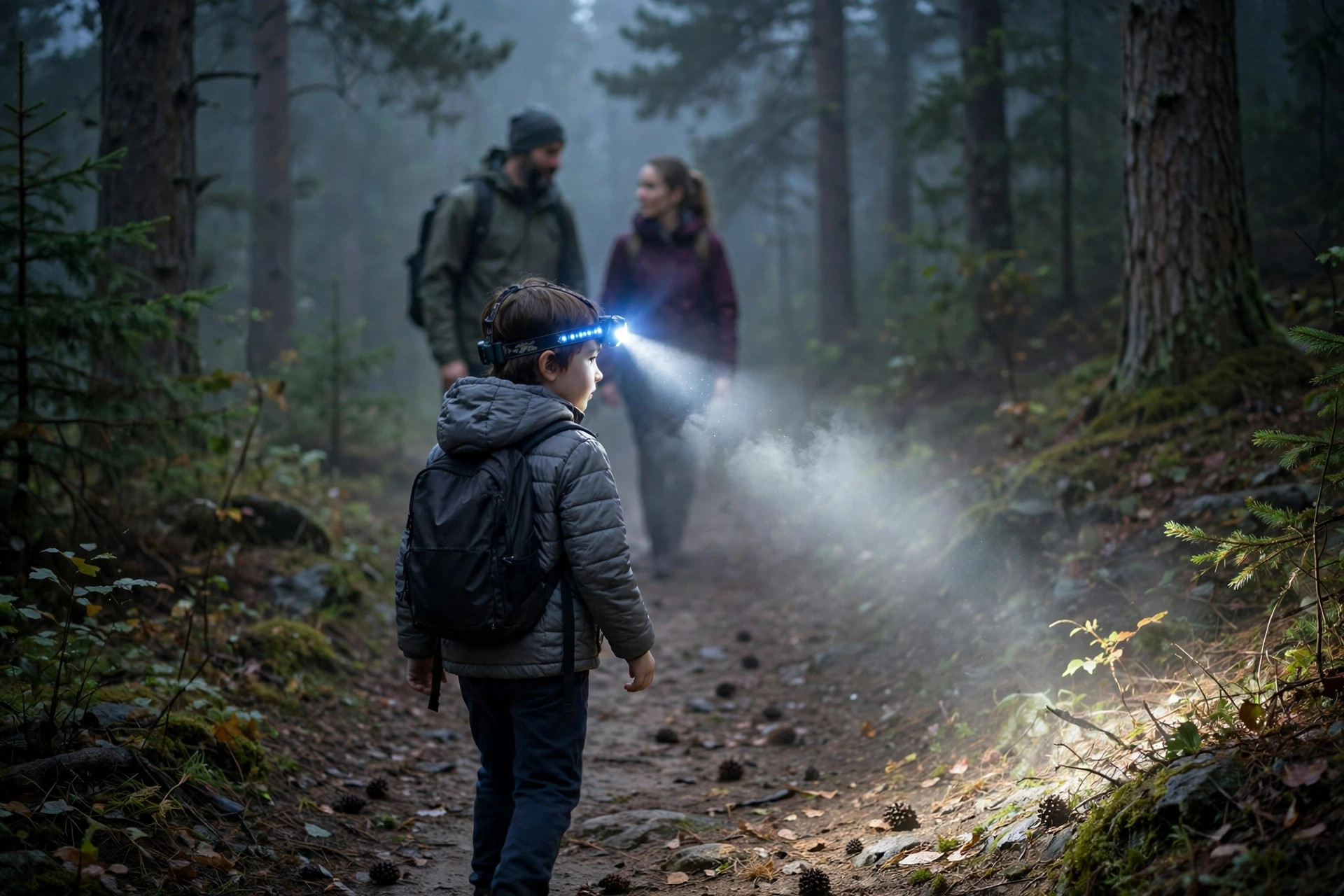
- Blinding the group. Kids forget to turn their beams down and flash everyone in the face. Expect this constantly until about age eight.
- Too directional for hangout time. A beam aimed at someone’s eyes is not ambient campfire light — headlamps make conversation awkward in a circle.
- Tiny controls, small hands. Some models have fiddly buttons and mode cycles that frustrate young kids.
- Comfort issues. Elastic bands slip on small heads, and long wear can cause pressure complaints, especially on toddlers.
Lanterns: The Campsite Glow Everyone Gathers Around
A lantern is your campsite’s sun. Hang one over the picnic table or set it in the tent’s gear loft and the whole family can see what they are eating, reading, and stepping on — without anyone aiming a beam at anyone’s face. Lanterns are the social light source; they define the boundary of “camp” for kids and anchor them psychologically after dark.
Pros of Lanterns for Families
- Ambient, shared light. Everyone benefits at once — no one is left in the dark while the beam-holder looks away.
- Sets the camp boundary. Kids understand instinctively: inside the lantern’s glow is safe camp; beyond it is “take a light with you” territory.
- Dimmable and warm. Most modern lanterns offer warm-white modes and brightness steps, which are kinder for pre-bedtime wind-down than harsh beams.
- Multi-use designs. Many lanterns double as power banks for phones, include flashlight modes, or collapse flat for packing.
- No headband complaints. Ideal for toddlers who rip headlamps off in thirty seconds flat.
Cons of Lanterns
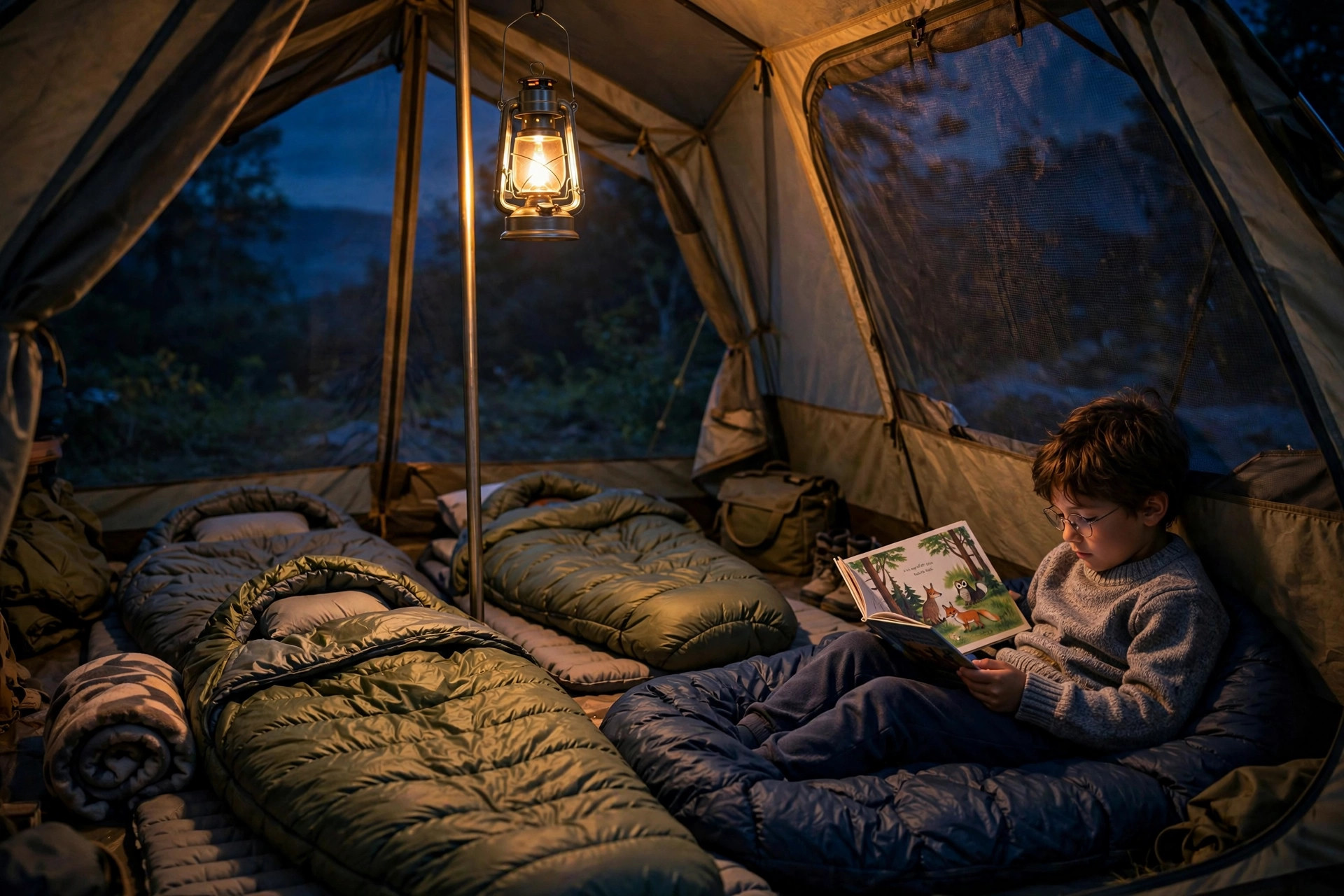
- Bulky to pack. Even compact lanterns take more space than a headlamp — a real cost on backpacking-style trips.
- Stationary by nature. A lantern cannot go with you to the bathhouse or follow a wandering toddler.
- Attracts insects. Bright lanterns pull in moths and mosquitoes, which is why many families switch to dimmer warm modes after dusk.
- Shadows in big groups. One lantern in the middle of a six-person site leaves the edges — where kids’ toys and shoes live — in shadow.
Headlamps vs Lanterns: Side-by-Side Comparison
Here is how the two stack up across the factors that matter most to camping families:
| Factor | Headlamp | Lantern | Winner for families |
|---|---|---|---|
| Hands-free use | Yes — full use of both hands | No — must be carried or placed | Headlamp |
| Sharing light with the group | Poor — beam follows one person | Excellent — 360° ambient glow | Lantern |
| Pack size and weight | Tiny (2–3 oz) | Bulky (8–16 oz) | Headlamp |
| Battery runtime | Good on low modes (50+ hrs) | Very good on low (100+ hrs on some) | Lantern |
| Red-light / night-vision mode | Common on mid-range models | Rare; dimming is the usual option | Headlamp |
| Toddler-friendliness | Low — falls off, hard to aim | High — passive, no wearing needed | Lantern |
| Trail walking / bathroom runs | Ideal | Useless (stays at camp) | Headlamp |
| Stargazing friendliness | Excellent with red mode | Okay if dimmed to lowest | Headlamp |
| Cost per unit | $15–$40 typical | $20–$60 typical | Headlamp |
The verdict is clear: headlamps win for movement, lanterns win for living. The families who struggle with campsite lighting are almost always the ones who bought only one of the two.
The Best Lighting Setup for Every Age Group
Toddlers and Preschoolers (Ages 2–5)
Skip the headlamp as a primary tool — toddlers pull them off, lose them in the dirt, and shine them into their own siblings’ eyes. Instead, anchor your site with two lanterns: one at the picnic table and one inside the tent’s gear loft or hanging from the rainfly. Add a string of warm LED fairy lights around the tent door or awning; these are magical for little kids, weigh almost nothing, and create an unmistakable “home base” glow they can see from anywhere on the site. If a toddler insists on wearing a headlamp like the big kids, buy a cheap one and let them — it is a toy at this age, not a tool. Pair your lighting with a calm evening cooking setup; our camp stove comparison covers which models are safest to run around small children after dark.
School-Age Kids (Ages 6–11)
This is the sweet spot for headlamps. Kids this age can wear one comfortably for hours and are old enough to learn the three rules: point it at the ground when talking to people, switch to red mode in camp, and turn it off when you are not using it. Give each school-age child their own headlamp with simple controls (one button, three modes max) and lock it to a low or medium setting. Keep the lantern as the social anchor — dinner, games, and story time happen under its glow, and the headlamps handle everything personal: reading in the tent, finding shoes, and bathroom runs. This is also the age to start night-sky education, which is far better under minimal light; the darker your site discipline, the more stars they will see.
Teens and Adults
Outfit each teen and adult with a quality headlamp with red mode and a lock function (prevents accidental activation in the pack). One shared lantern per four people is plenty at this stage, plus one extra for the cooking area. Teens love headlamps because they enable independence — sunset hikes back to camp, solo bathroom runs, late-night card games in the tent — so teach them the same night etiquette you would expect of adults: dim around camp, red mode after lights-out, and never sweep a beam across another site. If your family hikes after dark, our lost-hiking safety plan is worth reviewing, since most after-dark disorientation incidents start with poor lighting.
How to Buy: Lumens, Batteries, and Red-Light Mode
Shopping for family lights is simpler than the packaging makes it look. Here is what actually matters:
- Lumens: 150–350 is the family sweet spot. Anything above 400 lumens is overkill for camp and will blind everyone nearby. High-output “turbo” modes are marketing, not usefulness — you will live on the 50–150 lumen medium modes.
- Battery type: rechargeable for parents, AA/AAA for kids. USB-rechargeable headlamps save money long-term, but when a kid’s light dies mid-trip, swapping in spare AAs beats hunting for a power bank. Keep both types on hand.
- Red-light mode is worth paying for. Red LEDs preserve night vision, disturb insects and wildlife less, and keep the peace in crowded campgrounds. Prioritize it on every headlamp you buy.
- Lockout mode prevents dead batteries. Buttons get pressed in packed bags. A model with a hold-to-lock function arrives at the campsite with a full charge instead of a drained one.
- Warm white beats cool white. Cool-white LEDs (6000K+) feel harsh and clinical at camp and attract more insects. Warm white (2700–3000K) feels like firelight and keeps the evening calm.
- Water resistance: IPX4 minimum. Dew, condensation, and surprise rain are guaranteed. IPX4 (splash-proof) is the floor; IPX7 (submersion) is a bonus for clumsy kids.
- For lanterns: prioritize dimming range and runtime. A lantern that goes from 10 lumens (tent wind-down) to 400+ (table cooking) and runs 100+ hours on low will serve you for years.
Campsite Lighting Safety Rules for Families
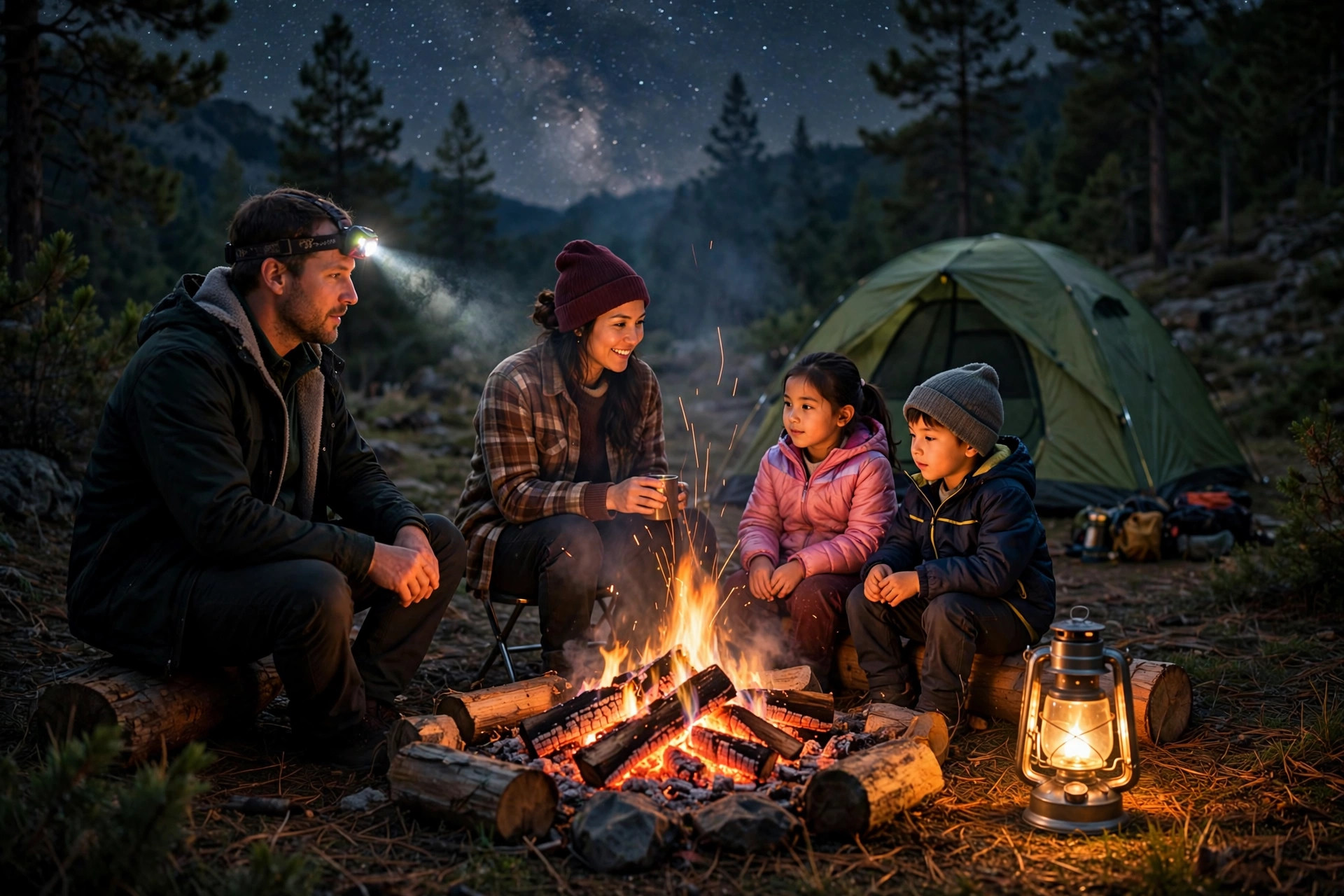
- Never use an open-flame light as a primary source around kids. Candles and gas lanterns have their place, but not within reach of toddlers. LED is the family default.
- Light the trip hazards, not just the table. Guylines, tent stakes, cooler corners, and the cooler itself (see our cooler guide for setup tips) are what kids actually trip over. A low lantern near the ground beats a bright one on the table.
- One beam per person on trails — no exceptions. Walking single-file at night, the last person should also run a light so nobody steps into darkness between beams.
- Practice the “red after eight” rule. Switch every light to red mode or its dimmest setting by 8 p.m. It teaches kids light discipline, respects neighboring sites, and makes stargazing dramatically better.
- Store lights inside the tent at night. Dew and curious raccoons both love unattended gear. A headlamp left on the picnic table is a dead headlamp by morning.
- Pack spares, not hope. Bring one more light source than the number of people. Batteries: one full spare set per light, plus a small power bank for rechargeables.
A final etiquette note: your light is your neighbors’ light too. Bright beams sweeping across adjacent sites at 10 p.m. are the fastest way to earn a campground reputation. Dim it, aim it down, and teach your kids that Leave No Trace includes light pollution — the official seven principles apply after dark just as much as by day. If you are reserving a site for your next trip, Recreation.gov is the main booking portal for federal campgrounds.
Frequently Asked Questions
How many lumens does a kid’s headlamp really need?
For campsite use, 50–150 lumens is plenty. Anything over 300 lumens will mostly be used to blind siblings. Reserve higher outputs for teens or adults who night-hike — and even they rarely need more than 350 lumens in practice.
Are headlamps safe for toddlers?
As a toy, yes; as a tool, not really. Toddlers cannot aim beams responsibly and often pull bands off or chew on them. Use lanterns and string lights as the primary lighting for children under five, and treat any headlamp as supervised play.
Can I just use my phone flashlight instead?
For one quick trip to the car, sure. For a whole evening, no — phones drain fast, occupy a hand, and produce harsh white light with no red mode. A dedicated headlamp costs less than a campsite pizza and works far better.
How do I stop my kids from blinding everyone with their headlamps?
Buy single-button models with no more than three modes, set them to low before the trip, and enforce the “ground when talking” rule from the first night. Red-light mode helps enormously — make it the default camp setting and the problem mostly disappears.
What is the best lantern type — battery, rechargeable, or solar?
For car camping, USB-rechargeable lanterns with a power-bank function are the best all-rounders. Battery models are fine as backups. Solar-only lanterns charge too slowly to be a primary light on cloudy trips, so treat them as a supplement, not the plan.
How long do lantern batteries actually last on a family trip?
On low and medium modes, most modern LED lanterns run 30–100+ hours — easily a week of evenings. The battery killer is high mode: running a lantern at full brightness can drain it in under 10 hours. Live on the dim end and carry one spare set or a power bank.
The bottom line for families: a lantern makes the campsite, a headlamp makes the camper. Buy both, assign them the right jobs, teach your kids the etiquette early, and your evenings will belong to stories, s’mores, and stars instead of stumbles and squabbles. Happy camping!
