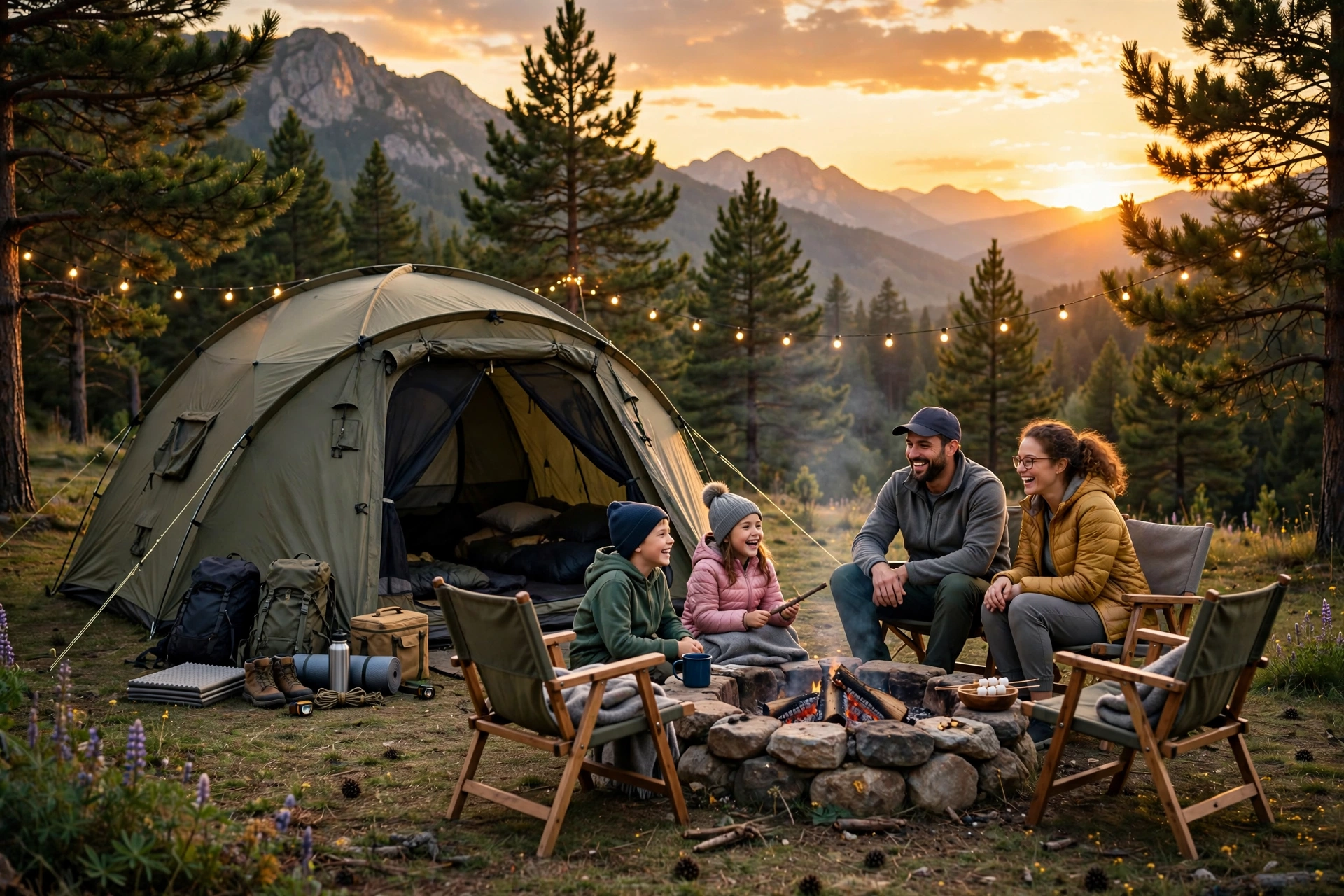
Packing for your first family camping trip can feel overwhelming. The internet is full of giant gear lists, but most of them either assume you already know what you’re doing or recommend thousands of dollars in equipment for a two-night stay. As a mom who has camped with babies, toddlers, and wiggly school-age kids, I wrote this family camping checklist to cut through the noise: 47 essentials that families actually use, with honest notes on what you can borrow, rent, or skip until your second trip.
Before you dive in, grab the complete picture of what goes in the bags with our complete camping packing guide — it pairs perfectly with the category-by-category breakdown below. If this is your very first time sleeping outdoors, also skim our roundup of first-time camping mistakes with kids so you don’t learn them the hard way.
How to Use This Family Camping Checklist
Think of this list in three layers. Non-negotiables are the items that affect safety and sleep — shelter, sleep system, water, food, first aid. Comfort upgrades are the things that turn “surviving” into “enjoying” — camp chairs, a real kitchen setup, lighting. Kid-specific items are the small things (like a familiar blanket or extra shoes) that prevent midnight meltdowns.
Check current availability on Recreation.gov, the official reservation system for federal campgrounds and national parks.
Shelter and Tent Setup (9 Essentials)
Your tent is your home base, and choosing the right one matters more for families than for solo campers. Kids need space to sprawl, and everyone needs a dry place to wait out a rain shower.
- Family tent (6-person for a family of 4). Size up by two people over your actual headcount — that “6-person” label means six sleeping bags touching edge to edge. A bigger tent buys you rainy-afternoon sanity.
- Tent footprint or ground tarp. A custom-fit footprint protects the tent floor from rocks and moisture. A cheap blue tarp works too, but fold it so it doesn’t stick out past the tent walls.
- Mallet for stakes. Rocks work, mallets work better. Bring it — rocky campground soil will destroy a sandal-and-rock situation.
- Extra stakes and guylines. At least four spares. Stakes disappear into the ground and get left behind constantly.
- Rainfly (with the tent, not separate). Never buy a tent without one. A separate rainfly is not optional for family camping.
- Tent repair kit. Seam sealer, a patch of ripstop nylon, and a spare pole sleeve weigh almost nothing and have saved more than one trip I know.
- Door mat or entry rug. A cheap doormat at the tent entrance cuts the amount of dirt, pine needles, and sand that ends up in sleeping bags by roughly half.
- Camp canopy or shade shelter. If your site lacks trees, a 10×10 pop-up canopy gives you a shaded “living room” for meals and naps.
- Duct tape (wrapped around a water bottle). Fixes tent poles, ripped tarps, broken camp chairs, and the occasional toy.
Sleep System (6 Essentials)
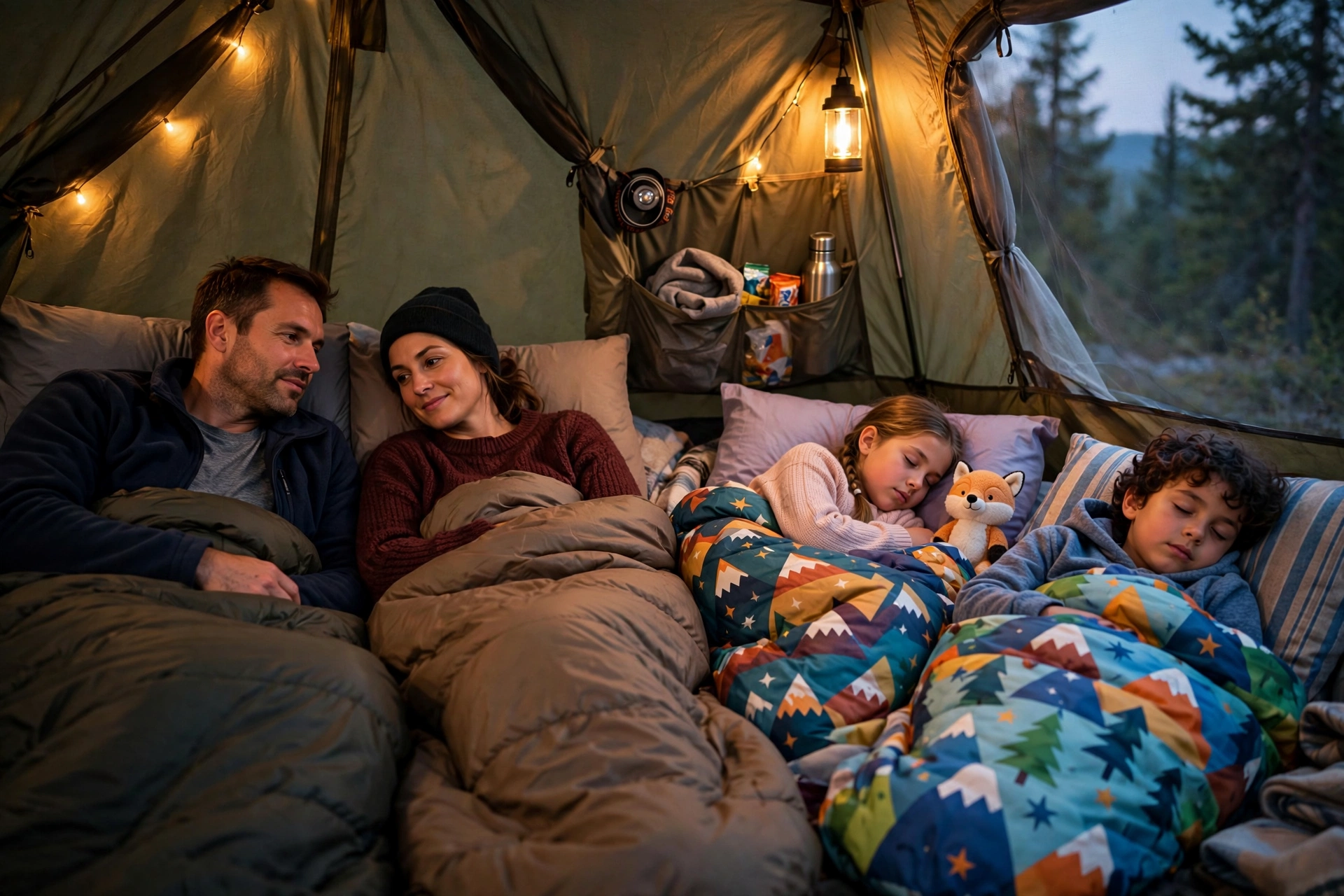
Cold, uncomfortable nights are the #1 reason families quit camping after one trip. The sleep system is where your money should go first — and good news: you don’t need the most expensive bag, you just need the right warmth rating for your season.
- Sleeping bags rated for the season. Check the “comfort” rating, not the “limit” rating. For summer camping, a 30–40°F bag is fine; spring and fall usually call for 15–20°F. Kids’ bags should follow the same rule.
- Insulated sleeping pads. A pad matters as much as the bag — it insulates you from the cold ground. Self-inflating pads or thick foam pads are great for kids who roll off narrow air mattresses.
- Pillows. Bring the real ones from home for the first trip. Camping pillows are fine, but familiar pillows help kids fall asleep in a new place.
- Fitted sheet over the pads. A flat sheet draped over sleeping pads keeps them together, adds a clean surface for toddlers, and makes the whole setup feel more bed-like.
- Extra blankets. One per child, minimum. Kids throw blankets off in their sleep, and nighttime temperature drops catch everyone by surprise.
- Battery-powered fan. A small clip-on fan moves air on hot nights and provides white noise. Campers with toddlers swear by these.
Camp Kitchen Essentials (10 Items)
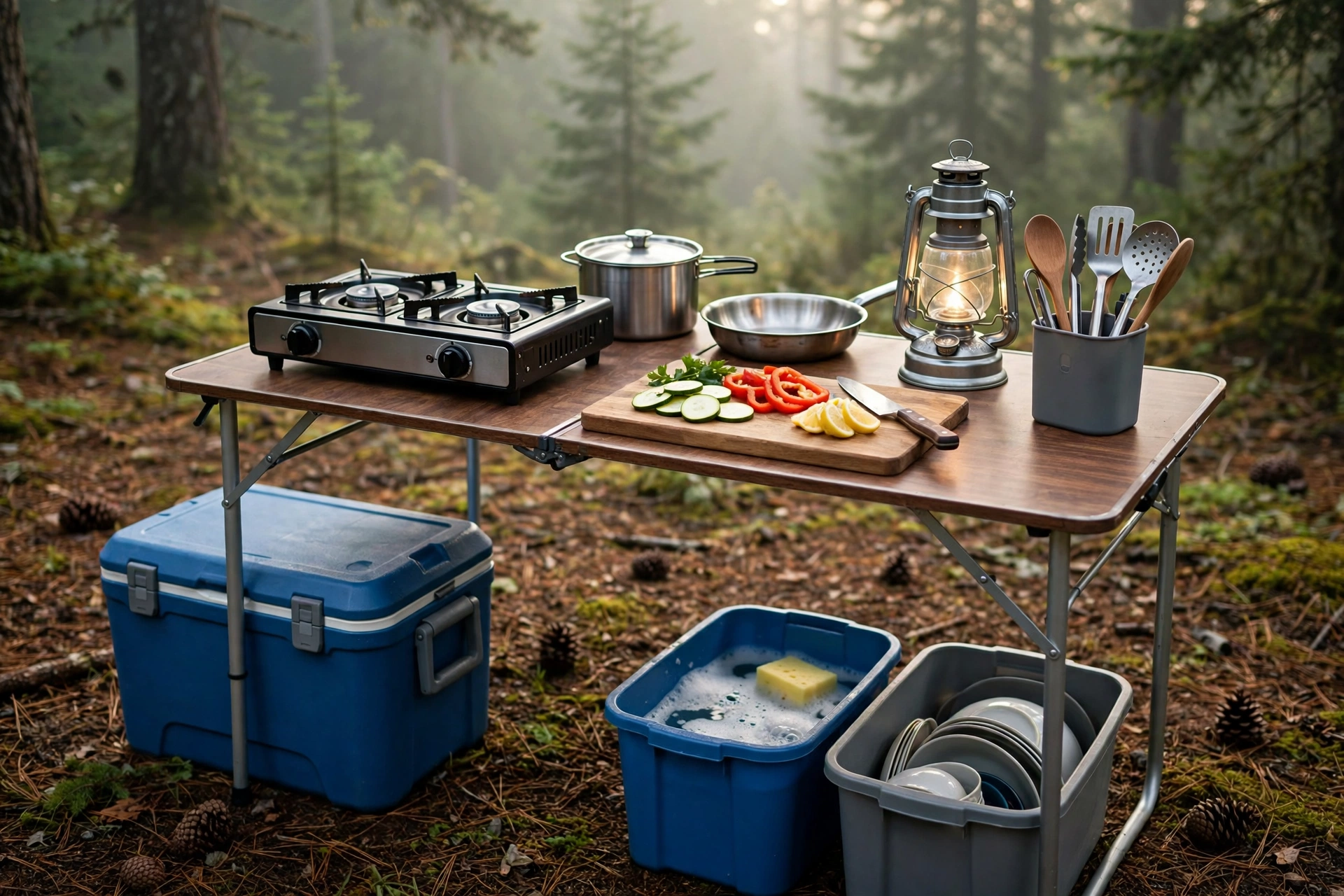
Feeding a family at camp is mostly about organization. Set up a real kitchen “station” — prep area, cooking area, wash area — and mealtimes stop being stressful.
- Two-burner camp stove. One burner is for cooking, one is for heating water or making coffee at the same time. Bring extra propane canisters.
- Cooler with ice. A hard-sided cooler keeps food safe for 2–3 days. Pre-chill it at home and freeze water bottles to double as ice packs and drinking water.
- Pots, pans, and a kettle. One large pot, one skillet, and a kettle cover 90% of camp cooking. Add a lid for everything.
- Cooking utensils. Spatula, tongs, a big spoon, a sharp knife, cutting board, and can opener. A dedicated camp kitchen box keeps them together.
- Dish bins (two). One bin for washing, one for rinsing. Add biodegradable camp soap, a scrub sponge, and a drying towel.
- Plates, cups, and cutlery for each person. Durable reusable sets beat paper plates for a family of four. Add one extra set for the inevitable guest or lost fork.
- Water jugs (at least 2 gallons per day per family). Even at sites with potable water, jugs save constant trips to the spigot.
- Coffee and tea setup. Parents need this. A pour-over cone, press, or instant packets — whatever your routine, don’t skip it.
- Food storage containers and bags. Sealable bins keep critters out of snacks and protect against raccoons. In bear country, use the campground’s food lockers.
- Meal plan. Write it down. Our 3-day family camping meal plan includes a shopping list and no-cook lunch ideas that make camp life dramatically easier.
Clothing and Layers (7 Essentials)
The golden rule of camping clothing: layers, layers, layers. Temperatures swing 30 degrees between afternoon and 3 a.m. in most mountain campgrounds, and kids can’t regulate temperature as well as adults.
- Base layers (merino wool or synthetic). One set per person per two days. Merino wool resists odor, which means fewer clothes packed. REI’s camping clothing guide has a great layering chart if you’re new to it.
- Mid-layer fleece or puffy jacket. For everyone. This is the layer that actually keeps you warm around the evening campfire.
- Rain jacket and rain pants. Even if the forecast says 0% chance. Kids with wet clothes get cold fast, and hypothermia is a real risk even in summer at altitude.
- Warm hat and gloves. You lose more heat from your head than you’d think, and gloves keep little hands comfortable around the fire ring.
- Sturdy closed-toe shoes plus camp sandals. Hiking shoes or sneakers for the day, easy slip-on sandals for campsite life and bathroom runs at night.
- Extra socks and underwear. Pack double what you think you need. Dry socks fix almost every bad mood.
- Pajamas (not daytime clothes). Changing into clean sleep clothes keeps sleeping bags clean and signals bedtime for kids.
Kids-Specific Gear (5 Essentials)
The difference between a trip the kids remember fondly and one they remember as “the time we were cold and bored” usually comes down to a handful of small items. If you’re camping with a baby, read our full tent camping with a baby guide for the complete newborn-to-toddler setup.
- Their own headlamp. Kids adore headlamps. It keeps their hands free, keeps them visible after dark, and turns nighttime bathroom trips into an adventure.
- Familiar sleep item. A lovey, blanket, or stuffed animal. Non-negotiable. New sleeping location plus no lovey equals a very long night.
- Portable potty or travel toilet. For toddlers in potty training, a portable potty at the tent beats a 2 a.m. trek to the campground bathrooms.
- Entertainment kit. Coloring books, card games, a nature scavenger hunt list, and one “quiet box” activity per child for downtime. Keep screens as a backup plan, not the plan.
- Kid-sized camp chair. Kids want a seat that’s theirs. Adult chairs swallow small kids and tip them over.
Safety and First Aid (6 Essentials)
Safety gear is boring to buy and invaluable when you need it. Most of these live permanently in our camp bin so we never forget them.
- Comprehensive first aid kit. Bandages, gauze, antiseptic wipes, tweezers (for ticks and splinters), antihistamines, children’s pain reliever, and any personal medications. Restock after every trip.
- Headlamps and lanterns for everyone. One light source per person. A bright area lantern for the cooking station plus headlamps for the tent.
- Fire safety kit. A bucket of water near the fire at all times, a small fire extinguisher or camp shovel, and matches/lighters in a waterproof container.
- Sunscreen and insect repellent. SPF 30+ and a kid-safe repellent. Reapply after swimming or heavy sweating. The National Park Service health and safety page is a solid refresher before any park trip.
- Whistle for each child. Three blasts is the universal distress signal. Kids find whistles fun, which means they’ll actually carry them.
- Paper map and compass (or downloaded offline maps). Cell service dies at most campgrounds. Download your area on your maps app before you leave home.
Camp Hygiene and Comfort (4 Essentials)
The small comforts that keep a family clean and happy without a bathroom two steps away.
- Biodegradable soap and hand sanitizer. For dishes and hands. Hand sanitizer at the kitchen station prevents half of all camp stomach bugs.
- Camp towels (quick-dry). Two per person. Quick-dry towels pack tiny and actually dry before morning.
- Toilet paper and a trowel. Even at campgrounds with bathrooms, carry both on hikes. Know the 200-foot rule: dig cat holes at least 200 feet from water, trails, and camps.
- Trash bags (multiple sizes). Pack it in, pack it out. Large bags for camp trash, small bags for day hikes, and one dedicated bag for recycling.
Family Camping Checklist at a Glance
Here’s the full 47-item list in one scannable table. Screenshot it for your phone before you leave.
| Category | Items | Count |
|---|---|---|
| Shelter & Tent Setup | Tent, footprint, mallet, extra stakes, rainfly, repair kit, entry mat, canopy, duct tape | 9 |
| Sleep System | Sleeping bags, pads, pillows, sheet, extra blankets, fan | 6 |
| Camp Kitchen | Stove, cooler, pots/pans/kettle, utensils, dish bins, tableware, water jugs, coffee setup, food storage, meal plan | 10 |
| Clothing & Layers | Base layers, mid-layer, rain gear, hat/gloves, shoes + sandals, extra socks/underwear, pajamas | 7 |
| Kids’ Gear | Headlamp, sleep lovey, portable potty, entertainment kit, kid chair | 5 |
| Safety & First Aid | First aid kit, lights, fire kit, sunscreen/bug spray, whistles, map/compass | 6 |
| Hygiene & Comfort | Soap/sanitizer, camp towels, TP + trowel, trash bags | 4 |
Frequently Asked Questions
What size tent does a family of 4 need?
Buy a 6-person tent. Tent capacity ratings assume sleeping bags edge to edge with zero extra space, so a “4-person” tent is a tight squeeze for two adults and two kids plus any gear. The extra room in a 6-person tent is what lets you survive a rainy afternoon without losing your mind.
What do kids actually sleep on when camping?
The same setup as adults: an insulated sleeping pad plus a season-appropriate sleeping bag. A self-inflating pad with a real R-value (3+ for three-season camping) plus their own pillow and a familiar blanket is the formula that works.
How far in advance should I book a family campsite?
For popular campgrounds in summer, book as early as the reservation window allows — many federal sites on Recreation.gov open 6 months ahead and sell out within hours for weekends. For off-season or midweek trips, 2–4 weeks is often plenty. State park systems each have their own windows, so check the specific park’s site.
What should I do if it rains the whole trip?
First, don’t panic — rain with kids is manageable if you’re prepared. Make sure your rainfly is taut and guyed out, keep everything off the tent floor edges, and have a “rain plan” of card games, coloring, and a dry canopy area for cooking. Wet clothes go in a stuff sack outside the sleeping area. Honestly, some of our best camp memories are rainy-day ones.
Are campfires safe with young kids?
Yes, with clear rules: a grown-up always at the fire, a bucket of water within reach, and a “fire circle line” that kids know not to cross. Teach kids to stop, drop, and roll, and never let them play near a fire pit after dark. When you’re done, drown the fire with water until the coals are cold to the touch — not just “not flaming,” actually cold.
Your first family camping trip doesn’t need to be perfect — it just needs to be safe, warm, and fed. Pack this checklist, borrow the big-ticket items if you can, and go. You’ll learn what your family actually uses (and what stays in the bag) on trip one, and trip two gets dramatically easier. Happy camping!

1 comment
[…] made with just three workhorses, plus a few basics. If you’re still building your kit, our family camping checklist covers everything a beginner family actually needs — and nothing you […]