Feeding a family at a campsite sounds simple until you are standing in a supermarket aisle wondering how much milk fits in a cooler, whether anyone will actually eat the chilli, and what lunch is supposed to be on day two. A written family camping meal plan removes all of that stress. You shop once, pack once, and at the campsite you already know what every meal is — which means less time cooking and cleaning, and more time doing the parts of camping your kids will actually remember.
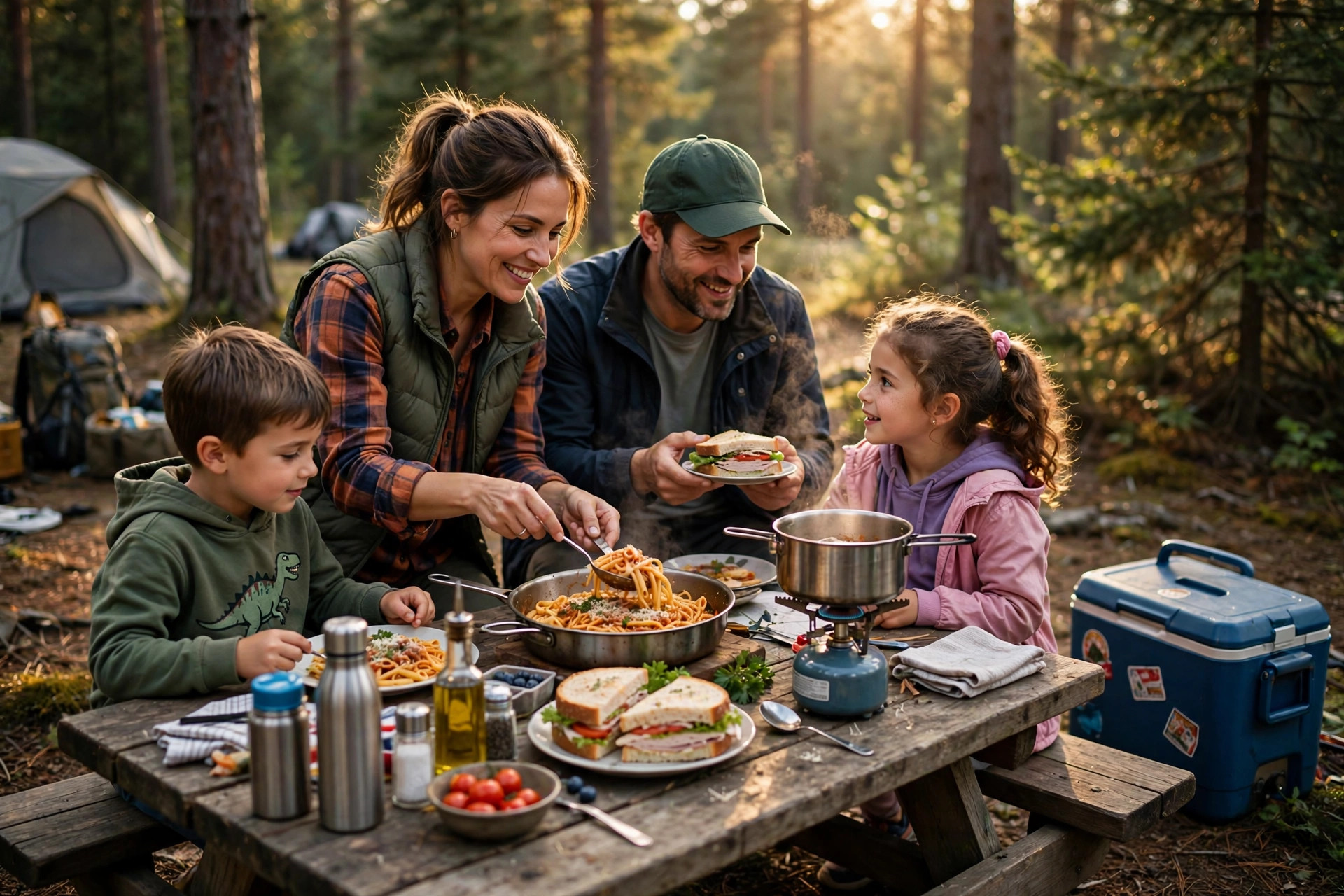
This plan covers three full days for a family of four: three breakfasts, three lunches, three dinners, plus snacks and drinks. Every meal is realistic campsite food. Nothing here needs an oven, most of it cooks on a two-burner stove or over a campfire grate, and the ingredients are used across several meals so very little goes to waste.
How This Meal Plan Works
The plan follows three simple rules that experienced camping families swear by. First, cook once, eat twice: dinner leftovers become tomorrow's lunch wherever that is safe and sensible. Second, front-load the fresh food: meals with fresh meat and soft produce happen on days one and two, while day three leans on hardier ingredients that keep well in a cooler. Third, every day has a no-cook backup: wraps, cheese, fruit and snacks that can become an emergency meal if the weather turns, the stove fails, or everyone is simply too tired to cook.
If your crew includes a toddler, build their portions into the same meals rather than cooking separately. Most dishes below can be served deconstructed — plain pasta beside the sauce, soft-cooked vegetables, shredded cheese — so little ones eat what you eat, in a form they can manage. Our guide to camping with toddlers essentials covers the feeding gear, bibs and spill-proof cups that make mealtimes calmer.
Food Safety Rules That Shape the Plan
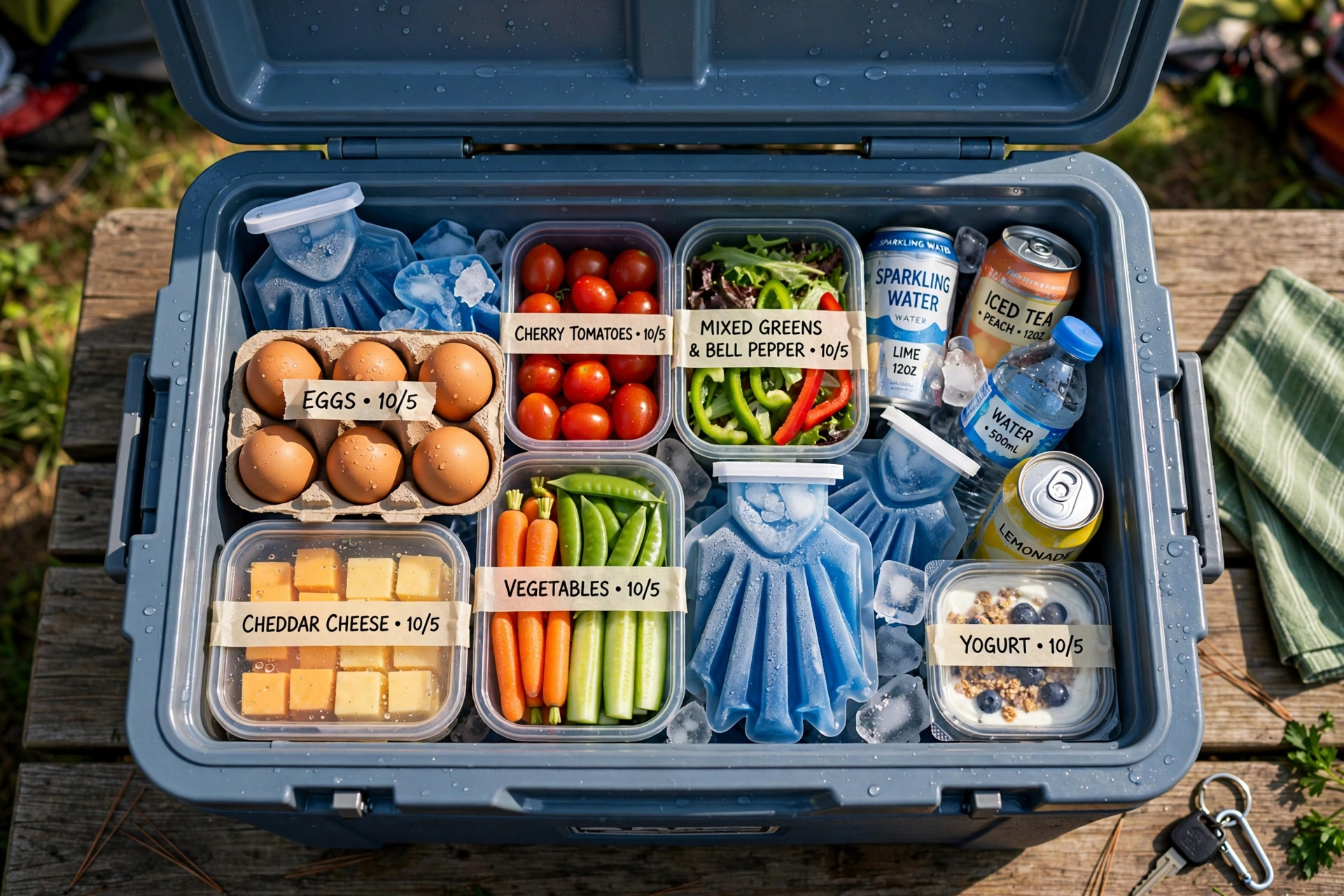
A meal plan is only a good plan if the food is still safe to eat on day three. Keep your cooler at or below 40°F (4°C) and use a cheap fridge thermometer so you are checking the temperature, not guessing. The guidance at FoodSafety.gov is clear on the basics: keep raw meat sealed and packed at the bottom of the cooler, keep the lid closed as much as possible, and throw away perishable food that has sat in warm temperatures for more than two hours — one hour on a very hot day.
A few habits make this easy:
- Freeze meat, sauces and water bottles at home; they thaw slowly and keep everything else cold
- Pack the cooler in reverse order, with day-three food at the bottom and day-one food on top
- Use two smaller coolers if you can — one for drinks that gets opened constantly, one for food that stays shut
- Cook burgers, sausages and chicken until there is no pink left, and reheat leftovers only once, until steaming hot
- Wash hands with soap before cooking and eating; at a campsite this one habit prevents most stomach bugs
The USDA food safety guidance also recommends keeping hot food hot and cold food cold during serving, rather than leaving dishes sitting out while everyone grazes. Serve, eat, and pack leftovers straight back into the cooler.
Day 1: Arrival Day — Keep It Easy
You will spend arrival day pitching the tent, inflating beds and finding the water tap, so day one food is deliberately the simplest of the trip.
| Meal | Menu | Notes |
|---|---|---|
| Lunch | Sandwiches made at home, crisps, apple slices | Eat on the road or straight after arrival |
| Dinner | Pasta with tomato and vegetable sauce, garlic bread, grated cheese | Sauce made at home and frozen; just reheat |
| Dessert | S'mores or toasted marshmallows | The official first-night ceremony |
| Snacks | Trail mix, bananas, cereal bars | Keep in the car for the drive |
Make the pasta sauce at home with onion, peppers, courgette and sweetcorn stirred through, then freeze it flat in a sealed bag. It doubles as a cooler ice block on the drive and reheats in one pot while the pasta cooks in another. Garlic bread wraps in foil and warms at the edge of the fire or in a dry frying pan. Serve toddlers the pasta with a little sauce and plenty of cheese, cut grapes and soft banana on the side, and keep a filled water cup within reach — new campers drink more than you expect on day one.
Day 2: The Big Adventure Day
Day two is usually the fullest day: a hike, a lake, or a beach, with hungry kids by lunchtime. Breakfast is filling, lunch is portable, and dinner is the trip's main cooked meal.
| Meal | Menu | Notes |
|---|---|---|
| Breakfast | Porridge with honey and berries, or scrambled eggs on toast | Porridge pots are the fast option |
| Lunch | Wraps with cheese, ham and cucumber, cherry tomatoes, yoghurt pouches | Pack in a small day cooler |
| Dinner | Burgers or sausages, corn on the cob, coleslaw, potato wedges | Cook over the fire or on the stove |
| Dessert | Baked bananas with chocolate buttons | Wrap in foil, warm until soft |
| Snacks | Rice cakes, raisins, cheese sticks, sliced pepper | Refill the snack bag every morning |
Porridge is the secret weapon of camping breakfasts: it is warm, cheap, filling, and you can stir in whatever each child likes. For lunch on the move, wraps beat sandwiches because they do not go soggy or fall apart in a backpack. Dinner is classic campsite food — burgers or sausages with corn wrapped in foil and cooked in the embers. Cut corn and sausages into small pieces for toddlers, let everything cool properly, and keep raw and cooked meat on separate plates, always.
Day 3: Use It Up Day
By day three the cooler holds the hardiest food, breakfast uses up the eggs and bread, and lunch is a picnic that clears the last fresh bits before the drive home.
| Meal | Menu | Notes |
|---|---|---|
| Breakfast | Eggy bread (French toast) with banana, or pancakes with jam | Uses up eggs, milk and bread ends |
| Lunch | Picnic of leftover cheese, wraps, coleslaw, fruit and flapjacks | Check everything smells and looks fresh |
| Dinner | Back home — not at camp | Plan an easy home dinner or a stop on the road |
| Snacks | Remaining cereal bars, dried fruit, crackers | Anything unopened travels home |
Eggy bread is perfect for day three because slightly tired bread soaks up egg beautifully, and kids who refused sandwiches all weekend will eat it warm with banana. If anything in the cooler looks or smells off by now, bin it without debate — no saved sandwich is worth a poorly child on the drive home. Families who want more simple ideas for the next trip will find plenty in our collection of the easiest camping meals for kids, most of which slot straight into a plan like this one.
Snacks and Drinks: The Part Everyone Underestimates
Hungry children do not care that dinner is in forty minutes. A dedicated snack bag, restocked each morning, prevents most campsite meltdowns. Aim for a mix of quick energy and slower fillers: bananas, apples, raisins, trail mix, cheese sticks, rice cakes, cereal bars and mini breadsticks all travel well. Our roundup of the best snacks for camping has more ideas sorted by age, including nut-free options for families who need them.
For drinks, water is the main event. Fill a large water container at the campsite tap and keep cups filled all day, especially after hikes. Add small juice cartons as a treat, milk for breakfasts and bedtime drinks, and tea or coffee for the adults — morale matters.
The Complete Shopping List
Shop once, using this list, for a family of four. Quantities assume two adults and two children with normal appetites; scale the proteins and bread up for older kids and teenagers.
| Category | Buy |
|---|---|
| Bread and wraps | 1 loaf of bread, 1 pack of tortilla wraps, 1 pack of burger buns, garlic bread |
| Dairy and eggs | 12 eggs, butter or spread, grated cheese, cheese sticks, sliced cheese, milk, yoghurt pouches |
| Meat | Burger patties or sausages for one dinner, sliced ham for wraps, bacon optional for breakfast |
| Fruit and vegetables | Bananas, apples, grapes, berries, cucumber, cherry tomatoes, peppers, corn on the cob, potatoes, onion, courgette |
| Store cupboard | Pasta, pasta sauce ingredients or a jar, porridge oats, honey, jam, cooking oil, salt and pepper |
| Snacks and treats | Trail mix, raisins, cereal bars, rice cakes, crisps, crackers, marshmallows, chocolate buttons, biscuits for s'mores |
| Drinks | Juice cartons, tea or coffee, hot chocolate sachets, squash if your kids prefer it |
| Camping essentials | Ice or ice packs, foil, food bags, bin bags, kitchen roll, washing-up liquid and a sponge |
Before you shop, run through a full packing list so the stove gas, matches and sharp knife are not forgotten alongside the food — our ultimate camping checklist covers the whole car in one pass.
Prep at Home Before You Leave
Thirty minutes of prep at home saves hours at the campsite. Make and freeze the day-one pasta sauce. Mix dry porridge oats with dried fruit in individual bags. Chop peppers and onions into a sealed tub. Marinade or portion meat into day-labelled bags and freeze them flat. Decant oil, salt and spices into small bottles — full-size containers waste space and leak dramatically at least once per family, per trip.
Pack a small camp kitchen box that never gets unpacked between trips: stove, gas, lighter, two pans, a chopping board, one good knife, a wooden spoon, plates, bowls, cutlery, mugs and a washing-up bowl.
Frequently Asked Questions
How much food do I need for 3 days of family camping?
For a family of four, plan three proper meals a day plus a full snack bag, and then add roughly one extra meal's worth of no-cook backup food. Kids eat more outdoors than at home — fresh air and activity see to that — so err on the side of too many snacks rather than too few. Unopened dry food simply travels home again.
How do I keep food cold for 3 days without electricity?
Start with a fully chilled cooler and frozen food and water bottles, keep it in the shade, and open it as rarely as possible — a separate drinks cooler helps a lot. Block ice lasts longer than cubes. Check the temperature with a fridge thermometer and top up with bought ice on day two if the campsite shop sells it. Food kept at or below 40°F (4°C) stays safe across the three days.
What are the easiest camping dinners for kids?
Pasta with a pre-made sauce, burgers or sausages with corn, and quesadillas are the three easiest wins. They cook fast, use few pans, and almost every child will eat at least one of them happily. Build your plan around dinners your kids already like at home; a campsite is not the place to launch new flavours.
Can I use this meal plan for a toddler?
Yes. Every dinner here can be served in a toddler-friendly form: soft pasta, shredded cheese, well-cooked vegetables cut small, and sausages or burgers cut lengthways into strips. Keep a familiar backup — a pouch, a banana, a yoghurt — for the evening your toddler decides that today is not a pasta day, and always offer water through the day.
What food should I avoid taking camping?
Skip anything that spoils quickly once opened, such as deli salads with mayonnaise that will sit warm, raw seafood, and large amounts of fresh milk for a long trip. Avoid glass jars where you can, because they are heavy and breakable, and leave strongly smelling food sealed — it keeps the tent and, in bear country, your whole site safer and more pleasant.
Make the Plan Yours
Print this family camping meal plan, cross out what your family will not eat, and write your own favourites in the gaps. That annotated copy is gold: it becomes the starting point for every future trip, so each outing needs less thinking than the last. Good campsite food is not about impressive cooking. It is about hot, safe, familiar meals appearing at the right moment — while you get to sit down, eat with your kids, and watch the light change over the trees.

1 comment
[…] them in the fresh air after eating. Let your preschooler help pack the food the night before; our 3-day family camping meal plan with shopping list has snack ideas that work perfectly for a spring […]