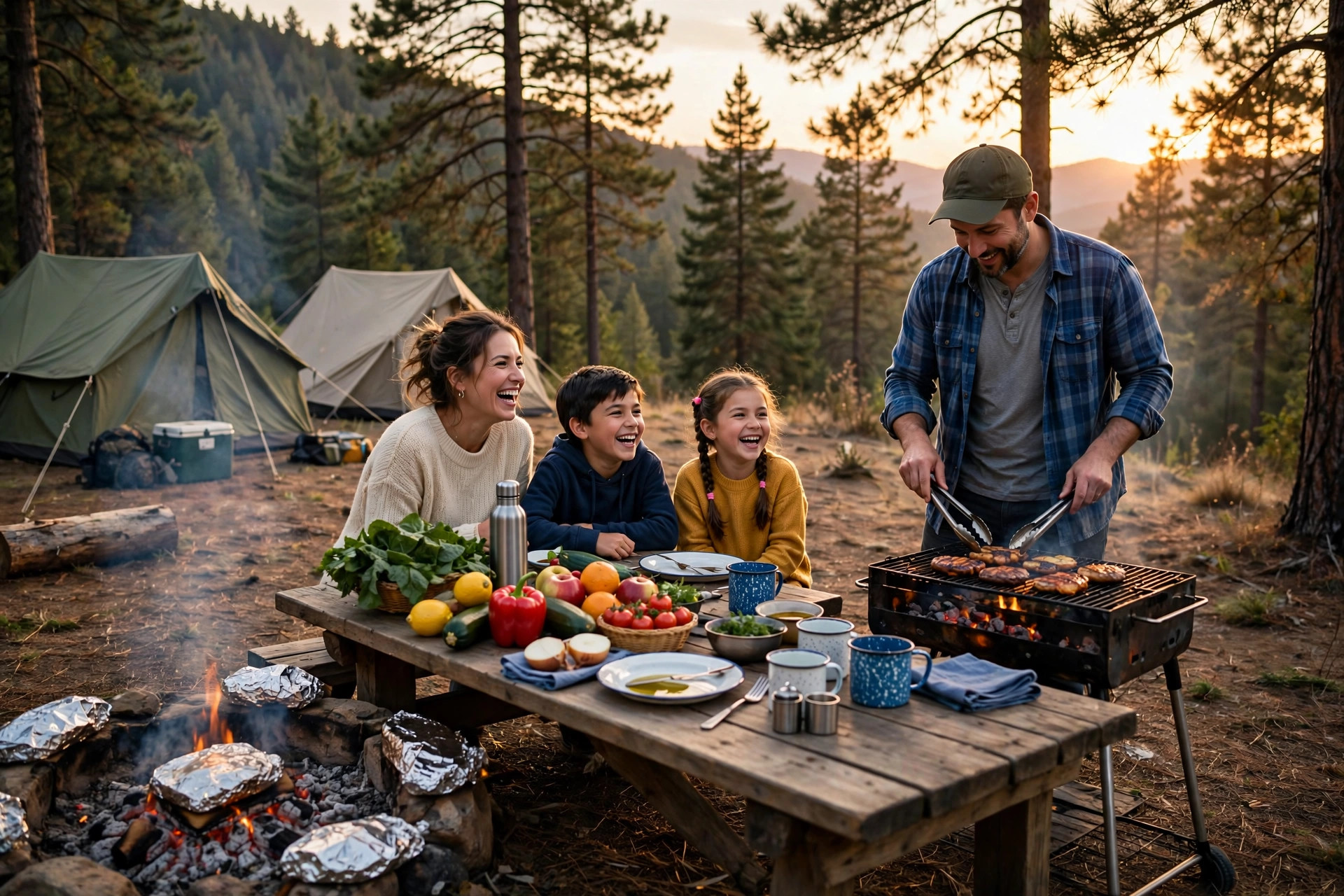
If you have ever stood in a hot campground at 6 p.m. with hungry kids circling and no idea what to make for dinner, this summer camping meal plan is for you. Feeding a family for a full week outdoors takes a plan that respects the heat, limited gear, and the fact that kids who hike all day need real food, fast.
This 7-day summer camping meal plan gives your family 21 meals and daily snacks with zero repeats — no duplicate breakfasts, lunches, or dinners all week. Every meal is built for real camp kitchens: one or two pots, a camp stove or campfire, and a cooler. Everything is kid-approved, heat-safe, and designed for under 30 minutes of active cooking.
Why a Meal Plan Matters More in Summer
Camping meal planning is always smart, but summer raises the stakes: warm weather shortens your food’s safe window, crowds out cooler space with ice, and makes heavy meals feel miserable after a long hike. A written plan solves all three at once:
- Less waste, more ice: you buy exactly what the plan needs, so the cooler holds ice instead of mystery leftovers.
- Faster dinners: when the day’s hike ends, hungry kids get fed in 20 minutes instead of 45 — which also means fewer meltdowns.
- Safer food: the plan keeps perishable meals early in the week and shifts to shelf-stable options as the ice dwindles.
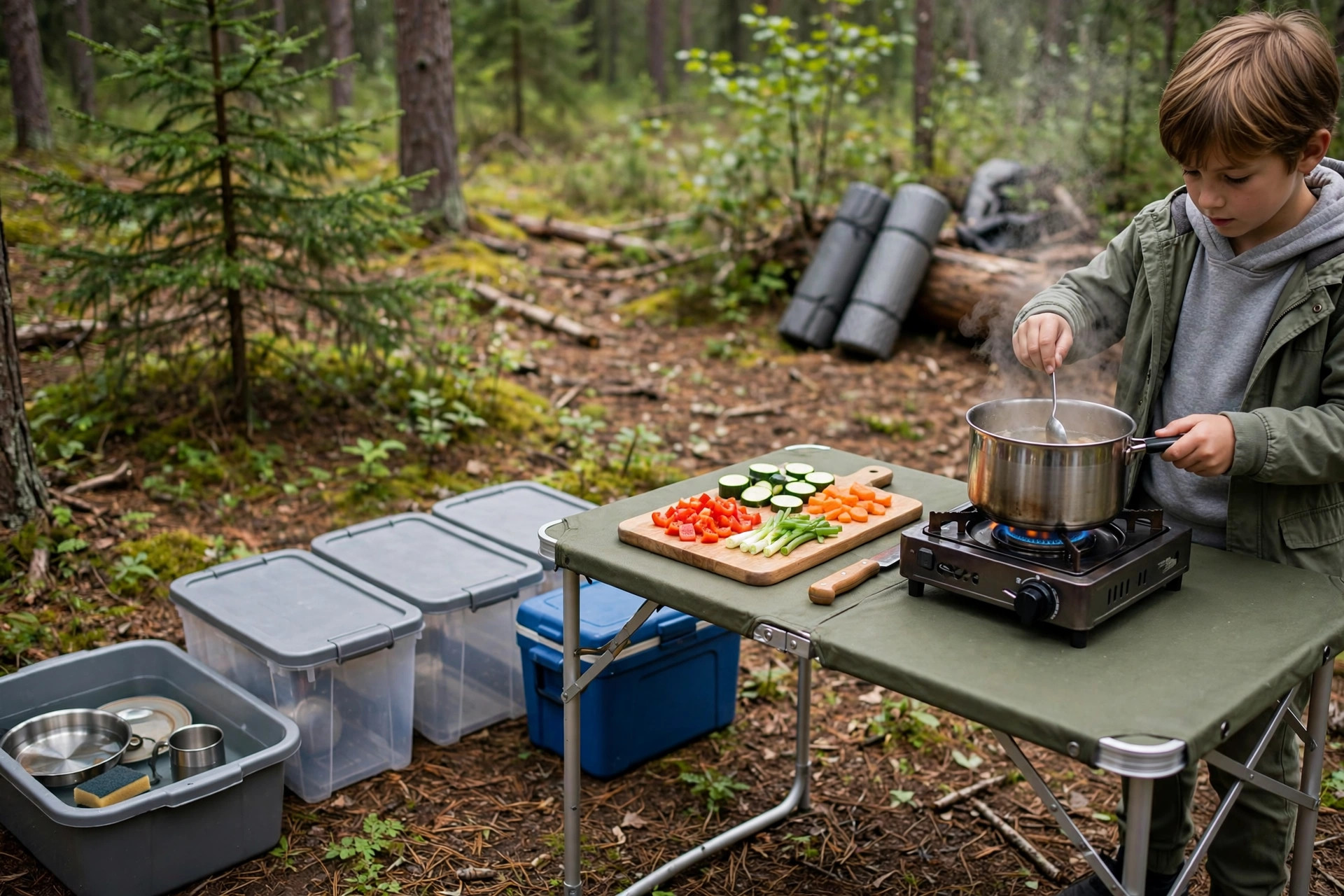
One golden rule from our camp kitchen setup guide: every meal should use two heat sources or fewer.
The Ground Rules of This 7-Day Plan
Before the day-by-day breakdown, here are the five rules that shaped every meal:
- No repeats. 21 distinct meals. Kids notice repetition fast, and variety keeps everyone excited about camp food.
- Max 30 minutes active cooking per meal. Camp kitchens are for cooking, not project management.
- Heat-smart sequencing. Dairy-heavy and fresh-meat meals land on Days 1–3; later days lean on canned proteins, dried goods, and produce that survives without perfect cooling.
- Kid jobs included. Each dinner has a safe task kids can own — wrapping foil packs, assembling tacos, stirring the pot — because kids eat what they help make.
- One-pot preference. Fewer pots means less water for washing, less propane burned, and a faster path to the campfire chairs.
Pre-Trip Prep: The Sunday That Saves Your Week
One focused Sunday afternoon of prep makes the whole week nearly effortless:
- Cook once, eat twice: grill a big batch of chicken breasts and hard-boil a dozen eggs. Both appear in lunches and dinners on Days 1–3.
- Chop and bag: dice onions, peppers, and zucchini into zip bags. Cut fruit (except apples, which brown) into grab-ready portions.
- Freeze smart: freeze water bottles solid — they become drinking water as they melt and outperform loose ice. Freeze chili, soup bases, and marinated meats flat in freezer bags for Days 4–6.
- Portion the dry goods: pre-measure pancake mix, rice, and oatmeal into labeled bags. At camp, you just add water.
A solid cooler strategy is half the battle — our cooler ice-retention guide shows how to keep food safely cold through day 5 and beyond, including the two-cooler system (one for drinks, one for food) that serious camp cooks swear by.
The 7-Day Summer Camping Meal Plan
Every day below: breakfast (B), lunch (L), dinner (D), plus a snack — with kid jobs noted where they count.
Day 1 — Arrival Day: Keep It Dead Simple
B: Drive-through or home breakfast before you leave — arrival day is about setup, not cooking.
L: Deli sandwich bar (turkey, ham, cheese, lettuce, mustard) on bakery rolls.
D: Foil-pack chicken fajitas. Pre-sliced chicken, peppers, and onions with taco seasoning, wrapped in heavy-duty foil and cooked on campfire coals for 15 minutes. Serve in warm tortillas.
Kid job: assembling their own foil packs before sealing.
Snack: Apple slices with peanut butter cups.
Day 2 — Pancake Morning, Taco Night
B: Campfire pancakes with berries. Just-add-water mix in a squeeze bottle (less mess), fresh blueberries, and real maple syrup.
L: Chicken salad wraps using leftover Day 1 chicken, mayo packets, celery, and grapes in flour tortillas.
D: Walking tacos. Single-serve corn chip bags opened lengthwise and loaded with seasoned ground beef (browned at home, reheated), cheese, salsa, and shredded lettuce. Zero dishes.
Snack: Trail mix the kids blended themselves from the bulk bins.
Day 3 — Skillet Day
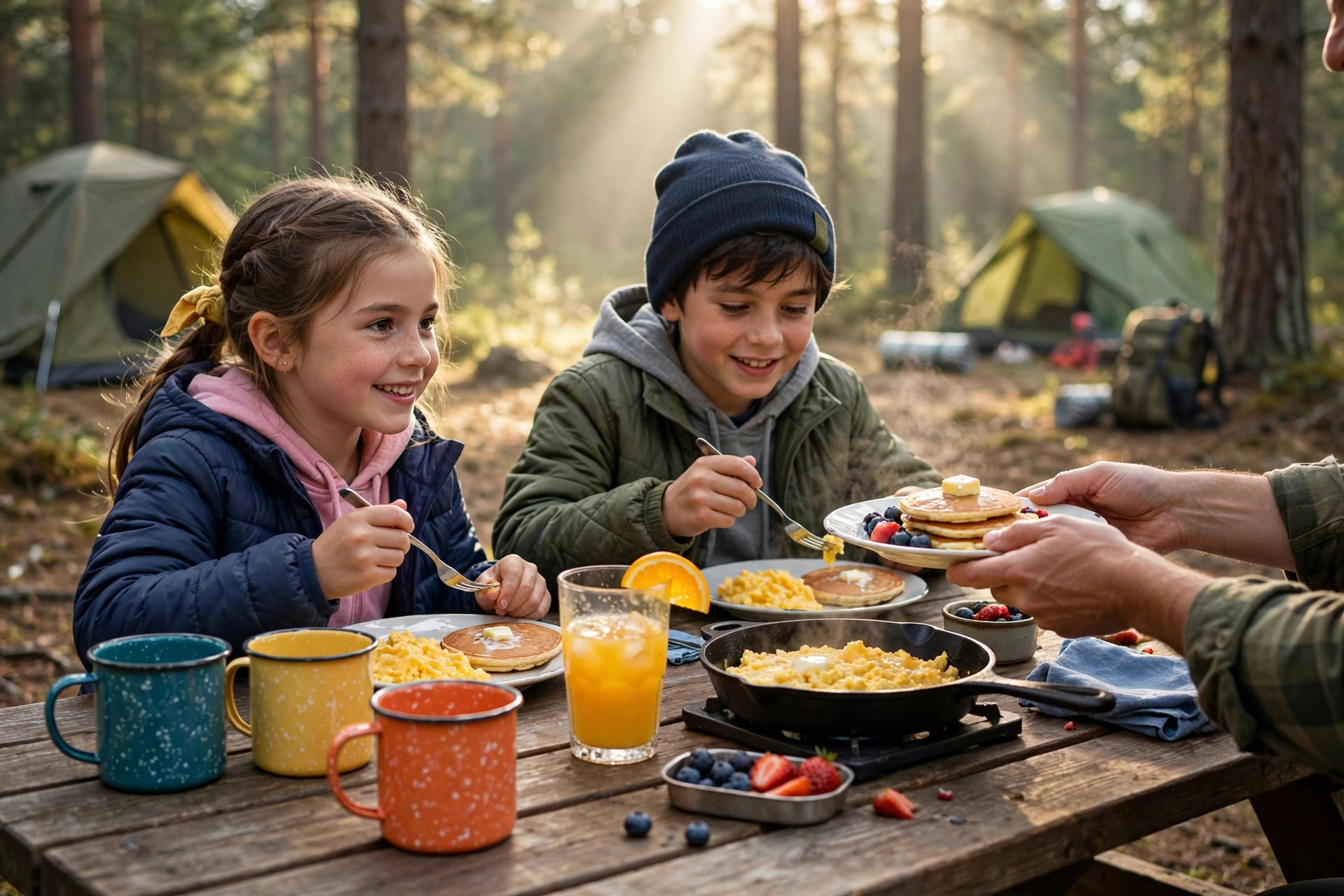
B: Skillet breakfast hash. Diced potatoes, pre-cooked sausage, peppers, and onions crisped in a cast-iron skillet, topped with fried eggs.
L: Hummus veggie pitas with cucumber, shredded carrots, and feta — no cooking, no cooler stress.
D: One-pot campfire chili mac. Elbow macaroni, canned chili, and shredded cheddar in one pot. Hearty enough for big hiking appetites.
Kid job: grating cheese and stirring the pot (with a long spoon, supervised).
Snack: Frozen grapes — nature’s popsicles, still cold from the cooler.
Day 4 — The Midpoint Pivot
By Day 4 your ice is fading, so fresh meat steps aside and the freezer-bag meals take over.
B: Overnight oats jars. Oats, shelf-stable milk boxes, chia seeds, and dried fruit mixed the night before in mason jars.
L: Tuna pasta salad. Shelf-stable tuna pouches, cooked-and-cooled rotini (cooked Day 3 evening), olive oil, lemon, and sun-dried tomatoes.
D: Campfire pizza pockets. Refrigerated pizza dough wrapped around mozzarella, pepperoni, and sauce, sealed in foil and baked in coals for 10 minutes.
Snack: Popcorn popped in a lidded pot over the stove — the campfire movie-night essential.
Day 5 — Grill and Chill
B: Breakfast burritos. Scrambled eggs, black beans, salsa, and cheese in tortillas — endlessly customizable, eaten in hand.
L: PB&J plus. Classic peanut butter and jelly upgraded with banana slices and honey — plus a thermos of the morning’s leftover coffee for the adults.
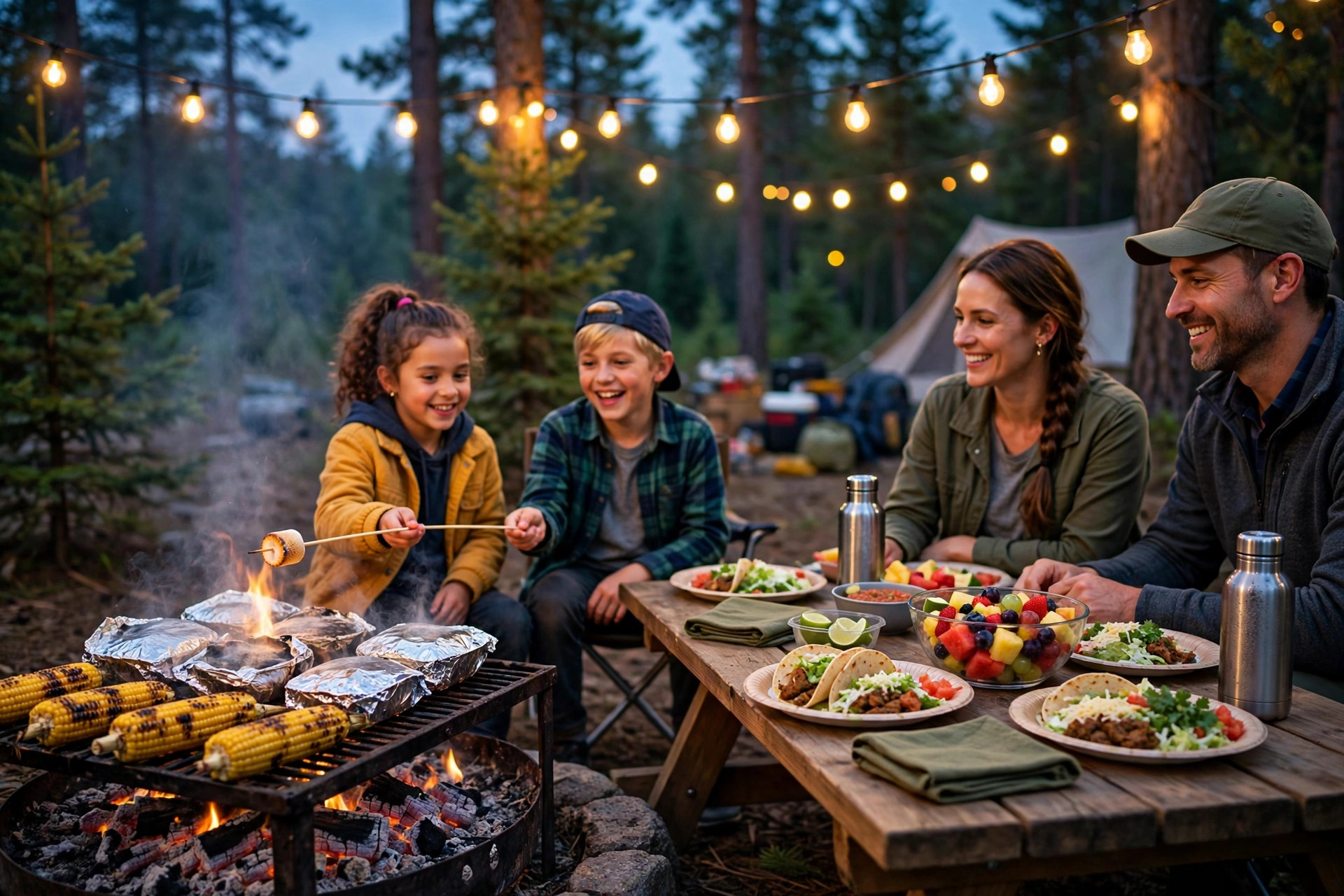
D: Grilled sausage and veggie skewers. Pre-cooked smoked sausage (shelf-stable until opened) with zucchini, bell peppers, and onion chunks, grilled over the fire and served over instant couscous.
Kid job: threading their own skewers.
Snack: S’mores — it’s Day 5, you’ve earned the full ceremony.
Day 6 — Low-Cooler Creativity
B: Cinnamon campfire toast. Thick bread slices dipped in a cinnamon-sugar egg wash, cooked in a buttered skillet — faster than pancakes, half the cleanup.
L: Ramen noodle upgrade. Instant ramen with shelf-stable chicken pouches, dried seaweed, and a squeeze of lime. Kids think it’s an adventure; you know it’s brilliant.
D: Dump-and-go campfire stew. That frozen chili-soup base from Sunday goes in the Dutch oven over coals with a can of corn and a can of beans. Serve with cornbread from a just-add-water mix baked in a second Dutch oven.
Snack: Ants on a log (celery, peanut butter, raisins) — nostalgic and filling.
Day 7 — Pack-Out Breakfast, Victory Lunch
B: Everything-leftovers scramble. The glorious end-of-week cleanout: remaining eggs, cheese ends, veggies, and potatoes in one skillet. Nothing wasted, cooler nearly empty for the drive home.
L: Road-trip picnic. Whatever bread, fruit, cheese, and crackers survived, eaten at a scenic pullout on the way home.
D: Home. Order the pizza. You earned it.
7-Day Summer Camping Meal Plan at a Glance
| Day | Breakfast | Lunch | Dinner |
|---|---|---|---|
| 1 | At home / on the road | Deli sandwich bar | Foil-pack chicken fajitas |
| 2 | Campfire pancakes + berries | Chicken salad wraps | Walking tacos |
| 3 | Skillet breakfast hash | Hummus veggie pitas | One-pot chili mac |
| 4 | Overnight oats jars | Tuna pasta salad | Campfire pizza pockets |
| 5 | Breakfast burritos | PB&J plus bananas | Sausage & veggie skewers |
| 6 | Cinnamon campfire toast | Upgraded ramen | Dump-and-go campfire stew |
| 7 | Leftovers scramble | Road-trip picnic | Pizza at home |
Smart Snack Strategy for Hungry Hikers
Pack a dedicated “snack bin” — separate from the cooler — stocked with:
- Trail mix, granola bars, and fruit leather
- Apples, oranges, and bananas (nature’s packaging, no cooler needed)
- Beef or turkey jerky and single-serve nut butter packets
- Goldfish crackers or pretzels for the under-5 crowd
Rule of thumb: offer a snack every 2 hours on active days. A fed kid is a happy hiker — and our family camping checklist includes a full snack-packing section so nothing gets forgotten.
Food Safety in Summer Heat
Summer heat is the silent trip-ruiner. The USDA’s well-known guidance is simple: perishable food should not sit out for more than 2 hours — and only 1 hour when temperatures top 90°F. At camp, that means:
- Two-cooler system: drinks in one (opened constantly), food in the other (opened rarely). Every opening costs you cold.
- Block ice + frozen bottles on the bottom, food on top, and a towel or sleeping pad over the cooler as insulation.
- Cook-and-cool fast: get leftovers into the cooler within the hour, and reheat them to steaming before serving again.
- Bear country rules: in national parks and forests, all food, coolers, and scented items go into bear boxes or vehicles at night — never in the tent. Check your destination’s rules on nps.gov’s bear safety page first.
- Fire restrictions: many western campgrounds ban open fires in late summer. Check current restrictions at recreation.gov when you book — every dinner in this plan also works on a camp stove, and our camp stove comparison helps you pick the right burner for family cooking.
For a deeper dive on keeping a camp kitchen clean, organized, and safe all week, REI’s camp kitchen checklist is an excellent companion resource.
Grocery + Gear Packing List
Print this and shop once. Quantities assume a family of four for seven days — scale up for bigger crews or teenagers with hollow legs.
Proteins & Dairy (cooler)
- Chicken breasts (2 lbs, grilled at home), ground beef (1 lb, browned at home)
- Eggs (18), shredded cheddar, mozzarella, feta
- Deli turkey and ham, smoked sausage (1 pack)
- Butter, mayo packets, hummus tub
Produce
- Bell peppers, onions, zucchini, potatoes, corn
- Apples, oranges, bananas, blueberries, grapes, lemons/limes
- Lettuce, celery, carrots, cucumber
Pantry & Dry Goods
- Tortillas, bread, pita, pizza dough — plus pancake mix and cornbread mix (just-add-water)
- Elbow macaroni, rotini, instant ramen, instant couscous, rolled oats
- Canned chili, canned beans, canned corn, tuna pouches, shelf-stable chicken pouches
- Peanut butter, jelly, honey, trail mix ingredients, s’mores kit, popcorn kernels
- Taco seasoning, salt, pepper, cinnamon-sugar, olive oil, maple syrup, salsa
Gear
- Two-burner camp stove + fuel, cast-iron skillet, 1 large pot + lid, Dutch oven
- Heavy-duty aluminum foil, long tongs, spatula, cutting board, sharp knife
- Two coolers (food + drinks), frozen water bottles, dish tub + biodegradable soap
- Mason jars or containers for overnight oats, zip bags, trash bags
Make It Yours: Swaps for Picky Eaters
No plan survives contact with a picky 6-year-old unchanged. Build in these easy swaps:
- Walking tacos → walking nachos: same toppings over tortilla chips for kids who reject the “bag” concept.
- Chili mac → buttered noodles: pull a portion of plain pasta before the chili goes in.
- Skewers → deconstructed: let selective eaters pick their own pieces off the grill.
- Overnight oats → yogurt parfaits: same jars, layered with granola and berries.
- Vegetarian family? Swap chicken for black beans in the fajitas, use veggie sausage on skewers, and lean on the hummus pitas and pizza pockets — the plan barely notices.
Frequently Asked Questions
How do I keep food cold for 7 days of summer camping?
Use two coolers — one for drinks, one for food — and open the food cooler as rarely as possible. Start with block ice, keep the cooler in the shade, and eat perishables on Days 1–3 while shelf-stable meals carry Days 4–7.
What if campfire bans are in effect?
Every meal in this plan works on a camp stove — foil packs become skillet meals, pizza pockets cook in a covered skillet, and skewers work on a grill pan. Always check fire restrictions on recreation.gov before your trip, and carry a stove regardless.
How much does a week of camp food cost for a family?
For a family of four, expect roughly $150–$250 for the week depending on your region and how much you buy in bulk. Cooking from this plan is dramatically cheaper than eating out — and prepping proteins at home cuts the bill further.
Can I adapt this plan for a 3- or 4-day trip?
Absolutely — just take Days 1–3 (or 1–4). The plan is sequenced so the freshest, most perishable meals come first, which makes the first few days the natural short-trip version.
What about food allergies?
The plan is naturally flexible: most dinners are assembled from components, so gluten-free tortillas, dairy-free cheese, and nut-free snacks slot in easily. Read labels on seasoning packets and canned goods, and keep allergy-safe snacks in a separate marked bag.
Do I really need to prep at home first?
You don’t have to, but one Sunday of grilling, browning, chopping, and freezing saves 3–4 hours of camp cooking across the week. It’s the single highest-leverage step in this entire plan.
The Bottom Line
A week of camping shouldn’t mean sad hot dogs or expensive restaurant detours. With one afternoon of prep and this 7-day plan, your family eats 21 different, genuinely good meals — most in under 30 minutes — while you spend your energy on the trails, the lake, and the campfire instead of the cooler. Happy camping!
