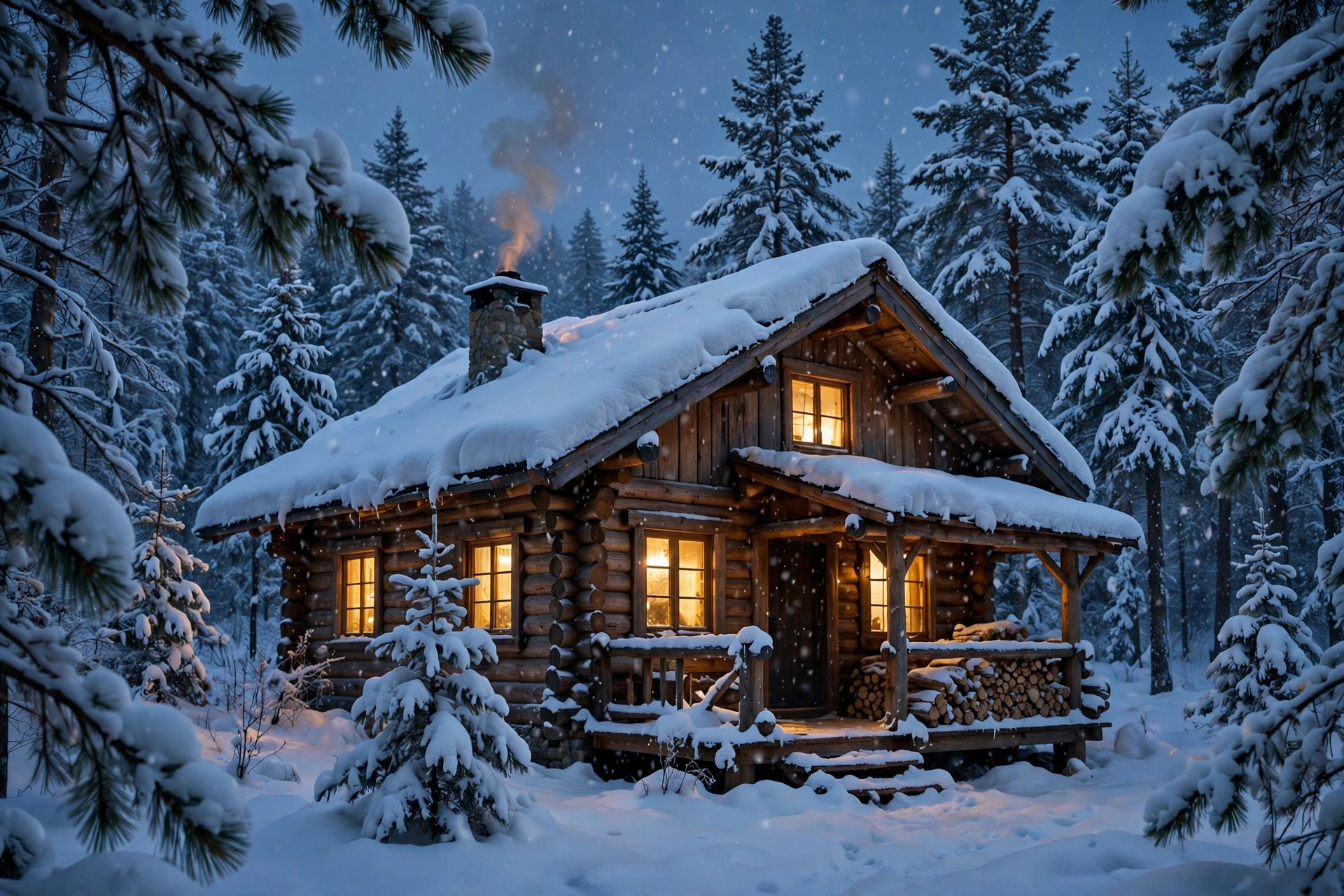
A winter cabin trip with toddlers can be pure magic — snow falling outside the windows, a warm fire crackling, and your little one toddling around a cozy wooden home. But let’s be honest: cabins bring a different set of challenges than hotels or campsites. Wood stoves, steep stairs, slippery decks, and sub-freezing weather all need a plan when you’re traveling with a one-to-three-year-old.
This guide walks you through everything: a complete toddler winter cabin packing list, room-by-room safety checks, cold-weather routines that actually work, and activity ideas for snowy days. Whether it’s your first winter getaway or your fifth, you’ll leave feeling prepared instead of panicked.
Why Winter Cabin Trips Are Wonderful for Toddlers
Toddlers are sensory explorers, and a winter cabin is a sensory wonderland. Crunchy snow underfoot, icicles glinting in the sun, steam rising from a mug of hot chocolate — these simple moments become core memories. Unlike a ski resort, a cabin trip moves at your family’s pace. There are no lift lines to miss, no lessons to rush to. Nap time stays on schedule because home base is steps away.
There’s also a practical side: cabin rentals often cost less in deep winter than during ski season, and many come with full kitchens, which means familiar meals for picky eaters. According to recreation.gov, winter is one of the most family-friendly seasons to visit public lands — crowds thin out, and wildlife viewing can be spectacular. The same logic applies to cabin destinations: quieter trails, emptier towns, and a slower rhythm that suits small children perfectly.
The catch? Toddlers are terrible at regulating body temperature and even worse at telling you when they’re cold. A winter cabin trip lives or dies on preparation. Pack right, childproof the cabin on arrival, and build your days around warmth and rest — and you’ll wonder why you waited so long.
Complete Toddler Winter Cabin Packing List
Pack for a cabin like you’re packing for a small expedition with a very demanding expedition leader. Below is the full checklist, organized by category. For a broader packing foundation, our family camping checklist of 47 essentials covers the universal gear that overlaps with cabin trips too.
Clothing: The Layering System
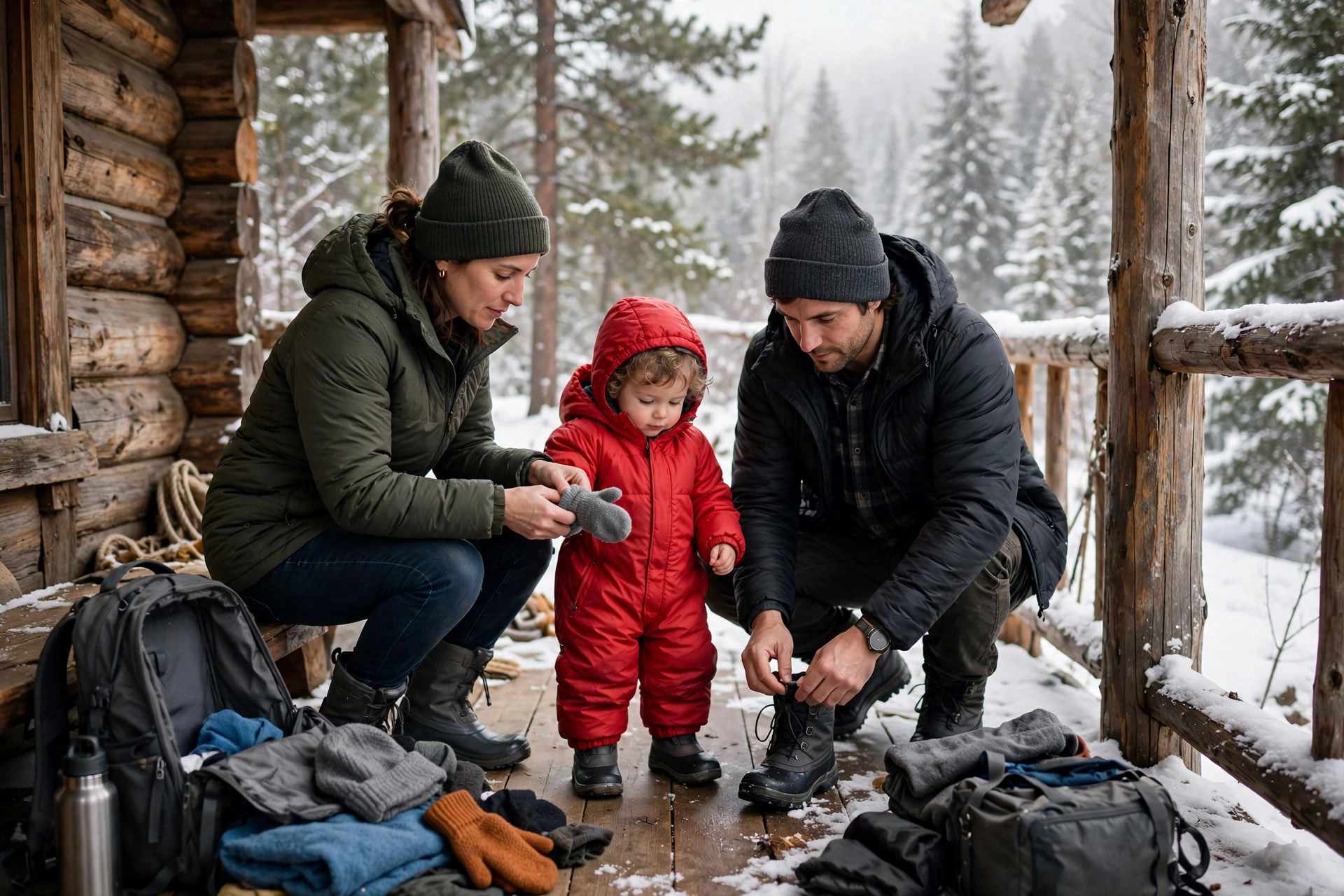
Toddlers lose heat fast, especially through their heads and extremities. Layering is non-negotiable. If you want the full science behind it, read our layering system guide for kids — the same principles apply around the cabin.
- Base layers (3 sets): Merino wool or synthetic long underwear tops and bottoms. Avoid cotton — it holds moisture and chills fast.
- Mid layers (2–3): Fleece or wool sweaters for insulation.
- Outer layer: A waterproof (not just water-resistant) one-piece snowsuit with sealed seams, plus waterproof mittens on strings and a warm balaclava-style hat.
- Footwear: Insulated, waterproof boots with room for thick socks; pack 4–5 pairs of warm socks.
- Everyday cabin clothes: 4–5 comfortable outfits, warm pajamas, and indoor slippers with grip soles (cold floors + smooth floors = slipping toddlers).
- Backup everything: One full extra set of base + mid layers in a separate dry bag. Wet clothes happen constantly at this age.
Sleep Gear
Don’t assume the cabin’s bedding is enough — or clean enough for a toddler who puts everything in their mouth.
- Travel crib or pack ‘n play with a firm mattress pad and fitted sheets (many cabins don’t provide them).
- Toddler sleeping bag or sleep sack rated for the cabin’s nighttime temperature. Our guide to kids’ sleeping bag temperature ratings explains what the numbers actually mean.
- White noise machine — cabins creak, furnaces kick on, and unfamiliar sounds wake light sleepers.
- Blackout curtains or portable blackout shades with suction cups for the bedroom window.
- Nightlight for middle-of-the-night wake-ups in an unfamiliar space.
- Lovey/comfort object — non-negotiable for sleep continuity away from home.
Food and Feeding
A full cabin kitchen is a blessing, but bring the toddler-specific gear anyway:
- Portable high chair or booster seat that straps to a chair (cabins rarely have them)
- 2–3 familiar sippy cups and bowls — unfamiliar dishes can trigger food refusal
- Snack reserves: pouches, crackers, dried fruit, oatmeal packets for the first morning
- Bib, spill-proof placemat, and enough wipes to stock a small store
- Formula or milk supply plus a way to warm bottles safely
- Basic spices your toddler’s meals depend on (cabins stock salt, pepper, and hope)
Health and Safety Kit
- Digital thermometer, infant pain/fever reducer (check dosing with your pediatrician before the trip)
- Nasal saline spray and aspirator — dry heated cabin air plus cold outdoor air is a congestion double-whammy
- Moisturizer, lip balm, and diaper cream — winter air is brutal on toddler skin
- First-aid basics: bandages, antiseptic wipes, tweezers, instant cold pack
- Any prescription medications with doses documented, plus your pediatrician’s number saved in your phone
- Outlet covers, corner guards, and a retractable baby gate or two (see the safety checklist below)
Entertainment and Comfort
- 5–6 favorite small toys, a few new surprises for long indoor stretches, and coloring supplies
- Board books about snow and winter — reading about what they’re experiencing doubles the magic
- A sled — the single best cabin-trip toy for toddlers; most rental towns sell them cheaply
- Tablet with downloaded shows for the drive and worst-case weather lockdown (no shame in it)
Cabin Safety Checklist: Do This Before You Unpack
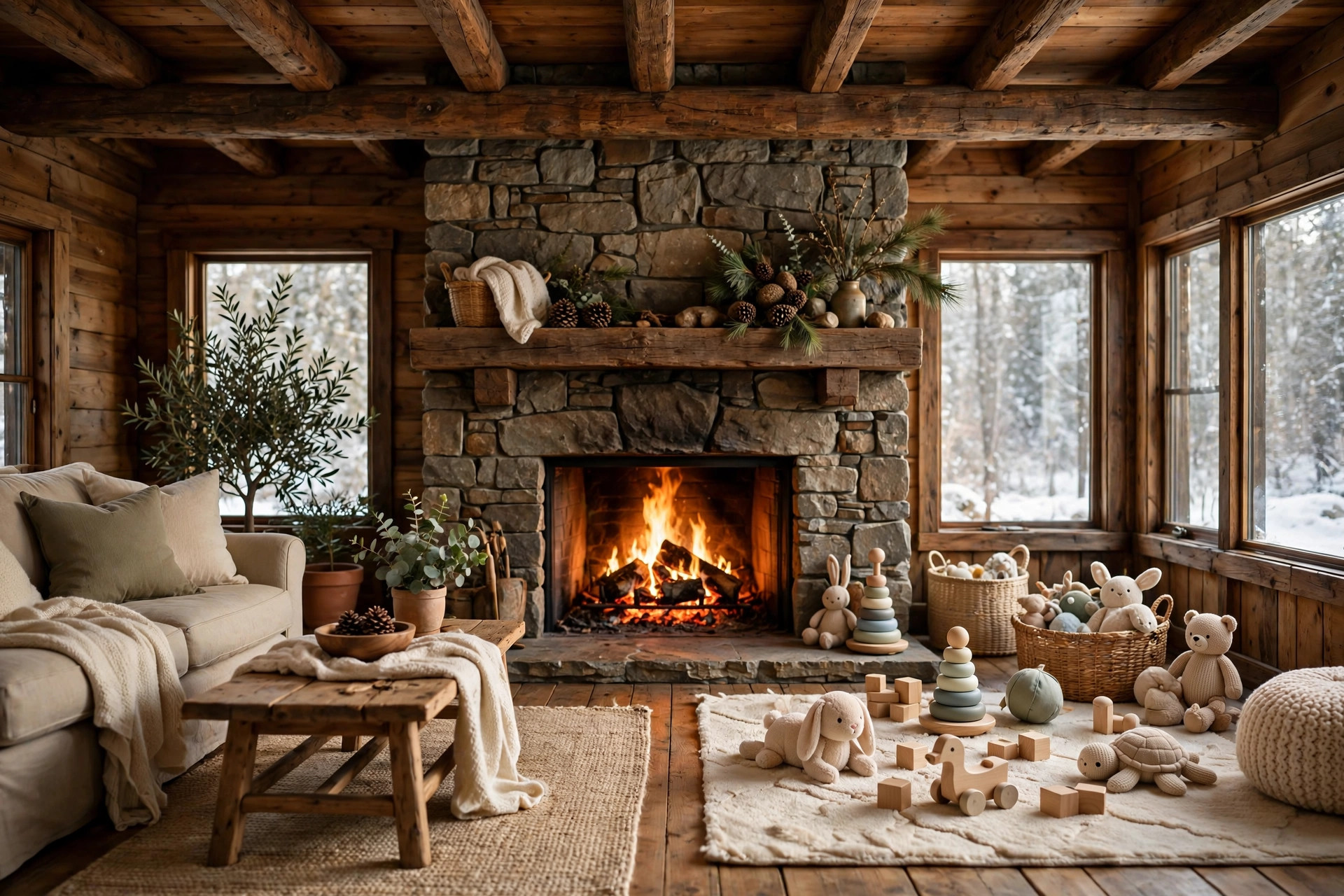
Every cabin is different, and most are not designed with toddlers in mind. Give yourself 20 minutes on arrival to walk the space before letting your little one roam. The safety mindset overlaps with what you’d do camping with little ones — our safety rules for camping with babies cover the same instincts for the littlest travelers.
| Check | What to Look For | Quick Fix |
|---|---|---|
| Heat sources | Wood stoves, fireplaces, baseboard heaters, space heaters | Set up a playpen or furniture barrier at least 3 feet from any heat source; confirm fireplace screen is sturdy |
| Stairs and lofts | Open staircases, ladder-accessed lofts, balcony railings | Install your portable gate at stair top and bottom; move furniture away from railings toddlers could climb |
| Outlets and cords | Low outlets, exposed cords, power strips | Plug in outlet covers; tuck or unplug cords where possible |
| Water hazards | Hot tubs, saunas, deep sinks, unfenced ponds or streams nearby | Lock hot tub covers; confirm the rental’s water features are secured; scope the yard before free play |
| Kitchen dangers | Low oven doors, accessible knives, cleaning supplies under sinks | Move hazards up high or into locked cabinets; stash a trash bag over under-sink areas if no lock exists |
| Decks and porches | Icy steps, wide railing gaps, snow-loaded railings | Salt or sand icy steps; block gaps wider than 4 inches with luggage or blankets as a stopgap |
| Carbon monoxide | Fuel-burning stoves, fireplaces, generators | Confirm working CO and smoke detectors on every floor; bring a portable CO alarm as backup |
| Windows and doors | Low windows, sliding doors, locks toddlers can reach | Engage child-safety locks; flip deadbolts out of reach; check that exterior doors latch reliably |
Cold-Weather Routines That Keep Toddlers Happy
The secret to winter cabin trips with toddlers isn’t endurance — it’s rhythm. Short outdoor bursts, warm indoor resets, and zero pressure to “make the most of the day.”
- The 30-minute rule: Toddlers typically stay comfortable outside for 20–30 minutes in real cold. Watch for red cheeks turning pale, whining that sounds different from normal fussing, or sudden clumsiness — all signs it’s time to head in.
- Warm-up stations: Before going out, have the cabin warm, dry clothes laid out, and a warm drink ready. The transition back inside should feel like a reward, not a chore.
- Layer checks every outing: Feel your toddler’s chest (not hands) to judge warmth. Hands and noses run cold even when the core is fine.
- Protect the face: A thin layer of petroleum-based balm on cheeks and lips before outings cuts windburn dramatically.
- Hydrate like it’s summer: Cold air is dry, and toddlers won’t ask for water. Offer warm drinks and water-rich snacks (oranges, cucumber) throughout the day.
- Keep the cabin air healthy: Run a humidifier if the cabin has one, or simmer a pot of water with citrus on the stove to add moisture to dry heated air.
- Respect nap and bedtime fiercely: Cold air is tiring. Tired toddlers get cold faster and recover slower. Protect sleep and everything else gets easier.
For more on realistic outdoor limits by age, our guide to hiking with toddlers and realistic trail distances is worth a read before you plan any snowy walks.
Winter Activities for Toddlers Around the Cabin
You don’t need a ski resort’s activity program. Toddlers find the ordinary extraordinary in snow:
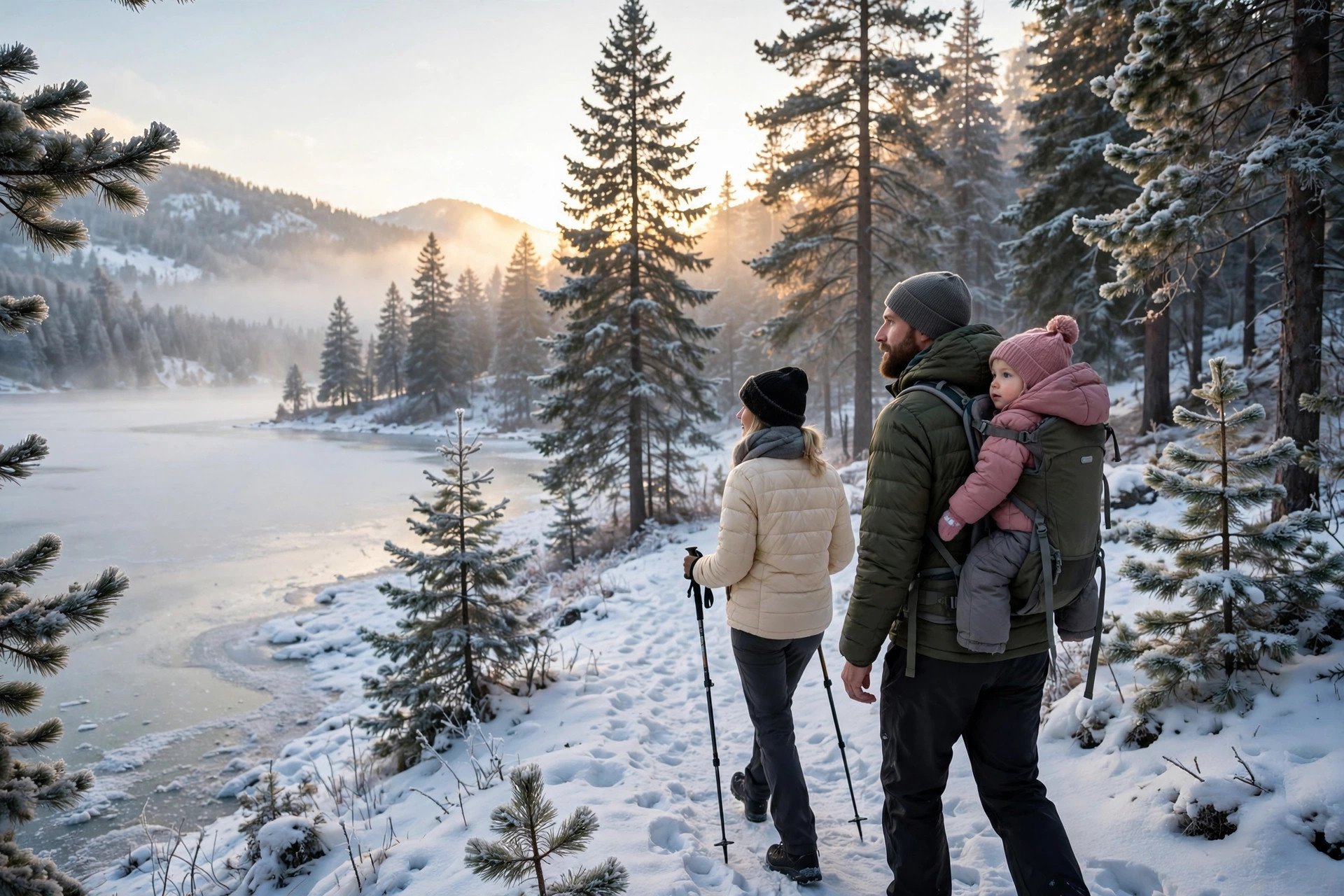
- First sledding: Gentle slopes only, toddler on your lap, helmet on. Five minutes of giggles beats twenty minutes of tears.
- Snow painting: Fill spray bottles with water and a drop of food coloring. Toddlers can “paint” the snow for ages.
- Nature treasure hunts: Pinecones, interesting sticks, animal tracks — a small bucket and a mission.
- Icicle watching and snowflake catching: Slow, quiet activities that mesmerize this age group.
- Indoor baking: Simple cookies or bread — toddlers can stir, pour, and taste. The warm kitchen becomes the day’s highlight.
- Fireplace story time: Winter-themed books by a real fire (at a safe distance) feel ceremonial to a two-year-old.
- Stargazing: Winter skies are exceptionally clear. Bundle up for a five-minute look at the stars before bed — cabins far from city lights deliver.
What to Do If Something Goes Wrong
A little contingency planning turns emergencies into inconveniences:
- Power outage: Know where the cabin’s flashlights, candles, and extra blankets are. Keep your car fueled and your phone charged — and know the address to give emergency services, since rural cabins can be hard to locate.
- Illness or injury: Before the trip, note the nearest urgent care or ER and its drive time. The National Park Service winter safety guidance is a solid refresher on cold-related risks like frostbite and hypothermia symptoms.
- Getting stuck: If your cabin is up a mountain road, carry chains or confirm your rental car has winter tires. Keep a car emergency kit with blankets, water, and snacks.
- Too cold to go out: Have a full indoor day planned in advance — crafts, baking, fort-building — so a storm day feels like a bonus, not a trap.
For trip planning around public lands and reserving winter-accessible cabins and campsites, recreation.gov is the official booking source. For deeper cold-weather know-how, the NPS winter safety page above covers layering, hydration, and emergency preparedness in detail.
FAQs: Winter Cabin Trips with Toddlers
What age is best for a first winter cabin trip?
Any age works with the right preparation, but 18 months to 3 years is a sweet spot — toddlers are mobile enough to play in snow and old enough to enjoy it, yet still nap reliably. With younger babies, prioritize a cabin with excellent heating and plan very short outdoor sessions.
How cold is too cold for a toddler outside?
Use common sense plus the wind chill: most pediatric guidance suggests limiting outdoor play when wind chill drops near or below 0°F (-18°C), and keeping sessions very short in the teens. Watch your child’s cues — shivering, pale skin, or unusual fussiness mean it’s time to go in, regardless of the thermometer.
Do I need special gear, or will regular winter clothes work?
Regular warm clothes work for quick trips to and from the car, but for real outdoor play, a waterproof one-piece snowsuit, waterproof mittens, and insulated boots make an enormous difference. Wet, cold toddlers are miserable toddlers — waterproofing is the single most important feature.
How do I keep a toddler’s sleep schedule in a strange cabin?
Bring the sleep environment to them: travel crib, white noise, blackout shades, lovey, and the same bedtime routine in the same order. Keep bedtime within 30 minutes of home time. The first night is usually the hardest — by night two, most toddlers settle.
What if the cabin isn’t as childproof as I expected?
Bring your own kit: outlet covers, a portable gate, corner guards, and a roll of painter’s tape (surprisingly useful for covering outlets and securing cords). Do the 20-minute walkthrough on arrival, and designate one fully safe room as the toddler’s home base.
Is a winter cabin trip worth it with a toddler, honestly?
Yes — with realistic expectations. You won’t ski all day or hike far. But you’ll get slow mornings, snow play in small perfect doses, and the particular coziness of being snowed in together. Many families say their winter cabin trips are the ones their kids remember most.
