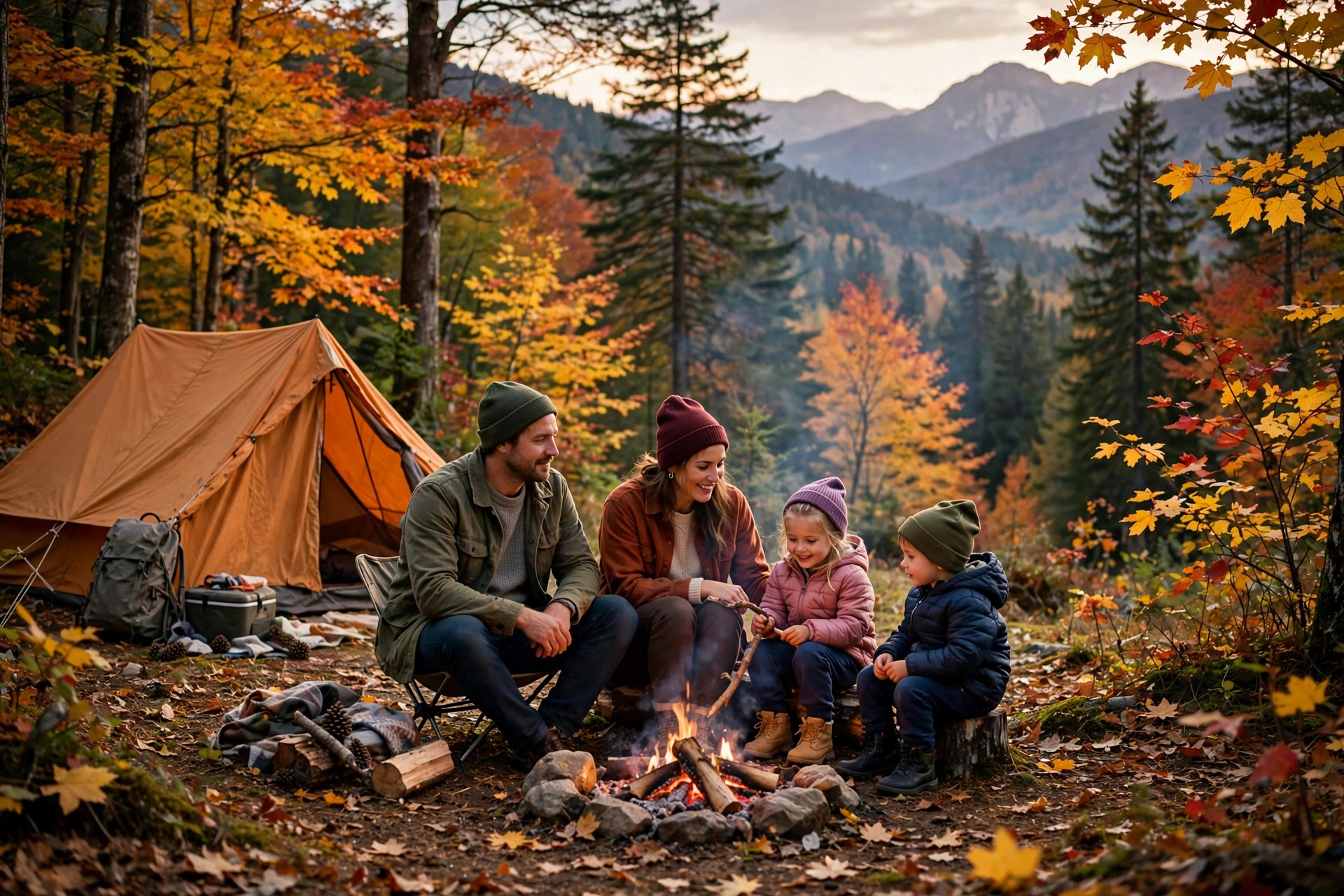
Fall camping with kids is one of the best-kept secrets of family travel — but it is not just “summer camping with a jacket.” Once Labor Day passes, the whole rhythm of a camping trip changes: the sun drops an hour or two earlier, nights turn genuinely cold, campgrounds go quiet, and half the services you took for granted in July quietly shut down. The good news? Families who adjust to the season get thinner crowds, zero mosquito wars, brilliant foliage, and campfire weather that actually feels like camping.
We camped our way through three fall seasons with kids under eight before we finally stopped making the same mistakes. Here is everything that changes after Labor Day — and exactly how to plan around it so the whole family stays warm, fed, and happy.
The Big Shifts: What Actually Changes in September and October
Summer camping has a forgiving margin of error. Forget a fleece? No problem, it is 75 degrees at 9 PM. In fall, that same oversight means a miserable night and a cranky six-year-old at 3 AM. The main changes break down into four areas:
1. Daylight shrinks fast
Between early September and late October, most of the US loses roughly 90 minutes of evening daylight. That means dinner, dishes, and bedtime routines happen in the dark — not at golden hour. Plan your arrival for mid-afternoon at the latest, and cook dinner before sunset so you are not fumbling with a camp stove in headlamp light while a toddler wanders toward the fire ring.
2. Temperature swings get dramatic
A 70-degree afternoon can collapse into a 38-degree night, especially in the mountains and desert Southwest. Kids lose body heat faster than adults, and they are terrible at telling you they are getting cold until they are already shivering. The fix is a proper layering system — base layer, insulating layer, shell — rather than one thick jacket that comes off the moment they start running around.
3. Campgrounds get quieter (and emptier)
This is the upside. Post-Labor Day crowds thin out dramatically at most state and national park campgrounds. Weekend sites that sold out in minutes during summer often have walk-up availability by October. It also means snagging last-minute cancellations gets much easier — a huge win if you like spontaneous trips.
4. Services start shutting down
The quiet part has a catch. Water spigots get turned off, shower houses close, camp stores shorten their hours or lock up entirely, and some campgrounds close their gates for the season. Always check the campground’s operating season on Recreation.gov before you go — “open” in October can mean a vault toilet and a hand pump, nothing more.
Weather Strategy: Plan for Three Seasons in One Trip
Fall camping weather is a coin flip, sometimes within the same day. The family that packs only for the forecast high is the family that packs up early. Build your plan around the low, not the high.
- Check the overnight low for the exact campground elevation, not the nearest town. A town at 2,000 feet can be 10–15 degrees warmer than a campground at 5,000 feet nearby.
- Watch the wind. A breezy 55 degrees feels like 45 to a small child sitting still at a picnic table. Bring a wind shell even on mild days.
- Rain gear becomes non-negotiable. Summer drizzle is an inconvenience; October rain at 50 degrees is a hypothermia risk for little kids. Pack full rain suits for toddlers and rain jackets + pants for older kids.
- Have a bail plan. Agree in advance on the conditions that end the trip (e.g., “if it drops below freezing two nights in a row, we head to a motel”). Kids should never feel the trip is a test of endurance.
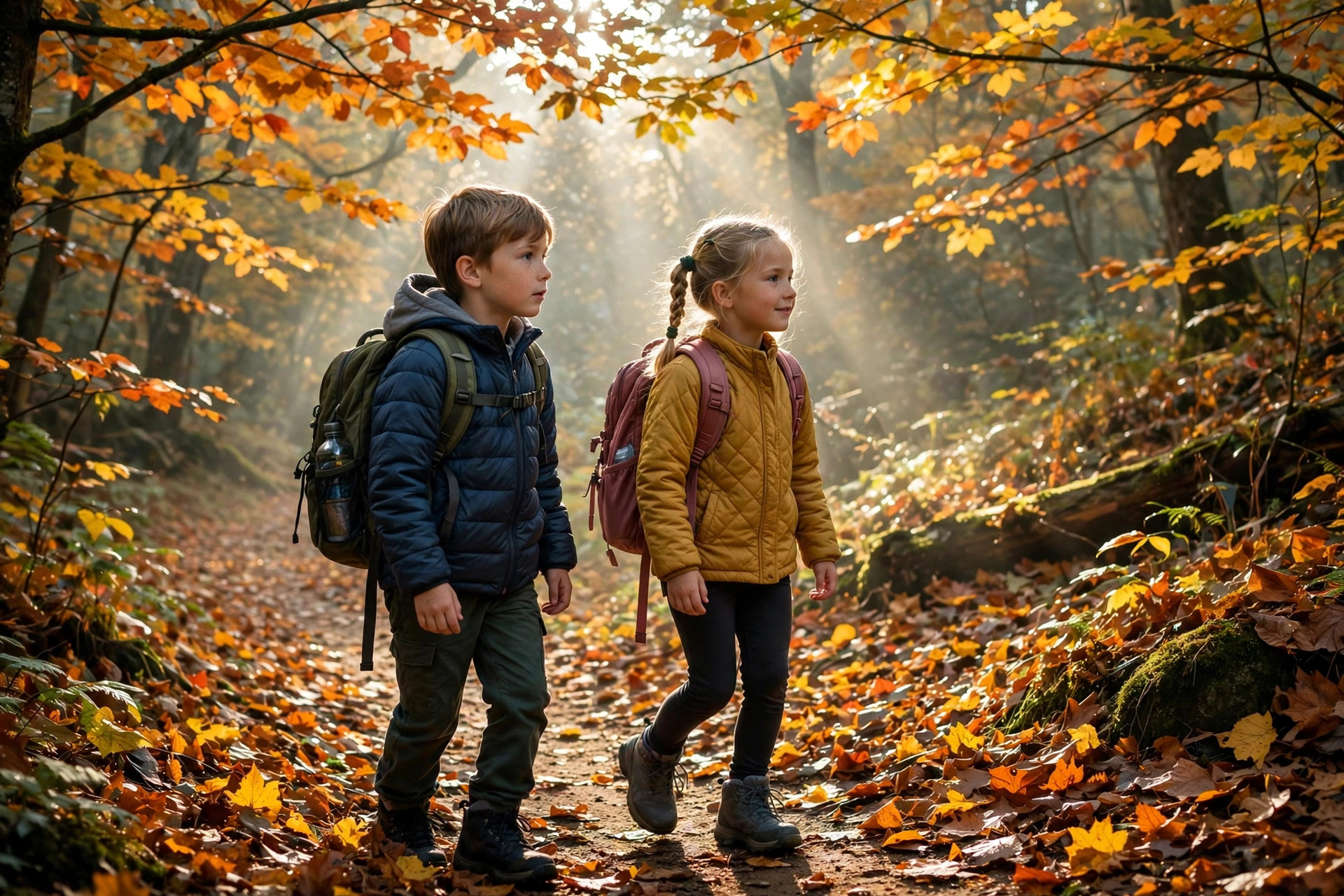
If you are still fuzzy on when campgrounds take reservations and when they go first-come, read up before booking — fall shoulder seasons have the trickiest booking calendars of the year.
What to Pack Differently: Summer vs. Fall
Your summer family camping checklist is the starting point, not the finish line. Here is what changes:
| Item | Summer version | Fall upgrade |
|---|---|---|
| Sleeping bags | 40°F bags are fine | 20–30°F bags for kids (see kids’ sleeping bag temperature ratings explained) |
| Sleeping pads | Any pad works | Insulated pads (R-value 4+) — cold ground steals more heat than cold air |
| Clothing | T-shirts + one hoodie | Full layering system + warm hat + gloves for every kid |
| Cooking | Cold breakfasts fine | Warm breakfasts (oatmeal, cocoa) to warm little bodies fast |
| Lighting | One lantern | Headlamp per person + extra batteries (dark by 6:30 PM) |
| Shelter extras | Optional | Tarp for rain + tent footprint (ground is colder and damper) |
| First aid | Standard kit | Add hand warmers, blister care (wet socks), and lip balm |
Two fall-specific packing rules we learned the hard way:
- Pack tomorrow morning’s clothes inside the sleeping bag. Kids wake up to warm clothes instead of ice-cold jeans, and getting dressed stops being a battle.
- Bring twice the socks you think you need. Wet socks + cold feet = the number one cause of kids wanting to go home. Seal dry socks in a zip bag so there is always a dry pair in reserve.
REI’s family camping checklist is a solid cross-check against your own list before you load the car.
Campground Life After Labor Day
The vibe of a fall campground is completely different — in the best way. Fewer neighbors means your kids can be a little louder, stargazing is better with less light pollution, and you might have an entire loop to yourselves on a weeknight.
But “quieter” also means “less help around.” Practical notes:
- Arrive before dark. With sunset creeping earlier every week, a 4 PM arrival gives you a comfortable buffer to set up in daylight.
- Confirm what is actually open. Call the ranger station or check the park’s site. The National Park Service camping page links to seasonal operating dates for every park.
- Firewood rules tighten. Many areas restrict bringing outside firewood to slow invasive pests — and in fall, camp stores that sold bundles may be closed. Buy firewood on the way in, not at the campground.
- Bears are hungrier. In bear country, fall is hyperphagia season — bears eat constantly before winter. Be extra strict about food storage, and keep the kids’ snack wrappers out of the tent.
Keeping Kids Warm at Night (the Make-or-Break Part)
Nighttime warmth is where fall trips succeed or fail. Cold kids do not sleep, and unslept kids ruin day two. Here is the system that works:
The sleep setup
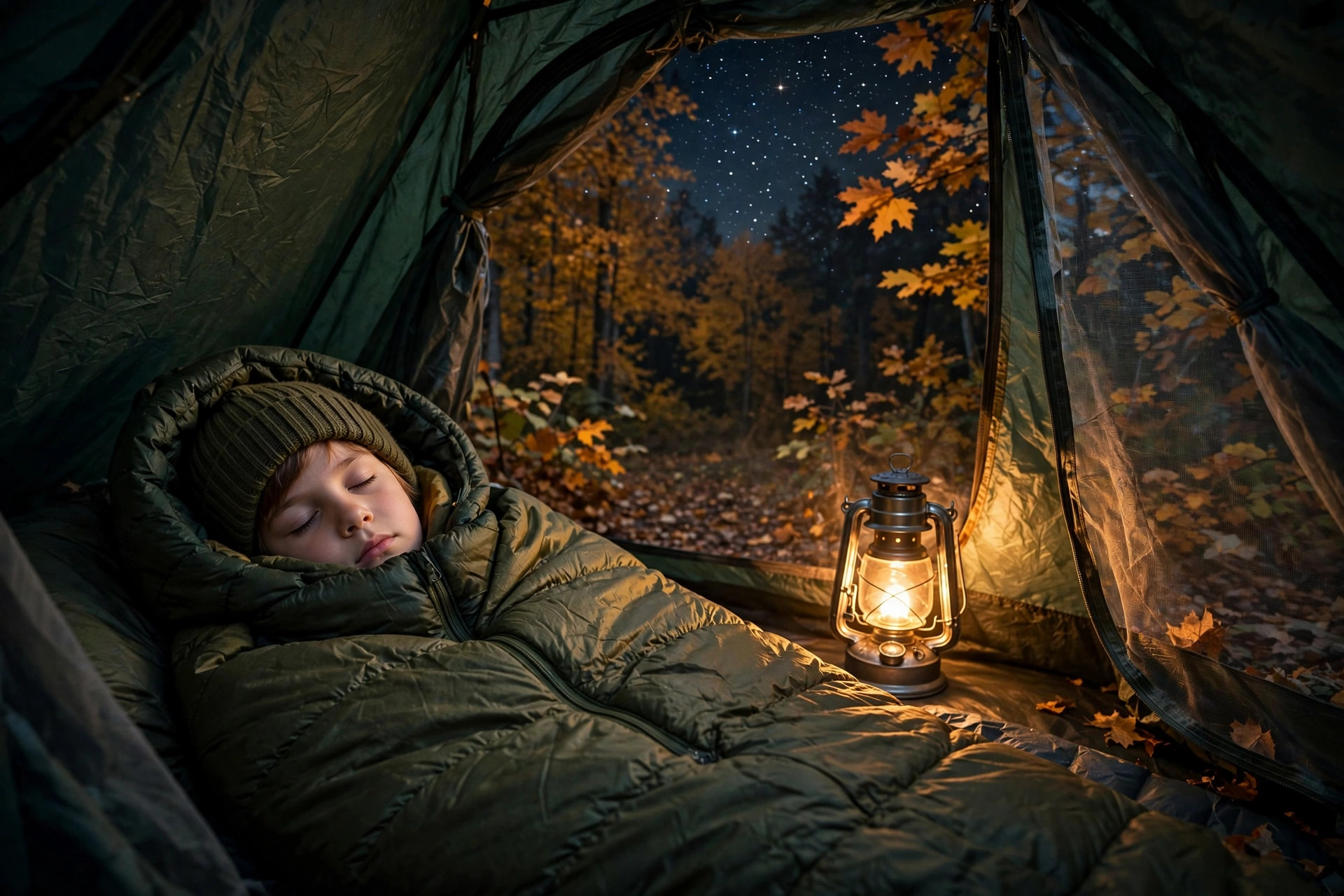
Start with an insulated sleeping pad — this matters more than the bag, because the ground pulls heat out of small bodies all night. Add a sleeping bag rated at least 10 degrees below the expected low (a 30°F bag for a 40°F night). Finish with a fleece liner for toddlers, who tend to kick bags open. Warm pajamas, thick socks, and a beanie worn to bed complete the cocoon. And the old scout trick still works: fill a water bottle with hot water, wrap it in a sock, and tuck it in the foot of each kid’s bag.
The tent
Ventilate anyway. It feels wrong to crack the tent open when it is 40 degrees outside, but sealed tents fill with condensation from breathing, and damp bags lose insulation fast. Leave two opposing vents cracked a few inches. A tent footprint plus a cheap fleece blanket under the pads adds surprising warmth.
The wind-down
Hot cocoa 30 minutes before bed is not just cozy — it raises core temperature going into the coldest hours. Keep a pee plan too: cold kids hold it, then wake up miserable. A lidded potty bucket inside the tent for toddlers avoids the midnight trek to a dark bathhouse.
Fall Meals That Actually Work
Summer camping runs on sandwiches and snacks. Fall camping runs on warmth. Plan every meal around something hot:
- Breakfast: instant oatmeal with brown sugar and dried fruit, plus hot cocoa. It is fast, one-pot, and warms everyone from the inside.
- Lunch: thermos soup (pack it hot in the morning — it is still steaming at noon) with bread and cheese.
- Dinner: one-pot chili, pasta, or foil-packet meals over the fire. Eat early, before the temperature drops.
- Dessert: this is peak campfire season — s’mores, campfire apples with cinnamon, or banana boats.
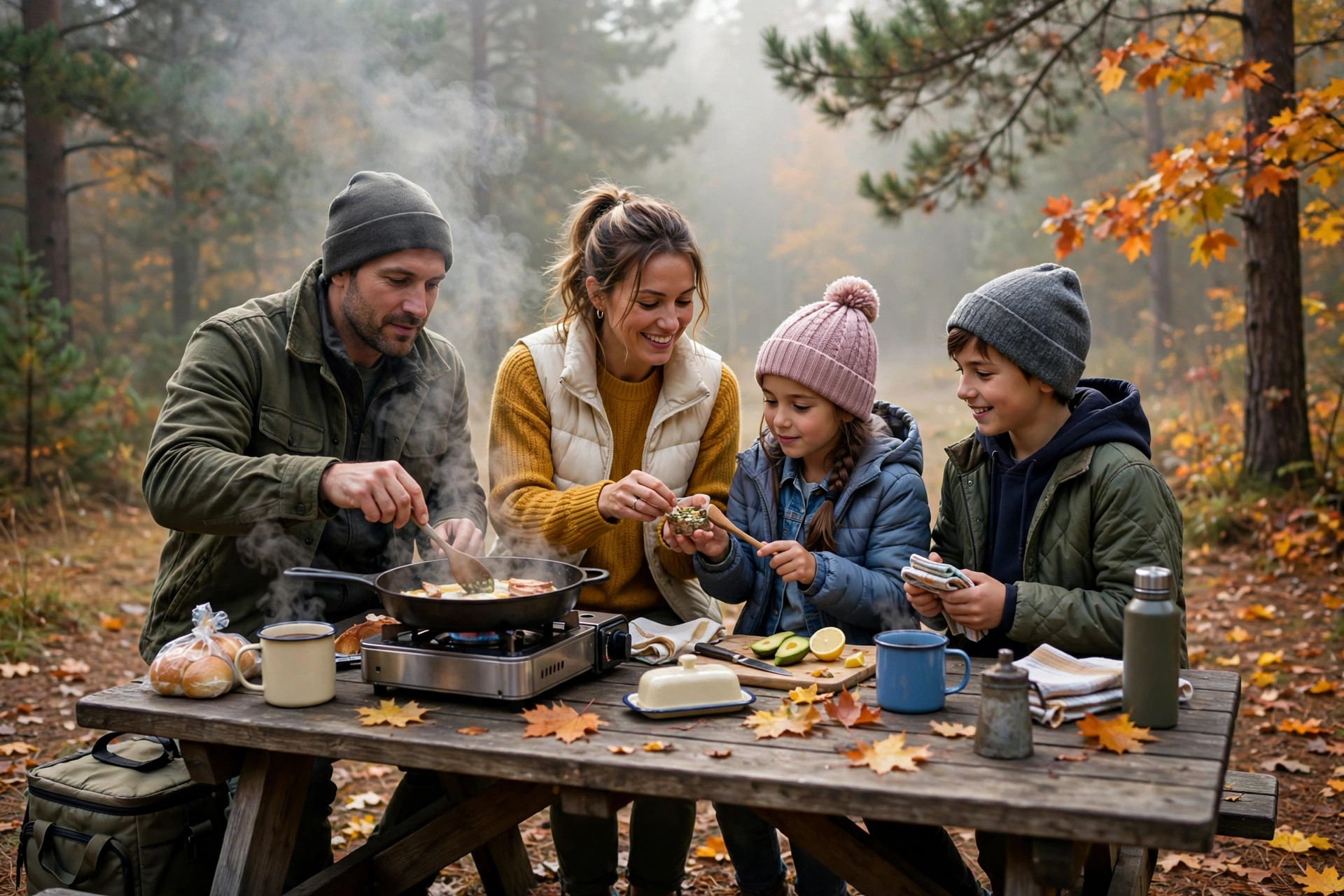
Cook before dark when you can, and keep a kettle of hot water going all evening. Hand warmers wrapped in a bandana double as pocket warmers for little hands between courses.
Fall-Specific Fun with Kids
Fall hands you activities summer cannot. Lean into them:
- Leaf collecting and pressing. Bring a small field guide and turn a hike into a treasure hunt for the reddest leaf.
- Acorn and pinecone crafts. A bag of pinecones plus peanut butter and birdseed becomes a bird feeder back at camp.
- Earlier stargazing. Dark skies by 7 PM mean even toddlers can see constellations before bedtime. Download a star app before you lose signal.
- Migration watching. Many parks sit on flyways — fall mornings can be spectacular for hawks and waterfowl.
- Campfire storytelling. Long dark evenings are made for it. Let each kid add one sentence to a running story.
Safety Notes for Fall Trips
Nothing here is scary — just different from summer:
- Hunting season overlaps fall camping in many state forests. If you hike during hunting season, everyone wears blaze orange — kids included. Check dates for your state.
- Shorter days = tighter hiking windows. Start hikes early and carry headlamps even on “short” trails. Turnaround time is not negotiable with kids.
- Ticks are still active well into fall. Do the same tick checks you would in June.
- Water sources may be off. Carry more water than summer trips — at least a gallon per person per day — since spigots are often shut down after Labor Day.
Frequently Asked Questions
What is the best age to start fall camping with kids?
Any age works with the right gear, but fall is easiest with kids ages 4 and up who can tell you when they are cold and walk a short trail. Toddlers do fine too — they just need more gear management, especially warm sleep setups and rain suits.
How cold is too cold to camp with kids?
For most families, overnight lows in the mid-30s°F are the practical limit with standard 3-season gear. Below freezing, you need 4-season-worthy sleep systems and real experience. When in doubt, book a cabin night as a backup plan.
Do I need a different tent for fall camping?
Not usually. A decent 3-season tent handles fall fine — the sleeping pad and bag matter far more. What does help is a tent with good ventilation options, since managing condensation becomes critical on cold nights.
Are campgrounds cheaper after Labor Day?
Often, yes. Many private campgrounds drop to shoulder-season rates, and the competition for reservable sites falls off a cliff. Walk-up and last-minute availability improves dramatically at most public campgrounds too.
What should kids wear to sleep while fall camping?
Dry base layers (never the clothes they wore all day), thick socks, and a warm hat. Add a fleece mid-layer if the bag is marginal. The key word is dry — even slightly damp daytime clothes will chill a child overnight.
Is fall camping safe during hunting season?
Yes, with precautions. Wear blaze orange on hikes, stick to marked trails, avoid dawn and dusk hiking in hunting areas, and check your state’s hunting season dates before you go. National parks do not allow hunting, so they are the simplest choice.
The Bottom Line
Fall camping with kids asks a little more of you — warmer gear, earlier dinners, backup plans for cold snaps — but it gives back more than it takes. The crowds vanish, the light turns golden, campfires finally feel essential instead of decorative, and your kids get a version of the outdoors most families never bother to see. Pack for the low, eat something hot, and get there before dark. The rest takes care of itself.

1 comment
[…] identify one backup — nearby national forest land, a state park, or a private campground. Our shoulder-season camping guide‘s flexibility rules apply in spring […]