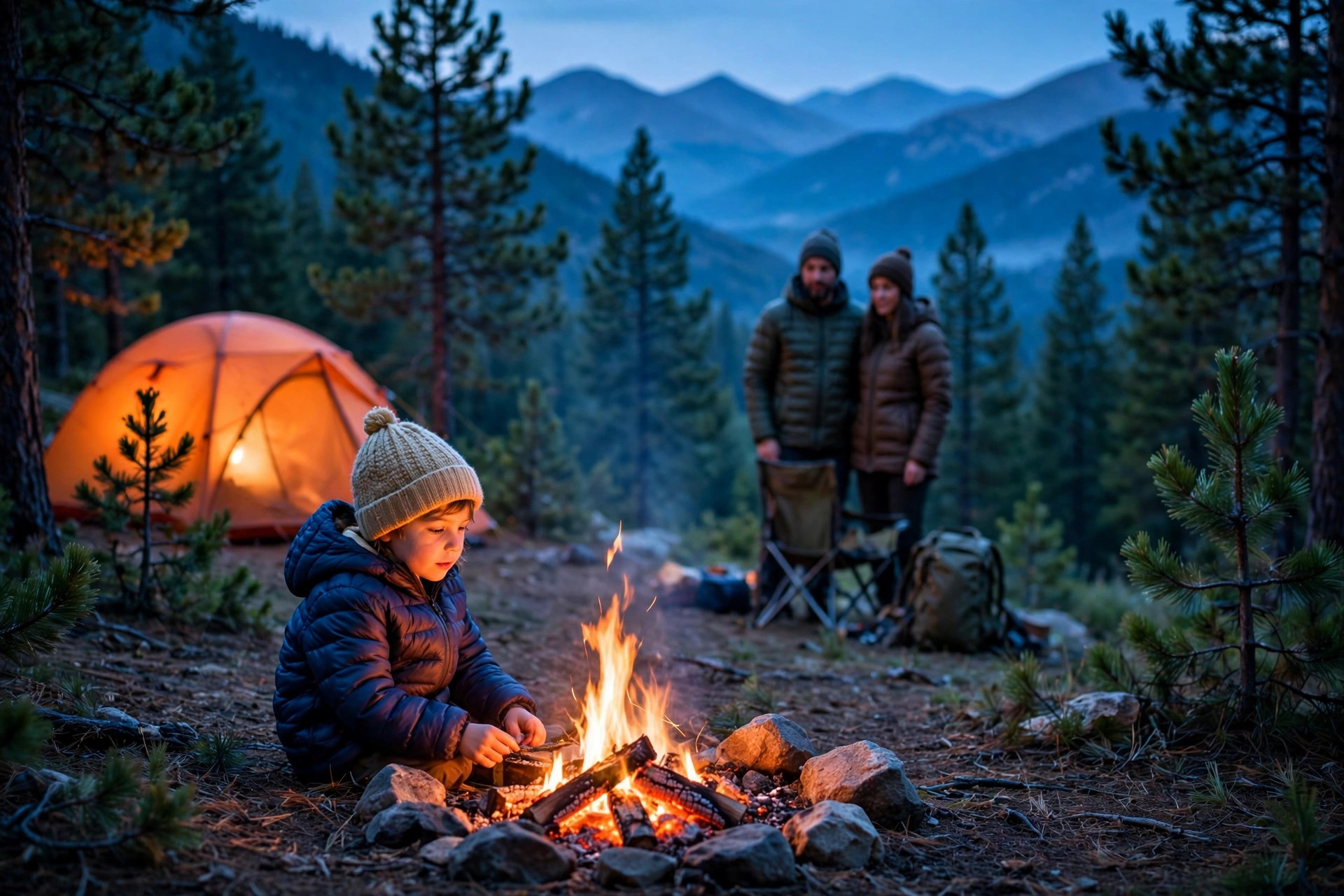
There is a special kind of parental guilt that arrives at 2 a.m. in a tent, when your child wakes up shivering. Learning how to keep kids warm while camping is not about buying the most expensive gear — it is about a simple layering system used consistently, from the trail to bedtime. Here is the exact 4-layer system that works for babies, toddlers, and older kids, plus a temperature chart, a packing list, and the mistakes most parents make.
Why Kids Get Cold Faster Than Adults
Kids have a much higher surface-area-to-body-mass ratio, which means they radiate heat quickly. Toddlers also have less insulating body fat, tire out faster, and are terrible at telling you they are cold until they are really cold.
Babies are a special case: infants under one cannot shiver effectively, so they cannot warm themselves the way older kids can. That makes proper layering for the youngest campers a genuine safety issue, not just a comfort one. The good news? The same system works for every age — you just adjust the thickness and add more attention for the little ones. The National Park Service notes that hypothermia can begin in temperatures well above freezing, especially when wind and dampness are involved, which is exactly the scenario family campers face on a chilly spring or fall night.
The 4-Layer System That Actually Works
Forget one big puffy jacket doing all the work. Four thin-to-medium layers, each with a job, keep a child comfortable from the trail to bedtime — just add or remove layers as temperature and activity change.
Layer 1: The Base Layer — Manage Sweat First
The base layer sits against the skin, and its only job is moving sweat away from the body. This is the most misunderstood layer, and where most families go wrong: never use cotton as a base layer. Cotton absorbs sweat and holds it against the skin, and wet fabric pulls heat from the body roughly 25 times faster than dry fabric. Outdoor folks have a saying — “cotton kills” — and while that sounds dramatic, damp cotton on a cold evening is genuinely how kids end up shivering in the tent.
Instead, choose:
- Merino wool base layers — naturally warm even when damp, odor-resistant (great for multi-day trips), and soft enough that most kids tolerate them. Look for 150–200 weight for three-season camping.
- Synthetic base layers (polyester or polypropylene blends) — cheaper, dry faster than wool, and a fine choice for active kids who run hot.
Fit matters: base layers should be snug but comfortable. For toddlers, one-piece thermal sets stay put better than separates and eliminate the gap at the waistline where cold air sneaks in.
Layer 2: The Mid Layer — Trap Warm Air
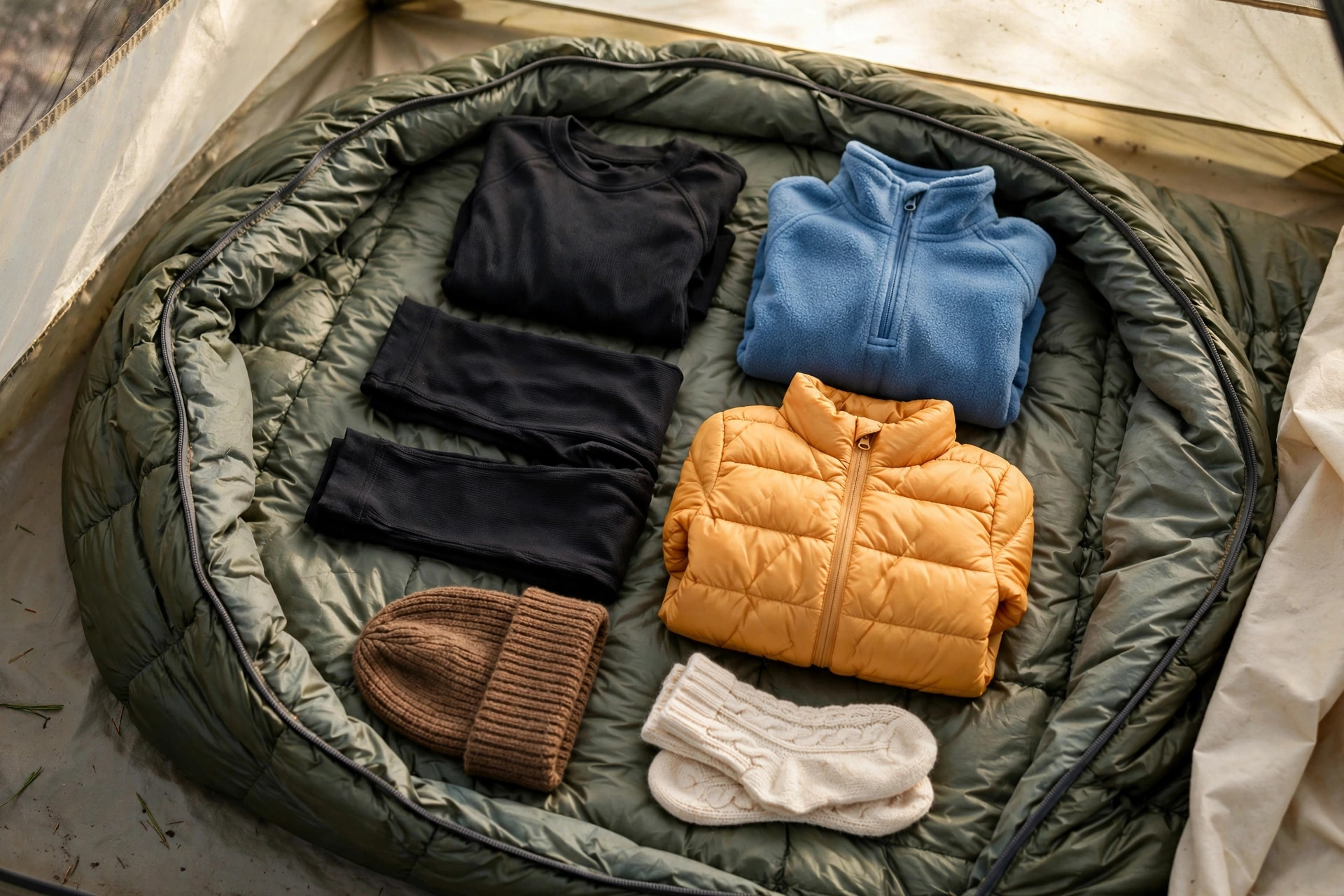
The mid layer is the insulation layer. Its job is trapping the warm air your child’s body produces. Fleece is the family-camping workhorse here: it is affordable, durable, machine-washable, and keeps insulating even when slightly damp.
How thick? Match it to the forecast:
- Mild evenings (50°F+ / 10°C+): a lightweight fleece or even just the base layer plus a long-sleeve shirt is enough.
- Chilly (40–50°F / 4–10°C): a midweight fleece jacket.
- Cold (below 40°F / 4°C): a heavier fleece plus a puffy vest, or a thick fleece with a windproof shell over it.
Kids overheat and cool down in cycles as they run around, and a vest is easier to regulate than a full heavy jacket. REI’s expert advice on how to layer clothing for outdoor activities covers the same principles for adults — the system is identical; kids just need you to manage it for them.
Layer 3: The Outer Shell — Block Wind and Rain
Wind is the silent heat thief. A 10 mph breeze can make 45°F air feel like the high 30s, and kids feel that drop fast. The outer layer’s job is simple: block wind and shed rain while letting sweat vapor escape (breathability).
You do not need expedition-grade shells for family camping. A decent waterproof-breathable rain jacket (look for taped seams and a hood that actually fits a small head) plus rain pants will handle 95% of family trips. Pack them even when the forecast looks perfect — mountain weather changes fast, and a surprise shower without a shell is how a fun afternoon turns into a shivering retreat to the car.
Layer 4: Extremities
Kids lose a disproportionate amount of heat through their heads, hands, and feet — partly because these areas have lots of blood flow near the surface and partly because kid-sized hats and gloves get lost constantly. Pack backups.
- Hat: a snug fleece or wool beanie that covers the ears. Pack two — one always disappears.
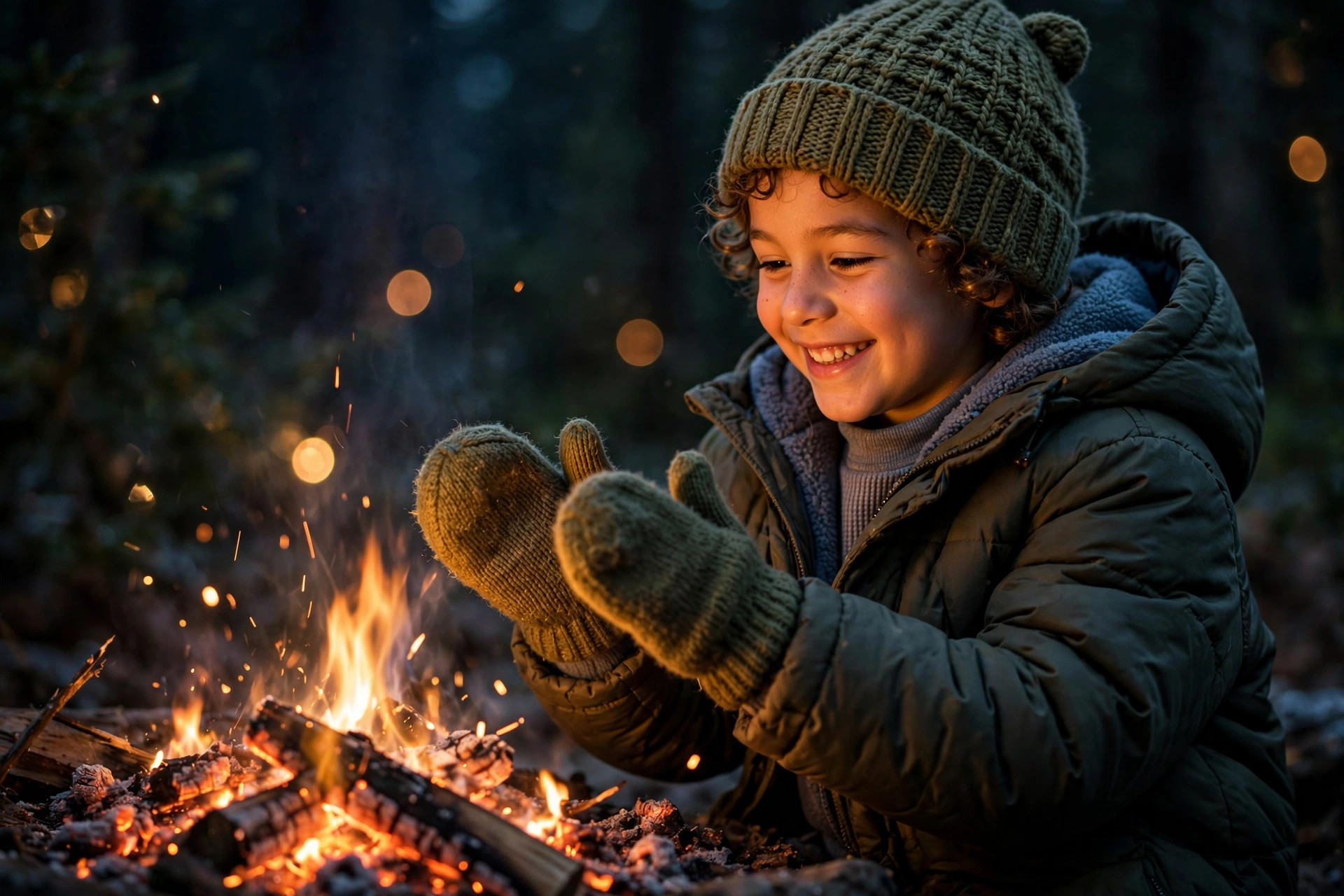
- Hands: mittens beat gloves for toddlers and preschoolers because fingers share warmth inside a mitten. Add thin liner gloves underneath for very cold nights.
- Socks: wool or wool-blend hiking socks. Never cotton athletic socks, and never let kids sleep in the socks they hiked in — damp socks equal cold feet at 3 a.m.
- Neck: a soft neck gaiter or buff seals the gap between jacket collar and chin where cold air pours in. Skip long scarves for small kids (snag hazard).
Kids’ Camping Layering Chart by Temperature
Use this as a starting point and adjust for wind, rain, and your child’s personal thermostat (some kids run hot, some run cold). “Overnight low” means the coldest temperature you expect between dusk and dawn.
| Overnight low | Base layer | Mid layer | Outer layer | Sleep setup |
|---|---|---|---|---|
| 55–65°F (13–18°C) | Lightweight synthetic or merino top + leggings | Light fleece for evening | Rain jacket on standby | Sleeping bag rated 40°F+, pajamas |
| 45–55°F (7–13°C) | Midweight merino or synthetic set | Midweight fleece jacket | Wind/rain shell for evening | Bag rated 30–40°F, warm pajamas + socks |
| 35–45°F (2–7°C) | Midweight merino set | Heavy fleece + puffy vest | Waterproof shell + rain pants | Bag rated 20–30°F, fleece pajamas, beanie |
| 25–35°F (-4–2°C) | Heavyweight merino set | Heavy fleece + puffy jacket | Insulated waterproof shell | Bag rated 15–20°F, full sleep layers + beanie |
| Below 25°F (-4°C) | Reconsider the trip for small kids — or camp somewhere with a heated option. If you go, double every layer and shorten the trip. | |||
Wondering where the line is? We break it down in detail in our guide to how cold is too cold for camping with a toddler — it is one of the most-read posts on TravelAle for a reason.
Keeping Kids Warm at Night (Where Most Trips Go Wrong)
Daytime layering is intuitive. Nighttime is where families get surprised, because temperatures keep dropping after the kids fall asleep and nobody is there to add a layer. Three rules prevent nearly all midnight shivering:
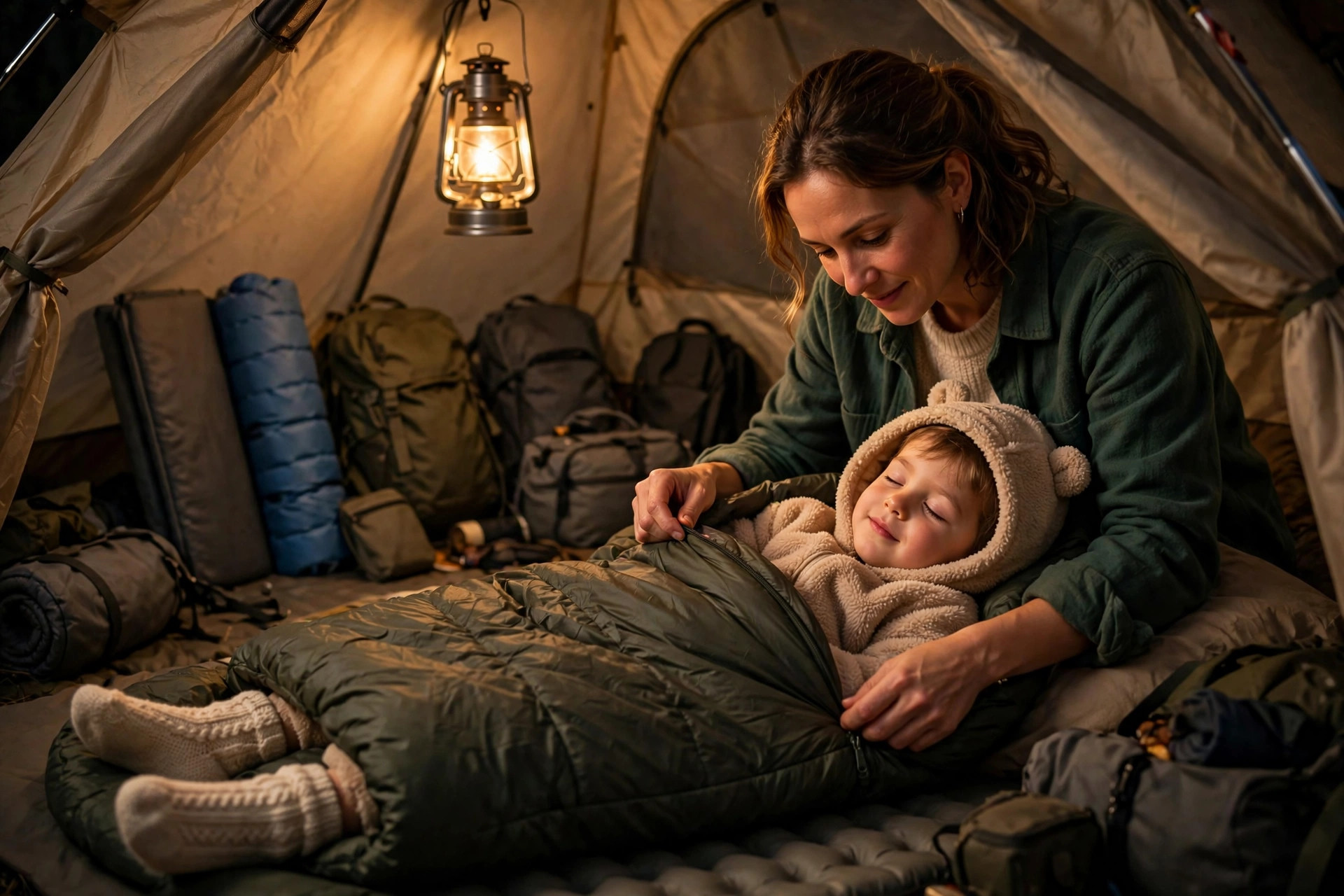
Rule 1: Change into dry sleep clothes. Even if the daytime base layer “feels dry,” it holds sweat. Every child gets a full change into dedicated dry sleep clothes — dry base layer or fleece pajamas, dry socks, and a dry beanie. This single habit matters more than the price of your sleeping bags. Our full breakdown of what toddlers should sleep in when camping walks through fabric choices and bag pairings.
Rule 2: Insulate from below. A sleeping bag’s insulation compresses under body weight, so the ground steals heat fast. A sleeping pad with a decent R-value (3+ for three-season camping, higher for cold) is non-negotiable — for kids, a closed-cell foam pad plus an inflatable pad stacked together is a cheap, bombproof combo. Toss an extra blanket under small kids’ pads for good measure.
Rule 3: Warm the bag before bed. A sleeping bag feels like a refrigerator when a tired kid climbs in. A hot water bottle (wrapped in a sock so it cannot burn skin) tucked into the foot of the bag 20 minutes before bedtime transforms the experience. For older kids, a few minutes of jumping jacks before zipping in generates body heat that the bag then traps.
One more tip: vent the tent slightly even on cold nights — trapped breath creates condensation that dampens everything by morning.
7 Layering Mistakes Parents Make
- The cotton base layer. Jeans, cotton hoodies, and cotton pajamas are the number-one cause of cold kids at campgrounds. Swap them for synthetics or wool.
- One giant jacket instead of layers. A single heavy coat cannot adapt when a kid goes from hiking (sweating) to sitting at the fire (cooling fast). Layers adapt; monoliths do not.
- Overdressing at bedtime. Piling every layer onto a sleeping child causes sweating, and sweat becomes a chill by 2 a.m. Dry sleep clothes plus the right bag beats a mountain of damp layers.
- Forgetting the post-activity change. Kids who played hard all afternoon are wearing damp clothes even if they do not feel wet. Change base layers before the evening campfire.
- Ignoring wind. Parents check the temperature and skip the wind. A windproof shell layer solves most “but it was only 50 degrees!” mysteries.
- No spare dry layers. One muddy puddle or spilled hot chocolate can soak a child’s only warm layer. Pack a full spare set of base + mid layers per kid — they weigh almost nothing.
- Waiting until kids complain. By the time a toddler says “I’m cold,” they are already quite cold. Check hands, noses, and the back of the neck every hour in chilly weather, and layer before the shivering starts.
Packing Checklist: Layers for a Weekend Trip
Per child, for a 2–3 night trip in variable weather (adjust up or down for the forecast):
- 2× base layer tops + 2× base layer bottoms (merino or synthetic)
- 1–2× fleece mid-layers (one light, one heavy)
- 1× puffy jacket or vest
- 1× waterproof rain jacket with hood + rain pants
- 2× warm beanies (one will get lost)
- 2–3× wool hiking socks + 1× dedicated dry sleep socks
- 1× mittens + 1× thin liner gloves
- 1× neck gaiter
- 1× set of dry fleece sleep clothes (kept in a dry bag, never worn during the day)
- 1× spare full base-layer set sealed in a zip bag (the emergency dry set)
Cross-check this against our family camping checklist of 47 essentials so nothing else slips through the cracks, and if rain is in the forecast at all, read our guide to camping in the rain with kids — wet-weather layering has a few extra tricks.
Frequently Asked Questions
How cold is too cold to camp with kids?
It depends on age, gear, and experience, but as a rough guide: with proper layers and sleeping setups, school-age kids handle nights down to freezing comfortably; toddlers and babies are best kept to nights above 40°F (4°C) unless you have genuinely cold-rated gear and experience. Wind and rain lower every threshold. We go deep on the specifics in our toddler cold-weather guide.
Should kids sleep in all their daytime layers?
No — this is one of the most common mistakes. Kids should change into dedicated dry sleep clothes (dry base layer or fleece pajamas, dry socks, dry beanie). Sleeping in sweaty daytime clothes leads to chilling in the middle of the night, no matter how warm the sleeping bag is.
Is cotton really that bad for camping?
For the layers closest to the skin, yes. Cotton absorbs and holds moisture, and damp fabric draws heat away from the body far faster than dry fabric. A cotton hoodie as a fashion layer over proper synthetics on a warm dry day is harmless — but cotton base layers, socks, or pajamas on a cold or damp trip are asking for a miserable night. When in doubt, check labels: merino wool, polyester, and nylon blends are your friends.
What if my toddler refuses to wear a hat?
Tricks that work: a jacket hood (harder to pull off than a hat), a balaclava-style beanie, letting them pick the hat at the store, or a warm ear-covering headband, which many hat-refusers accept. Also check why they refuse — an itchy wool hat gets rejected while a soft fleece one is tolerated.
Can we just use regular blankets instead of a kid’s sleeping bag?
Blankets work for warm summer nights, but a properly sized kid’s sleeping bag is warmer because there is less dead air space for small bodies to heat. For anything below about 50°F at night, a real sleeping bag is worth it — see our guide to what toddlers should sleep in when camping for bag and quilt options.
Do kids need different layers than adults?
The system is the same — base, mid, shell, extremities — but kids need more active management. Adults notice they are getting cold and add a layer; kids often do not notice until they are miserable. Check in on them regularly, keep spare dry layers accessible (not buried in the car), and remember that a playing child who strips down to a t-shirt at 55°F will need layers the moment they stop moving.
The Bottom Line
Keeping kids warm while camping comes down to a repeatable system: no cotton against the skin, a mid-layer for insulation, a shell for wind and rain, warm extremities, dry sleep clothes, and insulation from the cold ground. Practice it on a backyard campout first — the real trip will feel easy.
