You booked the site weeks ago, the kids have been counting down the days, and now the forecast shows rain all weekend — it feels like the trip is ruined before it starts. Here is the good news: a rainy forecast does not have to mean a cancelled trip. Some of our family's favorite camping stories happened in the rain — puddle jumping, hot chocolate under a tarp, raindrops drumming on the tent at night. The difference between a miserable weekend and a memorable one is almost never the weather itself. It is preparation, a flexible attitude, and knowing which conditions are genuinely unsafe. This guide covers deciding whether to go, setting up a camp that stays dry, keeping kids warm and happy, and the extra gear that makes all the difference.
First, Decide: Go, Adjust, or Reschedule?
Not all rain is equal, and the first decision is an honest one. Light showers, drizzle, or rain that clears by afternoon is completely manageable with the right setup — go, and use this guide. Steady all-day rain is harder, but still doable for a night.
Some conditions are a firm no, and no campsite fee is worth arguing with them:
- Thunderstorms — Lightning is the biggest weather danger outdoors, so if storms are forecast for your camping window, reschedule. The National Weather Service's rule is simple: when thunder roars, go indoors. Read their lightning safety guidance before any unsettled trip, and know that a hard-roofed car is your safest shelter at a campground — never a tent.
- Flood risk — If your site is near a creek, river, or dry wash and heavy rain is expected, move or cancel. Water can rise fast, sometimes from rain falling miles away. The NWS flood safety page explains the warning signs.
- Cold rain with very young kids — Rain in the 40s with a baby or toddler is a different calculation than rain in the 70s: cold plus wet is how hypothermia happens, and little bodies chill quickly. If your child is under three, postponing is good parenting, not failure.
Also check the campground itself. Many sites in our guide to the best family camping spots in the USA have good drainage and tree cover, and a quick call ahead can tell you if your site ponds when it rains — if so, ask to switch to a higher one.
Set Up Camp Like You Expect the Rain
The ten minutes you spend setting up decide how the whole rainy trip feels — do these things before the first drops fall, even if the sky looks fine when you arrive.
Pitch on high ground
Walk the site before you unroll anything. Look for the slightly raised, flatter area and avoid any dip where water clearly collects — the evidence shows in flattened dirt, debris lines, or a darker patch of soil. Pitch there, with the door facing away from the wind so rain is not blown straight inside.
Put a tarp over the tent
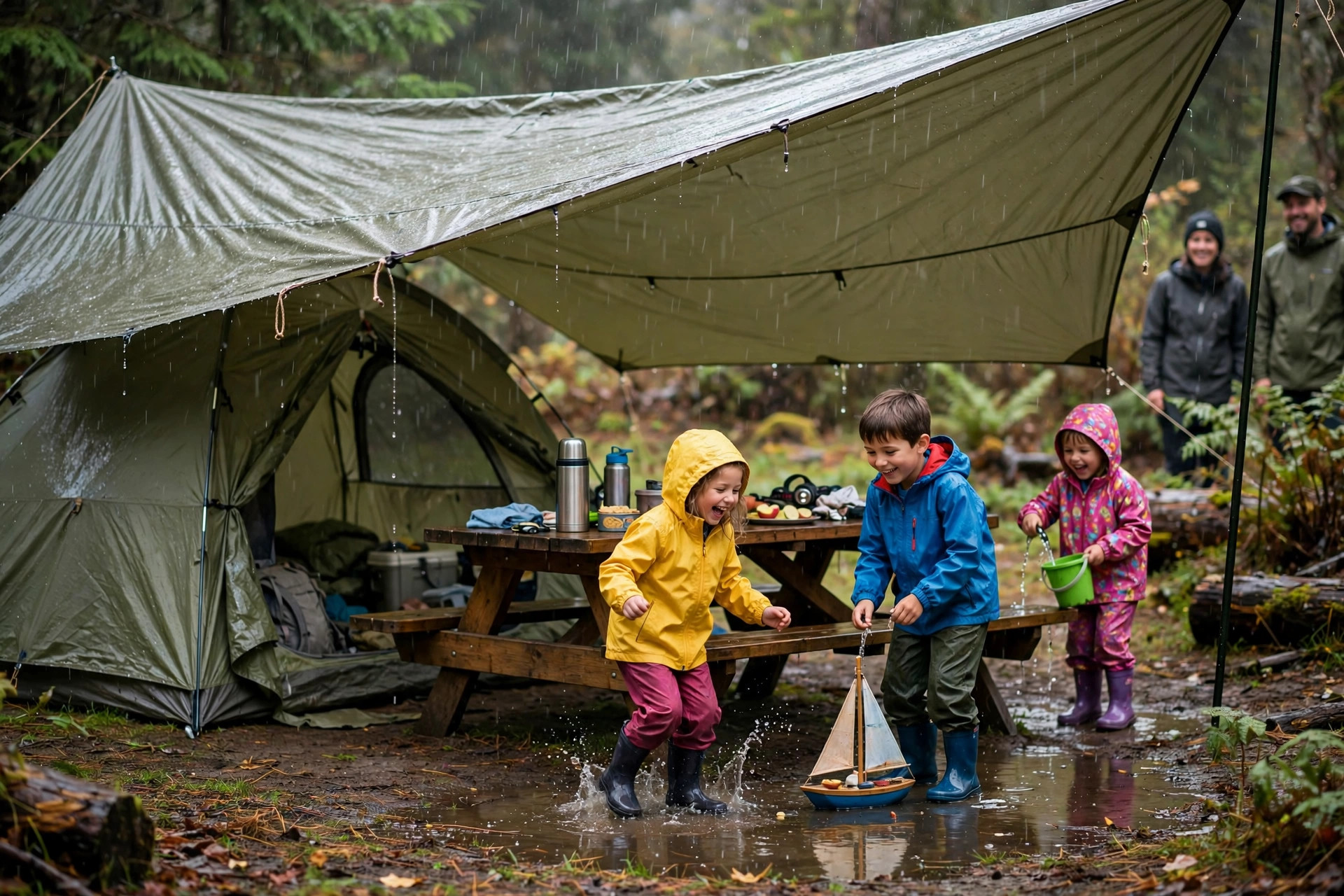
A tarp strung above the tent is the single best rainy-camping upgrade. It catches most of the rain before it hits the tent fly, which means quieter nights and a dry porch area in front of the door. Angle one side lower so water runs off away from the tent, and extend it past the tent's footprint on every side, using trees or tarp poles.
Make a covered kitchen and living area
String a second, larger tarp (or a pop-up canopy) over the picnic table. This becomes your living room — cooking, eating, and games all happen here, while the tent stays a dry sleeping-only zone. Enforce that rule from minute one: no wet shoes, jackets, or snacks inside the tent.
About trenching — usually, don't
Old-school advice says to dig a trench around your tent to divert water. At most modern campgrounds digging is not allowed, and it damages the site for the next family. Skip it — high ground, a ground cloth tucked fully under the tent (never sticking out, or it channels water underneath), and your tarp overhead solve the same problem the right way.
Keep the Kids Dry: Layers, Rain Suits, and Dry Bags
Kids do not mind rain nearly as much as they mind being cold and wet — your whole clothing strategy is about separating those two things.
- Dress them in a full rain suit or jacket plus rain pants. A jacket alone leaves legs soaked in five minutes of puddle play. One-piece suits suit toddlers best; two-piece sets make bathroom breaks easier for older kids.
- Layer underneath, and skip cotton. Cotton holds water and chills fast. Synthetic or wool base layers plus a fleece mid-layer keep kids warm even if damp creeps in.
- Pack spare clothes in dry bags, not in the duffel. Each child gets one waterproof dry bag (a heavy-duty trash bag works in a pinch) with a complete change of clothes, underwear and socks included. It stays sealed until truly needed — the emergency dry set is sacred.
- Two extra pairs of socks per child, minimum. Dry socks rescue a bad mood faster than almost anything. Add a warm beanie under the rain hood, too — it keeps in a surprising amount of heat.
- Footwear: rain boots for camp, one dry pair of shoes for the ride home. Camp shoes will get wet — accept it, and keep the car shoes bagged and separate.
Our complete camping packing checklist is your foundation — add the rain extras from the checklist at the end of this article.
Protect the Sleep Gear at All Costs
If the sleeping bags stay dry, the trip survives. If they get wet, everyone is cold, nobody sleeps, and you will be packing up at midnight.
Keep sleeping bags and pillows in waterproof stuff sacks or dry bags inside the car until the tent is pitched and the tarp is up — set them up last. Zip the tent closed whenever nobody is inside; one open-door shower is all it takes to soak a bag. Teach kids the "tent door drill": open, in, zip, every time.
Inside, lay bags on sleeping pads (they also insulate from cold ground) and keep everything a few inches from the tent walls, where condensation collects. Damp layers come off before anyone climbs into a bag. And if the sun appears for even twenty minutes, drape the bags out to air.
Quick Fixes for Common Rain Problems
| Rain problem | Fast fix |
|---|---|
| Water pooling on the tarp | Lower one corner so it drains off one side, away from the tent |
| Wet shoes everywhere | A lidded plastic bin by the tent door as the "shoe parking lot"; stuff shoes with newspaper overnight |
| Condensation dripping inside the tent | Open the vents and crack the door zipper a few inches at the top for airflow |
| Mud tracked into the tent | An old towel as a doormat at the entrance, and a no-shoes-inside rule from the start |
Rainy-Day Activities That Actually Work Under a Tarp
A rainy afternoon feels endless only if you are waiting for it to stop. Plan for the tarp hours instead, and they often become the part kids talk about most. Set up an activity station at the picnic table: coloring books in a zip bag, cards, a travel game, and a flashlight for shadow puppets after dark.
Crafts are perfect tarp entertainment — our roundup of easy kids' camping crafts and outdoor activities has ideas needing almost no supplies. Beyond the table, lean into the rain instead of hiding from it:
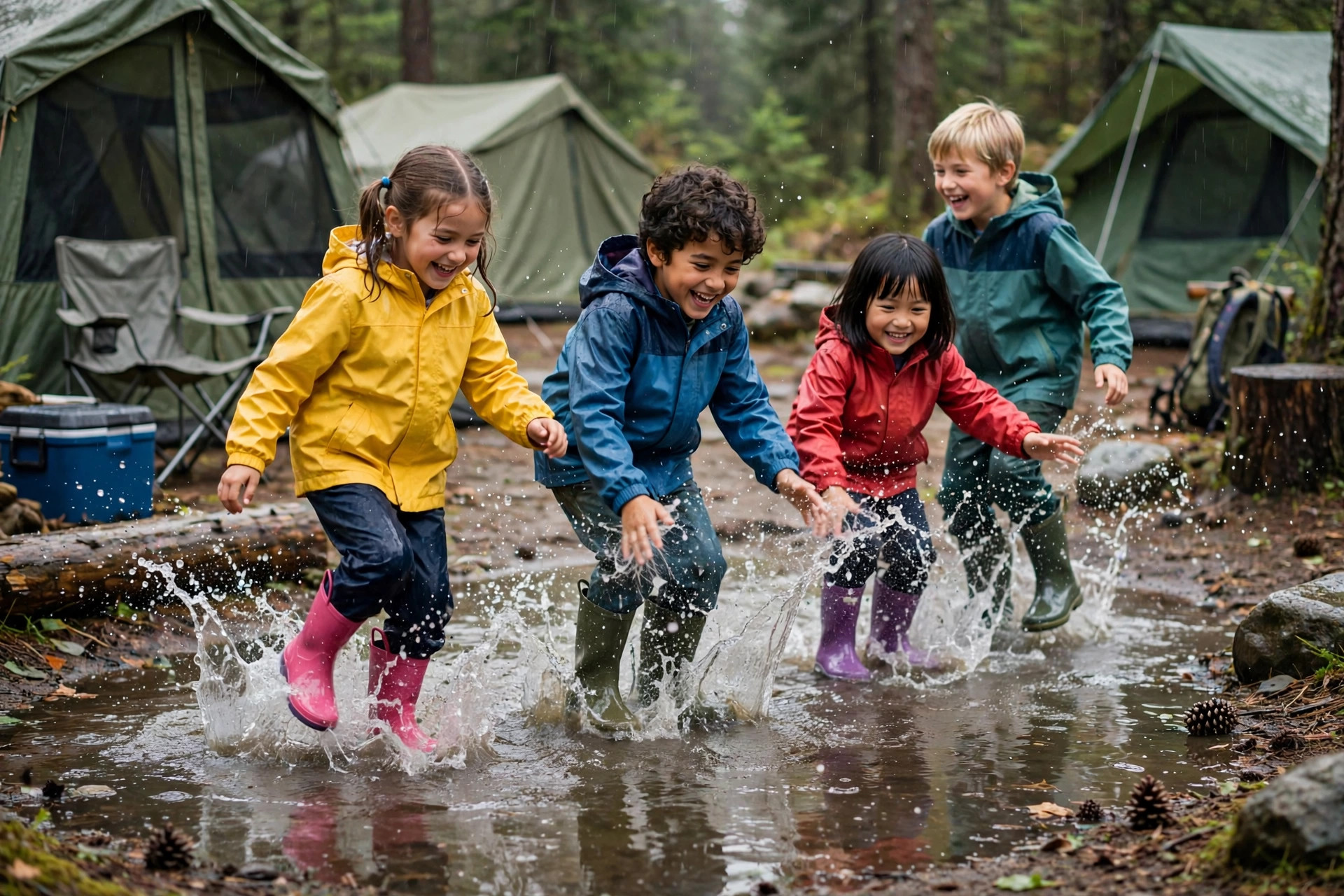
- Puddle jumping contests and "biggest puddle" walks in full rain gear
- Worm and snail safaris — they all come out in the rain
- Leaf and bark boat races in a little runoff stream (supervise closely, and never near real flowing water)
- A read-aloud or audiobook in the tent with headlamps and snacks
And bring one "break glass" surprise — a new small game, glow sticks, a special treat — saved for the hardest moment of the rainiest afternoon.
Food and Hot Drinks in Wet Weather
Cook under the tarp's edge with good ventilation, and keep meals simpler than your fair-weather plan — this is not the trip for elaborate campfire cooking. One-pot meals, foil packets prepped at home, quesadillas, pasta, and soup all work beautifully on a camp stove in the rain.
Hot drinks are morale in a mug: hot chocolate for kids, tea or coffee for you, served early and often. Keep coolers and food bins closed and covered — wet weather does not stop raccoons. Store lighters in a sealed waterproof bag, and pack two, in different bags; a lighter that will not light is a classic trip-ruiner.
Drying Out: The Nightly and Morning Routine
Five minutes of drying routine, twice a day, keeps damp from compounding into misery. At night, hang wet rain gear from a clothesline strung under the tarp — never inside the tent, where it just humidifies your sleeping space. Wring out socks and gloves and hang them too, and park shoes in the bin by the door.
In the morning, wipe any condensation pooled in the tent corners with a camp towel. If you have to pack up in the rain, load the tent loosely into a garbage bag rather than forcing it into its stuff sack, then set it up to dry at home the same day — a tent stored wet mildews fast and smells like it forever.
Rainy-Trip Packing Add-Ons
Start with our ultimate camping checklist of must-have essentials, then add these rain-specific extras:
- Two tarps (one over the tent, one over the picnic table) plus extra cord and bungees
- A full rain suit or jacket-and-pants set for every family member
- One waterproof dry bag per person for the emergency clothing set
- Extra socks — two more pairs per child than you think you need
- Rain boots for kids, plus one dry pair of shoes each for the drive home
- A lidded plastic bin for wet shoes and gear by the tent door
- Zip-top bags in several sizes for phones, books, and games
- A camp towel, plus an old towel as a tent-entrance doormat
- Newspaper for stuffing wet shoes overnight
- A clothesline or length of paracord for hanging wet gear under the tarp
- One surprise game, treat, or pack of glow sticks saved for the rainiest moment
Frequently Asked Questions
At what point should you cancel a camping trip because of rain?
Cancel or reschedule if thunderstorms with lightning are forecast, if there is any flood risk near your site, or if cold rain (roughly below 50°F) is expected and you are camping with a baby or young toddler. Light or passing rain, on the other hand, is very manageable with a tarp setup and the right clothing.
How do you keep a tent dry in heavy rain?
Pitch on high ground, tuck a ground cloth fully under the tent, hang a tarp above it angled so water runs off away from the tent, and keep the door zipped whenever nobody is inside. Keep sleeping gear in dry bags until the tent and tarp are up, and keep everything a few inches from the walls, where condensation forms.
What should kids wear camping in the rain?
A rain suit, or a rain jacket with rain pants, over synthetic or wool layers — never cotton, which chills kids fast once wet. Add rain boots, a warm hat under the hood, plenty of spare socks, and one full change of clothes sealed in a dry bag as an emergency set.
Is it safe to camp with kids during a thunderstorm?
No. A tent offers no protection from lightning. Get everyone into a hard-roofed vehicle or building and wait at least 30 minutes after the last thunder before going back outside. This rule has no exceptions — and it is why a storm forecast means reschedule, not tough it out.
How do you entertain kids at camp when it rains all day?
Set up an activity station under a tarp — crafts, coloring, cards, travel games — then dress everyone in rain gear and enjoy the wet: puddle jumping, worm spotting, and leaf-boat races are genuine fun for kids. Save one surprise treat or game for the hardest stretch of the afternoon.
The Rainy Trip Might Be the One They Remember
Here is the secret nobody tells you before your first wet camping trip: kids do not grade trips the way weather apps do. They remember the puddle they were finally allowed to jump in, the hot chocolate under the tarp, and rain drumming on the tent while they were warm and dry next to you. Go in with the right setup, respect the storms that really do mean "stay home," and keep the sleep gear dry — and a rainy weekend can absolutely be a great one. It even makes a good case for picking one of those forgiving, well-drained family camping spots next time and doing it all again, whatever the forecast says.
