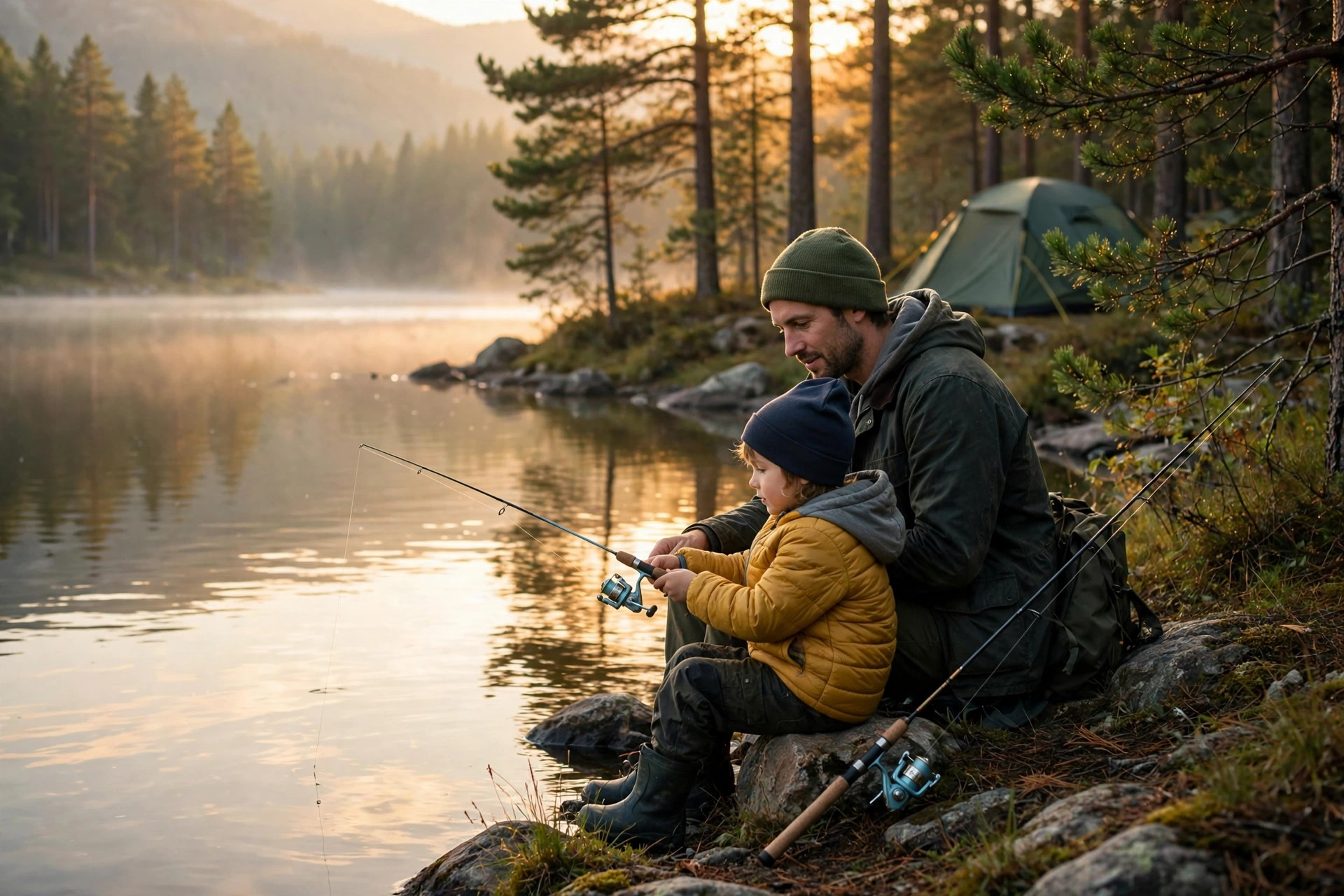
There’s a special kind of magic in watching a child’s face when their bobber dips under the water for the first time. That single tug on the line — small hands gripping the rod, the gasp, the frantic reeling — is a core memory in the making. But here’s what nobody tells you: a kid’s first fishing trip goes best when it happens from a campsite, not as a separate outing. Planning your kid’s first fishing trip around camping gives you the warm-up evening, the sunrise session, and the slow pace that turns beginners into lifelong anglers.
This guide walks you through exactly how to plan a first fishing trip that your child will love — from picking the water and gear to a minute-by-minute plan for the big morning. No expensive equipment, no marathon days, no tears. Just a day they’ll talk about for years.
Why camping makes the first fishing trip ten times better
Most “take a kid fishing” guides assume you drive somewhere, fish for a few hours, and drive home. That’s the hard mode. When you fish from your campsite, everything gets easier:
- No commute pressure. The pond is a five-minute walk from your tent, so there’s no “we drove an hour, you WILL have fun” energy. If the kids want to quit after 20 minutes, breakfast is back at camp.
- You can pre-fish the evening. Scout the bank, watch for rising fish, and check where the deep spots are — all while dinner cooks on the camp stove.
- Sunrise is your secret weapon. Fish feed hardest at dawn. From a tent, “early morning” means stumbling out in pajamas with a rod — no 5 a.m. car ride required.
- The exit is easy. Tired kid? Walk back to camp. No packing the car, no long drive home with a cranky passenger.
If you’re new to camping with kids in general, start with our first family camping trip weekend plan before adding fishing to the mix.
What age can kids start fishing?
Most kids are ready for a real first fishing trip between ages 3 and 4 — earlier than most parents expect. The key isn’t age, it’s attention span. Here’s a realistic breakdown:
| Age | What they can do | Best setup | Trip length |
|---|---|---|---|
| 3–4 | Hold the rod, watch the bobber, reel with help | You cast, they hold and reel | 15–30 minutes |
| 5–6 | Push-button cast (with practice), reel alone | Spincast combo, pre-rigged | 30–60 minutes |
| 7–9 | Cast independently, bait their own hook (maybe) | Light spinning rod, bobber + worms | 1–2 hours |
| 10+ | Full setup, knot tying, fish handling | Spinning rod, small lures or bait | 2–3 hours |
The rule that matters most: leave while they still want one more cast. Short and happy builds an angler; long and tearful builds a kid who never wants to go again.
Pick the right water (this matters more than the rod)
The single biggest predictor of a successful first trip is where you fish. Your child doesn’t need a trophy lake — they need water where fish actually bite.
Best water types for a first trip
- A small pond or stocked lake near your campsite. Campground ponds and stocked lakes are the gold standard. They’re calm, shallow at the edges, and often loaded with panfish that bite on almost anything.
- A slow creek or river eddy. Moving water adds excitement, but only if the bank is gentle and the current is slow. Avoid anything with steep, muddy banks.
- A fishing dock or pier. Many campgrounds and state parks have them. Docks give kids a stable, flat surface and put them right over deeper water.
What to avoid
- Deep, fast water with slippery rocks — a safety risk for small kids.
- Remote spots that require a long hike to reach — you want a quick retreat path.
- Unknown waters with no recent fishing reports — ask the campground host or bait shop what’s biting.
Check the rules before you go
In most U.S. states, children under a certain age (often 12–16) don’t need a fishing license, but adults do — even if you’re only helping your child. Rules vary by state, and some campgrounds sit inside national parks with their own regulations. Check your state’s fish and wildlife website before the trip, and look up catch limits and bait restrictions. The National Park Service fishing page is a good starting point if you’re camping in or near a national park, and Take Me Fishing has state-by-state license and access information.
The simple gear that actually works
You do not need a tackle shop’s worth of equipment. Here’s the short list that actually matters for a kid’s first trip:
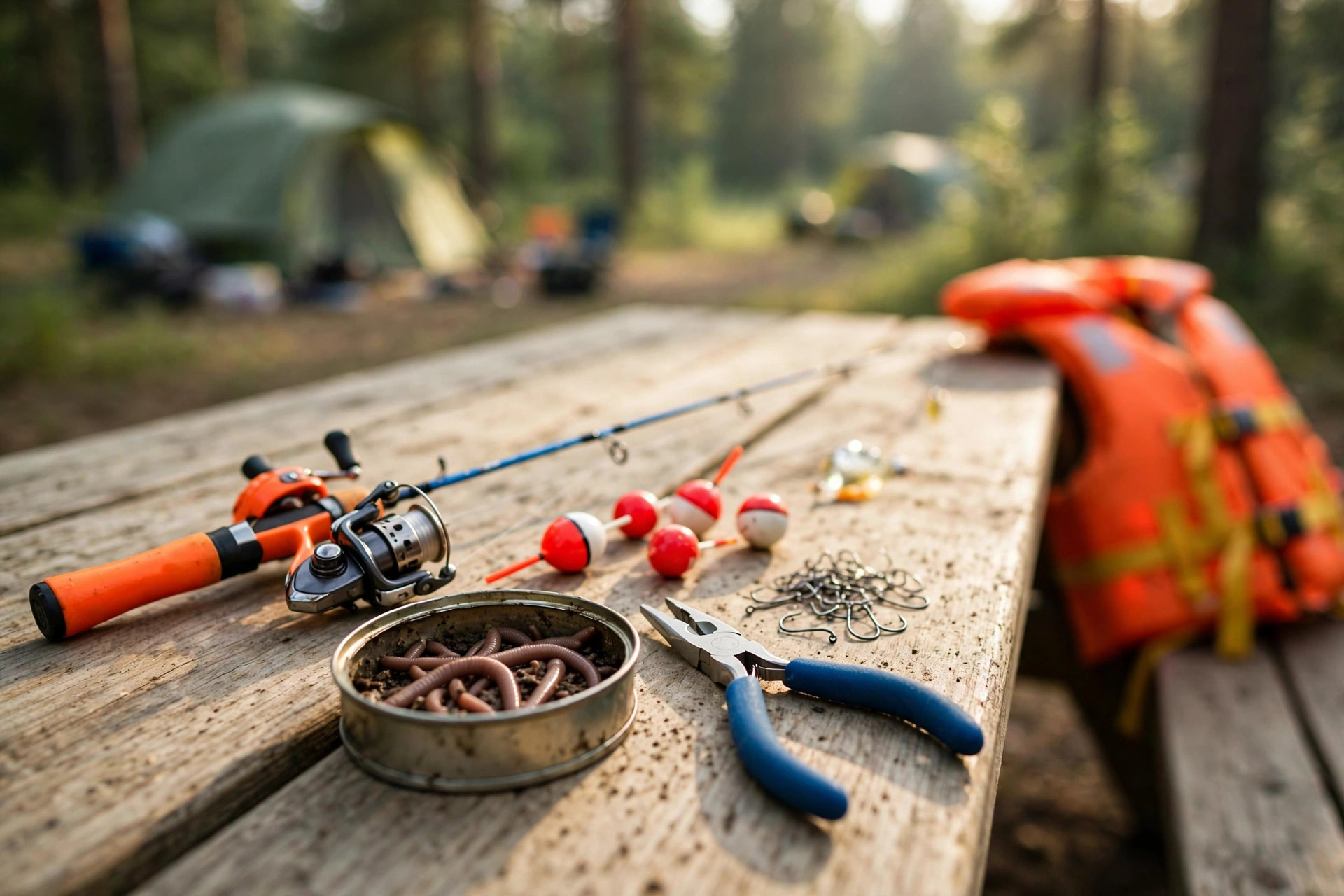
- One spincast combo per child (ages 3–7) — the push-button reel is by far the easiest for small hands. For ages 8+, a light 5–6 foot spinning rod works well. Skip the toy-store “character” rods; they tangle constantly and frustrate kids.
- Small hooks (size 8–10), split-shot sinkers, and bobbers — bobbers are magic for kids because they make bites visible.
- Live bait: worms or crickets. Buy them at the campground store or bait shop. Kids love handling worms, and panfish can’t resist them. Bring a small bait cup with a lid.
- Needle-nose pliers — for removing hooks quickly and safely.
- A small landing net — cheap, and it makes every catch feel like a big deal.
- A life jacket — mandatory for kids near deep or moving water, and smart on docks and boats. Keep one on hand too.
- Sun protection, bug spray, and snacks — a hungry, sunburned kid is done fishing in 10 minutes. Pack more water and snacks than you think you need.
- A small first-aid kit — hooks, rocks, and sun mean scraped knees and the occasional hook in a finger. Our family camping first-aid kit covers what to pack.
Rig the rods at camp the evening before. Tie on the hook, add the bobber and split shot, and spool fresh line if the reel is old. Morning-you will be grateful. If your child is old enough, practice casting in an open area with a rubber plug (no hook) before the real thing — five minutes of practice prevents most tangles.
The evening-before setup: your secret advantage
Here’s where the camping angle pays off. The evening before fishing day:
- Walk the bank together. Let the kids throw rocks and look for fish while you quietly note where the water is calm, where the bank is flat, and where you’ll set up chairs.
- Rig everything. Two pre-rigged rods (one is always a backup — tangles happen) beat one rod and a tackle box of good intentions.
- Check the weather and sunrise time. Aim to be at the water within an hour of sunrise for the best bite. Lay out clothes the night before.
- Talk about the plan at the campfire. Tell the kids what to expect: “Tomorrow we’re going to catch the fish for breakfast” builds anticipation better than any lecture.
While you’re at it, double-check your food storage plan — fresh bait and cleaned fish both attract animals, so keep the cooler and bait sealed in the car or a bear box overnight.
Your first-trip timeline: morning of the big day
Sunrise: get to the water early
Fish feed most actively in the first two hours after sunrise. Have the kids dressed, fed a quick breakfast, and at the water while the light is still golden. Bring a blanket or camp chairs — kids need a comfortable home base between casts.
The first cast: let them do it (with help)
Hand your child the rod, help them aim the cast, and let them push the button themselves. Then sit back and don’t touch the rod unless they ask. Your job today is guide, not angler — expect to spend the morning baiting hooks, untangling line, and celebrating. That’s the job.
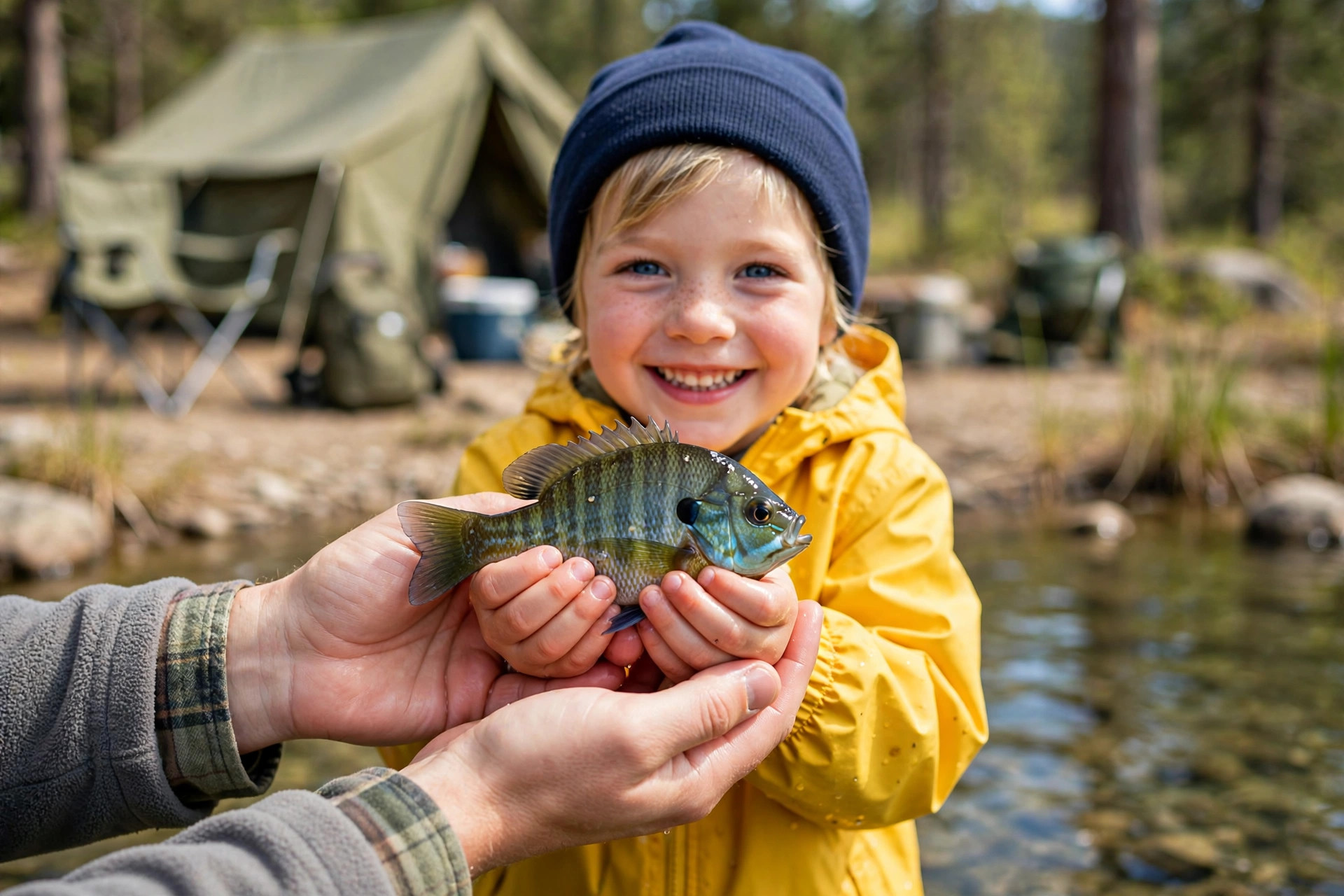
Wet your hands before handling any fish — dry hands damage their protective slime. Support the fish gently, let the child touch it (slimy is part of the fun), and take the photo fast. For a first trip, catch-and-release is simplest: lower the fish back and watch it swim away.
When the bobber dips: the moment of truth
Teach one simple rule: when the bobber goes under, lift the rod tip up. That’s it — no fancy hook-set. Then let them reel, helping only with the rhythm if they stall. The fish will likely be a small bluegill or sunfish — perfect.
Know when to quit
The trip is over when any of these happen — and that’s a good thing:
- Your child asks to go do something else (throw rocks, eat snacks, explore).
- Attention has clearly drifted — they’re poking the water with a stick instead of watching the bobber.
- You’ve been out longer than the trip-length guide above for their age.
Leave while it’s still fun. Pack up smiling, praise the heck out of them at camp, and let them tell the story to anyone who’ll listen. That story is the whole point.
Safety rules that are non-negotiable
Teach these before the first cast, calmly and once:
- The casting zone. No one stands behind or beside the person casting. Establish a clear “casting circle” and make everyone respect it. A hook in a sibling’s ear ends the trip.
- Hooks stay covered until the rod is at the water. Carry rods tip-up and hook-down, or use a hook keeper.
- Life jackets near deep or moving water — non-negotiable, no exceptions, no “but I can swim.”
- If a hook snags skin or clothing: freeze. Don’t yank. Cut the line, then push the hook out with pliers or get help. Keep pliers and antiseptic in your pocket, not back at camp.
- Sun and water. Reapply sunscreen, keep everyone drinking water, and watch for flushed cheeks — kids overheat faster than they realize.
When the fish don’t bite: plan B (built in)
Some days the fish simply aren’t biting, and that’s okay — your trip plan should never depend on a catch. A morning at the water with snacks and skipped stones is a great camping day even with zero fish. The kids won’t remember the fish count — they’ll remember being there with you.
The complete first-trip packing checklist
Tape this to the inside of your camp kitchen bin the night before:
- ☐ Spincast combo(s), pre-rigged with bobber + hook
- ☐ Live bait (worms or crickets) in a lidded cup
- ☐ Needle-nose pliers + hook remover
- ☐ Small landing net
- ☐ Life jackets (one per child)
- ☐ Sunscreen, hats, bug spray
- ☐ Snacks + more water than you think you need
- ☐ Camp chairs or a blanket
- ☐ Small first-aid kit (bandages, antiseptic, tweezers)
- ☐ Camera or phone for the first-fish photo
- ☐ Fishing licenses for adults (kids’ rules checked)
- ☐ Ziplock bags (for bait trash and wet clothes)
- ☐ Pack-out bag — pick up every bit of line and tackle. Wildlife thanks you.
Once the trip’s done and the kids are hooked (pun intended), you might want an evening session too — just keep the routine sane with our tips for getting kids to sleep while camping.
Frequently asked questions
Do kids need a fishing license?
In most U.S. states, children under a certain age (often between 12 and 16, depending on the state) can fish without a license. Adults almost always need one, even when only helping a child. Always check your state’s fish and wildlife regulations before the trip, since rules, seasons, and catch limits vary.
What’s the best fish for a kid’s first trip?
Bluegill, sunfish, crappie, and stocked trout are the best beginner species. They’re common in ponds and stocked lakes, they bite readily on worms under a bobber, and they’re small enough for kids to handle. Avoid targeting picky species like bass on a first trip.
What rod should I buy for a child?
For ages 3–7, a spincast combo (push-button reel) around 4–5 feet long is the easiest to learn on. For ages 8 and up, a light 5–6 foot spinning rod with a small spinning reel works well. Avoid cheap toy-character rods — they tangle constantly and frustrate beginners.
How long should a first fishing trip last?
Keep it short: 15–30 minutes for toddlers, 30–60 minutes for ages 5–6, and 1–2 hours for ages 7–9. The golden rule is to leave while your child still wants one more cast. A short trip that ends happy builds an angler; a long one that ends in tears does the opposite.
What if my child is scared of the fish or the worms?
That’s completely normal. Don’t force contact — let them watch you handle the fish first, and let curiosity do the work. If worms are the issue, try dough bait or corn as a less-creepy alternative.
Is it better to fish from shore or a boat with kids?
For a first trip, shore or a dock is far better. It’s stable, there’s room to move, and there’s an easy exit when attention runs out. Boats add safety complexity (everyone in a properly fitted life jacket at all times) and are better saved for trip two or three, once your child loves fishing.
