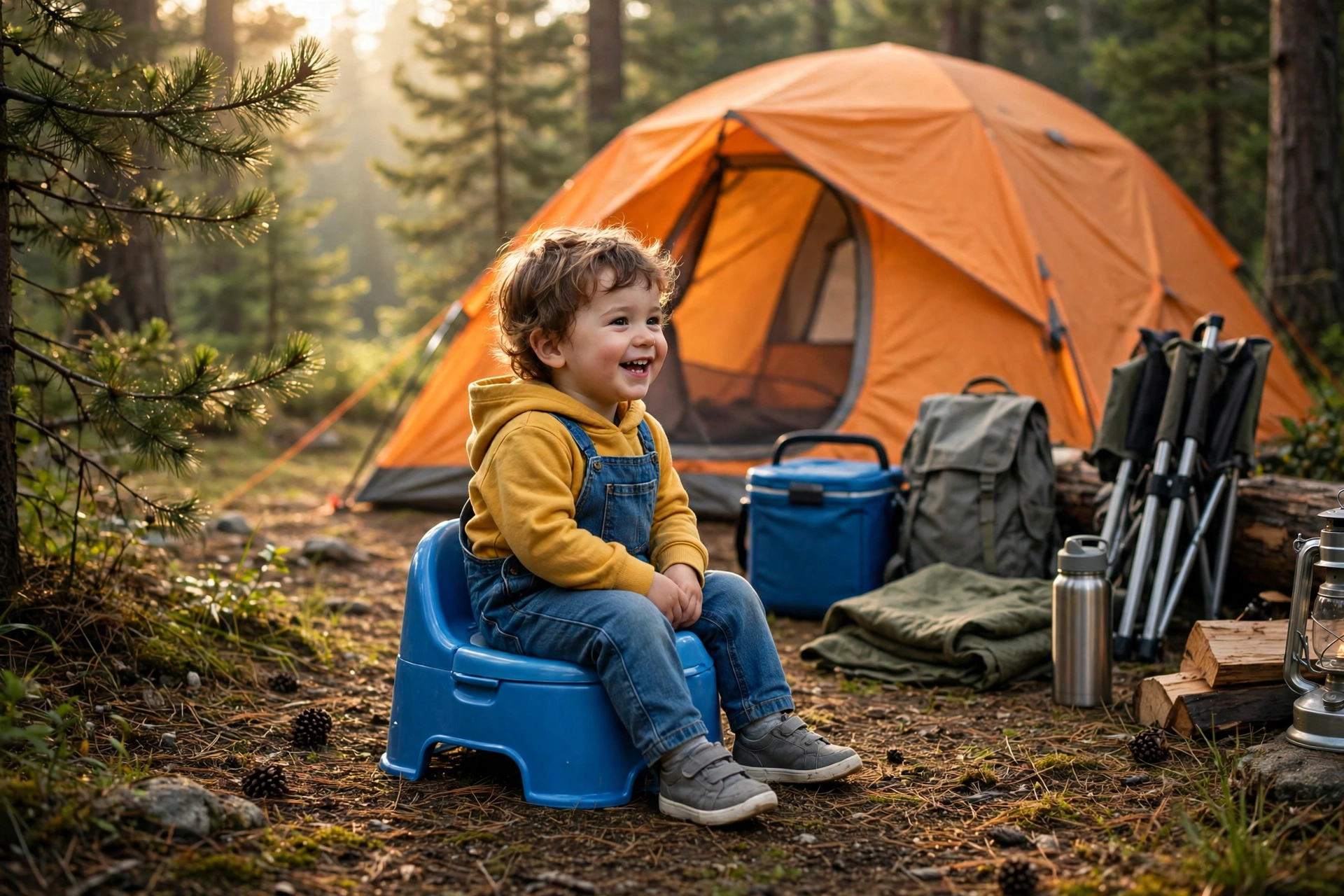
Picture this: you have been potty training while camping is on the calendar — your toddler has had three good weeks of using the potty at home, and the family camping trip you booked months ago is this weekend. Do you cancel the trip, pause training, or keep going?
Keep going. Potty training does not have to stop at the trailhead. With the right gear, a nighttime plan, and realistic expectations about accidents, you can camp with a potty-training toddler and come home with training intact — some parents even find the relaxed outdoor schedule speeds things up. This guide gives you the complete system: what to pack, how to set up the tent, how to handle pee and poop in the woods, and what to do when (not if) accidents happen.
Should You Keep Potty Training During a Camping Trip?
The short answer: if training is going reasonably well at home, keep it going at camp. Consistency is the single biggest factor in potty training success, and a two-day break can feel like a reset to a two-year-old. The longer answer depends on timing:
- Training for 2+ weeks and going well: absolutely keep going. Your toddler has the idea; camp is just a change of scenery.
- Training for less than a week: be honest with yourself. If you are still in the “pee on the floor every 20 minutes” phase, the trip may be easier with training diapers as a backup — and that is not failure.
- About to start training next week: either start before the trip so camp reinforces it, or wait until after. Starting cold at a campground is a rough first impression for everyone.
If your pediatrician has already confirmed your child shows readiness signs (hiding to poop, telling you the diaper is wet, staying dry for 2+ hours), the campground is as good a classroom as the living room. The American Academy of Pediatrics readiness checklist on HealthyChildren.org is worth a look before you commit.
9 Tips That Actually Work for Potty Training While Camping
1. Bring Their Familiar Potty — Not a Brand-New One
Toddlers are creatures of habit. The small potty they have been using at home should come on the trip, even if it takes up trunk space. A new folding travel potty introduced on day one of the trip is one novelty too many. Set the familiar potty up the moment you arrive — same potty, same spot near the tent, so it feels like “their bathroom” from the first hour.
If you do buy a travel potty for the trip, introduce it at home for at least 3–4 days first. A folding potty seat that fits over campground toilets is a good backup for sites with flush bathrooms.
2. Do a Practice Run at Home First
The single best preparation is a backyard camping practice run. Pitch the tent in the yard for one night and run the full potty routine: potty in the tent vestibule before bed, a nighttime trip in the dark, and a morning “pee behind the bush.” You will discover in 12 hours what would have surprised you at a remote campground — the potty is too cold, the path to the bathroom is too dark, or your toddler is terrified of the portable toilet.
3. Build a Nighttime Potty Station Inside the Tent
Midnight bathroom runs are where most camping potty plans fall apart. A sleepy toddler will not walk 100 yards to a vault toilet in the dark — and you do not want them to. Set up a dedicated potty corner inside your tent or tent vestibule:
- Their potty, lined with a biodegradable waste bag for easy cleanup
- A small lantern or headlamp on its dimmest setting (leave it on all night)
- Wipes and a small trash bag within arm’s reach
- A spare change of clothes folded next to the potty — not buried in a duffel bag
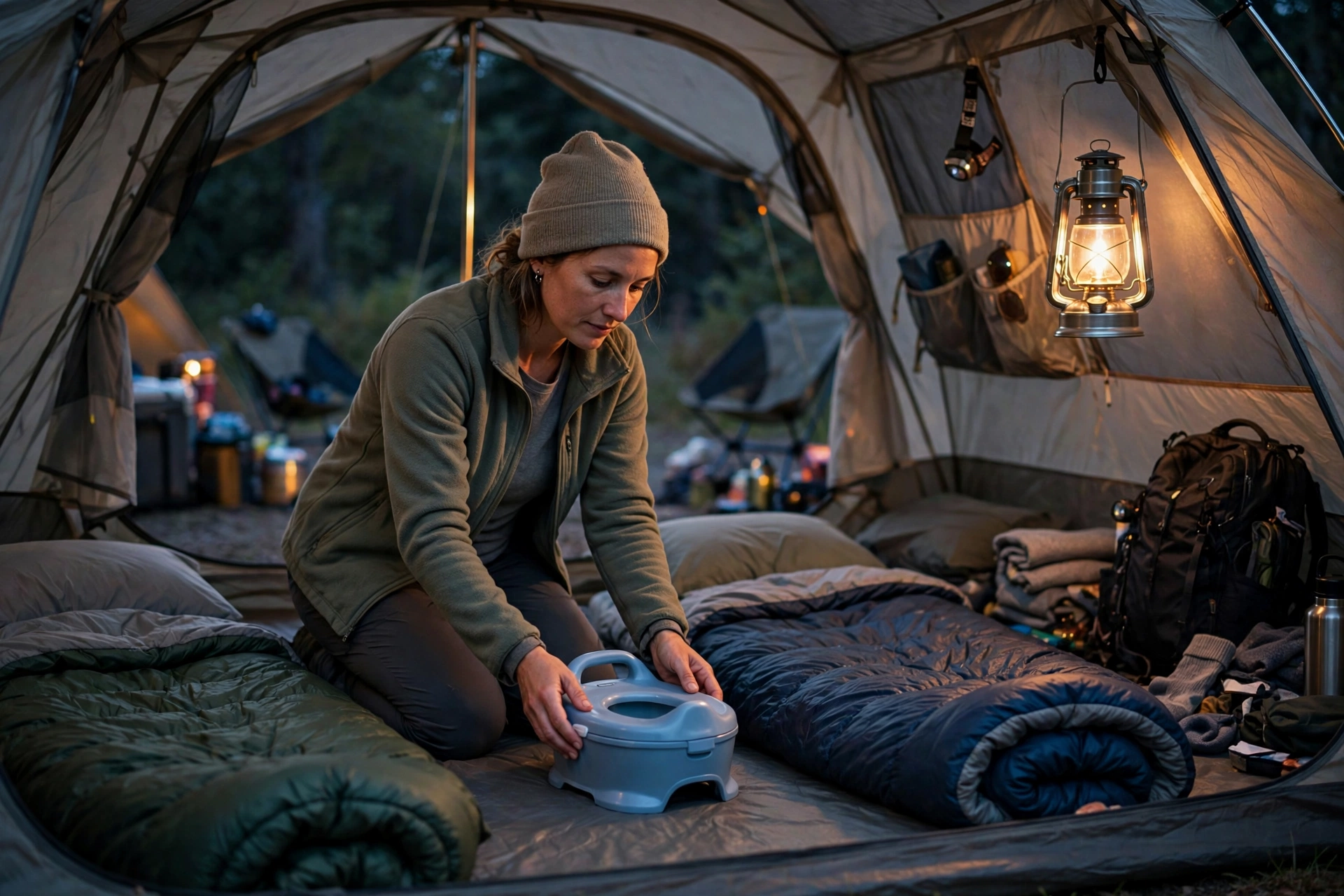
Before bed, do a final potty trip, and wake your toddler once (around the time you go to sleep) for a “dream pee.” Our full guide to getting kids to sleep while camping has more on bedtime routines that survive the trip.
4. Teach the Outdoor Pee — Step by Step
Many toddlers freeze the first time they are asked to pee outside. Walk them through it on day one like a little lesson:
- Pick a “potty spot” together — 200 feet from camp, trails, and any water, behind a tree or bush. Let them help choose; ownership helps.
- Show them how it works: pants all the way down to the ankles, squat or stand, aim away from camp.
- Hold their hands for balance the first few times. A squatting toddler on uneven ground tips over easily, and one fall can make them refuse for days.
- Wipe, sanitize hands, and praise like they just won the Olympics.
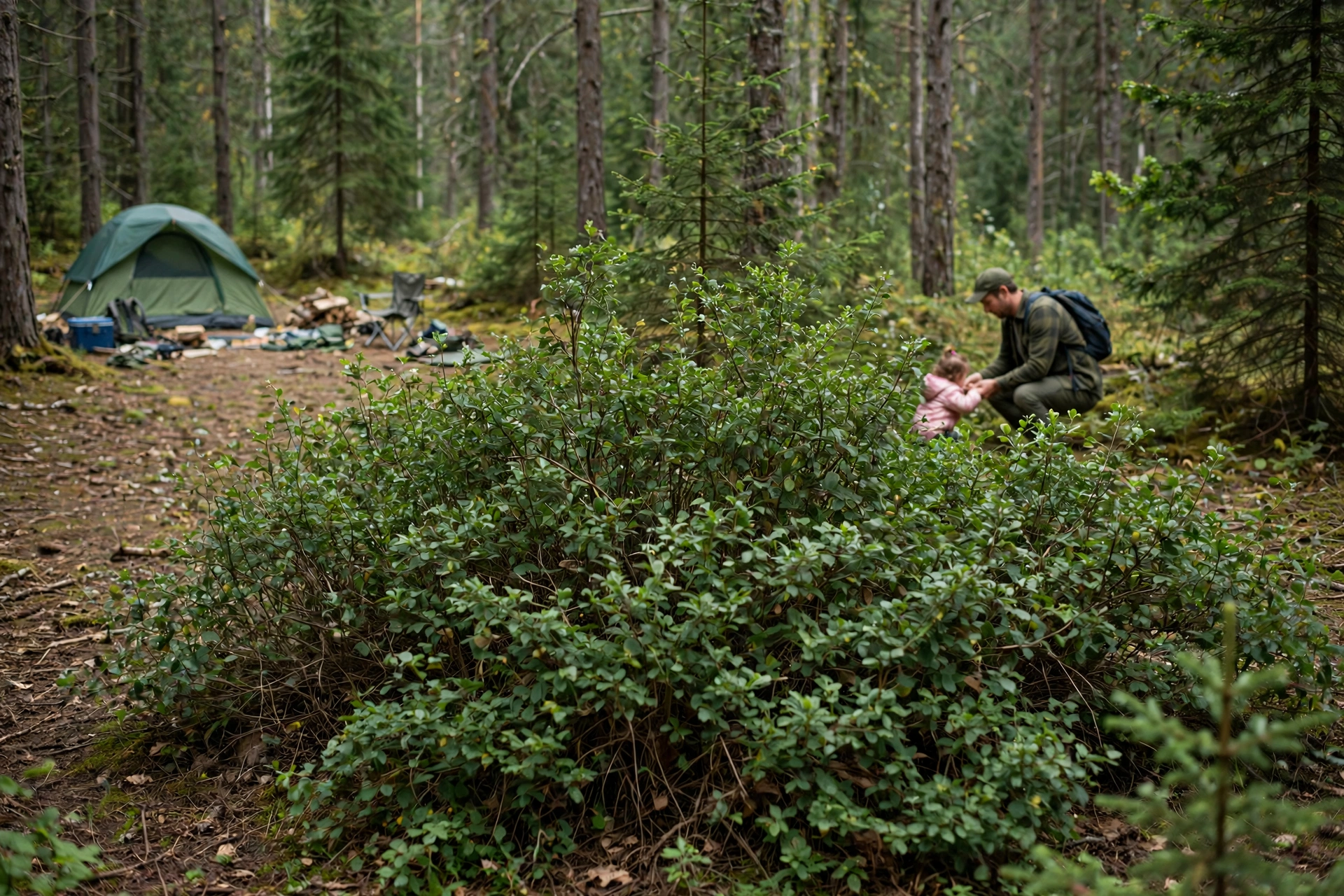
Boys often take to this instantly (many learn by watching Dad). Girls may prefer the potty even outdoors — keep the portable potty available and let them choose. No pressure either way.
5. Handle Poop the Leave No Trace Way
Poop requires a real plan, because “just bury it” has rules. Follow the Leave No Trace principles for disposing of waste properly: solid human waste goes in a cathole 6–8 inches deep, at least 200 feet from water, camp, and trails. For toddler poop specifically:
- Easiest: use the portable potty with a bag liner, seal the bag, and pack it out in your trash. This is the cleanest option and what most family campers do.
- Backcountry: dig a cathole for your toddler too, following the same 200-foot rule. The National Park Service explains the full Leave No Trace system if you want the details.
- Always pack out wipes — even “biodegradable” ones do not break down fast enough in a cathole.
Keep a dedicated “potty kit” bag: a small trowel, toilet paper, wipes, hand sanitizer, and spare bags. Grab-and-go beats assembling supplies mid-emergency.
6. Pack for Accidents, Not Perfection
There will be accidents — new place, new routine, too much fun to stop playing. The parents who enjoy camping during potty training are the ones who packed for accidents instead of hoping to avoid them. Per day, pack: 3–4 full changes of clothes, 2 pairs of shoes (one will get peed in), a waterproof bag for wet clothes, and puppy pads or a waterproof sheet under the sleeping bag. A small bottle of enzyme-based cleaner handles tent-fabric accidents. Keep all of this in one clearly labeled bag so a tired parent can find it at 2 a.m.
Add cleanup supplies to your family camping first aid kit run — wipes, sanitizer, and spare bags do double duty.
7. Keep the Home Routine — Same Words, Same Order
Toddlers navigate change through ritual. Use the exact same words, songs, and order you use at home: “potty time, pants down, sit, wipe, wash.” Bring the same step stool if you use one. Offer the potty at the same transition points: when they wake up, before meals, before the car, before bed. If you used a sticker chart at home, bring a mini version — a small notebook and stickers weigh nothing and the continuity is powerful.
8. Know the Campground Bathroom Reality
Before you book, check what the bathrooms actually are. Flush toilets with lights are potty-training friendly. Vault toilets (the concrete outhouses common in state and national parks) are dark, echoey, smelly, and have a terrifying hole — many toddlers flat-out refuse them, and honestly, that is reasonable. Plan for the potty at camp to be the primary bathroom and treat campground toilets as a bonus. Bring a headlamp for every adult, because you will be walking to that bathroom at least once, and the path is never lit.
9. Give Yourself Permission to Pause Without Guilt
Here is the honest truth the forums will tell you: sometimes you go back to training diapers for the trip, and that is fine. If your toddler is melting down, the weather is awful, or you are spending the whole trip managing accidents instead of enjoying your family, switch to pull-ups and resume at home. A short, calm pause beats a traumatic trip that makes your child dread the potty. Training is a months-long process — one weekend does not define it.
Potty Training Camping Packing Checklist
Print this or screenshot it before you pack:
| Item | Why | How many |
|---|---|---|
| Familiar potty or folding travel potty | Consistency — same seat as home | 1 |
| Biodegradable waste bags | Line the potty; pack out waste | 15–20 |
| Wipes + hand sanitizer | Cleanup without running water | 2 packs / 1 bottle |
| Full changes of clothes | Accidents are guaranteed | 3–4 per day |
| Waterproof wet bag | Isolate soiled clothes | 2 |
| Waterproof sheet / puppy pads | Protect the sleeping bag | 2–3 |
| Headlamp + tent lantern | Nighttime potty trips | 1 each |
| Small trowel | Catholes in the backcountry | 1 |
| Sticker chart + stickers | Keep the home reward ritual | 1 mini set |
| Enzyme cleaner (small bottle) | Tent fabric accidents | 1 |
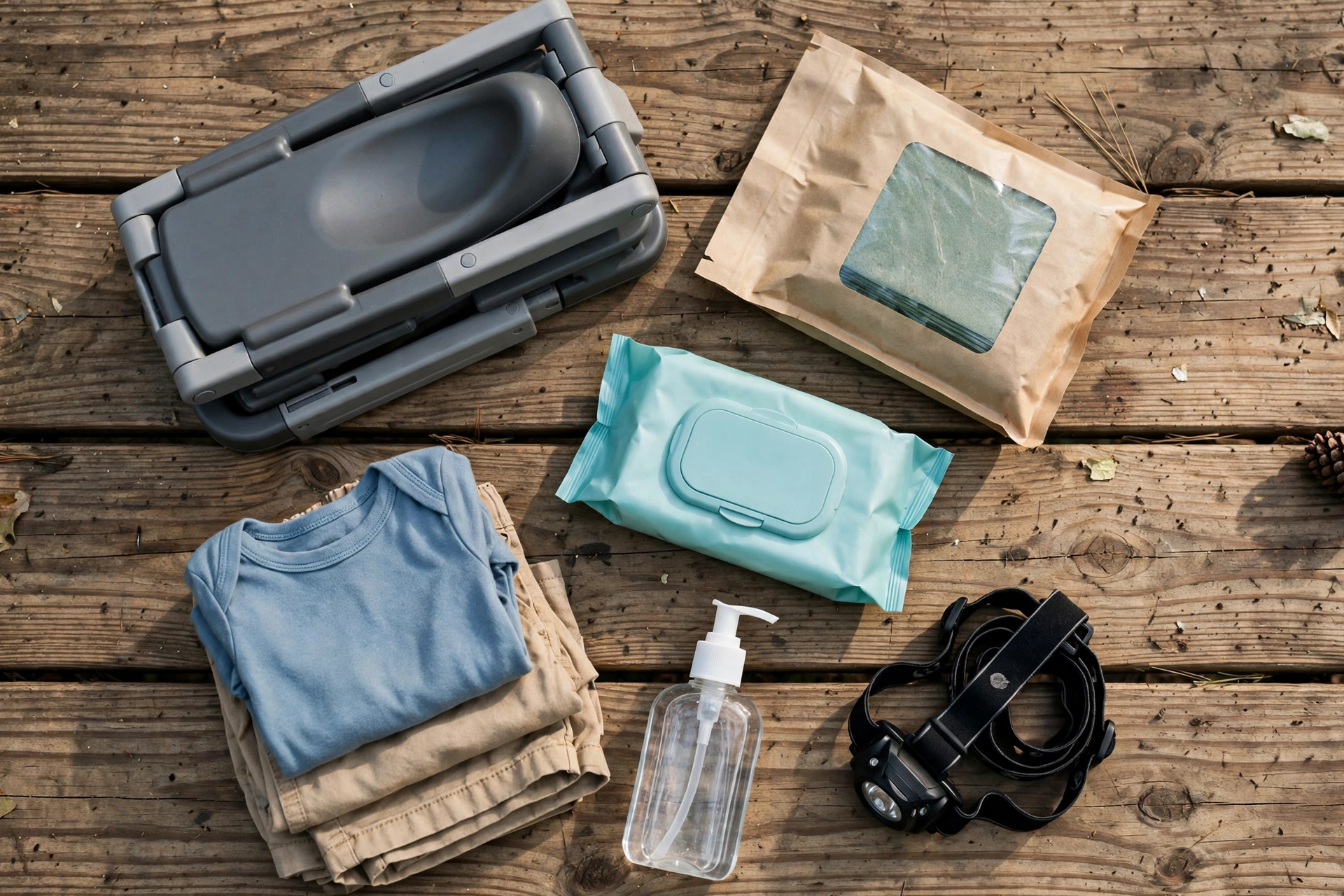
Fold this list into your family camping checklist so nothing gets left behind.
What About Diapers at Night?
Nighttime dryness usually comes months after daytime training — this is biology, not a training failure. Using an overnight diaper or pull-up at camp while doing underwear during the day is completely standard and does not “undo” daytime progress. Many pediatric sources note that staying dry overnight is hormonal and cannot be trained on a schedule. Do the “dream pee” before you sleep, keep the tent potty station ready, and do not stress about a wet pull-up in the morning.
Frequently Asked Questions
Is it OK to pause potty training for a camping trip?
Yes. Consistency helps, but a calm, happy trip with training diapers beats a miserable trip spent managing accidents. If your toddler is early in training or the trip is short, pausing is a reasonable, guilt-free choice. Resume the home routine the day you return.
How do you dispose of toddler poop while camping?
The easiest method: use the portable potty with a bag liner, seal the bag, and pack it out with your trash. In the backcountry, bury solid waste in a cathole 6–8 inches deep, at least 200 feet from water, camp, and trails. Always pack out wipes, even biodegradable ones.
What if my toddler refuses to pee outside?
Do not force it. Keep the portable potty available as the familiar option and let them watch you or a sibling go outside matter-of-factly. Most toddlers come around within a day once they see it is normal. Forcing it usually creates a standoff that lasts the whole trip.
Should I use a travel potty or just hold them over a cathole?
For toddlers, a travel or familiar potty is far better. Holding a squirming two-year-old over a hole is unstable and scary for them, and cleanup is harder. A potty with a bag liner gives them a stable, familiar seat and you a sealed bag to pack out.
Do I need a bigger tent for potty training while camping?
Not necessarily, but a tent with a vestibule helps enormously — it gives you a sheltered, private potty corner that is not right next to the sleeping bags. If you are shopping for a family tent anyway, a vestibule or a two-room layout is worth prioritizing.
The Bottom Line
Potty training while camping works when you treat it as a system, not a hope: the familiar potty, a nighttime station in the tent, a packing list built for accidents, and a plan for waste that respects the outdoors. Expect accidents, celebrate the wins, and remember that one rough night does not erase weeks of progress. Now get out there — the woods are waiting, and your toddler’s training can come along.
