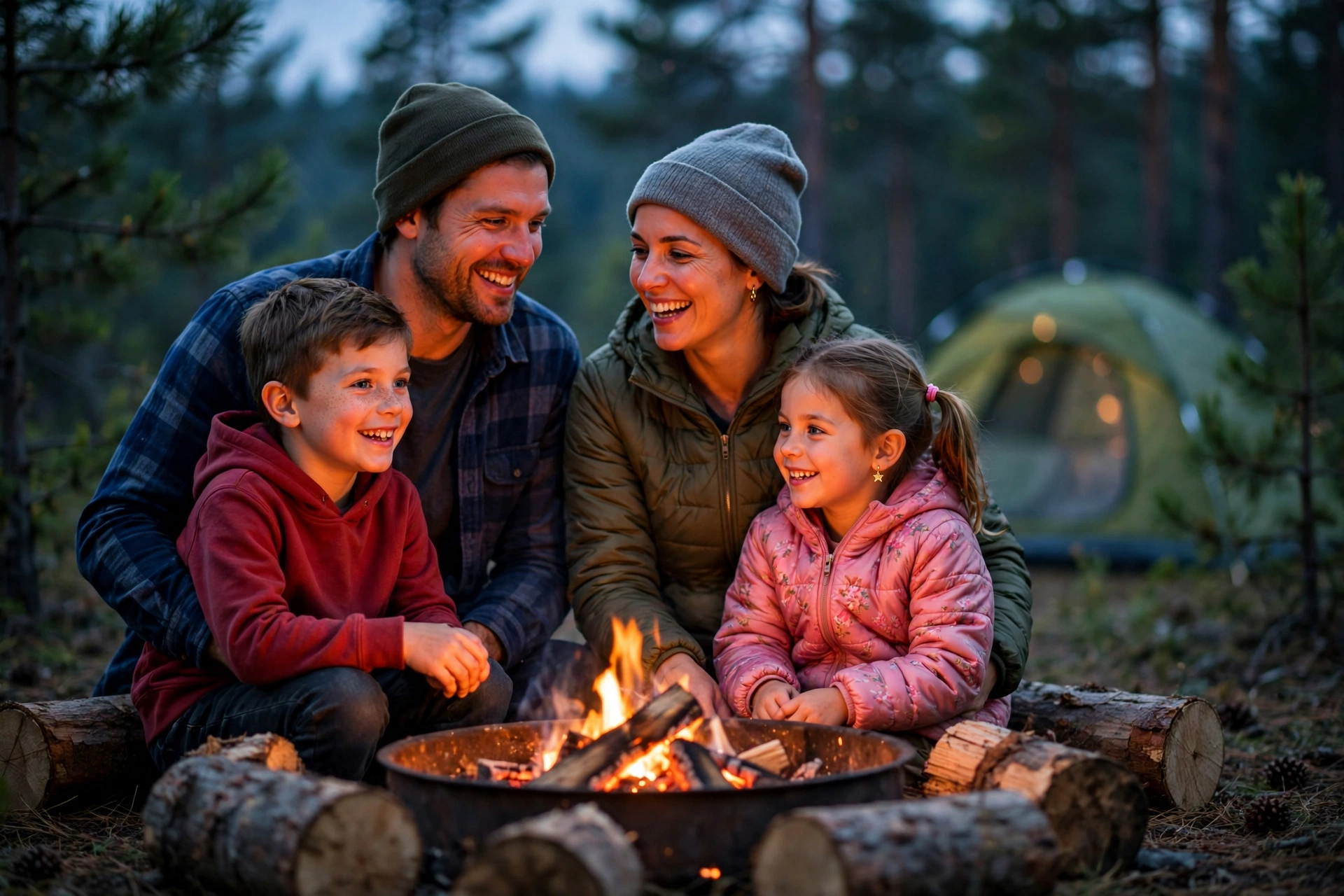
A campfire is the heart of family camping — it’s where stories are told, marshmallows are roasted, and the day’s adventures get replayed. But for parents camping with kids, fire also brings a very real worry: how do you keep little ones safe around open flames without ruining the fun?
This guide lays out 12 practical campfire safety rules for families, built around how kids actually behave at a campsite — curious, wiggly, and drawn to anything glowing. Follow them and the campfire becomes one of your family’s favorite traditions, not a source of stress.
Why Campfire Safety Matters More with Kids
Children under five account for a disproportionate share of campfire-related burns treated each year, and most incidents happen the same way: a child trips into an unguarded fire, grabs a glowing stick, or steps on hidden embers the morning after. None of these are freak accidents — they are predictable, and predictable means preventable.
Kids learn campfire rules fast — even a three-year-old can master the no-cross line. Teach the rules before the first fire is lit, and enforce them the same way every trip.
The 12 Campfire Safety Rules for Families
Rule 1: Use the existing fire ring — always
Never build a new fire pit when a designated fire ring or metal pit already exists. Campground fire rings are positioned with wind, drainage, and tree clearance in mind. Keep your fire small and contained inside the ring — a fire that fits under your cooking grate is plenty for a family evening. Most campgrounds (and national parks) prohibit creating new fire scars, and rangers can fine you for it.
Rule 2: Clear a 10-foot safety zone
Before lighting anything, walk a full circle around the fire ring and remove dry leaves, pine needles, twigs, and any paper or trash within about 10 feet (3 meters). Look up, too — overhanging branches should be at least 15 feet above the flames. Kids’ tents, chairs, and toy piles go outside this zone, not at its edge.
Rule 3: Draw the “no-cross line” for kids
This is the single most important rule for families. Before the first spark, have the kids help you lay a ring of stones, sticks, or a rope about 3–4 feet out from the fire ring. Explain the rule in plain language: “Nobody crosses this line without a grown-up. Ever.” Make it a game the first night — who can point to the line from across the campsite? — and kids will self-police it surprisingly well.
Rule 4: One adult is always on fire duty
A campfire is never left unattended — not for a bathroom run, not to grab a snack from the cooler, not “just for a minute.” With kids around, assign one adult as the designated fire watcher at all times. If that adult leaves, the fire gets smothered down or someone else formally takes over. Trade off in shifts so nobody burns out.
Rule 5: Keep the fire small and manageable
A family campfire does not need to be a bonfire. Small fires are easier to control, produce fewer flying embers, cook food more evenly, and are much less frightening for young kids. Add wood gradually — one log at a time — and keep flames below about knee height. If the fire is taller than the kids sitting around it, it’s too big.
Rule 6: Dress kids for fire safety
Skip puffy jackets, flowy sleeves, and synthetic fleece near the fire — loose synthetics melt and catch sparks easily. Dress kids in snug-fitting cotton or wool layers, tie back long hair, and have everyone wear closed-toe shoes (hidden embers around the ring can stay hot for hours). Our guide on keeping kids warm while camping covers fire-safe layering in detail.
Rule 7: Teach the stop, drop, and roll drill at home
Don’t wait until the trip to teach fire safety. Practice “stop, drop, and roll” in your living room the week before you leave, the same way schools teach it — make it a silly game so it sticks. Also teach: if clothes catch fire, never run (running feeds the flames). Kids who have rehearsed the drill react instead of panicking.
Rule 8: Handle roasting sticks like tools, not toys
Marshmallow roasting is the highlight of the night for most kids — and the most common burn moment. Use long metal or bamboo roasting sticks (at least 2 feet / 60 cm), and set two rules: sticks stay pointed at the fire, never waved around; and an adult holds the stick with the child until they’re old enough to manage alone (usually around 7–8). Glowing marshmallows are essentially napalm — blow on them before the first bite, every time.
Rule 9: Never use accelerants, ever
No lighter fluid, no gasoline, no alcohol-based hand sanitizer as fire starter. Accelerants cause flash fires that burn faster than anyone can react. Start your fire the slow way: tinder, kindling, then fuel wood. It takes five extra minutes and it teaches kids patience — plus it’s a great excuse to let them gather kindling (outside the safety zone) as their “job” for the evening.
Rule 10: Keep water and a shovel within arm’s reach
Before the fire is lit, place a full bucket of water (5+ gallons) and a shovel right next to the fire ring. This is your emergency kit — not parked across the campsite. Show older kids where it is and explain it’s only for grown-ups to use, but that it’s always there. Many parks and forests require this during fire season; make it a year-round habit.
Rule 11: Watch the wind — and know when to skip the fire
Strong, gusty wind turns a cozy campfire into a hazard in seconds: embers blow out of the ring, smoke chokes the kids’ seating area, and sparks can travel frighteningly far. Check the forecast before the trip and the sky before lighting up. If branches are swaying hard or the campground has posted a fire ban or red-flag warning, skip the fire without complaint — make it a lantern-and-story night instead. Windy campsite? Our wind-setup tricks help you plan around it.
Rule 12: Put the fire DEAD out — drown, stir, feel
A campfire is not “out” when the flames die. Embers buried in ash can stay hot enough to burn a bare foot the next morning — one of the most common causes of campsite injuries to kids. Use the drown-stir-feel method the U.S. Forest Service teaches:
- Drown the fire with plenty of water — pour until the hissing stops.
- Stir the ashes and embers with a shovel or stick, mixing in dirt and water.
- Feel everything with the back of your hand. If it’s too hot to touch, it’s too hot to leave. Repeat until cold.
Let kids watch (from outside the line) and repeat the three words back to you: drown, stir, feel. Making them part of the shutdown ritual turns safety into something they own.
” alt=”A parent pouring water from a metal bucket onto glowing campfire embers at night to fully extinguish the fire, steam rising under a starry sky” loading=”lazy” />
Setting Up a Kid-Safe Fire Area: Step-by-Step
Here’s the setup routine to run through on arrival, before the sun drops:
- Pick your spot. Use the campground’s fire ring. If dispersed camping, choose bare mineral soil at least 15 feet from tents, trees, and overhangs, and dig a shallow pit ringed with rocks.
- Clear the zone. Rake a 10-foot circle free of all flammable material. Move chairs, coolers, and toy bins outside it.
- Mark the kid line. Lay stones or rope 3–4 feet from the ring and announce the no-cross rule. Have every kid point to it.
- Stage your tools. Water bucket, shovel, and a first-aid kit go next to the fire ring before lighting. Our family camping first-aid kit list includes burn-specific items like gel dressings.
- Check conditions. Wind, fire bans, and dry conditions — if anything looks off, skip the fire tonight.
- Assign fire duty. Name the adult in charge, out loud, so there’s no ambiguity.
” alt=”A safe campsite campfire setup with a metal fire ring on cleared bare ground, a bucket of water and a shovel beside it, pine forest at sunset” loading=”lazy” />
Campfire Cooking with Kids — Safely
Cooking over the fire is where families make their best memories, and it’s entirely doable with kids if you structure it:
- Keep kids as helpers, not cooks, until they’re old enough (usually 8+) — they fetch, unwrap, and season while adults handle the flames.
- Use long-handled tools. Long roasting sticks, long tongs, and grill gloves keep small hands far from heat.
- Serve away from the fire. Carry food to the picnic table for eating — no balancing hot plates on laps next to a fire ring.
- Cool it before tasting. Food cooked over open flame is deceptively hot inside. The “blow and touch your lip first” rule prevents the classic burned-tongue meltdown.
- Plan fire-friendly meals. Foil packets, kebabs, and walking tacos all cook over low coals with minimal fuss. Our 7-day camping meal plan has more kid-approved fire-cooked ideas.
” alt=”An adult’s hand guiding a child’s hand roasting a marshmallow on a long wooden stick over a small campfire with glowing embers” loading=”lazy” />
Common Campfire Mistakes Families Make
| Mistake | Why it’s risky | Do this instead |
|---|---|---|
| Leaving the fire “for a minute” | Kids gravitate to unattended fires instantly | Assign a named fire watcher; smother the fire if everyone leaves |
| Burning trash or treated wood | Toxic smoke and unpredictable flare-ups | Burn only clean, dry firewood; pack trash out |
| Letting kids poke the fire with sticks | Sparks fly, sticks catch, kids lose balance | Only adults adjust the fire; kids’ sticks stay at the fire for roasting |
| Skipping the morning check | Hidden embers burn bare feet hours later | Drown, stir, feel — and recheck before the kids play near the pit |
| Sitting kids downwind | Smoke irritates young lungs and ruins the evening | Seat kids upwind; move seats as the wind shifts |
Teaching Kids to Respect Fire (Not Fear It)
The goal isn’t to scare kids away from campfires — it’s to build genuine respect. A few approaches that work:
- Give them real jobs. Gathering kindling, carrying (empty) water buckets, and calling out “drown, stir, feel” give kids ownership of the safety system.
- Answer the “why.” Kids follow rules better when they understand them: “Sparks can travel farther than you can throw a ball — that’s why we stay behind the line.”
- Model the behavior. If you duck under the kid line to grab a stick, the rule is dead. Adults follow every rule, every time.
- Praise the safe choices. “You remembered the line without being reminded — nice work” reinforces faster than correcting mistakes.
- Debrief after. At breakfast, ask what went well and what the family should do differently tonight. Kids’ observations are often sharper than you’d expect.
Want more ways to turn campfire time into learning time? Our stargazing guide for kids pairs perfectly with a post-dinner fire, and campground etiquette covers the unwritten rules your neighbors will thank you for.
FAQ: Campfire Safety with Kids
What age can kids sit near a campfire?
There’s no official minimum age, but most safety educators suggest babies and toddlers stay at least 6–8 feet back in a caregiver’s arms or a camp chair, while kids 3+ can sit at the ring behind the no-cross line. The real factor is impulse control — if your child can’t resist grabbing shiny things, keep more distance regardless of age.
How do I keep my toddler away from the campfire?
Physical barriers beat willpower for toddlers. Mark the no-cross line clearly, keep toddlers in a camp chair with a tray or in a pack-and-play set back from the fire area, and never rely on verbal rules alone at this age. One adult should be the toddler’s shadow whenever a fire is lit.
Can you have a campfire during a burn ban?
Usually no — burn bans typically prohibit all open flames, including campfires in established rings. Some campgrounds allow contained gas fire pits during partial bans; check the specific rules for your campground and the managing agency before you go. When in doubt, assume the ban covers you and plan a fire-free evening.
What’s the safest way to start a campfire with kids watching?
Use matches or a lighter with natural tinder (dryer lint, cotton balls with petroleum jelly, or fatwood shavings) — never accelerants. Narrate what you’re doing so kids learn the process, and let them place kindling under close supervision. the National Park Service’s campfire guide walks through the same tinder-kindling-fuel progression step by step. It takes a few extra minutes but builds real skills.
How long do campfire embers stay hot?
Buried embers can stay hot enough to cause burns for 12+ hours — sometimes into the next afternoon. That’s why the drown-stir-feel method and the back-of-hand test matter: never assume a fire is out just because the flames are gone. Recheck the pit in the morning before kids play nearby.
Are propane fire pits safer than wood campfires for families?
They offer instant on/off, no embers or smoke, and are often allowed during partial burn bans — at the cost of some classic campfire atmosphere and the need to carry fuel. Many families start with propane and graduate to wood as the kids get older.
