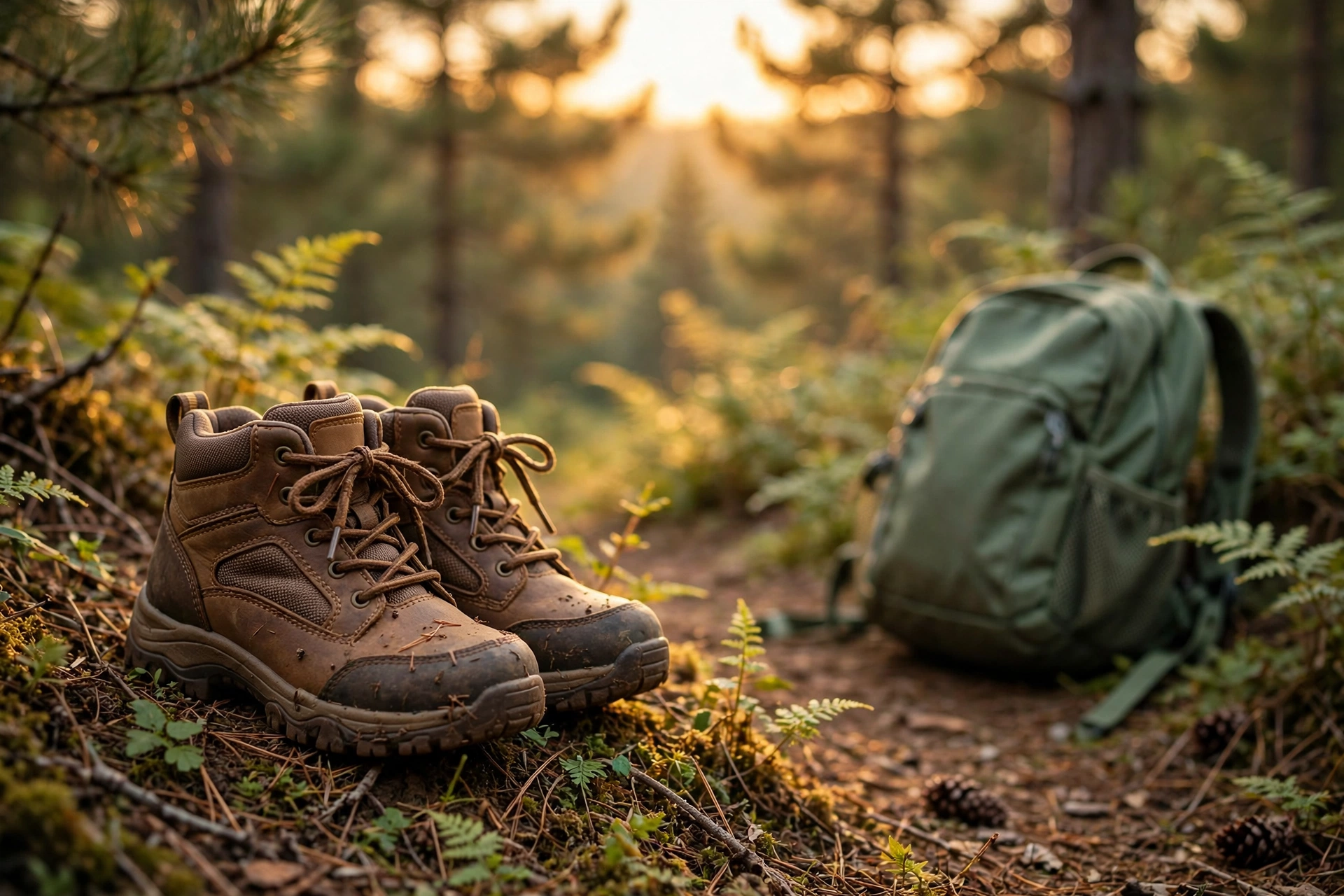
Nothing ends a family hike faster than a child in pain. Blisters, pinched toes, a twisted ankle on a rocky descent — and suddenly the trip you planned for weeks is over at mile two. The good news: most foot pain on the trail is a gear problem, not a kid problem. Choosing kids hiking boots that actually fit is one of the highest-impact things you can do for your family’s outdoor adventures. This guide walks you through fit, sizing for growing feet, waterproofing, and everything else you need to know before you buy.
Why Kids’ Hiking Boots Aren’t Just Small Adult Boots
Children’s feet are not miniature versions of adult feet. They are wider relative to their length, the bones are still developing, and the fat pad on the bottom of a young child’s foot makes proper arch feel different. A boot built on an adult last (the foot-shaped mold the boot is built around) and simply shrunk down often pinches across the toes while swimming around the heel.
That’s why boots designed specifically for kids matter. Kid-specific boots tend to have:
- A wider toe box so toes can spread naturally on uneven ground
- A more flexible sole because a child’s lighter body weight can’t bend a stiff adult-style sole — and a boot that won’t flex fights every step
- Simpler closure systems — many kids’ models use hook-and-loop straps or quick-lace systems so children can adjust their own boots on the trail
- Lighter overall weight because even a few extra ounces on a small foot add up over a few miles
For short, flat walks on smooth paths, sturdy sneakers are genuinely fine. But once your hikes include rocky trails, mud, stream crossings, or real elevation change, proper kids hiking boots earn their place in the pack.
How Kids’ Hiking Boots Should Fit
Fit is everything. A boot with perfect waterproofing and great tread is worthless if it pinches or slips. Here’s exactly how to check.
The 3 Fitting Checks That Matter Most
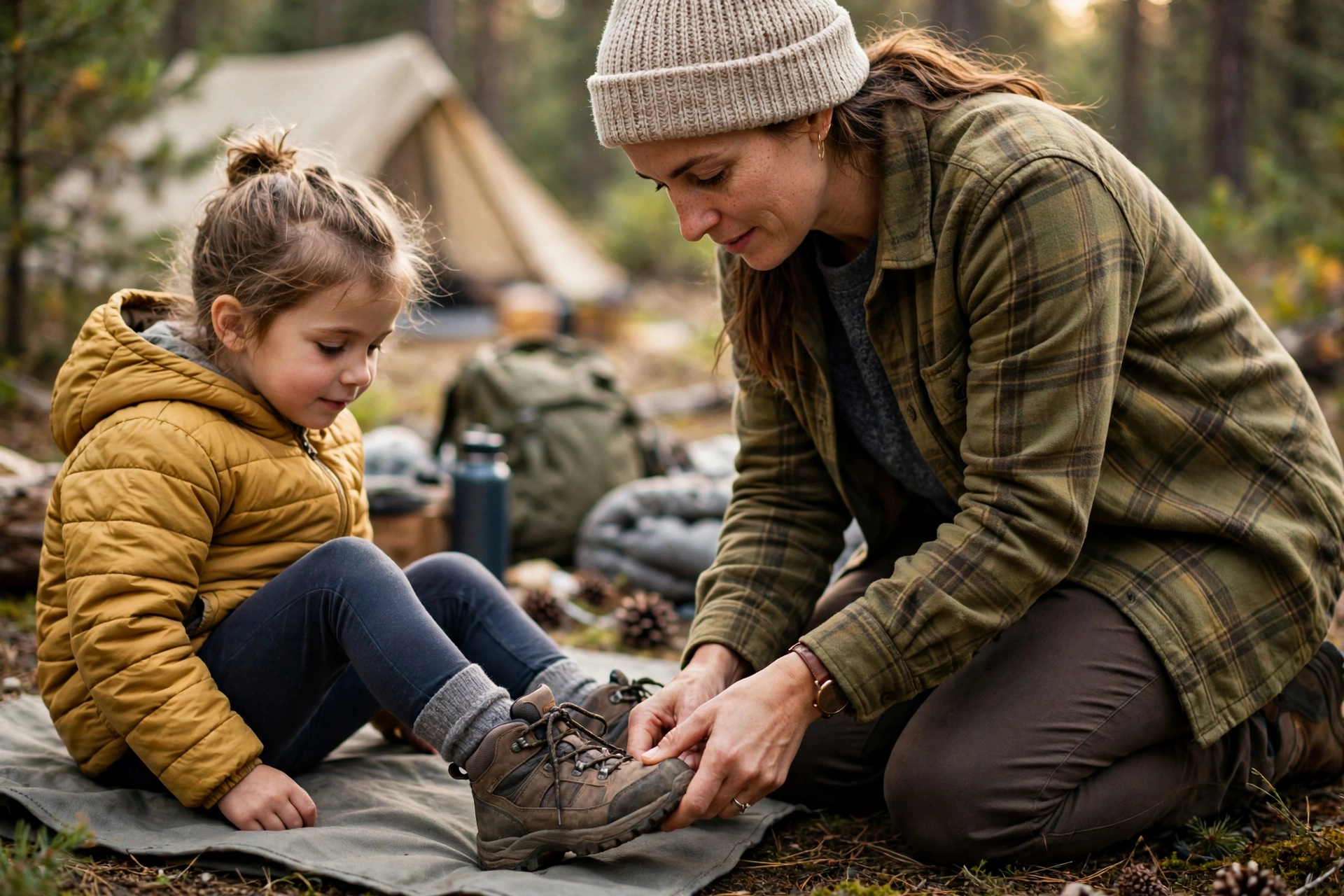
1. The thumb test for toe room. With your child standing (not sitting — feet spread under weight) and wearing the hiking socks they’ll actually use, press your thumb down across the toe box. You should feel about a thumb’s width of space between their longest toe and the front of the boot. Less than that, and toes will jam into the front on every downhill. Much more, and the foot slides around, which causes blisters.
2. The heel-lock check. Have your child walk around the store, then walk up and down any incline or step you can find. The heel should stay put — if it lifts and slips with each step, the boot’s volume is wrong for their foot, not just the size. No amount of tightening laces fixes a boot that’s too roomy in the heel.
3. The flex-point test. Bend the boot with your hands. It should bend where the ball of the foot bends — roughly under the toes — not in the middle of the arch. A boot that flexes in the middle fights the natural motion of the foot and causes fatigue fast on small, light hikers.
Socks Are Half the Fit
Always fit boots wearing the socks your child will hike in — ideally a wool or synthetic-blend hiking sock, never thin cotton. Cotton holds moisture against the skin and is the number one cause of blisters, and sock thickness changes the boot’s fit noticeably. Buy the socks first, then the boots. For more on building the right clothing system for young hikers, see our guide on keeping kids warm while camping with a layering system that works — the same no-cotton rule applies head to toe.
Sizing Boots for Growing Feet: How Much Room Is Right?
This is the question every parent asks, and the temptation is real: buy big so they “grow into them” and get two seasons out of one purchase. Resist the urge to go more than about a half size up. A boot that’s too large causes exactly the blisters and tripping you’re trying to avoid, and an oversized boot on a rocky trail is a twisted-ankle waiting to happen.
Practical sizing rules that work:
- Shop in the afternoon. Feet swell slightly through the day, so a boot fitted at 4 p.m. won’t surprise you on mile three.
- Measure both feet and fit to the larger one — most people have one foot slightly bigger.
- Leave a thumb’s width of growing room, but no more. If the boot only fits with the laces cranked to maximum, it’s too big.
- Recheck the fit every couple of months during hiking season. Kids’ feet can grow a full size in a single season, and a boot that fit in spring may be pinching by fall.
- Never buy online for a first pair if you can avoid it. Sizing varies wildly between brands, and you can’t assess heel lock or toe clearance from a size chart. Once you know your child’s size in a specific brand and model, reordering online is fine.
And a note for toddlers: if your child is under about three and mostly riding in a carrier, skip the boots entirely and invest in a good child carrier backpack instead. Boots matter once they’re walking real trail distances themselves — which you can calibrate with our guide to realistic hiking distances by age.
Waterproof vs Breathable: Which Does Your Kid Actually Need?
Waterproof sounds like an obvious upgrade, but it comes with a trade-off: waterproof boots are warmer, heavier, and less breathable. On a hot summer day hike, a waterproof boot can turn into a sweaty blister factory. Here’s how to decide.
When Waterproof Boots Are Worth It
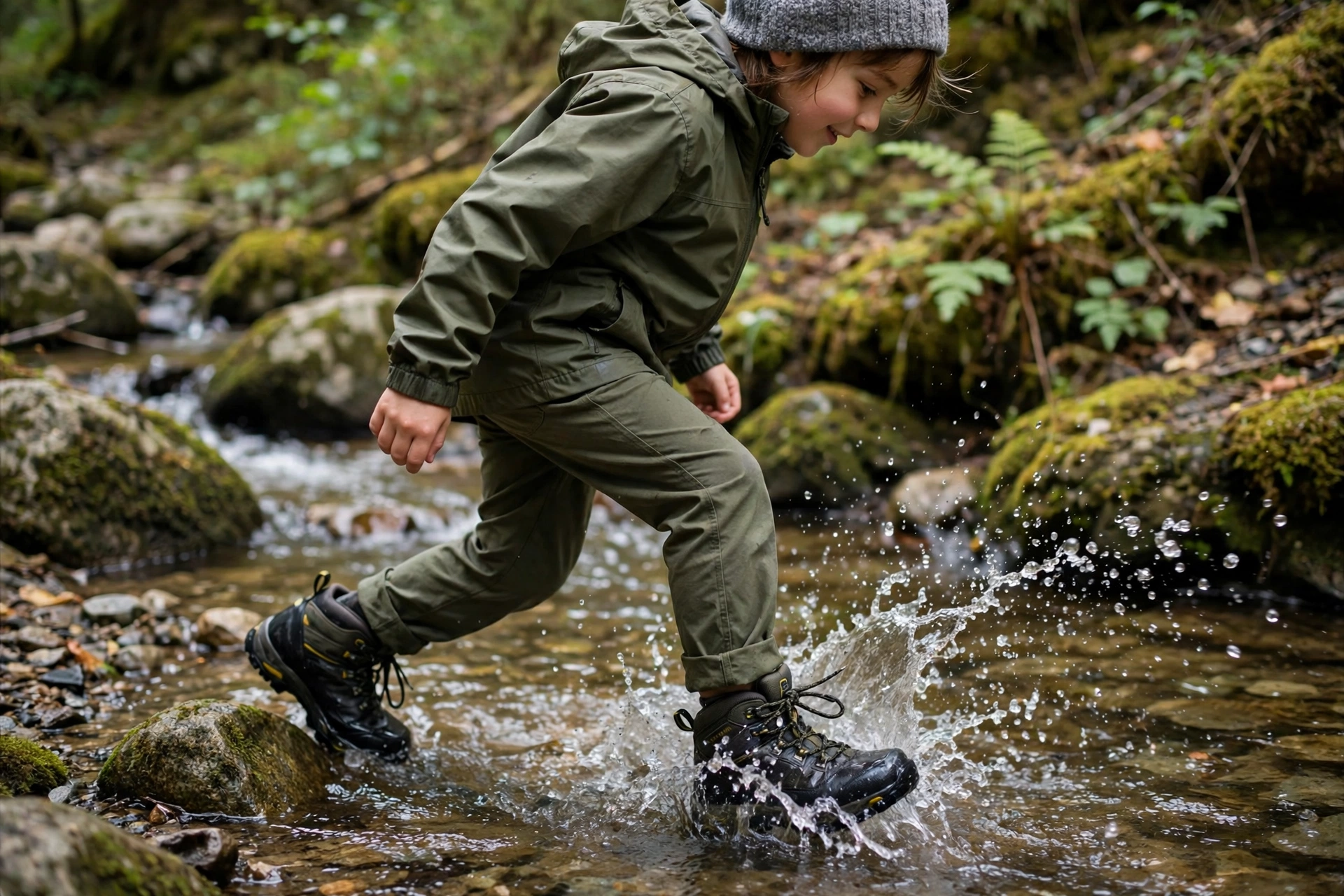
Choose waterproof (usually a waterproof-breathable membrane or a waterproof leather/synthetic upper) when your family regularly hikes in wet conditions: spring trails with stream crossings, rainy climates, muddy shoulder seasons, or any hike where puddles are a feature, not a bug. For kids, who have an almost magnetic attraction to water, waterproofing saves more hikes than almost any other feature. Teach them the limit, though — waterproof boots keep splashes out but won’t survive full submersion, which is exactly what a six-year-old considers a challenge.
When Breathable Boots Win
For dry climates, summer hiking, and well-maintained trails, a non-waterproof breathable boot or even a sturdy trail shoe is often the better pick. They dry faster when they do get wet, run cooler, and are usually lighter. If your family hikes mostly in warm, dry conditions, breathability beats waterproofing.
One maintenance note: waterproofing treatments wear off. Re-treat leather and fabric boots with an appropriate waterproofing product at the start of each season, and always let boots air-dry away from direct heat — never toss them next to a campfire or on a radiator, which cracks leather and delaminates soles.
Ankle Height, Weight, and Traction: What Actually Matters
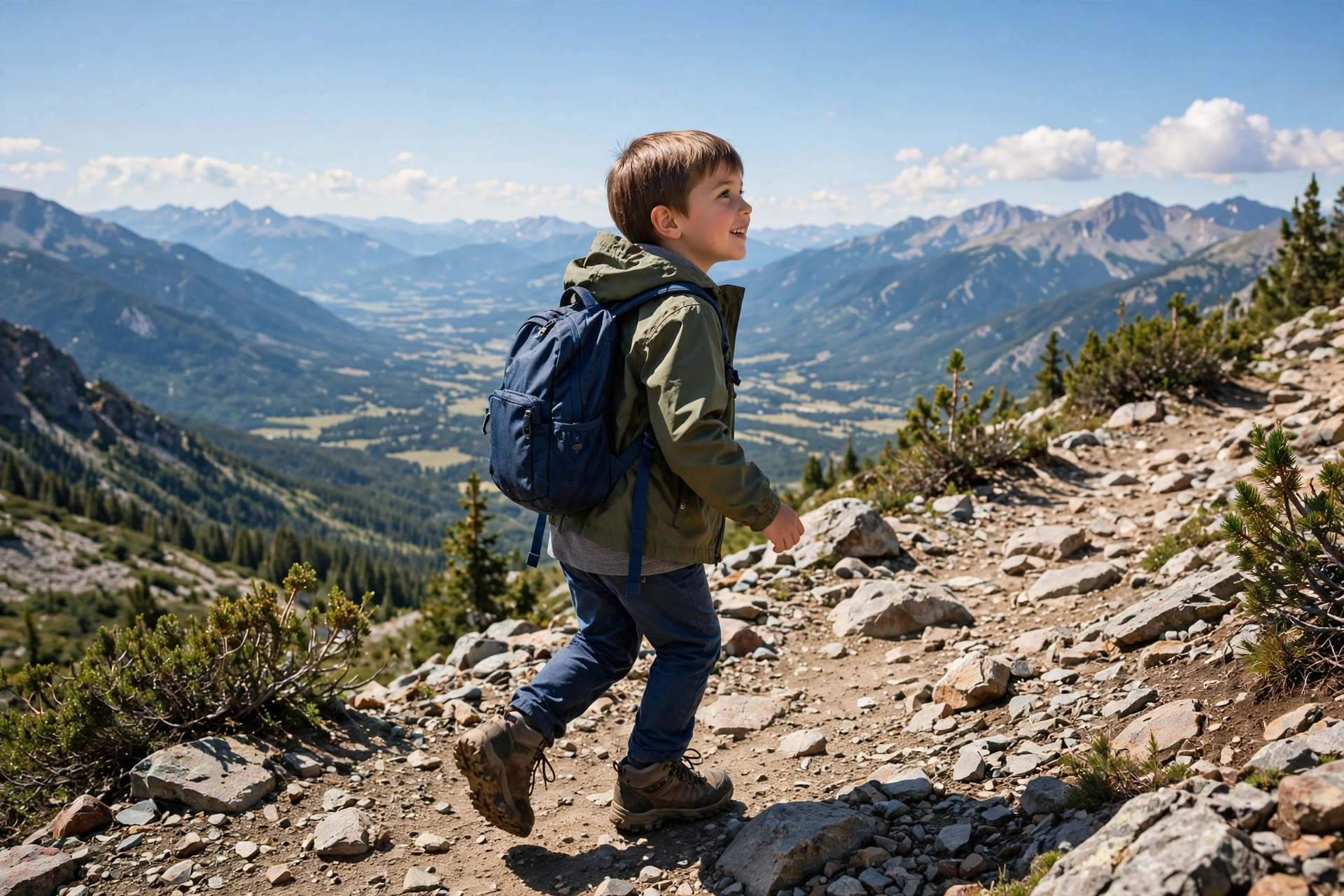
Ankle height: High-top boots offer the most protection against rolled ankles and keep out trail debris, and they’re the right call for rocky, uneven terrain. Mid-height boots are the versatile middle ground most families end up with. Low-cut hiking shoes work fine on smooth, well-kept paths and are lightest of all. Match the height to your terrain, not to what looks toughest.
Weight: This matters more for kids than adults. A boot that feels fine in the store can feel like a brick by mile two to a 40-pound hiker. When choosing between two models that both fit, pick the lighter one.
Traction: Look for deep, widely spaced lugs (the knobby tread blocks) that shed mud rather than packing with it. Press the sole — it should feel grippy, not plasticky-smooth. Good traction matters most on the descents, which is also where proper footwear connects to overall trail safety skills kids should learn by age.
| Boot style | Best for | Watch out for |
|---|---|---|
| High-top waterproof boot | Wet, rocky, or cold-weather trails | Heaviest; needs a real break-in period |
| Mid-height hiking boot | Most family day hikes, mixed terrain | Check the flex point — some run stiff |
| Low-cut trail shoe | Dry, smooth paths; fast-moving kids | Little ankle protection on rough trails |
Breaking Them In Without Blisters
New boots straight onto a five-mile hike is how blisters happen. The break-in doesn’t need to be dramatic — just deliberate:
- Have your child wear the boots around the house for an hour or two, several evenings in a row.
- Take short walks. Two or three neighborhood walks of 20–30 minutes, in hiking socks, before any real trail.
- Do one easy trail first. A flat, familiar path of a mile or two is the perfect shakedown — short enough to bail if something rubs.
- Teach the early-warning rule. Tell your child: the moment something feels like a “hot spot,” we stop and deal with it. A piece of moleskin or a bandage at the hot-spot stage prevents the blister entirely.
- Pack blister care on every hike during the first month — moleskin, bandages, and an extra pair of dry socks weigh almost nothing.
Warning Signs the Boots Don’t Fit
Kids often won’t complain until it really hurts, so watch for these red flags on the trail:
- They keep stopping to adjust or re-tie their boots
- Red marks or pressure lines on the feet after the hike that take more than a few minutes to fade
- Complaints about toes hitting the front on downhills (too short) or the heel slipping (too big in volume)
- A new limp, toe-walking, or suddenly wanting to be carried on trails they used to walk
- Blisters in the same spot two hikes in a row — that’s a fit problem, not a break-in problem
If you spot these, recheck the fit before the next hike. Feet grow, socks change, and a boot that was perfect in June can be wrong by September.
Budget Tips: Save Money Without Buying Junk
Kids outgrow boots fast, so spending smart matters more than spending big.
- Buy end-of-season. Late summer and fall clearances are the best time to buy next year’s boots — just be conservative about predicting growth, and keep receipts.
- Check resale and hand-me-downs carefully. Used boots can be a great deal, but inspect them: press the midsole — if it feels compressed and dead instead of springy, the cushioning is done. Check that tread isn’t worn smooth and that the waterproofing still beads water. A boot that’s structurally sound but cosmetically scuffed is a bargain; a boot with a dead midsole is just heavy.
- Prioritize fit over brand. A mid-priced boot that fits perfectly beats a premium boot that’s merely okay. Kids’ feet don’t care about logos.
- Buy the socks first, then the boots. Fitting boots over the wrong socks leads to a poor fit.
- Ask about return policies. Several major outdoor retailers allow returns even after light use — which takes the risk out of the break-in period. REI’s expert advice on how to choose hiking boots is also worth reading before you shop, since the fitting principles apply to kids’ models too.
And when you’re planning where to actually use those new boots, the National Park Service’s ranger advice on visiting national parks with kids is a great starting point for picking family-friendly trails.
Frequently Asked Questions
Can my child just hike in sneakers?
For short hikes on flat, dry, well-maintained paths — absolutely. Sneakers are lighter and kids already own them. Step up to hiking boots when trails get rocky, muddy, or steep, or when you’re carrying a heavier pack and need the ankle support and traction.
How much room should kids’ hiking boots have?
About a thumb’s width (roughly half an inch) between the longest toe and the front of the boot, measured while standing in hiking socks. That’s enough room for foot swelling and a little growth, without the foot sliding around.
Should I buy waterproof hiking boots for my child?
It depends on where you hike. Wet climates, spring mud, and stream crossings make waterproofing worthwhile. In hot, dry conditions, breathable non-waterproof boots are cooler, lighter, and more comfortable. There’s no universal right answer — match the boot to your trails.
How often will my child outgrow their hiking boots?
Fast — sometimes within a single season. Check the fit every couple of months during hiking season, and always re-check after a growth spurt. If the thumb test fails, it’s time to size up.
Do kids’ hiking boots really need breaking in?
Yes, but it doesn’t take long. A few evenings wearing them at home plus two or three short walks is usually enough. Skipping break-in and going straight to a long hike is the most common cause of first-hike blisters.
The right boots won’t make your child love hiking — the trails, the snacks, and the freedom do that. But the wrong boots can absolutely make them hate it. Take the time to fit them properly, break them in gently, and recheck as feet grow, and you’ll remove the single most common reason family hikes end early. Then get out there: the trail is waiting, and small boots were made for big adventures.
