Hiking with a baby is one of the sweetest ways to start them young — but the right carrier makes or breaks the whole experience. The best hiking infant carrier keeps your baby secure and close, keeps your back and shoulders happy, and holds enough gear that you don’t need a second pack strapped to your chest. Whether you’re doing an easy lakeside loop with a newborn or a full-day summit push with a toddler, there’s a carrier built exactly for that stage.
There are three main families of hiking carriers: soft-structured carriers that buckle on like the Ergobaby, framed backpack carriers like the Osprey Poco and Deuter Kid Comfort, and wraps or slings for the earliest months. Which one fits your family depends on your baby’s age, how far you like to hike, and how much stuff you want to carry. Let’s break them all down so you can pick with confidence.
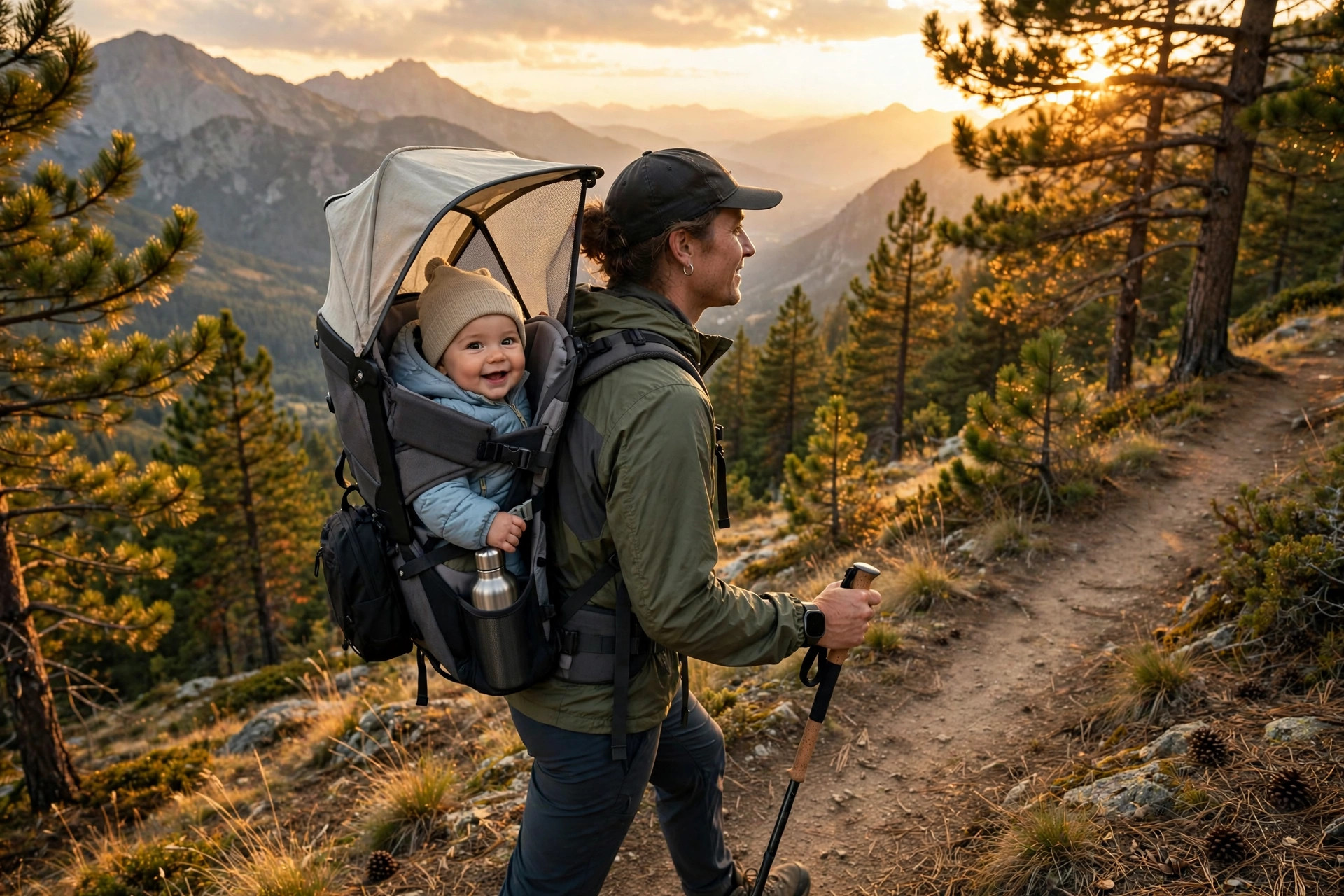
Best Hiking Infant Carrier – Explore with Ease
Choosing the best hiking infant carrier comes down to your baby’s age and your hiking style. Soft-structured carriers like the Ergobaby are ideal for newborns through about 18 months — light, compact, and cozy. Framed backpack carriers like the Osprey Poco Plus and Deuter Kid Comfort III are best for babies 6 months and up on longer hikes, with real storage, sunshades, and hip-belt weight distribution. For the newborn months, a woven wrap like the Solly Baby keeps your squishy baby snuggled close hands-free. Always try a carrier with your baby before buying, and look for adjustable straps, a supportive hip belt, and built-in sun protection.
Quick Comparison: Which Carrier for Which Stage
| Carrier type | Best for ages | Weight | Typical price |
|---|---|---|---|
| Woven / stretch wrap (Solly, Baby K’Tan) | 0–6 months | Under 1 lb | Under $100 |
| Soft-structured carrier (Ergobaby) | Newborn–18 months | 1–3 lbs | $100–$200 |
| Framed backpack (Osprey Poco, Deuter Kid Comfort) | 6 months–3+ years | 6–8 lbs | $300–$400 |
| Minimalist ride carrier (Trail Magik) | 1 year+ | Under 1 lb | $99 |
How to Choose a Hiking Carrier: Fit First, Brand Second
Before falling in love with a brand, run through this checklist — it saves more sore shoulders than any feature list:
- Match the carrier to your baby’s age. Framed backpack carriers require a baby who can sit up and hold their head steady — typically around 6 months and up. For younger babies, stick with wraps or soft-structured carriers. Our guide to camping with a newborn has the full safety rules for taking tiny babies outdoors.
- Check the weight limit. Most framed carriers are rated for a child up to about 48 lbs (including gear). Toddlers grow fast — buy for the next 12 months, not today.
- The hip belt is everything. On framed packs, a padded hip belt shifts your child’s weight onto your legs instead of your shoulders. Try the pack on loaded if you can — it should feel like the weight sits on your hips, not your back.
- Try before you buy. Visit a local gear shop, have an employee fit the carrier properly, and walk around the store with your kid in it. Ten minutes of real-world testing beats ten reviews.
- Don’t sleep on the used market. Premium framed carriers like the Osprey Poco Plus run around $395 new, but lightly used ones regularly sell for $150–$200 on Facebook Marketplace and Nextdoor. Carriers hold up well, so used is genuinely smart money.
Soft-Structured Carriers (SSC)
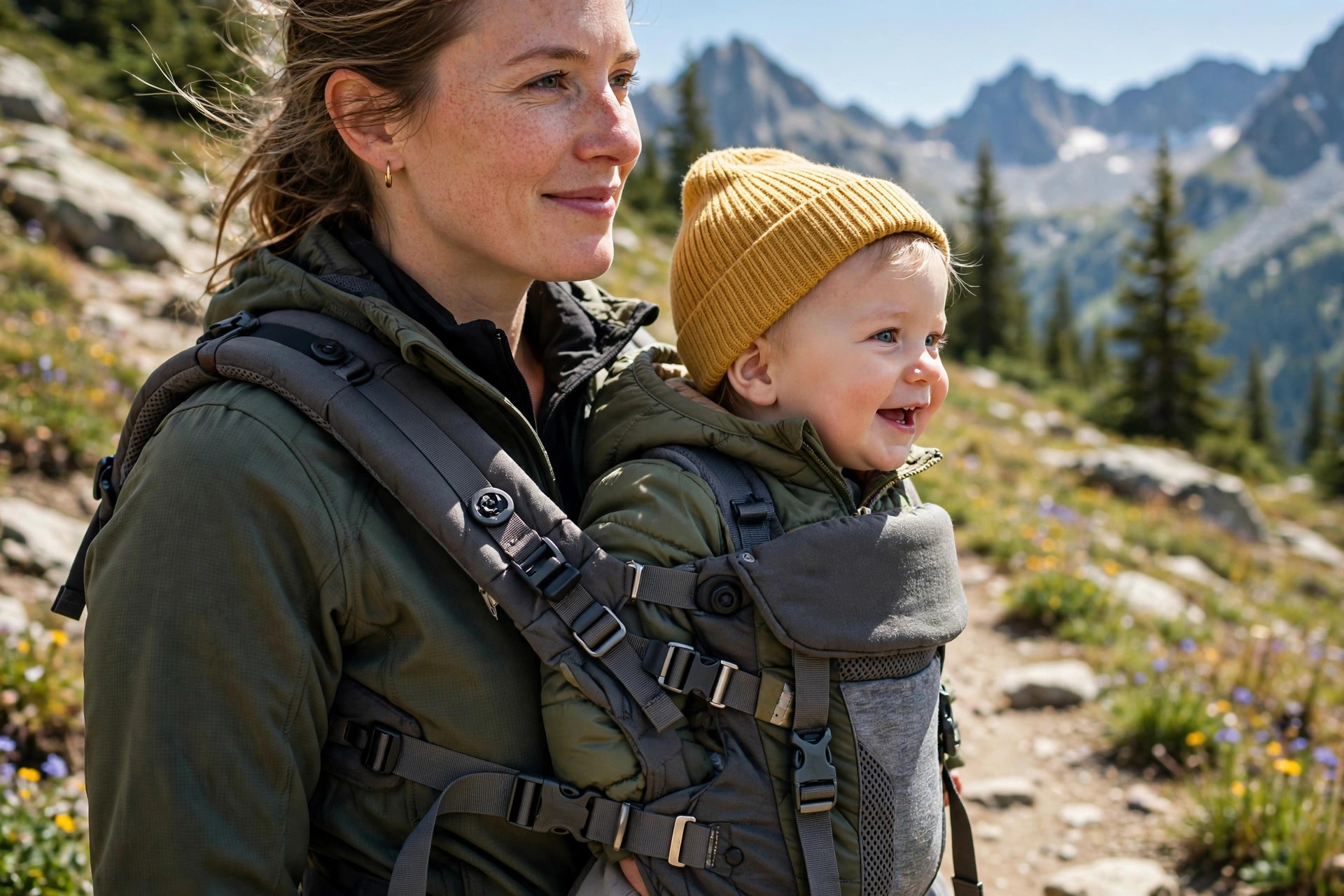
Soft-structured carriers are the workhorses of babywearing. They buckle on like a regular backpack and let you carry your child on your chest or back. They’re known for their smaller footprint, which makes them easier to toss in the car and more convenient for travel. They’re also much lighter than framed packs — often 2–3 lbs instead of 7 — and the closeness they offer is perfect for kiddos who want to be near mom or dad.
Benefits of SSCs Over Framed Backpacks
The benefits of soft-structured carriers over framed backpacks are clear for everyday use: they’re more compact, so storage and travel are easy; they’re lighter, which matters on shorter hikes and around camp; and the snuggly closeness is exactly what younger babies want. If you only buy one carrier, a soft-structured carrier that works from newborn to toddler gives you the most bang for your buck.
Spotlight: The Ergobaby
The Ergobaby is the standout soft-structured carrier. It’s packed with excellent padding, makes it easy to get your kiddo in and out, and includes a solid sunshade for trail days. Newer models add handy storage pockets for small items like snacks and sunscreen. It’s easy to clip on quickly — a real advantage when you’re juggling a wiggly baby and a trailhead parking lot.
Spotlight: The Co Family Carrier
Another great option is the Co Family Carrier. It’s designed to be less bulky, which makes it easier to pack or carry when not in use. The straps cross on your back, so they don’t compete with a daypack’s shoulder straps — ideal if you’re carrying your own gear or pushing a structured backpack carrier for a second child. It also distributes weight differently across your body, reducing strain on your shoulder blades during longer carries.
Framed Backpack Carriers
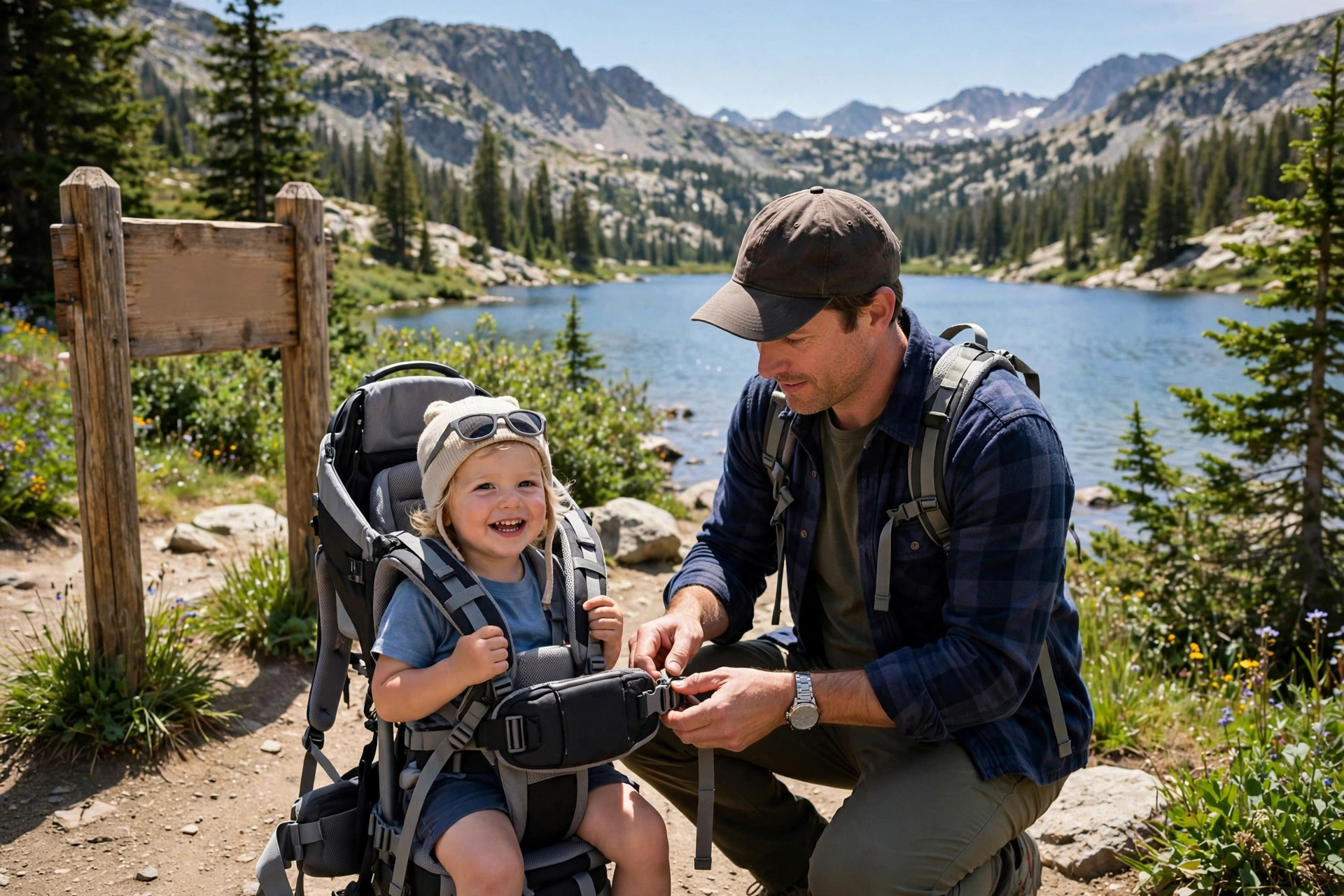
For babies 6 months and up — and especially for toddlers up to about 48 lbs — framed backpack carriers like the Osprey Poco Plus and Deuter Kid Comfort III are the gold standard. A real hip-belt structure shifts your kid’s weight onto your legs instead of your back, provided the pack is properly fitted. They’re bulkier than soft carriers, but for longer hikes where comfort and support matter, nothing beats them.
Storage Space
Storage is where framed packs pull ahead. Depending on the model, you get enough room for lunch, diapers, layers, and water — the Osprey Poco Plus has around 26 liters of storage, while the Deuter Kid Comfort III offers about 20 liters — so you can skip carrying a separate daypack on most outings. If you’re building your family camping checklist, most day-hike essentials fit right in the carrier.
Weight Distribution
The biggest advantage of a framed pack is weight distribution. The aluminum frame and hip belt shift the load onto your leg and hip muscles, which is far more comfortable for carrying a 20–35 lb toddler than any soft carrier. SSCs, by contrast, place most of the load on your back and shoulders, which leads to fatigue on longer miles. The difference is night and day once your kid passes 25 lbs.
Toddler Comfort
For toddler comfort, framed carriers win comfortably. Kids get a better view over your shoulders, a real seat with a five-point harness, and enough wiggle room to eat a snack or sip from a water bottle. Soft carriers can feel awkward for older toddlers — especially when they fall asleep and their head lolls without support — while framed packs have padded headrests designed for trail naps.
Osprey Poco Plus vs. Deuter Kid Comfort III
From my experience, the Osprey Poco Plus is the standout. It has the better child cockpit with its double-halo harness, a generous sunshade and raincover included in the box, and an adjustable torso that fits both parents comfortably. When I helped friends with the Deuter Kid Comfort, I found it harder to keep the kid’s weight centered, which made the carrier feel less stable. Both are excellent packs, but the Poco’s fit system feels more forgiving — especially if two parents of different sizes share one carrier. If you’re deciding, do the store try-on with your actual kid; the right fit is personal.
Buy Used and Save Big
A new Osprey Poco Plus costs around $395 and a Deuter Kid Comfort III runs about $300 — but the used market is full of deals. Framed carriers are built to survive years of use, so a gently used pack at half price is often indistinguishable from new. I’ve seen Poco Plus carriers go for as low as $150 on Facebook Marketplace, Nextdoor, and Craigslist. Just check the buckles, zippers, and frame joints before handing over cash.
Wraps, Slings, and Minimalist Carriers for the Early Months
For the newborn days and quick outings, simple carriers beat bulky ones. Wraps and slings keep your baby snuggled against your chest, leave your hands free, and pack down to nearly nothing.
Exploring Woven Wraps for Newborns
Woven wraps are a fantastic choice for the newborn months. Their softness lets your squishy baby snuggle close — a smooth transition from womb to trail. They’re perfect for keeping your hands free, especially when you’re also wrangling a toddler. Two popular brands are Solly Baby and Baby K’Tan, each with its own pros and cons.

Solly Baby: Soft and Stylish
The Solly Baby wrap is known for being one of the softest, breeziest options out there. Its stretch gives a snug fit while letting your baby wiggle, and it comes in lovely colors and patterns. The price — usually under $100 — can sting a little, but sales are common. The learning curve for tying can feel cumbersome at first, especially with a crying newborn, but it gets second nature fast. One practical tip: the long fabric tends to drape on the floor while tying, so wrap at home and wear it in the car to the trailhead. It works well for babies up to 25 lbs, and is most comfortable during the first 3–4 months.
Baby K’Tan: Affordable and Easy to Use
The Baby K’Tan solves the tying problem: it’s pre-wrapped, with connected loops of fabric you just slip on. No dragging on the floor, no origami. It’s also more affordable than most woven wraps — I found a used one for just $25, and even new they’re budget-friendly. For parents intimidated by long wraps, the K’Tan is the easy on-ramp to babywearing.
Slings: Quick and Convenient
Ring slings are the grab-and-go option. Once tied, you can leave the ring set and throw it on in seconds — perfect for quick moments like the zoo, the farmers market, or camp chores. They range from cheap to nearly $100 for fancy brands. I love their ease, but be honest with yourself: all the pressure rests on one shoulder, so they get uncomfortable fast on real hikes. Slings are for short carries, not summit days.
Trail Magik: The Minimalist Trail Option
For backpacking trips or day hikes where your toddler walks most of the way but needs the occasional ride, Trail Magik is brilliant. It’s essentially a padded rectangle of canvas that attaches to your own backpack’s hip belt, giving your kid a perch when their legs give out. It folds to the size of a water bottle, weighs under 10 ounces, fits kids up to 43 lbs, and costs $99. For families where the toddler is “almost” walking the whole trail, it’s the lightest possible insurance policy.
My Go-To Carriers for Every Stage
As a serial carrier buyer who babywears almost constantly, I’ve tried many carriers with my two kids. Here’s my breakdown by age and stage:
- Newborn (0–4 months): A woven wrap like the Solly or Baby K’Tan. Soft, cozy, and perfect for keeping your brand-new baby close — see the newborn camping safety rules before heading out.
- 3 months to 18 months: The Ergobaby soft-structured carrier. Easy to clip on, comfortable for hours, and great for everyday wear plus short hikes.
- 1 year+: The Osprey Poco Plus framed backpack. Sturdy, comfortable, and ideal for longer hikes — with room for diapers, snacks, and layers built in.
- Transition from carrier to walking (after 1 year): When my child started walking but still needed occasional rides, the Trail Magik was a lifesaver. Lightweight, tiny when packed, and perfect for backpacking trips where every ounce counts — pair it with your backpacking sleep setup for a full trail-family kit.
If you’re looking to buy just one carrier that lasts through the years, get a soft-structured carrier that works from newborn to toddler. They’re quick to get on and off, comfortable for both parent and child, usually include sunshades, and work for hiking as well as daily life. There are many brands to choose from, so you can find one that fits your body and budget.
Hiking Carrier Safety Checklist
A carrier only works if it’s used safely. Run through these every time you head out:
- Head control comes first. No framed backpack carrier until your baby can sit up and hold their head steady on their own — usually around 6 months.
- Check the fit before every hike. Straps loosen over time. Snug the hip belt, shoulder straps, and child harness before you leave the trailhead, and re-check after the first 15 minutes.
- Protect from sun and cold. Babies in carriers can’t regulate temperature or seek shade themselves. Use the built-in sunshade, a hat, and sunscreen on exposed skin — and bring an extra warm layer, since a carried baby gets colder than a moving adult. Our kids’ layering guide covers exactly what to pack.
- Hydrate and snack often. Stop every 30–45 minutes to offer water and check on your passenger. A happy, fed baby is a quiet hiking partner.
- Watch the trail, not the view. Your center of gravity changes with 30 lbs on your back. Take rocky or rooty sections slowly, use trekking poles if you have them, and skip scrambles with a baby aboard.
Some Important FAQs About Hiking Infant Carriers
When can babies start using a hiking carrier?
A framed hiking carrier is generally appropriate for babies who can hold their heads up and sit unsupported, typically around six months and over. For younger babies, soft-structured carriers like the Ergobaby or wraps like the Solly Baby are the right choice — they support newborns safely when used according to the manufacturer’s guidelines.
What is the best hiking carrier for a toddler?
For toddlers, two models stand out: the Osprey Poco Plus and the Deuter Kid Comfort III. Both use a hip-belt structure that shifts your kid’s weight onto your legs instead of your back, both are rated for babies 6 months and up, and both carry toddlers up to about 48 lbs. The Osprey edges ahead on storage and included accessories; the Deuter is often a little cheaper.
How do you carry a baby while trekking?
Invest in a carrier that supports your baby’s neck and spine while keeping you comfortable. Look for adjustable straps, a padded waist belt, and a sunshade or hood for weather protection. Pack light, stop frequently, and remember that short, happy hikes beat long, miserable ones — build up your miles gradually as both you and your baby get used to the carrier.
Should I buy new or used?
Used is genuinely smart for framed carriers. They typically cost $300–$400 new, but lightly used ones sell for $150–$200 on Facebook Marketplace, Nextdoor, and Craigslist. Check buckles, zippers, and the frame for damage, and give fabric parts a good wash before first use. For wraps and soft carriers, buying new is cheap enough that it’s usually the simpler choice.

1 comment
[…] which buys you far longer happy riding time than a low, inward-facing carry. Our roundup of the best hiking infant carriers compares ride height and cockpit design across the main […]