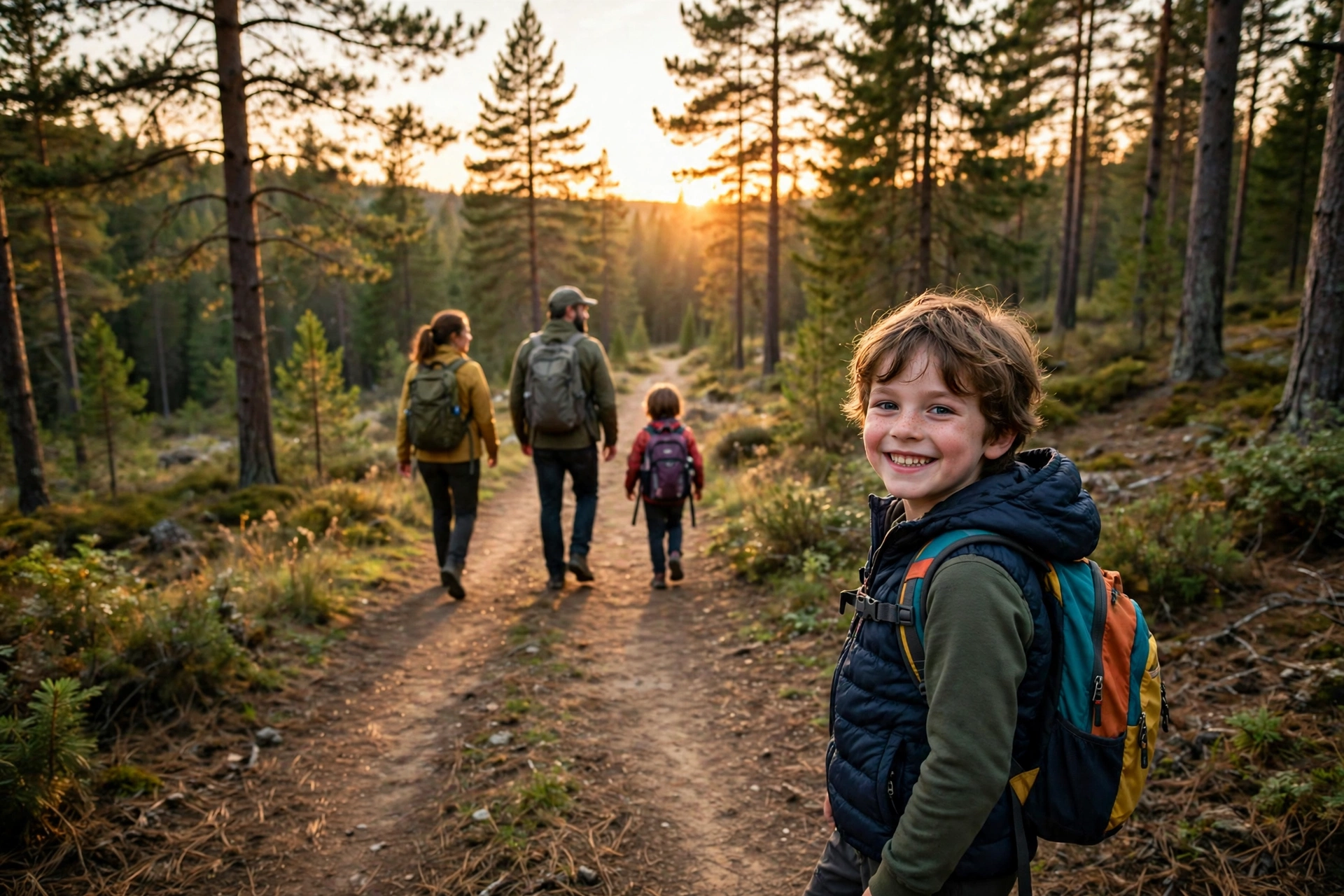
If your kid has ever made it half a mile down the trail before the backpack ended up on your shoulders, you already know the real question behind the search for the best hiking backpacks for kids: which pack will actually fit a small body well enough that your child carries it happily — all the way back to the trailhead?
The answer is rarely the cutest pack or the cheapest one. It is the pack that matches your child’s torso length, holds the right volume for the trip, and sits light enough that it never becomes a complaint. This guide walks you through exactly how to get that fit, grouped by age so you can skip straight to your kid, with honest picks, a packing checklist, and the mistakes parents make most.
Why Kids Need a Real Hiking Pack (Not an Adult Pack or a School Bag)
Three things make a kids’ hiking backpack different from whatever bag is lying by the front door:
- Torso-scaled fit. A child’s back is short. An adult daypack’s shoulder straps start in the wrong place, the hip belt rides up near the ribs, and all the weight hangs from the shoulders. Kid-specific packs shrink the whole suspension to match short torsos.
- Hip-belt weight transfer. On a properly fitted pack, roughly 80% of the weight should sit on the hips, not the shoulders. Youth packs include real, padded hip belts sized for narrow hips — school bags don’t.
- Growth room without going oversized. Good kids’ packs include adjustable torso systems so one pack survives two or three growth spurts. Buy too big “to grow into” and the pack will chafe and bounce all season.
One important clarification: if you are still carrying your child rather than hiking alongside them, you don’t need this guide — you need a child carrier backpack built to hold a toddler. Everything below is for kids who walk the trail themselves.
How to Fit a Hiking Backpack on a Child: 5 Steps
Do this at home before you buy, or in the store before you pay. It takes ten minutes and makes more difference than any brand name. The method below follows the same fitting logic REI’s backpack sizing and fit guide teaches for adults, adapted for small bodies.
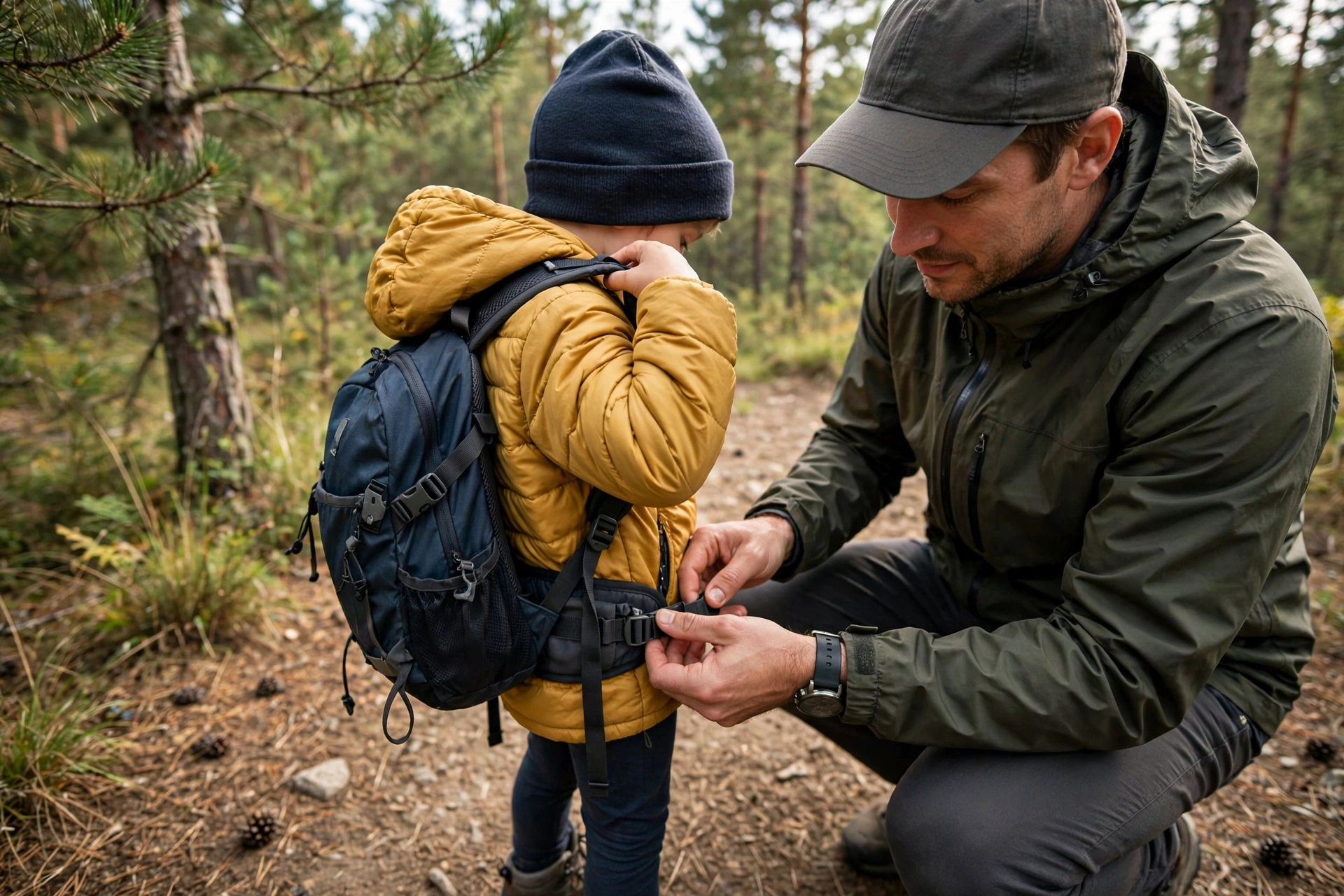
Step 1: Measure the torso, not the height
Have your child stand straight. Feel for the bony bump at the base of the neck (the C7 vertebra). Measure with a soft tape from there down to an imaginary horizontal line across the tops of the hip bones. That number — in inches — is the torso length, and it matters far more than height or age. Most youth packs list the torso range they fit right in the specs.
Step 2: Match capacity to the trip, not the child
A bigger child does not automatically need a bigger pack. Capacity follows the outing: 5–10 liters for short nature walks, 10–20 liters for full day hikes, 30+ liters only for overnights. Oversized packs tempt kids to overfill them (see the weight rule below).
Step 3: Load it before you judge it
Stuff the pack with roughly the weight your child will actually carry — a full water bottle, snacks, a jacket. An empty pack tells you nothing about fit.
Step 4: Adjust in the right order — hips, shoulders, lifters, sternum
Loosen everything first. Then: center the padded hip belt over the top of the hip bones and snug it so it stays put — the hips carry the load. Pull the shoulder straps down and back until they wrap smoothly around the shoulders without gaps. If the pack has load-lifter straps, tighten until they angle about 45 degrees. Finish with the sternum strap about an inch or two below the collarbones, just snug enough to keep the shoulder straps in place.
Step 5: The walk-around test
Have your child walk, bend, and twist for a few minutes. Red flags: the pack sways side to side, straps dig into the neck, the hip belt creeps up to the ribs, or your child immediately asks to take it off. Any of these means wrong size or wrong adjustment — fix it now, not at mile two.
How Much Weight Can Kids Safely Carry?
This is the part most listicles skip. Pediatric and physical-therapy guidance generally puts the safe ceiling for a loaded backpack at roughly 10 to 20 percent of a child’s body weight, with most experts nudging parents toward the lower end of that range for growing bodies. Water is the heaviest thing in a kid’s pack — a single liter weighs about 2.2 pounds — so keep loads light and let the adults carry the group’s heavy gear.
Quick reality check by age (using the 10–15% conservative band):
| Age band | Typical body weight | Comfortable pack weight | Right capacity |
|---|---|---|---|
| 2–4 years | 25–40 lbs | 2.5–5 lbs | 5–8 L |
| 5–8 years | 40–60 lbs | 4–8 lbs | 10–18 L |
| 9–12 years | 60–90 lbs | 6–12 lbs | 18–30 L |
| 13+ years | 90–130 lbs | 9–18 lbs | 35–50 L |
If your child has back, neck, or growth-plate concerns, check with your pediatrician before loading up for a long hike. And never forget the water math: on warm days, kids drink more than you expect — plan their water, but carry the extra yourself.
The Best Hiking Backpacks for Kids, by Age (2026)
These picks are drawn from published manufacturer specs and consistent parent feedback across hiking forums and outdoor communities — grouped by age because age determines torso length, which determines everything. Prices change constantly, so check current prices before you buy; the bands below are budget, mid-range, and premium.
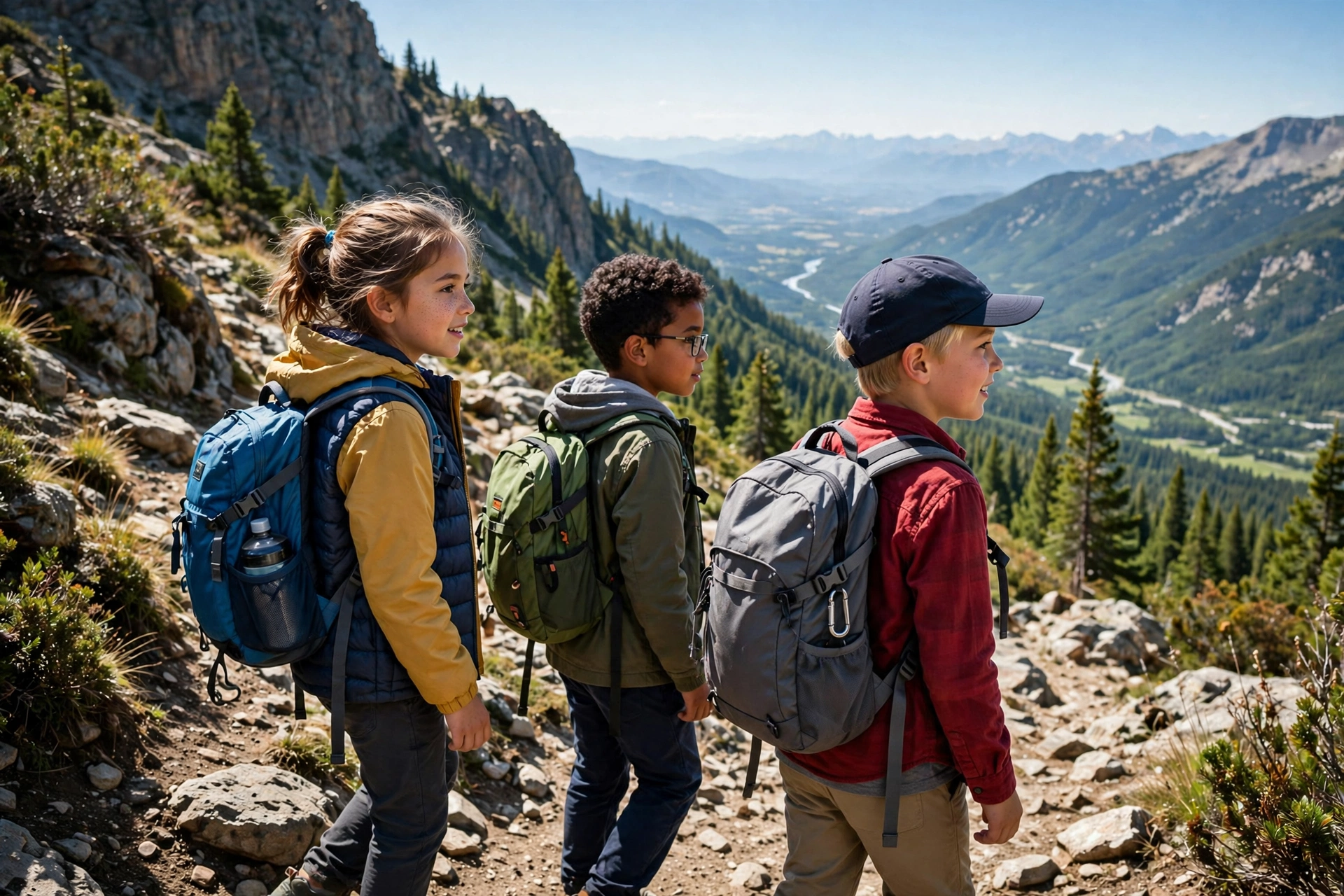
Ages 2–4: first-trail packs (5–8 L)
At this age the pack is mostly about building the habit — and the pride. Look for featherweight packs with a chest strap and almost nothing else.
Best for tiny hikers: packs like the Deuter Pico (5 L, around 7 oz) are built exactly for this stage — a real mini hiking pack with padded straps scaled to preschoolers. Who it’s for: 2–4-year-olds on short walks who want to carry their own snack and treasure finds. Who it’s NOT for: anyone needing water capacity or a full day out — 5 liters won’t hold lunch and a jacket.
Ages 5–8: the sweet-spot daypacks (10–18 L)
This is the age band where a good pack pays off most. Kids hike real distances now — match the pack to how far kids can realistically hike by age — and 12–18 liters covers water, snacks, a layer, and a few treasures.
Best overall value: the REI Co-op Tarn 18 is the pack experienced hiking families mention most: 18 liters, a real hip belt, hydration compatibility, and a mid-range price that stings less when growth spurts hit. Best simple classic: the Deuter Junior (18 L) has been the default kids’ daypack for years — light, tough, and sized for roughly ages 5–9. Best “real pack” feel: the Osprey Daylite Jr gives smaller kids the same harness DNA as adult Osprey packs, which helps if an older sibling already hikes in one. Who these are for: elementary-age day hikers. Who they’re NOT for: overnights — you cannot squeeze sleeping gear into 18 liters.
Ages 9–12: real trail packs (18–30 L)
Older kids start carrying their own full kit — and sometimes their share of group gear. Prioritize an adjustable torso and a genuinely padded hip belt here.
Best step-up daypack: the Osprey Jet 18 is widely recommended as the safest all-around choice for the 6–12 range, with a ventilated back panel that matters on warm climbs. Best first overnight-capable pack: the Deuter Fox 30 adds an adjustable back system and enough volume for a first backpacking trip with light gear. Who these are for: confident young hikers doing long days or first overnights. Who they’re NOT for: younger or smaller kids — a 30-liter pack on a 7-year-old is a sail, not a backpack.
Ages 13+: youth backpacking packs (35–50 L)
Teens with adult-like torsos can move into youth backpacking packs with full suspension. The torso measurement from Step 1 matters more than ever here — many 13-year-olds fit small adult packs, and some still need youth sizes.
Best youth backpacking pack: the Osprey Ace 38 offers about 5 inches of torso adjustability and a real load-bearing hip belt, aimed at roughly ages 9–14 — the closest thing to an adult pack in a kid-sized frame. Best for taller teens: the Gregory Wander 50 bridges the gap to adult packs for multi-day trips. Who these are for: teens doing overnights and multi-day treks. Who they’re NOT for: day hikers — 50 liters of empty space just invites overpacking.
What Goes Inside a Kid’s Pack: The Packing Checklist
Give kids ownership of their own gear — it keeps them engaged on the trail and teaches responsibility. A kid’s pack should hold their essentials; adults carry the group’s heavy and safety gear.
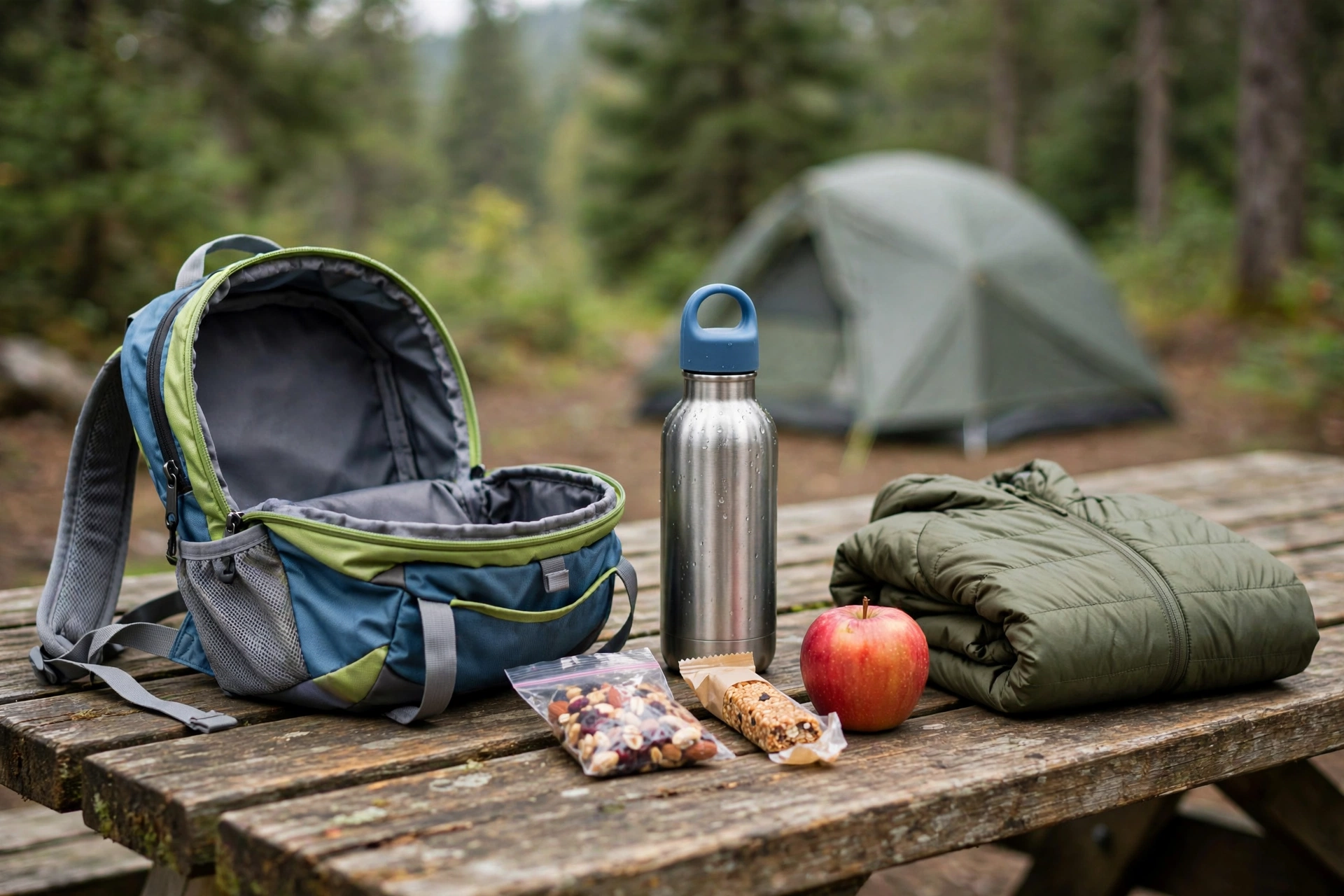
- Water bottle (full) — the single most important item
- Snacks they chose themselves — ownership matters (see our trail-tested hiking snacks for kids)
- One extra layer (fleece or rain shell)
- Sun protection: hat and sunscreen
- A whistle on a chest-strap loop — teach the “three blasts” rule from our trail safety skills by age guide
- Small comfort item for younger kids (a favorite snack, a nature journal)
- Headlamp for late-day hikes
The National Park Service’s Ten Essentials for hiking safety still applies to the family as a whole — navigation, first aid, and emergency gear ride in the adults’ packs.
5 Mistakes Parents Make When Buying Kids’ Backpacks
- Buying by age instead of torso length. Two 8-year-olds can differ by 4 inches of torso. Measure, don’t guess.
- Sizing up “to grow into.” An oversized pack bounces, chafes, and ends up on your shoulders. Buy for this season; good packs adjust enough for next year too.
- Skipping the hip belt. No hip belt means 100% of the weight hangs from little shoulders. For day hikes over a couple of miles, a padded hip belt is non-negotiable.
- Overpacking the pack. Kids fill available space. Choose a smaller volume and enforce the 10–15% weight rule — weigh the loaded pack on a bathroom scale before you leave.
- Ignoring the shoes-and-socks system. A great pack can’t save a hike ruined by blisters. Fit their footwear as carefully as the pack — our kids’ hiking boots fit guide walks through it.
Frequently Asked Questions
What age can a child start wearing a hiking backpack?
Most kids can carry a tiny 5-liter pack from around age 2–3 on short walks — at that stage it’s about fun and habit, not cargo. Real load-carrying starts around 5–6, when kids hike meaningful distances and can understand the weight rule.
How do I measure my child’s torso for a backpack?
Find the bony bump at the base of the neck (the C7 vertebra) and measure down to an imaginary line across the tops of the hip bones. Use a soft tape with your child standing straight. Compare that number — not their height or age — to the pack’s listed torso range.
Can kids use an adult backpack?
Only if the torso length truly matches a small adult size, which usually doesn’t happen before the mid-teens. Adult packs place the hip belt and shoulder-strap anchors in the wrong spots for short torsos, shifting all the weight to the shoulders.
How heavy should a kid’s hiking backpack be?
Stay near 10–15% of your child’s body weight for comfort, and treat 20% as an absolute ceiling. Weigh the loaded pack on a bathroom scale — parents consistently underestimate how fast water and snacks add up.
Daypack or backpacking pack for a 10-year-old?
For day hikes, an 18–22 liter daypack is plenty. Move to a 30–40 liter youth backpacking pack only when your child starts doing overnights and needs to carry sleeping gear and extra clothing.
The Bottom Line
The best hiking backpack for kids is the one that fits your child’s torso, matches your trip length, and stays light enough that it never becomes a complaint. Measure the torso, buy for this season (not three seasons from now), keep the load near 10–15% of body weight, and let your kid pack their own snacks. Do that, and the pack stays on their back — not yours — all the way home.
