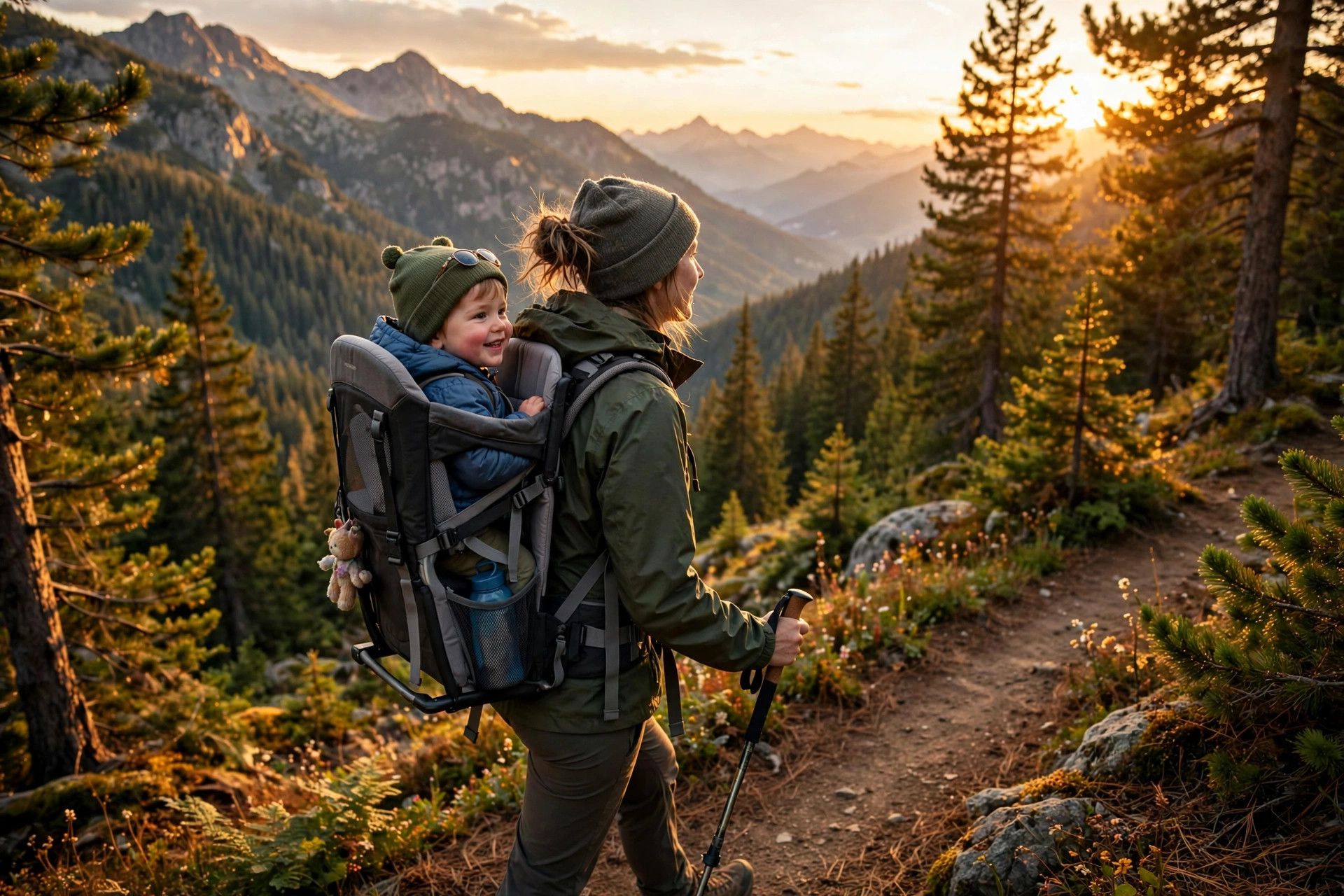
A child carrier backpack is the single best piece of gear for families who want to keep hiking after a baby arrives. Once our daughter outgrew the soft carrier she napped in on neighborhood walks, we needed something with real structure — a framed carrier with a safe seat, a sunshade, and enough cargo space for diapers, snacks, and a spare layer. Over the past two hiking seasons, we carried her in framed carriers across alpine meadows, desert switchbacks, and rainy Pacific Northwest trails, and we learned quickly that not all child carrier backpacks are built the same.
Some fit like a premium hiking pack and disappear on your back. Others bounce, squeak, or leave the toddler roasting in the sun. This guide compares the 7 best child carrier backpacks for 2026 — how they fit, how they handle real trail miles, and which one matches your family’s hiking style.
Why a Framed Child Carrier Wins on Real Trails
For short walks, a soft-structured baby carrier is perfect. But once hikes stretch past an hour, a framed child carrier backpack earns its place. The aluminum or plastic frame holds your child upright at a safe seated height, keeps their weight off your shoulders and on your hips, and gives you real cargo space — usually 12 to 20 liters — for everything a day hike with a toddler demands.
Framed carriers also solve the two biggest problems parents report on trail:
- Sun and weather exposure: most quality carriers include an integrated or optional sunshade that keeps a sleeping toddler shaded while you keep walking.
- Kickstands and stability: a fold-out kickstand lets you set the carrier down safely for snack breaks and diaper changes without laying your child on the ground.
Most framed carriers are rated for children from about 6 months (once they can sit up unassisted) to around 40–48.5 lbs total, including the child’s weight plus cargo. That gives most families two to three solid hiking seasons per carrier.
How We Picked These 7 Carriers
We started with every major framed child carrier on the market and narrowed the field using the criteria that actually mattered during our trail testing:
- Parent fit and adjustability: does it offer torso adjustment for hikers of different heights?
- Child comfort: padded seat, stirrups, and a drool pad that survives real use.
- Weight: carrier weight plus cargo makes a difference by mile four.
- Sun and weather protection: included sunshade or a good rain cover.
- Cargo and organization: can it swallow a day’s worth of toddler supplies?
- Safety features: secure harness, stable kickstand, and sturdy frame.
For a broader look at family trail gear, our beginner’s hiking gear guide covers the rest of your kit.
The 7 Best Child Carrier Backpacks of 2026
1. Best Overall: Osprey Poco
The Osprey Poco is the carrier we reach for most often, and it’s the model we reviewed in depth in our full Osprey Poco review. It fits smaller-framed hikers beautifully with its adjustable torso length, the child cockpit feels genuinely roomy, and the included sunshade deploys in seconds. The double halo harness for the child is the easiest to buckle one-handed of any carrier we used. At a reasonable weight for its feature set, it’s the best all-rounder for day hikes from 2 to 6 miles.
2. Best for Long Days: Deuter Kid Comfort Pro
If your hikes regularly stretch past lunch, the Deuter Kid Comfort Pro’s Aircomfort back system is the most breathable parent back panel we tested — a real advantage on hot climbs. The child seat adjusts up and down to grow with your kid, the side-entry design makes loading a squirmy toddler easier, and the chin pad doubles as a surprisingly soft napping pillow. It’s heavier than the Poco, but the comfort is worth it for big-mile families.
3. Best Value: Kelty Journey PerfectFIT
The Kelty Journey is the carrier that proves you don’t need to spend premium money for a solid frame carrier. The PerfectFIT suspension adjusts to a wide range of parent torsos, the integrated sunshade is included rather than sold separately, and the under-seat storage is generous. It lacks some of the polish of the Osprey and Deuter — the buckles feel plasticky and the hip belt is less plush — but for weekend hikers it delivers the core features at a much friendlier price.
4. Best Storage: Osprey Poco Plus
The Poco Plus takes everything great about the Poco and adds a full daypack’s worth of storage, including a 20-liter main compartment and an interior sleeve. If you’re the parent who carries the water, the first aid kit, the extra clothes, and the snacks for everyone, this is your carrier. The extra volume adds a little weight, so lighter hikers should try it on loaded before committing.
5. Most Organized: Thule Sapling
The Thule Sapling (formerly Sapling Elite) is the tidiest carrier in the lineup. Thoughtful details abound: a gear loft, multiple zippered pockets, and a removable backpack so a second parent can shuttle supplies to the car. The ErgoRide child seat with an adjustable stirrup kept our tester’s legs comfortable, and the fold-flat design stores easily in a crowded gear closet. It’s a premium price, but the organization is unmatched.
6. Lightest Frame: Phil&Teds Parade
At under 6 pounds, the Phil&Teds Parade is the lightest framed child carrier we used, and you’ll feel the difference on the first steep climb. The aluminum frame is slim, the seat is simple but comfortable for shorter hikes, and it packs down well for travel. Trade-offs: the sunshade is an add-on, storage is modest, and it’s best suited to children under about 40 lbs. For travel and short hikes, though, it’s a joy to carry.
7. Best Budget Pick: Chicco Smart Support Backpack
The Chicco Smart Support is the most affordable framed carrier worth buying. The steel frame is sturdy, the seat is padded and secure, and it includes the essentials — sun canopy and storage pouch — that budget carriers often skip. It’s noticeably heavier than the premium models and the parent fit isn’t as refined, but for occasional hikers and grandparents who want a safe option, it’s excellent value.
Child Carrier Backpacks Compared: Quick Specs
| Model | Best For | Max Child Load | Carrier Weight | Sunshade Included |
|---|---|---|---|---|
| Osprey Poco | Best overall | 48.5 lbs | ~7.9 lbs | Yes |
| Deuter Kid Comfort Pro | Long days | 48.5 lbs | ~8.2 lbs | Yes |
| Kelty Journey PerfectFIT | Value | 50 lbs | ~8.1 lbs | Yes |
| Osprey Poco Plus | Storage | 48.5 lbs | ~8.6 lbs | Yes |
| Thule Sapling | Organization | 48.5 lbs | ~7.7 lbs | Yes |
| Phil&Teds Parade | Lightweight | 40 lbs | ~5.9 lbs | Add-on |
| Chicco Smart Support | Budget | 40 lbs | ~9.6 lbs | Yes |
Weights and ratings are manufacturer figures; always verify the current specs before buying, as models are updated yearly.
How to Fit a Child Carrier Backpack Correctly
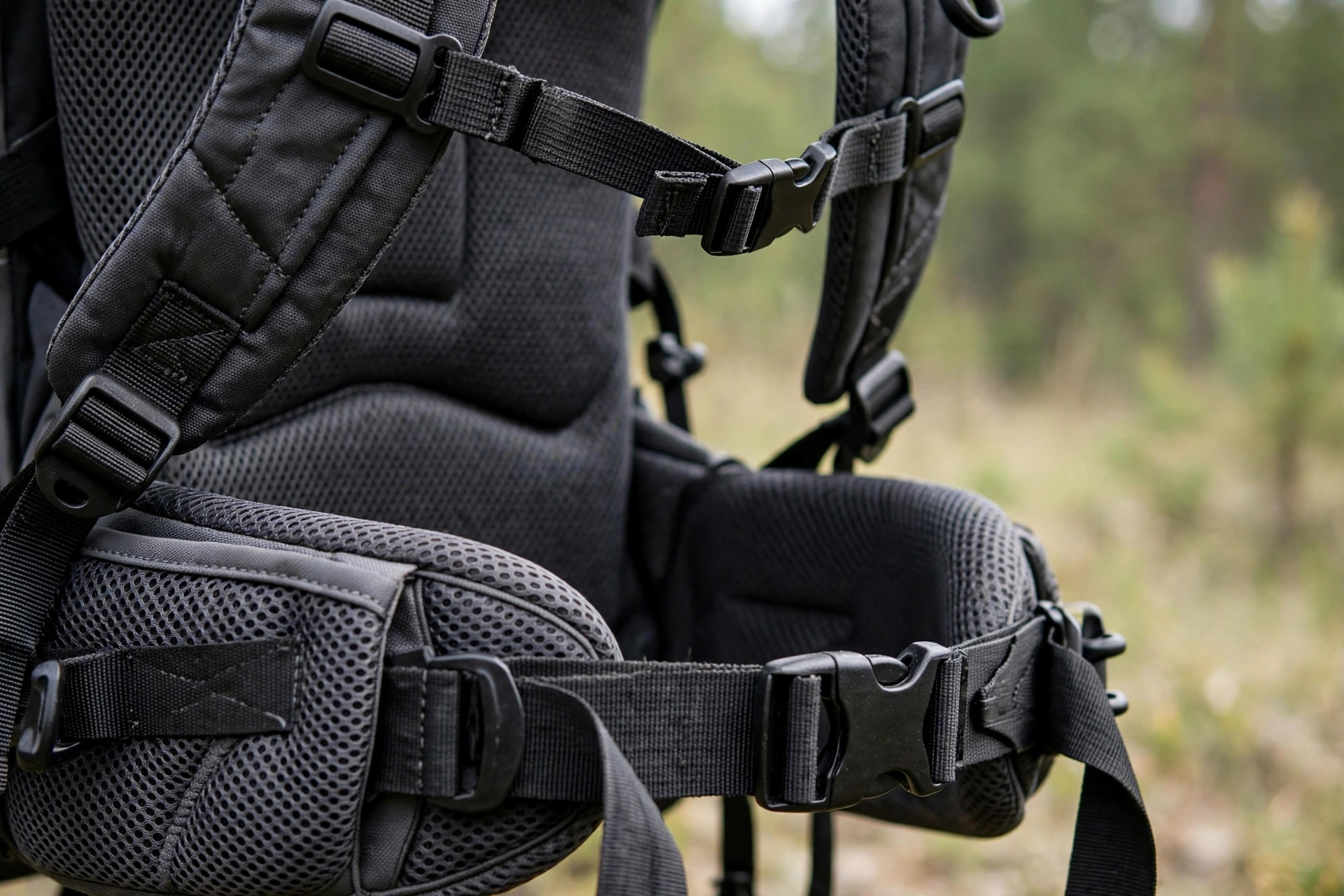
A poorly fitted carrier turns a fun hike into a miserable one. Follow these steps every time you put it on:
- Adjust the torso length first. With the carrier on a flat surface, set the harness to your torso length before loading your child. Most premium carriers slide between about 15 and 20 inches.
- Buckle the hip belt snug on your hips. Roughly 70–80% of the weight should ride on your hips, not your shoulders.
- Tighten shoulder straps, then load lifters. The pack should feel close to your back without pinching.
- Seat your child and buckle the harness. The child harness should be snug but allow two fingers between strap and shoulder.
- Adjust the stirrups. Your child’s feet should rest comfortably on the stirrups, not dangle — this protects their leg circulation.
- Deploy the sunshade. Even on cloudy days, UV reaches a child seated above your head height.
If two parents share one carrier, mark each person’s torso setting — swapping takes 30 seconds once you know your marks.
What to Pack in the Carrier’s Cargo Space
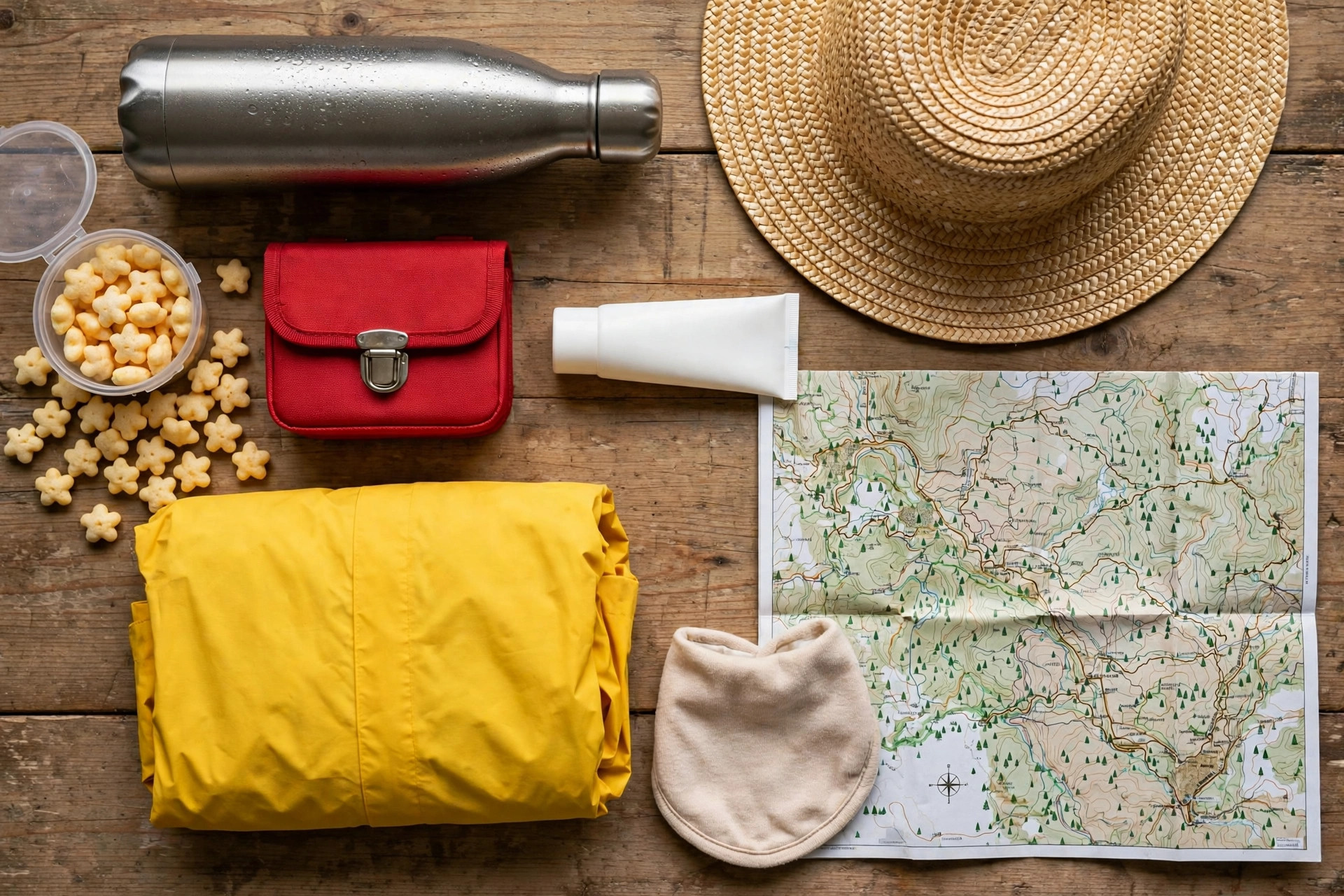
A framed carrier’s cargo compartment easily swallows a toddler’s day-hike kit. Our standard loadout:
- 2–3 diapers, wipes, and a small changing pad
- Sippy cup or water bottle plus a snack bag (crackers, fruit pouches, trail mix for parents)
- Sun hat, child-safe sunscreen, and sunglasses with a strap
- A warm mid-layer and a lightweight rain shell for the child
- Small first aid kit: bandages, antiseptic wipes, tweezers for splinters
- A compact toy or book for rest stops
Keep total cargo weight reasonable — the child plus gear should stay within the carrier’s rated maximum. Heavy items go low and close to your back.
Trail Safety Rules for Hiking with a Child on Your Back
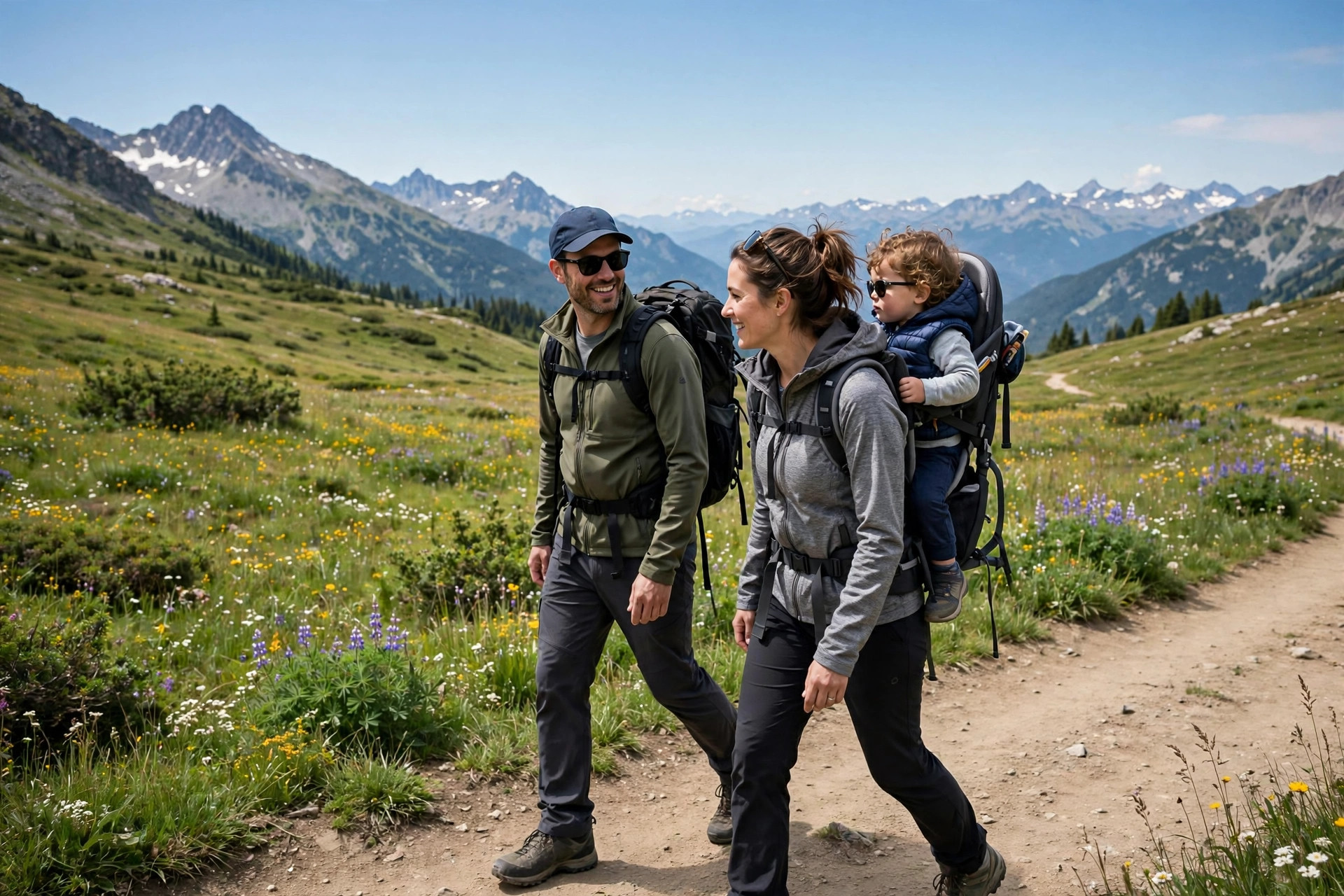
Carrying a child raises your center of gravity and your responsibility. These rules kept our hikes safe across two seasons:
- Match the trail to the load. A child on your back makes you slower and less agile — stick to well-maintained trails and realistic distances. Our guide to trail distances for toddlers helps you plan.
- Never carry a child who can’t sit unassisted. Most pediatric guidance puts the minimum around 6 months. For younger babies, use an infant hiking carrier or soft carrier instead.
- Duck under branches — then duck again. Your child sits a full head higher than you; trail obstacles you clear easily can strike them.
- Watch the heat. A child seated above your head gets more sun and less breeze. Offer water and snacks often, and head back at the first sign of fussiness.
- Take the kickstand seriously. Always use the kickstand when setting the carrier down, and never lean a loaded carrier against a rock or tree.
- Check weather obsessively. Afternoon thunderstorms are dangerous at elevation; be below treeline by early afternoon in the mountains.
For more family trail safety basics, see Recreation.gov’s guide to hiking with kids and REI’s child carrier buying guide.
Frequently Asked Questions
What age can a baby go in a framed child carrier backpack?
Most manufacturers and pediatric guidance agree on one rule: the child must be able to sit up unassisted, which is usually around 6 months. Before that, stick with a soft carrier worn on your chest.
How heavy a child can a carrier backpack hold?
Most framed carriers support a child plus cargo totaling 40 to 50 lbs, depending on the model. Check your specific carrier’s rating — the Phil&Teds Parade and Chicco Smart Support top out at 40 lbs, while the Osprey, Deuter, Kelty, and Thule models go to 48.5–50 lbs.
Can you hike with a sleeping toddler in a carrier?
Yes — this is one of the best features of framed carriers. A good sunshade blocks light, the padded head support keeps the chin from flopping, and the steady rhythm of walking usually puts toddlers to sleep within minutes.
Are child carrier backpacks allowed on airplanes?
Framed carriers can be checked as luggage but aren’t allowed as carry-ons. The lightest models like the Phil&Teds Parade are the easiest travel companions; pad the frame with clothes in your bag.
Do I need hiking boots to use a child carrier?
Supportive footwear matters more when you’re carrying extra weight. Sturdy trail shoes or hiking boots with good ankle support are recommended. Pair the carrier with proper toddler hiking shoes for your little one once they’re walking portions of the trail.
How do I clean a child carrier backpack?
Most carriers have a removable, machine-washable drool pad. For the rest, spot-clean the fabric with mild soap and water, and rinse the frame. Never put the whole carrier in a washing machine — the frame and padding will be damaged.
Final Thoughts
The right child carrier backpack turns “we can’t hike with a baby” into your family’s favorite weekend ritual. For most families, the Osprey Poco hits the sweet spot of fit, features, and price. Long-mile hikers should look at the Deuter Kid Comfort Pro, and budget-conscious families can’t go wrong with the Kelty Journey or Chicco Smart Support.
Whichever you choose, try it on loaded — child, snacks, diapers, and all — before your first real hike. Your back will thank you by mile three.
