There is a moment on every family camping trip when your toddler decides the picnic blanket is boring, your lap is too wiggly, and the adult camp chair looks like a mountain worth climbing. That is usually the moment parents realise a seat made for a small child is not a cute extra. It is the piece of gear that makes meals calmer, campfire time safer, and the whole campsite feel a little more settled. The best toddler camping chairs give your child a place that is theirs — low enough to climb into, sturdy enough not to tip, and comfortable enough that they actually stay in it.
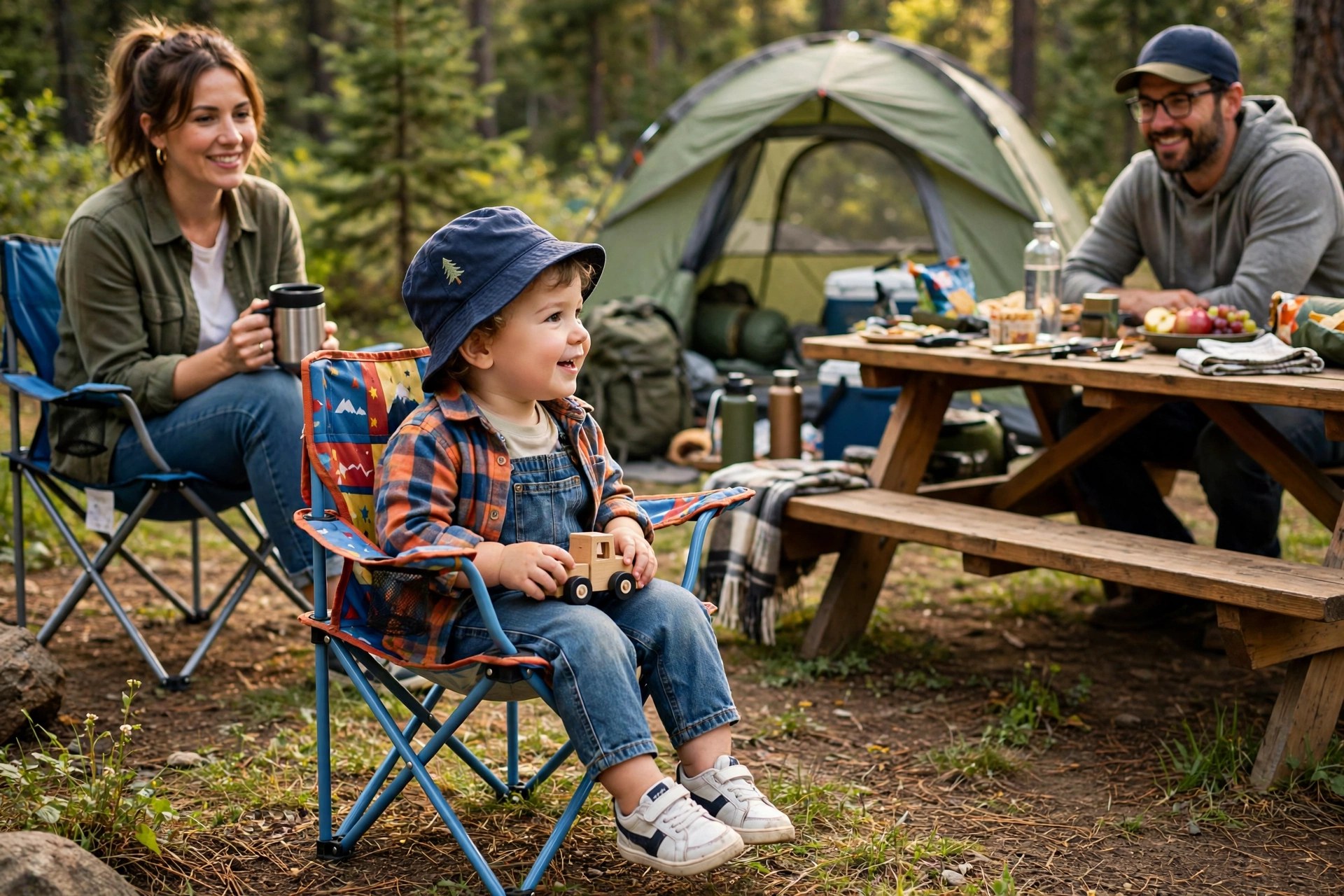
This guide is not about chasing the most expensive chair. It is about safety first, then comfort, then the practical details that matter when you are packing a car that is already full. You will learn which types suit which ages, what to check before you buy or borrow a chair, how to set it up safely on uneven ground, and what to do if you would rather not buy a dedicated chair at all. Prices and models change often, so this guide gives you a clear checklist you can use for any chair you find in a shop, online, or second-hand.
What Makes a Toddler Camping Chair Safe?
An adult camp chair shrunk down is not automatically a safe toddler chair. Look at the whole design, not just the colour or the character printed on the back.
A low seat and a wide, stable base
Toddlers should be able to sit with their feet touching or nearly touching the ground. If their legs dangle high above the dirt, every wriggle shifts their weight and makes tipping more likely. A wide base with legs that splay out slightly is far more stable than a tall, narrow frame. Before a trip, set the chair up at home on grass and give it a gentle push from the side. It should rock a little and settle, not topple. The frame should also lock firmly open so it cannot fold shut in use — check that lock every time, and retire any chair that feels loose at the joints.
Supportive seating, not a deep sling
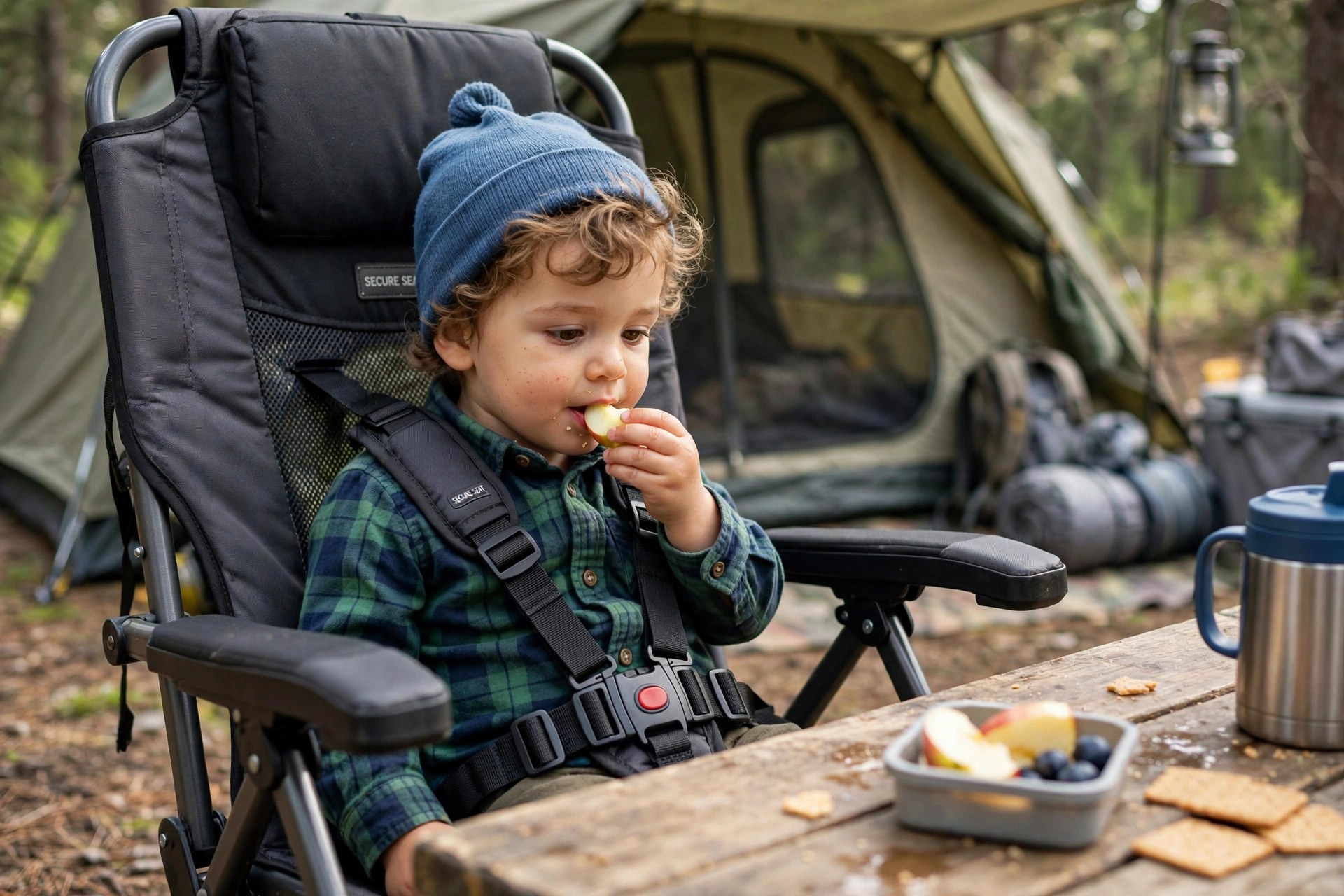
Very saggy fabric seats look cosy, but a small child can slide down into a slumped position that is hard to get out of and uncomfortable for eating. A firmer, flatter seat with a supportive back helps your toddler sit upright for snacks and meals. For younger toddlers, a higher back and gently raised sides can help them feel contained. If a chair includes a harness or lap strap, use it for meal times and follow the maker’s instructions for that model.
No sharp edges, pinch points, or loose parts
Run your hand around the frame, armrests, and cup holders before the first use. Look for sharp edges, cracked plastic, bent tubing, and screws that have worked loose. Folding points are natural pinch points, so keep little fingers away while you open and close the chair.
The parent guidance at HealthyChildren.org, from the American Academy of Pediatrics, is a useful general reminder for all child gear: choose age-appropriate equipment, follow weight and height limits, and supervise young children closely outdoors. A chair does not replace supervision — especially near a fire, a stove, or water.
Types of Toddler Camping Chairs Compared
Most family options fall into four groups. None is perfect for every child, and the right choice depends mostly on age, whether you eat at a table, and how much packing space you have.
| Chair type | Best for | Strengths | Watch out for |
|---|---|---|---|
| Low folding camp chair | Toddlers aged 2 to 4 for sitting, snacks, and stories | Light, simple, gives the child their own seat | No tray and usually no harness, so not ideal for full meals for younger toddlers |
| Chair with a tray | Younger toddlers and meal times | Tray keeps food in front of them and can help them stay seated to eat | Tray must attach firmly; check it does not lift off easily |
| Clip-on or booster-style seat for a picnic table or adult chair | Families short on space and children who eat with everyone else | Very compact and brings the child up to table height | Only use on a sturdy, stable surface exactly as the maker directs; never on a wobbly camp chair |
| Rocking or oversized novelty chairs | Short, supervised fun at home more than camp | Can feel exciting for older toddlers | Easier to tip on uneven ground and usually bulkier to pack — not a first choice for a campsite |
For most families, a low folding chair is the best starting point, plus a tray version if your toddler is under two and most meals happen in the chair rather than at a picnic table. Our camping with toddlers essentials guide puts a chair in context with the rest of the kit that helps a first trip run smoothly.
How to Choose the Right Size
Manufacturers set their own weight and age guidance, so always check the label on the chair you are considering rather than relying on a listing headline. As a parent, you can do three simple home checks:
- Sit your child in the chair at home and watch whether they can get in and out without climbing over the arms in a risky way.
- Check that the seat is not so deep that they slide forward, and not so narrow that winter layers make it a squeeze.
- Confirm their feet are close to the ground and the chair does not tip when they lean to reach a toy just to the side — then teach them to ask or get down instead of leaning far.
If you are buying for a baby who is only just sitting up, a dedicated chair may be too much, too soon. Families camping with a younger baby often do better with a blanket, a parent’s arms for feeds, and a safe flat space for play, which is why our guide to tent camping with a baby focuses on sleep, shade, and floor time first.
Features That Are Actually Worth It
- A washable or wipe-clean fabric. Camp snacks are sticky by law of nature. A seat you can wipe after yoghurt, berries, or a spilled drink will still look decent on trip three.
- A simple cup or snack holder your child can reach. One holder is plenty. It teaches independence and saves your own drink from being knocked over quite so often.
- A carry bag with a strap. Chairs that fold flat or into a small bag are far more likely to make the packing list. Bulky chairs get left at home.
- Feet or caps that suit grass and dirt. Wider feet spread weight better on soft ground than thin ends that sink into mud after rain.
- Shade only if it stays stable. A small canopy can help on a bright site, but it should not make the chair top-heavy or catch the wind. Never rely on a chair canopy instead of sunscreen, a hat, and proper shade.
Features you can safely skip include complicated recline systems and anything with lots of detachable small parts to lose in the grass at pack-up time.
Setting Up the Chair Safely at Camp
Where you put the chair matters as much as which chair you bought. Choose a flat patch away from the fire ring, the stove, tent guy lines, and the main walking route where adults carry hot pans. On a slope, turn the chair to face uphill rather than letting your child sit sideways on the slant, and re-check stability after rain softens the ground — a chair that was firm on Friday can wobble by Saturday, especially after a wet night like the ones covered in our guide to camping in the rain with kids.
A few camp rules help from the first trip:
- An adult sets up and folds away the chair — every time.
- The chair is for sitting and eating, not for standing, climbing, or using as a step.
- Hot food and drinks for adults do not rest on a toddler chair’s tray or arms.
- At bedtime, fold the chair away or lay it flat in the car so it does not collect rain or dew, and so nobody trips over it in the dark on the way to a sleep setup like the ones in our guide to what toddlers sleep in when camping.
Making the Chair a Happy Place, Not a Battle
A chair only helps if your toddler is willing to use it. Let them try it at home first — in the garden or living room with a favourite snack and a book — so the campsite version feels familiar. Keep early sits short and positive, with a small activity: a sticker book, a simple puzzle, or being the official holder of the torch while dinner is made. At meals, sit at their level when you can; toddlers copy what they see. If they want to get down, let them — within your campsite boundaries — and offer the chair again at the next snack.
Cleaning, Storage, and Making It Last
After each trip, shake out crumbs, wipe the fabric, and let the chair dry fully before you store it. A chair put away damp will smell, and mould spots are hard to shift from light fabric. Check the frame and locking point while you clean it; catching a loose joint at home is much better than discovering it at the next campsite. Store it dry, with its carry bag if it has one, and never use a second-hand chair with a damaged harness or a frame repair you do not trust.
If You Do Not Want to Buy a Chair
A dedicated chair is helpful, but it is not compulsory kit. Plenty of families manage with alternatives for a first season: a picnic blanket with a firm foam mat underneath for snacks and play, a booster seat used only on a stable picnic bench or the ground exactly as its maker allows, or meal times at a picnic table where your toddler sits between two adults with close supervision. You can also borrow a chair for one trip and see whether your child uses it enough to justify buying one.
What matters most is a safe, supervised place to sit and eat, not owning a particular product. If money is tight, put it first towards sleep warmth and weather protection — the chair can come later.
Frequently Asked Questions
What age is a toddler camping chair for?
Most low toddler camping chairs suit children who can sit up confidently, roughly between 18 months and 4 years old, but every model has its own age and weight guidance. Always follow the maker’s label, and do not use a chair for a baby who cannot sit up steadily on their own.
Should a toddler camping chair have a harness?
A harness or lap strap is most useful for younger toddlers at meal times, because it helps them stay seated while they eat. It is not a substitute for supervision. If a chair has a strap, use it as the maker directs and check it for wear before each trip.
Can my toddler sit in a small adult camp chair instead?
Usually it is not a good swap. Adult chairs sit higher, sag more deeply, and let little legs dangle, which makes sliding and tipping more likely. A low chair sized for a toddler is a safer and more comfortable fit.
How do I stop a camping chair tipping over on grass?
Set it on the flattest ground you can find, open it fully until it locks, and check for wobble before your child sits down. Wider feet help on soft ground. Keep the chair away from slopes, re-check it after rain, and teach your toddler to sit, not stand or rock, in the chair.
What is the best toddler camping chair for eating meals?
For meals, look for a low, stable chair with a firm seat and, for younger toddlers, a securely attaching tray or a design that pulls up well to a picnic table. Wipe-clean fabric matters more than colour, because camp meals are messy.
The Little Seat That Settles the Whole Campsite
The best toddler camping chairs are not the fanciest ones in the catalogue. They are the low, sturdy, washable ones that lock open properly, fit your child right now, and pack without a fight. Choose for safety first, test at home, set the chair up thoughtfully at camp, and let your toddler practise in it before you need it for a hungry, tired dinner hour. Do that, and a very small chair can do a surprisingly big job — giving your little camper a place of their own, and giving you a calmer, happier trip.
