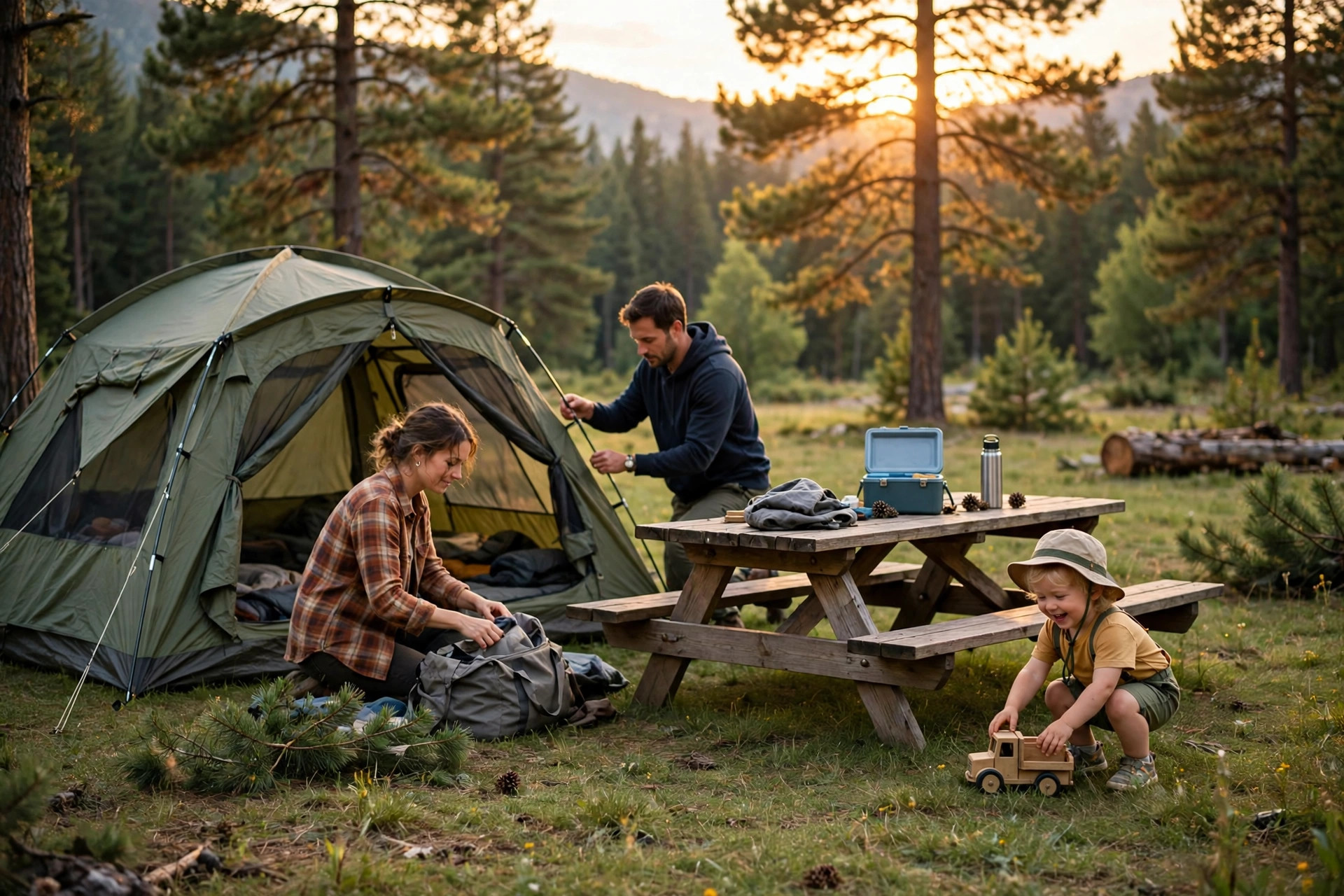
Camping with a toddler sounds either magical or completely chaotic — and honestly, it can be both. The difference between a trip your family talks about for years and a trip that ends with everyone crying in the car at 2 a.m. is rarely luck. It is planning. This guide walks you through how to camp with a toddler for the first time, step by step: picking the right campsite, setting up sleep that actually works, packing without bringing the whole house, and knowing exactly when to call it a day and drive home.
If you have camped with a baby before, some of this will feel familiar — but toddlers are a different challenge. They walk, they climb, they grab, and they have very strong opinions about where they sleep. The good news: toddlers are also the easiest age to delight outdoors. A puddle, a pinecone, a flashlight — that is a whole afternoon of entertainment.
Is Your Toddler Ready for Camping?
There is no magic birthday when a child becomes “ready” to camp. A 14-month-old, a 2-year-old, and a nearly-4-year-old are three very different camping companions. What matters is matching the trip to your child, not to someone else’s Instagram post.
Ages 12–18 months: the portable phase
At this age your toddler is mobile but not yet running everywhere, which is actually an advantage. They still nap twice a day, they are happy in a carrier, and they do not yet argue about bedtime. The main challenges are sleep setup and constant supervision near water and fire. A portable travel crib or a small pop-up sleep tent inside your tent works well — see our guide to portable travel cribs for camping for what fits inside a family tent. Keep the trip to one night, close to home.
Ages 18–24 months: the explorer phase
This is the age of maximum curiosity and minimum listening. Your toddler will walk straight toward the fire ring, the stream, and the road — all in the same minute. Plan for one adult to be on active toddler duty at all times, and say the handoff out loud: “You have her while I light the stove.” Campsite zones matter more than gear at this age. If your little one is still in nappies, read our potty training while camping guide before you go — the routines in it help even if your child is not training yet.
Ages 2–3 years: the helper phase
Two- and three-year-olds can carry their own tiny backpack, “help” collect sticks, and follow simple rules like “stay inside the blanket” — for about ten minutes at a time. They also have real fears: the dark, strange noises, a tent that flaps in the wind. Bring a familiar comfort object, keep bedtime close to the home routine, and let them choose one small job at camp, like holding the flashlight. A short practice run makes a huge difference at this age, which brings us to the next step.
Pick the Right First Campsite
When you are learning how to camp with a toddler, the campsite matters more than the gear. Your first toddler camping trip should be boring — in the best way. Choose a developed, drive-up campground within an hour of home, with toilets, drinking water, and a level tent site. Save the remote lakeside site for trip number three.
Use this checklist when you book:
- Drive time under 60 minutes. If the trip falls apart, you want an easy exit, not a four-hour drive home with a screaming toddler.
- Toilets and drinking water on site. Hauling water and digging cat holes is hard enough without a toddler on your hip.
- A flat, open site away from water and roads. Ask the campground host for a site with a clear buffer from streams, ponds, and vehicle lanes.
- Shade in the afternoon. Toddlers overheat fast, and a shady site is worth more than a pretty view.
- One night only. You will learn more from one successful night than from three miserable ones. Book a second night only after the first trip goes well.
- Arrive with daylight to spare. Aim to be set up at least three hours before your toddler’s bedtime. Setting up a tent in the dark with a tired toddler is a recipe for tears — yours included.
Not sure how to judge a campground before you book? Our 12 questions to ask before booking a family campground will help you spot the red flags in a listing.
Practice at Home First
The single best thing you can do before your first trip costs nothing: a backyard trial run. Pitch the tent in the yard, lay out the sleeping setup, and let your toddler explore it in daylight. Eat dinner outside. Try a nap in the tent. You will discover the missing pieces — the sleeping pad that slides, the zipper your toddler cannot work, the lantern that is too bright — while you can still walk inside and fix them.
Do the same with the sleep setup indoors first. Put your toddler down for a nap in the travel crib or sleeping bag at home, in the exact bedding you will take camping. If they will not sleep in it at home, they will not sleep in it in a tent. Better to learn that on a Tuesday afternoon than at midnight in the woods.
The Toddler Camping Packing List
Packing for a toddler is less about bringing everything and more about bringing the right things in the right bags. Group everything by when you will need it, and pack a “grab-first” bag that stays in the car, not buried under the tent.
| Group | What to pack | Why it matters |
|---|---|---|
| Sleep | Travel crib or toddler sleeping pad, child sleeping bag or blankets, familiar pillow and comfort toy, white-noise app or small fan, headlamp with red-light mode | Sleep is the make-or-break part of the trip — keep it as close to home as possible. |
| Clothing | Two full outfits per day plus one spare, warm layers for night, rain jacket, sun hat, sturdy closed-toe shoes, extra socks | Toddlers get wet and muddy constantly; dry clothes fix most meltdowns. |
| Food | Familiar snacks in easy reach, sippy cups, a few simple meals, a small cooler, wipes for hands and faces | Hungry toddlers do not wait politely — keep snacks where you can grab them in seconds. |
| Diapers & care | Nappies for the trip plus six extra, wipes, nappy bags, nappy cream, hand sanitiser, any medicines, sunscreen, insect repellent | There is no shop at 2 a.m.; pack for the worst case, not the plan. |
| Play | A bucket and shovel, a few favourite toys, colouring supplies, bubbles, a torch of their own | Five small toys beat one big one — rotate them through the day. |
| Safety | First-aid kit, children’s pain relief, thermometer, whistle, child carrier or stroller for rough ground | See our family camping first-aid kit list for the full rundown. |
The grab-first bag: one bag with nighttime nappies, wipes, pyjamas, a torch, and spare bedding. It stays in the car or right by the tent door. When you arrive, you can set up sleep before anything else — and at 3 a.m., you will not be digging through the boot in the dark.
Setting Up Camp with a Toddler on Board
Before a single toy comes out, divide your site into three zones: a sleep zone (tent), a cooking zone (stove and fire, adults only), and a play zone (blanket, toys, shade — as far from the fire ring as the site allows). Walk the play zone first and clear sharp stones, tent pegs, and anything small enough to swallow.
This zone system is the heart of how to camp with a toddler safely — it keeps the chaos contained. Then split the jobs. One adult sets up the tent while the other supervises the toddler — never the other way around. A toddler left to “explore” while both parents wrestle with tent poles will find the one hazard on the site within ninety seconds. Agree the handoff out loud every time it changes.
Set up the sleep system before dinner, not after. By the time your toddler is tired, the tent should already feel familiar: bedding laid out, comfort toy in place, lantern tested. A toddler who walks into a ready-made nest settles far faster than one who watches you inflate a sleeping pad at bedtime.
Sleep: How to Get a Toddler to Sleep in a Tent
Sleep is the part of toddler camping that parents worry about most, and the part that goes best when you keep the home routine. Same order, same cues, even if the clock shifts: tidy up, pyjamas, story, sleep. Bring the same book you read at home. Bring the same pyjamas. Familiarity beats novelty at bedtime.
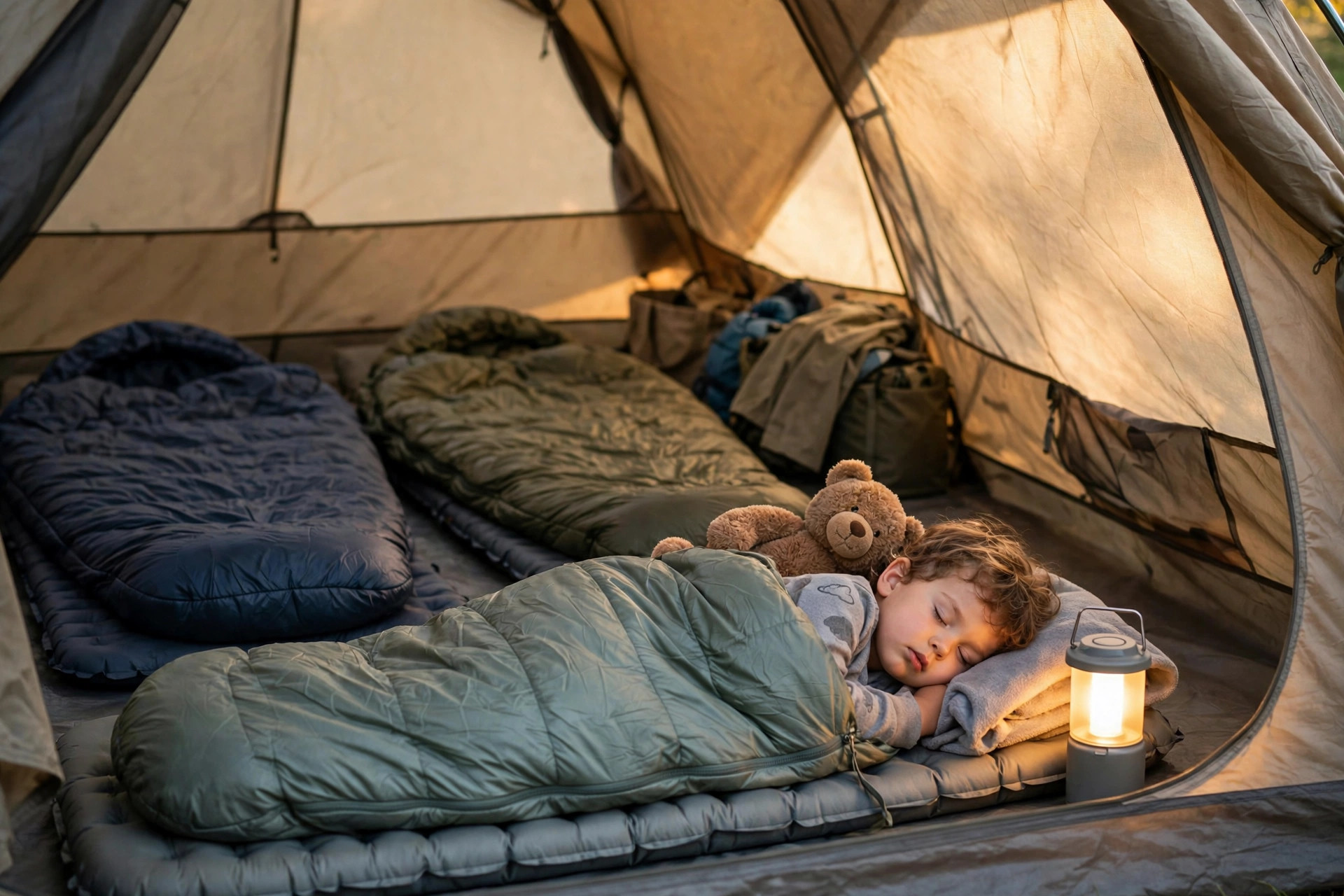
A few things that genuinely help:
- Keep bedtime close to normal. An overtired toddler does not sleep better — they sleep worse, and wake more.
- Block the early light. A tent gets bright at 5 a.m. A dark towel over the tent’s mesh, or a simple blackout liner, can buy you an extra hour.
- Use white noise. A small fan or a white-noise app masks campground sounds — generators, late-night neighbours, early birds.
- Stay nearby. On the first trip, sleep in the same tent as your toddler. They will wake at least once in a strange place; your hand on their back is the fastest way back to sleep.
- Never leave a toddler alone in a tent to nap. Tents heat up fast in the sun, and a waking toddler can unzip and wander in seconds.
For the full picture, read our guide to getting kids to sleep while camping — the layering and temperature tips there apply to toddlers too.
Meals and Snacks That Actually Work
Keep meals boring and familiar. This is not the trip for a new recipe — it is the trip for the pasta your toddler already eats, the sandwiches they already like, and snacks they can hold themselves. Cook one-pot meals or food you can prep at home and reheat, and keep a snack bag within arm’s reach all day.
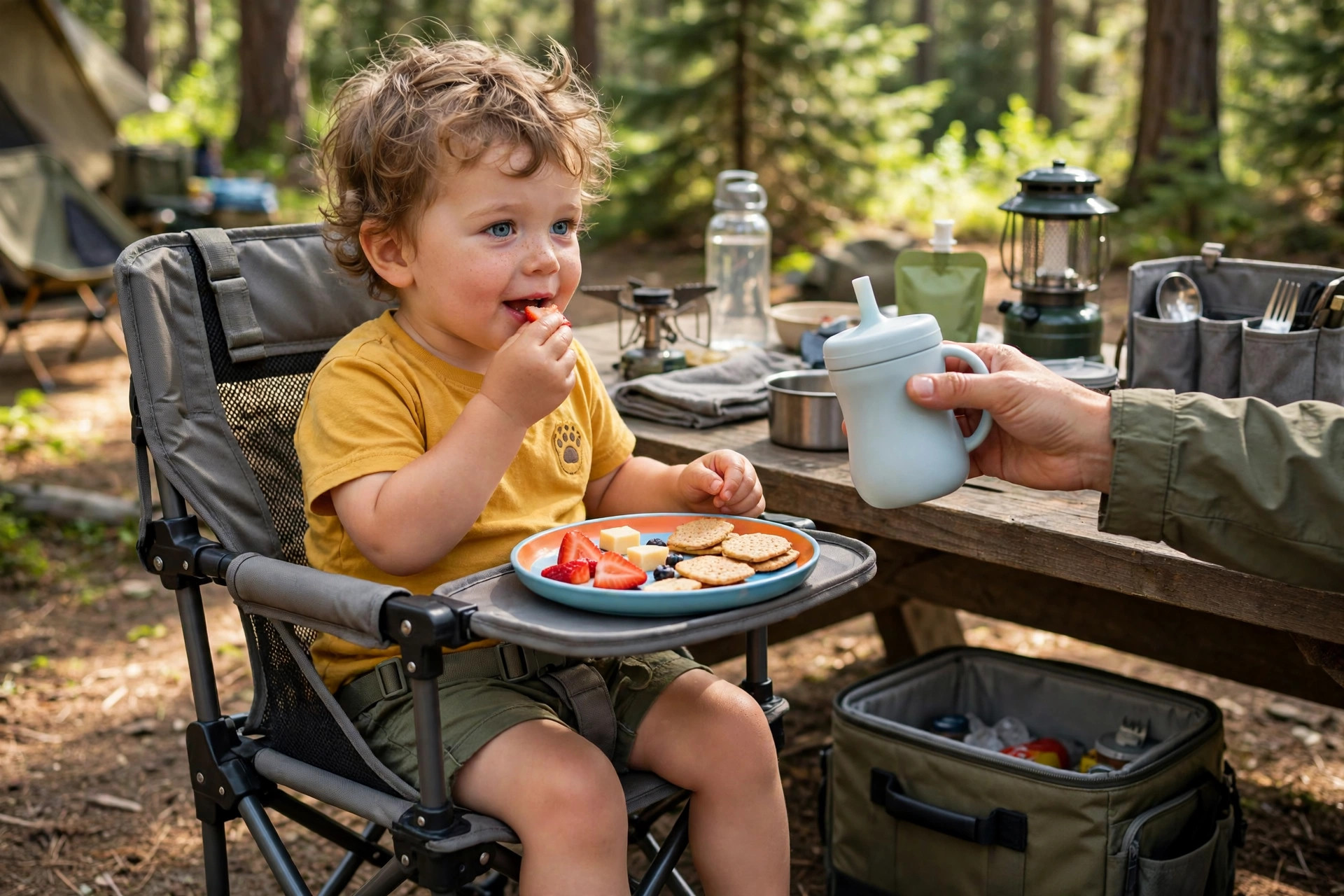
A portable high chair or a booster seat that straps to a picnic bench is worth its weight: it keeps your toddler contained, at table height, and away from the stove while you cook. Pack foods that survive being dropped in the dirt — crackers, cheese, fruit, dry cereal — and save the messy stuff for when you are sitting down together.
Watch for choking hazards around camp: whole grapes, nuts, popcorn, and hot dogs cut the wrong way. Cut food small, keep your toddler seated while eating, and keep a changing mat and wipes ready before the first nappy change of the day, not after.
What to Do All Day (Without a Packed Schedule)
The best toddler camping schedule has anchors, not activities: breakfast, free play, a short walk, lunch, nap or quiet time, more play, dinner, bedtime. One optional outing a day is plenty. A morning at the campsite plus one short afternoon walk will go better than a day packed with drives, hikes, and attractions.
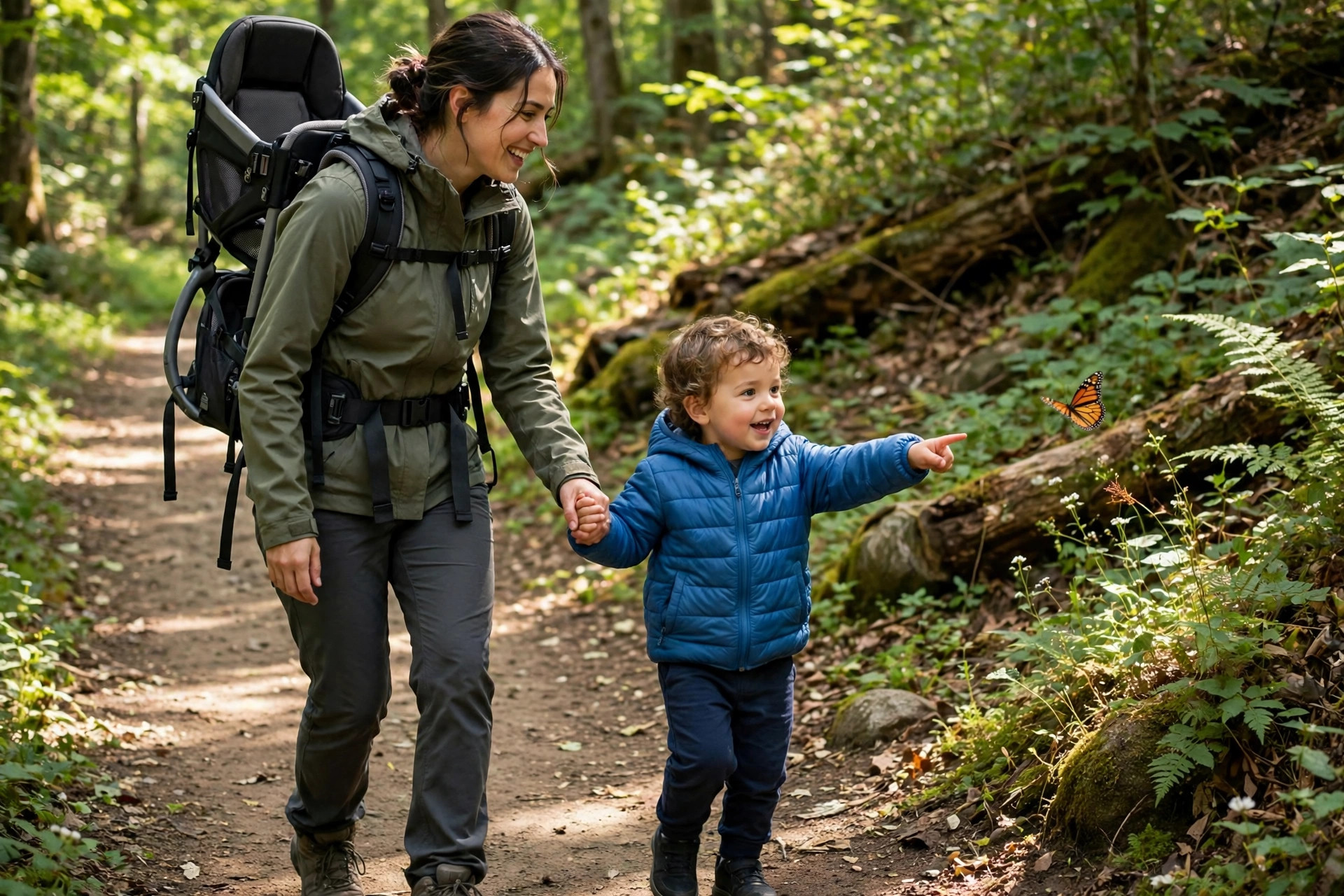
Keep walks short and toddler-led — ten to twenty minutes, with frequent stops. Let them pick up sticks, splash in puddles, and watch ants. A child carrier is worth bringing for when little legs give out; a toddler who has walked themselves tired will fall asleep in the carrier on the way back, which is a feature, not a failure.
Simple campsite activities that work at every age:
- Nature treasure hunt — find a smooth stone, a pinecone, a feather, a yellow leaf
- Water play with a bucket and cups (always supervised, always within arm’s reach)
- Bubbles, chalk on a flat rock, and a torch for shadow games after dark
- “Helping” jobs — carrying the (empty) water bottle, holding the map, choosing the bedtime story
If you want more ideas, our 31 camping ideas for kids has plenty that work for the youngest campers too.
Safety Rules That Matter Most
Toddlers cannot manage risk on their own, so the adults have to. These are the non-negotiables:
- Water: stay within arm’s reach near any pond, stream, or pool. Toddlers can get into trouble in very shallow water, quickly and quietly. Never rely on a toddler to stop at the water’s edge.
- Fire: keep your toddler well back from the fire ring and the stove, and never leave a fire unattended. A child safety fence around the cooking area helps on longer trips.
- Sun and heat: hat, sunscreen, shade, and water — reapply sunscreen every couple of hours and watch for flushed cheeks and unusual tiredness.
- Bugs: use child-safe insect repellent, check for ticks after walks, and keep the tent zipped to keep mosquitoes out at night.
- Wildlife: store all food in the car or a bear box overnight, and teach your toddler that animals are for watching from far away, never approaching.
- Night: a toddler who wakes at night should find a parent, not an open tent door. Keep the tent zipped and a small light within reach.
For authoritative guidance on camping with young children, the U.S. National Park Service and Recreation.gov both publish family camping advice worth reading before your first trip — see the links below.
When Things Go Wrong: The Bail-Out Plan
Every first toddler camping trip should have a bail-out plan, agreed before you leave home. Decide in advance what “we’re going home” looks like: a fever, a night with no sleep at all, a storm that will not pass, or a toddler who is miserable for hours despite food, rest, and comfort. Going home early is not failure — it is good parenting, and it protects the next trip. A toddler who remembers camping as fun will ask to go again. One who remembers it as miserable will not.
Pack the car so you can leave in twenty minutes: keep the grab-first bag accessible, leave the tent for last, and do not try to pack perfectly. A messy, fast exit beats a tidy, tearful one.
One more thing worth deciding before you go: who drives home if everyone is exhausted. A tired parent driving at night after a sleepless tent night is a real risk — plan the return drive for daylight if you can.
Your First Trip, Hour by Hour
Here is what a good first day actually looks like, so you can stop guessing:
- Morning: drive to the campground, arrive before lunch, let your toddler explore the site while you set up.
- Midday: lunch at the picnic table, then a short walk or water play while energy is high.
- Afternoon: nap or quiet time in the tent, then free play — bubbles, sticks, the treasure hunt.
- Evening: an early, simple dinner, a short campfire (or skip it entirely on trip one), then the familiar bedtime routine.
- Night: expect at least one wake-up. Stay calm, stay close, and remember it gets easier every trip.
That is the whole plan. No dawn hikes, no scenic drives, no packed itinerary. Small, slow, and familiar wins with toddlers every single time.
Frequently Asked Questions
What age is best to start camping with a toddler?
Most families find 18 months to 3 years a sweet spot: your child can walk, eat camp food, and sleep in a travel crib or toddler sleeping setup. Younger babies can camp too — see our camping with a newborn safety guide — but toddlers are sturdier, more adaptable, and far more delighted by the outdoors.
How long should a first camping trip with a toddler be?
One night, within an hour of home. It is long enough to learn what works and short enough that a bad night does not ruin the whole trip. Add a second night on your next trip once the first one goes well.
How do I keep my toddler warm at night in a tent?
Layer like you would at home, plus one extra layer: warm pyjamas, a child sleeping bag rated for the forecast, and a hat if it is cold. Check your toddler’s chest (not hands) to judge warmth, and never use a hot water bottle or a heater inside a tent.
What if my toddler will not sleep in the tent?
First, check the basics: too hot, too cold, too bright, too noisy, or overtired. A white-noise app and a familiar comfort toy fix most cases. If nothing works, do a short drive or a carrier walk to settle them, and try again. If the night is truly lost, pack up in the morning and try again another weekend — one bad night does not mean camping is not for your family.
Do I need a special tent for camping with a toddler?
No. A regular family tent with enough floor space for a travel crib or toddler sleeping pad works fine. What matters more is a flat site, good ventilation, and a tent your toddler has already spent time in at home. If you are choosing a tent, our family tent buying guide explains sizing for families with small children.
Is it safe to take a toddler camping in bear country?
Yes, with the right precautions: store all food and scented items in the car or a bear box, cook away from the tent, and keep your toddler close at all times. Read our bear country food storage guide before booking a site in bear country.
Learning how to camp with a toddler is mostly about keeping things small, slow, and familiar. Your first camping trip with a toddler will not be perfect. Something will get forgotten, someone will get muddy, and someone — possibly you — will have a meltdown. That is normal, and it is also the trip your family will laugh about later. Keep it short, keep it close to home, keep the routine familiar, and let your toddler set the pace. The outdoors will still be there next weekend — and by then, your toddler will be asking to go back.
Planning more trips? Start with our first family camping trip weekend plan for a complete stress-free itinerary, and check the National Park Service’s camping with kids guidance and Recreation.gov’s family camping tips for official advice before you head out.
