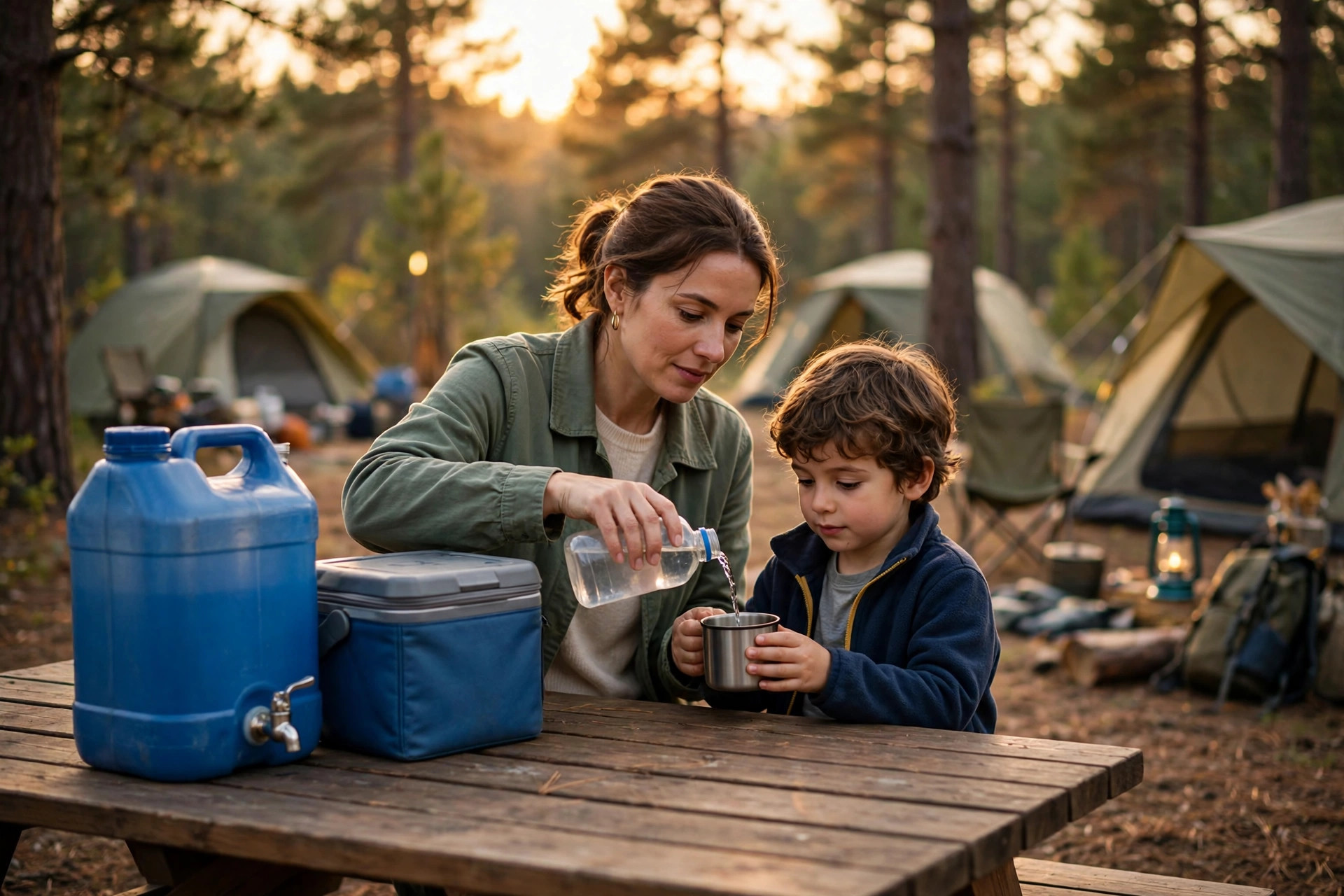
Nothing ruins a family camping trip faster than running out of water. One minute the kids are playing by the tent, the next someone is thirsty, the pasta water is gone, and Dad is hiking back to the campground tap for the third time that day. A good water jug fixes all of that — if you pick the right size and type for your family.
In this guide, I will show you exactly how much water a family actually needs at camp, the different types of camping water jugs, and the best water jugs for family camping in 2026 — with honest pros and cons, and who each one is (and is not) for.
How Much Water Does a Family Actually Need While Camping?
Before you buy anything, do the math. The commonly cited baseline is about 1 gallon (3.8 litres) of drinking water per person per day — and that is drinking only. Cooking, handwashing, and washing dishes push the real number higher, especially with kids around. A realistic planning figure for a family at a drive-up campsite is 1.5 to 2 gallons per person per day for all uses.
| Family size | 1 night | 2 nights | 3 nights |
|---|---|---|---|
| 2 adults + 1 child | 5–6 gallons | 9–12 gallons | 14–18 gallons |
| 2 adults + 2 children | 6–8 gallons | 12–16 gallons | 18–24 gallons |
| 2 adults + 3 children | 8–10 gallons | 15–20 gallons | 22–30 gallons |
Those numbers look big — and they are. But you do not have to carry it all at once: most family campgrounds have a potable water tap on site. The jug’s job is to hold enough water at your site so you are not walking to the tap every hour. For a weekend trip, two medium jugs (3–5 gallons each) usually beat one giant one — easier to carry, and if one leaks, you have not lost your whole supply.
A gallon of water weighs about 8.3 pounds, so a full 5-gallon jug weighs over 40 pounds before you count the jug itself. The “best” jug is the one an adult in your family can actually lift and pour safely.
The 5 Types of Camping Water Jugs
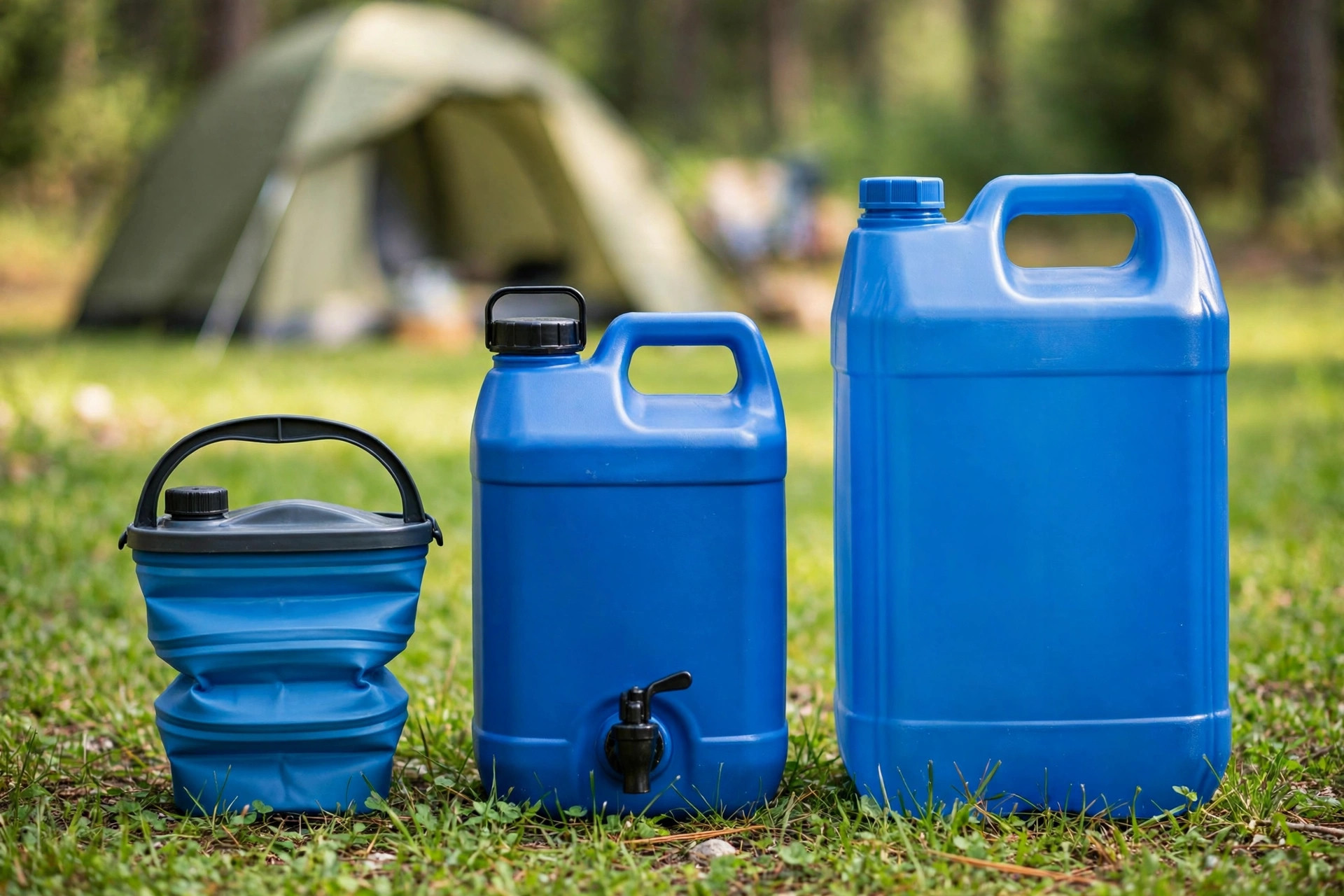
Water jugs fall into five broad types — know them first and choosing gets much easier.
1. Rigid jugs with a spigot
The classic car-camping jug: a hard plastic container (usually 3–7 gallons) with a tap at the bottom. Best for base camp — set it on a table and dispense hands-free. Downside: same size full or empty, heavy when full.
2. Collapsible jugs
Soft-sided containers that fold flat when empty — brilliant for small cars and apartment storage. Downside: thinner walls puncture more easily and can pick up a plastic taste if water sits for days.
3. Insulated jugs
Double-wall jugs (often stainless steel) that keep water cold for hours — best for hot-weather trips and kids who refuse warm water. Downside: heavy, expensive, and usually smaller (1–2 gallons).
4. Water cubes and stackable tanks
Square tanks (often 5–7 gallons) that stack in a car trunk or on a camp shelf — best for big families and longer trips. Downside: awkward to pour without a spigot, heavy when full.
5. Cooler-style dispensers
Big insulated dispensers with a push-button or lever spigot — the kind you see at sports fields. Best for group camping and handwashing stations. Downside: bulky, overkill for a family of three on a one-night trip.
Best Water Jugs for Family Camping (2026)
Here are the picks that make the most sense for families. I have not lab-tested these myself — these recommendations are based on the features that matter at a family campsite, long-term owner feedback, and how each design holds up to real kid use.
Best overall for families: Reliance Aqua-Tainer 7-Gallon
Seven gallons covers a family of four for a full day of drinking and cooking, the hideaway spigot stores inside the jug so it does not snap off in transit, and the wide mouth makes filling and cleaning easy.
Pros: huge capacity for the price; spigot tucks away for transport; wide mouth for easy cleaning. Cons: over 55 pounds when full — a two-person lift; slow spigot flow; no insulation. Best for: car-camping families of 4+ staying two or more nights. Not for: solo parents carrying water alone, or anyone short on trunk space.
Best collapsible jug: GSI Outdoors Folding Water Cube (10L / 2.6 gal)
The jug for families who pack light: 10 litres, folds flat to almost nothing when empty, with a sturdy handle and spigot. Fill it at the campsite tap, set it on the picnic table, and let the kids serve themselves.
Pros: packs flat; light even when full; kid-friendly spigot. Cons: thin walls can puncture; plastic taste if water sits for days. Best for: small cars, short trips, second jug. Not for: your only supply on a long trip.
Best for keeping water cold: Stanley Adventure Fast Flow Water Jug (2 gal)
If your kids will only drink cold water, an insulated jug earns its place. The Stanley keeps water cold for hours in summer heat, pours fast through its wide spigot, and survives being knocked off a picnic table. Two gallons covers a day’s drinking water for a family of four — use it for drinking, and a cheaper jug for washing and cooking.
Pros: keeps water cold; fast-flow spigot kids can operate; tough, leak-resistant build. Cons: only 2 gallons; heavy for its size; costs more per gallon. Best for: summer trips and families whose kids refuse warm water. Not for: your only jug on a multi-day trip.
Best budget jug: Igloo 6-Gallon Water Container
The Igloo 6-gallon jug is a tall, narrow, BPA-free container with two handles and a spout that stores away. It costs less than a family pizza, holds enough for a weekend, and its slim shape slides into the gap between the cooler and the tent bag.
Pros: very affordable; slim footprint; two handles. Cons: spout can dribble if the cap is not seated properly; no insulation; tall shape can tip if a toddler bumps the table. Best for: first-time family campers and budget trips. Not for: anyone who wants a hands-free lever spigot for little kids.
Best for big groups and base camp: Scepter 5-Gallon Military Water Can
Built to a military specification with thick walls, for families who camp often and hard. It survives drops, rough roads, and being used as an improvised seat (not recommended, but it happens).
Pros: extremely durable; thick walls resist punctures; wide mouth for cleaning. Cons: heavier than standard jugs; pricier than basic options. Best for: frequent campers, scout families, rough-road trips. Not for: occasional campers who would be fine with a lighter, cheaper jug.
Quick Comparison Table
| Jug | Capacity | Type | Best for | Watch out for |
|---|---|---|---|---|
| Reliance Aqua-Tainer | 7 gal | Rigid + spigot | Families of 4+, multi-night | 55+ lbs when full |
| GSI Folding Water Cube | 2.6 gal | Collapsible | Small cars, second jug | Thin walls, puncture risk |
| Stanley Fast Flow | 2 gal | Insulated | Cold drinking water | Small capacity, heavier |
| Igloo 6-Gallon | 6 gal | Rigid + spout | Budget, first trips | Can tip; spout can dribble |
| Scepter 5-Gallon | 5 gal | Rigid, heavy-duty | Frequent, rough trips | Heavier and pricier |
What to Look for When Choosing a Water Jug
Whatever jug you buy, check these five things first — they matter more than brand names.
1. Food-grade, BPA-free material
Only buy containers explicitly labelled food-grade and BPA-free. Never store drinking water in a container that once held fuel, chemicals, or cleaning products — no amount of washing makes that safe. The CDC recommends FDA-approved food-grade containers for drinking water storage, because they will not transfer harmful substances into the water.
2. A spigot little hands can use
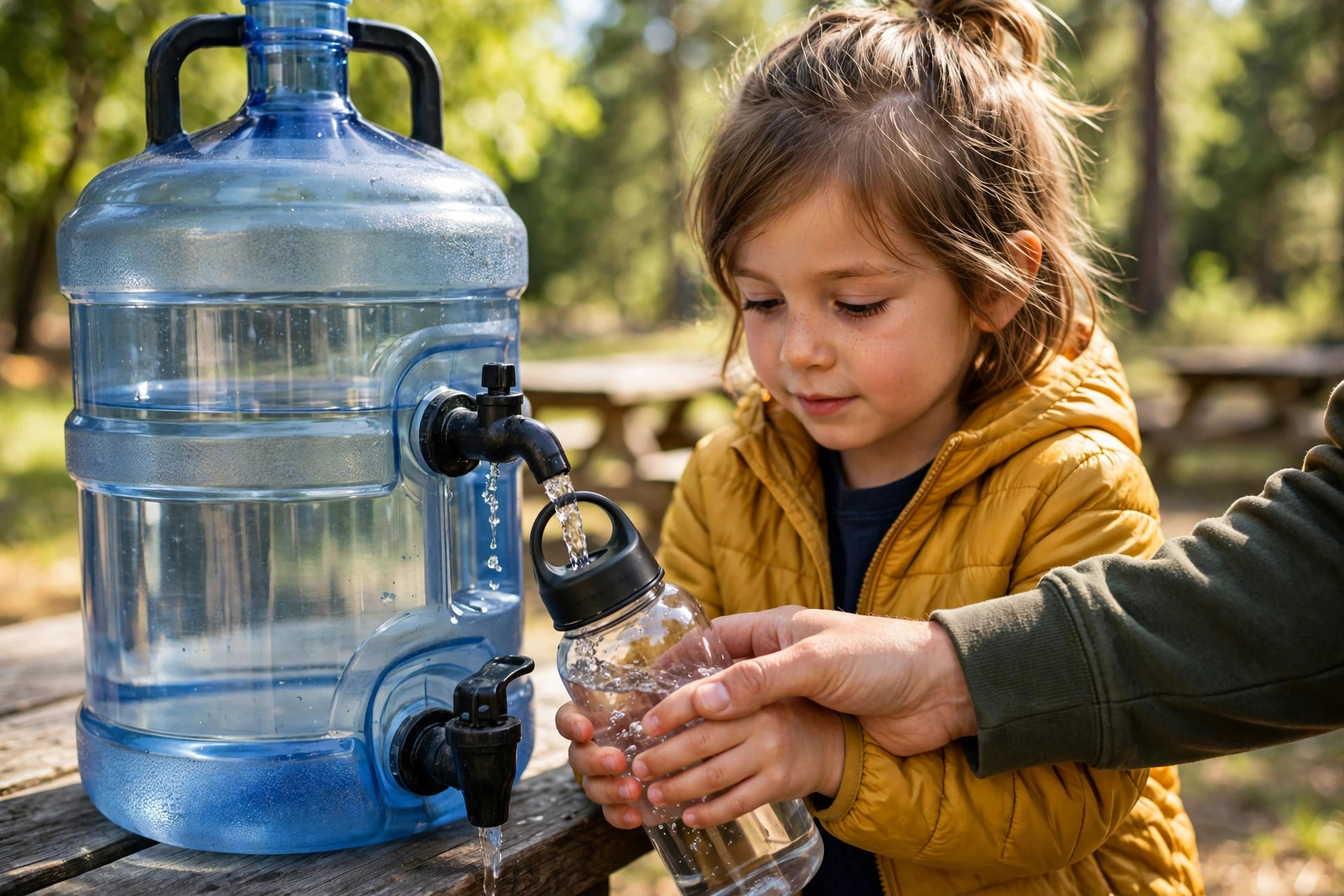
A lever-style spigot beats a screw-cap spout: kids can fill their own cups, which means fewer “Mum, I’m thirsty” interruptions — and fewer spills. Test the shut-off: it should stop positively, not dribble.
3. A wide mouth
A mouth of 4 inches or more lets you reach inside to scrub and drop ice cubes in on hot days. Narrow-mouth jugs grow mould in corners you cannot reach — the most overlooked feature, and the one that decides whether a jug lasts one season or five.
4. Handles that work when it is full
One handle is fine for a 2-gallon jug. For 5 gallons and up, look for two handles or a moulded grip for a two-person carry — a full 5-gallon jug weighs over 40 pounds.
5. Weight and packed size
Measure your trunk before you buy: a rigid 7-gallon jug is useless if it does not fit beside the cooler. Collapsible jugs solve this but give up durability — many families end up with one of each.
The Two-Jug Strategy
Most experienced families settle on the same system: one big rigid jug for the kitchen, one smaller jug for drinking water. The big jug (5–7 gallons) sits at the cooking area for pasta water, dishes, and handwashing; the smaller jug (2–3 gallons, ideally insulated) sits on the picnic table where kids can reach it. Fill each jug once a day, nobody carries 50 pounds at once, and if one jug has a problem, you still have water.
Pair the system with a couple of leak-proof water bottles for the kids so everyone has their own bottle for hikes and play.
Keeping Your Camping Water Safe and Clean
Clean water in, clean water out — but only if the jug stays clean. Follow this checklist on every trip:
- Before the trip: wash with warm soapy water, rinse well, and air-dry completely with the cap off. A damp, capped jug grows mould between trips.
- Fill only from potable sources: campground taps marked “drinking water”, or water you have treated yourself. Stream and lake water needs filtering or boiling first — REI’s backcountry water treatment guide explains the options — and never fill a jug directly from a stream and drink it untreated.
- Keep it in the shade: sun heats the water, encourages bacterial growth, and makes kids refuse to drink it — tuck it under the picnic table or behind the tent.
- Do not let little hands inside: hands, cups, and toys dipped into the jug contaminate the whole supply — use the spigot, not the mouth, for serving.
- Empty and dry it at home: wash it, rinse it, and store it with the cap off and the spigot open. A jug stored wet and sealed will smell like a swamp next spring.
- Replace it when it smells: if a jug keeps a plastic or musty smell after a proper wash, retire it — clean water should taste like nothing.
Make sure water gear is on the packing list — our full family camping checklist covers it. Camping with a toddler for the first time? Our first-timer’s toddler camping guide covers water, sleep, and meals in one place.
Frequently Asked Questions
How much water do I need for a family of 4 camping for 2 days?
Plan on 12–16 gallons for drinking, cooking, and washing — 1.5 to 2 gallons per person per day. With a potable tap on site, bring 6–8 gallons and refill daily; with no tap, bring the full amount plus a buffer.
What size water jug is best for family camping?
For most families, a 5-gallon jug is the sweet spot: enough for a day of drinking and cooking for four, still liftable by one adult (just over 40 pounds when full). For longer trips, add a second 2–3 gallon jug.
Are collapsible water jugs safe for drinking water?
Yes, as long as they are labelled food-grade and BPA-free. The trade-off is durability, not safety: they puncture more easily and can pick up a plastic taste if water sits for days. Use them for short trips only.
How do I keep camping water cold without a fridge?
Use an insulated jug for drinking water, keep all jugs in the shade, and freeze a couple of water bottles at home to use as ice blocks inside a cooler. Never leave jugs in a hot car.
Can I use a regular 5-gallon office water bottle for camping?
It will hold water, but it is not ideal: office bottles are heavy, have no spigot, tip over easily, and the narrow neck is hard to clean. A camping jug with a wide mouth, handles, and a spigot is cheaper, lighter, and far more practical.
How do I clean a camping water jug so it does not get mouldy?
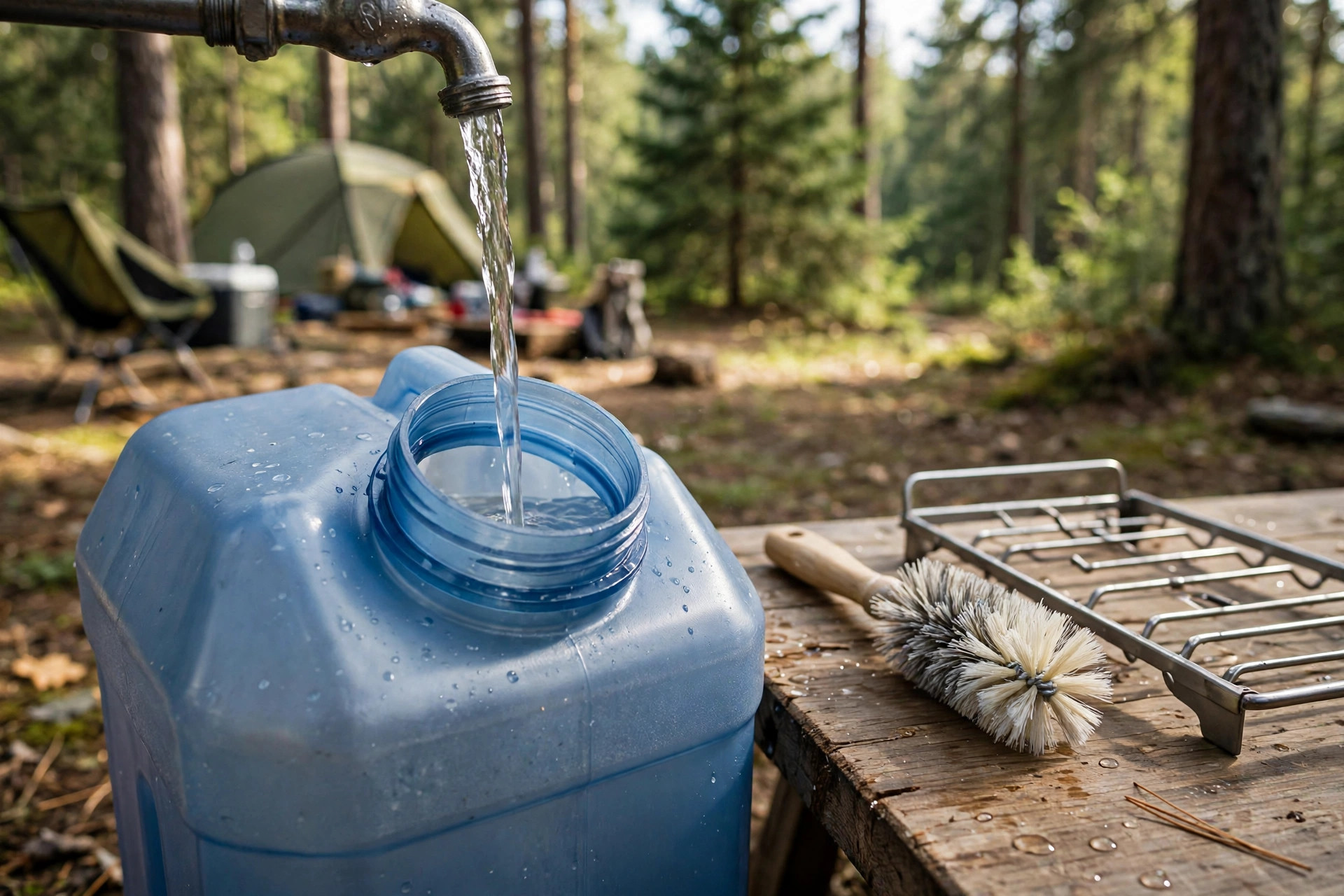
Wash with warm soapy water and a bottle brush, rinse, then air-dry completely with the cap off and the spigot open. For stubborn smells, soak with a tablespoon of baking soda per gallon of warm water, then rinse. Never store a jug wet and sealed.
The Bottom Line
The best water jug for family camping matches your family size, trip length, and car. For most families, that means a 5–7 gallon rigid jug with a lever spigot for the kitchen, plus a smaller insulated jug for cold drinking water at the table. Do the water math before you shop, buy food-grade and BPA-free, and test the setup at home once.
Happy camping — Emma
