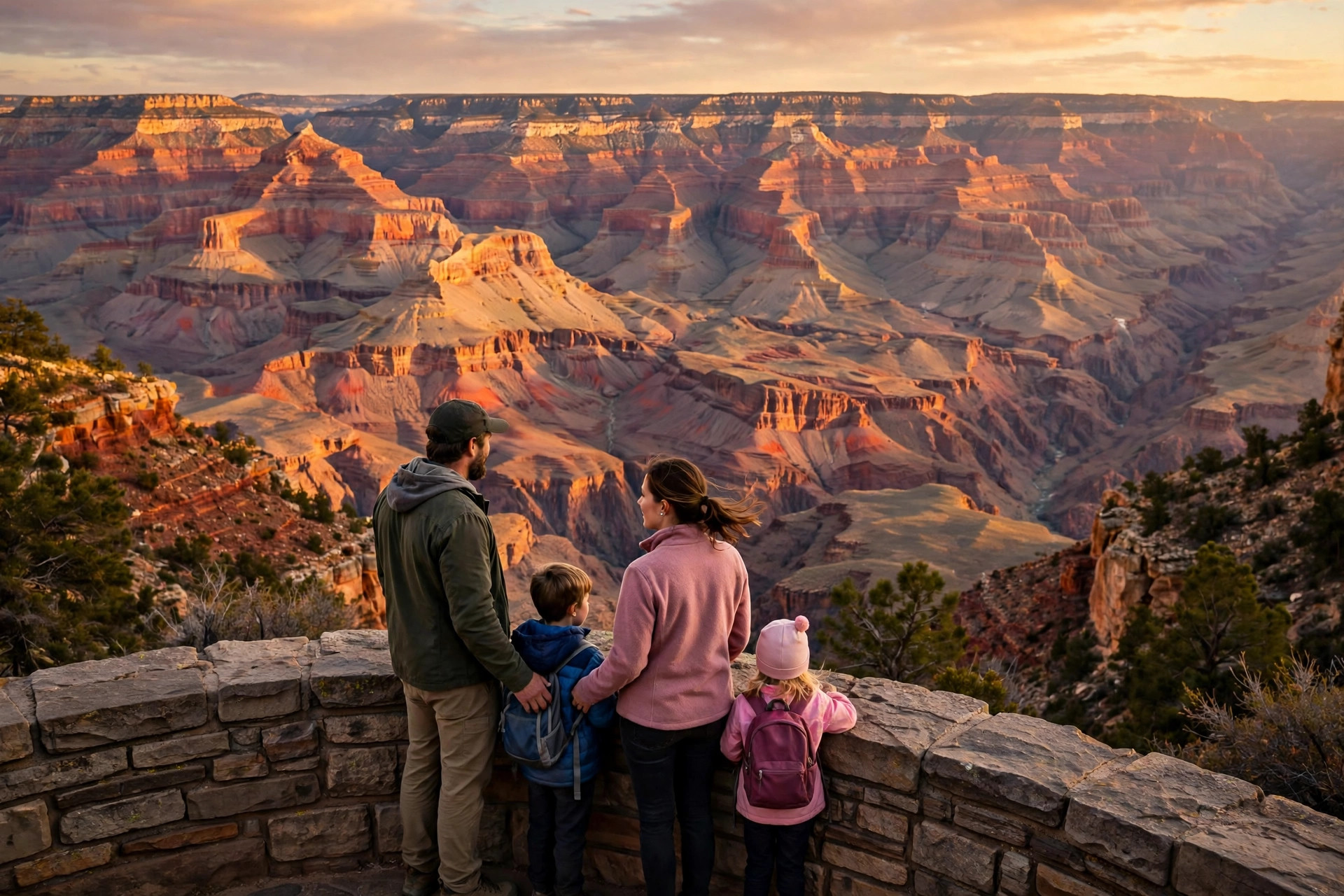
Planning a family trip to the Grand Canyon with kids? You are about to give your family one of the most memorable views in America — a mile-deep canyon painted in red, orange, and gold. The good news: the Grand Canyon is genuinely family-friendly. The South Rim has paved, stroller-friendly trails, free shuttle buses, a real Junior Ranger program, and viewpoints you can reach without a single steep climb. But a badly planned day can turn wonder into whining fast.
This 2026 South Rim family guide fixes that. It covers the best viewpoints for each age, the hikes worth doing with kids, how the free shuttle works, safety rules that matter at the rim, where to stay, what to pack, and a ready-to-follow itinerary.
Why the South Rim Is the Best Choice for Families
For a first family visit, choose the South Rim. It is open year-round, holds the classic postcard views, and has the visitor centers, restaurants, lodges, and shuttle routes that make a day with kids manageable. The North Rim is quieter and cooler, but it is a much longer drive, its services run only from about mid-May to mid-October, and it closes entirely in winter.
The South Rim sits at about 7,000 feet, so the air is thinner and drier than most families expect. Kids dehydrate faster, sunburn quicker, and tire sooner at altitude. Plan shorter days, carry more water than you think you need, and build in rest breaks.
Entry costs $35 per private vehicle for a seven-day pass, and children under 16 are included. If you plan several park trips this year, check whether the annual pass saves money — our guide to free things to do in national parks explains how.
Best Grand Canyon Viewpoints for Families
You do not need to see every overlook. Pick three or four and visit them at the right time of day.
Mather Point — Start Here
Mather Point is the classic first stop, a short flat walk from the Grand Canyon Visitor Center. The overlook is fenced and paved, making it one of the safest spots for small children. Go early, before the tour buses arrive.
Yavapai Point and the Geology Museum
A short walk east along the Rim Trail brings you to Yavapai Point and the free Yavapai Geology Museum. Its big windows frame the canyon, hands-on exhibits explain how the rock layers formed, and the 3-D topographic map is a hit with school-age kids. Come back at sunset: Yavapai is one of the best sunset viewpoints on the South Rim, and little kids can watch from inside the museum.
Hopi Point — Best Sunset with Older Kids
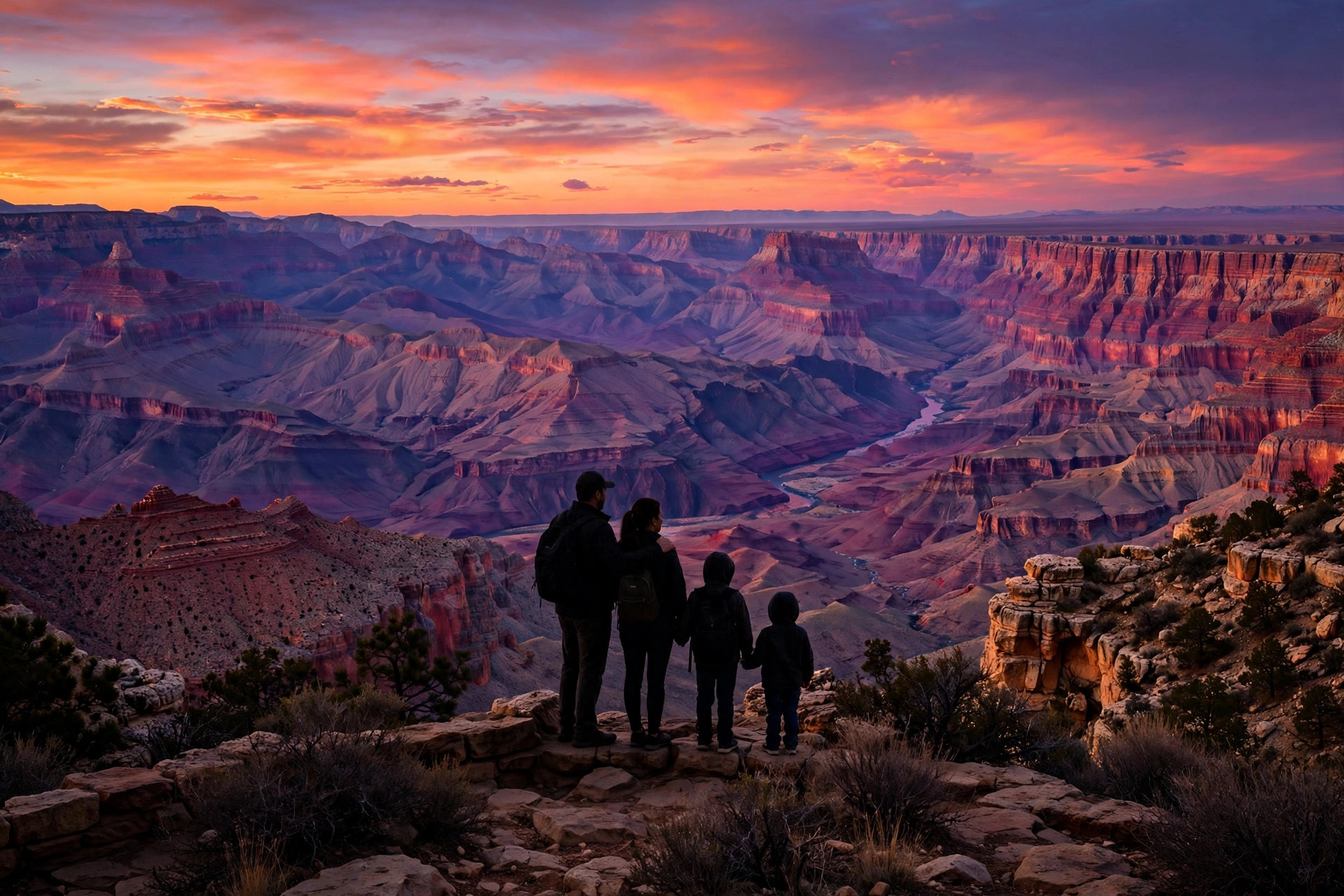
Hopi Point faces west, so the canyon glows orange and pink as the sun drops. Reach it on the free Hermit Road shuttle. Bring a layer for the walk back, and hold small children’s hands — this overlook is busier and less fenced than Mather Point.
Kid-Friendly Hikes by Age
Hiking the Grand Canyon with kids is not about distance. Pick a short, safe stretch, walk it slowly, and turn back while everyone is still happy.
| Age group | Best trail | Distance | Why it works |
|---|---|---|---|
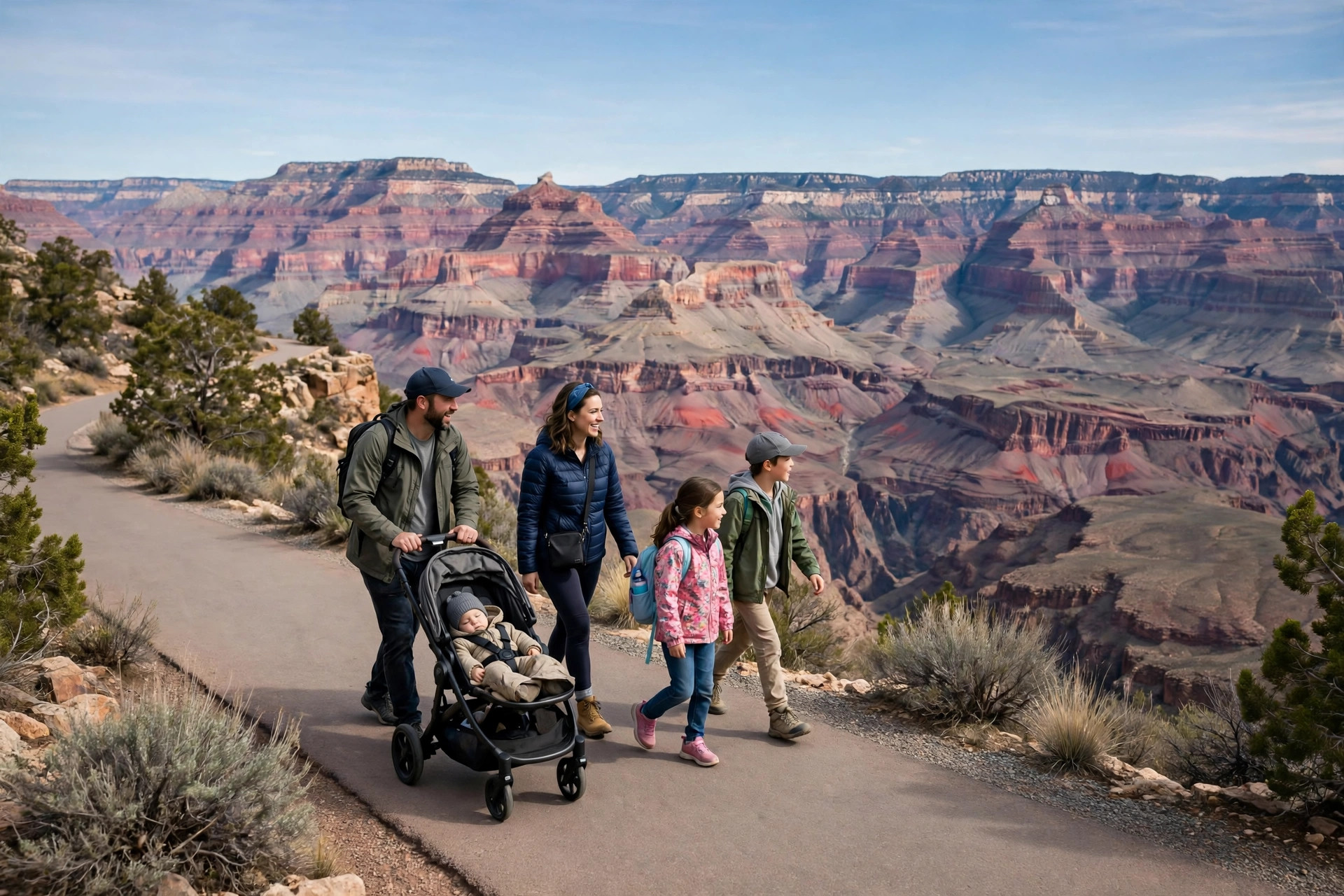
| Toddlers (2–4) | Rim Trail, Visitor Center to Yavapai Point | About 0.7 miles, flat and paved | Stroller-friendly, fenced in most places, museum at the end as a reward |
| Preschoolers (4–6) | Rim Trail, Mather Point to Yavapai Point | About 1 mile, flat and paved | Easy walking, viewpoints and museum keep them curious |
| School age (7–10) | South Kaibab Trail to Ooh Aah Point | 1.8 miles round trip, steep | A real taste of hiking below the rim, with a big viewpoint payoff |
| Tweens and teens (11+) | Bright Angel Trail to the first tunnel | About 1.5 miles round trip, steep | Historic trail with tunnels and views — turn around before the heat builds |
Two rules make every canyon hike with kids safer. First, hike in the morning — start by 8 a.m. in summer, when the trail is shaded and cool. Second, never hike down farther than your kids can comfortably hike back up; the climb out is always harder, and there is no water on the trails. The same calm, prepared mindset in our bear safety guide for kids applies at any national park.
What to Do with Kids at the Grand Canyon
Viewpoints are only half the day. These activities turn a sightseeing stop into a trip your kids will talk about for years.
Join the Junior Ranger Program
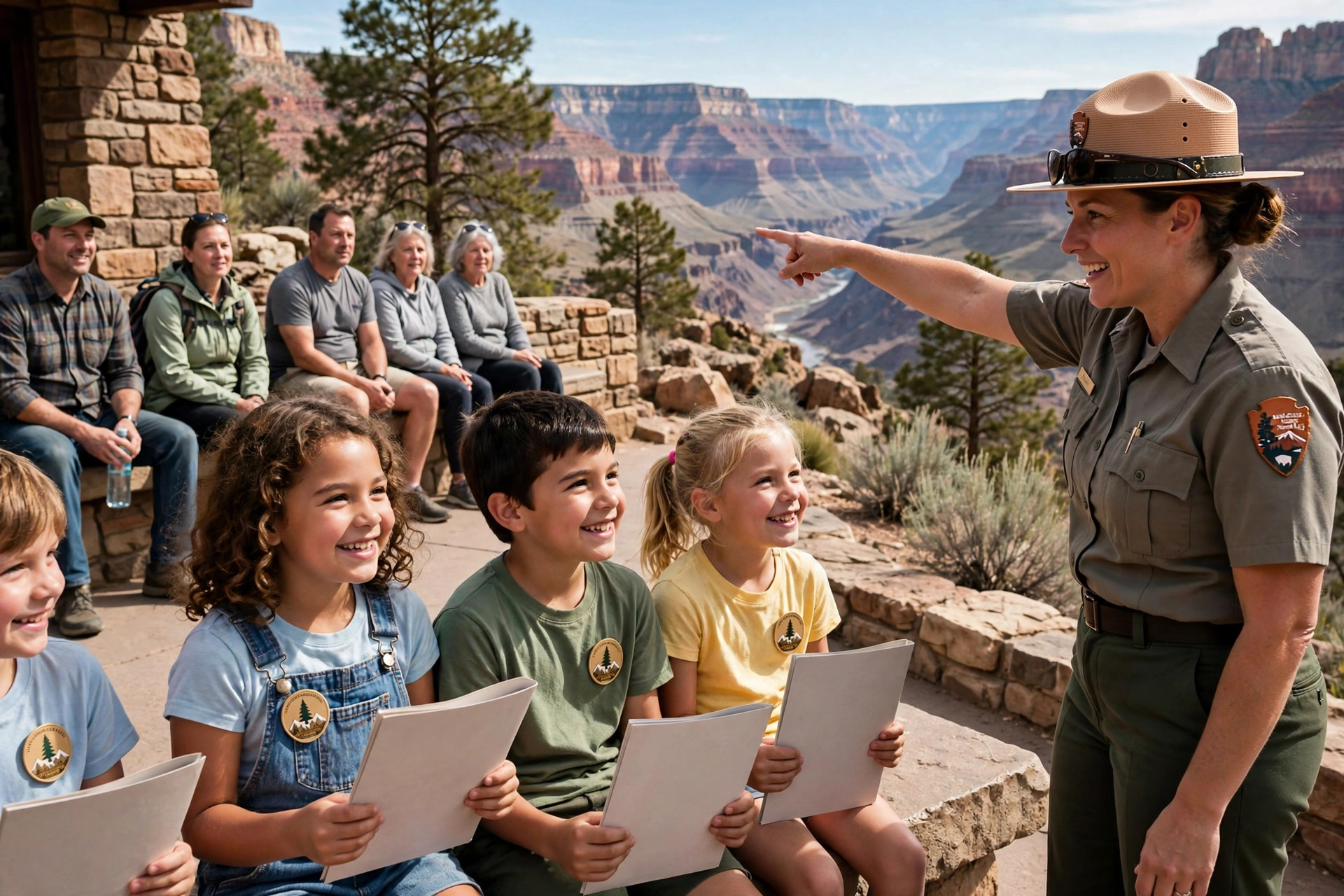
The Junior Ranger program is free, and it is the single best tool for keeping kids engaged. Pick up the activity booklet at the Grand Canyon Visitor Center, let your kids complete the age-banded activities as you explore, then get sworn in by a ranger and receive a badge. Our Yosemite with kids family guide and Zion with kids family guide cover the Junior Ranger programs at those parks too.
Go to a Ranger Talk
Rangers give free talks and walks every day — the geology talk at the Yavapai Geology Museum and the evening programs at the visitor center are the most family-friendly. Check the day’s schedule when you arrive and build one talk into your plan.
Ride Bikes on the Greenway Trail
The paved Greenway Trail runs about 13 miles from the Visitor Center toward Hermit’s Rest, and the flat sections near the village are perfect for families. Rent bikes near Mather Point — trailers and tag-alongs are available for little kids — ride for an hour, and return them.
Take a Mule Ride (Ages 9 and Up)
The mule ride is the Grand Canyon’s most iconic family activity, and it has strict rules: on the South Rim, riders must be at least 9 years old and 57 inches tall. The two-hour ride along the rim is the best option for families with older kids. Overnight mule rides down to Phantom Ranch are suspended through February 2027 for trail and bridge work — check the park’s official site for the current status.
Getting Around: Shuttles, Parking, and Driving
The South Rim’s free shuttle buses are the key to a stress-free day. Three routes cover the village, the Kaibab/Rim area, and Hermit Road. Hermit Road is closed to private cars for most of the year (March through November), so the shuttle is the only way to reach Hopi Point and the other west-rim viewpoints.
Parking is the part most families underestimate. The main lots near the Visitor Center fill by mid-morning in spring and summer. Arrive before 9 a.m., or park at the large lot near the Backcountry Information Center and take the village shuttle in. If you are staying inside the park, leave the car at your lodge and use the shuttles all day.
Coming from outside the park? The historic Grand Canyon Railway runs daily from Williams, Arizona, to the South Rim — about two hours and fifteen minutes each way, with a Wild West show at the depot before departure. Check seasonal shuttle times on the park’s official plan your visit page before you travel.
Safety Rules Every Family Should Follow
The Grand Canyon is safe for families who respect it. These are the rules rangers repeat most — teach them to your kids before you arrive.
- Hold hands at every viewpoint. Developed overlooks have railings, but the rim between them often does not. Treat the rim like a pool deck: constant contact, clear rules, no exceptions — and skip unfenced ledges entirely.
- Carry one liter of water per person, per hour of hiking. There is no water on the trails. Refill at the visitor center and trailheads, and make kids drink on a schedule.
- Watch for heat and altitude. At 7,000 feet, kids tire faster and sunburn quicker. Hats, sunscreen, and morning hikes are not optional. Headache, nausea, or unusual tiredness means rest, shade, and water right away.
- Stay on marked trails. Shortcutting switchbacks causes falls and damages fragile desert soil. If a child is tired, turn around — the canyon will still be there tomorrow.
- Keep food sealed and wildlife wild. Ravens and squirrels at viewpoints are bold thieves, and feeding any animal is illegal in the park. Store snacks in sealed bags and never leave food unattended.
Where to Stay with Kids
Staying inside the park saves the most time. Yavapai Lodge is the most family-friendly inside-park option, with a tavern, a cafe, and a market across the parking lot; some rooms have bunk beds. The historic El Tovar is beautiful but pricey; inside-park rooms often sell out six months ahead.
Just outside the south entrance, Tusayan has family hotels, restaurants, and an IMAX theater showing a 30-minute Grand Canyon film — a good end-of-day option for kids five and up. Williams, about an hour south, is the budget pick and home of the Grand Canyon Railway. If your family is camping nearby, reserve early through Recreation.gov — Mather Campground fills fast in spring and fall. For the sleep side of the trip, our guide on how to get kids to sleep while camping covers the routines that actually work in a tent.
What to Pack for Kids: Checklist
Pack the night before — canyon shops are pricey, and nothing ends a viewpoint stop faster than a forgotten water bottle.
- Water bottles for everyone, plus a spare — and electrolyte packets for hot days
- Sunscreen, hats, and sunglasses for every child
- Layers: a fleece or light jacket even in summer, because mornings and sunset are cool
- Sturdy closed-toe shoes with grip — no flip-flops on trails, ever
- Snacks that survive heat: trail mix, granola bars, fruit, crackers
- Junior Ranger booklet and a pencil (pick one up at the visitor center)
- Binoculars — kids love spotting ravens, condors, and the river far below
- Wet wipes, a small first-aid kit, and any medicines your child needs
Sample Itineraries: One Day and Two Days
This plan is built around morning energy, midday rest, and the golden hours.
One-Day Family Itinerary
| Time | What to do | Notes |
|---|---|---|
| 8:00 a.m. | Arrive, park, Visitor Center | Pick up Junior Ranger booklets; check the ranger-talk schedule |
| 8:30 a.m. | Mather Point | First big view, before the crowds; fenced and easy |
| 9:30 a.m. | Rim Trail walk to Yavapai Point | Flat, paved, stroller-friendly; Geology Museum at the end |
| 11:00 a.m. | Ranger talk at Yavapai Museum | Free, about 30 minutes, great for school-age kids |
| 12:30 p.m. | Lunch in the village | Maswik Lodge food court or a picnic from the market |
| 2:00 p.m. | Rest and shade | Back at the lodge, or the IMAX film in Tusayan |
| 4:00 p.m. | Hermit Road shuttle to Hopi Point | Easy shuttle ride, several viewpoints on the way |
| 5:30 p.m. | Sunset at Hopi Point | Layers on; hold small hands; head back right after sunset |
Two-Day Family Itinerary
Day 1 follows the one-day plan above. Day 2 starts with the Desert View drive, then a bike ride on the Greenway Trail after lunch, and a final sunset at Yavapai Point.
Best Time to Visit the Grand Canyon with Kids
Spring (March to May) and fall (September to November) are the best seasons for families: mild days, cool nights, and smaller crowds. Summer brings the biggest crowds and afternoon thunderstorms — still very doable if you hike early and rest at midday. Winter is quiet and beautiful, with snow on the rim, but expect icy paths and cold mornings. For the full official picture — alerts, road closures, shuttle times, and ranger programs — start at the Grand Canyon National Park site on nps.gov before you finalize dates.
Frequently Asked Questions
Is the Grand Canyon suitable for toddlers?
Yes, with the right plan. Stick to the paved Rim Trail around the village, use a stroller or carrier, and keep viewpoint visits short. The fenced overlooks near the Visitor Center are the safest spots for little ones. Avoid below-rim hikes entirely with children under five.
What are the best hiking trails for young children?
The flat, paved Rim Trail between Mather Point and Yavapai Point is the best first hike — about a mile, stroller-friendly, with viewpoints and a museum along the way. For kids seven and up, the South Kaibab Trail to Ooh Aah Point (1.8 miles round trip) is a great first taste of hiking below the rim.
How much does it cost to visit the Grand Canyon with kids?
Entry is $35 per private vehicle for seven days, and children under 16 enter free. Ranger talks, the Junior Ranger program, the Geology Museum, and the shuttles are all free. Budget extra for food, lodging, and activities like bike rentals or the railway.
Can kids ride the Grand Canyon mules?
Yes, but only on the South Rim, and only riders aged 9 and up who are at least 57 inches tall. The two-hour rim ride is the best family option. Book well in advance, and check the park site for current availability — overnight rides to Phantom Ranch are suspended through February 2027.
Do we need to book anything in advance?
Yes — lodging inside the park and in Tusayan often sells out months ahead, especially in spring and fall. Mule rides and Grand Canyon Railway tickets also need advance booking, and campgrounds can be reserved through Recreation.gov.
