National parks are America’s best family bargain — but the fun doesn’t have to stop at the entrance gate. Most of the magic inside a park is completely free: ranger talks under a starry sky, Junior Ranger booklets kids earn like real badges, boardwalk loops past steaming geysers, and scenic drives where every pullout looks like a postcard. In this guide, we’ll walk through eight of the most-visited national parks and spotlight the genuinely free things to do at each one, so your family can plan a trip that feels rich without spending extra once you’re inside.
One honest note first: most national parks charge an entrance fee (typically $20–$35 per vehicle for a 7-day pass). The activities below are free once you’re in. The good news is that Great Smoky Mountains National Park has no entrance fee at all, and the National Park Service offers free-entrance days every year — Martin Luther King Jr. Day, the first day of National Park Week, Juneteenth, August 4 (the Great American Outdoors Act anniversary), the NPS birthday on August 25, and Veterans Day. On those days, even the parks that normally charge let everyone in free.
If you’re budgeting the full trip — gas, food, lodging — our family road trip cost breakdown will help you see where the money really goes. And if you’re camping instead of hoteling it, our family camping checklist for beginners covers the 47 essentials so nothing gets forgotten.
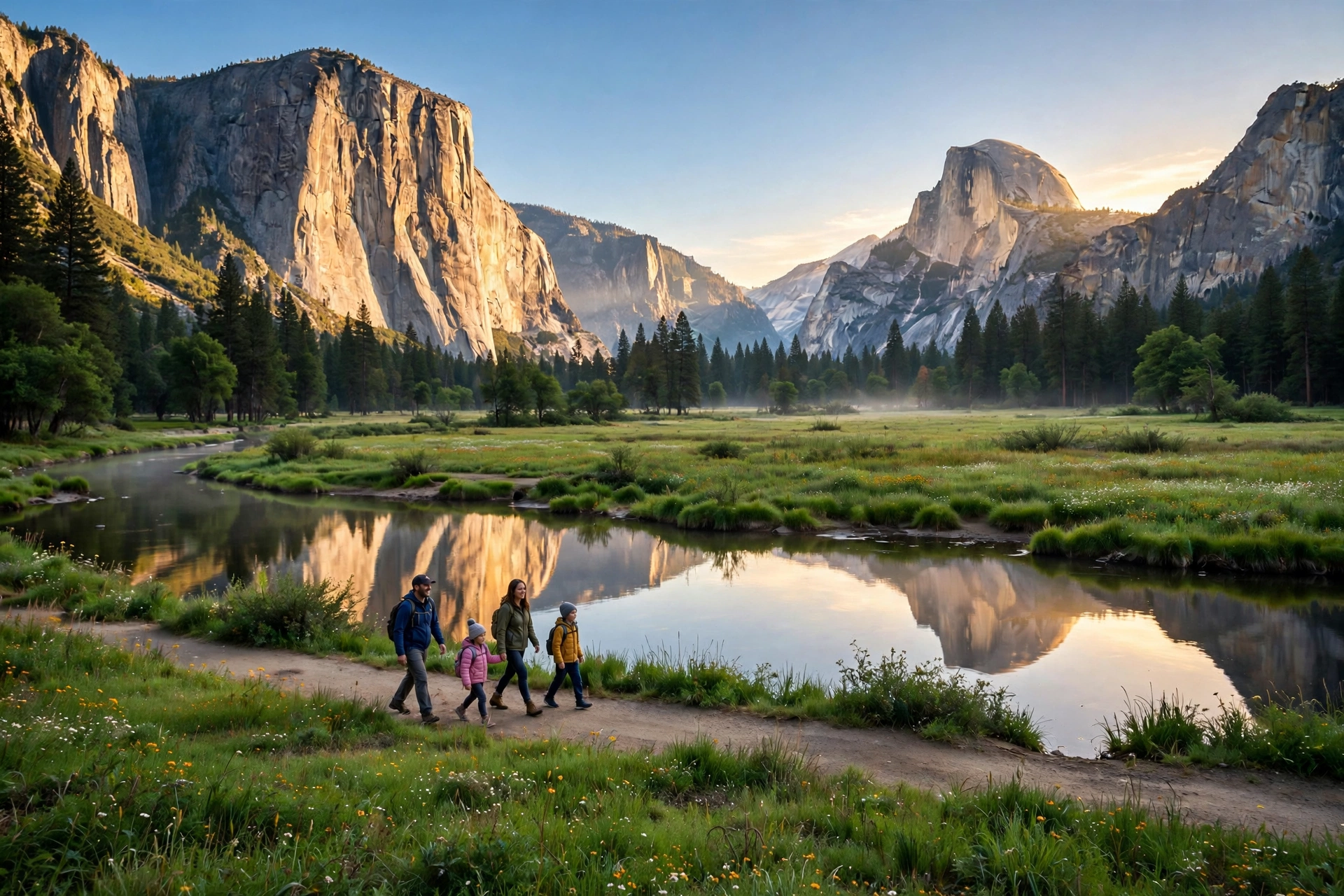
Yellowstone: America’s Free Showpiece
Yellowstone is the original national park and still the best place to show kids that the Earth is alive underneath their feet. The park charges a standard vehicle entrance fee, but nearly every iconic experience inside costs nothing extra.
Watch Old Faithful and Explore the Upper Geyser Basin
Old Faithful erupts roughly every 90 minutes, and watching it from the boardwalk is free — no ticket, no line, no reservation. Check the predicted eruption time posted at the Old Faithful Visitor Education Center, then arrive 20 minutes early for a good spot. While you wait, wander the Upper Geyser Basin boardwalk, where steaming pools and colorful hot springs like Grand Prismatic’s smaller cousins line an easy, stroller-friendly loop.
Earn a Junior Ranger Badge
At nearly every major park, kids can pick up a free Junior Ranger activity booklet at the visitor center, complete activities by exploring the park, and return it to a ranger to earn a badge. Yellowstone’s booklet is one of the best. Learn more at nps.gov/kids.
Attend an Evening Ranger Program
In summer, Yellowstone rangers host free evening campfire programs at amphitheaters near major campgrounds and villages. Topics range from wolves to wildfires to how geysers work. Bring a blanket, arrive early, and let the kids ask every question they have.
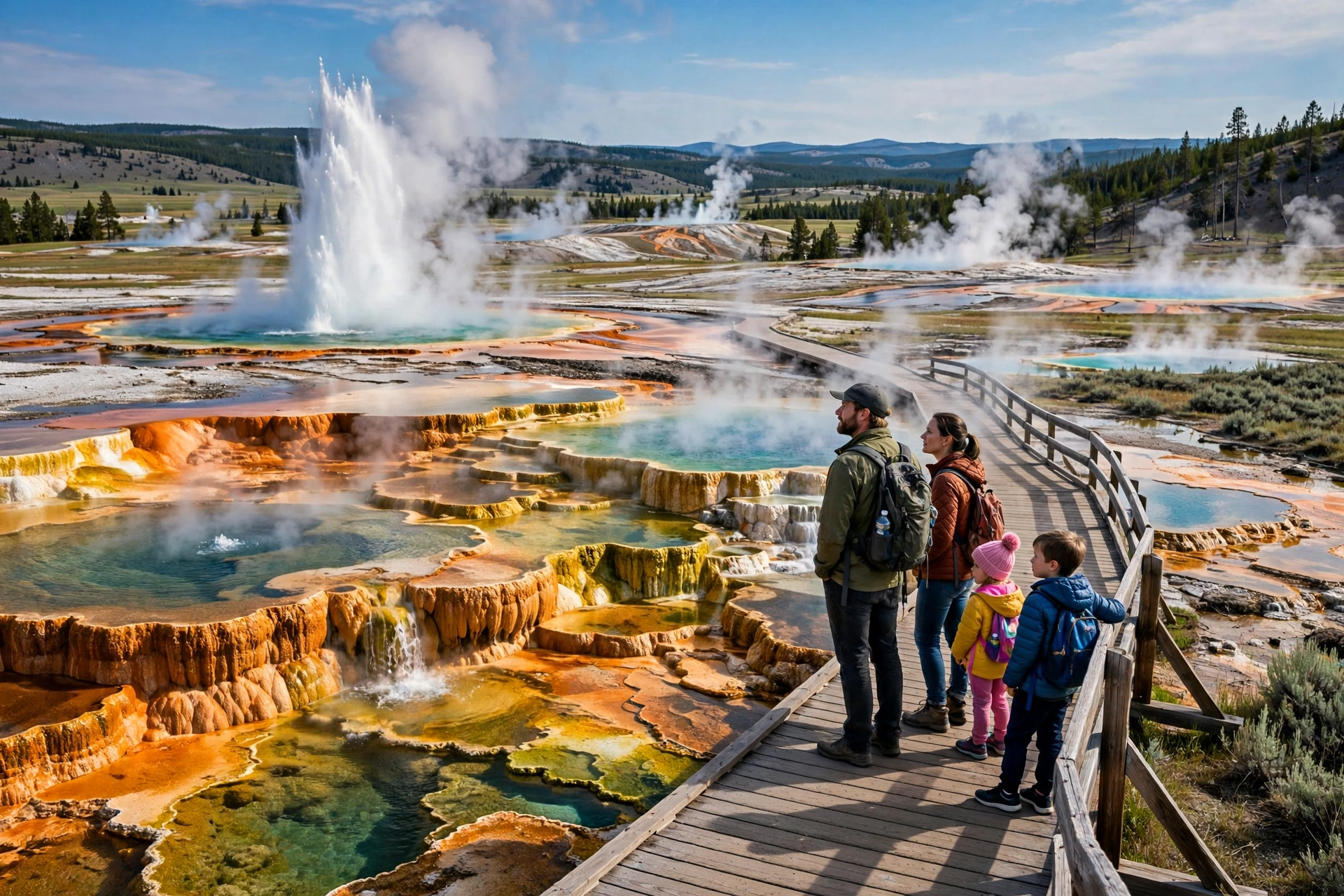
Yosemite: Granite Walls and Waterfalls, Free
Yosemite Valley’s entrance fee buys you access to one of the most jaw-dropping landscapes on Earth. Once inside, the valley itself is the attraction — and nearly all of it is free to explore.
Stroll the Lower Yosemite Falls Trail
The one-mile, wheelchair-accessible Lower Yosemite Fall Trail loop is an easy walk (great for little legs) ending at the base of the 320-foot Lower Falls, where mist showers your kids on warm days. For more easy options across the parks, see our guide to easy hikes near national parks for families.
Picnic at El Capitan Meadow
El Capitan Meadow, along the valley loop road, has unobstructed views straight up the 3,000-foot granite monolith. Bring a picnic, lie back on the grass, and watch for tiny specks — those are climbers on the wall.
Walk Tunnel View at Sunset
One short stop before the valley’s exit tunnel gives you the single most famous view in the park — El Capitan, Half Dome, and Bridalveil Fall all in one frame. It’s free, takes five minutes, and at sunset the light does something magical to the granite.
Grand Canyon: Free at the Rim and Beyond
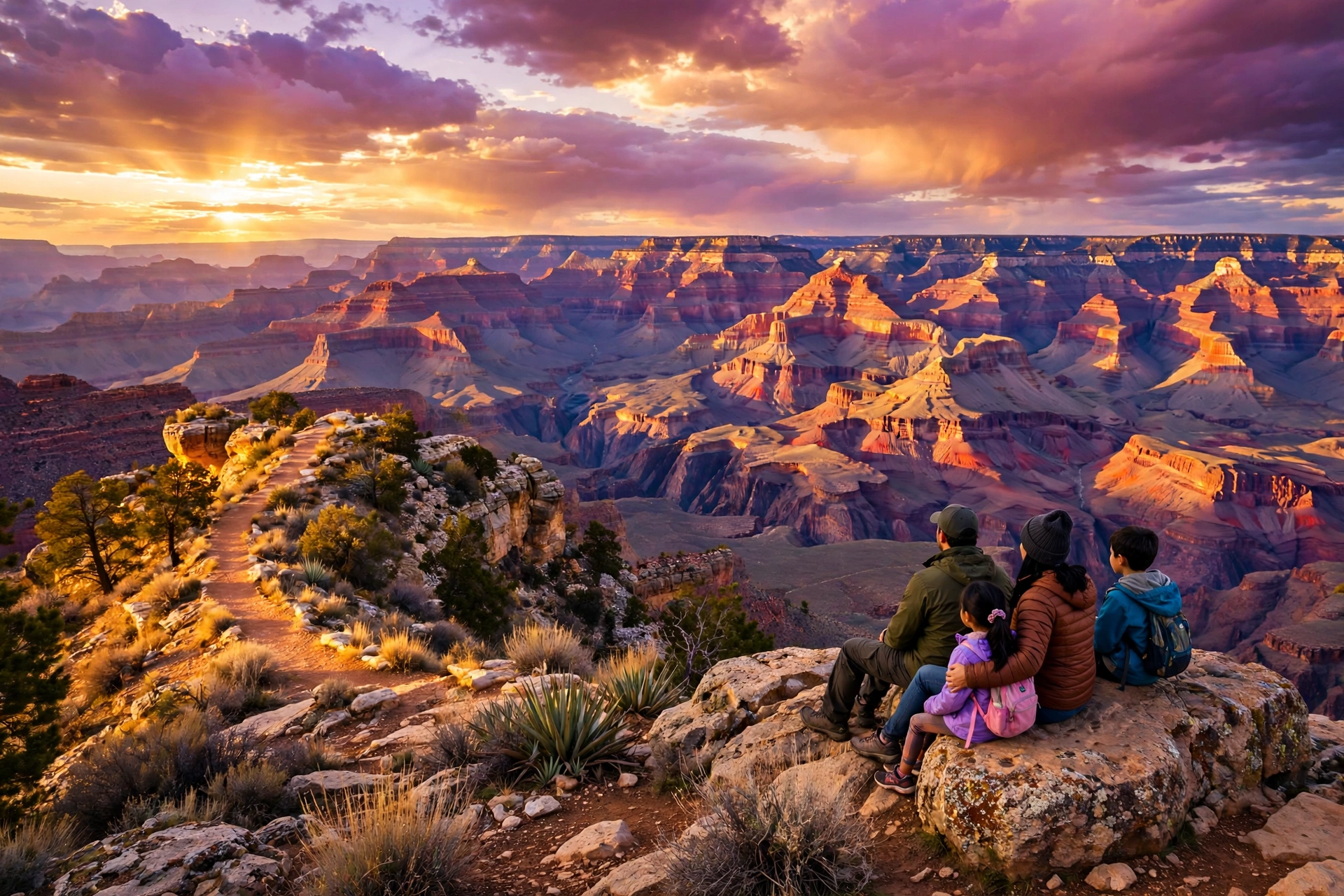
The Grand Canyon charges a vehicle entrance fee, but the South Rim is essentially a free museum that happens to be a mile deep. Rangers, trails, and viewpoints along the rim are all included.
Walk the Rim Trail
The Rim Trail is a mostly flat, paved path stretching 13 miles along the South Rim from Hermit’s Rest to the South Kaibab Trailhead — and you can walk any short section you like. The 1.4-mile stretch from Mather Point to Yavapai is perfect with kids, with the canyon spread out below you the whole way.
Catch a Ranger Talk at the Geology Museum
The Yavapai Geology Museum’s free geology talks explain how the canyon was carved, using a floor-to-ceiling window as the visual aid. Rangers run short programs at the museum and are fascinating for school-age kids.
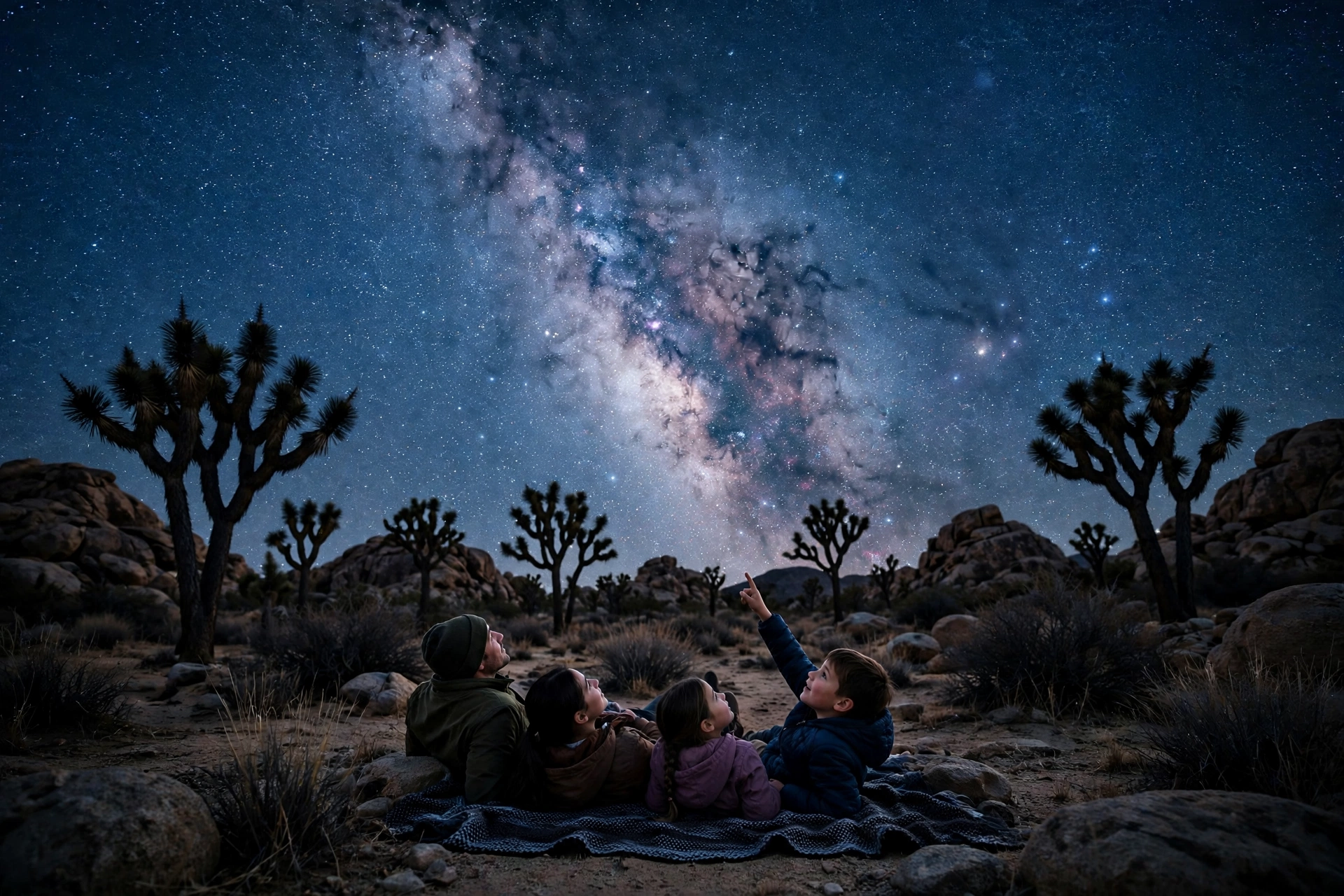
Join a Free Constellation Program
The South Rim is an International Dark Sky Park, and rangers host free evening constellation talks and telescope sessions at the visitor center area. Arrive after sunset and give everyone’s eyes 15 minutes to adjust.
Great Smoky Mountains: The Freeest Major Park
Here’s the secret locals have always known: Great Smoky Mountains National Park charges no entrance fee — one of the only major parks you can drive into completely free (parking tags are required in some lots, but general entry is free). That makes its free activities an even bigger win for families.
Drive Cades Cove Loop
The 11-mile Cades Cove Loop Road is a free, slow drive through a historic mountain valley where black bears, deer, and wild turkeys are common sightings, especially in early morning. Stop at the pioneer homesteads and old grist mill along the way — kids love peeking inside a 150-year-old cabin.
Hike to Laurel Falls
Laurel Falls is a 2.6-mile round-trip paved trail to an 80-foot named waterfall — short enough for energetic kids, paved enough for strollers. It’s one of the most popular hikes in the park for a reason: waterfall payoff, manageable distance, and zero cost.
Explore the Mountain Farm Museum at Oconaluftee
Near the Cherokee entrance, the Mountain Farm Museum is a free collection of log buildings from the 1800s — farmhouse, barn, smokehouse, apple house, and a working blacksmith shop. Costumed demonstrators appear seasonally, and the whole site is stroller-accessible.
Zion: Shuttles, Pullouts, and Canyon Walls
Zion charges a vehicle entrance fee, but the main canyon’s free shuttle system turns the whole park into one long, free scenic experience. You can spend an entire day riding the shuttle between trailheads and viewpoints without spending another dollar.
Ride the Scenic Drive Shuttle
From March through November, the free shuttle runs the length of Zion Canyon with nine stops, and the ride itself is the show — 2,000-foot sandstone walls on both sides, hanging gardens, and waterfalls visible from the window. Hop off at any stop, explore, and catch the next bus.
Walk the Riverside Walk
At the end of the shuttle line, the Riverside Walk is a 2.2-mile round-trip paved trail along the Virgin River beneath towering cliffs. It leads to the mouth of the Narrows, where you can dip your feet in the river. It’s flat, shaded in the morning, and ideal for families with small children.
Photograph the Canyon Overlook at Golden Hour
From the east side of the park, the short Canyon Overlook Trail (1 mile round trip) delivers a stunning elevated view of Lower Zion Canyon. It’s an easy add to any day, it’s free, and at sunset the sandstone glows orange. For trail-distance ideas by kid age, our hiking-with-toddlers guide helps you pick the right length.
Acadia: Coast, Trails, and Carriage Roads
Acadia charges a vehicle entrance fee, but its signature experiences — rocky coastline, scenic drives, and carriage-road biking — are all included once you’re in.
Walk the Ocean Path
The Ocean Path is a two-mile, fully accessible walk along the rugged granite shore from Sand Beach to Otter Point, passing Thunder Hole, Monument Cove, and Otter Cliffs. Kids can scramble (safely, with you) on the pink granite, hunt for tide pools at low tide, and feel the Atlantic wind. It’s Acadia’s essential free experience.
Drive Park Loop Road at Sunrise
The 27-mile Park Loop Road circles the park’s highlights — pullouts included. Start before dawn and head to Cadillac Mountain, the first place in the U.S. to see sunrise from October through March. Note: Cadillac sunrise now requires a timed reservation (a small fee via recreation.gov), but sunset and daytime visits are free with your park entry.
Bike the Carriage Roads
John D. Rockefeller Jr. built 45 miles of car-free carriage roads through Acadia’s woods, and they’re free to explore with your own bikes. No cars, crushed-stone paths, stone bridges — some of the most family-friendly biking in any national park.
Olympic: Three Parks in One, All Free Inside
Olympic charges a vehicle entrance fee, but what you get is access to rainforest, alpine peaks, and wild Pacific beaches — three ecosystems in one park, all free to explore.
Walk the Hall of Mosses
The Hall of Mosses Trail (0.8-mile loop) in the Hoh Rain Forest is the park’s most magical walk — giant spruce trees draped in clubmoss, everything dripping green. It’s short, flat, and easy enough for toddlers.
Explore the Tide Pools at Rialto Beach
Rialto Beach and Kalaloch beaches are free to visit and offer tide pools at low tide full of starfish, anemones, and crabs. Check the tide chart (posted at the ranger station), arrive at low tide, and let the kids explore — it’s a living biology lesson that costs nothing.
Drive Hurricane Ridge for Wildflowers
Hurricane Ridge Road climbs 5,242 feet with pullouts the whole way up, ending at panoramic views of the Olympic peaks. In July, the meadows are carpeted with wildflowers, and deer wander near the road. The drive and the viewpoints are completely free.
Rocky Mountain: Alpine High, Free Access
Rocky Mountain charges a vehicle entrance fee (plus a timed-entry reservation in peak season via recreation.gov), but once inside, the mountain experiences are all included.
Drive Trail Ridge Road
Trail Ridge Road is the highest continuous paved road in the U.S., topping out at 12,183 feet. Pullouts along the way offer views of alpine tundra, marmots, and elk herds. The drive itself is free and spectacular. Pack layers; the summit can be 30 degrees colder than the valley.
Walk Bear Lake Nature Trail
The half-mile Bear Lake Nature Trail loops a subalpine lake surrounded by peaks, with rangers often posted at the trailhead in summer. It’s the easiest “wow” in the park — reflections, wildflowers, and often elk in the meadow.
Watch Elk in Moraine Park
In September, the elk rut turns Moraine Park into a free wildlife theater — bulls bugling, herds gathering, and safe viewing from pullouts along the road. Rangers set up spotting scopes at overlooks. Bring binoculars if you have them, keep your distance, and let the kids listen for the bugle call echoing off the mountains.
Free Things to Do by Park: Quick Comparison
| Park | Entrance Fee | Top Free Highlights | Best for Ages |
|---|---|---|---|
| Yellowstone | Vehicle pass required | Old Faithful viewing, Upper Geyser Basin boardwalk, Junior Ranger program, evening ranger talks | 4+ |
| Yosemite | Vehicle pass required | Lower Yosemite Falls Trail, El Capitan Meadow picnic, Tunnel View overlook | All ages |
| Grand Canyon | Vehicle pass required | Rim Trail walking, geology talks, dark-sky constellation programs | 5+ |
| Great Smoky Mountains | No entrance fee | Cades Cove Loop, Laurel Falls hike, Mountain Farm Museum | All ages |
| Zion | Vehicle pass required | Free canyon shuttle, Riverside Walk, Canyon Overlook Trail | 4+ |
| Acadia | Vehicle pass required | Ocean Path walk, Park Loop Road drive, carriage-road biking | All ages |
| Olympic | Vehicle pass required | Hall of Mosses Trail, Rialto Beach tide pools, Hurricane Ridge drive | All ages |
| Rocky Mountain | Vehicle pass + timed entry (peak) | Trail Ridge Road drive, Bear Lake Nature Trail, elk watching in Moraine Park | 5+ |
How to Pay Less at Every Park
Time your trip to a fee-free day. The National Park Service publishes its list of fee-free days each year — six days when entrance fees are waived at every park. Planning your visit around one of these can save a family $20–$35 per park.
Consider the annual pass. The America the Beautiful pass ($80) covers entrance fees at all national parks and federal recreation lands for a full year. If your family will visit three or more fee-charging parks in 12 months, it pays for itself. Fourth graders can get a free annual pass through the Every Kid Outdoors program — worth checking before your trip.
Book campsites and tours through recreation.gov. Official reservations for park campgrounds, timed entries, and tours live at recreation.gov — always book there instead of third-party sites that add fees. Campsite windows open months ahead; our guide to when to book campsites explains each reservation window.
Stay safe without spending. Free fun doesn’t mean careless fun — a simple lost-hiker safety plan for families costs nothing and matters everywhere, and teaching the Leave No Trace principles in a kid-friendly way keeps these parks free of trash for everyone.
FAQs
Which national parks are completely free to enter?
Most national parks charge an entrance fee, but Great Smoky Mountains is the famous exception — there is no entrance fee. All 8 parks in this guide offer many genuinely free activities inside, and the NPS offers six fee-free days per year (including MLK Day, Juneteenth, August 4, and Veterans Day) when even fee-charging parks let everyone in free.
Are Junior Ranger programs really free?
Yes. The Junior Ranger program at every national park is free — the activity booklet is free at the visitor center, and the badge kids earn after completing it is free. It’s one of the best no-cost activities for families and is available at all 8 parks covered here.
Do I need reservations for free activities like ranger talks?
Usually no — ranger talks, evening programs, and guided walks are typically first-come, first-served and free. However, some attractions require reservations with small fees: Cadillac Mountain sunrise at Acadia (timed reservation), Rocky Mountain’s peak-season timed entry, and Zion’s shuttle operates on its own schedule. Always check nps.gov for the specific park before you go.
What’s the best free stargazing in national parks?
Grand Canyon’s South Rim (an International Dark Sky Park), Yellowstone’s remote geyser basins, and Acadia’s Sand Beach all host free ranger-led night sky programs. Bring warm layers, arrive 15 minutes early, and let everyone’s eyes adjust for the best experience.
Can I visit national parks for free on holidays?
The NPS fee-free days include Martin Luther King Jr. Day, the first day of National Park Week, Juneteenth, August 4 (Great American Outdoors Act anniversary), August 25 (NPS birthday), and Veterans Day. These are some of the busiest days of the year, so arrive early and pack patience.
How many parks does an annual pass cover?
The America the Beautiful annual pass ($80) covers entrance fees at more than 2,000 federal recreation sites, including all national parks that charge fees, for one full year from purchase. For families visiting three or more fee-charging parks in a year, it’s cheaper than paying per-visit fees.

3 comments
[…] Target free-admission days and programs — many parks and museums run free days in the off-season, and junior ranger programs run year-round. See our list of free things to do in every major national park. […]
[…] once you’ve paid the park entrance fee, so a little research up front saves real money — our guide to free things to do in national parks covers ranger programs, free ranger-led walks, and other no-cost fun that fits perfectly into this […]
[…] If you are planning the trip with family or just want to keep spending down, check our list of free things to do in national parks for ways to keep the adventure […]