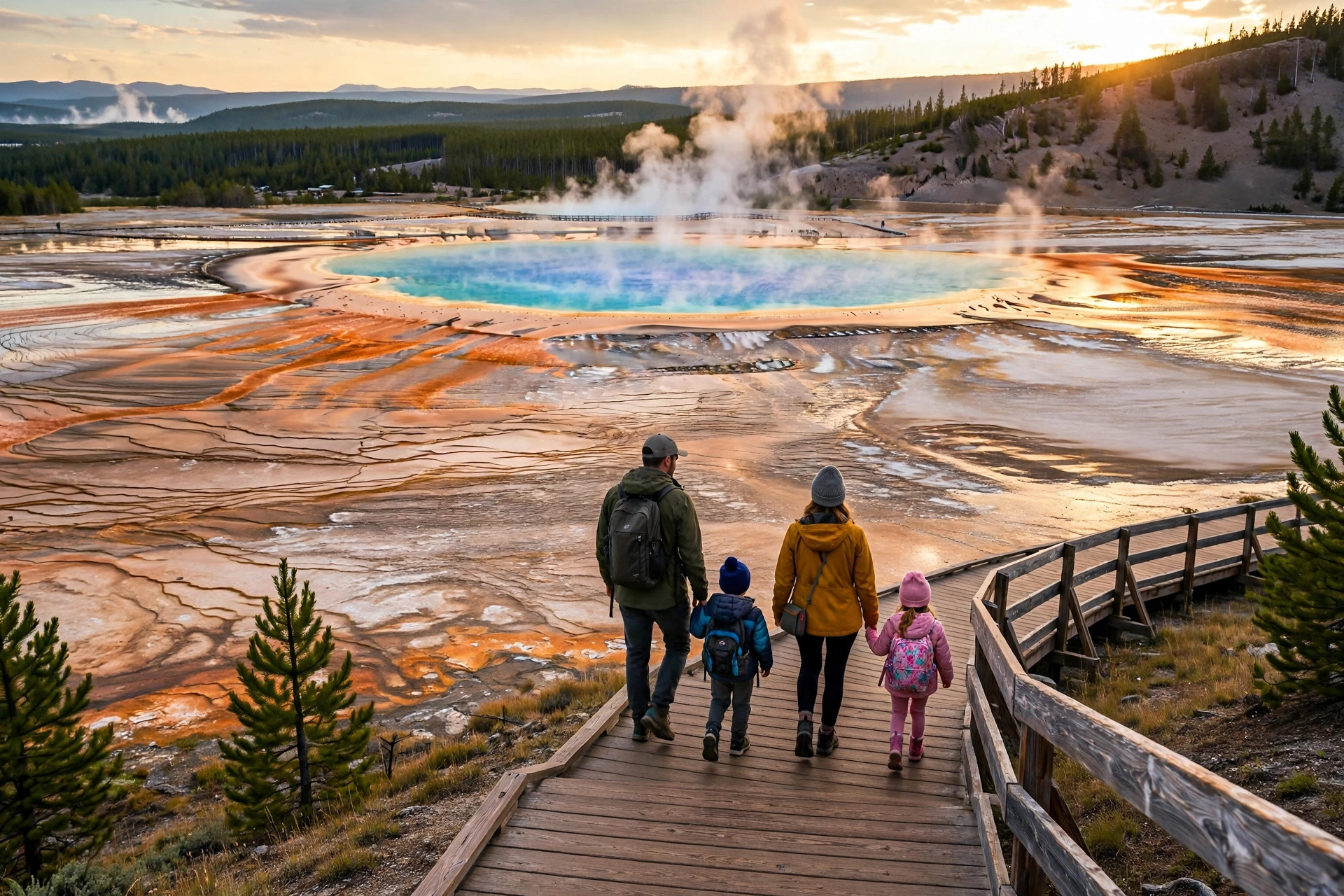
Yellowstone is one of the best national parks to visit with kids — geysers that erupt on cue, wildlife you can spot from the car, and boardwalk trails short enough for little legs. But the park is huge, nearly 3,500 square miles, and families who try to “see everything” usually end up exhausted. This 5-day Yellowstone with kids itinerary hits the highlights at a kid-friendly pace, with built-in rest time and one big adventure per day.
Why 5 Days Is the Sweet Spot for Yellowstone with Kids
Yellowstone’s roads form a figure-eight loop, and driving between sights can eat hours. Three days means choosing between the geyser basins and the wildlife — and missing something you’ll regret. A full week gives you flexibility, but with kids, trip fatigue is real by day six. Five days is the sweet spot: enough time for both the Upper and Lower loops, a rest afternoon in the middle, and no 12-hour drive days.
Aim to visit between early June and late August if your kids are school-age. Park roads are fully open, all visitor centers and most lodges are operating, and the weather is warm enough for dawn wildlife spotting without freezing little hands. Shoulder-season visits (late May or September) mean fewer crowds, but some services start closing and nighttime temperatures can drop near freezing — check the official Yellowstone National Park site for current road status before you go.
One more planning note: many Yellowstone highlights are free to enjoy once you’ve paid the park entrance fee, so a little research up front saves real money — our guide to free things to do in national parks covers ranger programs, free ranger-led walks, and other no-cost fun that fits perfectly into this itinerary.
Day 1: Old Faithful and the Upper Geyser Basin
Arrive through the West Yellowstone entrance (the most convenient gate for families, with grocery stores and gas just outside the park) and head straight for Old Faithful. The drive from West Yellowstone to Old Faithful takes about 45 minutes — a manageable first stretch with an excited crew.
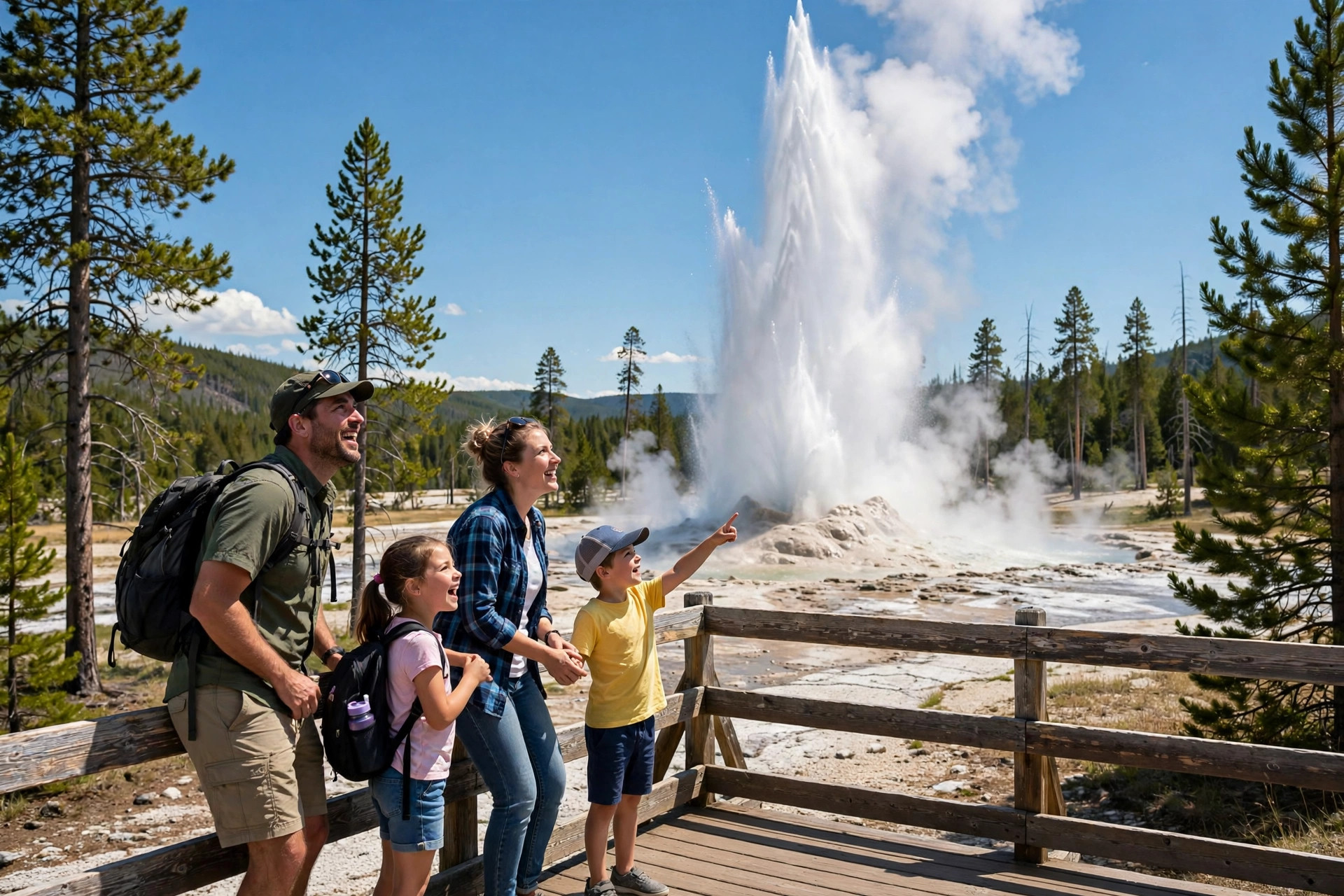
Check the predicted eruption time at the Old Faithful Visitor Education Center, then grab a spot on the boardwalk at least 20 minutes early — kids get the best views from the benches near the inn side of the basin. Eruptions last 1.5 to 5 minutes and shoot water 100–180 feet in the air, so even toddlers stay glued. Pro tip: the visitor center shows a live prediction board for other nearby geysers too.
After the eruption, walk the Upper Geyser Basin boardwalk loop. This is the world’s largest concentration of geysers, and the full loop is flat and stroller-friendly. Don’t try to walk it all with small kids — do the section to Morning Glory Pool (about 1.5 miles round trip) or just loop the first half-mile and head back for ice cream at the Old Faithful Inn’s Bear Paw Deli.
Spend the night near Old Faithful or in West Yellowstone. If you booked inside the park, plan a simple camp-kitchen dinner — picnic areas at Madison Junction are on the route and perfect for your first night.
Day 2: Grand Prismatic Spring and the Midway Geyser Basin
Day two is geyser-basin morning, which means arriving early. The Grand Prismatic Spring parking area fills by 10 a.m. in summer, and the overlook trail (Fairy Falls Trailhead, 0.6 miles one way) delivers the iconic aerial-style view kids will recognize from every Yellowstone photo.
Walk the boardwalk around Grand Prismatic itself too — the steaming rainbow colors are more vivid at ground level, and the contrast with the overlook view makes a great “compare and spot the difference” game for older kids. Then drive north a few minutes to the Lower Geyser Basin, home to Fountain Paint Pots. The half-mile boardwalk loop passes bubbling mud pots, fumaroles, and two geysers, and it takes most families about 30–45 minutes.
Afternoon rest is built in on purpose. Head back to your lodging for naps or a swim, or drive the scenic Firehole Canyon Drive (a one-way side road with a popular swimming area at Firehole River — water is warm near the canyon). End the day with the short drive to Midway for golden-hour photos when the steam glows.
Day 3: Grand Canyon of the Yellowstone
The Grand Canyon of the Yellowstone surprises families who think the park is “just geysers.” The 308-foot Lower Falls is nearly twice the height of Niagara, and the canyon’s yellow walls glow at sunrise. Drive the North Rim and South Rim roads, stopping at Lookout Point, Grand View, and Artist Point.
For a real hike, try Uncle Tom’s Trail — it’s short but steep, with 328 metal steps down to a viewing platform near the falls’ base. It’s thrilling for kids ages 6+, but do an honest assessment: if your kids melt down on stairs, the overlook views are equally spectacular. For help judging what your little ones can handle, see our guide to realistic trail distances by age — the same principles apply to Yellowstone’s paved overlook paths.
Afternoon: visit the Canyon Visitor Education Center (excellent kid-friendly exhibits on the park’s geology and the 1988 fires), then drive the scenic Dunraven Pass toward Tower-Roosevelt if it’s open. This is a great area for an evening wildlife drive — keep eyes peeled for black bears in the meadows.
Day 4: Lamar Valley Wildlife Safari Day
Day four is the early one — and the one your kids will talk about for years. Lamar Valley, in the park’s northeast, is nicknamed “America’s Serengeti” for its wolves, grizzlies, bison, elk, and pronghorn. Wildlife is most active at dawn, so plan to be in the valley by 6:30–7 a.m.
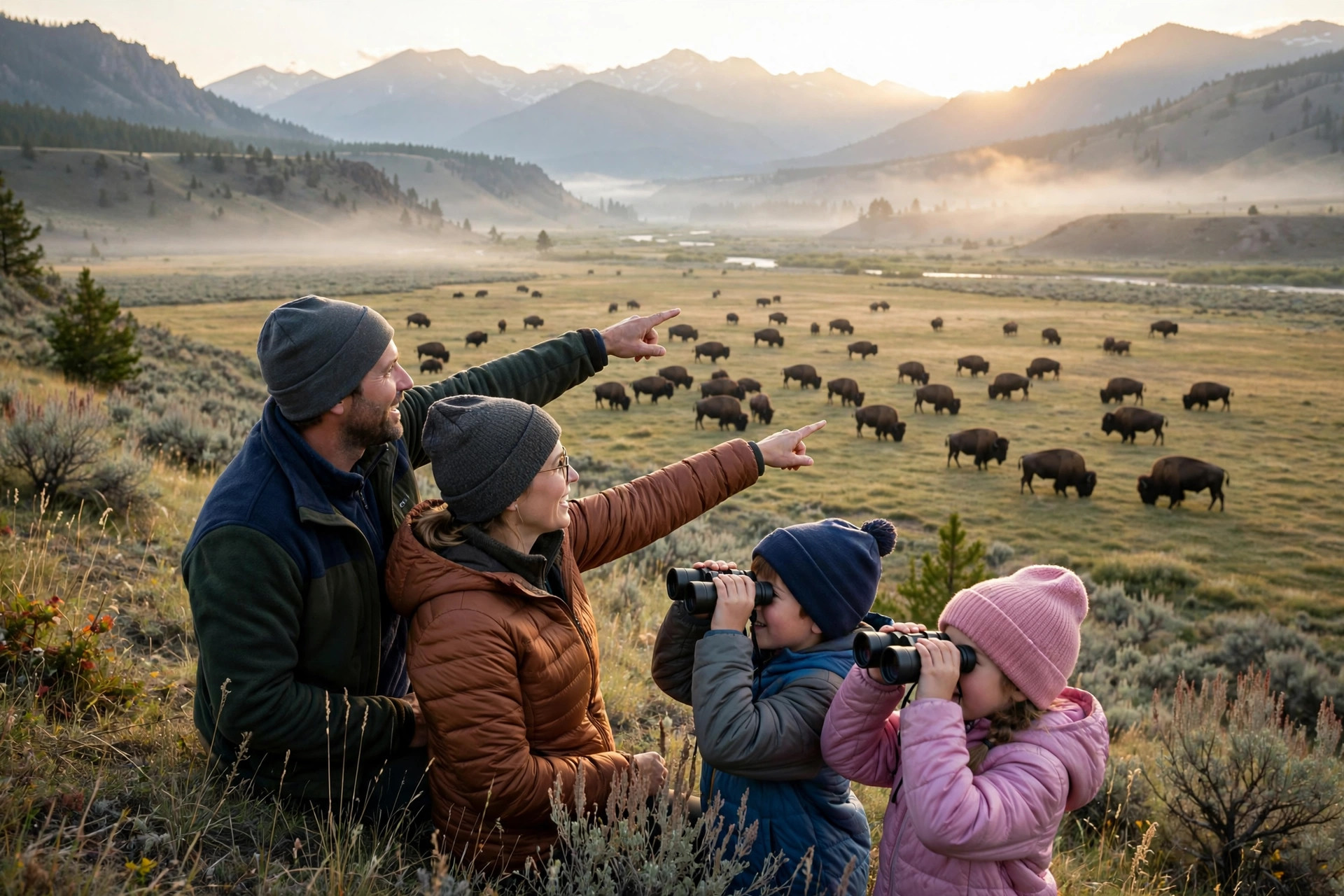
Bring binoculars (one per kid if possible), a spotting scope if you have one, and breakfast you can eat in the car at pullouts. The National Park Service rangers often set up scopes at Slough Creek and Lamar Canyon in summer — stop and ask what they’re watching. Keep the car stocked with snacks and quiet activities for the stretches between sightings.
Safety is non-negotiable here, and it’s a great moment to teach it: stay at least 100 yards from bears and wolves and 25 yards from bison and elk. Never approach wildlife for a photo. Review Yellowstone’s official safety guidance with your kids before the trip so the rules feel familiar, not scary.
After a midday rest, spend the afternoon at the Roosevelt Lodge area — the Old West Cookout (horseback or wagon ride plus dinner) is a splurge kids love, or just explore the Tower Fall area (a short, paved 0.5-mile trail to a 132-foot waterfall). Head back via the scenic route through Hayden Valley, another prime wildlife corridor, for a sunset drive.
Day 5: Mammoth Hot Springs and a Relaxed Departure
Save Mammoth Hot Springs for your last morning. The travertine terraces look like a frozen waterfall of white and orange stone, and the boardwalk loop through the Upper and Lower Terraces is about 1.75 miles total — do the upper section (0.5 miles) with younger kids.
Stop by the Albright Visitor Center for the Junior Ranger program if you haven’t yet — kids complete an activity booklet (available at any visitor center) and earn a badge at a ranger-led ceremony. It’s free and genuinely the highlight of the trip for many 5–12-year-olds.
From Mammoth, you’re 5 miles from the North Entrance at Gardiner, Montana — a convenient exit with restaurants and a short drive to Bozeman if you’re flying home. If you’re departing west, backtrack through the park and exit at West Yellowstone.
Where to Stay in Yellowstone with Kids
Lodging inside the park books up 6–12 months ahead for summer — reserve the moment your dates are firm on Recreation.gov, which handles Yellowstone’s campgrounds and lodging reservations. Here’s how the main options compare for families:
| Option | Best for | Family notes |
|---|---|---|
| Old Faithful Inn / Snow Lodge | Geyser-basin days | Walk to eruptions; pricey; book a year out |
| Canyon Lodge | Canyon + wildlife days | Central location; cafeteria is kid-friendly |
| Lake Yellowstone Hotel cabins | Quieter nights | Affordable cabins; great lake views |
| West Yellowstone (gateway town) | Budget + flexibility | Hotels, rentals, groceries; 30–45 min drives |
| Park campgrounds (Madison, Canyon) | Outdoor families | Reserve on Recreation.gov; no hookups |
Camping families: two different campgrounds (one south, one north) save backtracking. The family camping checklist covers everything from bear-proof food storage to the kid gear that makes park camping actually comfortable.
What to Pack for Yellowstone with Kids
- Layers for everyone — mornings can be in the 40s even in July; afternoons hit the 70s. Pack fleece mid-layers and rain shells.
- Binoculars — at least one decent pair per two kids; wildlife day depends on them.
- Bear spray — carry it on every hike, even short boardwalk-adjacent trails. Buy in a gateway town (can’t fly with it).
- Snacks and a cooler — food inside the park is limited and pricey; picnic lunches save hours and money.
- Sun protection — elevation is 7,000–8,000 feet; the sun is intense. Hats, sunscreen, sunglasses.
- Junior Ranger booklets — free at visitor centers; keep them in the daypack from day one.
- Car entertainment — audiobooks about Yellowstone, a wildlife bingo card, and window markers for the “spot the bison” game.
- First-aid basics — blister pads, antihistamines, any altitude-sensitive medications, and plenty of water bottles.
Kid-Friendly Tips That Make or Break the Trip
Start early, rest midday. The wildlife-and-geyser magic happens before 10 a.m., and parking lots are brutal by noon. Return to your cabin or hotel for lunch and naps, then head back out for golden hour — you’ll dodge both crowds and crankiness.
Teach the buddy system. Boardwalks and overlooks have railings, but kids wander. Before the trip, walk through what to do if you get separated on a trail — the stay-put rule applies in Yellowstone’s developed areas too.
Don’t over-schedule. One headline sight per day plus one flexible bonus is the right pace. If the kids are obsessed with a mud pot, let them be obsessed. The itinerary is a framework, not a checklist.
Thermal areas are not playgrounds. The ground around geysers is fragile and dangerously hot — kids must stay on boardwalks at all times. Make this rule crystal clear on day one, not day two.
FAQs: Yellowstone with Kids
How many days do you need in Yellowstone with kids?
Five days is ideal for families — it covers both the Upper and Lower loops at a relaxed pace with rest time built in. Three days works if you focus on either geysers or wildlife, but you’ll skip major highlights. With kids under 6, consider stretching to 6 days with two full rest afternoons.
What is the best entrance for families visiting Yellowstone?
West Yellowstone (west entrance) is the most convenient for families: grocery stores, gas, restaurants, and lodging right outside the gate, with 30–45 minute drives to Old Faithful and the geyser basins. Gardiner’s north entrance is best for wildlife-focused trips and Mammoth Hot Springs.
Is Yellowstone safe for toddlers?
Yes, with supervision. Boardwalks are stroller-friendly, and most headline sights require only short walks. The key rules: stay on boardwalks in thermal areas, keep 25+ yards from bison and elk (100+ from bears and wolves), and use the buddy system at overlooks. Our trail distance guide by age helps you judge which walks fit your toddler.
When is the best time to visit Yellowstone with kids?
Early June through late August is best for school-age kids — all roads, lodges, and ranger programs are open. Late May and September have fewer crowds but colder nights and some closed services. Avoid visiting before mid-April or after early November unless you’re prepared for serious winter conditions.
Do kids need reservations for the Junior Ranger program?
No reservation needed. Pick up the free Junior Ranger booklet at any visitor center, complete the age-appropriate activities during your visit, and return to a ranger for the badge ceremony. It’s one of the best free things to do in any national park — see more free park activities here.
Can you see wildlife in Yellowstone without hiking?
Absolutely — most wildlife sightings happen from the road. Lamar and Hayden Valleys are drive-through wildlife corridors, and bison frequently cause “traffic jams” right on the Grand Loop Road. Bring binoculars and plan dawn or dusk drives for the best odds.
Yellowstone rewards families who slow down. Five days gives your kids time to watch a geyser twice, ask a ranger twenty questions, and fall asleep counting bison instead of sheep. Book your lodging early, pack for four seasons in one day, and let the park set the pace — that’s the trip they’ll remember.
