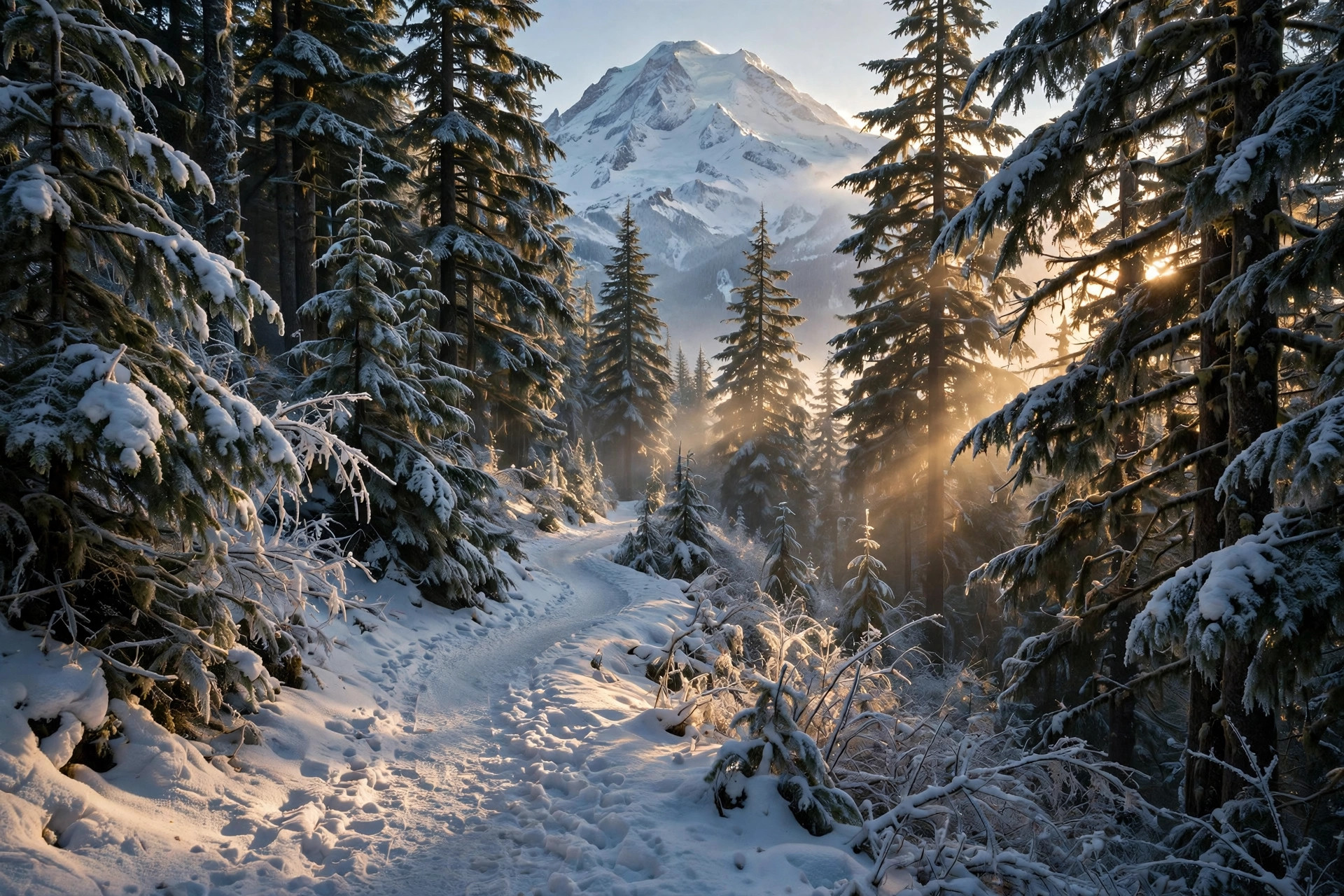
Top Winter Hikes Near Seattle, Washington: Unforgettable Trails
There is something quietly magical about winter hiking trails near Seattle. The crowds that pack the parking lots in July have vanished, the evergreens wear a fresh coat of snow, and frozen waterfalls hang like crystal chandeliers in the Cascade foothills. When I first moved to Washington, I made it my mission to enjoy the winter season instead of hibernating through it. That meant learning which trails stay safe, which parking lots actually get plowed, and what gear turns a miserable slog into a glorious adventure. After several winters of trial and error, I have gathered my favorite winter hiking trails near Seattle into one guide for the 2026–27 season — refreshed, fact-checked, and ready for your next cold-weather outing.
Whether you want a short waterfall walk with your kids, a steady training climb before spring mountaineering season, or a full snowshoe day above the clouds at Mount Rainier, this list has you covered. Every trail here is within roughly two hours of downtown Seattle, open in winter, and doable with the right preparation.
What Does “Near” Really Mean?
“Near” is a flexible word in the Pacific Northwest. For some hikers, near means a 30-minute dash to the Issaquah Alps after work. For others, a two-hour drive to Mount Rainier or the North Cascades still counts as a day trip. I have organized these trails roughly by drive time from Seattle so you can filter by the kind of day you want:
- Under 45 minutes: Rattlesnake Ledge, Tiger Mountain, Teneriffe Falls — the Snoqualmie Pass corridor and Issaquah Alps classics.
- 45–90 minutes: Middle Fork Snoqualmie, Wallace Falls, Heybrook Lookout, Lake 22 — Snoqualmie and Stevens Pass country.
- 90 minutes–2 hours: Oyster Dome, Panorama Point, Artist Point, Marymere Falls, Mount Storm King — the bigger Cascades and Olympics adventures.
Winter adds a second dimension to distance: daylight. In December and January, usable daylight near Seattle runs roughly 8:30 a.m. to 4:15 p.m. Pick your trail distance with that window in mind, and always carry a headlamp with fresh batteries in case the trail takes longer than planned.
Safety Tips for Winter Hiking
Winter hiking is wonderful, but it is less forgiving than summer hiking. These rules are the difference between a great day and a rescue callout:
- Check trail and road conditions the morning of your hike. Read recent trip reports on wta.org (Washington Trails Association) — winter reports there note ice, blowdowns, gate closures, and parking-lot snow depth. Road access changes constantly: Snoqualmie and Stevens Pass roads are usually plowed, but forest roads to trailheads like Middle Fork or Lake 22 can be closed or snowed in for weeks.
- Check the avalanche forecast every time you gain elevation. The Northwest Avalanche Center (nwac.us) publishes a daily avalanche forecast for the Cascades and Olympics during the winter season. If the danger rating is Considerable or higher in your zone, choose a different trail. Lake 22, Artist Point, and Panorama Point all cross or sit near avalanche terrain — never enter it without training, a beacon, shovel, and probe, and a partner who carries them too.
- Carry the Ten Essentials, winterized. In winter that means extra insulation, extra calories, a headlamp (darkness arrives fast), fire-starting supplies, and a way to call for help. A personal locator beacon or satellite messenger is worth its weight on remote winter trails.
- Traction on every hike, no exceptions. Microspikes live in my pack from November through April. Even low-elevation trails like Rattlesnake Ledge and Heybrook turn into skating rinks after a freeze-thaw cycle.
- Know when to turn around. A turnaround time — a clock time, not a summit — is the most important piece of winter gear. If you have not reached the top by it, you descend. The mountain will be there next weekend.
Hiking with little ones? Winter adds extra layers of planning. Our guide on realistic trail distances by age for hiking with toddlers helps you match the trail to your child, and the step-by-step safety plan for getting lost with kids is a read every winter-hiking parent should make.
Leave No Trace Principles
Snow makes the wilderness look pristine, but it does not make your impact invisible. The seven Leave No Trace principles still apply — with a winter twist:
- Plan ahead and prepare: winter conditions change hourly; check forecasts, road reports, and sunset times.
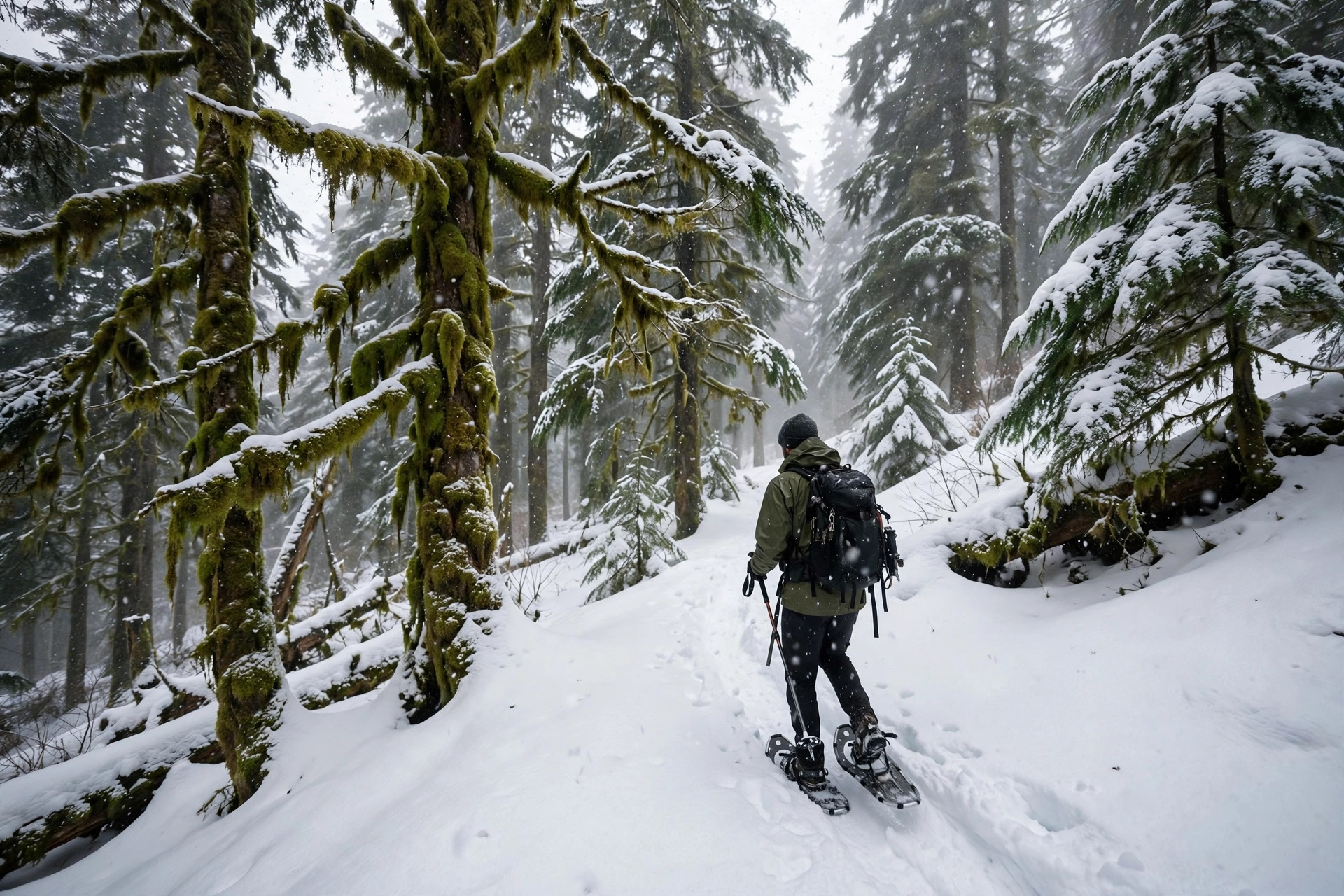
- Travel on durable surfaces: stick to established trails and the packed route. Postholing off-trail damages vegetation under the snow and exhausts you fast.
- Dispose of waste properly: pack out everything, including tissues and food scraps. Burying waste in snow is not disposal — it surfaces in spring.
- Leave what you find: resist the urge to knock down icicles at waterfalls or carve into frozen bark.
- Minimize campfire impacts: use a stove; snow camping fires scar the landscape and are often restricted.
- Respect wildlife: winter is a survival season for animals. Observe from a distance and never feed them — a fed deer in winter is a dead deer in spring.
- Be considerate of others: keep dogs leashed where required, yield the trail, and keep music off.
We made the principles kid-friendly in Leave No Trace for Kids: 7 Principles Made Fun — a great pre-hike read if your crew includes young explorers.
Essential Gear for Winter Hiking
Gear is where winter hiking succeeds or fails. The system below is what I actually carry on Washington winter trails from December through March — packing the right gear matters even more when small hikers are along.
Clothing — the layering system:
- Base layer top and bottom (merino wool or synthetic — never cotton; cotton kills in winter)
- Mid layer fleece top and bottom
- Insulating puffy jacket (down or synthetic)
- Waterproof-breathable shell jacket and shell pants
Footwear and extremities:
- Waterproof hiking boots with aggressive tread
- Wool socks plus a spare dry pair in a ziplock
- Warm hat or beanie, neck gaiter or balaclava, insulated gloves plus a backup pair
- Disposable hand warmers for the coldest days
Traction and snow travel:
- Microspikes (the single highest-value winter item you can own)
- Snowshoes for deep-snow days at Paradise, Artist Point, or upper-elevation trails
- Trekking poles with snow baskets
Safety and navigation:
- Headlamp with spare batteries, emergency beacon or satellite messenger
- First aid kit, emergency bivvy and space blanket, waterproof matches, multi-tool
- Navigation: offline maps app plus paper map and compass as backup; portable charger (cold drains phone batteries fast)
- Sunscreen and sunglasses — snow glare is brutal even on overcast days
Food and water:
- Insulated water bottle (wide-mouth bottles freeze slower) or a thermos with something warm
- Extra high-calorie snacks — you burn far more energy staying warm in winter
For multi-day winter trips, pair this list with our tips for staying clean while backpacking — winter grime and sweat management is its own art.
Where to Stay for Washington Winter Hikes
If you want to string two hiking days together — or just warm up properly afterward — basing yourself near the mountains beats a dawn drive from Seattle. These are the kinds of places I look for each winter season; availability and rates shift with the 2026–27 season, so book early for holiday weekends and check current pricing:
- Leavenworth-area cabin: a great base for Stevens Pass hikes, with Bavarian-village charm for the evening. Winter nightly rates for cabins here typically start in the mid-$100s.
- Snoqualmie Pass-area cabin: puts you minutes from Hyak, Alpental, and the Snoqualmie corridor trails — ideal for a two-day winter hiking weekend.
- Mount Rainier-area cabin: after a Panorama Point snowshoe day, nothing beats a fireplace and a hot tub near Ashford or Elbe.
- Family-friendly vacation rentals near North Bend: look for 2–3 bedroom houses on acreage — perfect small-family bases with kitchens for packing trail lunches.
- Nisqually River-area house: riverside rentals with fireplaces and hot tubs make a luxurious recovery base after Rainier winter days.
Wherever you stay, confirm the driveway and access road get plowed — a rental at elevation with an unplowed hill can strand you from your own trailhead.
Winter Hiking Trails Near Seattle, Washington
Here are my twelve favorite winter hiking trails near Seattle, updated for the 2026–27 season. Each includes the pass you need, the stats that matter, and honest notes on winter conditions. Quick legend: Discover Pass ($30/year or $10/day in Washington state lands), Northwest Forest Pass ($30/year), and the America the Beautiful Interagency Pass ($80/year) cover most federal trailheads.
Rattlesnake Ledge
Permit/Parking Pass: None required
Distance: 4.0 miles roundtrip | Elevation gain: 1,160 ft | Difficulty: Moderate
Dogs: Yes, on leash
The classic Seattle-area winter hike. Rattlesnake Ledge is short enough for a half-day or even an after-work outing, and the ledge viewpoint — Rattlesnake Lake glittering below, the Cascades stacked behind — is glorious in low winter light. The catch: this trail ices over relentlessly from December through February. Microspikes are mandatory, not optional, and go on a weekday morning if you can — winter weekends still draw crowds.
Tiger Mountain – West Tiger #3
Permit/Parking Pass: Discover Pass
Distance: 5.0 miles roundtrip | Elevation gain: 2,100 ft | Difficulty: Moderate/Hard
Dogs: Yes, on leash
My favorite winter training hike in the Issaquah Alps. The steady 2,100-foot grind up West Tiger #3 keeps your legs honest through the off-season, and the summit view — Mount Rainier, the Olympics, and on the clearest days Mount Baker — is one of the best panoramas within an hour of Seattle. Expect patchy snow and ice at the top all winter. This is also an excellent conditioning hike if you are building toward a spring thru-hike or a magical winter hike in bigger mountains.
Teneriffe Falls
Permit/Parking Pass: Discover Pass
Distance: 5.6 miles roundtrip | Elevation gain: 1,600 ft | Difficulty: Moderate/Hard
Dogs: Yes, on leash
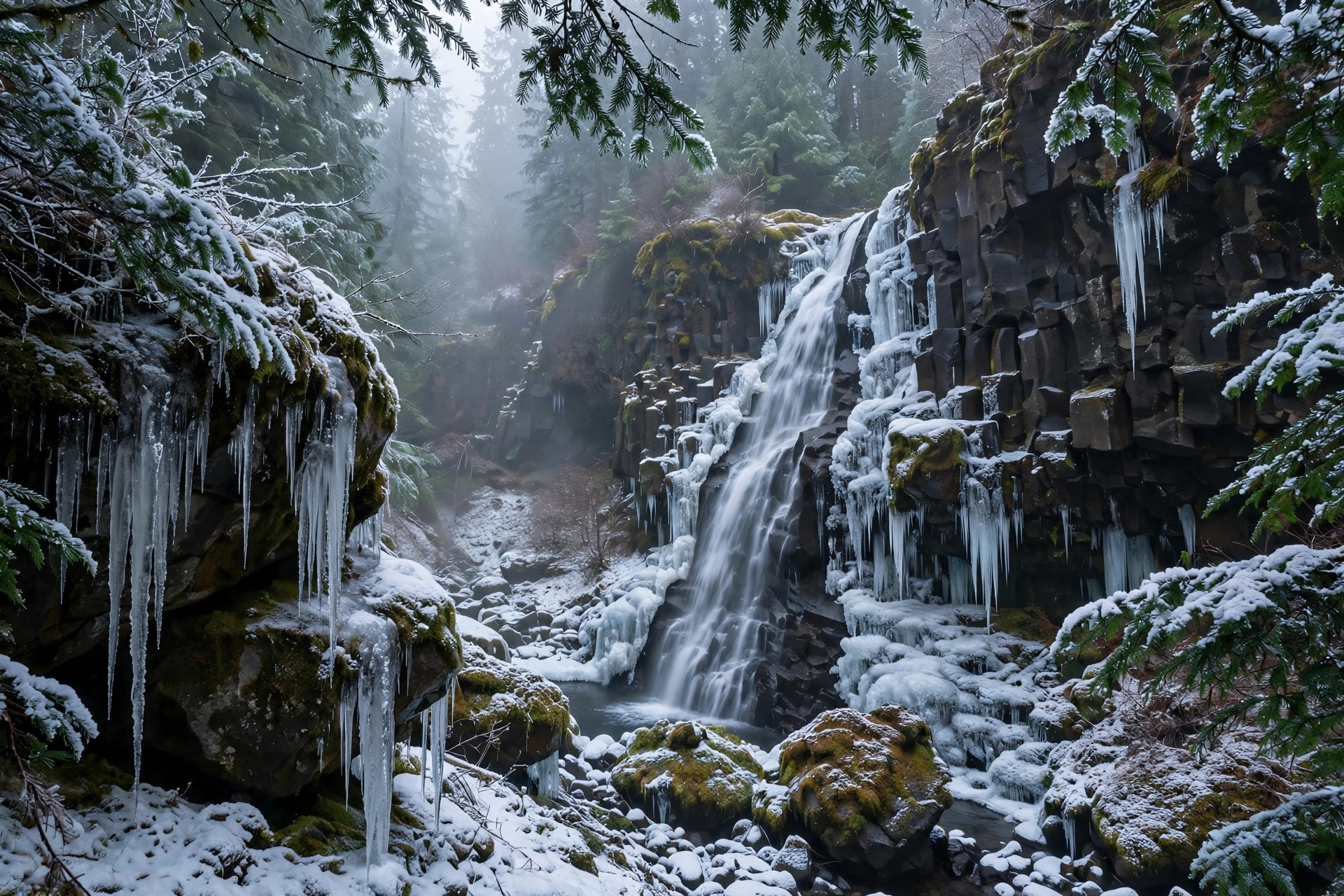
A lush forest climb to a waterfall that turns half to ice in deep winter. The upper talus section can be slippery and snow-covered, so take your time and wear traction. Go after a cold snap for the full frozen-falls effect — the icicle formations around the cascade are spectacular in January and February.
Middle Fork Snoqualmie
Permit/Parking Pass: Northwest Forest Pass or America the Beautiful Interagency Pass
Distance: 12.0 miles roundtrip (out-and-back, turn around anywhere) | Elevation gain: ~1,650 ft | Difficulty: Easy/Moderate
Dogs: Yes, on leash
The Middle Fork trail is the choose-your-own-adventure of winter hiking: a nearly flat riverside ramble through old-growth cedar and Douglas fir, with that impossibly blue-green river beside you the whole way. In winter you can walk as far as the snow allows and turn around — even two miles out and back is a perfect cold-weather outing. Watch for icy boardwalk sections. The trailhead road can close during big storms, so check WTA trip reports before you commit to the drive.
Wallace Falls
Permit/Parking Pass: Discover Pass
Distance: 5.6 miles roundtrip | Elevation gain: 1,300 ft | Difficulty: Moderate
Dogs: Yes, on leash
Wallace Falls is at its most dramatic in winter and early spring, when rain and snowmelt swell the three-tiered cascade. The trail climbs steadily to the Lower, Middle, and Upper falls viewpoints; the Middle Falls overlook is the payoff most winter hikers aim for. Freeze-thaw ice coats the upper trail in cold snaps — spikes on, always. Start early: the small lot fills even on winter Saturdays.
Heybrook Lookout
Permit/Parking Pass: None required
Distance: 2.0 miles roundtrip | Elevation gain: 850 ft | Difficulty: Easy/Moderate
Dogs: Yes, on leash
Proof that a great winter hike does not need to be long. This two-mile climb through second-growth forest ends at a historic fire lookout with a sweeping view of Mount Index and Bridal Veil Falls. It is one of the closest trails to Seattle on this list, making it perfect for short winter days. The lookout stairs can ice up — use the handrail and your spikes.
Lake 22
Permit/Parking Pass: Northwest Forest Pass or America the Beautiful Interagency Pass
Distance: 5.4 miles roundtrip | Elevation gain: 1,350 ft | Difficulty: Moderate
Dogs: Yes, on leash
Lake 22 in winter is a genuine alpine fairy tale: a frozen lake ringed by snowy cliffs, with old-growth cedar along the lower trail. But this is the one trail on the list that demands real avalanche awareness — the upper basin slides regularly. Check the NWAC forecast the morning of your hike, and if the danger is elevated, pick a different trail. No view is worth the risk.
Oyster Dome
Permit/Parking Pass: Discover Pass
Distance: 7.0 miles roundtrip | Elevation gain: 1,900 ft | Difficulty: Moderate
Dogs: Yes, on leash
The outlier of the list — and worth the drive north. Oyster Dome trades Cascade peaks for a sweeping view over Samish Bay and the San Juan Islands, with the Olympics on the horizon. The Chuckanut Mountains get less snow than the central Cascades, so this is often hikeable when everything else is buried. Make a day of it: warm up afterward with a bowl of chowder in Bellingham or Fairhaven.
Panorama Point Snowshoe via Skyline Trail
Permit/Parking Pass: America the Beautiful Interagency Pass (park entrance fee)
Distance: ~5.0 miles roundtrip | Elevation gain: 1,900 ft | Difficulty: Moderate/Hard
Dogs: No — dogs are not allowed on trails in Mount Rainier National Park
The crown jewel of Washington winter hiking. From Paradise (5,400 ft), the snowshoe route up the Skyline Trail to Panorama Point delivers an unbroken view of Mount Rainier towering over the Tatoosh Range, with Adams and St. Helens on clear days. This is true backcountry snow travel: rent snowshoes at Whittaker Mountaineering in Ashford or from REI, check the NWAC forecast, and stay on the marked winter route — the summer trail is buried and the terrain has real avalanche exposure. Rangers at the Henry M. Jackson Visitor Center can advise on current conditions.
Artist Point Snowshoe
Permit/Parking Pass: None required (Mount Baker Highway is plowed to the Artist Point lot in winter)
Distance: ~4.0 miles roundtrip (route varies with snow) | Elevation gain: ~1,000 ft | Difficulty: Moderate
Dogs: Yes, on leash
Artist Point might be the most beautiful winter trailhead in Washington: a high alpine basin staring straight at Mount Shuksan and Mount Baker, both plastered in snow. The Table Mountain snowshoe loop wanders through frozen tarns and wind-sculpted snowfields. Avalanche terrain is everywhere here — this is a fair-weather, low-danger-day-only destination, and you should carry beacon, shovel, and probe with the training to use them.
Marymere Falls
Permit/Parking Pass: America the Beautiful Interagency Pass (Olympic National Park entrance)
Distance: 1.8 miles roundtrip | Elevation gain: 330 ft | Difficulty: Easy
Dogs: No — dogs are not allowed on trails in Olympic National Park
The easiest trail on this list and a perfect family winter hike. A short, nearly flat walk through old-growth forest along Barnes Creek ends at the 90-foot Marymere Falls. In winter the mist freezes into delicate ice sculptures around the falls’ base. Microspikes help on the slick final stretch. Pair it with a soak at Sol Duc Hot Springs (reservations required) for the ultimate Olympic Peninsula winter day.
Mount Storm King
Permit/Parking Pass: America the Beautiful Interagency Pass (Olympic National Park entrance)
Distance: 4.1 miles roundtrip | Elevation gain: 2,100 ft | Difficulty: Hard
Dogs: No — dogs are not allowed on trails in Olympic National Park
The hardest hike on this list, and the view — straight down to the impossibly blue water of Lake Crescent with the Strait of Juan de Fuca beyond — is the reward. The final push involves steep switchbacks and a rope-assisted scramble that is genuinely sketchy in icy conditions. Only attempt Storm King in winter on a dry, above-freezing day with spikes, poles, and strong legs; in snow or ice, save it for summer. This is an experts-only winter objective.
Final Thoughts: Embrace the Magic of Winter Hiking
Winter hiking near Seattle rewards the prepared. The trails are quieter, the waterfalls are wilder, and the light — low, golden, and brief — makes everything look cinematic. Start with the forgiving classics like Rattlesnake Ledge, Wallace Falls, or Marymere Falls, build your gear kit and your judgment, and work up to the big snowshoe days at Paradise and Artist Point.
My one rule after all these winters: the forecast is part of the plan, not an afterthought. Check NWAC, check WTA trip reports, pack your spikes, and give yourself permission to turn around. The mountains will wait. Happy hiking — see you out there.
Frequently Asked Questions
Can you hike near Seattle in the winter?
Absolutely. Dozens of trails within two hours of Seattle stay accessible all winter, especially low-elevation waterfall hikes like Wallace Falls, Marymere Falls, and the Middle Fork Snoqualmie trail. Higher trails require microspikes or snowshoes, and you should always check avalanche forecasts and road conditions before heading out.
Do I need snowshoes for winter hiking near Seattle?
It depends on the trail and the snowpack. Low-elevation hikes like Rattlesnake Ledge and Heybrook Lookout usually just need microspikes. For deep-snow destinations like Panorama Point at Mount Rainier or Artist Point at Mount Baker, snowshoes are essential. When in doubt, check recent trip reports on wta.org.
What pass do I need for winter trailheads near Seattle?
Most trailheads require one of three passes: the Discover Pass for Washington state lands (Tiger Mountain, Wallace Falls), the Northwest Forest Pass for national forest trailheads (Lake 22, Middle Fork Snoqualmie), or the America the Beautiful Interagency Pass for national parks (Mount Rainier, Olympic). Check each trail’s listing above before you go.
Are winter hikes near Seattle good for beginners?
Yes — start with Marymere Falls (1.8 miles, nearly flat), Heybrook Lookout (2 miles), or the lower sections of the Middle Fork Snoqualmie trail. These are short, low-elevation, and forgiving. Avoid avalanche-exposed trails like Lake 22’s upper basin and Artist Point until you have winter experience and training.
Can I bring my dog winter hiking near Seattle?
On many trails, yes — Rattlesnake Ledge, Tiger Mountain, Wallace Falls, and Lake 22 all allow leashed dogs. However, dogs are not permitted on trails in Mount Rainier or Olympic National Parks, so Panorama Point, Marymere Falls, and Mount Storm King are people-only. Always check leash rules before you go.
What is the best month for winter hiking near Seattle?
January and February typically offer the most reliable snow for snowshoe destinations and the most dramatic frozen waterfalls. December can be excellent too, but days are shortest. March brings longer days and corn-snow conditions at higher elevations — often the sweet spot for big snowshoe days before the spring melt.
