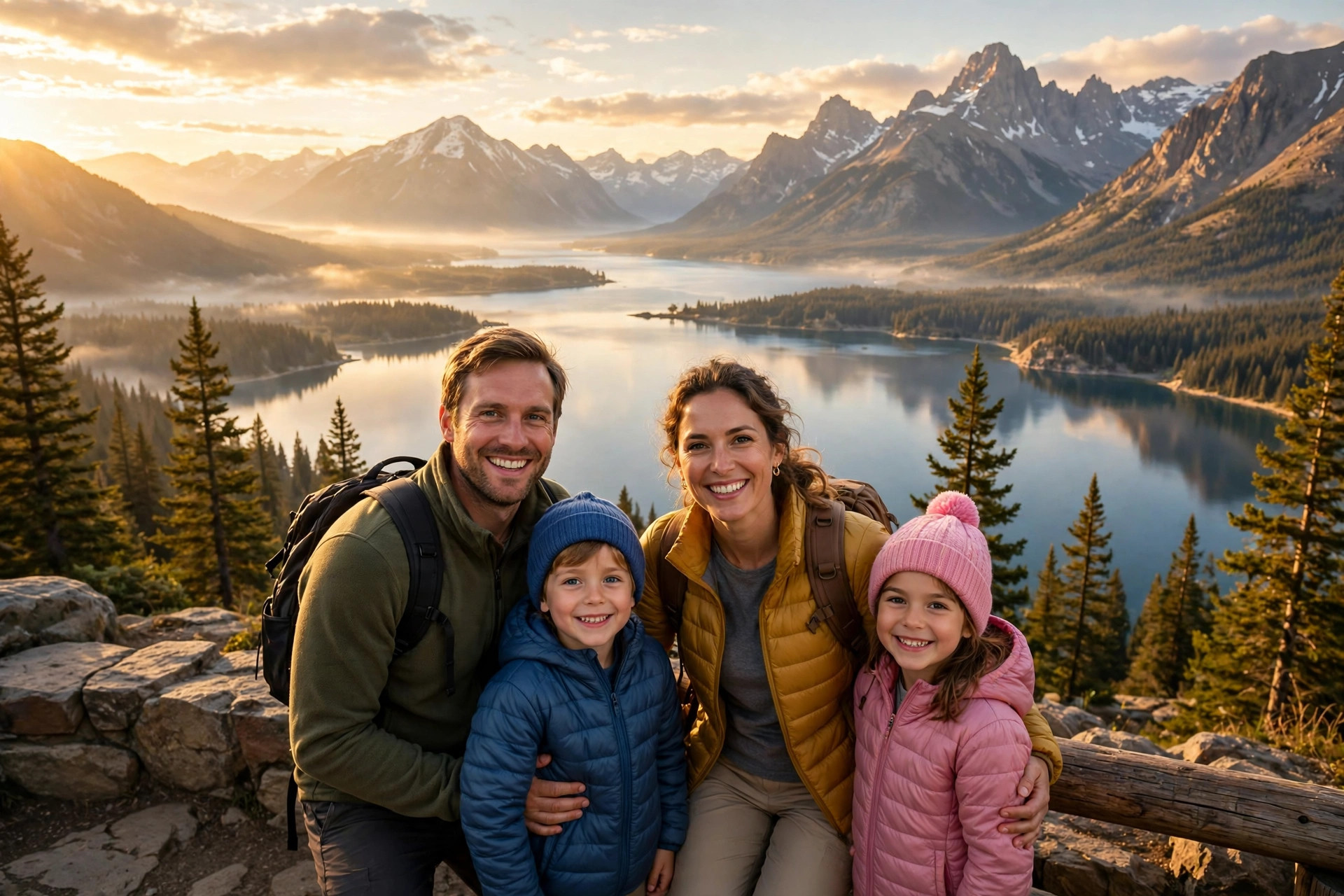
Best National Parks to Visit with Kids
The best national parks to visit with kids are the ones where children can actually take part — not just look at scenery from a car window. The right park pairs big, wow-factor landscapes with things kids can do: ranger programs, wildlife spotting, short walks to waterfalls, tide pools, and the Junior Ranger program that turns the whole visit into a game.
Six parks stand out for families: Yellowstone, Grand Canyon, Yosemite, Acadia, Great Smoky Mountains, and Grand Teton. Each one is different, so the best choice depends on your children’s ages, how much walking they can handle, and what excites them most — geysers, canyons, waterfalls, beaches, or wildlife. This guide covers what each park is really like with kids, the don’t-miss experiences, the best ages, and the practical details (fees, seasons, safety) parents need before booking.
Best National Parks for Kids at a Glance
| Park | Best for ages | Don’t miss with kids | Best season |
|---|---|---|---|
| Yellowstone | 5+ | Old Faithful, Grand Prismatic Spring, Junior Ranger | June–September |
| Grand Canyon | 5+ | South Rim viewpoints, Rim Trail, Junior Ranger | March–May, September–October |
| Yosemite | 4+ | Yosemite Falls, Mariposa Grove sequoias, Valley floor | May–June (waterfalls) |
| Acadia | 3+ | Carriage roads, tide pools, Cadillac Mountain sunrise | June–October |
| Great Smoky Mountains | 3+ | Cades Cove, waterfalls, Junior Ranger | April–June, October |
| Grand Teton | 5+ | Jenny Lake, wildlife watching, lakeside walks | June–September |
1. Yellowstone National Park
Yellowstone is the easiest national park to love with kids because the wow moments come fast: a geyser erupting on schedule, a rainbow-colored hot spring, a bison crossing the road. Children can see geysers, hot springs, waterfalls, lakes, forests, and wildlife in a single trip — and the geothermal features turn the whole park into a real-world science lesson.
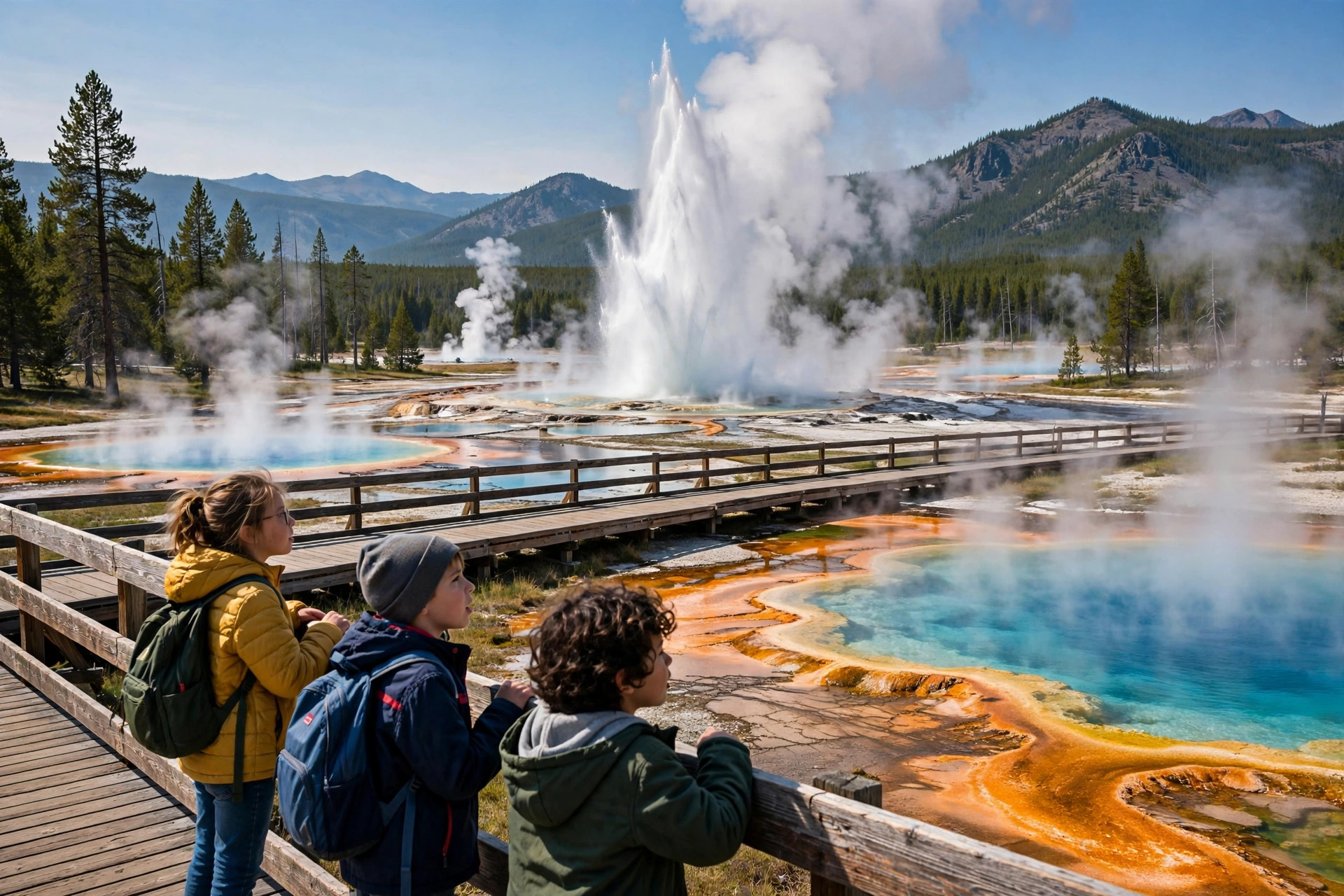
The National Park Service runs ranger programs during the main summer season, along with visitor-center exhibits and self-guided activities through the official NPS app. Children can also join the Yellowstone Junior Ranger program — pick up the booklet, complete the activities, and earn a badge.
Because Yellowstone is extremely large, families should plan no more than two or three major stops per day and build in driving time and rest breaks. Base yourself in one area (Canyon, Old Faithful, or Mammoth Hot Springs) and explore from there rather than trying to cross the whole park daily. For a ready-made plan, see our 5 Days in Yellowstone with Kids itinerary.
Wildlife needs real respect here. Stay on boardwalks and designated paths around hot springs — the ground can be dangerously thin — and keep the park-required distance from bison, elk, and bears (at least 25 yards from most animals, 100 yards from bears and wolves). Never let children approach animals for a photo.
2. Grand Canyon National Park
The Grand Canyon works brilliantly with kids because the main experience — standing at the edge of one of the world’s great landscapes — needs no hiking at all. The South Rim offers viewpoints, visitor facilities, shuttle buses, ranger-led activities, and the mostly flat, paved Rim Trail, which is perfect for strollers and little legs.
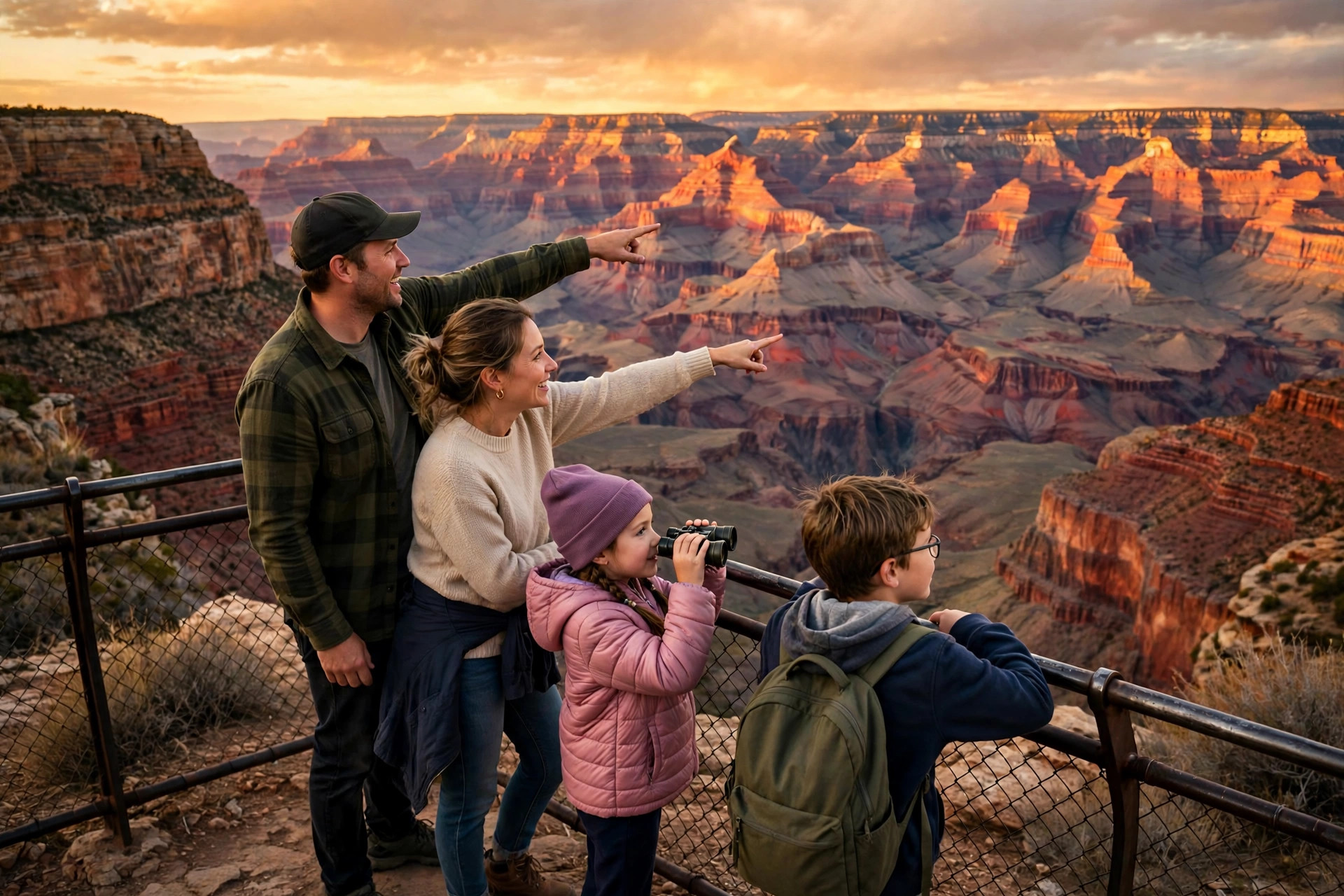
The National Park Service offers Junior Ranger programs and family programs where children learn about the canyon with rangers. Check the current schedule before you go: in 2026, North Rim ranger programs were unavailable for the summer season, so the South Rim is the reliable choice for families.
Heat is the real hazard. Summer temperatures at the rim can top 100°F (38°C) and are far hotter inside the canyon — never hike down with young children in summer heat. Stick to short rim walks, carry far more water than you think you need, and visit viewpoints early in the morning or at sunset. Keep children behind railings and away from unfenced edges at all times.
3. Yosemite National Park
Yosemite gives children waterfalls, granite cliffs, meadows, forests, and giant sequoias in one compact valley. Families can spend a full day sightseeing without making the trip about strenuous hiking — the valley floor is mostly flat, with a free shuttle and short, paved paths to Lower Yosemite Fall and Mirror Lake.
The park’s Junior Ranger program is a highlight: children pick up a free handbook at a visitor center, complete activities while exploring, and receive a badge after sharing the booklet with a ranger. It is designed for roughly ages 4–12, with adapted activities available. Yosemite also schedules family-friendly ranger walks, including kid-focused Junior Ranger walks in Yosemite Valley — check the official calendar before your visit, as schedules change.
Timing matters more at Yosemite than almost anywhere else. Waterfalls are at their best in May and June; by late summer many are thin or dry. In peak season the park has used a reservation system for entry on certain dates, so check whether a peak-hours reservation is needed for your dates on nps.gov before you drive in. For the sequoias, the Mariposa Grove (near the south entrance) is the easiest grove to visit with kids, with a shuttle from the parking area.
4. Acadia National Park
Acadia National Park in Maine is the best choice for families who want variety in a small, manageable park: rocky coastline, forests, mountains, lakes, and carriage roads all within a short drive of each other. It is also one of the most genuinely kid-friendly parks — the 45 miles of car-free carriage roads are perfect for biking, and the tide pools at low tide are a natural aquarium.
The National Park Service offers Junior Ranger activities, ranger programs, scavenger hunts, and Acadia Quest, a family challenge that encourages kids to explore and learn about the park. Children can pick up a Junior Ranger booklet at a visitor center, nature center, or campground, complete the activities, join ranger programs, and be sworn in as Junior Rangers to receive a badge.
Acadia shines when parents want children to be actively involved rather than carried from viewpoint to viewpoint. Rent bikes for the carriage roads, plan a sunrise or sunset on Cadillac Mountain (the first place in the US to see the sunrise in fall and winter), and leave time for Bar Harbor’s shops and ice cream. Our Acadia National Park with Kids: 3-Day Itinerary lays out a complete family plan.
5. Great Smoky Mountains National Park
Great Smoky Mountains National Park is the most visited national park in the US for a reason: it is free to enter, easy to reach, and packed with waterfalls, forests, wildlife, and historic buildings that kids find fascinating. Families can combine short walks, scenic drives, picnic stops, wildlife observation, and visits to historic cabins without committing to a difficult full-day hike.
The park’s Junior Ranger program uses an activity guide designed to introduce children to the Smokies. Children complete activities and experiences in the guide, with help from a parent or guardian, before being sworn in as Junior Rangers at a visitor center.
Cades Cove is the don’t-miss family stop: an 11-mile loop road through a mountain valley where deer, black bears, and wild turkeys are often visible, plus historic cabins kids can walk through. Go early in the morning for the best wildlife and the thinnest crowds. For toddler-specific advice, see Great Smoky Mountains with Toddlers: What Works and What Doesn’t.
Note that while there is no entrance fee, the park charges for parking (a daily tag, available at visitor centers and kiosks). Check current weather, road conditions, and seasonal facility schedules before setting out — mountain weather changes fast, and Newfound Gap Road can close in winter storms.
6. Grand Teton National Park
Grand Teton National Park is ideal for families who want dramatic mountain scenery, lakes, wildlife, and outdoor activities without the crowds and scale of Yellowstone next door. The scenery alone keeps children interested, and families can choose activities to match their children’s abilities: scenic drives, wildlife viewing, ranger programs, lakeside walks, and boating.
Jenny Lake is the family centerpiece — take the shuttle boat across the lake, walk the short trail to Hidden Falls, and look for moose along the shore. The park participates in the broader National Park Service Junior Ranger program, giving children a structured way to learn about the place they are visiting.
Plan carefully around weather and seasons. Mountain conditions can change quickly, so children need layers, water, sun protection, and comfortable footwear even on a sunny morning. Wildlife is abundant here — moose in particular can be unpredictable, so keep a generous distance and never let children approach them. Pair this park with Yellowstone on the same trip; the two parks share a border and one entrance fee covers both for seven days.
How to Choose a National Park for Your Kids’ Ages
The best park for your family depends heavily on the children’s ages and interests:
- Toddlers (ages 2–4): Acadia and Great Smoky Mountains work best — short paved paths, scenic drives, visitor centers, and nearby facilities. Look for parks with stroller-friendly trails and easy restroom access.
- Young kids (ages 5–8): Yellowstone and Grand Canyon are ideal — big wow moments with little walking, plus Junior Ranger booklets that keep them engaged. This is the sweet spot for ranger programs.
- Older kids (ages 9–12): Yosemite and Grand Teton open up — longer hikes, boating, cycling, and real wildlife watching. They can handle the walking and the learning that makes these parks special.
- Teens: Any of the six, with an emphasis on adventure: rafting near the Smokies, backcountry trails in Yosemite, or a multi-day Yellowstone and Grand Teton road trip.
Before booking, check the park’s official website for current road conditions, closures, operating schedules, campground information, weather, and special programs. A park that works beautifully in summer can be a very different place in another season. For trail ideas that suit younger legs, see Best Easy Hikes Near National Parks for Families.
Entrance Fees and Passes (2026)
Most of these parks charge a standard vehicle entrance fee of $35 for a seven-day pass (Yellowstone, Grand Canyon, Yosemite, Acadia, and Grand Teton). Great Smoky Mountains has no entrance fee, though parking requires a paid tag. The America the Beautiful annual pass ($80) covers entrance fees at all national parks and federal recreation areas for a year — it pays for itself after three park visits and is the best deal for families planning more than one trip.
Entrance fees and non-resident pricing have changed in recent years, so always confirm the current fee on nps.gov before your trip. And remember that many of the best park experiences are free once you are inside: ranger programs, Junior Ranger booklets, scenic drives, and most short trails cost nothing. See Free Things to Do in National Parks for more ways to keep costs down.
Tips for Visiting National Parks with Kids
A few simple preparations can make a family park trip much easier:
- Keep the schedule realistic: Avoid planning every hour of the day. Two or three stops with unhurried time beats a rushed checklist — tired kids remember the meltdown, not the viewpoint.
- Carry enough water: Children dehydrate faster during active outdoor days, especially at altitude and in desert heat. Pack more than you think you need, plus salty snacks.
- Choose suitable trails: Consider distance, elevation, heat, and terrain before starting. A trail that is easy for adults can be a slog for a five-year-old. Check our guide on teaching kids trail safety by age.
- Prepare for weather: Pack layers and rain protection where conditions can change — mountain parks can swing 30 degrees in a day.
- Teach wildlife safety: Never approach, feed, or chase wild animals. Teach kids the “thumb rule”: if you hold out your thumb and it does not cover the animal, you are too close.
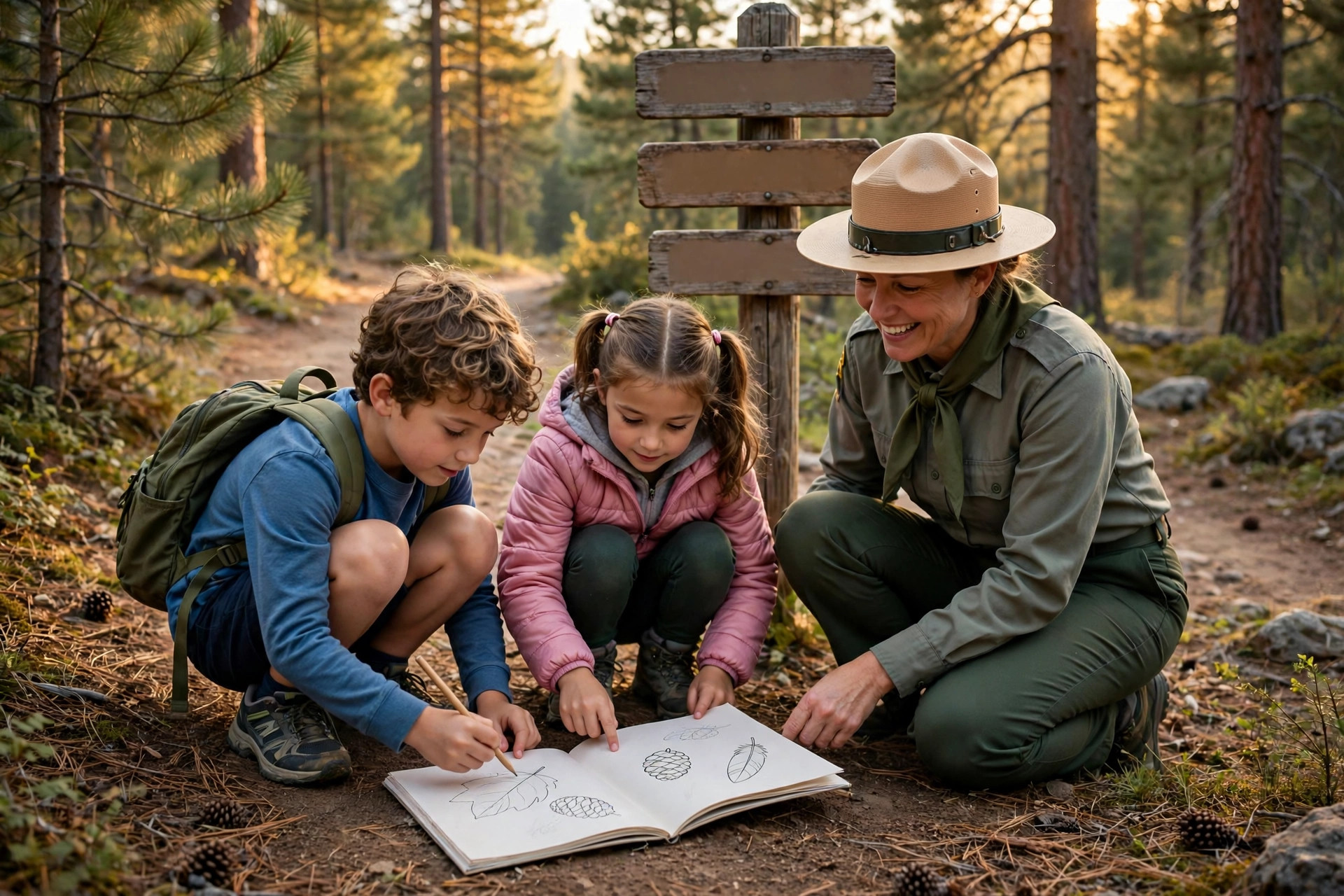
- Use ranger programs: These can turn sightseeing into an educational experience — and they are usually free.
- Start the Junior Ranger program on day one: Pick up the booklet at the first visitor center so kids can work on it throughout the visit instead of rushing at the end.
- Check conditions before leaving: Park roads, trails, facilities, and programs can change with weather, wildfire, or construction.
The National Park Service’s Junior Ranger system is available across many NPS sites, giving families an additional way to turn a park visit into a learning activity — and a badge collection kids genuinely want to grow.
Frequently Asked Questions
What is the best national park for kids?
Yellowstone is the best all-round national park for kids: geysers, wildlife, waterfalls, and Junior Ranger activities in one park, with most highlights reachable by short walks and scenic drives. For younger children (under 5), Acadia and Great Smoky Mountains are easier, with shorter trails and more facilities close at hand.
What age is best for visiting national parks with kids?
Ages 5 to 12 are the sweet spot — kids are old enough to walk a mile or two, enjoy ranger programs, and complete Junior Ranger booklets, but young enough to be amazed by geysers and waterfalls. Toddlers can still enjoy parks with scenic drives and short paved trails, especially Acadia and the Smokies.
Are national parks free for kids?
Children under 16 enter national parks free, and the vehicle entrance fee covers everyone in the car. Ranger programs and Junior Ranger booklets are free. The America the Beautiful annual pass ($80) covers a whole family’s entrance fees at every national park for a year.
How many days do you need in a national park with kids?
Plan at least two full days per park, and three for Yellowstone or the Grand Canyon. One day is enough only for a quick highlights drive; with kids, a slower pace with rest breaks and ranger programs makes the trip far more enjoyable.
What should kids bring to a national park?
Comfortable walking shoes, layers, a sun hat, sunscreen, a refillable water bottle, snacks, and a small backpack they carry themselves. Binoculars and a Junior Ranger booklet turn sightseeing into an activity — and a camera or nature journal keeps older kids engaged.

1 comment
[…] can become busy during peak periods. The National Park Service specifically advised visitors to plan ahead for the 2026 season, including checking road conditions […]