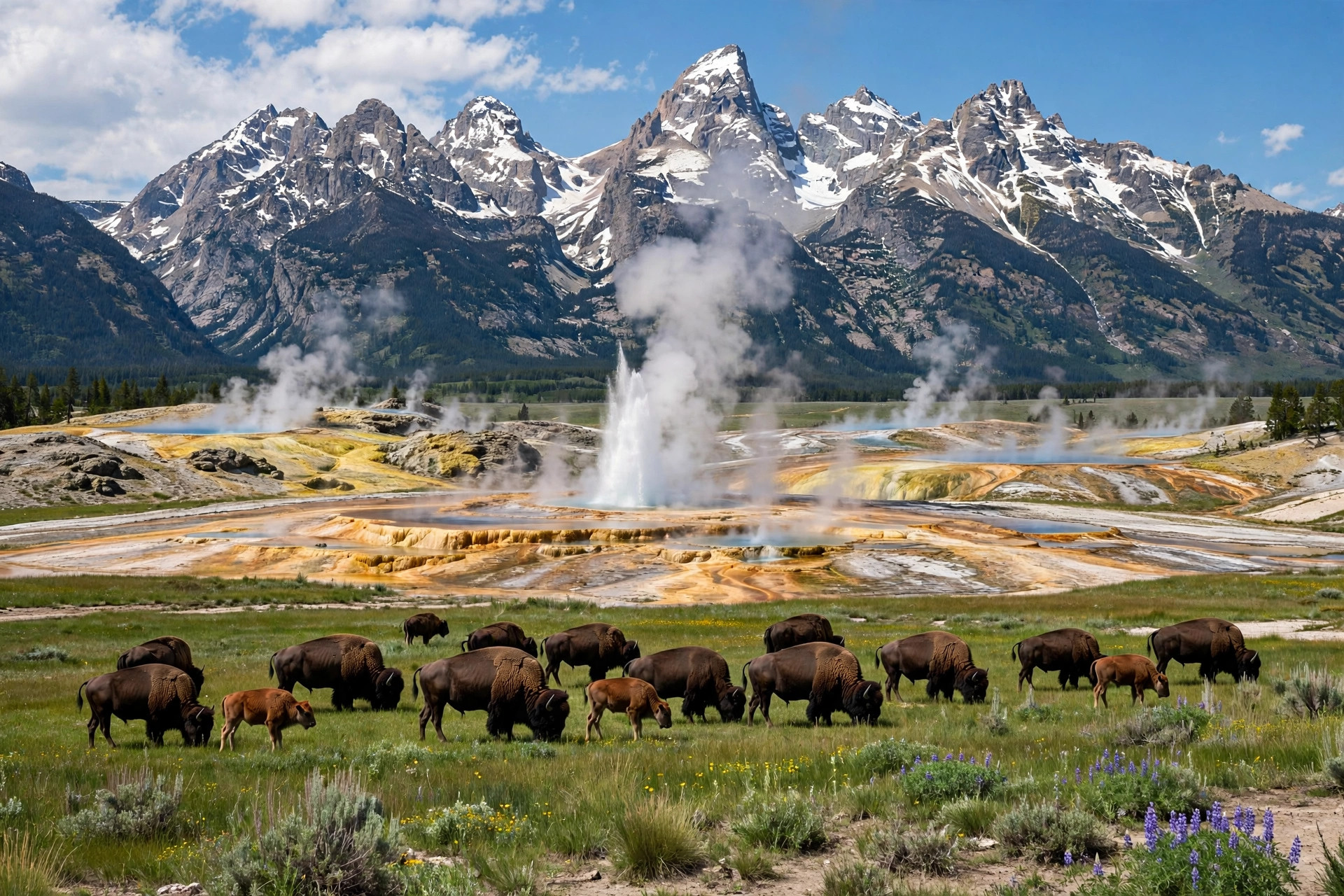
The National Park Service protects some of the most extraordinary destinations on the planet, from hidden bat caves and vibrant coral reefs to roaring volcanoes and towering sandstone canyons.
Each of the 63 main national parks across the U.S. — whether it’s the misty Smoky Mountains of Tennessee or the steamy volcanic slopes of Hawaii — has its own singular beauty, thriving ecosystem, and unforgettable wildlife. But a handful stand out as must-see wonders, offering experiences that deserve top billing on any bucket list.
As you map out your 2026 national park plans, these 12 destinations promise more than just scenery. They deliver heart-pounding activities, rare encounters with nature, and moments that redefine adventure. Whether you’re road-tripping with kids, chasing fall foliage, or ticking off a lifetime list, this guide will help you pick the parks that fit your trip.
Planning tip before you go: the America the Beautiful annual pass ($80) covers entrance fees at all national parks for a full year — it pays for itself after just a few parks. Several parks also use timed-entry vehicle reservations during peak season (typically May–September), so always check each park’s official NPS alerts page before finalizing your dates.
1. America’s Crown Jewel: Great Smoky Mountains National Park
Year after year, the Great Smoky Mountains National Park proves why it’s the most visited national park in the nation, drawing an astonishing 14 million annual visitors. Straddling the Tennessee-North Carolina border, this Appalachian wonderland dazzles with soaring peaks, misty valleys, and cascading waterfalls that explode with luminous foliage each fall.
What makes it special? Those scenic byways winding through the iconic mountains of the east coast, plus endless activities from fishing and horseback riding to biking and immersive treks. Don’t miss Alum Cave Bluffs with its arched rock formations, the misty Rainbow Falls, or the challenging Chimney Tops trail with its 1,400-foot ascent rewarding hikers with panoramic views.
If you’re bringing little ones, the Smokies are one of the easiest parks for a family trip — many waterfalls and viewpoints are a short walk from the parking lot. See our guide to visiting the Smokies with toddlers for trail picks that actually work with small kids.
2. Where It All Began: Yellowstone National Park
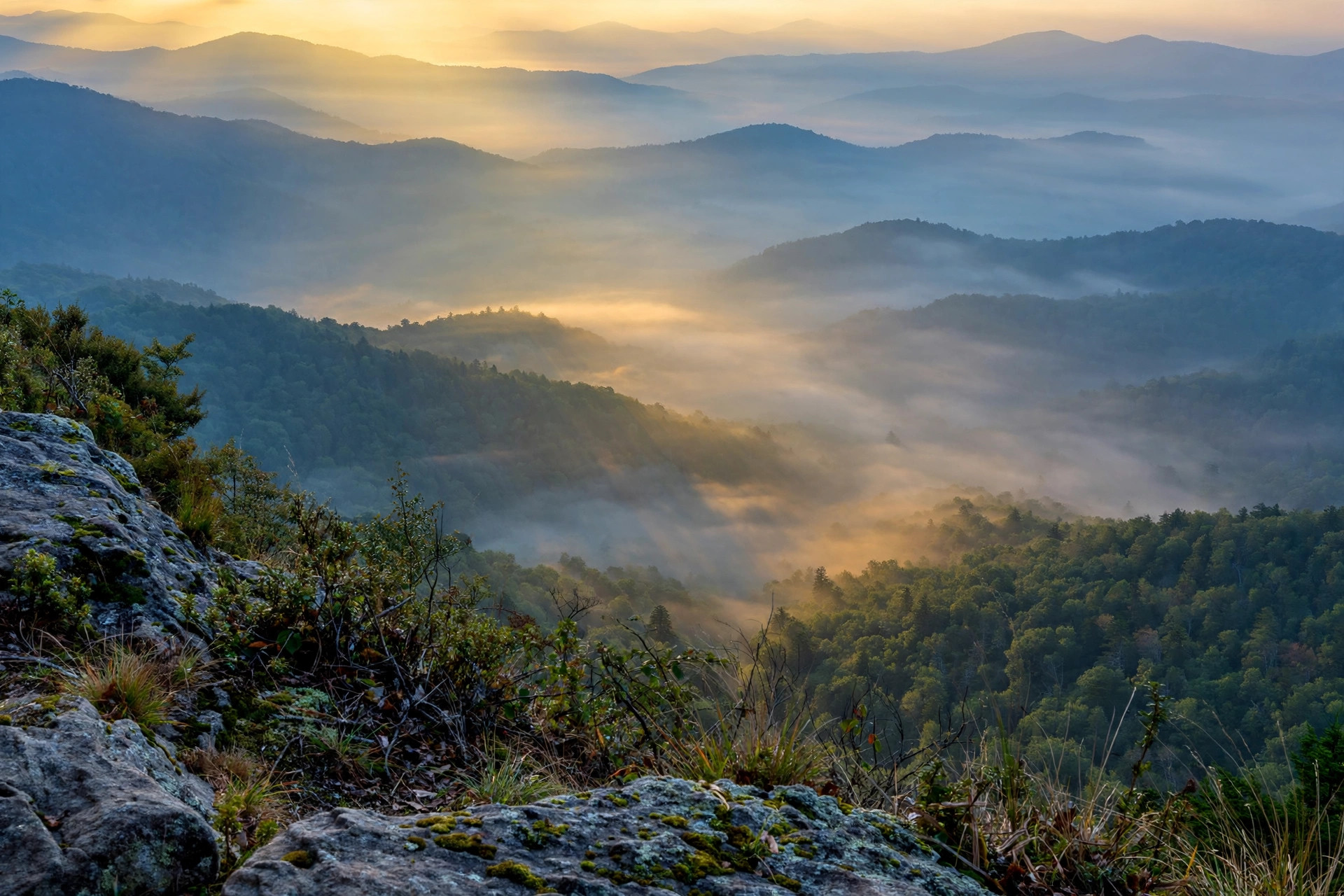
As the original and first national park in the U.S. (and the world, established in 1872), Yellowstone sets the gold standard. This 2.2-million acre park is a living postcard of iconic sights and wildlife, from surreal, mesmerizing geothermal features like explosive geysers and kaleidoscopic hot springs to the mighty rivers feeding into Yellowstone Lake — the largest high-elevation lake in North America with 110 miles of shoreline.
Sitting 8,000 feet above sea level atop the Yellowstone Caldera, its molten topography fuels unforgettable adventures: mountain hikes, paddling, and iconic stops like Mammoth Hot Springs, Old Faithful, and the Grand Canyon of the Yellowstone. Keep your camera ready for bison, grizzly bears, wolves, elk, swans, otters, bald eagles, and foxes roaming freely.
Summer crowds are intense, so book lodging inside or near the park 6–12 months ahead, and plan your days around early mornings — wildlife is most active at dawn, and the boardwalks are quietest then. Traveling with kids? Follow our 5-day Yellowstone family itinerary to see the best of the park without the meltdowns.
3. A Martian Landscape: Badlands National Park
South Dakota’s Badlands National Park delivers the unexpected — an underrated, almost alien terrain of jagged earthen spires, buttes, and pinnacles erupting from the prairie like a mini Grand Canyon. Unlike most parks, you’re free to explore off-trail, weaving through this geological wonderland while spotting bighorn sheep, bison, and chirping prairie dogs. Just an hour from the Black Hills and Mount Rushmore, it’s a road-trip essential.
Sunrise and sunset are the magic hours here: the striped rock formations glow pink and gold, and the light makes the whole landscape look like another planet. The Badlands Loop Road (Highway 240) is an easy scenic drive with a dozen overlooks — perfect for a half-day stop on a longer road trip, or pair it with a night of stargazing, since the park has some of the darkest skies in the Midwest.
4. Giants of the Desert: Saguaro National Park
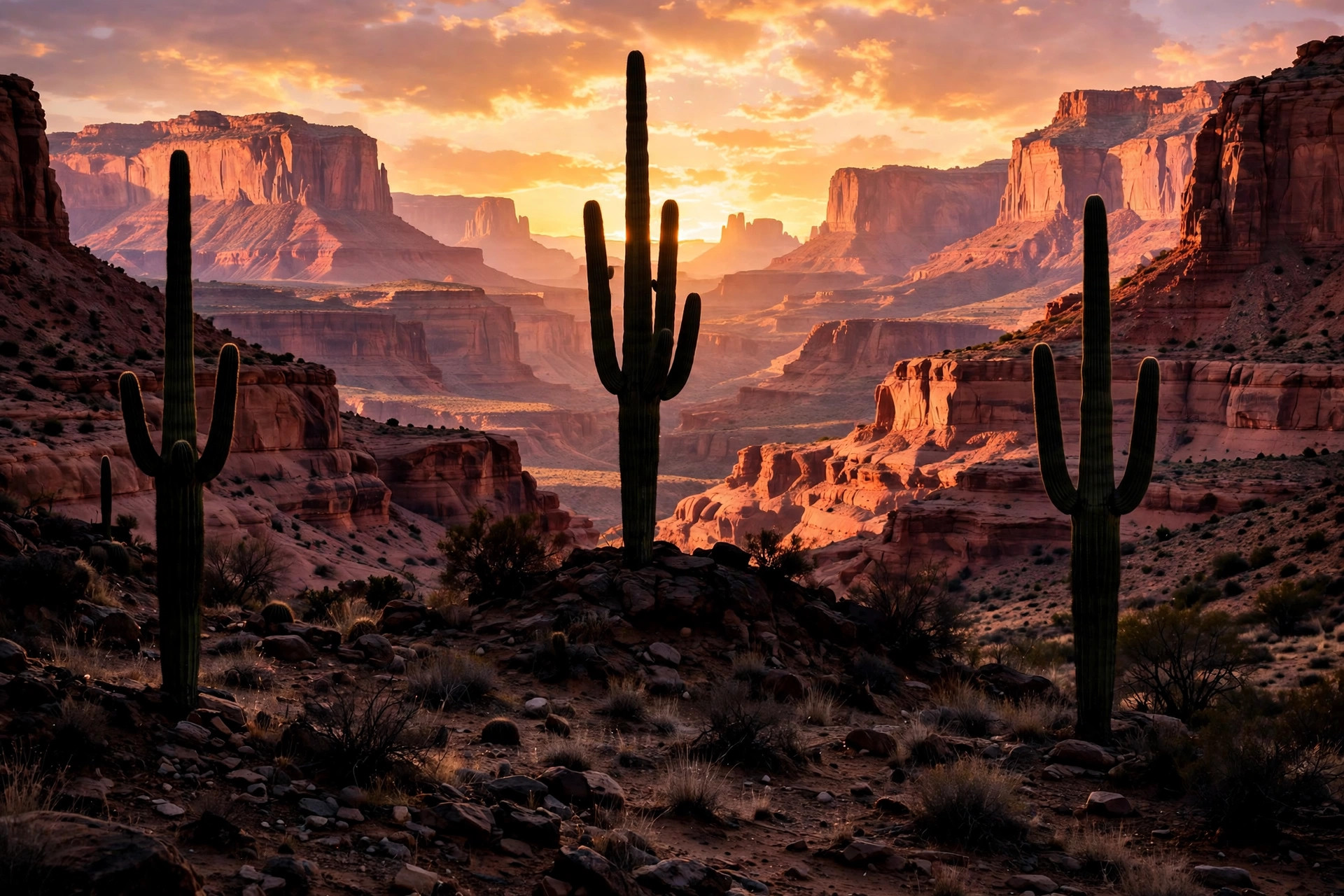
The saguaro cactus — a symbol of the American desert — stands sentinel in Arizona’s Sonoran Desert, some reaching 60 feet tall. At Saguaro National Park, these towering giants dominate arid mountains, dry river beds, and sun-soaked valleys across its two districts near Tucson.
This cacti-filled park teems with life: javelinas snuffling through scrub, roadrunners darting past, and even gila monsters sunbathing. Hike the Cactus Forest Trail (a 10-mile stroll through dense spines) or conquer Wasson Peak for sunset views over a sea of saguaros.
Time your visit for late winter or early spring (February–April), when the desert blooms and temperatures are pleasant for hiking. Summer highs regularly top 100°F, so if you do visit in summer, stick to short dawn walks and carry more water than you think you need.
5. History Meets Hydrotherapy: Hot Springs National Park
Defying expectations, Hot Springs National Park blends urban charm with nature. One of the oldest protected areas in the park system, this urban park in Arkansas centers on Bathhouse Row — a strip of elegant historic bathhouse buildings now housing museums, a brewery (the only one in a U.S. national park, using thermal spring water!), and even a boutique hotel. Hike up Hot Springs Mountain in the Valley of Vapors for steamy vistas.
Hot Springs is one of the most accessible national parks in the system: no entrance fee, no backcountry required, and the historic downtown sits right at the park’s doorstep. It’s an ideal first national park for anyone who wants the experience without the logistics of a remote wilderness trip.
6. Hawaii’s Sky-High Secret: Haleakalā National Park
Maui’s Haleakalā National Park is Hawaii unleashed. The Summit District crowns the Haleakalā volcano, where sunset and sunrise paint the volcanic crater in surreal hues. Trek 30 miles of trails through volcanic wilderness, spotting endangered nenes (Hawaiian goose), or head to the Kīpahulu District for the legendary Road to Hana, where bamboo forests, jungles, and waterfalls spill into the Pacific coast.
The sunrise at the 10,023-foot summit is famous — and reservations are required for sunrise viewing, so book ahead through the NPS. Bring warm layers: temperatures at the summit can be 30–40°F colder than at sea level, and first-time visitors are always surprised by how chilly a Hawaiian mountaintop feels before dawn.
7. Descend Into Darkness: Carlsbad Caverns National Park
New Mexico’s Carlsbad Caverns National Park is a subterranean fantasy. Walk the natural entrance trail (as deep as the Empire State Building is tall!) into rooms adorned with stalactites, stalagmites, and glassy cave pools. The Big Room could fit two football fields, while ranger-guided tours reveal hidden chambers. At dusk from late spring through fall, watch Brazilian free-tailed bats spiral into the sky.
The self-guided Big Room trail is an easy 1.25-mile loop that’s stroller-friendly in parts and doable for most fitness levels. For a bigger adventure, book a ranger-guided tour of the more remote chambers — these sell out in summer, so reserve weeks ahead. The cave stays a constant 56°F year-round, so bring a light jacket even on the hottest desert day.
8. A Volcanic Masterpiece: Crater Lake National Park
Formed nearly 8,000 years ago by a collapsing volcano, Crater Lake National Park in Oregon safeguards the deepest lake in the U.S. — a stunningly clear, cobalt-blue lake filled solely by rain and snow. Drive Rim Drive’s 33 miles for views of Wizard Island, or hike the Cleetwood Cove Trail to swim in its pristine waters.
Crater Lake has one of the shortest visitor seasons of any major park: snow often lingers into July, and the full Rim Drive usually doesn’t open until mid-summer. Plan for August or September for the best odds of clear skies and open roads. The water is famously cold (rarely above 55°F), so that swim is strictly for the brave.
9. Land of Extremes: Death Valley National Park
Spanning 3.3 million acres, Death Valley National Park is the largest national park in the contiguous U.S. — and the hottest place on Earth (a record 134°F at Furnace Creek!). Explore Badwater Basin (282 feet below sea level), hike Telescope Peak’s 14-mile trail (gaining 3,000 feet), or marvel at dunes, canyons, and craters in this Sahara-like wonder.
Visit between November and March, when daytime temperatures are pleasant and the desert wildflowers sometimes put on a spectacular “superbloom” after wet winters. Summer visits are genuinely dangerous — the park closes some areas during extreme heat, and you should never hike after 10 a.m. in summer. Fill your gas tank before entering: services inside the park are few and expensive.
10. The Crown of the Continent: Glacier National Park
With its remaining glaciers, Alpine-like peaks, and crystalline lakes, Montana’s Glacier National Park is a hiker’s paradise. Drive the legendary Going-to-the-Sun Road — a 50-mile engineering marvel crossing the Continental Divide at Logan Pass — paddle the clear waters of Lake McDonald, or tackle 700 miles of trails past moose, mountain goats, and elk.
During peak summer, vehicle reservations are required for Going-to-the-Sun Road, so secure yours the moment the reservation window opens. For hikers, the Highline Trail (starting at Logan Pass) and the trail to Grinnell Glacier are the park’s signature day hikes — start early, as parking at Logan Pass fills by 8 a.m. in July and August. The season is short here: most facilities operate late June through mid-September.
11. Utah’s Sacred Ground: Zion National Park
Zion’s nearly 5 million annual visitors flock to its heavenly cliffs and canyons. Challenge Angels Landing, wade The Narrows, or stargaze under otherworldly skies. The park’s massive sandstone walls — some rising 2,000 feet straight up — make even the scenic drive feel like an adventure.
A few things to know before you go: Angels Landing now requires a permit won through a seasonal lottery — apply months ahead. The park runs on a mandatory shuttle system for the main canyon from spring through fall, so plan around shuttle lines (arrive before 8 a.m. or after 3 p.m. to skip the worst of them). The Narrows is best hiked in late summer and fall when the Virgin River is low; rent canyoneering boots and a walking stick in Springdale. For a quieter experience, explore the Kolob Canyons section in the park’s northwest corner, where crowds thin dramatically.
12. Peak Perfection: Rocky Mountain National Park
Colorado’s Rocky Mountain National Park boasts 265,000 acres of snow-capped peaks, alpine tundra, and elk-filled valleys. Drive the Highway to the Sky (Trail Ridge Road, the highest continuous paved road in the U.S.), hike to Flattop Mountain, or explore 150 lakes beneath 60 peaks above 12,000 feet.
Timed-entry reservations are required during peak season (typically late May through October), with separate slots for the Bear Lake corridor — book as early as the window allows. Fall is magical here: the elk rut in September and October fills the meadows with bugling bulls, and the aspens turn gold. Trail Ridge Road usually closes for the season by mid-October, so plan high-elevation drives for summer and early fall.
How to Choose Which Parks to Visit First
Twelve parks is a lot — here’s how to narrow it down based on your travel style:
- First national park ever? Start with Great Smoky Mountains or Hot Springs — no entrance fee for the Smokies, easy access, and plenty of short trails.
- Traveling with kids? Yellowstone, the Smokies, and Saguaro have the most kid-friendly infrastructure: junior ranger programs, short boardwalk trails, and nearby towns with family lodging.
- Best for a long weekend? Hot Springs, Carlsbad Caverns, or Saguaro — each works beautifully as a 2–3 day trip.
- Best for a big road trip? Chain the Utah and Southwest parks (Zion + Bryce Canyon + nearby), or do the northern loop: Yellowstone + Grand Teton + Glacier.
- Chasing fall color? The Smokies (October) and Rocky Mountain (late September) are unbeatable.
- Winter sun? Death Valley, Saguaro, and Haleakalā are at their best in winter.
And if budget matters, timing your trip for the shoulder season saves real money on lodging and flights — check our breakdown of the cheapest months to visit popular US destinations when you’re picking dates.
National Park Trip Planning Checklist
- Get the annual pass: the $80 America the Beautiful pass covers all parks for a year.
- Check reservation requirements: timed-entry and permit systems change year to year — verify on each park’s NPS page 2–3 months out.
- Book lodging early: in-park lodges and nearby gateway towns sell out 6–12 months ahead for summer.
- Download offline maps: cell service is unreliable or nonexistent in most parks.
- Pack layers: mountain parks can swing 40°F in a single day, even in summer.
- Follow Leave No Trace: pack out everything, stay on trails, and never feed wildlife.
FAQs: Visiting US National Parks
How many days do you need per national park?
Plan 2–3 full days for most parks on this list. Yellowstone and Glacier deserve 3–4 days because of their size; Hot Springs, Carlsbad Caverns, and Saguaro can be done well in 1–2 days.
Do kids need a park pass?
No — children 15 and under enter national parks free. One America the Beautiful pass covers the vehicle and all its passengers, so a family of any size pays a single entrance fee.
What is the cheapest way to visit multiple national parks?
Buy the $80 annual America the Beautiful pass and cluster nearby parks into one road trip (for example, Utah’s Mighty 5, or Yellowstone + Grand Teton). Traveling in the shoulder season cuts lodging costs significantly.
Can you bring dogs to national parks?
Mostly no — pets are generally restricted to developed areas, parking lots, and a few designated trails. They are not allowed on most hiking trails or in the backcountry. If you’re traveling with a dog, check the park’s pet policy page before you go and plan for boarding or pet-sitters on hiking days.
Which national park is best for first-time visitors?
Great Smoky Mountains: it’s free to enter, easy to reach, full of short scenic trails and waterfalls, and the gateway towns (Gatlinburg, Cherokee) have endless lodging and dining options.
When is the best time of year to visit national parks?
It depends on the park: aim for May–June and September–October for mountain parks (fewer crowds, good weather), and November–March for desert parks like Death Valley and Saguaro. Always check seasonal road closures — many high-elevation roads don’t open until summer.
The Bottom Line
From the misty ridges of the Smokies to the Martian plains of the Badlands, America’s national parks hold a lifetime of adventures. Pick the two or three that match your season and travel style, plan around reservations and lodging, and give yourself enough days to actually slow down and look around. The parks reward the unhurried — the sunrise you almost slept through, the elk herd at dusk, the quiet trail everyone else skipped. That’s the trip you’ll remember.

2 comments
[…] Teton National Park in Wyoming is known for dramatic mountain scenery, lakes, and outdoor recreation. Its campgrounds […]
[…] National Park in Maine is a useful option for families who want a mixture of coastline, forests, mountains, […]