This post contains affiliate links. If you buy through them, TravelAle may earn a small commission at no extra cost to you. Read our Affiliate Disclosure.
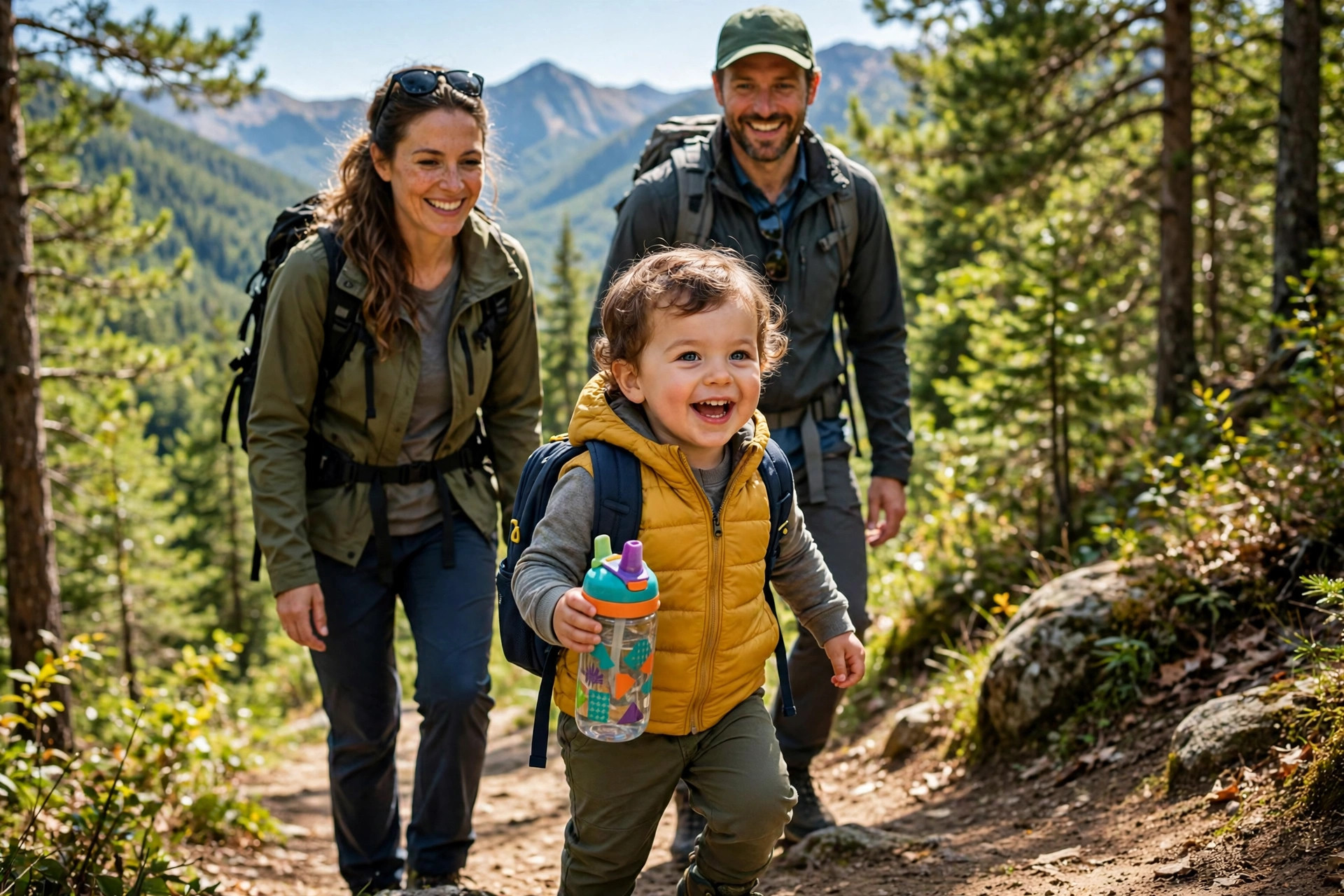
A thirsty toddler wet from a spilled bottle is a toddler who wants to go home — right now, halfway up the trail. The best spill-proof cups for hiking toddlers are light, leak-proof when dropped, easy to drink from without stopping, and simple to clean at camp. This guide shows how to pick one by age and trail style, compares the three cups we recommend, and ends with a packing checklist.
Our Top Picks on Amazon
CamelBak Eddy+ Kids Insulated Stainless Steel Water Bottle, 12 oz — Best for ages 3+ on warm trails: insulated steel keeps water cold for hours, and the bite valve only flows when your child sips. Check Price on Amazon
Contigo Kids AUTOSPOUT Straw Water Bottle, 14 oz — Best one-handed drinking for ages 3+: a push-button pop-up straw with a spill-proof valve, and a cover that keeps the spout clean on dusty trails. Check Price on Amazon
Tommee Tippee Sportee Water Bottle, 12m+, 10 oz, Pack of 3 — Best for the youngest hikers (12 months and up): a soft, bite-resistant spout and a two-piece valve that is genuinely spill-proof, and the 3-pack means a spare is always in the bag. Check Price on Amazon
Prices change often — check Amazon for the current price. Affiliate Disclosure
Why a Regular Sippy Cup Fails on the Trail
The cup that works at the kitchen table can fail in five minutes on a trail. At home, a spill means a quick wipe; on a hike, it means a soaked shirt, a miserable toddler, a wet backpack, and half your water gone. Trail life is hard on a cup: dropped on rocks, squeezed into side pockets, bounced in a carrier, left in the sun. Three realities decide whether a cup survives: it will be dropped repeatedly, so thin plastic cracks; it will ride upside down in a bag, so “spill-resistant” is not enough — you need a valve that holds when inverted; and your child has to drink one-handed while walking, without you stopping to unscrew a lid. If drinking takes two hands, your toddler will simply stop drinking. At camp you have a water bottle and a bit of soap, so the best trail cups come apart into washable pieces.
How to Choose a Spill-Proof Cup for a Hiking Toddler
Start with your child’s age — the right lid changes completely between one and four — then match the cup to your trail.
Match the lid to your child’s age
| Age | Best lid type | Why it works |
|---|---|---|
| 12–24 months | Soft spout, two-piece valve | Gentle on teeth, seals shut when dropped |
| 2–3 years | Straw cup, shut-off valve | Easy sipping; valve stops flow between sips |
| 3–4 years | Bite valve or push-button straw | One-handed, no tipping, child opens it alone |
| 4+ years | Bite valve or flip straw, insulated steel | Bigger capacity, keeps water cold, trail-tough |
A 360-degree rim cup — no spout at all — is great for dental development at home, but a poor trail choice under three: it needs a firm sip, and a tired toddler on uneven ground will dribble more than they drink. Save the 360 cup for the picnic table.
Five things to check before you buy
- True leak-proofing, not just “spill-resistant.” Look for “spill-proof when closed” — “splash-proof” means drips when it tips over.
- Weight when full. A filled 12-ounce steel bottle weighs far more than a 10-ounce plastic cup. If your toddler carries it, lighter wins; in your pack, insulation matters more.
- Fit in a side pocket. Measure your side pocket first — a cup that is too wide ends up loose in the main compartment, leaking onto spare clothes.
- Cleaning. Count the parts — three or fewer is ideal, every part reachable with a brush, and top-rack dishwasher safe is a plus.
- Material safety. Look for BPA-free plastic or food-grade steel, and skip anything with paint inside or a strong plastic smell.
The 3 Best Spill-Proof Cups for Hiking Toddlers
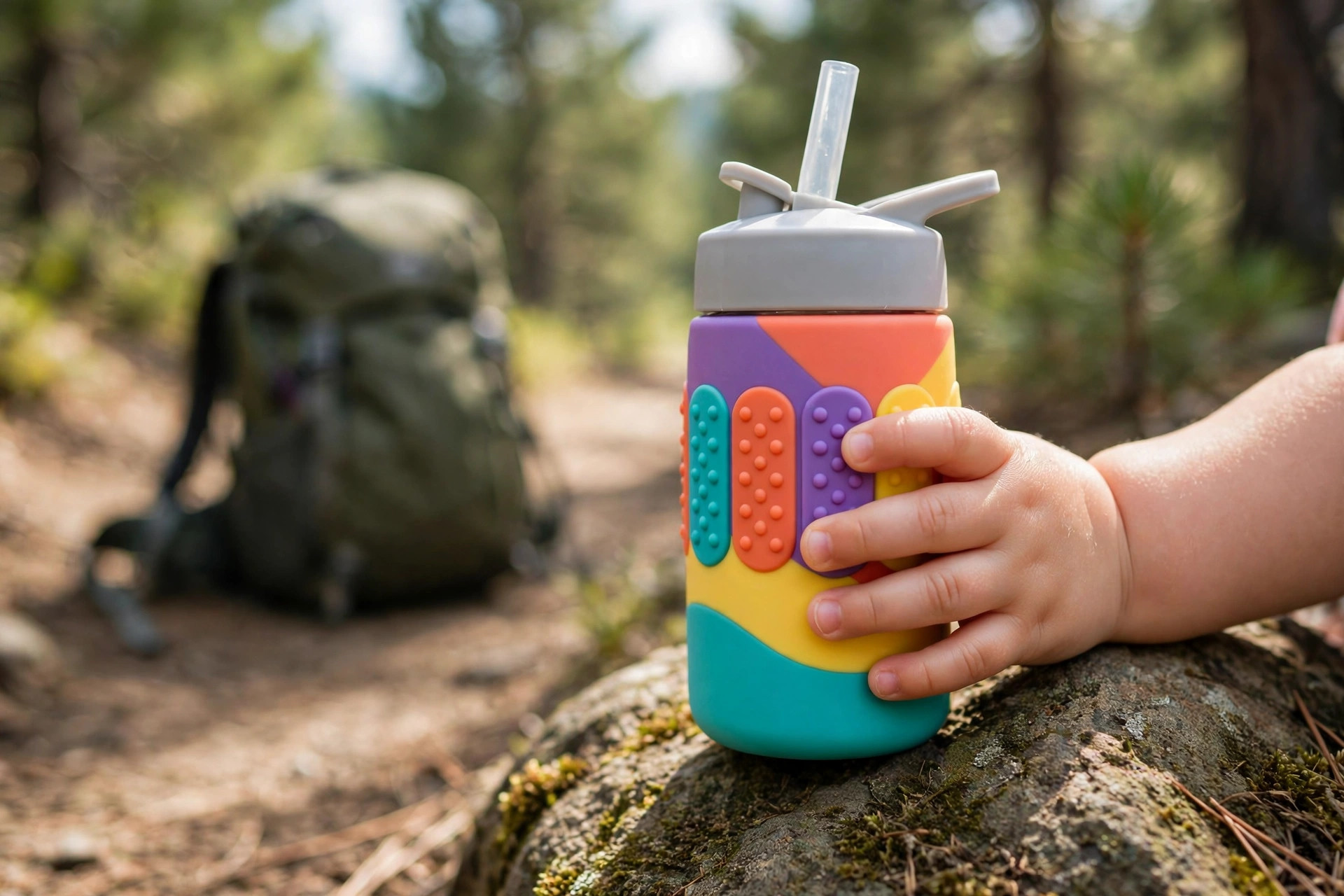
These three cover every age on the trail, with an honest note on who each suits.
1. CamelBak Eddy+ Kids Insulated Stainless Steel, 12 oz — Best for Warm Trails, Ages 3+
The Eddy+ Kids is the cup for sunny days. The vacuum-insulated steel body keeps water cold for hours, and a toddler drinks far more from a cold bottle than a lukewarm one. The bite valve only flows when your child sips, so the cup is spill-proof while open and leak-proof when closed. A flip cap covers the spout, and the handle clips to a pack.
Who it is for: warm-weather hikers, kids aged 3 and up who can manage a bite valve, and parents who want one bottle to last from preschool through early elementary school. Who it is NOT for: toddlers under 3 — the manufacturer recommends ages 3 and up, and younger children often cannot bite hard enough for a good flow. It is the heaviest pick — if your toddler carries their own bottle, the plastic options below are lighter.
2. Contigo Kids AUTOSPOUT Straw Water Bottle, 14 oz — Best One-Handed Drinking, Ages 3+
The Contigo AUTOSPOUT is the easiest cup here to use while walking. One push pops the straw up; another folds it back under its cover. The pop-up straw has a spill-proof valve, so even with the spout open, the bottle does not leak when it tips over — and the cover keeps dust off the mouthpiece on dry trails. At 14 ounces it holds the most water of the three picks, and the lightweight BPA-free plastic keeps it light.
Who it is for: kids aged 3 and up on longer hikes, parents who want the biggest capacity without steel’s weight, and families who hate cleaning — the lid comes fully apart and every part is top-rack dishwasher safe. Who it is NOT for: toddlers under 3, and hard straw-chewers — a determined chewer wears through a soft straw faster than a bite valve. It is not insulated, so on a hot day the water warms up faster than in the CamelBak.
3. Tommee Tippee Sportee Water Bottle, 12m+, 10 oz (Pack of 3) — Best for the Youngest Hikers
For a one- or two-year-old, the Sportee is the most forgiving cup here. The soft, bite-resistant spout is gentle on little mouths and tough enough for tiny teeth, and the two-piece valve is completely spill and leak-proof — the cup can be shaken, tipped, and dropped without a drop escaping. At 10 ounces it is the lightest pick here, sized for small hands, and it comes as a pack of three in bright colors — solving two classic toddler problems: losing the cup, and refusing the “wrong” color.
Who it is for: children from 12 months to about 3 years, first-time hikers, and parents who want a cheap, genuinely spill-proof cup for the diaper bag. Who it is NOT for: older kids — a 10-ounce cup empties fast with a thirsty four-year-old, and the spout is meant for little mouths. It is also not insulated, so it is best for shorter hikes or cooler days.
How Much Water Does a Hiking Toddler Actually Need?
No single number fits every child — heat, altitude, effort, and size all change the answer. The rule most hiking parents use is simple: offer small sips often, rather than waiting for your child to ask. Toddlers are bad at noticing thirst until they are already tired and cranky. Plan on your toddler drinking roughly half as much as you do, and carry one extra bottle. Offer water every 20 to 30 minutes, at every rest stop and viewpoint. Watch for dehydration signs: fewer wet diapers than usual, dry lips, unusual tiredness, or a child who suddenly goes quiet. In real heat, take shade breaks seriously and do not be afraid to turn back early. For guidance specific to your child, ask your pediatrician before a big trip — the AAP guide to protecting children from extreme heat is a solid reference.
Trail Packing Checklist: The Cup Kit
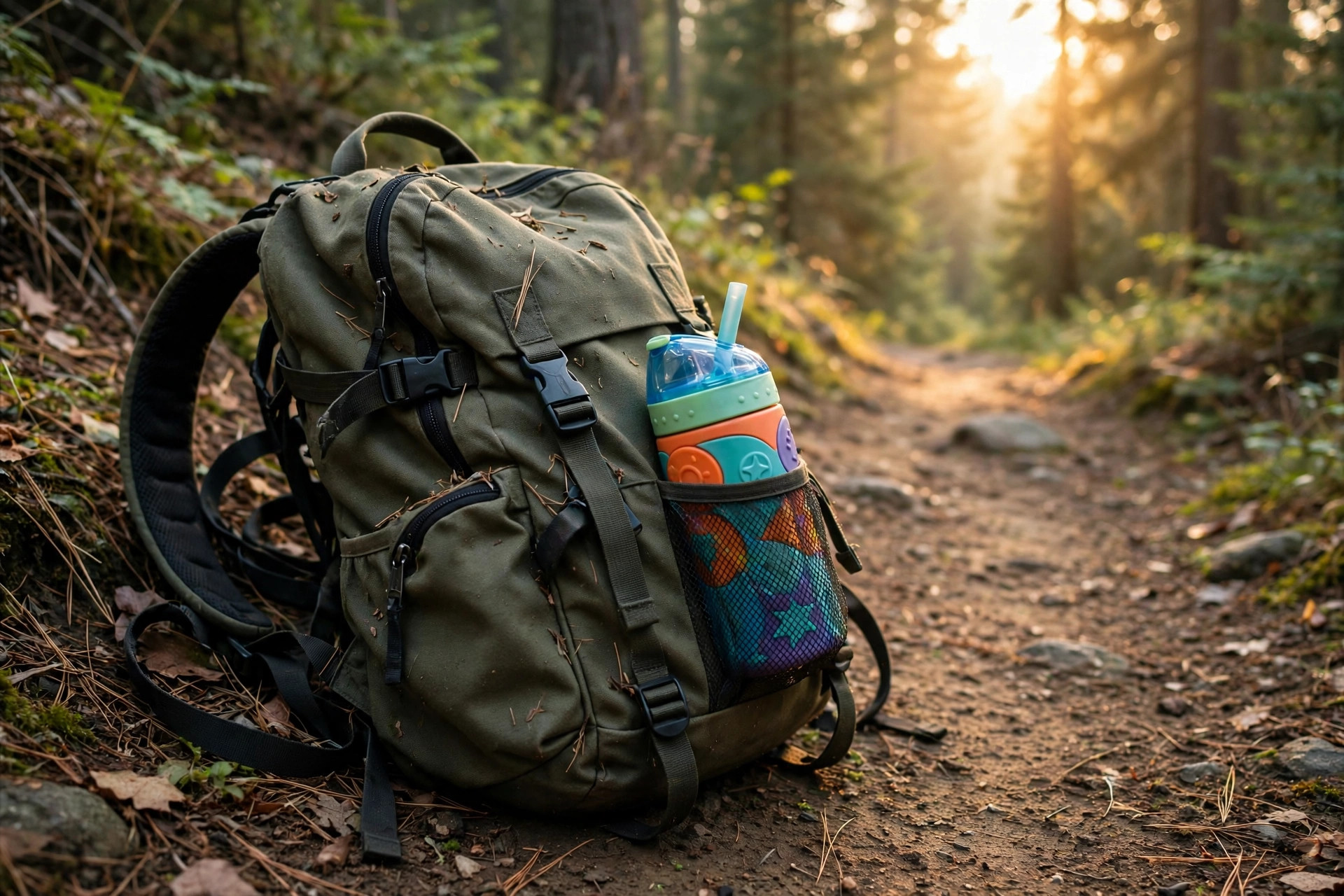
A cup alone is not a hydration plan. Pack the extras: the cup, filled and tested at home — turn it upside down, shake it, and let your child drink from it, because a sticking valve is a problem to find in your kitchen, not on mile two. A spare cup or valve, since one dropped cup can roll down a slope and vanish. A small bottle brush, because a quick rinse is rarely enough for a straw or valve at camp. A carabiner, so the cup can hang outside the pack at rest stops. Extra water for refills — a 10- or 12-ounce cup is a serving, not a supply. And a zip-top bag, so a used cup keeps the pack dry at the end of the day.
Cleaning Spill-Proof Cups at Camp
Mold loves warm, damp straws — an uncleaned cup smells like a pond by the second morning. Every evening at camp, take the cup fully apart and rinse each piece, using a drop of dish soap on the straw and valve if you have it. Shake the pieces dry and leave them open to air overnight. Never store a damp cup closed in a pack. Avoid juice and milk in a straw cup on a hike: water is the only drink that rinses clean with plain water at camp. At home, run every part through the dishwasher and check the valve and straw for wear — a valve that no longer seals is a replacement part, not a cleaning problem.
5 Mistakes Parents Make with Toddler Cups on the Trail
1. Buying the adult version in a smaller size. A scaled-down adult bottle often has a stiff valve or heavy steel body a toddler cannot manage — buy the cup designed for the age. 2. Skipping the at-home test. A cup your child cannot open alone becomes your job every ten minutes. 3. Choosing capacity over weight. A bottle your toddler cannot lift is one you will carry — and one you carry is one your child forgets to drink from. 4. Forgetting the dust. On dry trails, an uncovered spout collects grit; a cup with a cover fixes that. 5. One cup for the whole trip. Cups get lost, dropped, and left behind — a spare cup is the cheapest insurance on the packing list.
Frequently Asked Questions
What is the best spill-proof cup for a hiking toddler?
It depends on age. Ages 12 months to 3 years do best with a soft-spout valved cup like the Tommee Tippee Sportee. Ages 3 and up do best with a bite-valve bottle like the CamelBak Eddy+ Kids on hot days, or a push-button straw bottle like the Contigo AUTOSPOUT on longer hikes. The key is a valve that seals when the cup tips over.
Are spill-proof cups really leak-proof in a backpack?
A good one is, if the valve or lid is fully closed. Cups with a two-piece valve or a bite valve with a flip cap hold up when tipped. Straw cups without a shut-off valve can leak when stored sideways, so look for “leak-proof when closed” — and packing the cup upright is still the safest bet.
Can my toddler use a regular water bottle on a hike?
Most toddlers under four struggle with a regular screw-top or open bottle: two hands, spills when tipped, hard-to-control flow. A valved cup lets them drink one-handed while walking. Kids around four and up can often manage a bite-valve bottle — a kid-sized bottle with a smarter lid.
How do I clean a toddler sippy cup while camping?
Take it fully apart every evening, rinse each piece, and use a drop of soap on the straw and valve if you have it. Shake the pieces dry and leave them open to air overnight — never seal a damp cup in a pack. Bring a small straw brush, stick to water on the trail, and run everything through the dishwasher at home.
What size cup should a toddler carry on a hike?
Ten to 14 ounces is the sweet spot: light to carry, big enough between refills. A one- or two-year-old is happy with 10 ounces; a three- or four-year-old on a longer hike will want 12 to 14. Carry a larger family bottle for refills instead of a heavy bottle your toddler cannot lift.
Should I bring a spare cup on a family hike?
Yes. Cups get dropped, rolled down slopes, and left at viewpoints — and a toddler without a cup stops drinking. A spare cup, or at least a spare valve and straw, weighs almost nothing and is the cheapest insurance on your list.
You may also like our guides to the best water bottles for kids who hike, camping with a toddler, trail distances by age, and trail-tested hiking snacks for kids. For trail safety, the National Park Service’s hiking-with-kids guidance and REI’s expert advice on hiking with kids are both worth a read.
