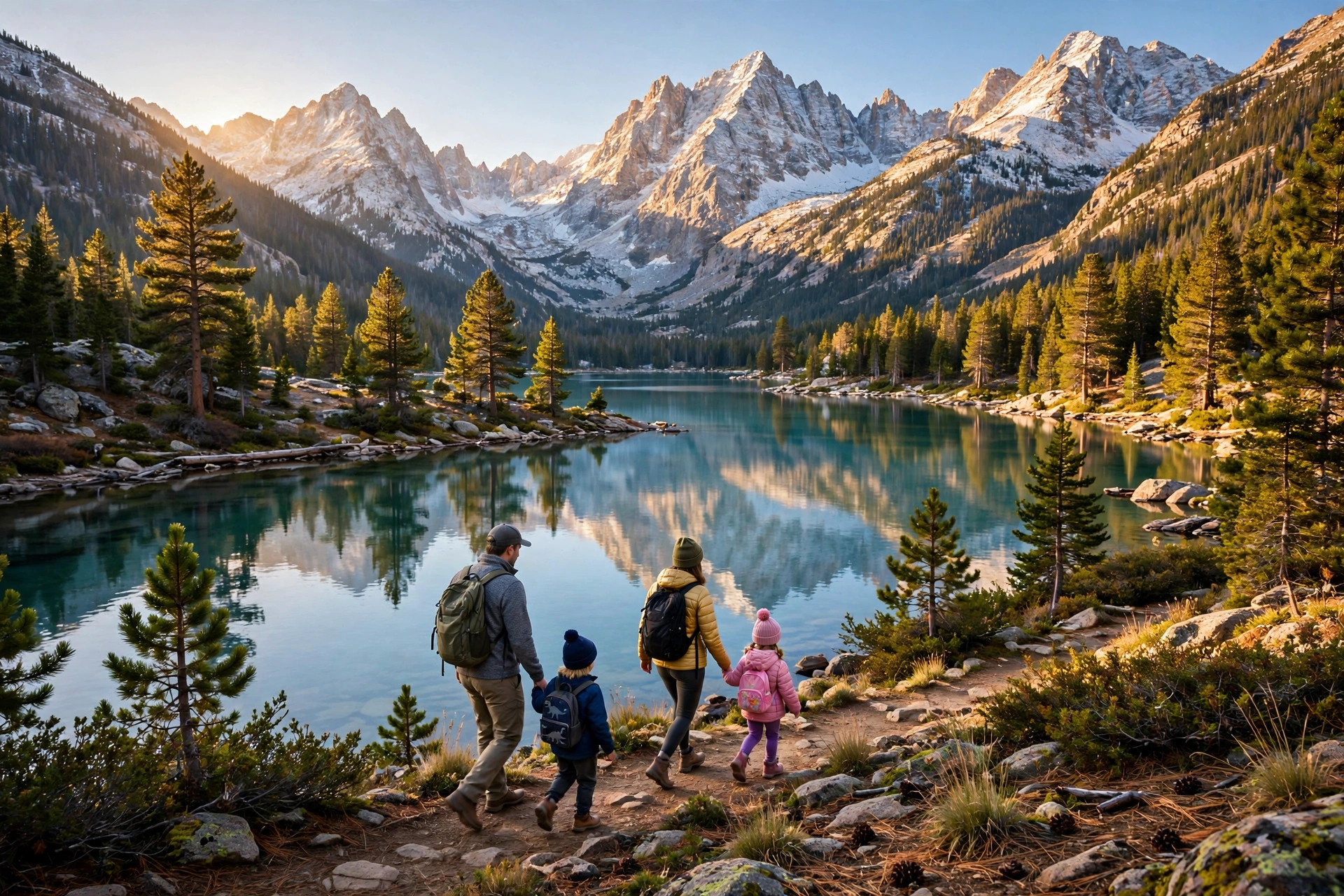
Rocky Mountain National Park with kids is one of the easiest big-mountain trips a family can take in the United States. You can drive to 12,183 feet on Trail Ridge Road, walk a flat half-mile loop around a turquoise alpine lake, and watch elk graze in a meadow — all in a single day. But two quirks catch unprepared families off guard: the altitude, and the timed entry permit system. Get those two right, and Rocky Mountain becomes the rare national park where a 4-year-old and a teenager both have a great day.
We have now visited six national parks with our kids, and Rocky Mountain stands out for its payoff-to-effort ratio. This guide covers the timed entry rules step by step, the best easy hikes by age, a realistic 3-day itinerary, and the altitude plan that keeps everyone feeling good.
Why Rocky Mountain National Park Works So Well with Kids
- Short, flat lake trails. Bear Lake is a 0.6-mile loop and Sprague Lake is a 0.8-mile loop. Both are doable with a preschooler, and Sprague Lake is stroller-accessible.
- Wildlife you can actually see. Elk gather in Moraine Park most evenings, moose frequent the west side, and marmots whistle from the tundra rocks.
- A real Junior Ranger program. Free booklets in three age levels, ranger-led programs in summer, and a badge ceremony kids remember.
- Four visitor centers. Places to rest and refill water — Beaver Meadows, Fall River, Moraine Park Discovery Center, and the Alpine Visitor Center.
- A gateway town that helps. Estes Park, outside the east entrance, has lodging, restaurants, and a lake.
The one honest warning: the altitude. The park ranges from about 7,800 feet at the entrances to 14,259 feet at Longs Peak, and most family highlights sit between 8,200 and 9,500 feet — so pace your first day.
Timed Entry Permits: Book This First
The timed entry system is the most common reason families get turned away at the gate. Rocky Mountain runs two kinds of reservation in the busy season, and they are easy to confuse.
1. Timed Entry (general access). Required for daytime entry in the busy season, roughly late May through mid-October. It covers everything except the Bear Lake Road corridor.
2. Timed Entry + Bear Lake Road. A separate reservation for Bear Lake Road. You need it for Bear Lake, Nymph, Dream and Emerald Lakes, Sprague Lake, and Alberta Falls — nearly every hike families come for. It sells out fastest.
How to book, step by step
- Go to recreation.gov and search for Rocky Mountain timed entry.
- Book Timed Entry + Bear Lake Road if you plan to visit the Bear Lake area at all. One reservation covers your vehicle.
- Reservations for each month open on the first of the previous month (June opens May 1). The popular morning slots go first.
- Missed the release? About 40% of permits are released at 7 p.m. Mountain Time the evening before your visit.
- Arrive inside your two-hour entry window. Once you are in, you can stay as long as you like that day.
- Before 9 a.m. and after 2 p.m., general access needs no reservation — but the Bear Lake corridor requires one from 5 a.m. to 6 p.m.
Dates and hours shift slightly year to year — confirm the current season on the official NPS timed entry page before booking travel.
When to Visit Rocky Mountain with Kids
Mid-June through mid-August is the easiest window: Trail Ridge Road is open, nearly all trails are snow-free, and the weather is the most stable of the year. The trade-off is crowds and the timed entry system.
| Season | What families get | What to watch for |
|---|---|---|
| Mid-June to mid-August | Trail Ridge Road open, all trails accessible, ranger programs running | Timed entry required, biggest crowds, afternoon storms — be below treeline by 2 p.m. |
| Late May to mid-June | Smaller crowds, wildflowers starting, waterfalls at their fullest | Trail Ridge Road may still be closed, snow on higher trails |
| September | Elk rut (bugling elk in Moraine Park), golden aspen, fewer crowds | Timed entry still in effect early in the month, cold nights |
| October to April | Quiet park, snow fun at Hidden Valley, no timed entry | Trail Ridge Road closed, most trails snow-covered |
Our pick: the last two weeks of June — the full park, long daylight, and summer programs, with smaller crowds than July.
Best Easy Hikes in Rocky Mountain by Age
The trails families actually finish with happy kids. Distances are round-trip unless noted.
| Trail | Distance | Elevation gain | Best for |
|---|---|---|---|
| Sprague Lake Loop | 0.8 miles | Almost flat | Ages 2–5, strollers, first-day walk |
| Bear Lake Loop | 0.6 miles | Almost flat | All ages — the park’s easiest big payoff |
| Alberta Falls | 1.6 miles | About 160 feet | Ages 5+, an easy waterfall goal |
| Nymph Lake (from Bear Lake) | 1 mile | About 225 feet | Ages 6+, lily pads and views |
| Dream Lake (from Bear Lake) | 2.2 miles | About 425 feet | Ages 8+, the classic family hike |
| Emerald Lake (from Bear Lake) | 3.2 miles | About 605 feet | Ages 9+ |
Hike the Bear Lake corridor in the morning: parking fills by mid-morning even with a permit, and afternoon thunderstorms roll in fast. Start at Bear Lake, and if the kids still have energy, keep walking toward Nymph and Dream Lakes — each lake is a natural turn-around point.
Our Yosemite with Kids guide uses the same age-banded approach, and our Grand Teton with Kids guide has more easy lake trails.
Trail Ridge Road with Kids: America’s Highest Drive
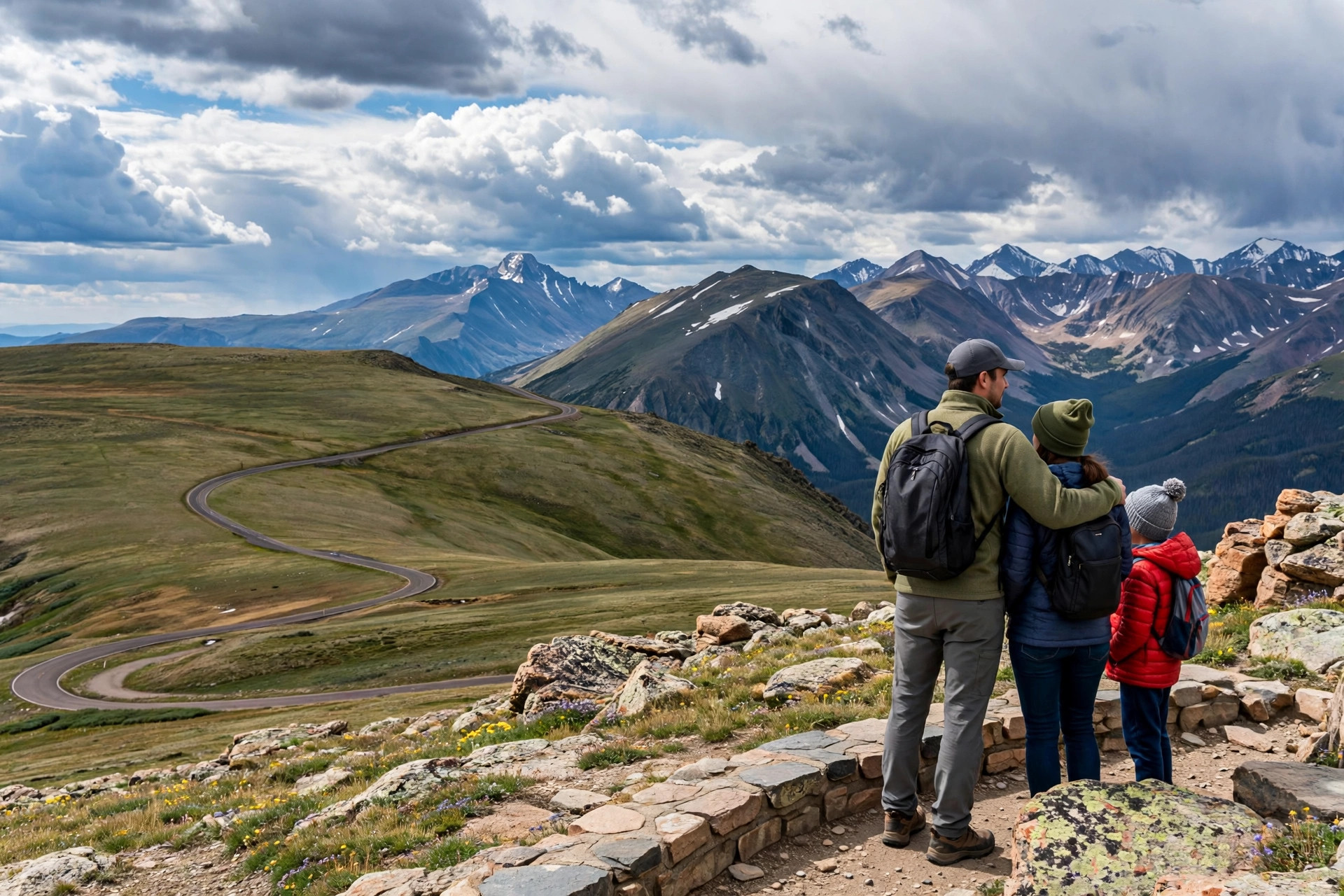
Trail Ridge Road is the highest continuous paved road in the United States, climbing to 12,183 feet from Estes Park to Grand Lake. It is the single best activity for families with very young kids — the scenery comes to you.
- Leave before 9 a.m. You beat the crowds and the afternoon thunderstorms, and the light is better for photos.
- Stop at the Alpine Visitor Center. At 11,796 feet, it is the highest visitor center in the National Park System, with a short tundra trail, a gift shop, and restrooms.
- Walk the Tundra Communities Trail. A short, paved path through fragile alpine tundra — stay on the path, since tundra plants take decades to recover from a footstep.
- Expect wind and cold. Even in July, the top of the road can be 20–30 degrees cooler than Estes Park. Pack layers.
Wildlife Watching with Kids: Elk, Moose, and Safe Distances
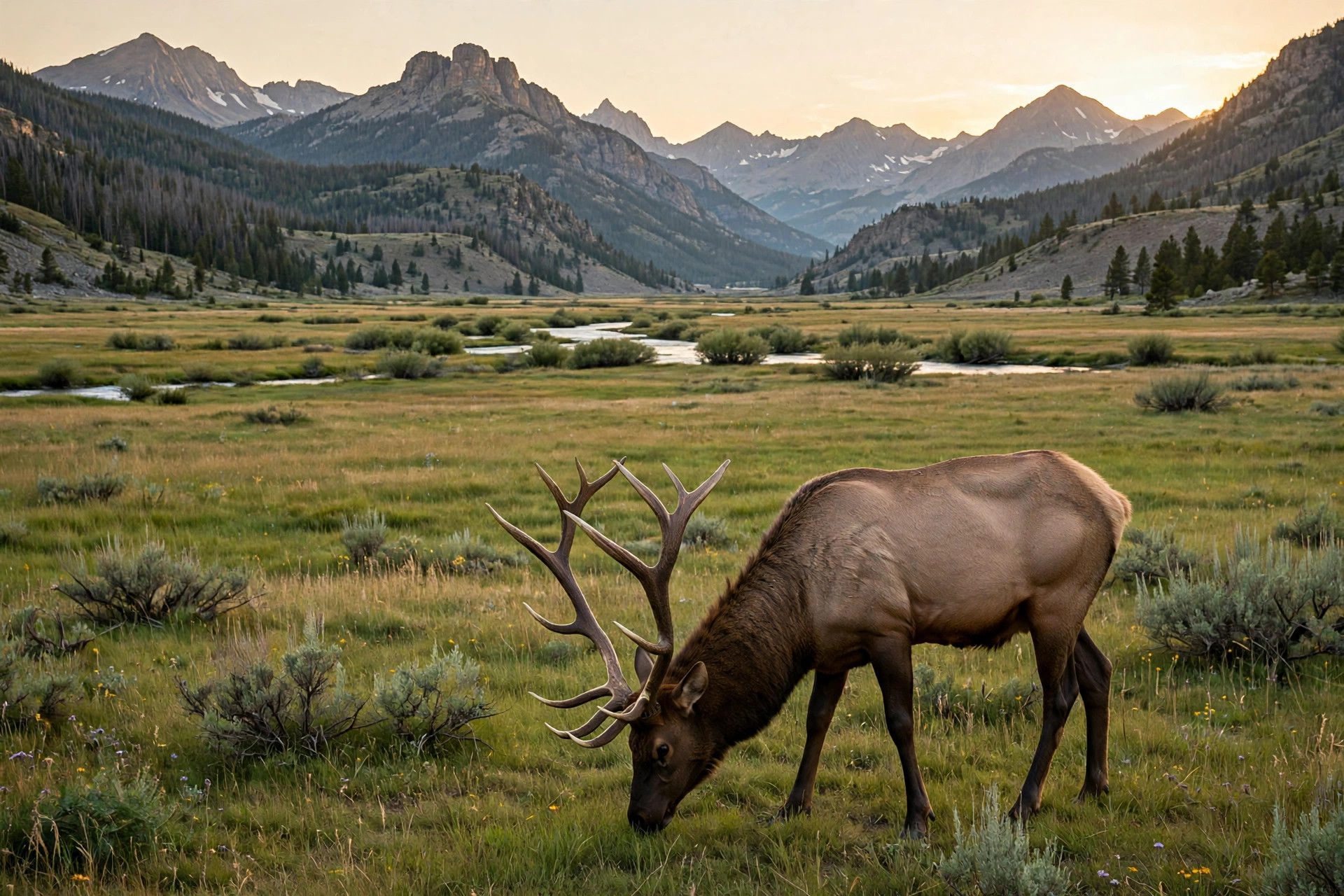
The animals come to the meadows, so sightings are almost guaranteed. Stay at least 25 yards from elk, moose, and all wildlife, and 100 yards from bears. Teach kids the “thumb rule”: hold your thumb up at arm’s length — if the animal is not fully covered, you are too close.
- Elk in Moraine Park. Drive through in the early morning or late afternoon; in September, the elk rut fills the meadow with bugling bulls. Watch from the pullouts with binoculars.
- Moose on the west side. The Kawuneeche Valley near Grand Lake is the most reliable moose habitat. Moose are fast and unpredictable — watch from the car or a long distance.
- Bighorn sheep at Sheep Lakes. Near the Fall River entrance, sheep come for the mineral licks in late spring.
- Marmots and pikas on the tundra. Marmots whistle from the rocks along Trail Ridge Road, and pikas live in the rock piles — kid-sized binoculars turn them into a treasure hunt.
Read our Bear Safety for Kids guide before any trip into bear country.
The Junior Ranger Program: The Family Anchor
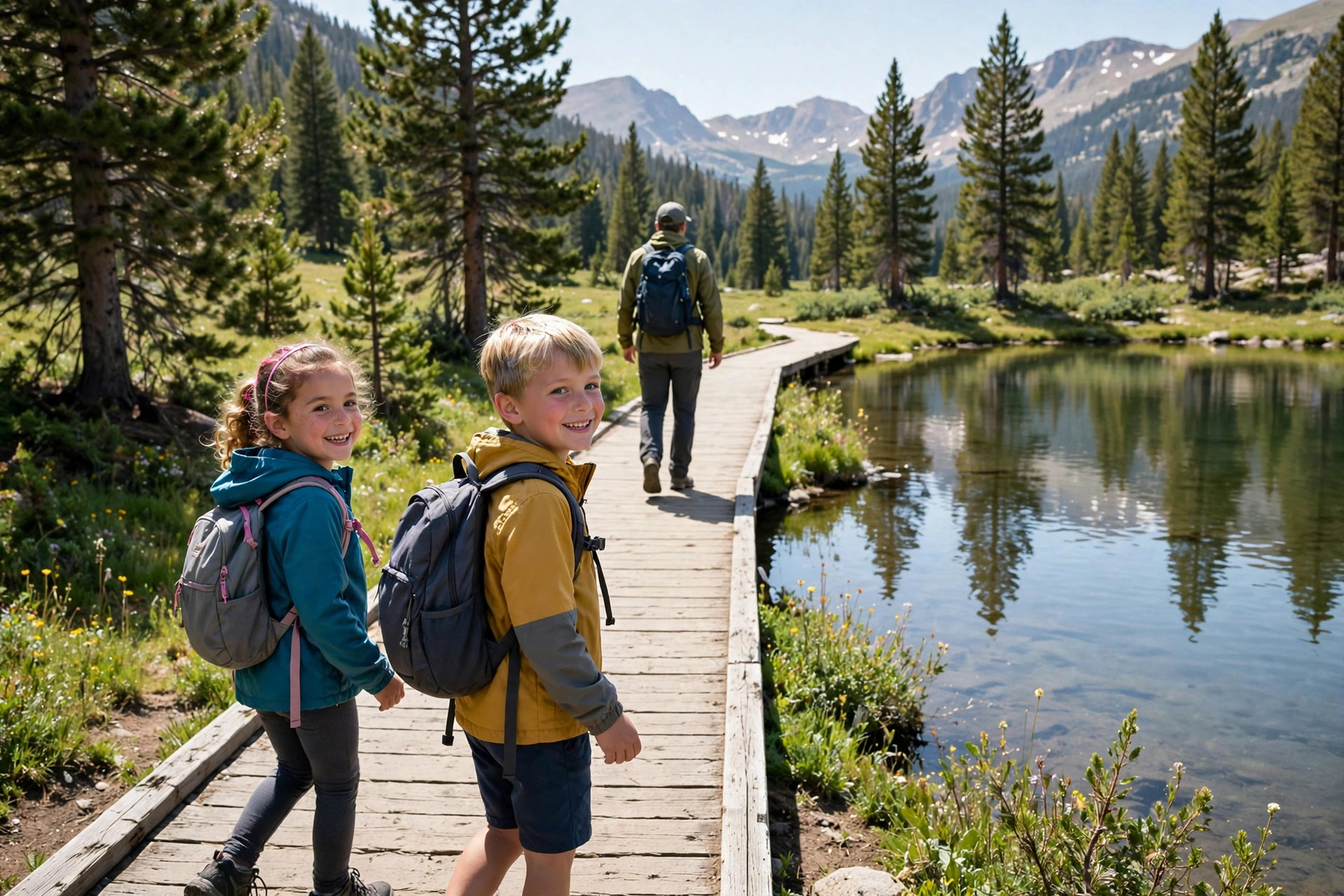
If your kids are between 5 and 12, the Junior Ranger program is the best free activity in the park. Pick up a booklet at any visitor center — versions exist for ages 5 and under, 6 to 8, and 9 and up. Kids complete activities by exploring the park, then a ranger swears them in and hands over a badge.
- Pick up the booklet on day one — half the activities happen naturally while you hike and drive.
- Go to a ranger-led program. In summer, rangers run family programs at Beaver Meadows and Moraine Park Discovery Center.
- Keep the badge ceremony as a trip finale. It gives the last day a goal and the kids a souvenir that actually means something.
Where to Stay: Campgrounds and Estes Park
Camping inside the park: three reservable campgrounds on the east side — Moraine Park, Glacier Basin, and Aspenglen — plus Timber Creek on the west side, all bookable through recreation.gov. Moraine Park is the family favorite: large sites, evening elk in the meadow, and ranger programs at the amphitheater. A campground stay also means no timed entry reservation is needed on your stay dates.
Basing in Estes Park: the easier choice for families with babies or toddlers — real beds, restaurants, a lake, and a grocery store. The town sits at about 7,500 feet, lower than most of the park, so sleeping there gives everyone a break overnight. Book early for summer; the Visit Estes Park site lists family lodging and current conditions.
A 3-Day Family Itinerary for Rocky Mountain
Day 1 — Arrive and acclimate: settle into Estes Park and take one easy walk — the Sprague Lake loop. Eat a real dinner, drink plenty of water, and get to bed early. No big hike today, no Trail Ridge Road.
Day 2 — Bear Lake in the morning, Trail Ridge Road in the afternoon: enter with your Timed Entry + Bear Lake Road permit and hike the Bear Lake loop, then on to Nymph Lake if the kids are up for it. In the afternoon, drive Trail Ridge Road to the Alpine Visitor Center, walk the tundra trail, and end with an elk-watching drive through Moraine Park.
Day 3 — Junior Rangers and the west side: morning at the Moraine Park Discovery Center for the Junior Ranger booklet and a ranger program. If the family has energy, drive the west side to the Kawuneeche Valley for moose. If not, a slow morning in Estes Park and the badge ceremony is a perfect ending. A fourth day can add Emerald Lake.
What to Pack for Rocky Mountain with Kids
Altitude and weather swings make this list different from a normal summer trip. Layers are everything — our kids layering guide explains the system in detail.
- Layers: a warm mid-layer and windproof jacket per person, even in July.
- Sun protection: sunscreen, hats, sunglasses — UV is stronger at altitude.
- Water: each person carries their own bottle, and the car holds extra.
- Salty snacks: trail mix, crackers, pretzels.
- Rain gear: afternoon storms are a daily summer pattern; a cheap poncho each is enough.
- Binoculars for the kids: wildlife watching is what they will remember.
- A first aid kit: blister care, bandages, regular medication — see our family camping first aid kit list.
- Stroller or carrier: an all-terrain stroller works at Sprague Lake; elsewhere, a hiking carrier is the practical choice.
Altitude Sickness in Kids: What Parents Should Know
Altitude affects children faster than adults. Know the warning signs: headache, nausea, unusual tiredness, loss of appetite, and trouble sleeping. The fix is almost always the same — rest, water, salty food, and descending if symptoms persist.
- Take the first day easy. No big hike and no Trail Ridge Road on arrival day.
- Hydrate. Kids should drink water all day, even when they say they are not thirsty.
- Descend if symptoms worsen. A headache that does not ease with rest and water, vomiting, or confusion means driving down to Estes Park. If symptoms are severe or do not improve after descending, seek medical care promptly.
If your child has asthma, heart or lung conditions, or any medical concern, talk to your pediatrician before the trip. This guide is general travel information, not medical advice.
Frequently Asked Questions
Do I need a timed entry reservation for Rocky Mountain National Park?
Yes, in the busy season (roughly late May through mid-October) for daytime entry, booked through recreation.gov. For the Bear Lake area, you need the separate Timed Entry + Bear Lake Road reservation. Campground stays include park entry. Confirm current dates on nps.gov.
What is the best age to take kids to Rocky Mountain National Park?
Kids as young as 3 or 4 can enjoy it — the lake loops are flat, wildlife is visible from the car, and Trail Ridge Road needs no hiking. Ages 5 to 8 get the most from the Junior Ranger program; kids 8 and older can reach Dream and Emerald Lakes.
How many days do you need in Rocky Mountain with kids?
Three days is an honest minimum: one to acclimate and explore the Bear Lake corridor, one for Trail Ridge Road and wildlife, and one for the Junior Ranger program and the west side. Two days works if you skip the west side.
Is Trail Ridge Road safe to drive with kids?
Yes, for a careful driver. It is paved and well maintained, but has steep drop-offs and no guardrails in places. Drive in daylight, leave early, keep kids buckled, and use the signed pullouts. If heights make the driver nervous, have the other adult drive.
Can you see elk in Rocky Mountain National Park?
Almost certainly. Elk gather in Moraine Park most mornings and evenings from spring through fall, and bugling bulls fill the meadow during the September rut. Best viewing is at dawn and dusk from the pullouts. Stay at least 25 yards away.
What is the entrance fee for Rocky Mountain National Park?
A private vehicle pass costs $30 and is valid for seven days. An annual America the Beautiful pass ($80) covers this park and all other national parks — worth it if your family visits more than two parks in a year.
Rocky Mountain rewards families who plan the logistics first and the scenery second. Book the Bear Lake permit early, take the first day easy, and let the park do the rest.
