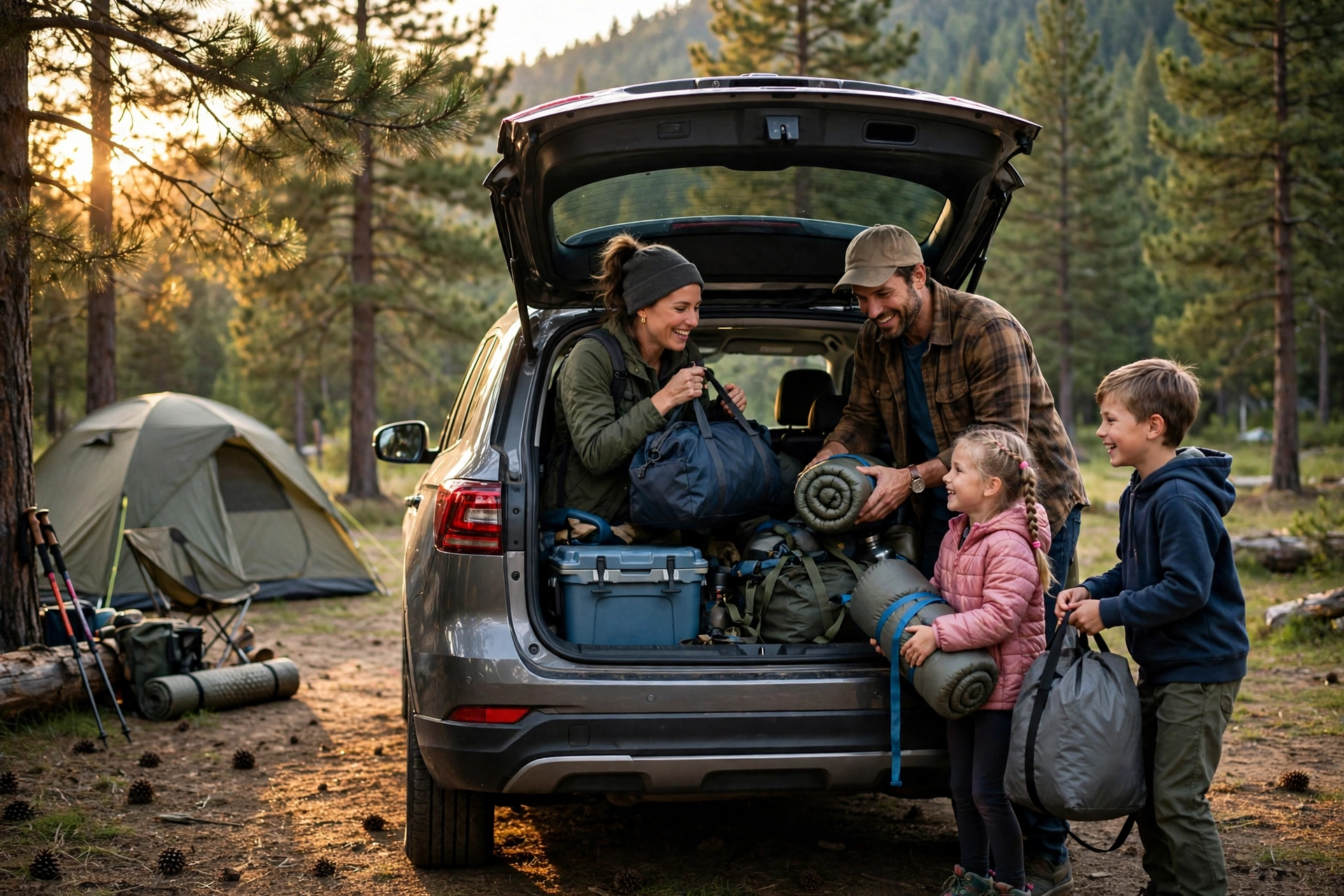
Packing for a camping trip with kids feels like a test you cannot pass. Bring too little and someone is cold, hungry, or bored by 8 p.m. Bring too much and the car is so full you cannot find the tent poles when you arrive. After years of family trips — and plenty of forgotten toothbrushes — I have learned that what to bring camping with kids is less about owning the perfect gear list and more about making good decisions before you leave the driveway.
This guide is not another 100-item checklist to print and panic over. Instead, it walks you through what your family actually needs, broken down by your children’s ages, what you can safely leave at home, a simple packing system that keeps the car sane, and what to do when you forget something anyway. Use it alongside our full family camping checklist when you want the item-by-item version.
Start with the 5-minute rule: decide before you pack
Before a single bag comes out of the closet, answer five questions. They decide almost everything on your list:
- How old are your kids? A baby needs a sleep setup and feeding gear; a ten-year-old needs a headlamp and a job to do.
- How many nights? One night is a different pack than four. Add one outfit change per child per day, plus one spare set — that formula never fails.
- Car camping or walk-in site? If the car is twenty steps from the tent, weight barely matters. If you are hauling gear down a trail, every pound counts.
- What is the weather really going to do? Check the forecast for the campsite itself, not the nearest town. Mountain nights can be 15 degrees colder than the valley below.
- Is there water, a store, or a ranger station nearby? A campground with a camp store forgives forgotten items. A remote site does not.
Write the answers on a sticky note and stick it on the fridge. Every packing decision after that gets easier, because you are packing for your trip, not a generic one. For national park trips, the National Park Service camping pages explain what park campgrounds provide, and most federal campsites are booked through Recreation.gov — check both before you finalize the list.
What to bring camping with kids, by age
Kids of different ages need very different things. Here is the honest breakdown — the items that actually matter at each stage, and the ones parents overpack.
Babies (under 1 year)
Babies are the most gear-heavy campers per pound of child, but the list is shorter than most parents fear. The non-negotiables: a safe sleep setup (a portable travel crib or a bassinet that fits inside the tent), enough formula or a breastfeeding plan, diapers for the trip plus a full extra day, wipes, a sun hat, and layers for cold nights. A baby carrier beats a stroller on every uneven campsite path. Skip the pack-and-play extras, the bottle warmer, and the baby bathtub — a basin of warm water does the same job. For the full baby-specific breakdown, see our guide to camping with a toddler, which covers the transition from baby to walker.
Toddlers (ages 1–3)
Toddlers need containment, comfort, and spares. Pack a small travel crib or a pop-up playpen for safe naps and bedtime, twice as many outfits as you think (mud finds toddlers), a favorite comfort item from home, and their usual snacks. A pair of cheap water shoes saves bare feet on gravel and in creek water. This is also the age where a camping high chair earns its space — see our roundup of the best portable camping high chairs for families. Leave the ride-on toys and the big activity table at home; a bucket, a shovel, and a patch of dirt will entertain a toddler for hours.
Young kids (ages 4–7)
This is the sweet spot: old enough to carry their own small backpack, young enough to be thrilled by a flashlight. Give each child their own daypack with a water bottle, a snack, a headlamp, and one small toy or book. They choose what goes in it (within reason), and they carry it — that ownership alone cuts the “I’m bored” complaints in half. Pack a magnifying glass, a bug viewer, or a simple nature journal; open-ended tools beat electronic entertainment every time at camp. Bring one extra layer each, because kids this age get cold fast once the sun drops and they will not tell you until they are shivering.
Older kids (ages 8–12)
Older kids can take real responsibility, and they enjoy it. Let them pack their own bag from a short written list, carry a whistle, and learn to use a compass. A pair of walkie talkies for kids is genuinely useful at this age — it lets them explore the campground loop while staying in contact. Pack a deck of cards, a book, and a headlamp with a red-light mode for stargazing. Skip the tablet unless the trip is long and the drive is longer; even then, keep it for the car, not the campsite.
Teenagers (ages 13+)
Teens pack themselves, mostly. Your job is the shared gear and the boundary-setting: one charging solution for the whole family (a single power bank, not five), a real job at camp (fire, cooking, or tent duty), and a plan for the phone. Our guide to camping with teens has the full playbook for keeping older kids happy outdoors.
The core list: what every family actually needs
Strip away the age-specific extras and every family camping trip needs the same core categories. Use this table as your decision sheet — if an item does not fit one of these rows, question whether it belongs in the car.
| Category | Bring this | Why it matters |
|---|---|---|
| Shelter | Tent (one size up from your family), footprint, stakes, mallet | Extra room keeps kids and gear from fighting for floor space |
| Sleep | Sleeping bags rated for the coldest expected night, sleeping pads, pillows, one extra blanket per child | Cold kids do not sleep, and tired kids ruin the next day |
| Kitchen | Stove + fuel, one pot, one pan, spatula, cutting board, cooler, water jug | Simple meals, cooked fast, keep everyone fed and calm |
| Clothing | Layers, rain jackets, two outfits per child per day + one spare, warm hats, extra socks | Wet and cold are the two fastest ways to end a trip early |
| Safety | First aid kit, headlamp per person, sunscreen, bug spray, whistle per child | Small problems stay small when you can handle them on the spot |
| Hygiene | Toilet paper, hand sanitizer, wipes, toothbrushes, biodegradable soap, trash bags | Campground bathrooms run out; your kit should not |
| Fun | One ball, a card game, a nature scavenger hunt, books | Boredom is the real enemy — pack light on toys, heavy on ideas |
For the full item-by-item version of this table, print our camping checklist with kids and check things off as they go into the bins.
What to leave at home (the honest list)
Overpacking is the most common family camping mistake, and it is almost always the same items. Leave these behind:
- The full toy box. Kids play with sticks, rocks, and dirt at camp. Bring two small favorites, not a bag of them.
- Three pairs of shoes per person. One sturdy pair, one pair of water shoes or sandals. That is enough.
- The big kitchen. You need one pot, one pan, and a knife — not the blender, the griddle, and four spatulas.
- Excess food. Plan meals, then pack for the plan plus one spare dinner. A cooler full of “just in case” food goes bad and wastes space.
- Your own pillow from home. It takes up half a duffel. A compressible camp pillow is a better trade.
- Valuables and good clothes. Everything at camp gets dirty, wet, or smoky. Pack clothes you do not mind ruining.
A good test: if you have not used an item by the second night of your last trip, it does not earn a spot on the next one.
The bin packing system: how to actually pack the car
The list is only half the job. The other half is knowing where everything is when you need it at 9 p.m. in the dark. Use the bin system:
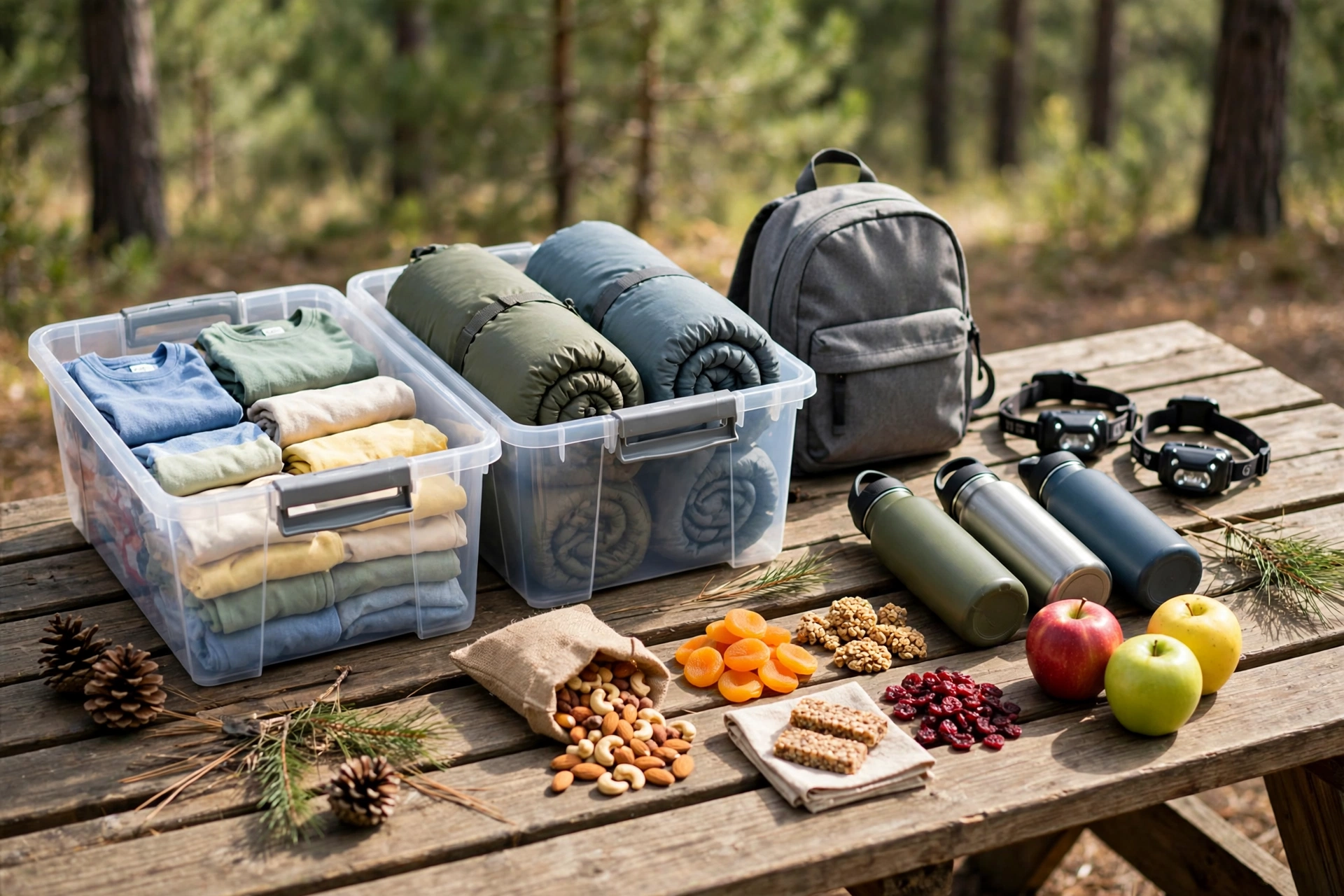
- One bin per category: sleep, kitchen, clothes, and “kids’ stuff.” Label each bin on two sides with masking tape and a marker.
- Pack the tent last, unload it first. The tent, stakes, and mallet go in last so they come out first — you can set up shelter while the kids explore.
- Keep a “first night” bag on top: headlamps, pajamas, toothbrushes, snacks, and the kids’ comfort items. If you arrive after dark, this bag is the whole trip.
- Give every child a color. A colored stuff sack or a strip of tape on each child’s bag ends the “whose is this?” argument before it starts.
- Leave one empty bin. It holds dirty laundry on the way home and gives you somewhere to put the things you bought or found.
Pack the car the night before you leave, not the morning of. A calm departure sets the tone for the whole weekend — and a rushed one guarantees something gets left behind. Our first family camping trip weekend plan walks through a full Friday-to-Sunday timeline if you want the whole trip mapped out.
Forgot something? The campsite rescue guide
Every family forgets something. The difference between a ruined trip and a funny story is knowing the fix before you need it.
| Forgotten item | Quick fix at camp |
|---|---|
| Toothbrushes | Rinse with water and baking soda from the kitchen kit; buy replacements at the camp store |
| Sleeping pad | Folded blankets and spare clothes under the sleeping bag; ask neighboring campers — someone always has a spare |
| Rain jackets | Trash bags with arm holes as emergency ponchos; dry clothes and the tent’s vestibule until the rain passes |
| Can opener | Most camp stores sell one for a few dollars; plan meals around packets and fresh food instead |
| Phone charger | Put the phone on airplane mode and use it only for photos; the car charger works in a pinch |
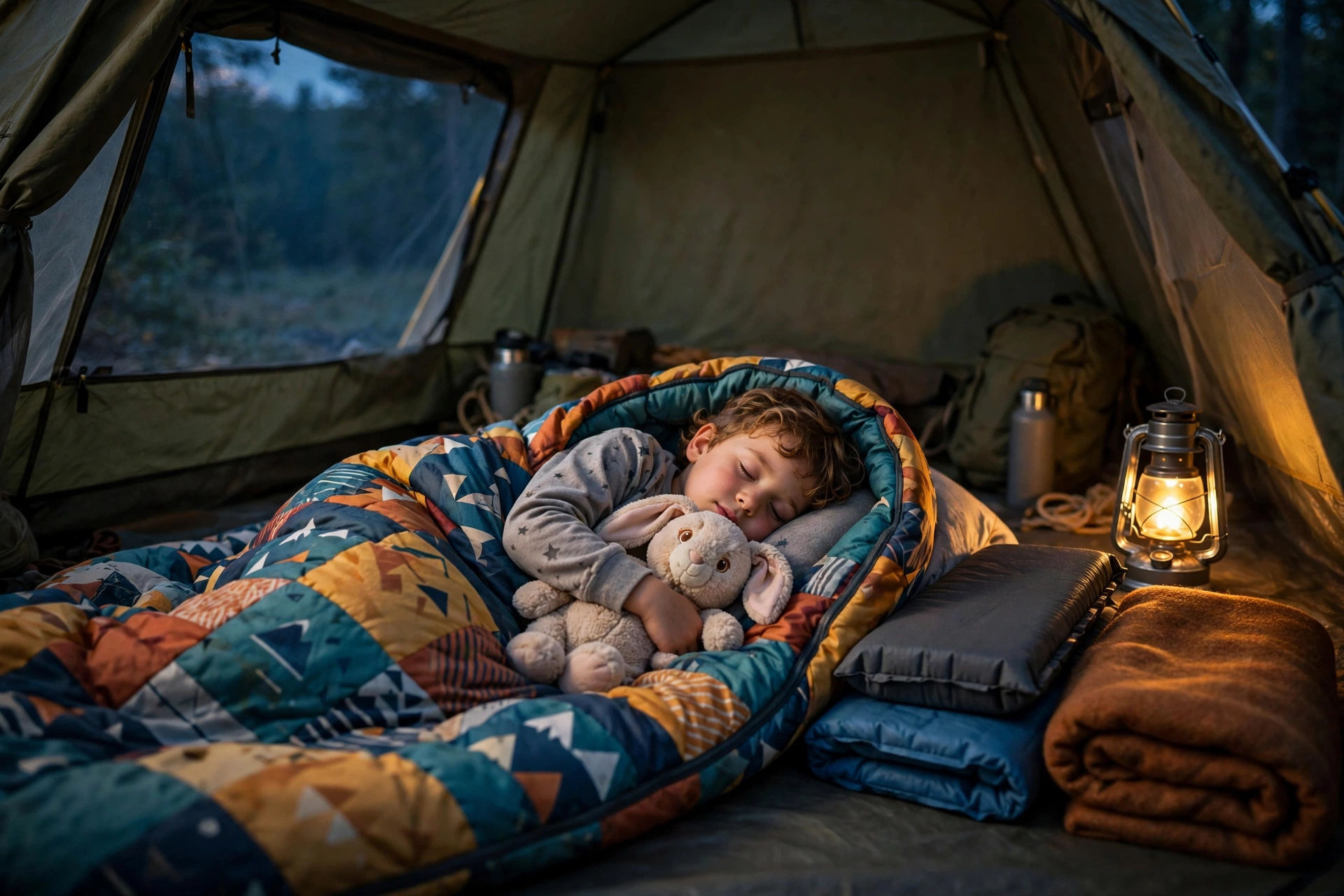
| Comfort toy | Let the child pick a “camp buddy” — a pinecone, a smooth stone — and make it part of the trip story |
| Bug spray | Long sleeves and pants at dusk; a campfire’s smoke helps; buy repellent at the nearest store the next morning |
One more safety net: keep a small first aid kit in the car at all times, separate from the camping bins. Our guide to the family camping first aid kit lists exactly what goes in it and why — and it doubles as the kit you grab when the bins are still in the garage.
Common packing mistakes (and the fix)
Mistake 1: Packing for the weather you want, not the weather you will get. Always pack one warm layer and one rain layer per person, even in July. Mountain weather turns fast.
Mistake 2: One giant bag for the whole family. When everything is in one duffel, finding one child’s socks means emptying the whole bag. Small bags per person win every time.
Mistake 3: No plan for wet and dirty things. Bring two trash bags or a wet-bag for muddy clothes. Without one, the dirt spreads to everything else in the car.
Mistake 4: Forgetting the “boring” stuff. Toilet paper, trash bags, dish soap, and a lighter are the items families forget most — and the ones that cause the most frustration. Put them on the list first, not last.
Mistake 5: Packing the car in the morning. Pack the night before. Morning packing is how the tent poles end up leaning against the garage wall while you are an hour down the highway.
How to get kids to sleep while camping
Packing the right sleep gear is only part of the battle — the other part is the routine. Keep bedtime close to the home routine, bring the comfort item, and tire them out properly during the day. A headlamp with a red-light mode lets them read in the tent without wrecking everyone’s night vision. If sleep is your biggest worry, our guide on how to get kids to sleep while camping has fifteen parent-tested tips that go beyond gear.
Frequently asked questions
What is the most important thing to bring camping with kids?
Warm sleep gear and extra clothes. Kids get cold faster than adults, and a cold, wet child ends a trip faster than any forgotten toy. After that, headlamps — one per person — because darkness at a campsite is darker than kids expect.
How many clothes should I pack per child for a camping trip?
Plan two full outfit changes per child per day, plus one spare set and one warm layer. For a two-night trip, that is five outfits per child. It sounds like a lot until the first mud puddle.
What should I bring for a baby’s first camping trip?
A safe sleep setup (travel crib or bassinet), feeding supplies for the trip plus one extra day, diapers plus a full spare day’s worth, sun protection, and warm layers for the night. Keep the trip short and close to home for the first time.
Do kids need their own backpack for camping?
From about age four, yes — a small daypack with a water bottle, a snack, and a headlamp. It builds independence and keeps their essentials from vanishing into the family duffel. Keep it light: under 10% of their body weight.
What can I leave behind when camping with kids?
Most of the toys, the extra shoes, the big kitchen setup, and the “just in case” food. Kids play with nature at camp, and every extra item is something you have to carry, find, and pack again.
What do I do if I forget something important while camping?
Check the camp store first — most stock the basics. Ask neighboring campers; the camping community is generous with spares. And keep a “first night” bag packed on top of the car so the essentials are never buried.
