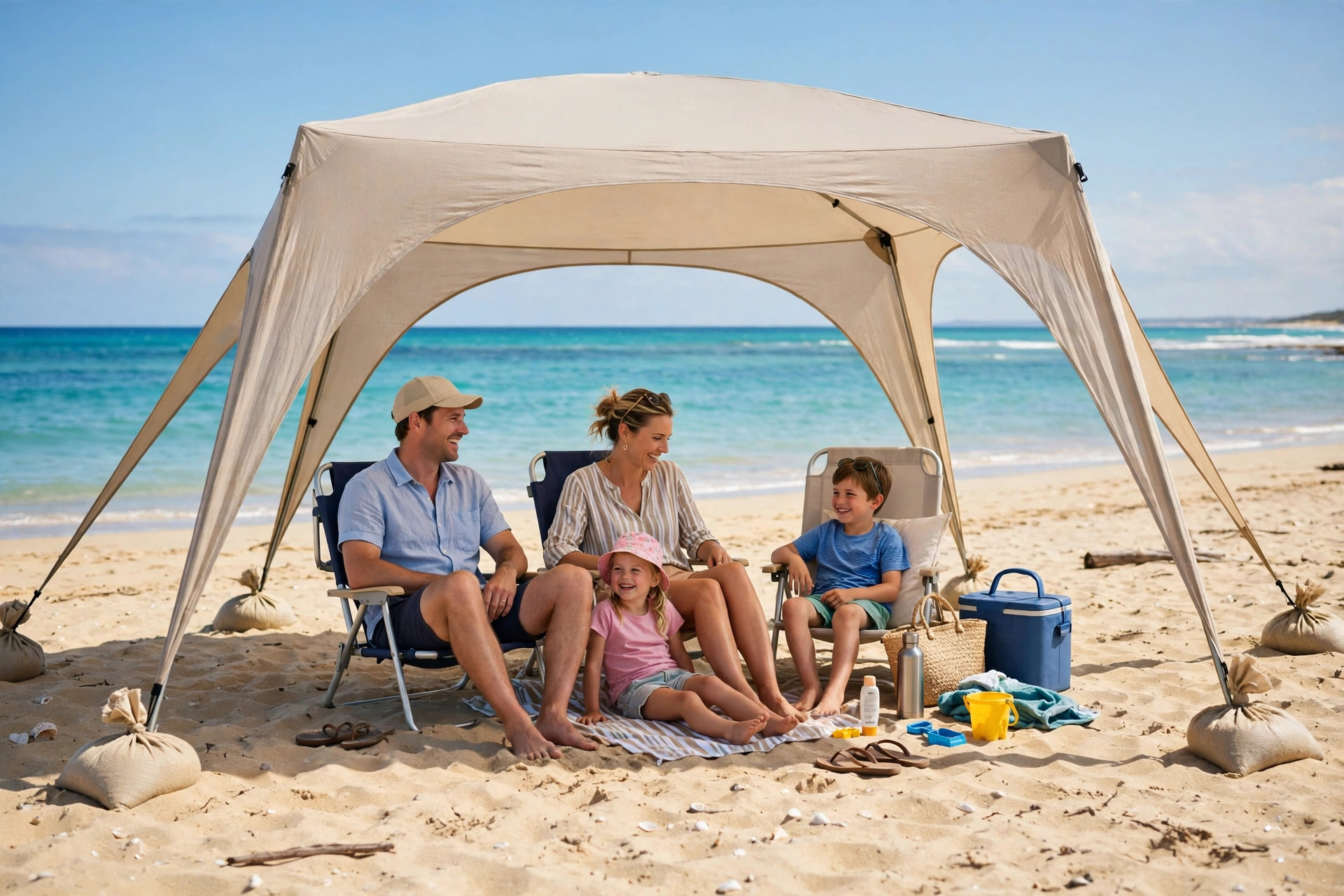
A good beach day with kids lives or dies on shade. Without it, someone is sunburned by 11 a.m. and the baby will not nap. The best beach shade tent for a family blocks serious sun, stays put when the sea breeze picks up, and goes up fast while you are also watching a toddler sprint toward the water.
Quick Answer: Which Beach Shade Tent Should Your Family Get?
Short on time? For most families, a four-pole stretch canopy (such as a Neso Grande or Sun Ninja) is the best all-rounder: big open shade, UPF 50+ fabric, and sand-filled corner anchors that hold in a breeze. If your beach is reliably windy, a wind-powered shade (such as a Shibumi Shade) is lighter and stronger in gusts. If you have a baby who needs an enclosed nap spot, a pop-up tent (such as a WolfWise or Pacific Breeze) is the easiest win.
| Type | Best for | Shade size | Setup time | Packed weight | Watch out for |
|---|---|---|---|---|---|
| Four-pole stretch canopy | Families of 4–8 | 80–150 sq ft | 5–10 min | 4–9 lbs | Needs sand for anchors |
| Wind-powered shade | Windy beaches | 100–150 sq ft | 2–5 min | 4–6 lbs | Needs at least a light breeze |
| Pop-up tent | Babies & toddlers | 25–50 sq ft | Under 2 min | 3–7 lbs | Catches wind; small shade area |
| Beach umbrella | Solo parent + 1 child | 25–50 sq ft | 2–3 min | 5–9 lbs | Shade moves with the sun |
The 3 Types of Family Beach Shade, Explained
Every family beach shelter is one of three designs. Pick the type first, then the brand — they behave very differently on a windy beach with kids.
1. Four-Pole Stretch Canopies
A big sheet of stretchy, UPF 50+ fabric held up by four poles, with a pocket at each corner that you fill with sand. Neso and Sun Ninja are the best-known names. The open sides mean constant airflow, and the fabric flexes with gusts instead of fighting them. For most families this is the best choice: the shade genuinely fits two chairs, a cooler, and a toddler play zone. The trade-off: setup takes a few minutes and two hands, and you need loose sand for the anchors, so rocky beaches are a poor match.
2. Wind-Powered Shades
The Shibumi Shade is the famous example. Instead of poles, a long fabric canopy is held up by the wind itself, anchored by sandbags. It is the lightest way to shade a large group — around 4 pounds for up to 150 square feet — and nearly impossible to blow over. The catch: on a still, windless day it sags. If your beach usually has at least a light breeze, this is the best large-family option; if it is often dead calm, pick a canopy instead.
3. Pop-Up Beach Tents
These spring open in seconds and fold back into a flat disc. Models like the WolfWise Pop Up and the Pacific Breeze Easy Setup are cheap, light, and enclosed enough to keep blowing sand off a napping baby. The downside: a pop-up is a small, closed box that catches wind like a sail, and the shade fits two adults at most — treat it as a baby shelter or a second tent.
Best Beach Shade Tents for Families in 2026
These are the models families consistently recommend, grouped by the job they do best. Specs below are the manufacturers’ published figures — check the listing before you buy.
Best Overall for Most Families: Neso Grande / Sun Ninja 4-Pole Canopy
Why it wins: the largest usable shade per pound of any pole design, UPF 50+ fabric, and sand anchors that actually hold. Who it is for: families of four or more who want one shelter that covers everyone. Who it is NOT for: rocky beaches with no loose sand for the anchor bags, or parents who need a one-minute setup with a baby on their hip.
Best for Windy Beaches: Shibumi Shade
Why it wins: at about 4 pounds it shades up to eight people, and strong gusts are a feature, not a threat. Who it is for: families who go to the same windy beach all summer. Who it is NOT for: calm, windless days, or parents who want an enclosed space for a napping baby — the Shibumi is open on all sides by design.
Best Pop-Up for Babies and Toddlers: WolfWise Pop Up Beach Tent
Why it wins: it opens in seconds, costs far less than a canopy, and gives a baby a shady, sand-free pocket for naps. UPF 50+ fabric is standard. Who it is for: parents of babies and toddlers, and families who want a cheap second shelter. Who it is NOT for: a family of five expecting everyone to fit underneath, or a very windy beach — stake it down and keep it low.
Best Easy Setup for Solo Parents: Pacific Breeze Easy Setup Beach Tent
Why it wins: a true one-person setup with a roomy interior, mesh windows for airflow, and space for two adults and a small child. Who it is for: the parent who sets up alone while the other watches the kids. Who it is NOT for: big groups — it is a tent, not a canopy — or exposed, gusty beaches without good staking.
Best Budget All-Rounder: Easthills Outdoors Instant Beach Tent
Why it wins: solid UPF 50+ fabric, a fast pop-up frame, and a price that leaves money for the rest of the beach kit. Who it is for: families buying their first beach shelter. Who it is NOT for: parents who need maximum shade area — measure the footprint against your family before you buy.
How to Choose: 5 Questions Before You Buy
Answer these five questions and the right type picks itself.
1. How many people need shade?
Count chairs, not people. A family of four needs at least 8 x 8 feet of usable shade once you add a cooler and a play mat. Families of six or more need 10 x 10 feet or larger — a big canopy or a wind shade, not a pop-up.
2. How old are your kids?
With a baby under two, an enclosed pop-up for naps matters more than total shade area. With school-age kids, open airflow and a big footprint matter more — many families end up with both.
3. How windy is your beach?
Steady 10–20 mph onshore wind is normal at many ocean beaches, and that is exactly where pop-ups and umbrellas fail. Canopies and wind shades are built for it. If your beach is usually calm, any type works.
4. How far do you carry it?
Beach parking is rarely next to the sand. If you walk more than five minutes with a cooler, chairs, and a toddler, every pound matters — under 7 pounds packed is the sweet spot. A beach wagon with wide wheels helps on soft sand; narrow wheels sink, so check yours before beach day.
5. What does your beach allow?
Some beaches ban enclosed tents, cap tent size, or restrict shelters during lifeguard hours so guards can see the water. Always check the rules before you buy a big canopy — a shelter you cannot use is the most expensive kind.
How to Set Up a Beach Shade Tent Solo (With Kids Underfoot)
Setting up while watching small children is the real test of any beach shelter. This sequence works for a four-pole canopy and takes about five minutes.
- Claim your spot first. Set the carry bag down where you want shade at midday, not where it is at 9 a.m. — pick the spot for 11 a.m. to 2 p.m.
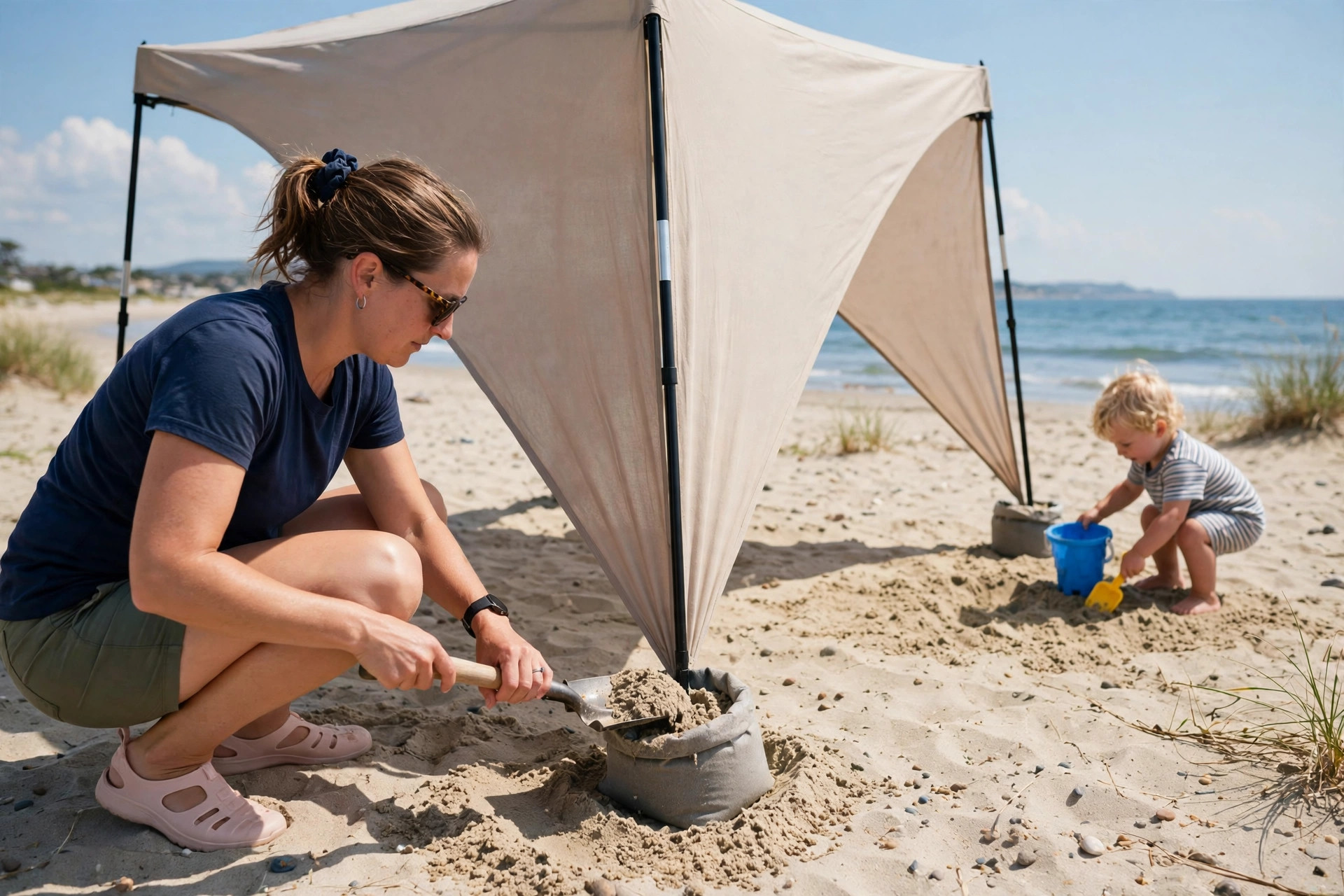
- Anchor before you raise. Fill all four sandbags before you put a single pole up — an unanchored canopy is a kite.
- Raise the upwind poles first. Put the two windward poles up first, then the downwind pair.
- Tension the corners. Pull each corner until the fabric is taut but not drum-tight — a little give lets gusts pass through instead of yanking the anchors out.
- Give the kids a job. Hand them the sand shovel and the job of filling the bags — it keeps them in one place and genuinely helps.
- Check the shade line. Sit in a chair and look up. If the sun hits your face, shift the canopy a foot or two.
Wind Safety: The Anchoring Checklist
Beach tents become dangerous when they turn into kites. These habits prevent almost every runaway-tent story:
- Fill sandbags completely — a half-full bag is decoration, not an anchor.
- Stake pop-ups with sand stakes or screw-in sand anchors, not the flimsy wire pegs in the box.
- Face the lowest side into the wind so gusts slide over the shelter instead of under it.
- If gusts hit 25 mph or more, take the shelter down.
- Never leave a set-up tent unattended while you swim.
- Re-check anchors after an hour — sand settles and bags loosen.
Toddler Naps Under a Beach Shade Tent
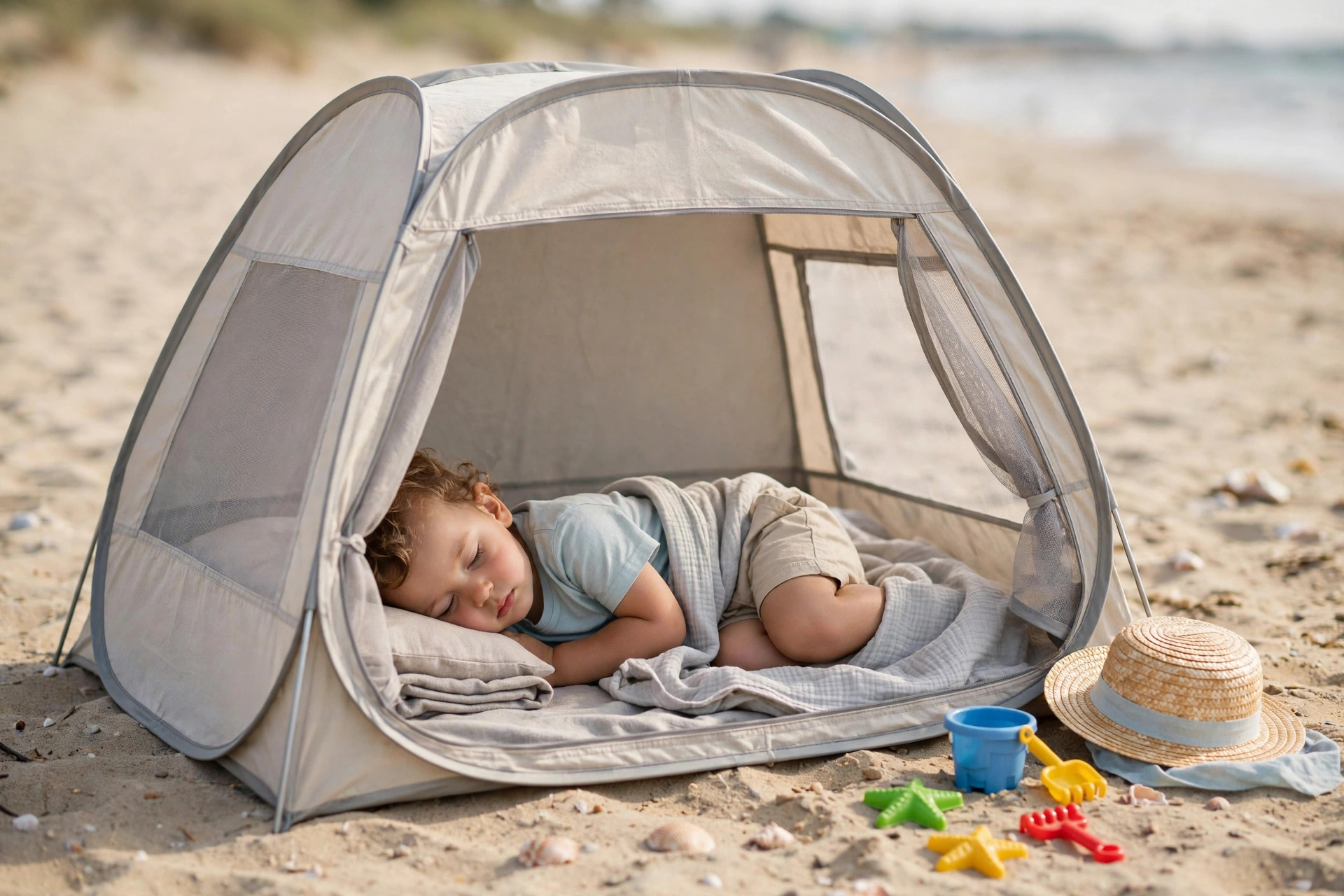
The difference between a three-hour beach day and a six-hour one is usually the nap. A small pop-up tent with mesh windows works best: it blocks sun and blowing sand while letting air through, and the dim interior signals sleep the way an open canopy cannot. Lay a familiar blanket from home inside and keep the tent in the shade of your main canopy. If your toddler sleeps in a travel crib at home, our guide to portable travel cribs for camping covers the models that also work on the beach. Skip the nap tent on very hot days — if the air inside feels stuffy, it is too hot for a sleeping child.
Beach Tent Bans and Rules to Check Before You Go
More towns are regulating beach shelters, usually so lifeguards can keep a clear view of the water. Check these before you buy — or before you drive two hours with a new canopy:
- Enclosed tents: several East Coast towns, including Ocean City, Maryland, restrict or ban tents with sides.
- Size caps: Myrtle Beach, South Carolina, has run size limits on beach tents.
- Lifeguard hours: some beaches allow shelters only outside guarded swimming areas.
- Overnight rules: almost every public beach bans leaving shelters up overnight.
Check the town or park website the night before. A two-minute search saves a ruined beach day.
Family Beach Shade Packing Checklist
- Shade tent or canopy, plus sandbags and spare stakes
- Small sand shovel for filling anchors fast
- Reef-safe sunscreen, reapplied every two hours — see the American Academy of Pediatrics sun safety guide for kids
- Wide-brim hats and UV swim shirts for every child
- Water bottles for everyone — see our picks for leak-proof water bottles for kids
- A familiar blanket for the nap tent
- A mesh bag for wet, sandy gear on the way home
Turning the beach trip into a full camping weekend? Our beach camping with kids guide covers tides, safety, and the gear list.
Frequently Asked Questions
What size beach shade tent does a family of four need?
At least 8 x 8 feet of usable shade; 10 x 10 feet is more comfortable once you add chairs, a cooler, and a play area. Measure the shade, not the footprint — sloping walls eat into usable space.
Is UPF 50+ really necessary for a beach tent?
Yes. UPF 50+ is the top of the scale and blocks about 98% of UVA and UVB rays. Anything unrated may block far less — thin fabric can let enough UV through to sunburn a child sitting underneath all afternoon. The U.S. National Weather Service heat and UV safety page explains how quickly UV exposure adds up.
Can a beach shade tent handle strong wind?
Four-pole canopies and wind-powered shades handle steady 15–20 mph breezes well when properly anchored. Pop-ups and umbrellas are the weak point — they catch wind and flip. Take any shelter down if gusts reach 25 mph or more.
Do I need a special tent for a baby at the beach?
A baby does not need a special tent, but an enclosed pop-up with mesh windows is the easiest way to give one a shady, sand-free nap spot. Keep it in the shade of your main canopy, never in direct sun, and check the temperature inside first.
Are beach tents allowed everywhere?
No. Some towns ban enclosed tents or cap tent size, and many beaches restrict shelters near lifeguard stands. Check the town or park rules before you go — nps.gov is the starting point for national seashores and lakeshores.
How much should a good family beach shade tent cost?
Expect roughly $40–$80 for a solid pop-up, $90–$200 for a good four-pole canopy, and $200–$300 for a premium wind-powered shade. Pay for UPF 50+ fabric, strong poles, and real sand anchors — that is what separates a tent that lasts three summers from one that lasts one weekend.
The Bottom Line
For most families, a four-pole stretch canopy is the best beach shade tent: the biggest shade, the best airflow, and anchors that hold in real beach wind. Add a small pop-up if you have a baby who naps, and pick a wind-powered shade if your beach is reliably breezy.
