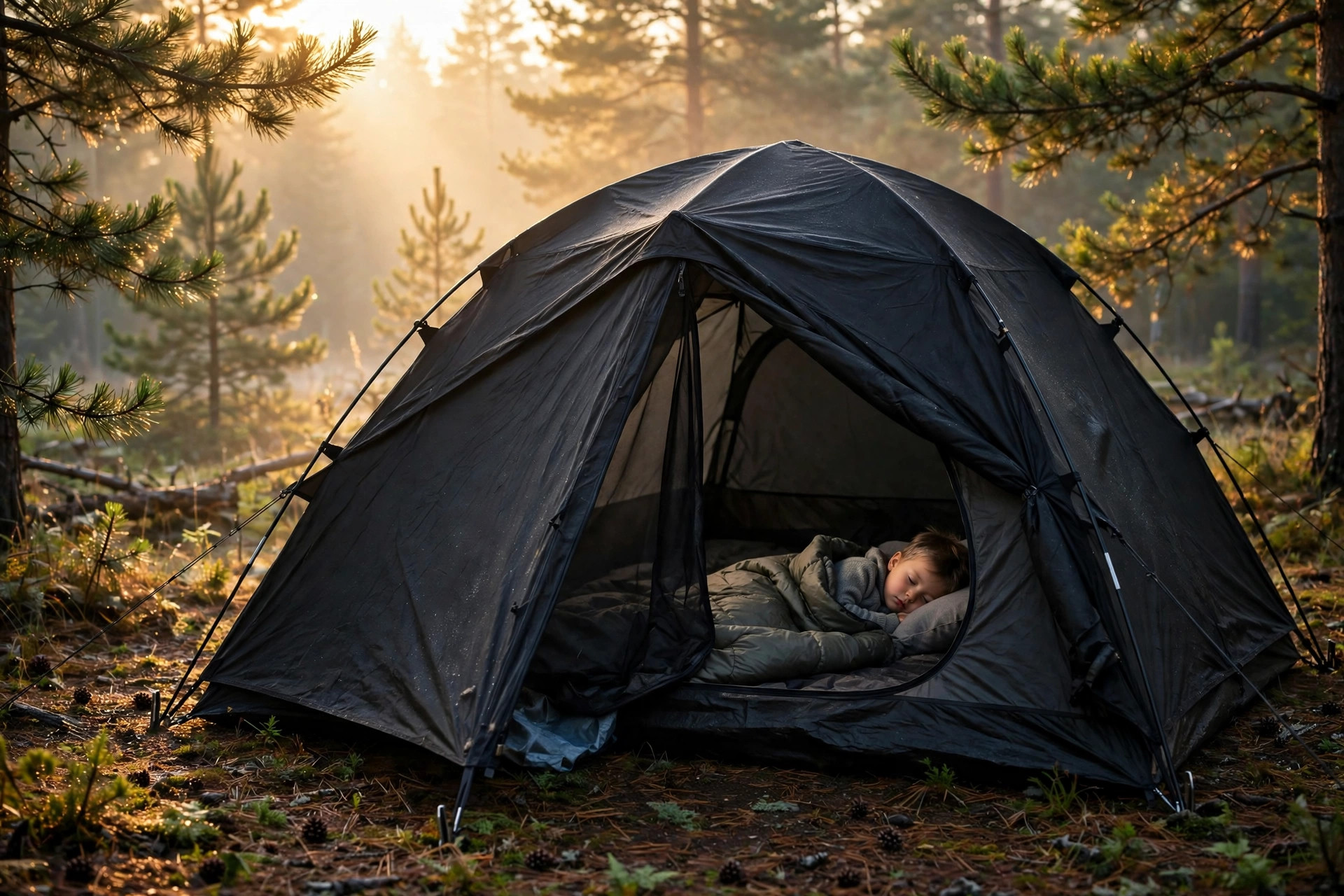
If your kids wake at 5 a.m. the moment the sun hits the tent, you know the problem: a regular tent turns into a glowing lantern at dawn. A blackout tent for kids promises to fix that — dark fabric that blocks most of the morning light so everyone sleeps in. Do blackout tents actually help kids sleep while camping? Yes, they help — if you pick the right type for your child’s age and use it safely. This guide explains how they work, which options are worth your money, and how to use one without turning the tent into a stuffy oven.
Do Blackout Tents Actually Help Kids Sleep While Camping?
Light is the single biggest reason kids wake early at camp. At home, blackout curtains tell your child’s brain it is still nighttime; in a regular tent, sunrise floods through thin nylon and most kids under six wake within minutes. Darkness supports the body’s sleep signals, so a darker tent helps kids sleep longer.
But a blackout tent is not magic. It will not fix a child who is cold, scared, overtired, or sleeping on a lumpy surface. Think of it as one piece of a sleep setup, alongside a comfortable sleeping bag rated for the night’s temperature, a familiar bedtime routine, and a quiet campsite. Used that way, parents commonly report an extra hour or two of sleep.
One honest note: no camping tent is truly 100% blackout. Brands quote figures like “blocks up to 90% of sunlight,” and those numbers come from the manufacturers, not independent testing. What matters is the difference you can feel: step inside a dark-room tent at 7 a.m. and it is noticeably dimmer than a standard tent. That is enough for most kids.
The 3 Types of Blackout Sleep Solutions for Kids
Not every “blackout tent” is the same product. Work out which type matches your child’s age before you buy — buying the wrong type is the most common mistake parents make.
| Type | Best for | How it works | Watch out for |
|---|---|---|---|
| Dark-room family tent | Ages 3+ (whole family) | Dark-coated fabric on a family tent blocks most sunlight | Heavier than a standard tent; still needs ventilation |
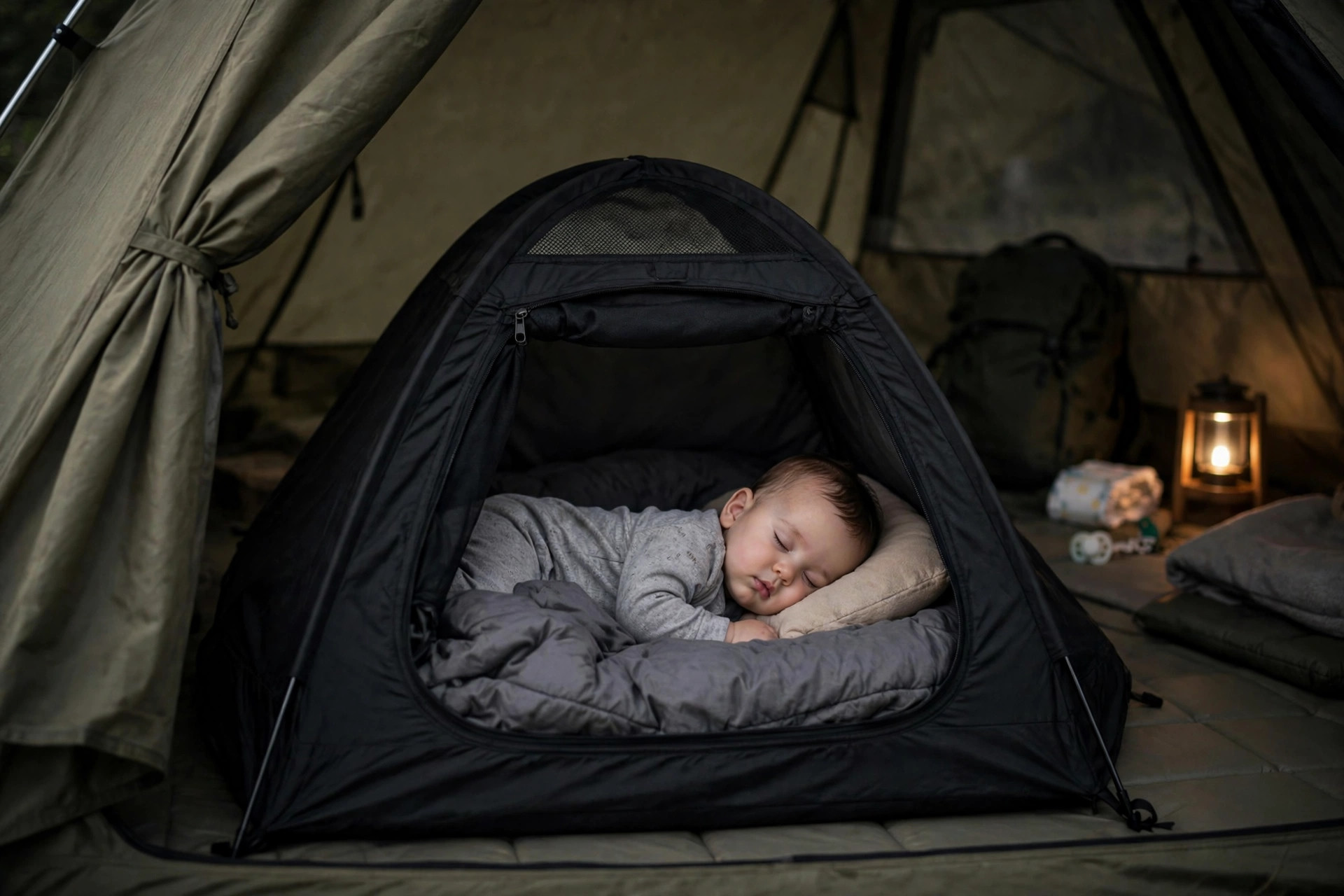
| Blackout sleep pod | Babies and toddlers (under 3) | Small dark tent that fits over a pack ‘n play or travel crib | Sheltered use only; check airflow constantly |
| Blackout crib cover | Babies (budget option) | Stretchy dark fabric draped over a playard | Dims light rather than blocking it |
Kids old enough to sleep in sleeping bags need a dark-room family tent. A baby or toddler who still sleeps in a crib needs a sleep pod. A cover is better than nothing on a tight budget, but expect “dimmer,” not “dark.”
Best Blackout Tents for Kids Sleeping While Camping (2026)
These picks are based on manufacturer specifications and how families realistically use each product. No prices are listed because tent prices change constantly — check the current price before you buy, and remember that a tent that fits your family beats a tent with a fancier spec sheet.
1. Coleman Sundome Dark Room Tent — Best for Most Families
Coleman’s Dark Room technology is the best-known blackout option in family camping. Coleman says the coating blocks up to 90% of sunlight, and the tent stays noticeably cooler on sunny mornings. It comes in 4-person and 6-person sizes, sets up in about five minutes, and has welded floors and sealed seams for rain protection. Best for: families with kids aged 3 and up who want one tent that does everything. Not for: backpacking (it is heavy), or a baby in a crib — a baby still needs their own sleep space.
2. SlumberPod — Best for Babies and Toddlers
The SlumberPod is not a camping tent — it is a small blackout tent that fits over a pack ‘n play, mini crib, or travel mattress. Its bottomless design drops over the crib, and it has four ventilation panels, a monitor pocket so you can peek in, and pockets for a small fan. It weighs under 6 pounds and packs small, so families use it for travel as well as camping. Best for: babies and toddlers who still sleep in a crib and need a dark, familiar sleep space inside a shared tent or cabin. Not for: outdoor use on its own (no weather protection), or children who have outgrown a crib.
Pair it with one of the best portable travel cribs for camping — the pod and the crib need to fit together.
3. Hiccapop Daydreamer — Best Portable Crib Blackout Tent
The Hiccapop Daydreamer is the SlumberPod’s main rival: a blackout tent that fits over standard pack ‘n plays, blocking over 90% of light according to the manufacturer. It has six air vents, dual side doors so you can reach your child without removing the whole cover, and a carry bag that folds down small. Best for: families who travel a lot and want one blackout solution that works at camp, at grandparents’ house, and in a hotel room. Not for: children over about 3, or families wanting one product for the whole family — this is a one-child solution.
4. EVER ADVANCED Blackout Camping Tent — Best Budget Family Option
The EVER ADVANCED blackout tent is a budget-friendly family dome with dark interior fabric, a rainfly, and a setup time the brand puts at about a minute for the instant version. The 4-person size suits a family with one or two small kids. Best for: families trying blackout camping for the first time without a big investment. Not for: rough weather — budget tents use lighter poles and thinner fabric, so treat it as fair-weather only.
5. Alvantor Bed Tent — Good Idea, Wrong Place
The Alvantor bed tent blocks a claimed 93% of light and fits a twin mattress, which sounds perfect — until you read the fine print. It is designed for indoor beds, with no water resistance and no weather protection. It is genuinely useful for a kid who needs darkness at home or in a cabin — but it is not a camping product. Best for: indoor use — a child’s bedroom or a cabin bunk. Not for: camping. Do not buy this expecting it to survive a rainy night in a field.
6. Dofilachy Blackout Cover — Best Ultra-Budget Option
The Dofilachy is a stretchy fabric cover that ties over a standard Pack ‘n Play. It is cheap, weighs almost nothing, and folds into a pocket. The honest catch: the manufacturer itself describes it as creating a “dimmer” sleep space, not true blackout. Best for: families on a tight budget who want some light reduction for a baby’s naps. Not for: parents who need real darkness for a light-sensitive sleeper — spend a little more on a proper pod instead.
How to Choose the Right Blackout Tent for Your Family
- Start with your child’s age. Under 3 and still in a crib? You need a pod or cover. Age 3 and up? A dark-room family tent.
- Check the vents, not just the light-blocking claim. A tent that blocks 90% of light but has no vents will be hot and stuffy by 8 a.m. Look for mesh windows and roof vents.
- Count real sleeping space, not the headline number. A “6-person” tent comfortably sleeps four people with gear. Our guide to the best tent for a family of 5 explains how to read tent capacity honestly.
- Weigh setup time against your patience at dusk. A dome tent that pitches in under ten minutes is worth it when you arrive with tired kids.
- Think about the floor. Kids sleep better off the cold ground — see our best camping cots for kids for off-the-ground options.
- Test it at home first. Pitch the tent in the backyard and let your kids nap in it — a child who has already slept in it once settles far faster at camp.
How to Help Your Kids Actually Sleep in a Dark Tent
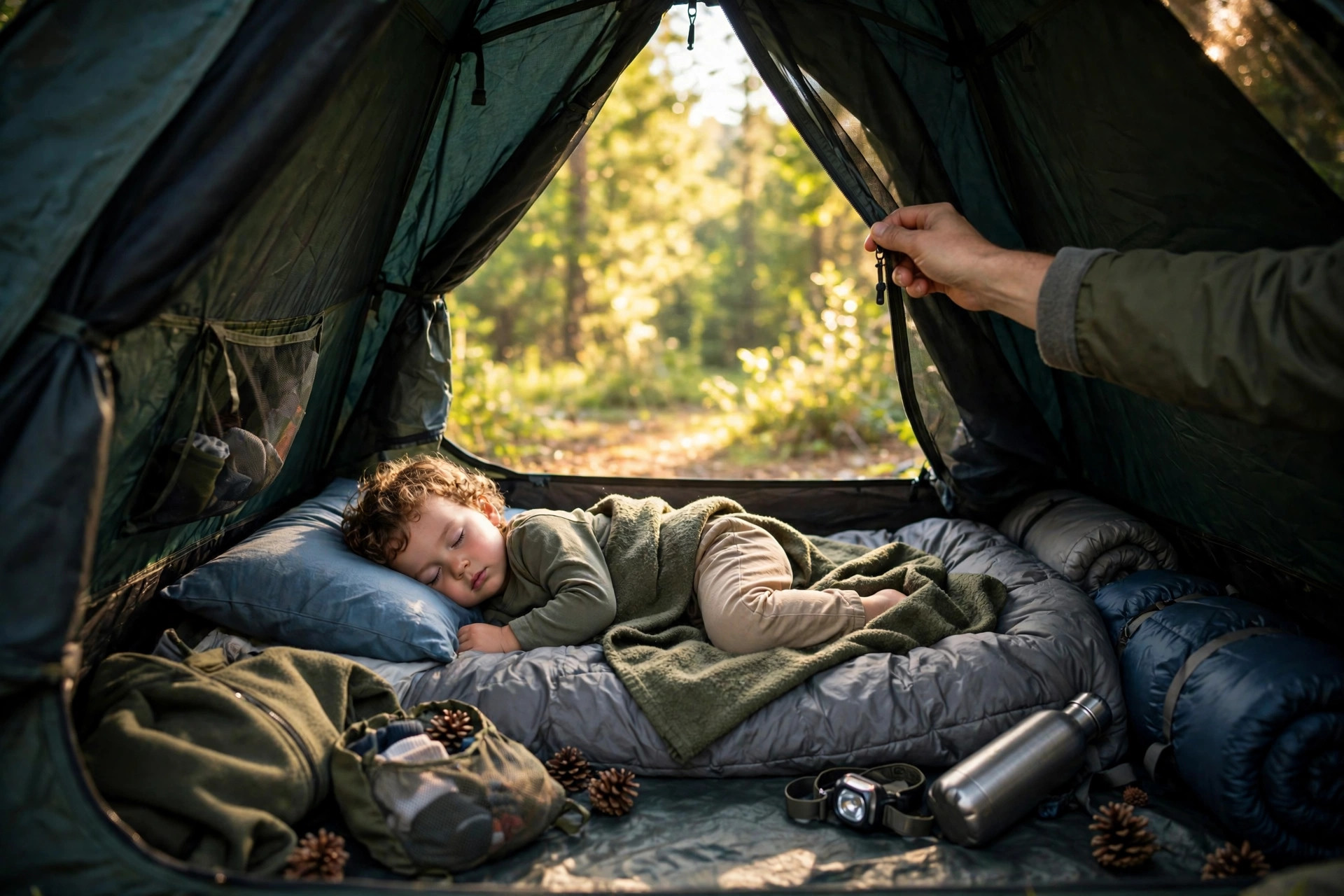
Buying the tent is only half the job. Here is the routine that works for most families:
- Keep bedtime close to home time. Aim for within 30 minutes of their normal bedtime — a dark tent cannot fix a child who is two hours past bedtime and wired.
- Run the same wind-down, minus the screens. Pajamas, teeth, a story by headlamp, a familiar blanket or stuffed animal. The routine signals sleep more than the darkness does.
- Let the tent cool down before bed. Open the doors and vents in the evening so hot air escapes, then close up when the kids go in.
- Use white noise if the campground is loud. A small battery fan or a phone white-noise app masks neighboring campers and late-night campfire talk.
- Plan for the 5 a.m. wake-up anyway. Keep a quiet toy, a book, and a snack inside the tent so an early riser can stay put while everyone else sleeps.
- Do a practice night. One backyard campout before the real trip removes most of the fear of the dark. For more ideas, see our guide on how to get kids to sleep while camping.
Safety First: Ventilation, Heat, and Babies
This is the part other guides skip, and it matters most. Dark fabric absorbs and traps heat, so a sealed dark tent gets hot fast on a warm morning. Never seal a tent completely, and never leave a baby in a closed blackout pod without airflow.
- Always leave at least one vent open. Open the vents even if a little light comes in — airflow beats total darkness.
- Check on babies frequently. A baby in a dark pod is a baby you cannot see. Use the monitor pocket, check in often, and never use a pod in a hot car or a closed, sun-baked tent.
- Add a small fan on hot nights. A battery-powered fan clipped to a vent moves air and adds white noise. Many pods have a dedicated fan pocket.
- Watch for condensation. Dark fabric plus warm breath equals damp walls by morning. Ventilate before bed and wipe down in the morning.
- Do not use a pod as a substitute for supervision. A pod is a sleep aid, not a playpen. If your toddler can climb out, they will — pod or no pod.
For authoritative safety information, the National Park Service publishes practical guidance on camping safely in national parks, and Recreation.gov lists campground rules and conditions before you book. REI’s expert advice on family camping checklists is also worth a read when you are packing.
What If a Blackout Tent Isn’t Right for Your Family?
A blackout tent is not the only way to darker mornings. Alternatives that work: a soft sleep mask for kids over five; pitching in the shade, so the site stays darker and cooler at dawn; a dark sheet clipped over the tent’s mesh ceiling; or simply shifting the schedule — breakfast at dawn, a nap after lunch. If you are still building your packing list, our honest packing list for camping with kids covers the sleep gear that makes the biggest difference.
Frequently Asked Questions
Do blackout tents really keep kids asleep longer?
For most families, yes — usually by an hour or two. Darkness supports the body’s sleep signals, and a dark tent blocks the sunrise that wakes kids in a standard tent. It works best with a normal bedtime, a comfortable sleeping setup, and a quiet campsite.
Are blackout tents safe for babies?
A blackout sleep pod designed for a crib is safe when used correctly: vents open, airflow checked, baby visible or monitored, and never in a hot, sealed space. Never use a pod or cover that fully encloses a baby without ventilation.
Do blackout tents get hotter than regular tents?
Yes, they can. Dark fabric absorbs more heat, and a sealed dark tent warms up quickly on a sunny morning. The fix is ventilation: open roof vents and windows, use a small fan, and pitch in shade when you can.
What age is a blackout tent best for?
Dark-room family tents work best for kids aged 3 and up who sleep in sleeping bags. For babies and toddlers under 3, a blackout sleep pod over a pack ‘n play is the right product. Older kids and teens benefit too, especially light sleepers and early risers.
Can I use a blackout tent in summer?
Yes, with care. Choose a model with good vents and mesh panels, pitch it in shade, and bring a battery fan. Avoid fully sealing the tent on hot nights. In very hot weather, a light-colored tent with good airflow may actually sleep cooler than a dark tent.
The Bottom Line
A blackout tent for kids is one of the few pieces of gear that can genuinely change how a trip feels. An extra hour of sleep means calmer kids, happier parents, and a day that starts well. Pick the right type for your child’s age, keep the vents open, and test it in the backyard first — the darkness helps, but routine, bedding, and fresh air are what turn a dark tent into a good night’s sleep.
