Five minutes after bedtime on our second family camping trip, my daughter whispered, “Mom, I can’t find my toothbrush,” and my son announced his headlamp was “somewhere under the sleeping bag — maybe.” The tent floor had disappeared under clothes, snack wrappers, and toys. That night taught me the truth every camping parent eventually learns: keeping a tent organized with kids is not about tidying up — it is about building systems before the mess happens.
After many trips with kids of different ages, we landed on 12 simple systems that actually survive contact with real children — no expensive gear, and all set up in under an hour at home.
The Golden Rule: Your Tent Is for Sleeping, Not Storage
Before any system works, agree on one rule: the tent is for sleeping and nighttime only. Everything not needed between bedtime and breakfast lives elsewhere — in the car, in a vestibule, or in a labeled bin outside the tent door.
This single rule does more than any organizer ever will. It keeps the floor clear, stops shoes from migrating into sleeping bags, and means nobody is crawling over a pile of toys at 2 a.m. looking for a water bottle. When kids ask where something goes, the answer is always the same: “If you don’t sleep with it, it doesn’t sleep in the tent.”
If you are planning your first trip with little ones, our family camping checklist covers everything worth packing — and, just as importantly, what to leave behind.
1. One Bin Per Kid
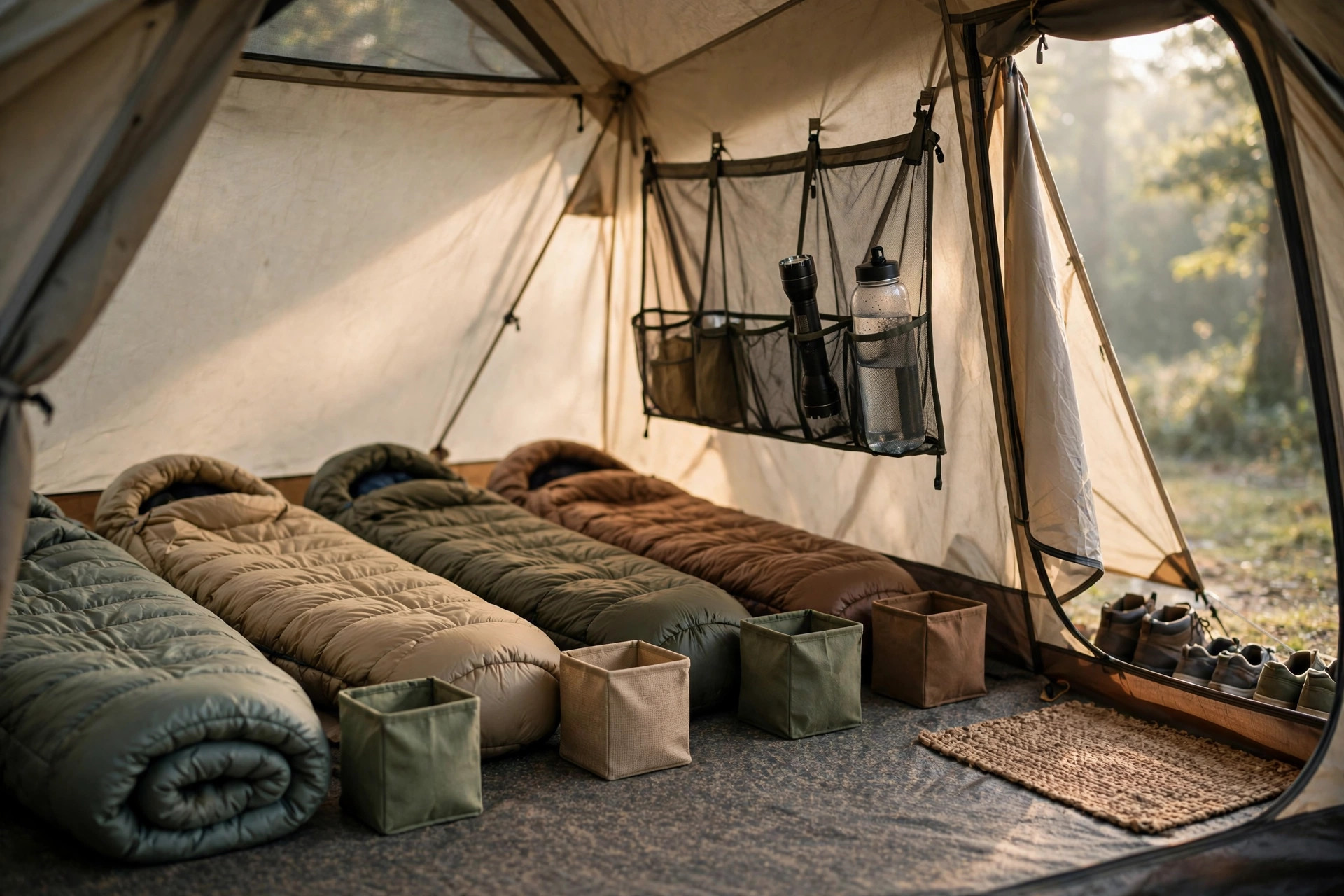
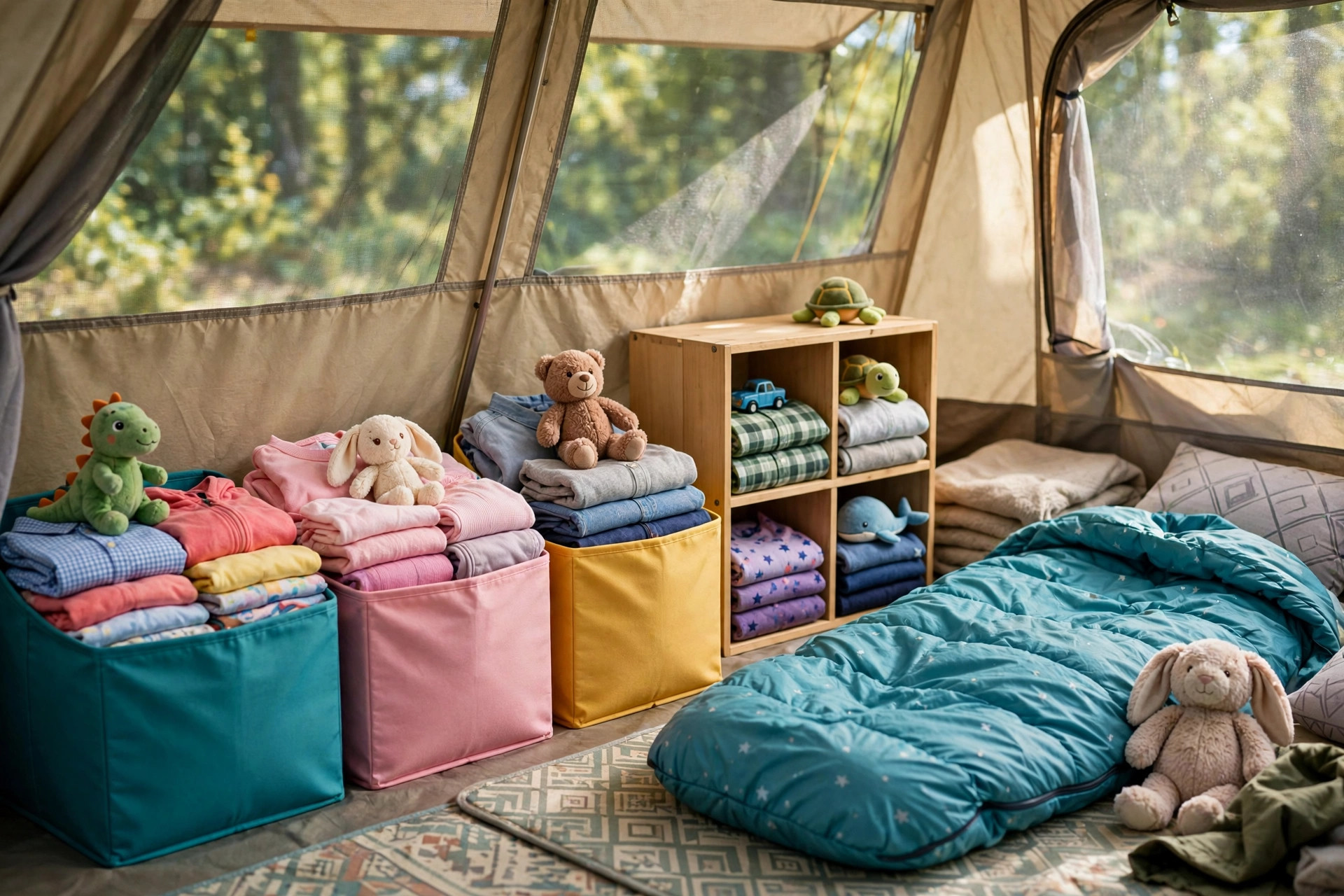
Give every child exactly one storage bin — a small fabric cube or a collapsible crate about the size of a shoebox — and make it theirs. Clothes, books, a stuffed animal, and their headlamp all live in that bin. Nothing else goes in, and nothing of theirs goes anywhere else.
Why it works: kids cannot organize an abstract “tent.” They can organize one box with their name on it. Use a different color per child so even a three-year-old can find theirs in the dark. At bedtime, the bin sits at the head of their sleeping bag.
2. Pack Outfits by Day in Zip Bags
Instead of packing a stack of loose clothes, put each day’s outfit — shirt, pants, underwear, socks — into its own large zip-top bag or packing cube, labeled with the day. A child grabs one bag in the morning, gets dressed, and the dirty clothes go straight back into the same bag.
This system kills three problems at once: no morning arguments about what to wear, no clean clothes mixed in with dirty ones, and no digging through a duffel bag that explodes across the tent floor. For a weekend trip, three bags per kid is plenty — plus one spare for the inevitable mud incident.
3. The Shoe Station at the Door
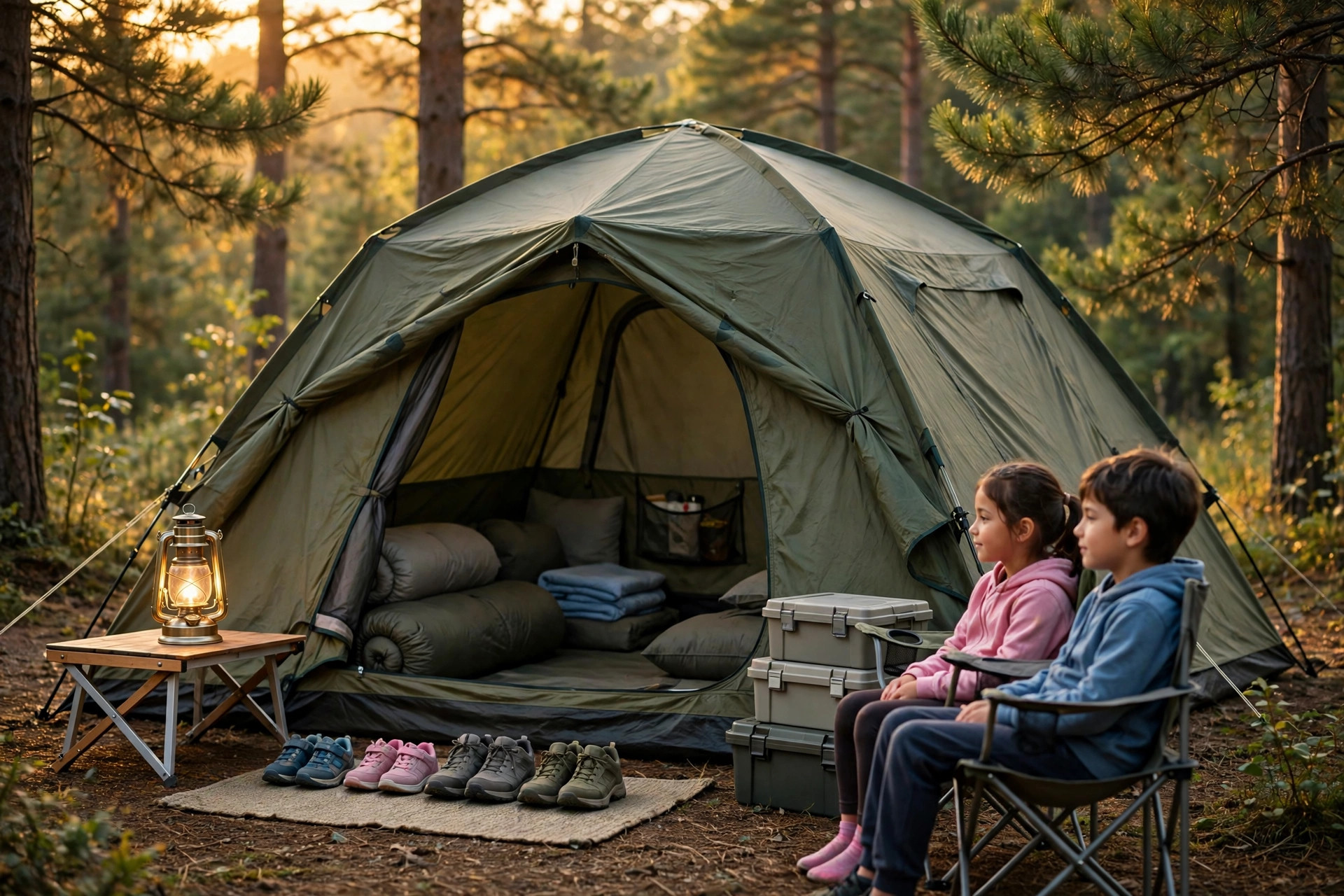
Shoes are the number one source of tent-floor chaos — and dirt. Set up a shoe station just outside the tent door: a small doormat, a collapsible crate, or even a mesh bag hung from a tent pole. Every pair of shoes lives there, always, no exceptions.
Inside the tent, keep one pair of clean camp socks or slip-on sandals per person for nighttime bathroom trips. That way nobody tracks mud inside, and nobody is hunting for shoes in the dark. Our full what to bring camping with kids packing list includes the shoe setup that has worked best for our family.
4. Hang Organizers on the Tent Walls
Most family tents have mesh pockets — and most families ignore them. A cheap hanging shoe organizer (the kind with clear pockets) hung from a tent loop or a gear line turns dead wall space into storage for toothbrushes, sunscreen, bug spray, lip balm, and the small items that otherwise vanish into sleeping bags.
Give each person one row, top to bottom, and put nighttime items — headlamps, water bottles, a book — in the pockets closest to each sleeping bag. It is the highest-impact organizer for the money, and it weighs almost nothing.
5. Run a Gear Line Inside the Tent
A simple length of cord or a bungee gear line strung across the tent ceiling, with a few carabiners or S-hooks, gives you a place to hang wet clothes, towels, hats, and headlamps. Clip a small mesh bag to it for each child and you have instant overhead storage that costs nothing and takes up zero floor space. Keep the line high enough that nobody walks into it at night, and never hang anything heavy.
6. The Night Basket by Every Sleeping Bag
Every sleeper gets a “night basket” — a small container, bag, or even a packing cube — placed at the head of their sleeping bag before bed. Into it goes everything that person might need overnight: water bottle, headlamp, a book, a pacifier or comfort toy, and any medication.
Build the baskets as part of the bedtime routine. Kids love the ritual, and it keeps the tent quiet at night — nobody whispering “where’s my water?” while everyone else sleeps. For more, see our guide on how to get kids to sleep while camping.
7. Enforce a Toy Limit — One Toy Tub
Kids will happily bring their entire toy collection camping. Do not let them. The rule in our family: each child picks the toys that fit in one small container with a lid — a shoebox-sized tub, a drawstring bag, or a packing cube. If it does not fit, it stays home. The lid matters: a lidded tub can be stacked, carried outside, and closed at night so toys do not spread across the tent.
8. The Dirty Laundry Bag System
Dirty clothes are sneaky: they mix with clean clothes, end up on the tent floor, and somehow multiply. Solve it with one mesh laundry bag per person, or one big family bag hung on a carabiner near the tent door. Dirty clothes go in the bag the moment they come off — not on the floor, not “on top of the duffel for now.”
Mesh beats plastic: wet clothes can breathe instead of turning musty. On the last morning, zip the bags shut and load them into the car — packing up takes minutes.
9. Keep the Snack Station Outside the Tent
Food in a tent is a double problem: crumbs everywhere, and smells that attract animals. Keep every snack, cooler, and food bin outside the tent — at the picnic table, in the car, or in a sealed bin in the vestibule. The only food that belongs inside overnight is a sealed water bottle per person. Set up a small snack station on a camp table at kid height, so children can help themselves.
10. Color-Code Everything by Child
Buy each child their own color — red for one, blue for another, green for the third — and use it everywhere: bins, water bottles, towels, packing cubes, headlamps, even the carabiners on the gear line. A four-year-old who cannot read a label can still find the blue bin, and cleanup becomes a matching game instead of a chore.
11. The Five-Minute Morning Reset
Systems only work if somebody maintains them, so build in a five-minute reset every morning before breakfast. The whole family tidies together, on a timer: sleeping bags rolled, bins closed, shoes at the door, trash in the trash bag, laundry in the laundry bag. Make it a race or play a song — kids who groan at “clean up” will happily compete at “beat the timer.”
Repeat it at bedtime, minus the sleeping bags. Two five-minute resets a day are the difference between a tent that stays organized all trip and one that falls apart by day two.
12. Use the Car as Your Storage Room
The tent is small. The car is big. Treat the car as the tent’s storage room: extra clothes, the cooler, bulk food, spare gear, and anything you will not need until tomorrow stays in the car, in one labeled bin per category, stacked so the one you need is always reachable. If you are still deciding what deserves a spot in the car versus the tent, our camping checklist with kids helps you sort essentials from nice-to-haves before you pack.
Which Systems Work Best at Each Age?
Not every system fits every age. Toddlers need simplicity and color; teenagers need privacy and their own space:
| Age group | Best systems | What to skip (for now) |
|---|---|---|
| Toddlers (2–3) | Color-coded bins, shoe station, toy tub, night basket | Day bags (parents pack them), gear line (too high to reach) |
| Preschoolers (4–5) | Day bags, color-coding, shoe station, morning reset game | Complex hanging organizers they cannot reach |
| School-age (6–9) | All 12 systems — they can run most of them alone | Nothing — this is the golden age for tent systems |
| Tweens & teens (10+) | One bin per kid, gear line, own night basket, car storage | Toy tubs; give them a privacy zone instead |
For families camping with a baby as well as older kids, the kids’ layering system is worth reading before your first cold night — warm kids sleep, and sleeping kids do not reorganize your tent at midnight.
Your Printable Tent Organization Checklist
Copy this list into your phone notes or print it before your next trip:
- ☐ Tent rule agreed: sleeping only, no storage in the tent
- ☐ One bin per kid, color-coded, packed at home
- ☐ Day bags packed: one outfit per bag, labeled by day
- ☐ Shoe station set up at the tent door with a mat
- ☐ Hanging organizer on the tent wall, one row per person
- ☐ Gear line strung, with a mesh bag per child
- ☐ Night baskets built at every sleeping bag
- ☐ Toy tub packed — one container per child, lid on
- ☐ Laundry bag hung near the door
- ☐ Snack station set up outside the tent
- ☐ Morning reset: five minutes, whole family, before breakfast
- ☐ Car organized as storage: one bin per category
Common Mistakes That Undo Every System
Bringing too much stuff. No organization system can fix overpacking. If the tent is full before you add the kids, the systems have nowhere to work. Pack less, and pack in containers from the start.
No home for dirty clothes. The moment dirty clothes hit the floor “just for now,” the tent is lost. The laundry bag has to exist on day one, in an obvious spot, before the first outfit comes off.
Systems only the parents understand. If a seven-year-old cannot run the system alone, it is a parent system, not a family system — and it will collapse the moment you are busy cooking dinner. Test every system with your kids at home first, in the backyard or even the living room.
Food inside the tent. Beyond the mess and the crumbs, food smells bring animals to your tent at night. Keep it outside, every night, no exceptions — see the National Park Service camping guidance on food storage for the official rules.
Frequently Asked Questions
How do I keep a tent organized with a toddler?
Keep it visual and simple: one color-coded bin, a shoe station at the door, and a toy tub with a lid. Toddlers cannot follow complex systems, but they can put the red toy in the red bin.
Soft fabric cubes and hanging pocket organizers beat hard boxes inside a tent: they are light, they collapse when empty, and they cannot hurt anyone who rolls onto them at night. Use mesh pockets built into the tent for headlamps and water bottles, and a hanging organizer for toiletries and small essentials.
How do you keep clothes organized while camping with kids?
Pack one outfit per day in its own zip bag or packing cube, labeled by day, and keep a mesh laundry bag near the tent door for dirty clothes. Clean and dirty never mix.
Should kids keep their shoes inside the tent?
No — keep shoes outside the tent at a shoe station by the door, on a mat or in a crate. This keeps dirt out of the sleeping area and stops shoes from getting lost under sleeping bags. Keep one pair of clean camp socks or slip-on sandals inside for nighttime bathroom trips.
How do I stop my tent from getting messy on a multi-day trip?
Run a five-minute family reset every morning and every evening, and keep the car as your storage room so the tent only holds what you need that night. Multi-day trips fall apart when gear accumulates — the daily reset and the “tent is for sleeping only” rule are what keep the systems working on day four as well as day one.
An organized tent is not about being perfect — it is about everyone knowing where their things are. Pick three systems for your next trip, try them for one weekend, and add more as they become habits. For more help planning, the REI camping with kids guide and Recreation.gov are solid next reads.
