You don’t need a $300-a-night safari tent to enjoy glamping. With the right setup, any ordinary tent — even the dome tent you bought years ago — can feel like a boutique hotel suite under the stars. The secret isn’t an expensive tent; it’s layering: a comfortable bed, warm lighting, real tableware, and a few thoughtful details that make the space feel intentional instead of thrown together.
This guide walks through seven upgrades that take the biggest share of your camping time — sleep, food, lighting, and lounging — and turns each one into something you’ll actually look forward to. None of them require special skills, and most use gear you already own or can rent.
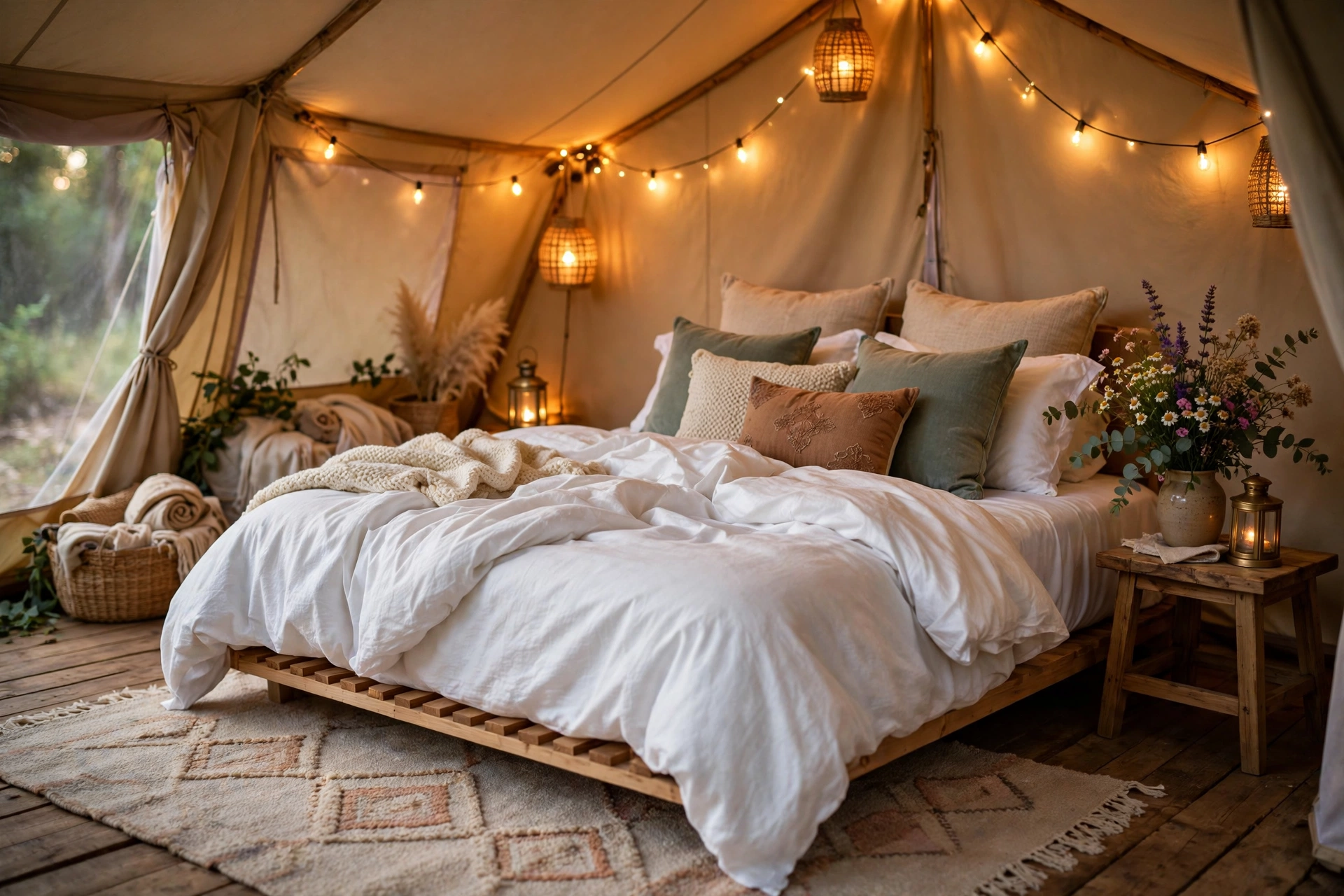
Where to Try Glamping First
Sleep Under the Stars Without Sacrificing Comfort
Tent glamping keeps you connected to the outdoors — the night air, the birdsong at dawn — while stripping out the parts of camping that leave you achy and grumpy. The biggest mindset shift: stop packing like you’re “roughing it” and start packing like you’re furnishing a small room. Every square foot of tent floor is living space.
Key benefits of tent glamping:
- Real connection with nature while sleeping genuinely well
- Far more affordable than people assume — most of the upgrades below cost less than one hotel night
- A middle ground that can convert skeptical partners and kids who “don’t like camping”
Your Glamping Adventure Awaits Anywhere
One of the greatest advantages of glamping is its versatility. You can pitch your tent in breathtaking locations — pine-scented forests, ocean sand dunes where you fall asleep to the sound of waves, or near spectacular national parks for easy trail access.
For beginners, start close to home:
- Your backyard makes the perfect trial run — if something’s missing, it’s a 30-second walk, not a 3-hour drive
- Established campgrounds like Kampgrounds of America offer power hookups, showers, and laundry — ideal infrastructure for your first luxury setup
- Testing at home first means your “real” trip is dialed in from the first night
If you’re still shopping for the right shelter, read our family tent buying guide first — a taller cabin-style tent makes the upgrades below much easier.
Create a Backyard Glamping Paradise
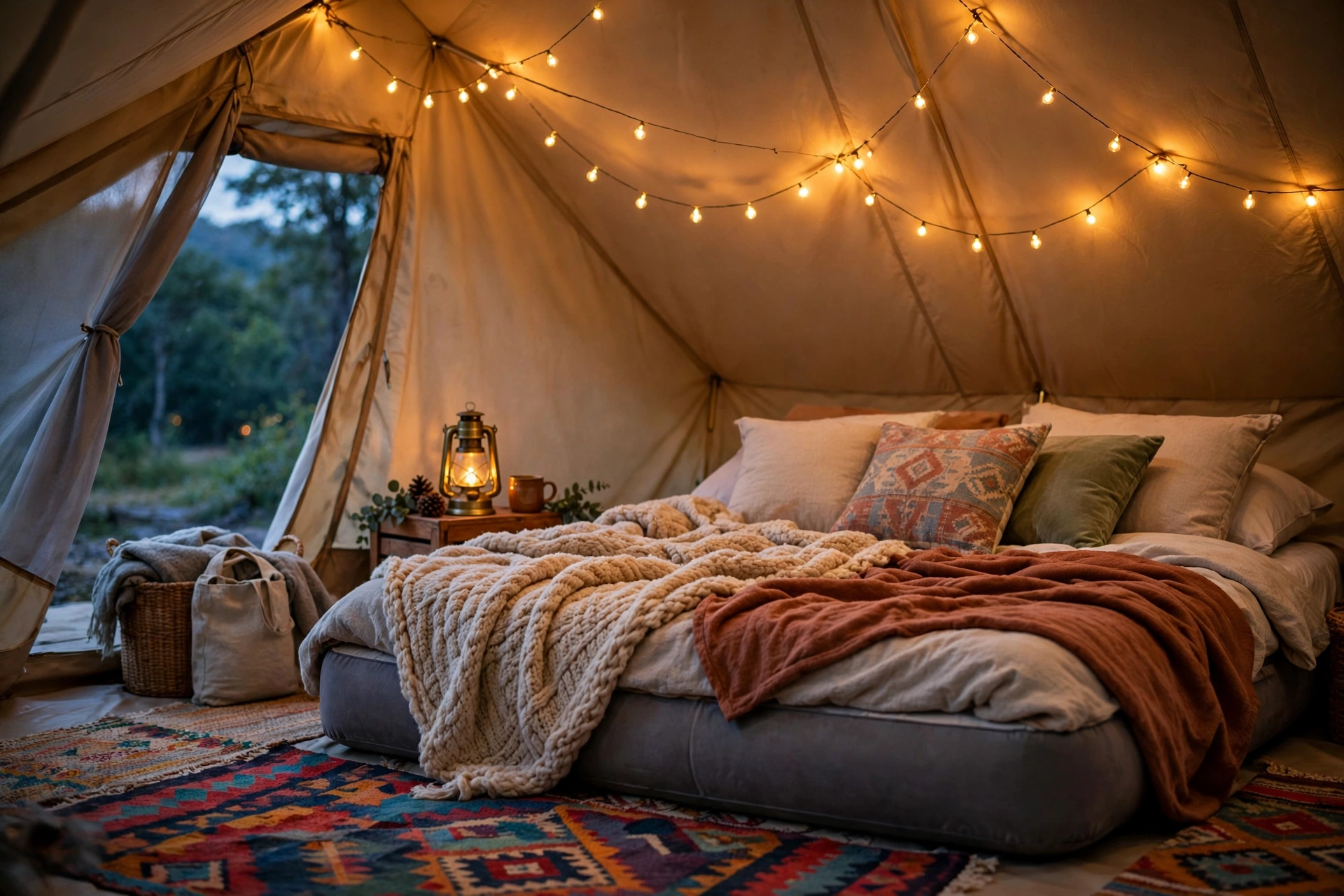
Transforming your backyard into a glamping trial zone pays off three ways:
Perfect for special occasions:
✓ Romantic date nights under the stars
✓ Weekend staycations when you can’t travel far
✓ Kids’ sleepovers they’ll talk about for years
Practical benefits:
• The whole family learns the setup routine in a low-stakes setting
• You discover what you’re missing (and what you overpacked) before the real trip
• A controlled environment for testing lighting, bedding, and power needs
Pro tip: Build a dedicated glamping checklist — gear, décor, entertainment, and food — during your backyard trial. If you’re starting from zero, our ultimate camping checklist covers the base layer; just add the luxury touches below.
Campground Glamping: The Best of Both Worlds
While glamping at home is convenient, the real magic happens at a proper campground. Here’s why campground glamping stands out:
Nature immersion:
- Wake up surrounded by nature with birds singing — no hotel alarm needed
- Easy access to outdoor activities like hiking, swimming, and stargazing
- Authentic camping atmosphere with comforts layered on top
Modern conveniences:
- Proximity to local attractions and sightseeing spots
- On-site amenities — hot showers, laundry, camp stores
- Many campgrounds now rent pre-furnished tents, so you can try the glamping life before investing in gear
7 Expert Tips to Transform Your Tent into a Luxury Glamping Retreat
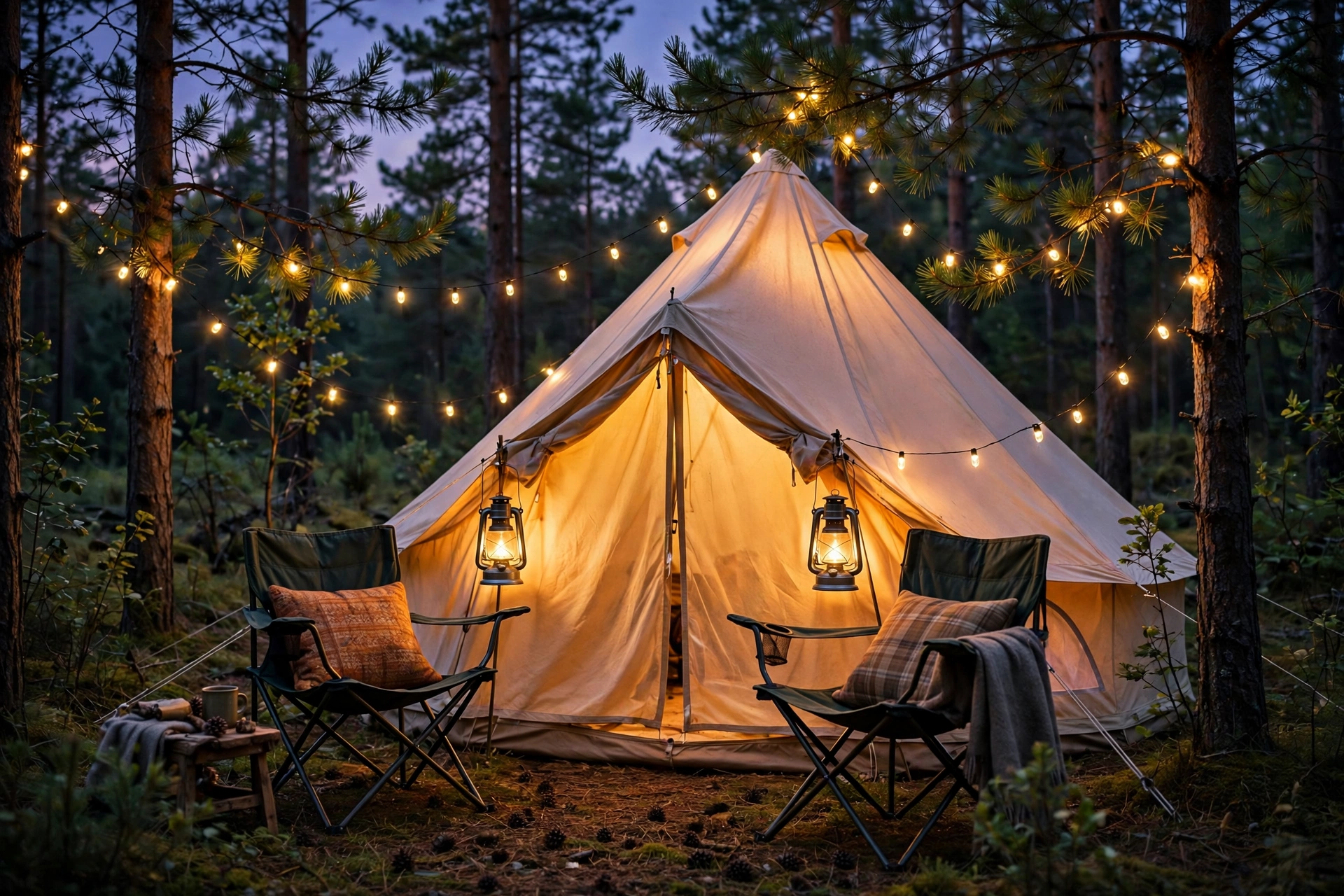
1. Invest in Premium Bedding for Hotel-Quality Sleep
Bedding is where 5-star glamping is won or lost. A standard sleeping bag on thin ground leaves you stiff; a layered bed makes you want to stay an extra night. Ditch the minimalist setup for these elevated options:
- Extra-thick air mattresses with built-in pumps — 4+ inches of height makes a real difference
- Sturdy cots topped with a memory foam topper — keeps you off cold ground entirely
- Layered camping quilts and blankets for adjustable warmth as the night cools
- Hotel-style duvets with high-thread-count cotton sheets — yes, real sheets
- Two pillows per person — one flat, one fluffy — for proper neck support
Pro tip: An electric blanket is a game-changer on chilly nights if you have power access, and for kids, packing their favorite pillow from home solves most bedtime resistance. For more on little ones, see what toddlers sleep in when camping and our guide to kids’ sleeping bag temperature ratings.
2. Elevate Your Camp Cuisine to Gourmet Levels
Glamping meals should transcend typical camp fare like grilling hot dogs. The trick is simple: cook what you’d cook at home, just on portable gear.
Essential equipment:
• High-quality cooler for perishables (ice retention matters more than you think)
• Portable two-burner stove or butane burner
• One cast iron skillet — it handles searing, baking, and campfire cooking
Menu ideas:
- Marinated skewers with fresh vegetables
- Artisanal cheese boards with local produce
- Refreshing fruit salads with honey-lime dressing
- One-pot pastas and campfire flatbreads that feel indulgent with zero fuss
Don’t forget: Pack favorite sauces, seasonings, and one premium ingredient per meal. A good olive oil or fresh herbs elevate everything. For a full week of ideas, see our 7-day camping meal plan.
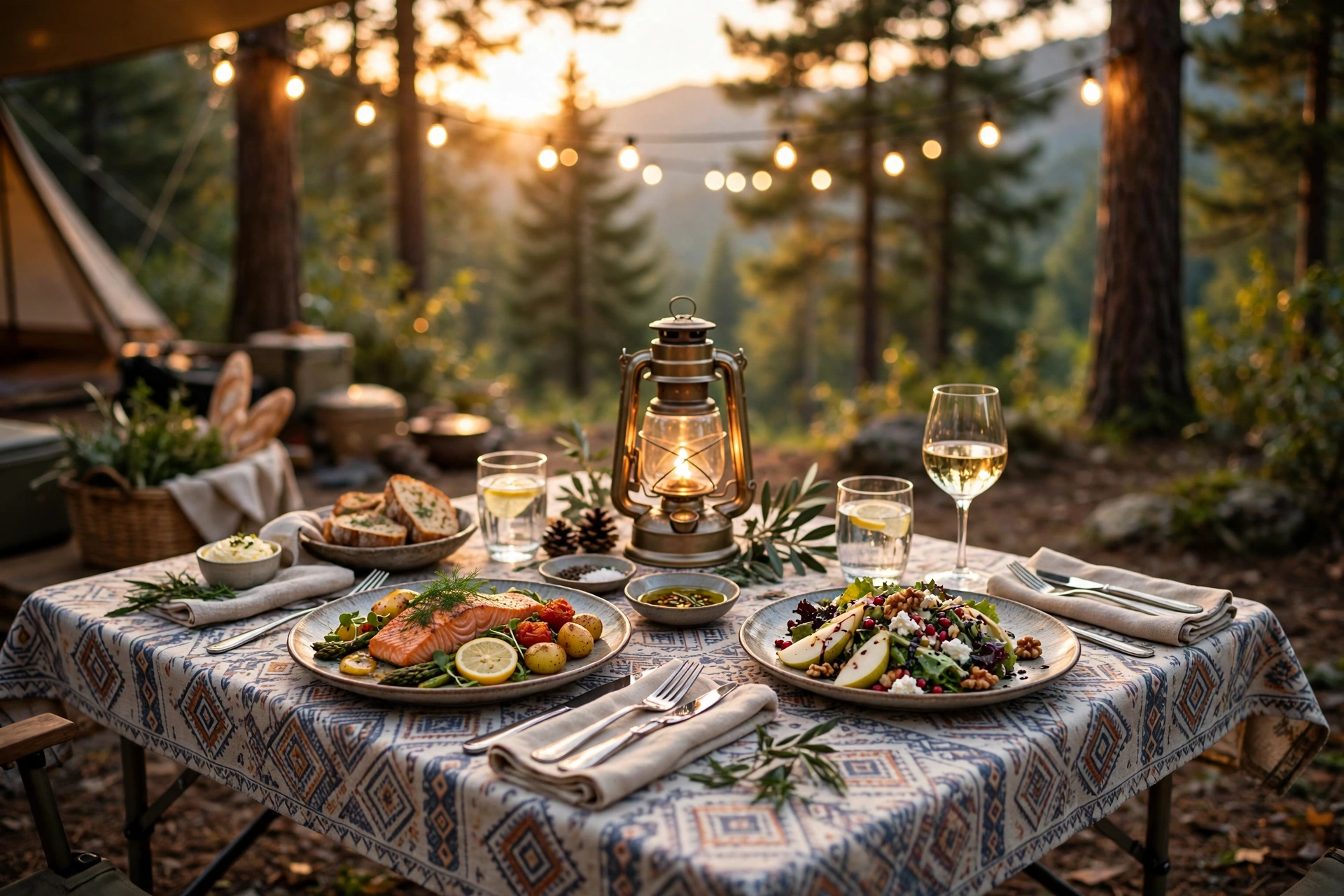
3. Create a Stunning Outdoor Dining Space
Transform your campsite eating area into a luxury dining experience — this is the upgrade guests notice first:
Table setup:
✓ Use a portable folding table as your base
✓ Cover it with a colored or patterned tablecloth (it also speeds up cleanup)
✓ Add a centerpiece — a jar with wildflowers or a lantern
Functional zones:
- Designated meal-prep area separate from the dining table
- Beverage station with real glassware — plastic cups are what make a meal feel “camping”
- Comfortable seating with cushions — even folding chairs feel better with a throw pillow
4. Design Indoor/Outdoor Living Spaces
A luxury tent isn’t one big empty room — it has zones. Create separate areas for sleeping, lounging, and changing, and the tent suddenly feels twice its size.
Inside your tent:
• Layer soft rugs over the tent floor — they insulate feet and dampen that “nylon” feel
• Add floor cushions and poufs for a lounge corner
• Use a portable fan for airflow in warm climates
• Hang a small fabric organizer or shelf for books, glasses, and chargers — clutter kills the luxury feel
Outside your tent:
- Hang a hammock between trees for afternoon naps
- Arrange inflatable or folding furniture around the fire ring
- Set up a proper lounge with folding chairs, side tables, and a rug that defines the space
Pro tip: An outdoor rug is the single cheapest “lounge” upgrade — it visually separates your living area from bare dirt and keeps dust out of the tent.
5. Curate Premium Entertainment Options
Go beyond typical camping activities with a small entertainment kit that makes evenings feel special:
Daytime fun:
• Classic lawn games like ladder ball, cornhole, and lawn Jenga
• Water games if you’re near a lake or beach
• A nature scavenger hunt — kids stay busy for hours with a simple list
Evening entertainment:
- Card game tournaments around the fire
- Music with a portable speaker or live acoustic instruments
- Stargazing with a phone app — constellations make every clear night feel cinematic
- Storytelling or a “roast” competition with s’mores as prizes
Rain in the forecast? Our 25 tent-friendly rainy-day activities keep the glamping vibe alive when you’re stuck inside.
6. Set the Mood with Strategic Lighting
Lighting is the fastest way to make a tent feel expensive. Layer it like you would at home — overhead, task, and accent:
Options include:
✓ String lights draped around the tent and nearby trees — the single biggest atmosphere upgrade
✓ Lanterns with warm-white bulbs instead of harsh cool-white headlamps
✓ Flameless electric candles for a safe glow on the table
✓ Battery-powered lanterns for areas without electric hookups
Pro tip: Charge solar string lights during the day and switch them on at dusk — free ambiance every night. Our headlamps vs. lanterns guide breaks down which lights actually work best at a family campsite.
7. Pack the Comforts of Home
The final layer is personal — the small things that make a space feel like yours:
Personal care:
- Travel-size versions of favorite products in organized containers
- A proper mirror and a hanging toiletry kit — getting ready shouldn’t feel like a chore
- Scented hand soap or a small essential-oil diffuser for the tent (battery-powered)
Comfort items:
• Favorite throw blankets and one “good” pillow from home
• Insulated mugs for morning coffee that stays hot
• For kids: their beloved stuffed animals and one familiar book for bedtime
Remember: The key to successful glamping is balancing outdoor adventure with the comforts that make you feel at home in nature.
Glamping FAQ
How much does it cost to glamp in your own tent?
For most campers, $75–$150 in one-time purchases covers the core upgrades: string lights, a decent air mattress or topper, a tablecloth, real glassware, and a few throw pillows. After that, each trip costs nothing extra.
What kind of tent works best for glamping?
Any tent you can stand up in. Cabin-style tents with vertical walls give you the most usable space for furniture and bedding, but plenty of people glamp beautifully in large dome tents. Size and headroom matter more than brand.
Can you glamp in a backyard?
Absolutely — it’s the best way to start. A backyard trial lets you test bedding, lighting, and your setup routine with the house as backup. It’s also perfect for staycations, date nights, and kids’ sleepovers.
How do you keep a glamping tent warm at night?
Layered bedding (sheets, quilt, duvet), a rug on the tent floor for insulation, and warm sleepwear do most of the work. With power access, an electric blanket is the ultimate upgrade; without it, a good sleeping bag liner adds surprising warmth.
Is glamping safe for kids?
Yes — arguably safer than standard camping, since you’re packing comfort items that reduce nighttime wakeups and complaints. Use flameless candles instead of real ones, keep string lights out of reach of small hands, and pack familiar bedtime items.
What’s the difference between glamping and regular camping?
Mindset and setup, not the tent. Glamping prioritizes comfort: real bedding, layered lighting, proper meals, and furnished spaces. You’re still sleeping outdoors and cooking outside — you’re just not punishing yourself while doing it.
