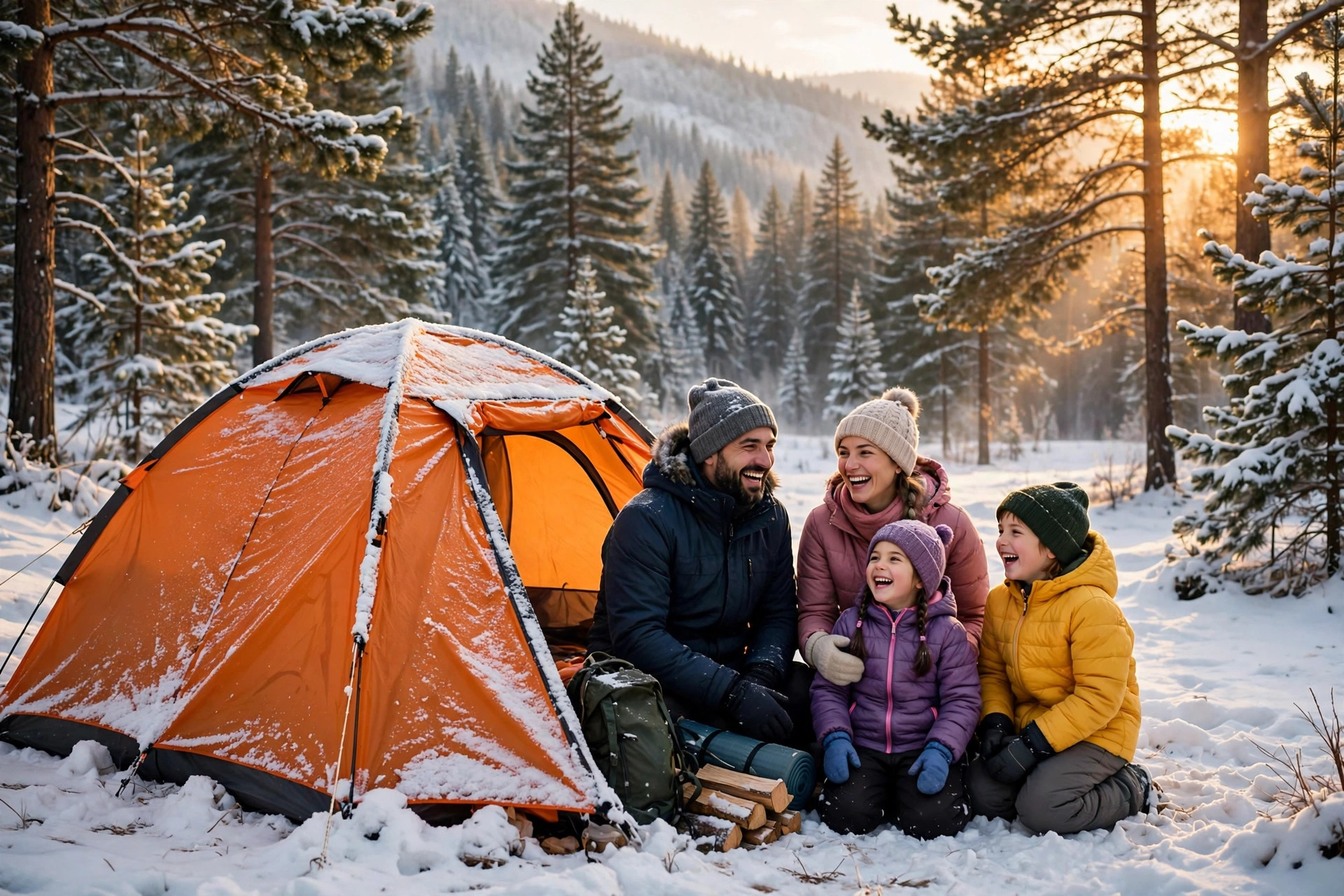
Winter camping with kids sounds brave — maybe even a little crazy. Snow on the tent, frost on the zippers, and little hands that go numb fast if you get it wrong. But ask any family who has done it well and they will tell you the same thing: a snowy campsite can be the most magical trip your kids ever remember. The quiet, the stars, hot cocoa by the fire, a snowman ten steps from your tent — none of that exists in July.
The difference between a magical trip and a miserable one is preparation. Pick the right campsite, pack the right gear, layer correctly, and plan for staying warm, fed, and safe.
Is Winter Camping with Kids Actually Safe?
Yes — with the right conditions. A calm, dry weekend at 25°F near a plowed road is a completely different trip from a backcountry site in a blizzard at 5°F.
As a parent, control what you can: the forecast, the campsite, the gear, the food, and the exit plan. If any one of those looks wrong, postpone. A good first winter trip is short (one night), close to home, and close to your car.
What age is old enough for winter camping?
There is no official minimum age, and every child is different. Most experienced outdoor families suggest waiting until kids are at least 4 or 5 for a tent-based winter trip, because younger children cannot say clearly when they are cold, and they lose body heat faster than adults. Toddlers and babies are better suited to a heated cabin — you can still play in the snow all day and sleep warm at night. If you do bring a baby or toddler, read our guide to camping with a newborn first and talk to your pediatrician.
For kids aged 5 and up, the biggest safety factor is whether your child can communicate. Teach them the rule before you leave home: “If you feel cold, shivery, or your fingers hurt, tell me right away.”
Picking the Right Campsite for Winter
Your campsite choice matters more in winter than in any other season — a beautiful summer site can be a miserable, or dangerous, winter site. Look for these things:
- Plowed road access. Confirm the campground road is plowed and open in winter — many close their loops from November to April.
- Short walk from the car. In winter, your car is your backup heater, gear storage, and escape plan.
- Water and toilets. Many campgrounds shut off water in winter to prevent frozen pipes. Check what is available, or bring all your water.
- Wind protection. A site sheltered by trees or a hillside stays noticeably warmer than an exposed ridge or lakeshore.
- Cell service or a ranger station nearby. For a first winter trip, stay somewhere you can call for help.
Book through Recreation.gov where possible, and call the campground or ranger station the week of your trip to confirm winter conditions and road status.
Winter Camping Gear for Kids: What Actually Matters
You do not need expedition gear. But winter punishes the wrong gear in ways summer never will: a summer sleeping bag, cotton clothes, and a leaky tent can turn a fun night into a cold, sleepless one. Here is what to prioritize:
| Gear | What to look for | Why it matters |
|---|---|---|
| Sleeping bag | Rated 10–15°F below the expected overnight low | Kids lose heat faster than adults |
| Sleeping pad | Insulated, R-value 4 or higher (or two pads stacked) | The frozen ground steals more heat than the air |
| Tent | Sturdy 3-season tent with a full rainfly | Blocks wind and spindrift |
| Clothing | Wicking base layers, insulating mid-layer, waterproof shell | Wet clothes lose heat fast |
| Boots | Insulated, waterproof, room for thick socks | Cold feet end the fun fast |
| Headlamp | One per person, spare batteries kept warm in a pocket | Winter nights are long |
If you are buying a new bag for your child, our guide to kids sleeping bag temperature ratings explains what those numbers mean. And before you pack, run through our family camping checklist of 47 essentials and add the winter items below.
The Layering System That Keeps Kids Warm
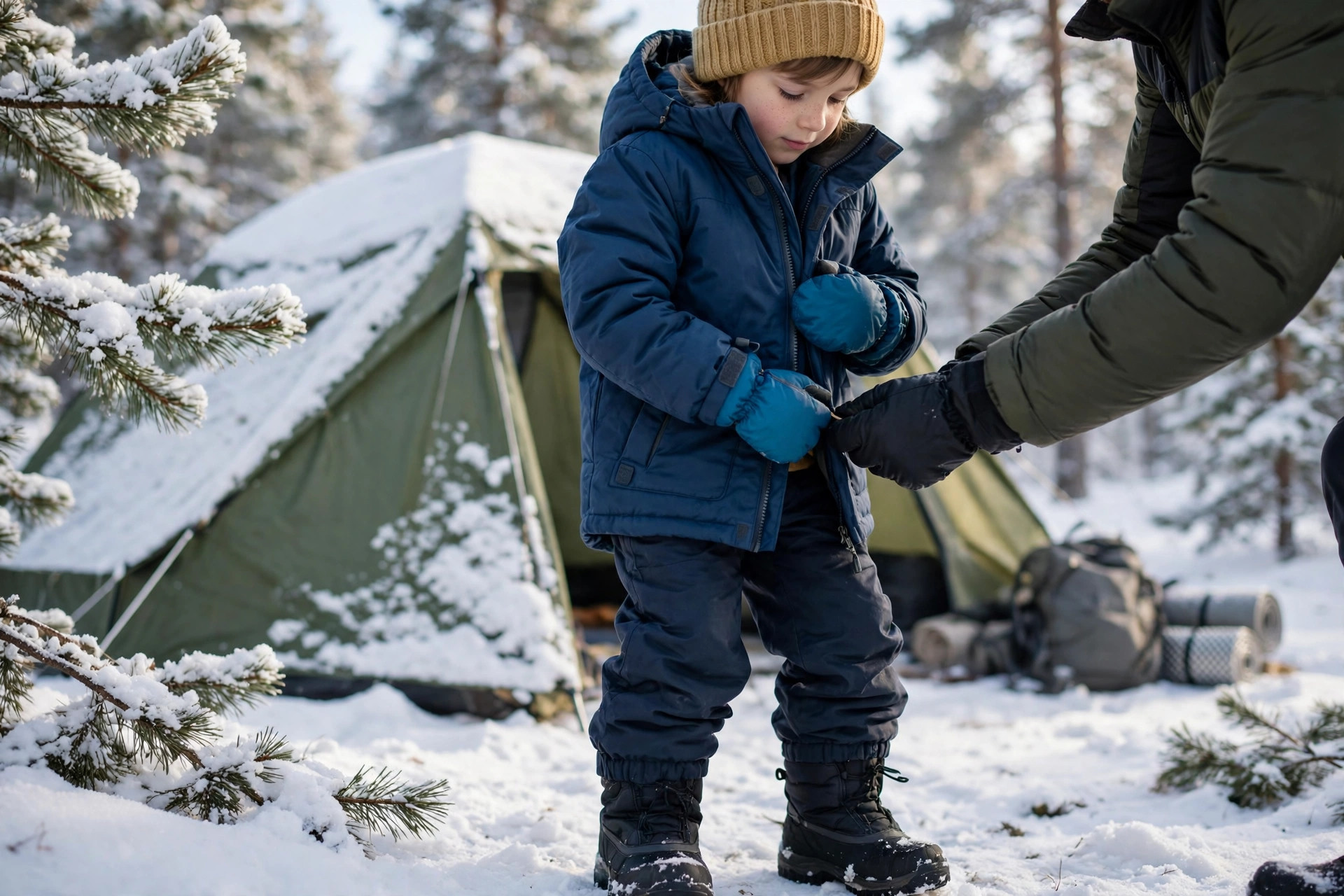
The single most important winter camping skill is layering. One thick coat is not enough — layers trap warm air, let you adjust as activity changes, and keep sweat away from the skin. The rule is simple: wick, insulate, protect.
Base layer: wick moisture away
Start with a snug synthetic or merino wool base layer, top and bottom. Never cotton — it holds sweat against the skin and gets cold fast.
Mid layer: trap the warmth
Add a fleece jacket or a lightweight insulated puffy jacket. For very cold days, add a second thin fleece. This is the layer you adjust most often — kids warm up fast when sledding and cool down fast when standing still.
Outer layer: block wind and snow
Finish with a waterproof, windproof shell jacket and snow pants. In wet snow, a water-resistant softshell is not enough — you need a true waterproof shell for kids who will be sitting, rolling, and falling in the snow.
Don’t forget the extremities
Pack a warm beanie, waterproof mittens (warmer than gloves for young kids), thick wool or synthetic socks, and a neck gaiter. Bring spares of everything small — mittens and socks get wet, and a dry pair is the fastest way to rescue a cold, unhappy child. For the full system, see our guide to the layering system that keeps kids warm while camping.
Setting Up Camp in Snow
Camp setup takes longer in winter, so arrive with at least two hours of daylight to spare.
Pick and prepare your tent site
Choose a flat spot sheltered from the wind. Stamp the snow down firmly with your boots before pitching — packed snow is warmer and more stable than loose powder. In heavy snow, pitch with the door facing away from the wind.
Build a warm sleep system
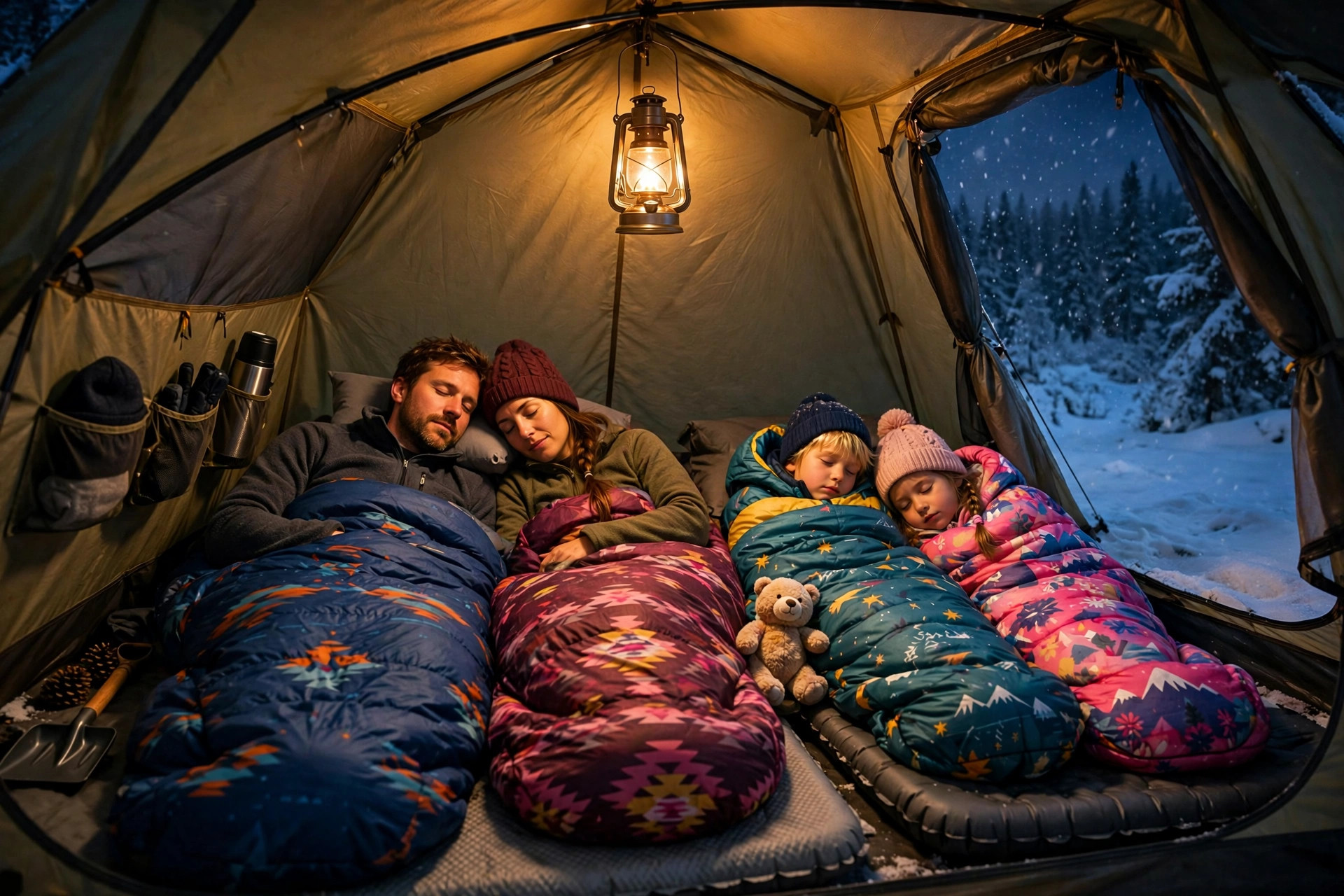
Inside the tent, lay a closed-cell foam pad first, then your insulated inflatable pad on top. The foam pad blocks the cold ground and protects the inflatable pad from punctures. Unroll sleeping bags early so the insulation lofts. Put tomorrow’s clothes in the foot of the sleeping bag — they will be warm when the kids wake up.
Keep the tent ventilated
You must ventilate the tent in winter. Breath moisture condenses and freezes on the tent walls, then drips down on the sleepers. Leave a vent or a small gap in the door open, even on cold nights. Never cook inside the tent — carbon monoxide from a stove in an enclosed space is deadly.
Food and Water in Cold Weather
Kids burn more calories in the cold, and cold food does not motivate anyone. Plan meals that are warm, simple, and fast: one-pot pasta, hearty soup, or foil-packet meals over the fire. Prep as much as possible at home — chop vegetables, pre-mix pancake batter — so camp cooking is mostly heating and serving.
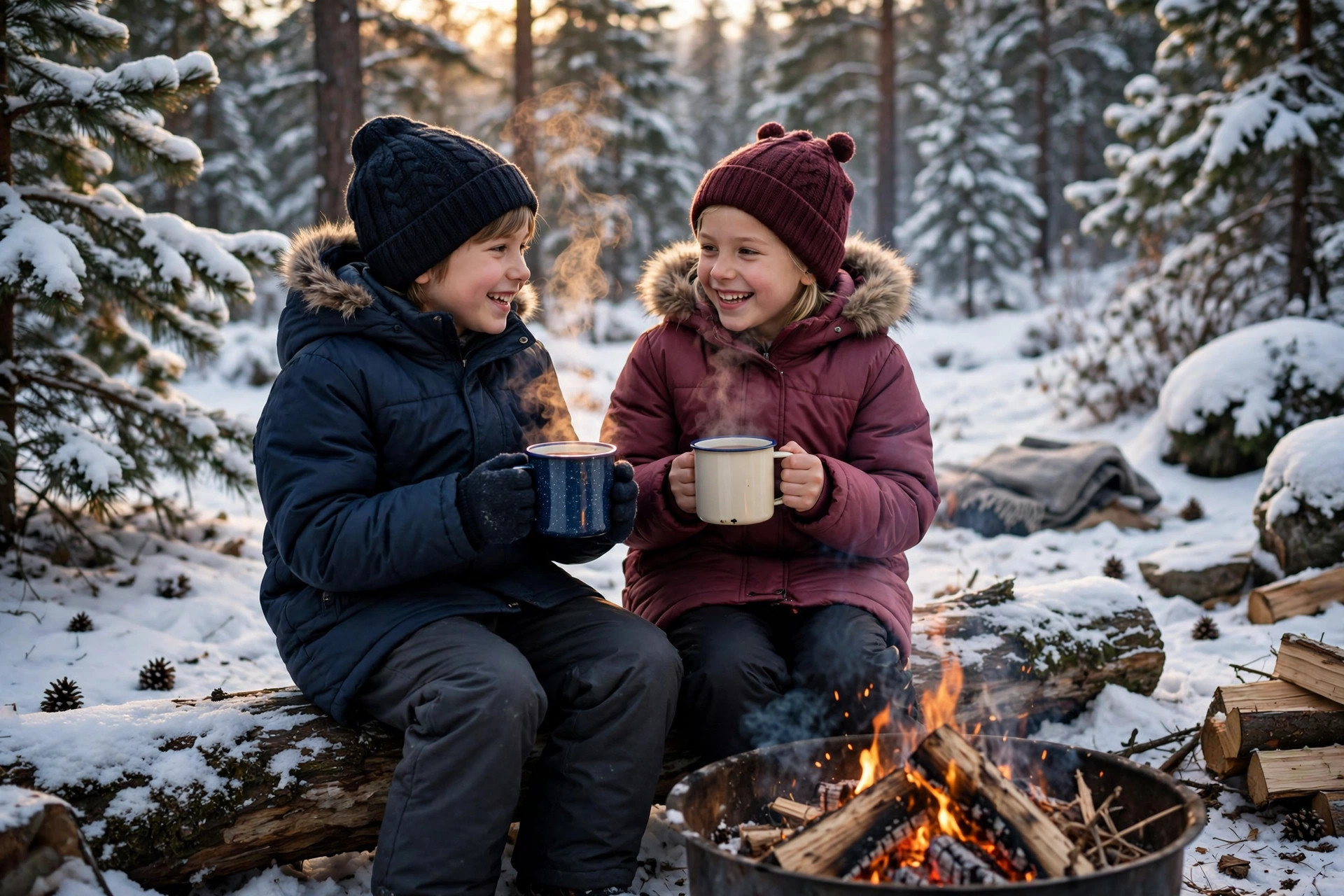
Hot drinks warm kids from the inside: cocoa, cider, and herbal tea. Keep a thermos of hot water ready at all times.
Water needs planning too. If the campground water is off, bring all your drinking and cooking water — at least one gallon per person per day, plus extra for washing. Keep jugs inside the tent at night so they do not freeze. Melting snow for water works in a real emergency, but it takes a lot of fuel and time — do not rely on it for a family trip.
A Simple Winter Camping Schedule for Families
A loose schedule keeps everyone warm and happy:
- 2–3 p.m.: Arrive, set up camp, stamp the tent platform, organize gear.
- 3–5 p.m.: Active play — snowman building, sledding, a short nature walk.
- 5–6 p.m.: Early dinner. Eat warm food before the temperature drops.
- 6–7:30 p.m.: Campfire time — cocoa, stories, stargazing. Then into the tent to wind down.
- 7:30–8 p.m.: Bedtime. Change into dry base layers and settle into warm sleeping bags.
- Morning: Hot breakfast first, then pack up in daylight.
Cold-Weather Safety Rules Every Parent Needs
Winter camping safety is mostly about watching for the early warning signs and acting fast:
- Check in often. Ask kids every 30–45 minutes how their fingers, toes, and ears feel. Young children often do not notice — or report — that they are getting cold.
- Know the signs of frostbite: pale or waxy skin, or numbness and tingling, usually on fingers, toes, ears, or the nose. Warm the area slowly with body heat or warm (not hot) water. Do not rub it.
- Know the signs of hypothermia: uncontrolled shivering, clumsiness, slurred speech, confusion, or unusual sleepiness. This is an emergency — get the person warm and dry and call for help.
- Never ignore shivering. When a child starts shivering, stop the activity, add layers, give a warm drink, and get moving or inside the tent.
- Keep everyone dry. Wet clothes and boots are the fastest route to cold injuries. Change out of wet layers immediately — spare socks and mittens are non-negotiable.
- Have a bail-out plan. Know how long it takes to reach the car, a heated building, or the nearest town. Leaving early is the right decision, not a failure.
Camping near a national park? Check the National Park Service camping information for that park’s winter rules, closures, and alerts first.
What to Do If the Weather Turns
Mountain weather changes fast. Check the forecast the night before and the morning you leave. If high winds, heavy snow, or a sharp temperature drop are expected, postpone — especially on a first trip.
Build a backup plan into every winter trip: a nearby lodge, a cabin, or a motel in the nearest town. Tell the kids in advance that “plan B” is part of the adventure. If your family would rather sleep warm and play in the snow all day, a winter cabin trip is a wonderful alternative — and our guide to fall camping with kids explains how conditions change as the season turns cold.
Winter Camping with Kids: Packing Checklist
Add these winter items to your normal camping list:
- ☐ Sleeping bags rated 10–15°F below the expected low
- ☐ Insulated sleeping pads (R-value 4+) plus foam pads
- ☐ Base layers, mid layers, waterproof shell — no cotton
- ☐ Spare socks, mittens, and base layers for every person
- ☐ Insulated waterproof boots
- ☐ Beanies, neck gaiters, hand warmers
- ☐ Headlamps with spare batteries (kept warm in a pocket)
- ☐ Hot water bottles or insulated thermoses
- ☐ Extra food and a full day of extra water
- ☐ A snow shovel and a small tarp for the tent area
- ☐ A charged phone and a paper map
- ☐ A basic first-aid kit plus blister care
- ☐ Fire starters and dry firewood
- ☐ Sleds or snow toys
Frequently Asked Questions
What temperature is too cold for kids to camp in?
For a first trip, aim for overnight lows no colder than 20°F, and daytime highs above freezing. Wind chill matters as much as the temperature — a windy 25°F night feels far colder than a calm 20°F night.
Can kids sleep in a tent in the snow?
Yes, with a properly rated sleeping bag, an insulated pad system, and dry layers. The ground is the biggest heat thief, so two pads (foam plus insulated inflatable) matter more than a thicker bag.
How do you keep a tent warm in winter?
You do not heat a tent — you insulate the people inside it. A good sleep system, dry layers, and a hot water bottle do the work. Never use a stove or heater inside a tent: the carbon monoxide risk is deadly. Keep the tent ventilated so condensation does not freeze on the walls.
What should kids wear for winter camping?
Three layers: a moisture-wicking base layer (synthetic or merino wool, never cotton), an insulating mid layer (fleece or puffy jacket), and a waterproof, windproof outer shell. Add insulated waterproof boots, a beanie, waterproof mittens, and a neck gaiter. Bring spare socks and mittens.
Is a 3-season tent OK for winter camping with kids?
For a calm-weather trip at a developed campground, a sturdy 3-season tent with a full rainfly is usually fine. In heavy snow or high wind, a 4-season tent is safer. Whatever tent you use, stamp the snow flat before pitching and keep the vents open.
What is the best first winter camping destination for families?
A developed campground at a state or national park with plowed road access, running water, and a ranger station nearby. Stay within a short walk of your car, keep the trip to one night, and have a motel or lodge backup nearby.
Final Thoughts
Winter camping with kids is not about proving anything — it is about a kind of quiet and wonder summer camping never offers. Keep the trip short, the campsite easy, the layers dry, and the cocoa hot. Watch the forecast, watch your kids, and be ready to call it a day early if the cold wins. Do that, and your kids will remember the snowman, the stars, and the warm tent.
