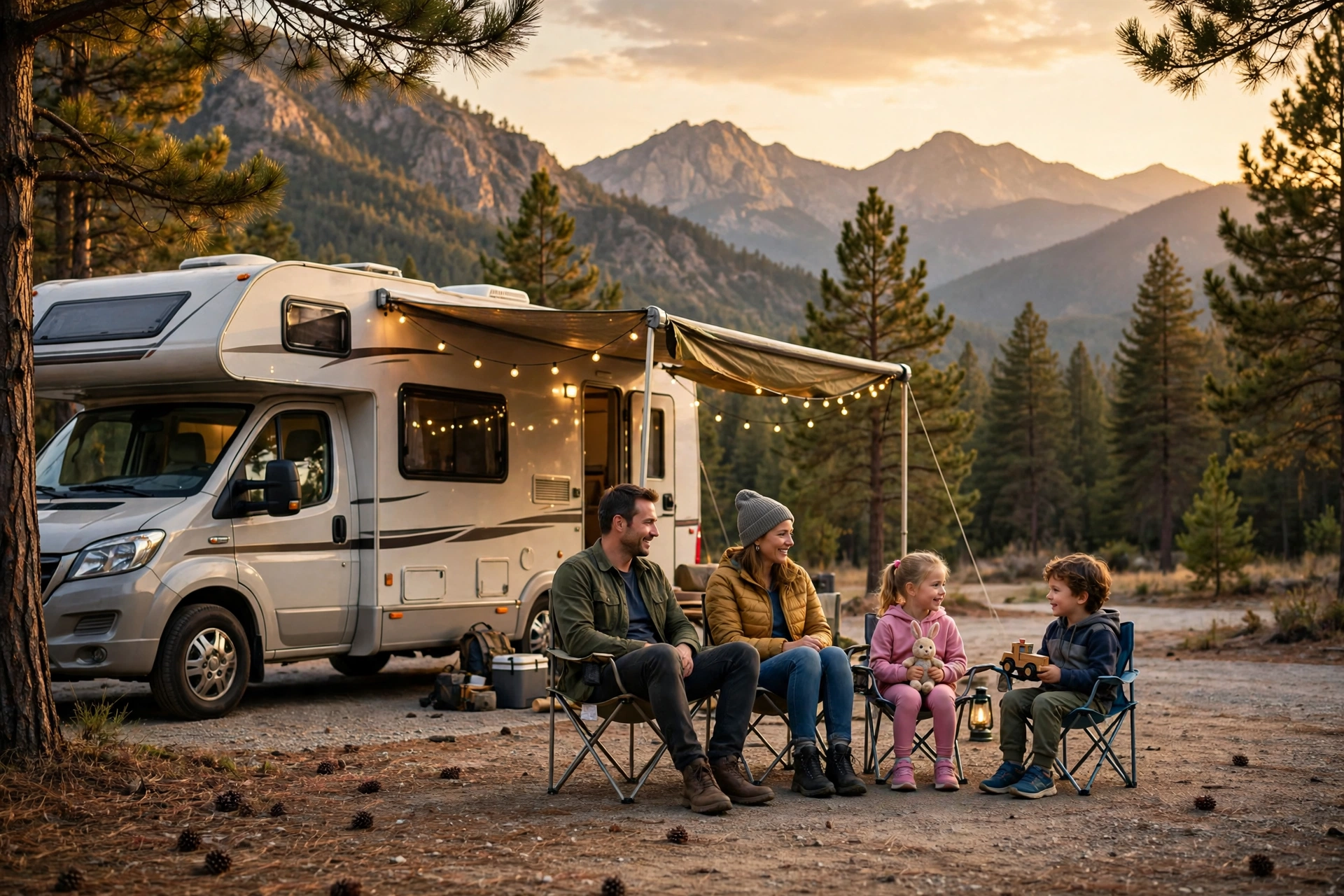
Your first RV trip with kids sounds like a dream: no tent to pitch in the rain, a real bed for everyone, and a kitchen that follows you to the mountains. Then the questions start. Which RV do you rent? How do hookups work? What do you do when a toddler needs a nap and you’re parked at a gas station?
This guide walks you through choosing the right RV, packing smart, setting up camp without stress, and keeping kids safe and happy — everything a first-timer needs.
Should Your Family Rent or Buy an RV First?
For a first trip, rent. Buying an RV is a big financial commitment, and you do not yet know which layout your family actually likes. Renting lets you test the lifestyle for one weekend before you decide anything.
Most families rent through a peer-to-peer platform or a local rental company. Peer-to-peer rentals usually cost less and come with more variety, while established rental companies offer roadside assistance, insurance bundles, and a staff member who walks you through the vehicle before you leave. For a first trip with kids, that walkthrough is worth a lot.
Book your rental at least four to six weeks ahead for summer weekends and holidays. Ask these questions before you pay:
- Does the rental include bedding, kitchen gear, and camp chairs, or do you bring your own?
- How many miles are included per day, and what does an extra mile cost?
- What happens if something breaks on the road — who do you call, day or night?
- Are car seats allowed, and where are the approved anchor points?
Choosing the Right RV Size for Your Family
The right size is the smallest RV your family can sleep in comfortably. A bigger rig is harder to park, more expensive to fuel, and more stressful to drive on narrow campground roads.
Class C motorhomes: the easiest first choice
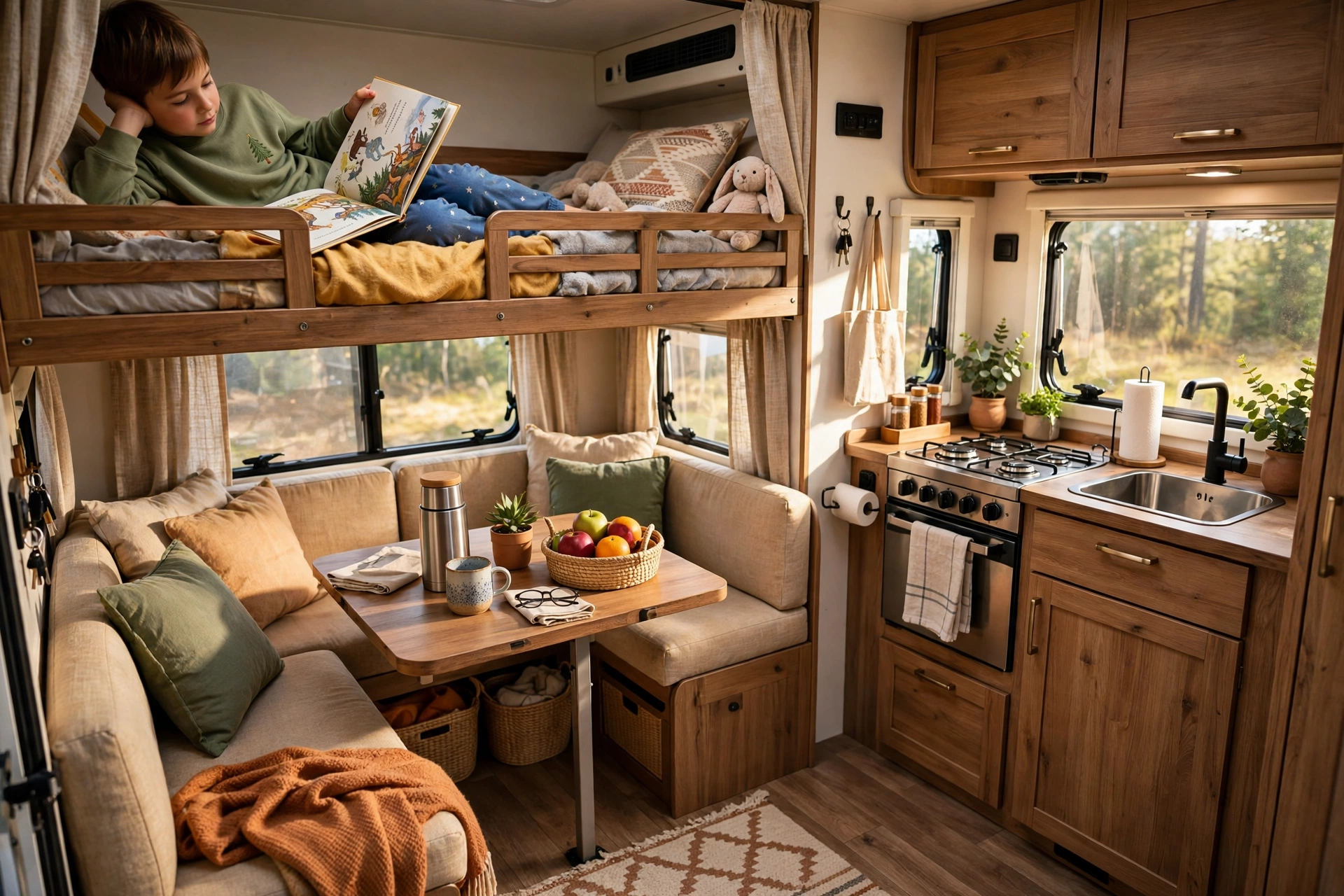
Most first-time family renters do best in a Class C motorhome between 22 and 28 feet. It drives much like a large van, sleeps four to six with a cab-over bunk kids love, and has a bathroom and kitchen built in. You arrive, level the RV, and you are camping.
Travel trailers: more space, more work
A travel trailer gives you more living space for the money, and you can unhook and drive your tow vehicle to the store. But towing requires a capable vehicle, a weight-distribution hitch, and practice backing up. If you have never towed anything, save it for your second trip.
Class B camper vans: great for small families
A camper van is easy to drive and park almost anywhere, but space is tight. It works well for a family of three with one small child, or for a weekend trip where you spend most of your time outside. With two kids and a week of gear, it gets cramped fast.
How RV Hookups Actually Work
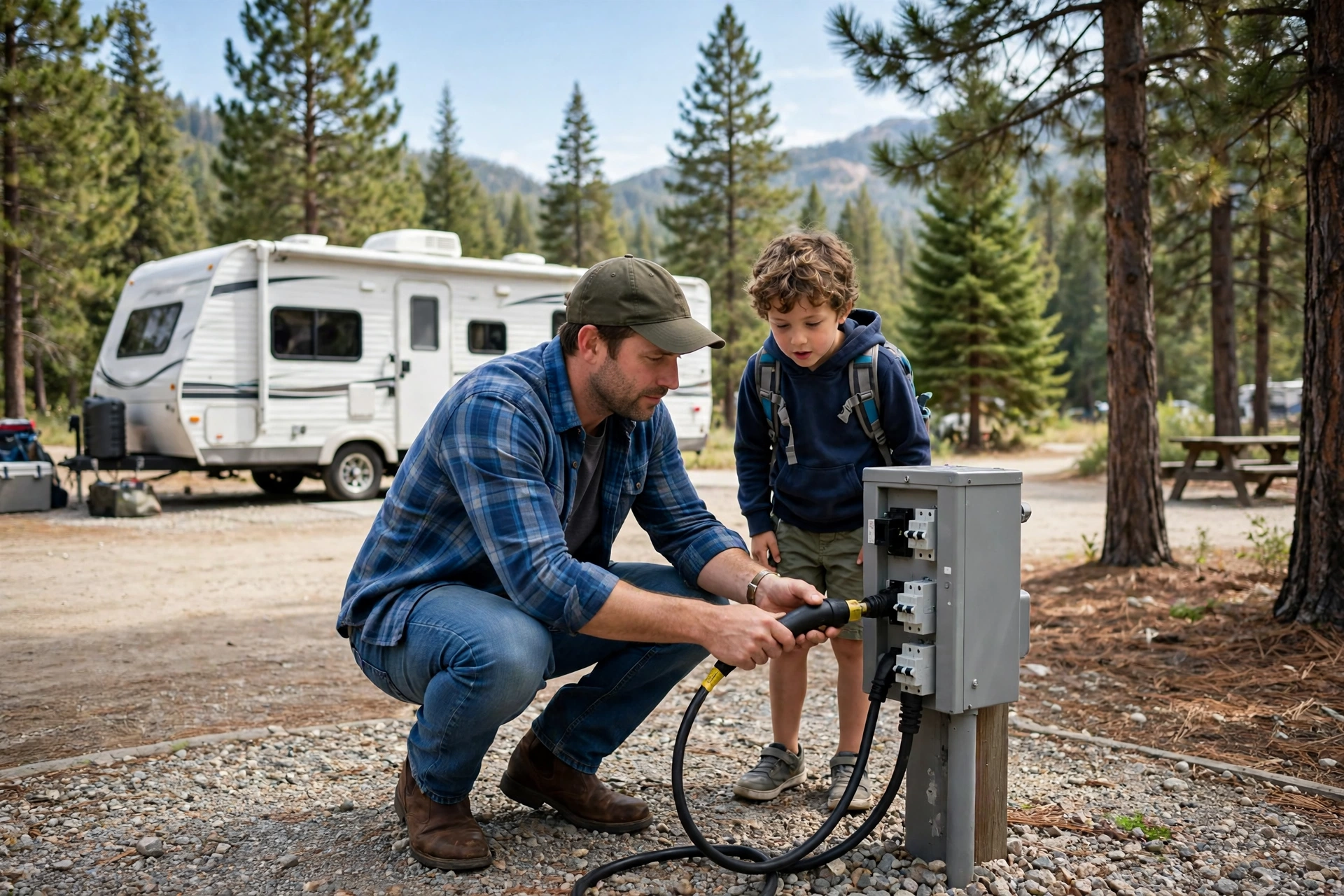
Hookups sound technical, but they are just three connections: water, electricity, and sewer. Most family campgrounds offer full hookups, and a staff member will happily show you the first time.
Electric hookups
Plug the RV’s power cord into the pedestal at your site. Most family RVs use a 30-amp plug; some larger ones use 50-amp. Use a surge protector between the pedestal and your RV — it protects your electrical system from campground power spikes, and rental companies expect you to use one.
Water hookups
Connect a drinking-water hose from the spigot to the RV’s city water inlet. Always use a water pressure regulator, because campground water pressure can be high enough to damage RV plumbing. Fill your fresh-water tank before you leave home if your first stop is a site without water.
Sewer hookups
This is the part everyone dreads, and it is honestly the easiest. Connect the sewer hose from the RV’s outlet to the ground drain, open the black-water valve first, then the gray-water valve to rinse the hose. Wear disposable gloves, keep kids well away, and wash your hands thoroughly afterwards. Empty the tanks when they reach about two-thirds full, never when they are nearly empty — the extra volume helps everything flow out cleanly.
Packing for an RV Trip with Kids
Packing for an RV is different from packing for a tent trip. You have more space, but weight matters, and everything has to stay put while you drive. Pack in soft bags rather than hard suitcases — they fit into RV cabinets far better.
The essentials checklist
- Bedding for every bunk, plus one extra blanket per child
- Car seats and booster seats, installed and checked before departure
- A basic kitchen kit: one pot, one pan, a cutting board, a knife, plates, cups, and utensils
- Food for the first night plus breakfast — do not plan a grocery run on arrival day
- First-aid kit, children’s medication, sunscreen, and insect repellent
- Flashlights or headlamps for every family member
- Outdoor games, books, and a few quiet toys for rainy hours
- Trash bags, paper towels, dish soap, and a small broom
Our full family camping checklist covers the gear side in detail — use it as your master list and cross off what the rental already provides.
Setting Up Camp Without the Stress
Arrive before dark: setting up an RV the first time takes about 45 minutes in daylight, twice as long in the dark.
Follow the same order every time:
- Park, set the parking brake, and chock the wheels.
- Level the RV side to side first, then front to back.
- Connect electric, then water, then sewer.
- Extend the slide-outs if your RV has them, and check that nothing is in the way outside.
- Put the awning out, set up chairs, and let the kids explore the site.
Give each child a small job — holding the flashlight, carrying the chocks, counting the hookups. Kids who help set up camp feel ownership of the trip, and they complain a lot less.
Keeping Kids Safe in and Around an RV
An RV is a home and a vehicle at the same time, and that creates safety rules that are different from both.
- While driving: children ride in proper car seats or boosters, buckled in a forward-facing seat. Never let kids roam the RV while it is moving, no matter how tempting the bunk looks.
- At camp: teach kids the campsite boundary on arrival — how far they can go without an adult. Campground roads look safe, but other RVs are backing up constantly.
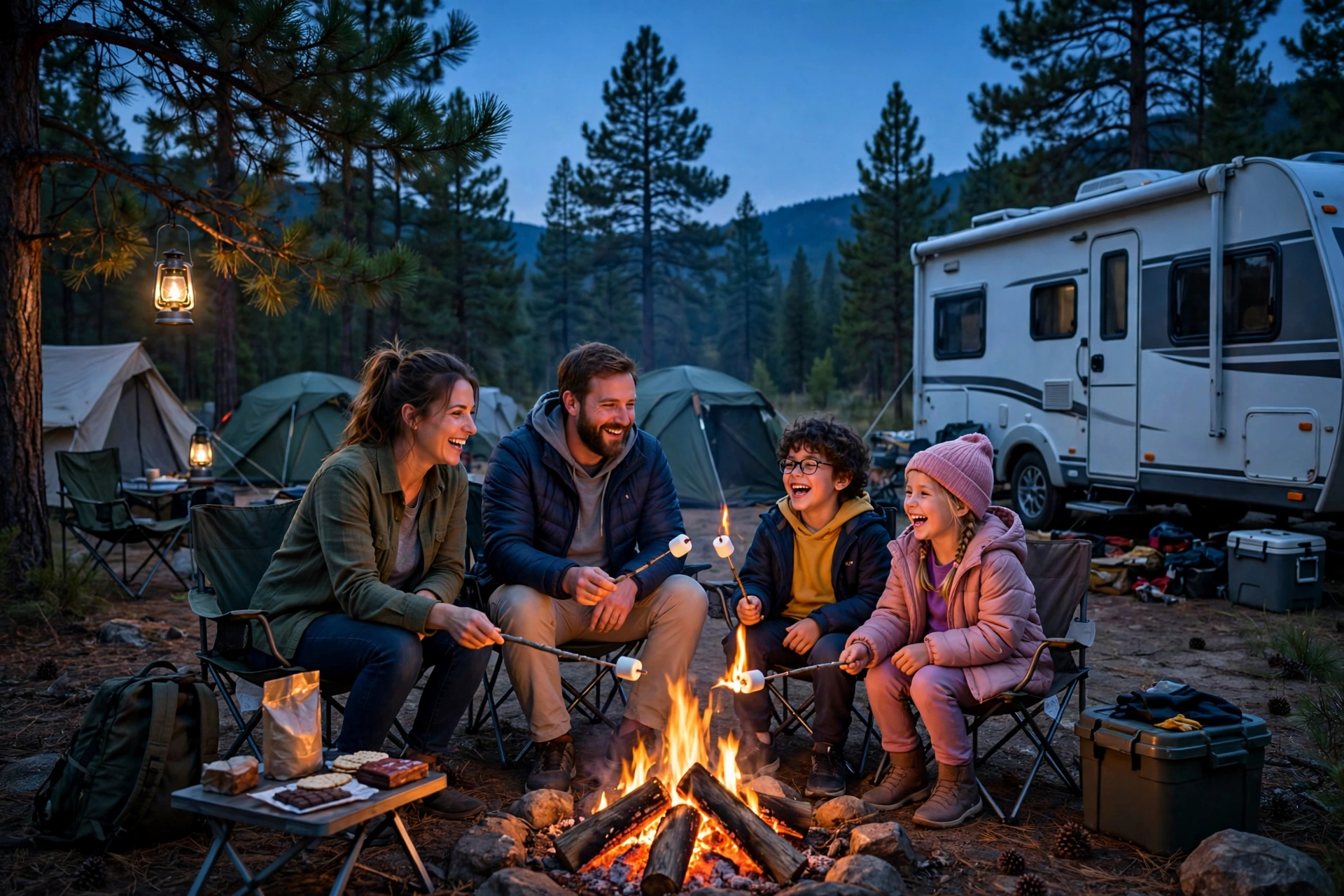
- Around the campfire: mark a ring of chairs as the fire line. Kids stay outside the ring unless an adult invites them in to roast a marshmallow.
- Bunk safety: the top bunk needs a safety rail, and children under six should sleep on the lower bunk. Show kids how to climb down facing the ladder, not jumping.
- Propane and generators: never run a generator inside or near the RV, and never let kids touch the propane valves or the water heater controls.
The National Park Service’s camping guidance is also worth a read before a park visit — it covers site rules, wildlife, and campfire safety in plain language.
Meals: What to Cook in a Tiny RV Kitchen
RV kitchens are small, so plan one-pot or one-pan meals and cook outside on a camp stove or grill when you can — it keeps heat and smells out of the RV.
Good first-trip meals include pasta with jarred sauce, tacos with pre-cooked meat, grilled chicken and foil-packet vegetables, and pancake breakfasts. Prep what you can at home: chop vegetables, marinate meat, and pack snacks in individual bags so kids can grab them without opening every container.
For more ideas, see our family camp kitchen setup guide, which covers how to organize a small cooking station so meal prep stays quick and calm.
Choosing a Family-Friendly Campground
The campground matters as much as the RV. For a first trip, choose a campground with full hookups, clean bathrooms, a playground, and sites that are not too tight. State parks are a great value and usually have more space between sites; private campgrounds often have more amenities like pools, game rooms, and organized activities.
Read recent reviews before booking, and check the campground’s rules on quiet hours, pets, and campfires. Most federal campgrounds can be booked through Recreation.gov, where you can filter by hookups, site length, and amenities before you reserve. Our guide to choosing a family-friendly campground lists the twelve questions worth asking before you reserve. If you are still deciding where to go, these state parks are excellent for first-time family campers — big sites, gentle trails, and ranger programs kids love.
What to Do When Things Go Wrong
Something small will go wrong on your first RV trip. That is normal, and handling it calmly is part of the adventure.
| Problem | What to do first |
|---|---|
| RV won’t level | Move to a flatter spot or add leveling blocks under the low-side wheels. |
| No water at the tap | Check the campground spigot, your hose connection, and the RV’s water pump switch. |
| Battery runs low | Turn off lights and fans, or plug into shore power. |
| Slide-out stuck | Check for obstructions outside, then call the rental company’s support line. |
| Kids are bored or cranky | Stop the trip, not the fun — take a walk, play a game, or move the plan to tomorrow. |
| Bad weather arrives | Stay put, cook inside, and play games. An RV is the best rainy-day shelter in camping. |
Keep the rental company’s 24-hour support number saved in your phone, not just on paper. If you are not sure whether something is a real problem, call — that is what the support line is for.
Your First RV Weekend: A Simple 3-Day Plan
Keep the first trip short and close to home. A weekend within two hours of home gives you a real taste of RV life without a long drive home if something goes sideways.
Day 1 — Arrive and settle in. Drive in the morning, set up camp by early afternoon, and spend the rest of the day exploring the campground. Cook an easy dinner and have a campfire. No big hikes on day one.
Day 2 — Explore. Take a short morning hike or visit a nearby attraction, come back for lunch and naps, then spend the afternoon at the playground or a lake. This is the day that makes the trip worth it.
Day 3 — Pack up slowly. Give yourself two hours to break camp. Dump the tanks, disconnect in reverse order, do a walk-around check, and drive home in daylight. Our stress-free first family camping weekend plan has a full hour-by-hour version of this rhythm if you want more detail.
Budgeting Your First RV Trip
An RV trip costs more than tent camping but often less than a hotel vacation. Expect the rental to be the biggest cost, followed by the campground fee, fuel, and food — roughly $150–$300 per night for the rental, $40–$80 for the campground, and $60–$120 in fuel for a weekend. For a fuller picture of family trip costs, see our family road trip cost breakdown.
Save money by traveling in the shoulder season, choosing state parks over private resorts, and cooking your own meals.
Frequently Asked Questions
Can kids sleep in an RV while it is moving?
No — children must stay buckled into a proper car seat or seatbelt in a forward-facing seat while the RV is moving; bunks are for parked use only.
Do I need a special license to drive an RV?
In most US states, a regular driver’s license is enough for RVs up to 26,000 pounds, which covers nearly all rentals. Check your state’s rules before booking, and confirm the rental company’s own requirements.
How old should kids be for their first RV trip?
Families RV with babies and toddlers all the time. The key is a safe sleeping setup — a travel crib or a lower bunk with a rail — and a campground close to home for the first trip so you can bail out easily if needed.
Is it safe to let kids play outside the RV at a campground?
Yes, with boundaries. Set a visible play area, use the buddy system, and remind kids that campground roads have large vehicles backing up. Most campgrounds are very family-friendly and quiet after dark.
What is the hardest part of RV camping with kids?
Most families say the setup and breakdown, not the camping itself. Arriving before dark, following the same setup order every time, and keeping the first trip short makes it manageable.
Should we rent a Class C or a travel trailer for our first trip?
Rent a Class C motorhome. It drives like a large van, needs no towing experience, and you can start camping the moment you park. Save trailers for when you have towing experience or a tow-ready vehicle.
