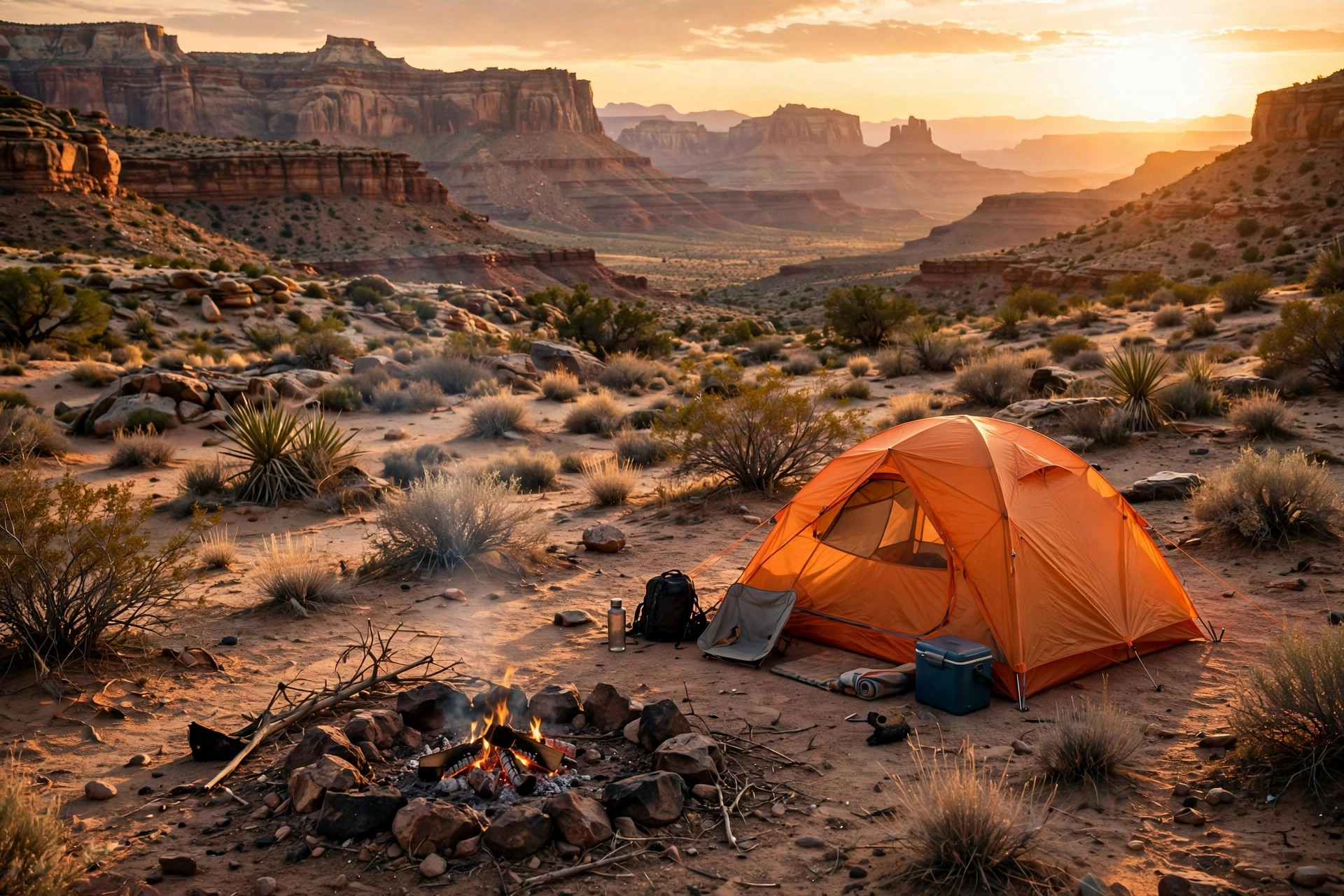
Spring break usually means an overpriced beach hotel surrounded by college crowds — or staying home. But there’s a third option most families overlook: spring break camping destinations that trade the chaos for campfires, wide-open trails, and star-filled skies.
March is one of family camping’s best-kept secrets: across the desert Southwest and southern coasts, daytime temperatures sit in the comfortable 60s and 70s, wildflowers are blooming, and the summer crowds haven’t arrived. Here are ten genuinely uncrowded options, with honest booking advice for each.
Why March Is Secretly a Great Month for Family Camping
Most families associate camping with summer, which is exactly why March works so well:
- Mild weather in the right places. Desert parks that are brutally hot by May sit in the sweet spot of 65–80°F daytime highs in March. Nights are cool enough for a campfire, not cold enough to be miserable.
- Thinner crowds. The famous summer parks are still snowed in or just waking up, while the spring-break party crowds cluster at a handful of beach towns — leaving entire regions blissfully quiet.
- Lower costs. March is shoulder season in most of these destinations: cheaper flights, cheaper gear rentals, and campsites that don’t vanish instantly. See our guide to the cheapest months to visit popular US destinations for the full timing breakdown.
- Wildlife and wildflowers. Spring migration is underway, desert blooms peak in good rain years, and wildlife is active before the heat sets in.
How We Chose These 10 Spots
Every destination had to be genuinely less crowded than the headline spring-break spots, kid-friendly in March, served by real reservable campgrounds, and blessed with typical March highs between 60°F and 85°F.
A few popular desert parks (Joshua Tree, Big Bend) do fill up on spring-break weekends themselves, so “uncrowded” here means relative to the summer crush and the beach-party scene — and we flag exactly which ones need the earliest reservations.
10 Uncrowded Spring Break Camping Destinations
1. Big Bend National Park, Texas
Big Bend is the definition of “worth the drive” — one of the most remote national parks in the country, tucked into far West Texas where the Rio Grande bends north. That remoteness keeps it peaceful: March highs typically land in the 70s, the desert greens up, and night skies rank among America’s darkest.
Why families love it: The Window View Trail is an easy paved 0.3-mile stroll with a huge payoff, and older kids can tackle the Lost Mine Trail. The free 105°F natural hot springs on the Rio Grande are a guaranteed kid-pleaser.
Where to camp: Chisos Basin (cooler mountain nights) and Rio Grande Village (warmer, near the river), both reservable on Recreation.gov. This is the one destination where you should book the moment your dates firm up — check conditions at nps.gov/bibe.
2. Joshua Tree National Park, California
Two deserts meet at Joshua Tree, and March is the park at its best: highs in the low 70s, wildflowers carpeting the south half in good years, and rock formations that double as a natural playground for scrambling kids.
Why families love it: Arch Rock and Skull Rock are short walks with weird geology kids love; Hidden Valley’s one-mile loop winds between house-sized boulders. Stargazing is exceptional.
Where to camp: Jumbo Rocks puts you among the formations; Black Rock and Indian Cove (reservable via Recreation.gov) offer flush toilets and more elbow room. This is the most popular park on the list — spring-break weekends sell out, so book early. Plan at nps.gov/jotr.
3. Death Valley National Park, California
Yes, Death Valley — in March, when highs are a pleasant 75–80°F instead of the infamous 120s. As the largest national park in the Lower 48, crowds spread thin across its salt flats, dunes, and canyons.
Why families love it: Mesquite Flat Sand Dunes were made for kids — dune running and sunset photos. Badwater Basin’s salt polygons look like another planet (the boardwalk is stroller-friendly), and Ubehebe Crater wows school-age kids.
Where to camp: Furnace Creek (reservable, most central), Texas Springs, and Sunset campgrounds; Stovepipe Wells is quieter and nearer the dunes. In good rain years March brings wildflowers — check the park’s bloom report first.
4. Saguaro National Park, Arizona
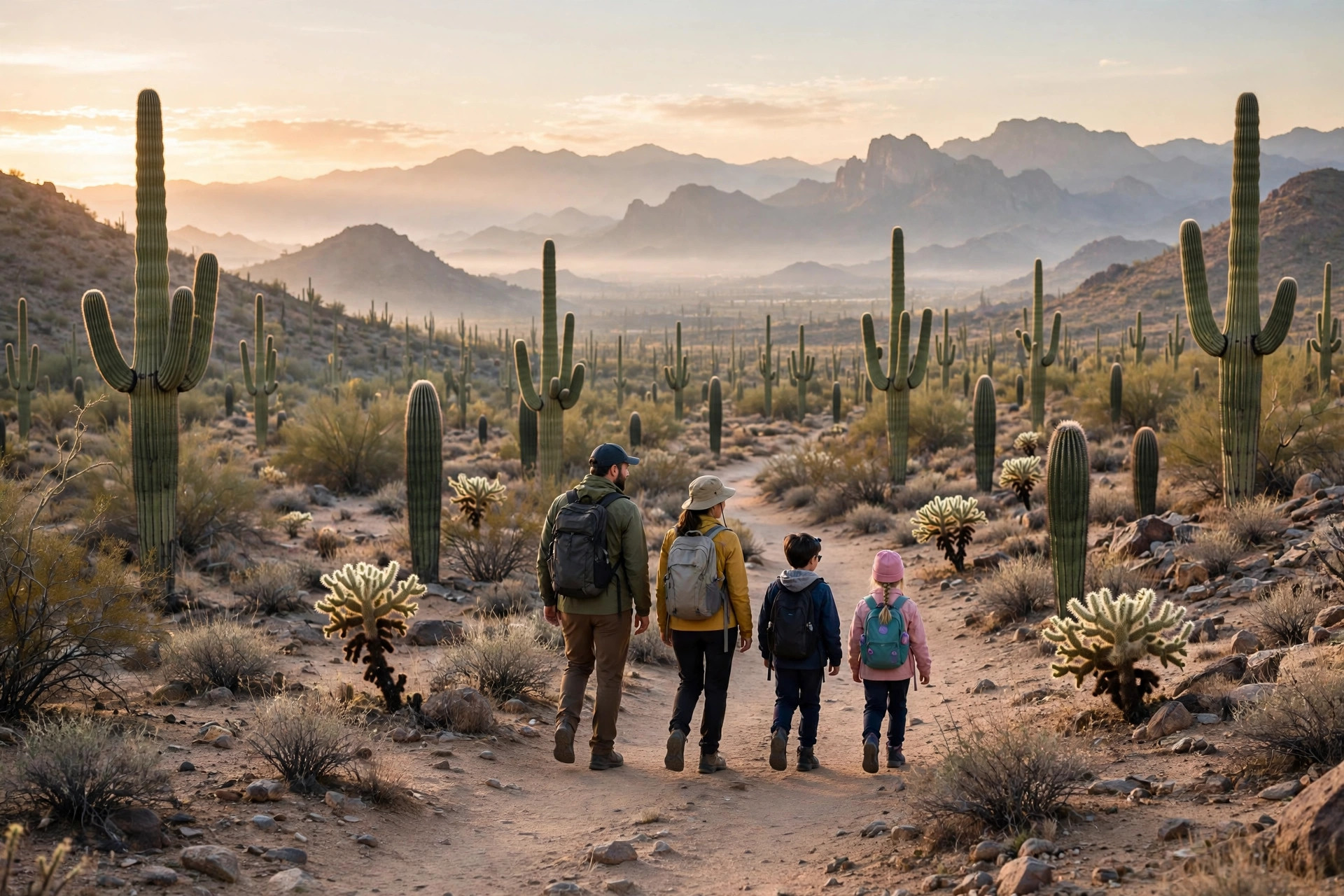
There’s nothing like standing in a forest of 40-foot cacti. March is prime time around Tucson: highs in the low 70s, saguaro blooms beginning, and cool hiking mornings. Both park districts are an easy day-trip from Tucson’s family attractions.
Why families love it: The Cactus Forest Loop Drive has pullouts built for short attention spans, and the half-mile paved Desert Discovery Trail labels every plant. Pair it with the Arizona-Sonora Desert Museum — a zoo-botanical garden hybrid kids consistently rank as a trip highlight.
Where to camp: Saguaro has no campgrounds, but Gilbert Ray Campground in adjacent Tucson Mountain Park is the classic base — reservable, shaded, surrounded by saguaros. Hike before 10 a.m. to have trails nearly to yourself.
5. Organ Pipe Cactus National Monument, Arizona
If Saguaro is the famous sibling, Organ Pipe is the quiet one — a remote monument protecting the only US habitat of the organ pipe cactus, with a fraction of the big parks’ visitors. March brings 70s highs, blooms, and superb dark skies.
Why families love it: The 21-mile Ajo Mountain Drive is a graded dirt loop with roadside exhibits — ideal for kids who’d rather ride than hike. Short trails like Desert View are easy wins, and the visitor center runs a solid junior ranger program.
Where to camp: Twin Peaks Campground, with some reservable sites. It’s remote — stock up in Ajo or Gila Bend on the way in. It pairs well with Tucson, about two and a half hours away, as a 2–3 night add-on to a Saguaro trip.
6. Guadalupe Mountains National Park, Texas
One of Texas’s least-visited national parks, despite holding the state’s highest peak and a fossilized reef turned to mountains. March brings 60s highs, wildflowers at lower elevations, and empty trails.
Why families love it: The Pinery Nature Trail is an easy, accessible stroll with big views. McKittrick Canyon feels like an oasis — the 2.4-mile round trip to Pratt Cabin is very doable for families, and older kids can attempt part of Guadalupe Peak Trail for bragging rights.
Where to camp: Pine Springs Campground is first-come, first-served with no hookups — arrive by early afternoon on weekends, and consider Carlsbad Caverns next door in New Mexico as a side trip. Nights are cold at 5,800 feet, so pack warm layers even when days feel like spring — our kids’ camping layering guide covers the system.
7. Texas Hill Country: Enchanted Rock, Texas
A massive pink granite dome rising out of the Hill Country. Late March is when surrounding wildflower fields start their famous show, and highs in the upper 60s to low 70s make ideal hiking weather.
Why families love it: The Summit Trail is just under a mile to the top — an achievement for determined grade-schoolers. The Loop Trail circles the base through vernal pools and oak groves.
Where to camp: The campground books through the Texas State Parks reservation system and sells out for spring-break weekends — reserve early. Day-use visitors now need advance day passes on weekends too, making camping inside the park the smarter play.
8. Padre Island National Seashore, Texas
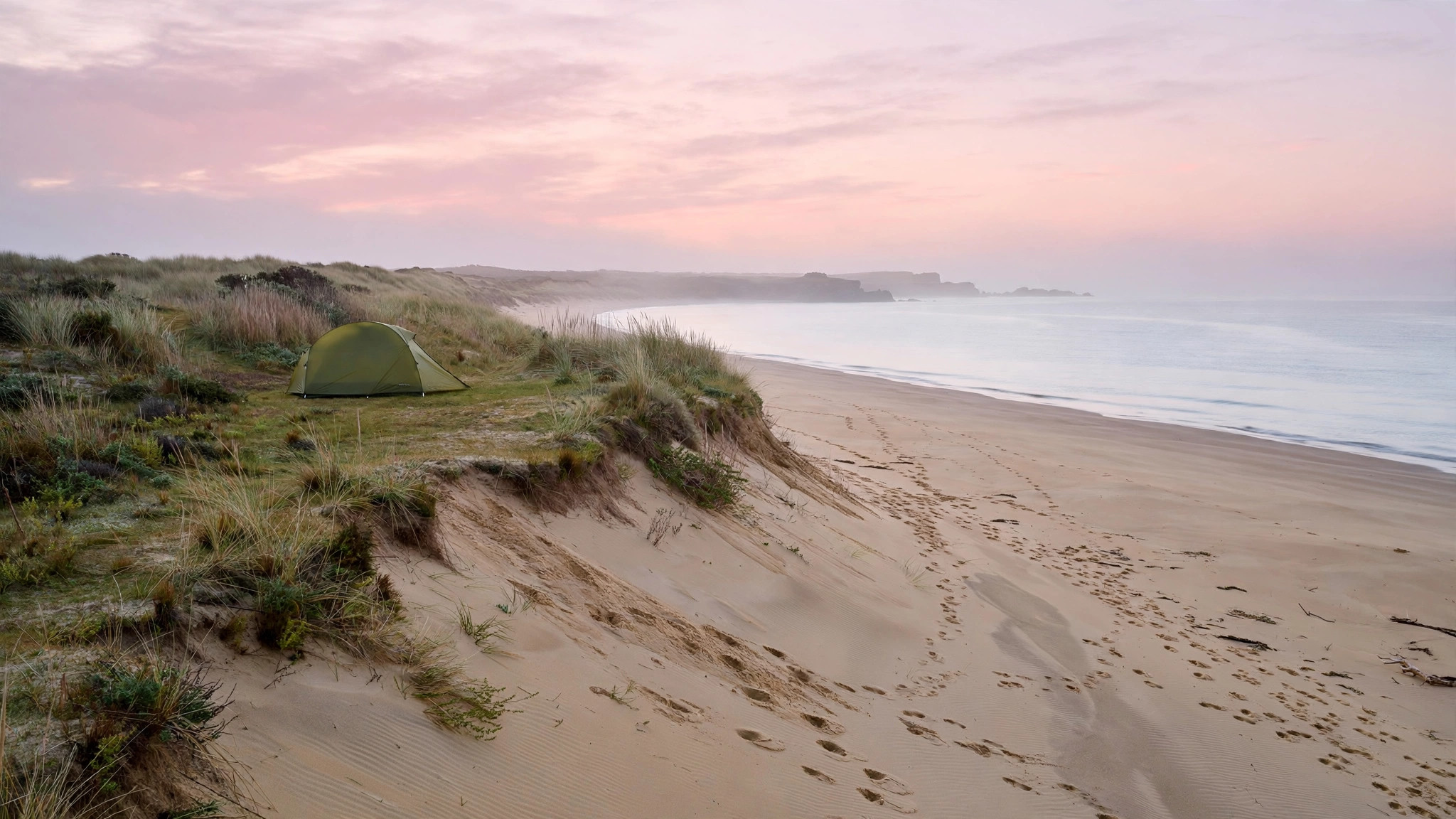
Want a beach spring break without the party scene? This national seashore protects 66 miles of undeveloped barrier island — the longest such stretch in the world. March highs in the low 70s, sea breezes, miles of empty sand.
Why families love it: Malaquite Beach has a visitor center, showers, and ranger programs. Kids hunt shells along empty shoreline while the park’s sea turtle program fascinates young naturalists. For more coastline ideas, see our family beach guide for the Atlantic side.
Where to camp: Malaquite Campground is the developed drive-up option; adventurous families can primitive-camp on North or South Beach with a high-clearance vehicle. Wind is the main variable — bring a sturdy tent with real stakes, and treat March as a beachcombing trip, not a swimming one.
9. Everglades National Park, Florida
March is the tail end of the dry season — falling water levels concentrate wildlife, mosquitoes hit their yearly low, and highs sit in the pleasant upper 70s. It’s the anti-theme-park Florida: slow, wild, and uncrowded next to the Orlando corridor.
Why families love it: The Anhinga Trail is a half-mile boardwalk where alligators, turtles, and herons are practically guaranteed — the best wildlife-per-step ratio of any trail we’ve covered. Shark Valley’s tram tour is a two-hour hit with kids.
Where to camp: Long Pine Key and Flamingo campgrounds, both reservable via Recreation.gov. Flamingo sits at the park’s southern tip with sunset views over Florida Bay — worth the drive down.
10. Cumberland Island National Seashore, Georgia
A barrier island off the Georgia coast reachable only by ferry, where wild horses roam moss-draped oak forests — and 300 visitors a day is the maximum allowed. March highs in the mid-60s make perfect hiking weather.
Why families love it: Wild horses on an empty beach. The haunting ruins of Dungeness mansion to explore. Eighteen miles of beach with almost no one on it. The ferry ride itself is an adventure for kids.
Where to camp: Sea Camp and Stafford Beach, reservable via Recreation.gov — Sea Camp — with restrooms near the ferry dock — is the family pick. Book ferry tickets with your campsite; both can sell out. With no stores on the island, plan meals carefully — our family camp kitchen guide helps you build an island-proof setup.
Quick Comparison: March Weather and Crowds
| Destination | Typical March Highs | Best For | Crowd Level |
|---|---|---|---|
| Big Bend, TX | 70s °F | Stargazing, desert hikes | Moderate — book early |
| Joshua Tree, CA | Low 70s °F | Scrambling, wildflowers | Moderate — book early |
| Death Valley, CA | 75–80 °F | Dunes, desert scenery | Low–moderate |
| Saguaro / Tucson, AZ | Low 70s °F | Easy trails, museums | Low |
| Organ Pipe, AZ | 70s °F | Solitude, dark skies | Very low |
| Guadalupe Mtns, TX | 60s °F | Canyons, peak hikes | Very low |
| Hill Country, TX | Upper 60s–low 70s °F | Wildflowers, dome hike | Moderate (small park) |
| Padre Island, TX | Low 70s °F | Beach, wildlife | Low |
| Everglades, FL | Upper 70s °F | Wildlife, boardwalks | Low |
| Cumberland Island, GA | Mid 60s °F | Beaches, wild horses | Very low (capped) |
How to Actually Get a Campsite for Spring Break
The honest truth: “uncrowded destination” doesn’t mean “walk-up campsite.”
- Book federal campgrounds on Recreation.gov. Most national park campgrounds release sites on rolling windows, typically six months out. Our campsite reservation windows guide covers the timing for every region.
- Check cancellations weekly. Prime sites pop back up as plans change, and midweek arrivals beat Friday check-ins for availability.
- Have a Plan B. For every first choice, identify one backup — nearby national forest land, a state park, or a private campground. Our shoulder-season camping guide‘s flexibility rules apply in spring too.
- Consider the edges of the week. Arriving the weekend before the official break week can mean half the neighbors.
Spring Camping With Kids: What to Pack
March camping means layers: desert days in the 70s regularly drop into the 40s at night. Beyond your normal kit, pack warm base layers and fleece for every kid, sleeping bags rated at least 10°F below the expected nighttime low, serious sun protection (desert sun in March is stronger than it feels), extra water capacity, and a wind-rated tent with real stakes for coastal sites. For the complete list, see our family camping checklist with 47 essentials.
Frequently Asked Questions
Is spring break a good time to go camping with kids?
Yes — in the right regions. The desert Southwest and southern coasts offer 60s–70s highs in March with far fewer crowds than summer. Skip high-elevation and northern destinations, still cold or snowed in.
Which national parks are least crowded in March?
Organ Pipe Cactus, Guadalupe Mountains, and Cumberland Island see the fewest visitors. Death Valley, Saguaro, and the Everglades are moderately visited but large enough to absorb crowds. Big Bend and Joshua Tree are busiest — calmer than summer, but book early.
How far in advance should I book a spring break campsite?
Book reservable national park campgrounds as soon as your window opens — typically six months ahead on Recreation.gov. State parks often open 6–13 months out. If you’re late, check cancellations weekly and aim for midweek arrivals.
What should kids wear camping in March?
Layers: a moisture-wicking base, an insulating mid-layer like fleece, and a windproof shell, plus warm hats for after sunset. Mornings can be in the 40s while afternoons hit the 70s. Our kids’ layering guide explains the full system.
Are desert campgrounds safe for toddlers?
Yes, with precautions: choose campgrounds with defined sites, keep toddlers in closed-toe shoes (cactus spines and hot sand are the real hazards), teach “look, don’t touch” for wildlife, and bring a travel crib for contained safe sleep.
Can we do a beach spring break without the party scene?
Absolutely. Padre Island National Seashore and Cumberland Island offer miles of natural beach with strict visitor limits — sea turtles, wild horses, and empty sand instead of crowds.
