The first time we pitched a tent with a baby in tow, I packed like we were moving house and still managed to forget the one thing we needed at 2 a.m. Tent camping with a baby is absolutely doable, and honestly, babies are often easier camping companions than toddlers — they stay where you put them, they nap anywhere, and the sounds of the outdoors work like a giant white-noise machine.
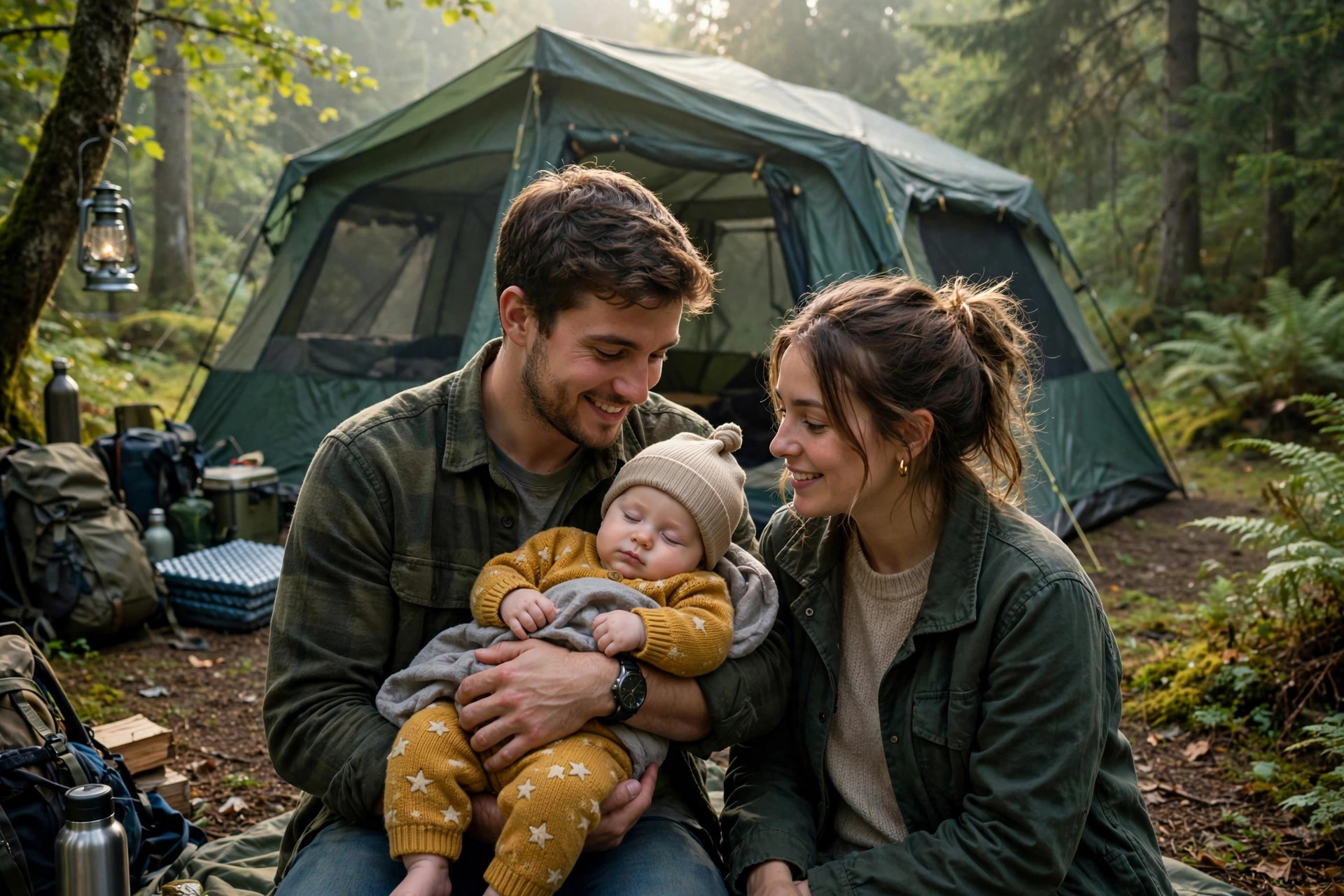
The secret is not more gear. It is a simple plan for sleep, feeding, and temperature, plus a first trip that is deliberately easy. This guide covers the best age to start, a forgiving first campground, a safe sleep setup, feeding and diapering, a full packing checklist, and a first-night routine that works.
When Is a Baby Old Enough for Tent Camping?
There is no official minimum age for camping with a baby, and plenty of families go within the first couple of months. What matters more than age is your baby's health, the weather, and how confident you feel. Many parents find the sweet spot is somewhere between two and six months: your baby is a little sturdier, feeding is more predictable, and they are not yet mobile enough to crawl through the tent door every five minutes.
Whatever age you start, keep the first trip short — one or two nights — and stay ready to drive home if the night goes sideways. That is not failure; that is good planning. Here is how the trip changes as your baby grows:
| Baby's age | What changes on the trip |
|---|---|
| 0-3 months | Feeds around the clock, so expect broken nights; temperature control matters most; baby sleeps almost anywhere |
| 3-6 months | Longer sleep stretches for many babies; more awake time to entertain; a great first-trip window |
| 6-9 months | Starting solids, so plan simple camp-friendly foods; rolling means the sleep space needs walls or a secure setup |
| 9-12 months | Crawling and pulling up; you will spend real effort keeping baby out of the fire ring, the dirt, and everyone else's tent |
If your baby was premature or has any medical condition, a quick check-in with your pediatrician before the trip is a sensible step. Otherwise, a healthy baby and mild weather are all you really need.
Choosing Your First Campground: Make It Easy on Purpose
Your first campground matters more than your gear. Pick a place that forgives mistakes:
- Short drive. Aim for under two hours from home. If the night is a disaster, you can be in your own bed before midnight.
- Reserve in advance. Book a specific site so you are not driving loops at dusk with a fussy baby. Many of the best camping destinations in the USA for beginners take reservations and have beginner-friendly layouts.
- Real bathrooms. Flush toilets and a water tap nearby make bottle washing and nighttime changes far easier.
- Quiet and shaded. A site away from the entrance road and group areas means less noise at bedtime, and tree cover keeps the tent cooler during afternoon naps.
- Flat, clear ground. Walk the site before pitching: no slope under the sleep area, no ant hills, no standing water.
A state park or a well-reviewed family campground is perfect for trip one. Save the remote, hike-in sites for next season.
Safe Sleep in a Tent: The Part That Matters Most
Sleep is where new camping parents worry most, and it is also where the guidance is clearest. The same safe-sleep basics that apply at home apply in a tent: your baby sleeps on their back, on a firm, flat surface, in their own sleep space, with nothing soft or loose around them — no pillows, blankets, bumpers, or stuffed animals in the sleep space. The American Academy of Pediatrics lays this out in its guide to safe sleep for parents, and it is worth a read before your trip.
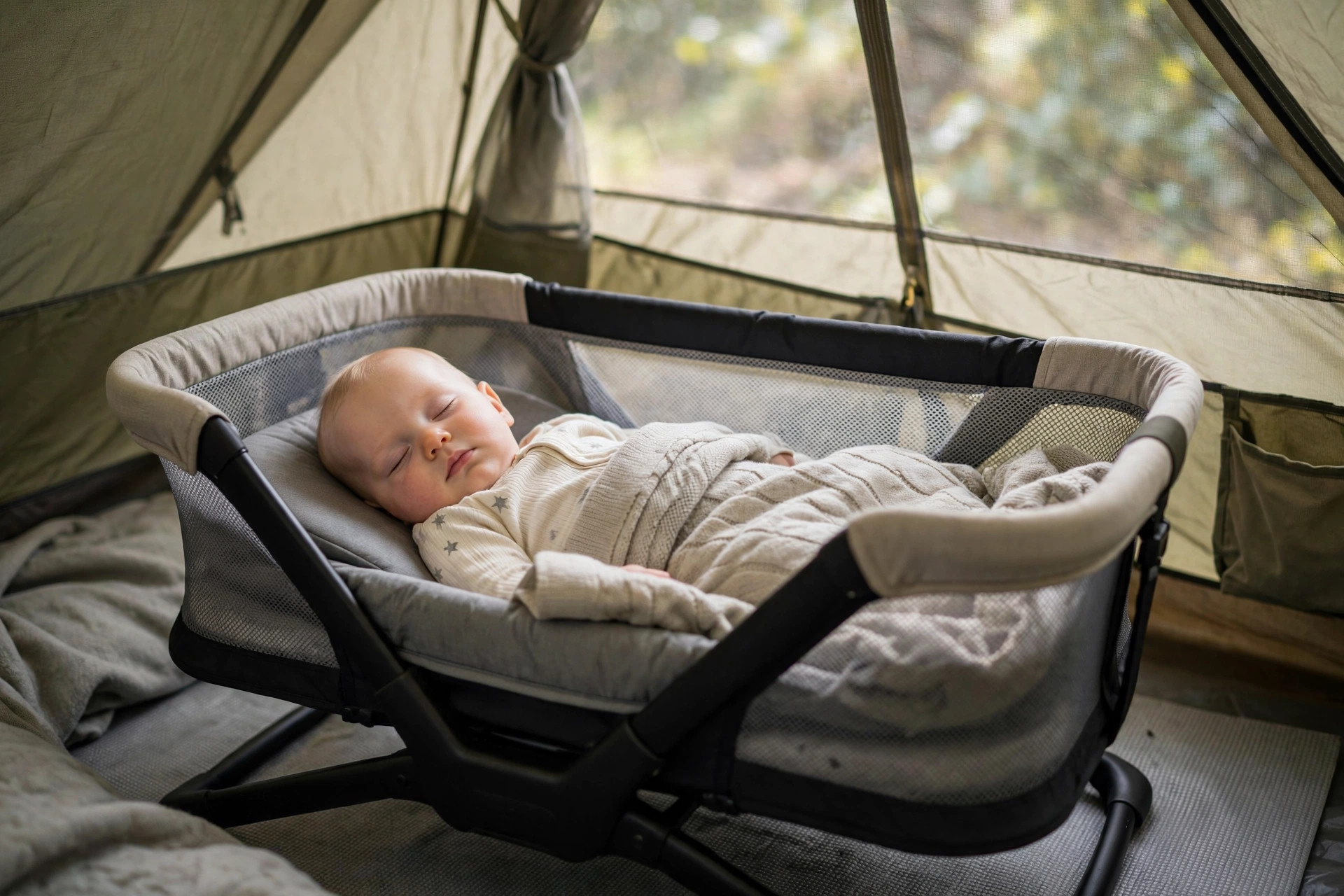
Sleeping in the same bed — or on the same air mattress — with a baby is not recommended, and air mattresses are especially risky because they are soft and uneven. Instead, give your baby their own space inside the tent:
- A travel bassinet or pack-and-play with a firm, flat mattress and a fitted sheet is the easiest safe option, and it doubles as a contained play space during the day.
- Dress your baby warmly instead of adding blankets. A wearable blanket or sleep sack rated for the expected nighttime temperature keeps your baby warm without loose bedding. Add or remove a layer underneath as the temperature drops.
Set the sleep space on the flattest part of the tent floor, away from the door zipper and away from any gear that could topple. If your baby will soon graduate to toddlerhood, our guide to what toddlers sleep in when camping covers the next stage, from toddler air beds to their first sleeping bag.
Feeding a Baby at Camp
Feeding is simpler outdoors than most parents expect, mostly because babies do not care where they eat.
Breastfeeding is the lowest-effort option at camp — nothing to wash, nothing to keep cold. A comfortable camp chair and a light cover (if you want one) are all you need, plus a headlamp with a red-light mode for night feeds so you do not wake the whole tent.
Bottles and formula take a little more planning:
- Pre-measure formula powder into a dispenser so each bottle is quick to make, especially at night.
- Store prepared bottles in a cooler with ice packs and use them within the timeframes on your formula's packaging — when in doubt, mix fresh with safe water instead of storing.
- Bring a small basin, a bottle brush, and a drop of biodegradable soap for washing, and rinse with clean water.
- Pack more bottles than you think you need. Washing at camp always takes longer than at home, and a spare clean bottle at 3 a.m. is pure gold.
Starting solids? Pouches are the camp hero: no prep, no refrigeration before opening, and the empty pouch goes straight into your trash bag.
Diapers, Changes, and Trash
Bring more diapers than your normal daily count — outdoors, changes happen at the least convenient moments. A portable changing pad turns any flat surface into a changing station, and a small "diaper kit" (diapers, wipes, cream, spare outfit, wet bag) that lives by the tent door saves midnight rummaging.
Pack out everything. Used diapers and wipes go into a sealed wet bag or a dedicated trash bag with a lid, stored in your car or a bear-proof container — never loose in the tent, since smells attract animals, and never in the fire pit. Cloth diaper families usually switch to disposables for the trip unless the campground has laundry — it is one trip, not a test of character.
Temperature Control, Day and Night
Babies cannot regulate their body temperature as well as adults, so your main job is layering and shade.
During the day: Dress your baby in light, breathable layers and a wide-brimmed hat. Pitch the tent in shade where you can, and open all the vents — tents heat up fast in direct sun, so never leave your baby napping alone in a closed, sun-baked tent. Check your baby's temperature by feeling their chest or the back of their neck; hands and feet are not a reliable guide.
At night: Temperatures drop quickly once the sun goes, even in summer. A good rule is to dress your baby in one more layer than you are wearing yourself. A fleece sleep sack over footed pajamas handles most summer nights; on cooler nights add a warm hat, since babies lose heat through their heads. If the night turns colder than expected, an early-morning feed and some extra cuddles in your own (awake) arms beats guessing with extra blankets in the sleep space.
Sun and Bug Protection That Is Safe for Babies
For babies under six months, shade and clothing are the first line of sun protection — a hat, long sleeves, and the stroller or tent shade. For older babies, apply sunscreen to exposed skin as your pediatrician advises, and reapply after sweating or water play.
For bugs, physical barriers beat sprays for little babies: a fine mesh net over the bassinet or stroller keeps mosquitoes out without putting anything on young skin. Dress your baby in lightweight long sleeves and socks in the evening, and skip products not labeled for your baby's age — check the label, and ask your pediatrician if you are unsure.
The Complete Baby Camping Packing Checklist
Print this, check things off, and add your own notes after trip one — your list will be perfect by trip two.
Sleep
- Travel bassinet or pack-and-play with firm mattress and fitted sheet
- Sleep sack or wearable blanket rated for nighttime temperatures
- Your own sleeping bags/pads and pillows
- Headlamp with red-light mode
Feeding
- Bottles (more than you think) plus formula dispenser, or nursing supplies
- Cooler with ice packs, small basin, bottle brush, biodegradable soap
- Baby food pouches and a spare spoon if on solids
- Two large water jugs
Clothing
- Two outfits per day plus one full spare set, kept dry in a sealed bag
- Warm layer, fleece, and a hat for night; sun hat for day
- Footed pajamas and a spare sleep outfit
Diapering and hygiene
- Diapers (daily count plus half again), wipes, cream, changing pad
- Wet bag and trash bags with ties
- Baby-safe hand soap and a small towel
Comfort and play
- A blanket for tummy time on the ground
- Two or three small toys and a teether
- The best hiking infant carrier you already own, or a stroller if the campground is paved
Safety basics
- Baby thermometer and any medication your baby uses
- Mesh bug net for the bassinet or stroller
- Printed address of the nearest hospital, saved offline
For the years right after this stage, our roundup of camping with toddlers essentials shows how this list evolves once your camper is walking.
A First-Night Routine That Actually Works
Babies settle best when camp bedtime feels like home bedtime. Keep your normal order — feed, change, pajamas, story or song — and start about thirty minutes earlier than usual, because everything takes longer outdoors.
- Around sunset, do the final diaper change and dress your baby in pajamas and the sleep sack.
- Take a short, calm walk around the campground loop — the fresh air and motion help signal sleep.
- Back at the tent, dim the lanterns, do the last feed in your camp chair, and keep voices low.
- Settle your baby into their sleep space on their back, zip the tent, and give them a few minutes to fuss and resettle before intervening.
- For night wakings, keep lights on the red headlamp setting, feed, change only if needed, and resettle the same way each time.
Expect the first night to be the roughest and the second to be better. Most babies adapt faster than their parents do.
When to Skip the Trip
Sometimes the right call is to stay home, and there is no shame in it. Postpone if:
- Your baby is sick or has a fever — camping will not help anyone recover.
- The forecast shows extreme heat, dangerous storms, or cold far below what your gear is rated for.
- Wildfire smoke is heavy in the area; little lungs and smoky air do not mix.
- You are so sleep-deprived that driving and fire safety become a worry in themselves.
The campsite will be there next weekend. A miserable first trip is what actually puts families off camping for years.
Frequently Asked Questions
Can a 2-month-old go tent camping?
Yes, many families camp with babies this young, provided the baby is healthy and the weather is mild. Keep the trip short, choose a campground close to home with real facilities, and be extra careful with temperature — very young babies overheat and chill quickly. When in doubt, ask your pediatrician first.
Where should a baby sleep in a tent?
In their own space — a travel bassinet or pack-and-play with a firm, flat surface — placed on the flattest part of the tent floor. Your baby should sleep on their back with no pillows, loose blankets, or soft toys in the sleep space, and should not share an air mattress with an adult.
How do I keep my baby warm at night in a tent?
Use layers: footed pajamas plus a sleep sack rated for the temperature, and a warm hat on cool nights. Dress your baby in roughly one more layer than you are wearing, and check their chest or neck — not hands or feet — to judge whether they are warm enough.
What do I do with dirty diapers when camping?
Bag them immediately in a sealed wet bag or lidded trash bag, store the bag in your car or an animal-proof container, and pack everything out when you leave. Never leave diapers loose at the site or burn them in the fire pit.
Is it okay if the first camping trip goes badly?
Completely okay — and common. Shorten the trip, sleep at home, and try again in a few weeks with what you learned. Almost every camping family has a legendary bad first night story; it is practically a rite of passage, and the second attempt is nearly always better.
