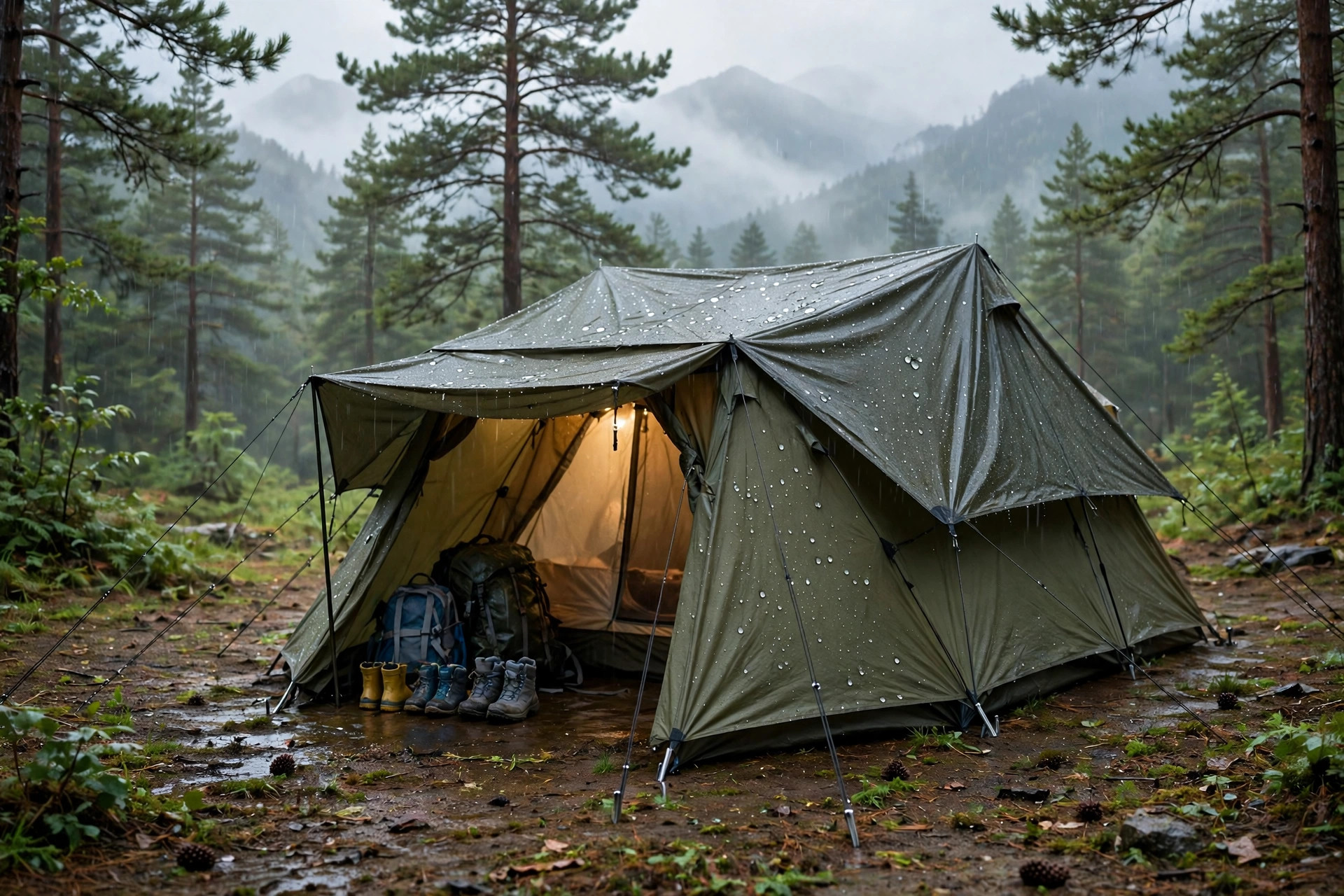
Picture this: your family is tucked into sleeping bags, rain pattering on the tent, and everyone is dry and still asleep. Now picture the opposite — a slow drip on your child’s pillow at 2 a.m. The difference is usually one piece of gear: the tent rainfly.
If you are new to family camping, the rainfly can look like an optional extra sheet of fabric. It is not: on most modern family tents, it is the actual waterproof roof. This guide explains what it is, how it works, how to pitch it so it really keeps you dry, and the mistakes that leave families wet even with the fly on.
What Is a Tent Rainfly?
A tent rainfly (sometimes written as one word, “rain fly”) is the waterproof outer layer that drapes over your tent. Think of it as a raincoat for your tent: the inner tent is the shirt underneath, and the fly is the coat that takes the weather.
Most family tents are double-wall tents, which means they have two layers:
- The inner tent (or tent body): usually made of breathable fabric and large mesh panels. It keeps bugs out, lets air move, and gives you your sleeping space — but on its own, it is not waterproof. Rain falls straight through the mesh roof.
- The rainfly: a waterproof sheet that goes over the top and, on good family tents, down the sides. It catches rain, snow, and heavy dew before they reach the inner tent, and channels water down and away from the door.
Between the two layers sits a small air gap. That gap matters more than most beginners realize — see the condensation section below. Some tents are single-wall tents, where body and waterproof layer are one piece of fabric; these are common in ultralight backpacking tents, but most family car-camping tents are double-wall designs with a separate, removable fly.
What a Rainfly Actually Does
A rainfly does far more than block raindrops. Here are the five jobs it performs on a family trip:
1. It keeps rain and snow out
This is the obvious one, and the most important. The fly is the primary barrier against precipitation. Without it, water passes through the mesh panels of a standard double-wall tent, and your sleeping bags get wet within minutes of a real downpour.
2. It blocks wind
A taut fly cuts wind before it hits the inner tent, making the tent warmer and much quieter on a blustery night. If your tent flaps and snaps in the wind, the fly is usually pitched too loosely — see the pitching steps below, and our guide to tent camping in wind.
3. It handles heavy dew and frost
Even on a clear night, dew can soak an unprotected mesh roof by morning. The fly catches that moisture and lets it run off outside instead of dripping onto your gear.
4. It adds shade and sun protection
On a hot afternoon, a fly shades the inner tent and keeps it noticeably cooler. Some families pitch the fly even on dry, sunny trips just for the shade.
5. It creates the vestibule
On many family tents, the fly extends past the door to form a covered porch called a vestibule. That space is gold with kids: muddy shoes, backpacks, and wet rain jackets can live there instead of inside the sleeping area.
Full-Coverage vs. Partial-Coverage Rainflies
Not all rainflies cover the same amount of tent. This is the single biggest difference to understand when shopping for a family tent, because it decides how much weather your tent can actually handle.
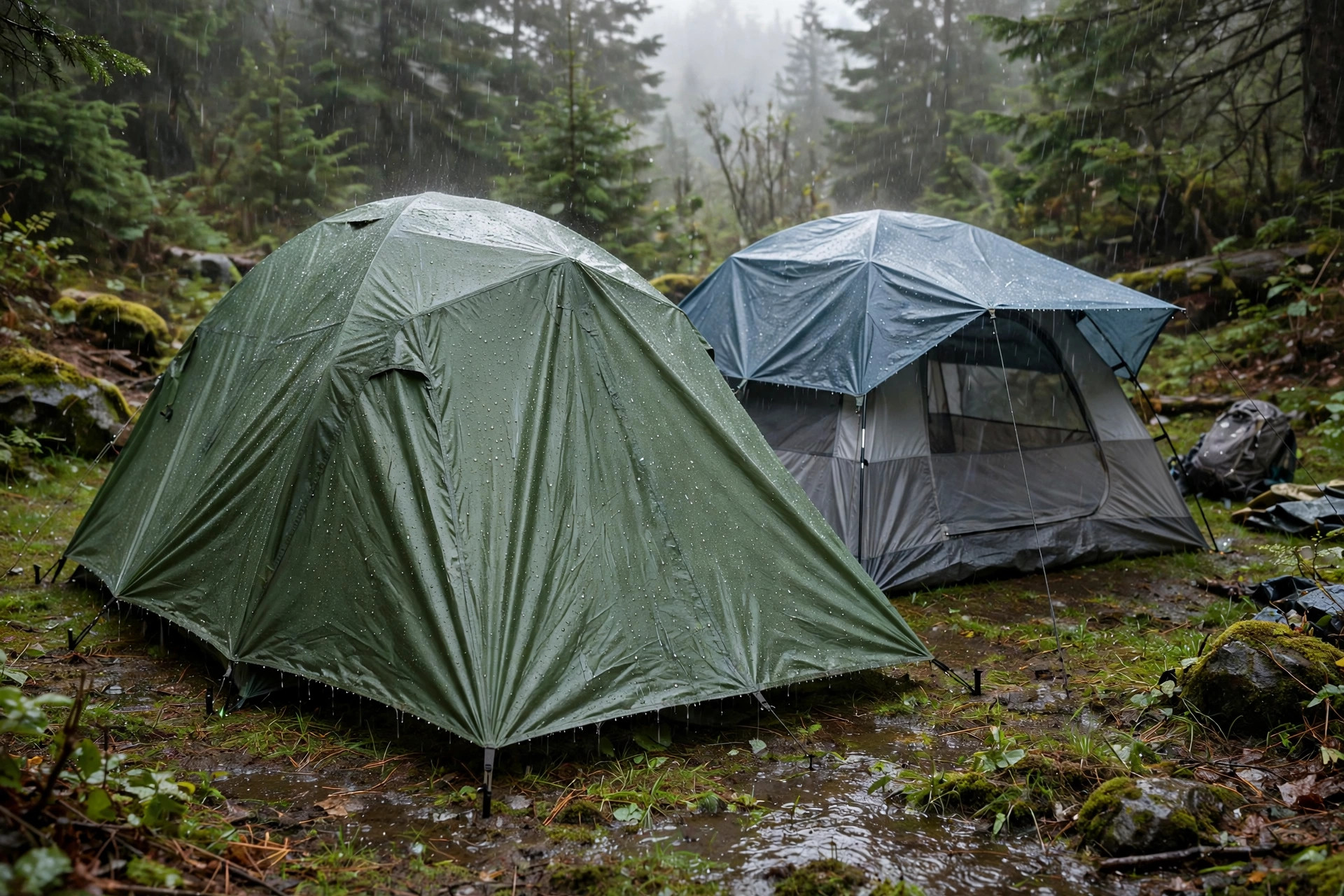 ” alt=”Two family camping tents in rain, one with a full-coverage rainfly reaching near the ground and one with a partial-coverage fly over only the roof” />
| Feature | Full-coverage rainfly | Partial-coverage rainfly |
|---|---|---|
| How much it covers | Nearly the whole tent, down to within a few inches of the ground | Only the roof and upper walls |
| Best for | Rainy climates, mountain weather, unpredictable forecasts | Dry regions, fair-weather summer trips |
| Wind protection | Excellent — seals out wind-driven rain | Limited — wind can push rain under the fly |
| Ventilation | Can feel stuffier; needs vents open | Airier, but at the cost of coverage |
| Vestibule | Usually larger, better gear storage | Usually smaller or none |
| Weight | Heavier | Lighter |
For family camping, full coverage is almost always better: you cannot control the forecast, and you cannot move a sleeping toddler to a drier tent at midnight. See our family tent buying guide for size and coverage together.
Rainfly Materials and Waterproof Ratings
Most rainflies are nylon or polyester with a waterproof coating. Nylon is lighter and stronger for its weight, but it stretches slightly when wet and can sag overnight. Polyester stays tauter in rain but is slightly heavier. Common coatings are polyurethane (PU) and silicone (silnylon or silpoly). What you should actually check is the hydrostatic head rating, in millimeters: how tall a column of water the fabric can hold back before it leaks.
| Hydrostatic head | What it means for your family |
|---|---|
| Under 1,200 mm | Light drizzle only — not enough for a family tent |
| 1,500–2,000 mm | Fine for fair-weather camping with occasional showers |
| 2,000–3,000 mm | Solid all-round family rating; handles steady rain |
| 3,000 mm and up | Storm-worthy; the rating to look for if you camp in wet regions |
One more detail matters as much as the fabric: seam taping. Needle holes along the fly’s seams leak unless sealed with tape or sealant at the factory. If your fly’s seams are not taped, a tube of seam sealer applied at home before your first trip is a cheap fix.
How to Pitch a Rainfly Correctly (Step by Step)
A rainfly only works when pitched right. A loose, sagging fly touches the inner tent, and water wicks straight through the contact point. Follow these steps every time:
 ” alt=”Hands pulling a tent rainfly guyline taut and staking it into the ground at a forest campsite” />
- Pitch the inner tent first, then add the fly. Set up the poles and inner body, stake the corners, and only then drape the fly over the top. Trying to do both at once is how flies end up twisted.
- Line up the doors. Before clipping anything, make sure the fly’s door matches the inner tent’s door. A fly pitched backwards puts a solid wall where your door should be.
- Clip or hook the fly to the tent. Attach the fly’s clips or buckles to the poles or tent corners, following your tent’s color-coded system if it has one.
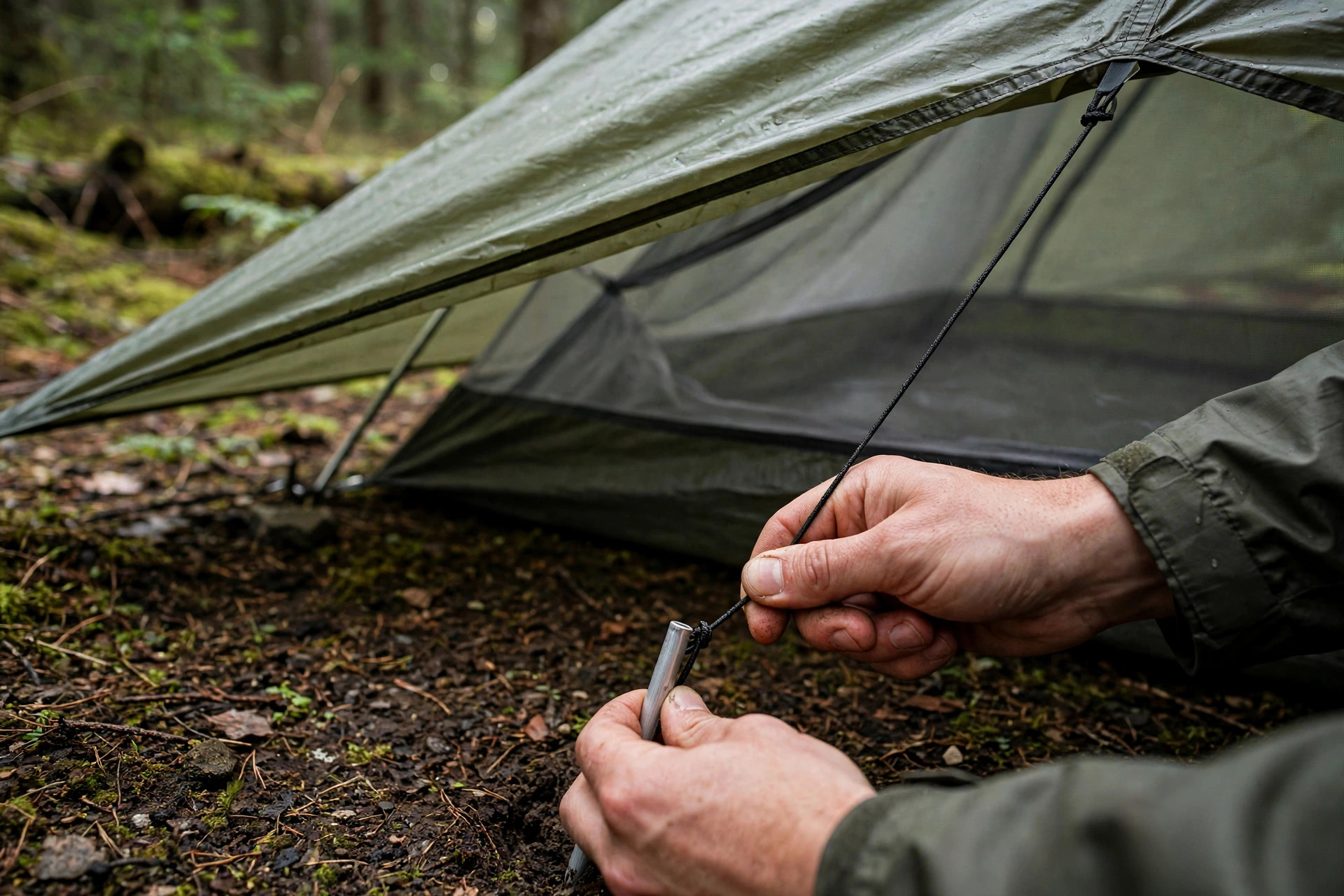
- Stake out the corners and guylines. Pull each guyline out at roughly a 45-degree angle and stake it firmly. This is the step families skip most — and the one that matters most.
- Tension everything until the fly is taut. The fly should be drum-tight, with no sagging pockets where water can pool. Walk around and tighten each guyline.
- Check the air gap. There should be a clear gap all the way around, not fabric touching fabric. If the fly touches the inner tent anywhere, tighten that side.
- Open the vents. Most flies have small vents near the top, covered by little hoods, so rain cannot get in while moist air escapes. Open them even in rain.
- Re-tension after an hour. Nylon flies stretch slightly when they first get wet. After the first rain, give the guylines one more pull — this single habit prevents most midnight drips.
Practice this setup once in the backyard before your trip — it turns a 10-minute fumble in the rain into a two-minute routine, a great job for older kids. Add the fly to your master list using our family camping checklist.
The Condensation Trap: Why a Pitched Fly Can Still Feel Wet
You can wake up to a damp tent even when it never rained. The cause is condensation: the warm, moist air your family breathes out all night hits the cold fly and turns to droplets. With two adults and two kids in a tent, that is a lot of moisture. Condensation is not a leak, and it does not mean your fly failed — but it feels just as wet. Here is how to keep it under control:
- Never pitch the fly touching the inner tent. Where the two layers touch, condensation transfers straight through to your sleeping area. Taut guylines are the fix.
- Keep the vents open. Closing every vent to “stay warm” traps moisture inside. Crack the fly vents and, if the weather allows, leave a small gap in the vestibule door.
- Do not dry wet clothes inside the tent. Hang them under the vestibule or outside instead — wet clothes add a surprising amount of moisture to the air.
- Vent in the morning. Open the tent fully for a few minutes after waking. It dries the inner tent before you pack it away damp — and packing a damp tent is how mildew starts.
A dry tent is a warm tent: damp sleeping bags lose insulation fast. See our guide on keeping kids warm while camping alongside these tips.
Using the Vestibule with Kids
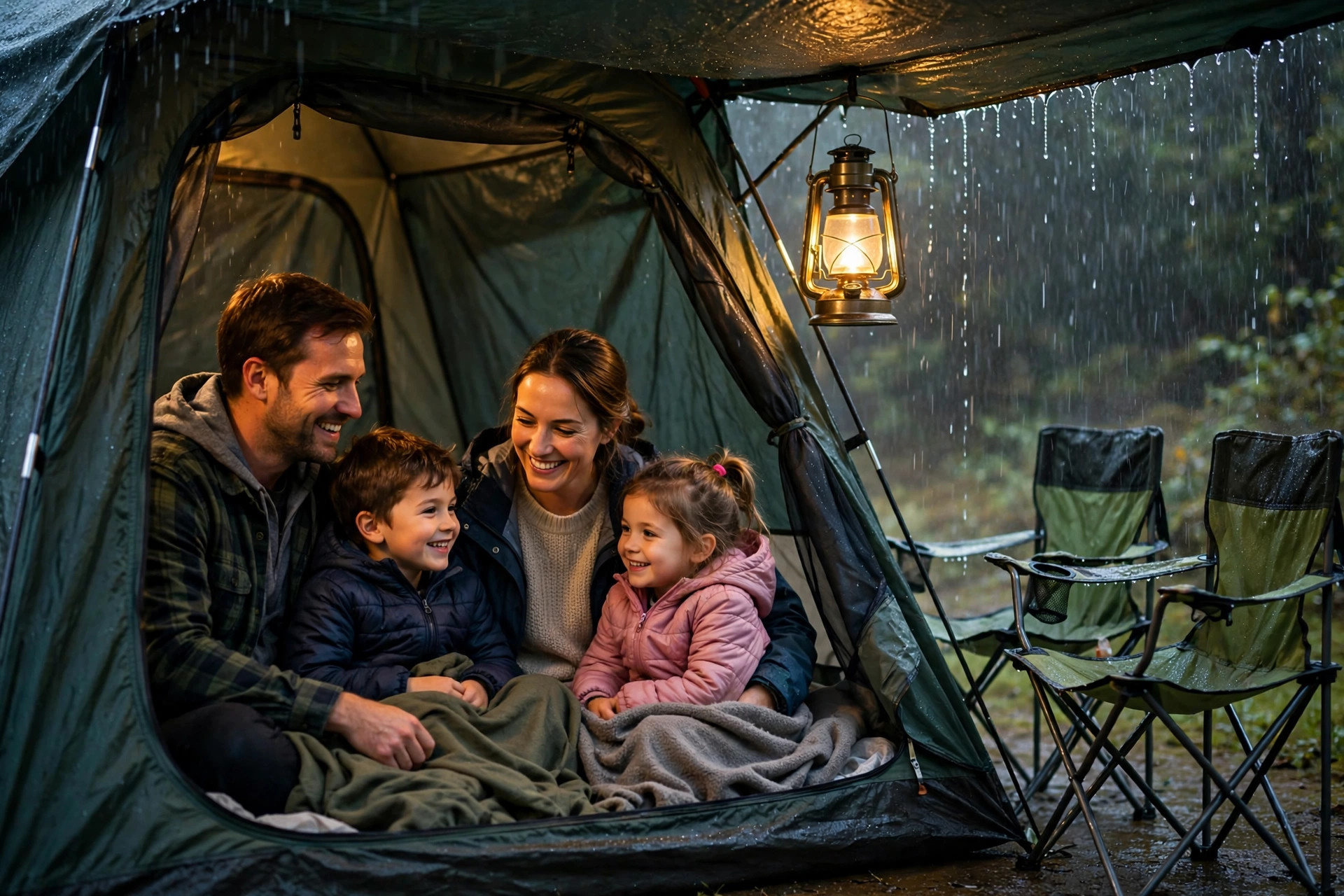
The vestibule — the covered porch under the fly’s overhang — is one of the best family features of a good rainfly, and most families underuse it. Think of it as your mudroom:
 ” alt=”Family with young children sitting dry inside a tent doorway under a rainfly vestibule during rain” />
- Shoe station: muddy shoes lined up in the vestibule keep the sleeping area clean.
- Wet-gear storage: rain jackets, wet towels, and backpacks stay covered but outside the tent.
- Rainy-day play porch: on a drizzly afternoon, kids can sit in the vestibule doorway and play cards or draw while staying dry. For more ideas, see our rainy-day camping activities for kids.
- Night-time potty spot: keep a small camp potty in the vestibule for middle-of-the-night trips, so nobody has to go out in the rain.
One safety rule: never cook in the vestibule. Stoves produce carbon monoxide, which the enclosed space under a fly traps. Cook outside, even in rain, under a separate tarp if needed.
Rainfly Care and Repair
A rainfly lasts years with basic care, but a few habits will quietly ruin one:
- Dry it before storage. Never pack a wet fly away for weeks — mildew eats coatings and leaves a permanent smell. If you must pack wet, dry it within a day of getting home.
- Clean gently. Hand-wash with lukewarm water and mild soap, then rinse well. Never machine-wash or use harsh detergents — they strip the coating.
- Reproof when water stops beading. If rain soaks in instead of beading and rolling off, a spray-on reproofing treatment restores the coating.
- Patch small tears early. A repair patch or dab of seam sealant on a small tear stops it becoming a big one. Check the fly at the end of every trip.
- Store it loose and dry. A stuff sack is fine for trips, but a loose mesh bag in a dry place is kinder to the coating for long storage.
Do You Always Need the Rainfly?
Not always. Skip the fly when:
- The forecast is clear and dry, and you want maximum airflow and stargazing through the mesh roof.
- You are camping in a hot, dry desert site where ventilation matters more than rain protection.
- You are doing a quick backyard campout with an easy retreat indoors.
But keep the fly on (or packed and ready) whenever there is any real chance of rain, when camping with babies or toddlers, or when heavy dew is likely. Our rule: if in doubt, pitch it. Taking it off takes two minutes; drying a soaked sleeping bag takes a day.
For trip planning, check current conditions and campground rules through the National Park Service camping pages and Recreation.gov before you head out.
Frequently Asked Questions
What is a tent rainfly in simple terms?
A tent rainfly is the waterproof outer cover that goes over your tent — like a raincoat for the tent — keeping rain, snow, dew, and wind away from the inner tent where your family sleeps.
Do I need a rainfly if my tent already looks waterproof?
Yes, on most double-wall tents. The inner tent is mostly mesh and breathable fabric, so it is not waterproof on its own. The rainfly is the layer that actually keeps water out.
What is the difference between a full-coverage and a partial-coverage rainfly?
A full-coverage fly extends nearly to the ground and protects against wind-driven rain. A partial-coverage fly covers only the roof and upper walls, giving better airflow but much less storm protection. For family camping, full coverage is usually safer.
Why is my tent wet inside even with the rainfly on?
Usually it is condensation, not a leak. Warm, moist air from breathing condenses on the cold fly overnight. Keep the fly taut so it does not touch the inner tent, open the vents, and avoid drying wet clothes inside.
Can I leave the rainfly off on a clear night?
Yes, on a reliably dry, clear night it improves airflow and lets you stargaze through the mesh. Keep the fly packed and within reach in case the forecast changes, and always use it when camping with babies or toddlers.
How do I know when my rainfly needs reproofing?
Watch how water behaves on it. If rain beads up and rolls off, the coating is healthy. If water soaks in and darkens the fabric, it is time for a spray-on reproofing treatment and a seam-seal check.
