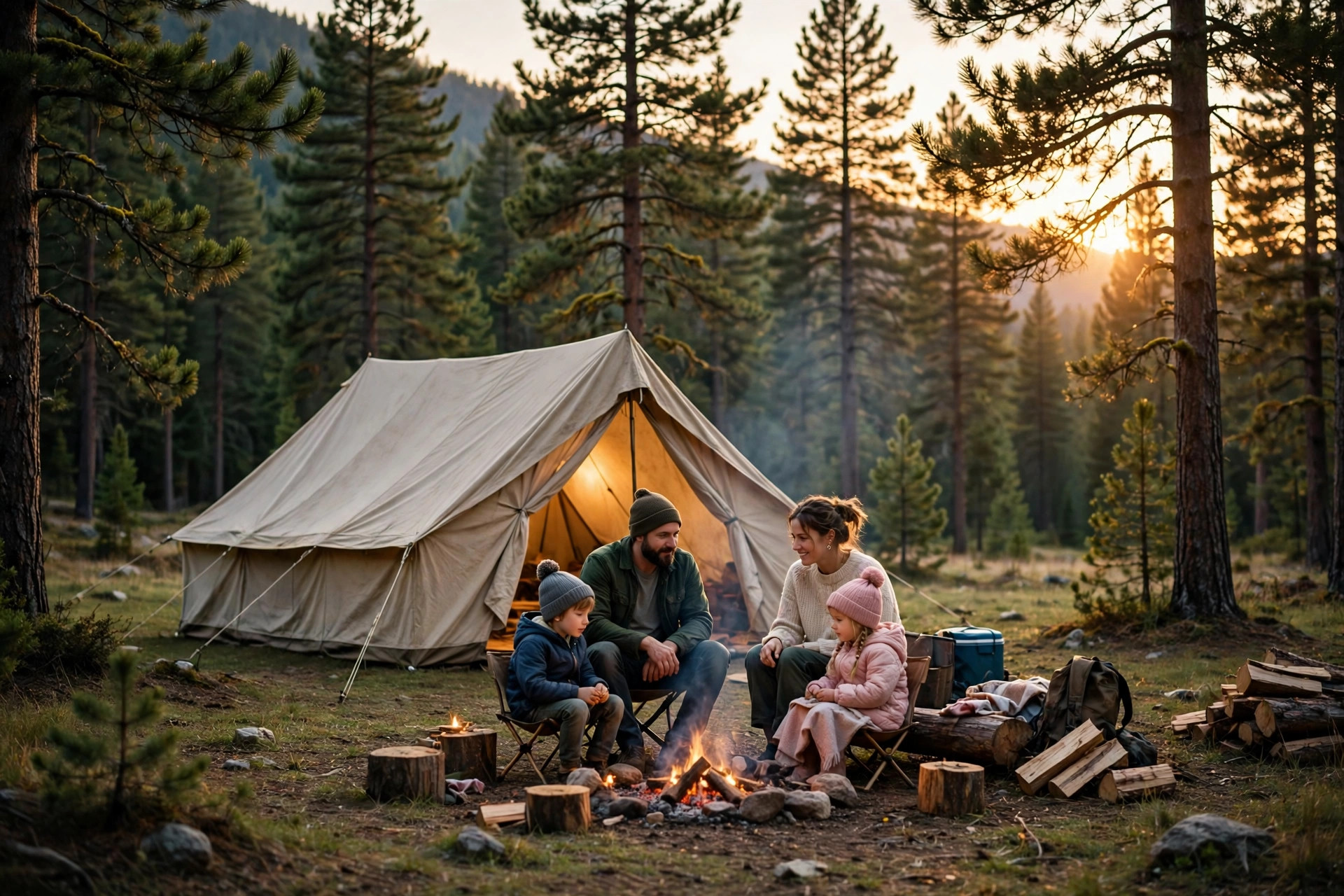
Ask a dozen camping families where they would rather pitch a tent, and you will get two very different answers. Some swear by national parks: paved sites, ranger programs, restrooms with actual doors. Others will tell you the real magic happens in national forests, where you can camp beside a quiet stream and not see another soul all weekend. Both are run by the federal government, both are spectacular, and both can be wonderful with kids — but they are not the same kind of trip. If you pick the wrong one for your family’s stage, a dream weekend can turn into a long, muddy complaint session.
This guide breaks down the real differences between camping in national forests vs national parks, what each one costs, how booking works, and which option fits your family best — so you can choose with confidence instead of guessing.
National Parks vs National Forests: The Key Difference
The simplest way to think about it: national parks are built to showcase a place, while national forests are built to use a place. National parks exist to protect scenery, wildlife, and historic sites, so visitor services, trails, and campgrounds are carefully developed and managed. National forests are working public lands — they allow timber harvest, grazing, and much more dispersed recreation, which means they are usually larger, wilder, and far less crowded.
In practice, that shows up in everything from the campsites to the rules. A national park campground feels like a small village: numbered sites, a camp host, a visitor center nearby. A national forest campground can be exactly the same — many forests have developed campgrounds too — or it can be nothing more than a pull-off beside a dirt road where you are entirely on your own.
Who manages each one?
National parks are managed by the National Park Service (NPS). National forests are managed by the U.S. Forest Service, part of the Department of Agriculture. That split matters for families because the two agencies have different reservation systems, different fee structures, and different rules about things like campfires, dogs, and where you can camp.
Cost: How Much Each Option Really Costs
For most families, national forests are the cheaper option — sometimes dramatically so.
| Cost | National Parks | National Forests |
|---|---|---|
| Developed campsite per night | Usually $20–$35 | Usually $10–$25 |
| Entrance fee | Often $20–$35 per vehicle (or $80 annual America the Beautiful pass) | Usually free; some recreation areas charge a small day-use fee |
| Dispersed camping | Not allowed in campgrounds; backcountry permits may apply | Free on most forest land |
| Reservation fee | $8–$10 through Recreation.gov | $8–$10 through Recreation.gov (when reservable) |
That free dispersed camping in national forests is the single biggest budget advantage. A family that camps five nights in a forest can save $100 or more compared with the same nights in a national park — and with an America the Beautiful pass covering park entrance fees, the gap narrows but rarely disappears. If your trip budget is tight, forests win on price almost every time.
Booking and Availability: Which Is Easier to Get Into?
National park campgrounds are famous for booking out fast. The most popular parks release sites six months in advance on Recreation.gov, and the best dates at places like Yellowstone or Yosemite can disappear within minutes of release. If your dates are flexible or you are planning far ahead, this is manageable. If you are planning two weeks out, it can feel impossible.
National forests are far more forgiving. Many forest campgrounds are first-come, first-served, and even reservable ones rarely sell out months ahead. Dispersed camping needs no reservation at all — you simply find a legal spot and set up. For families who decide to go camping on a Tuesday and leave on a Friday, forests are often the only realistic option.
That said, do not assume every forest site is available. Popular campgrounds near lakes and trailheads do fill up on summer weekends. Check the forest’s own page on Recreation.gov, and have a backup dispersed spot in mind. Our guide to finding last-minute campsite cancellations works for both parks and forests, and it has saved more than one of our weekends.
Campsites and Facilities: What to Expect with Kids
Here is where the two options feel most different on the ground.
National park campgrounds
Park campgrounds are built for visitors, and it shows: level tent pads, picnic tables, fire rings with grills, drinking water, flush toilets or well-kept vault toilets, and often a camp store or visitor center a short drive away. Sites are close together — you will hear your neighbors — but that closeness also means other kids to play with, which many children love. Rangers patrol regularly, and there is usually someone to ask when something goes wrong.
National forest campgrounds
Developed forest campgrounds are often very similar, just quieter and more spread out. You get the same basics — table, fire ring, toilet — with more trees between sites and fewer people around. Dispersed sites are a different world entirely: no table, no toilet, no water, no trash service. You bring everything and pack everything out, including human waste in some areas. That freedom is wonderful with older kids and a real challenge with a toddler who needs a bathroom at 2 a.m.
The rule of thumb we use: if your youngest child is under four, or this is your family’s first camping trip, start with a developed campground — in either a park or a forest. Save dispersed camping for the trip when your kids can walk to the bathroom on their own and help carry water. If you are still building your kit, our family camping checklist of 47 essentials covers exactly what a developed site still requires you to bring.
Activities and Things to Do with Kids
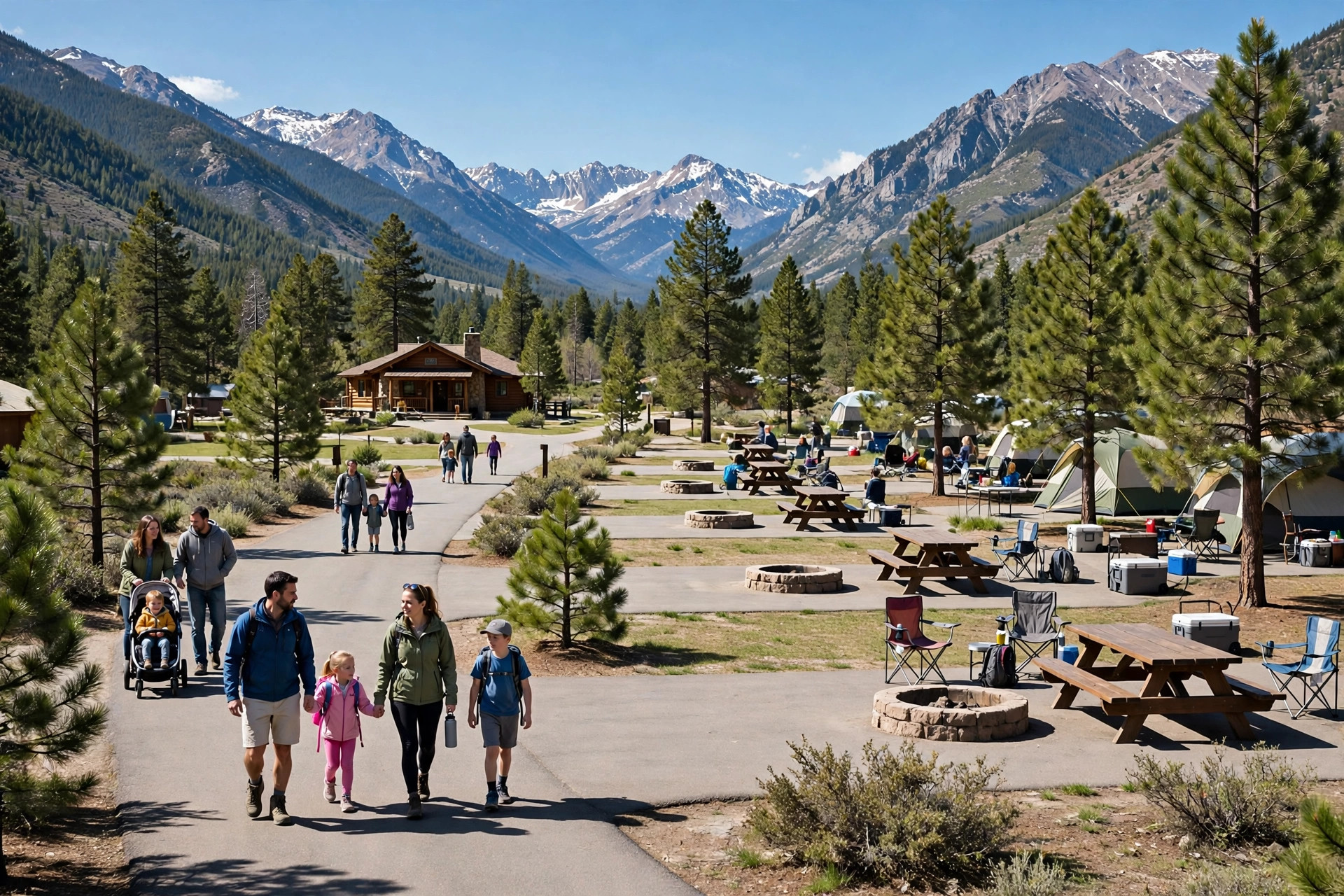
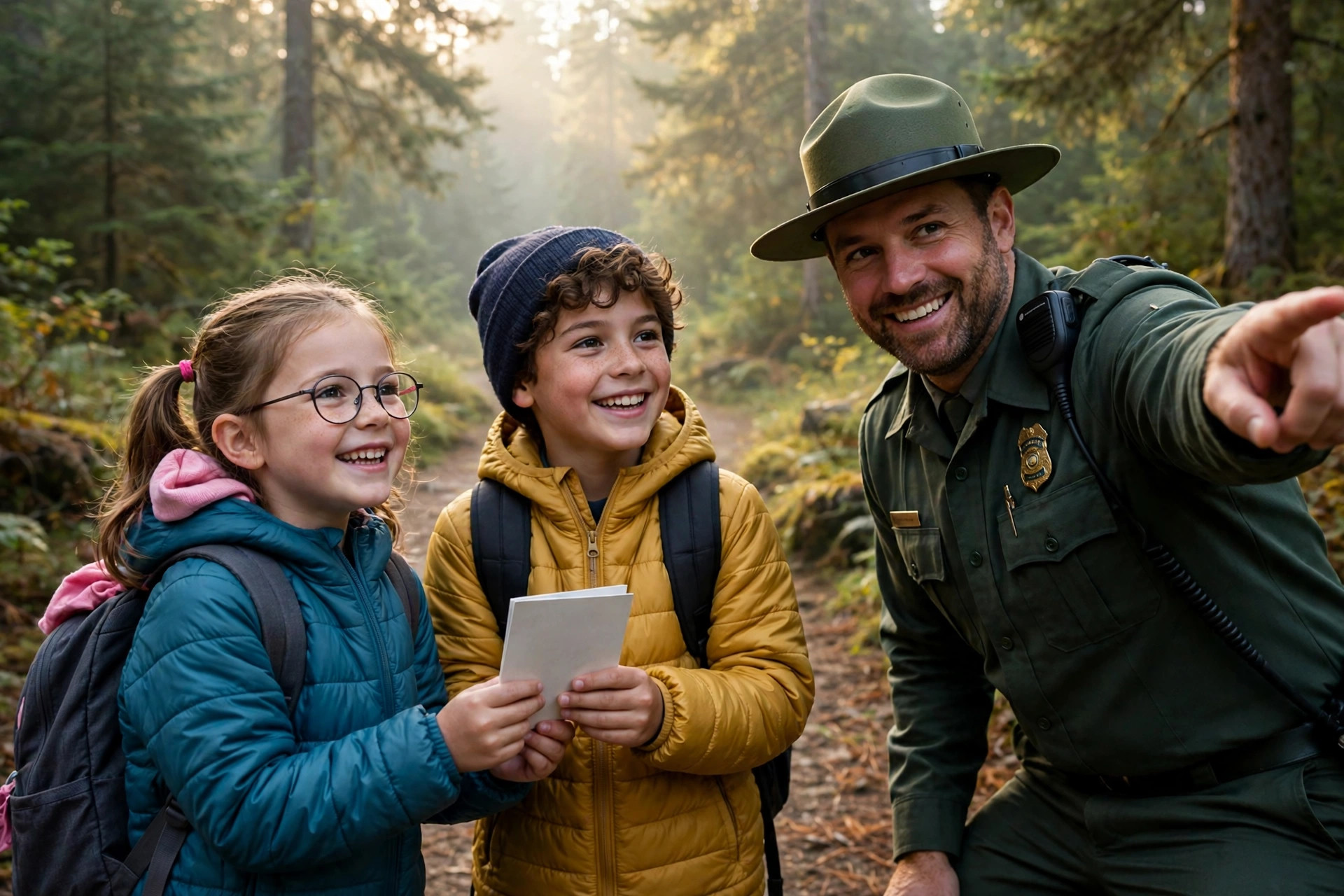
National parks win on structured, kid-friendly activities. Ranger-led programs, junior ranger booklets, visitor center exhibits, short paved trails to famous viewpoints, and shuttle buses all make a park easy to enjoy with children of very different ages. Our guide to junior ranger programs at the best national parks for kids shows how much of this is free and how it keeps children engaged for hours.
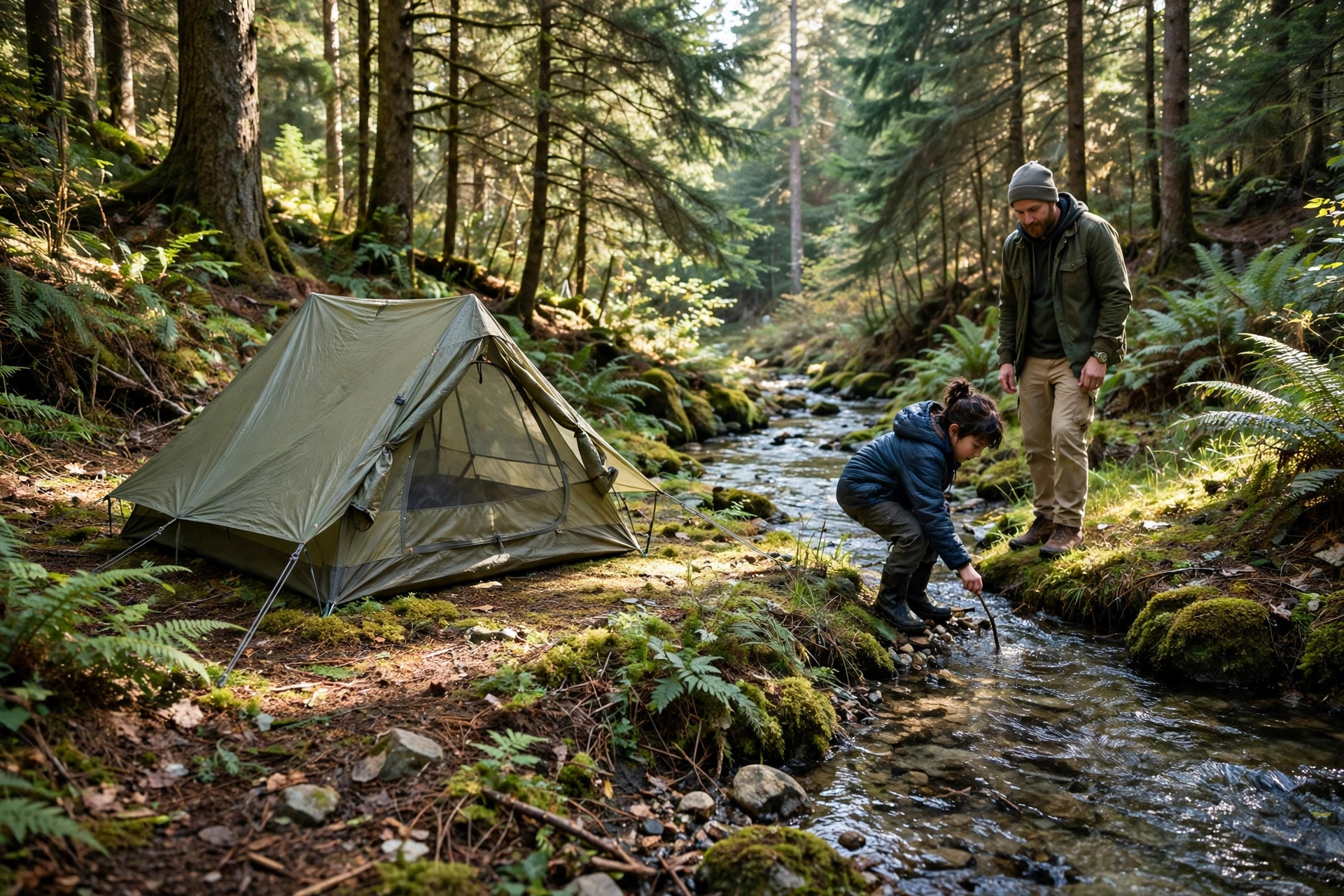
National forests win on unstructured play. Without the crowds and the schedule, kids build dams in creeks, climb logs, spot wildlife, and invent their own adventures. Fishing, berry picking (where allowed), and exploring old forest roads are all classic forest experiences that parks rarely offer. There are fewer guided programs, so the entertainment is largely up to you — which is either the best part or the hardest part, depending on your kids.
Rules That Catch Families by Surprise
The rules differ more than most first-timers expect, and the differences matter most with kids and pets.
- Dogs: National forests generally allow dogs on trails and in campgrounds on a leash. National parks usually restrict dogs to campgrounds, parking lots, and paved areas — not hiking trails. If the family dog is coming, forests are the easier choice.
- Campfires: Both can ban fires during dry periods, but forest fire rules change by district and are often stricter in dispersed areas. Always check the current fire restrictions before you go, and bring a camp stove as a backup either way.
- Stay limits: National forests typically allow 14 days in one spot; national parks often cap stays at 7 or 14 days depending on the campground.
- Collecting and foraging: Forests often allow limited berry or mushroom gathering; parks generally prohibit collecting anything.
- Noise and quiet hours: Both enforce quiet hours, but in a crowded park campground they matter a lot more — your toddler’s 6 a.m. wake-up call will be heard by twenty neighbors.
Before any trip, check the official pages: the National Park Service site at nps.gov for park alerts and closures, and the Forest Service site or Recreation.gov at recreation.gov for forest campground status and fire restrictions. Conditions change fast in fire season, and a five-minute check can save a ruined weekend.
Which Is Better for Your Family? A Simple Decision Guide
Choose a national park if…
- Your kids are under six and you want flush toilets, drinking water, and a ranger nearby.
- You want structured activities like junior ranger programs and guided walks.
- You are visiting a bucket-list destination and want the iconic views.
- You booked months ahead and have a confirmed reservation.
Choose a national forest if…
- Your budget matters and you want free or very cheap camping.
- You are planning last-minute and park sites are sold out.
- You want space, quiet, and fewer crowds.
- You are bringing the dog on the trails.
- Your kids are old enough to enjoy unstructured exploring and can handle a vault toilet or a trowel.
Or do both
Many of the best family trips combine the two: two nights in a national park for the ranger programs and the famous views, then two nights in the neighboring national forest for quiet, cheap, crowd-free camping. Parks and forests often sit side by side — Yellowstone borders several national forests, and the same is true around the Grand Canyon, the Smokies, and Rocky Mountain National Park. You get the highlights and the breathing room in one trip.
Planning Checklist: Forest or Park, Do These First
- Check availability first. Park sites book six months out; forest sites often do not. Look at reservation windows by state so you know when your dates open.
- Check fire restrictions and alerts on nps.gov or Recreation.gov the week of your trip.
- Know your water plan. Developed sites have drinking water; dispersed sites do not. Bring more than you think you need.
- Ask the right questions before booking. Toilets, water, cell service, and generator hours all vary — our list of 12 questions to ask before booking a family campground covers them all.
- Pack for the site you chose. A forest dispersed site needs a trowel, extra water, and a way to pack out trash. A park site needs earplugs for the neighbors’ generator.
- Have a plan B. If the park is full, the forest next door usually is not — and vice versa.
Frequently Asked Questions
Can you camp for free in a national forest?
Yes — dispersed camping is free on most national forest land, usually for up to 14 days in one spot. You need to camp at least 100–200 feet from water and trails (rules vary by forest), bring your own water and toilet setup, and pack out all trash. Developed forest campgrounds do charge a nightly fee, usually $10–$25.
Do you need a reservation for national forest campgrounds?
It depends. Many forest campgrounds are first-come, first-served, while the most popular ones take reservations on Recreation.gov. Dispersed camping never needs a reservation. Arrive early on weekends — the best first-come sites fill by Friday afternoon in summer.
Are national parks or national forests better for toddlers?
National parks are usually better for toddlers. They offer flush toilets, drinking water, paved paths, stroller-friendly viewpoints, and ranger programs, all within a short walk of the campsite. National forests are better once kids are older and can handle vault toilets, uneven trails, and longer stretches without facilities.
Can you bring a dog camping in a national park?
Yes, but with limits. Dogs are generally allowed in park campgrounds and parking areas on a leash, but they are usually not allowed on hiking trails or in backcountry areas. National forests are far more dog-friendly, allowing leashed dogs on most trails and in dispersed camping areas.
Is dispersed camping in a national forest safe for families?
It can be, with preparation. Choose a well-used dispersed area rather than a totally remote spot, tell someone your plans, carry a way to call for help, store food properly away from wildlife, and make sure older kids know the boundaries of camp. Families with very young children usually do better starting at a developed campground and trying dispersed camping later.
Do you need an America the Beautiful pass for national forests?
No. The America the Beautiful pass covers entrance fees at national parks and other federal recreation sites, but most national forests do not charge an entrance fee at all. The pass is still worth it if your trip includes even one national park, since a single park entry can cost $35 per vehicle.
The Bottom Line
There is no single winner here — only the right fit for this trip and this stage of your family’s life. National parks give you structure, facilities, and unforgettable icons. National forests give you space, savings, and freedom. The families who love camping most are usually the ones who have tried both, and who know when to choose the ranger program and when to choose the quiet creek.
Start with a park if your kids are small or it is your first trip. Head to the forest when you want room to breathe and money to spare. And if you cannot decide, do what experienced camping families do: spend half the trip in each.
