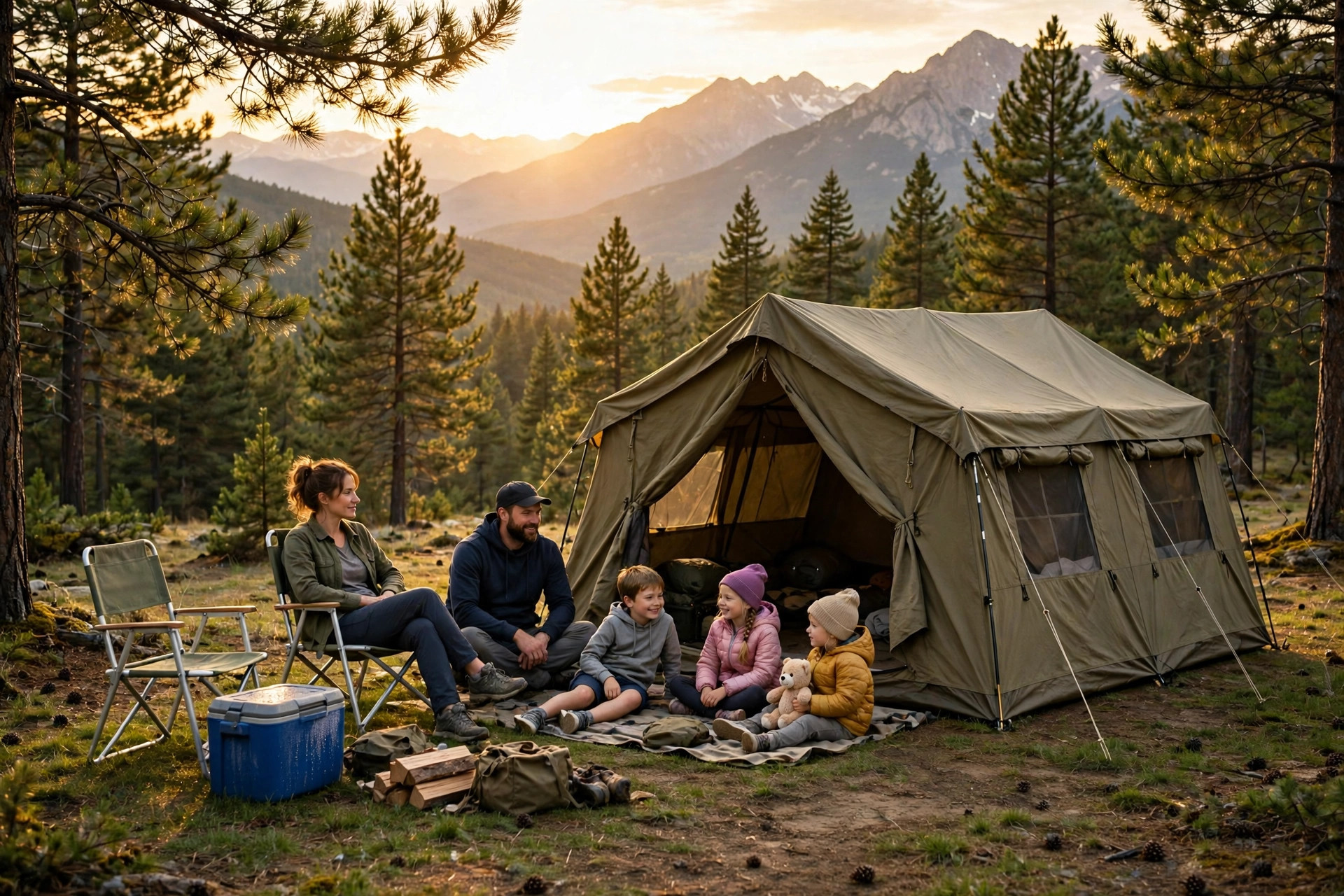
Shopping for the best 8-person tent for large families feels simple until you try to fit two adults, three kids, three air mattresses, and a pile of duffel bags inside one. The box says “sleeps 8,” but that number counts sleeping pads laid shoulder to shoulder, with zero room for anything else. For a family of five or six, an 8-person tent is usually the sweet spot — big enough for real living space, small enough for one parent to pitch. This guide compares the strongest 2026 options and maps out sleeping layouts that work with kids.
Note: we have not personally slept in every tent below. Picks are based on published specifications, independent review roundups, and family-camper feedback — not invented test results. Price ranges are approximate; check the current price before buying.
Why an 8-Person Tent Is the Sweet Spot for Large Families
Most families shopping in this size are not actually eight people. They are four to six people who want to stand up, change clothes without elbowing each other, and keep gear out of the rain:
- Real standing room: cabin-style 8-person tents typically offer 6 to 7 feet of peak height.
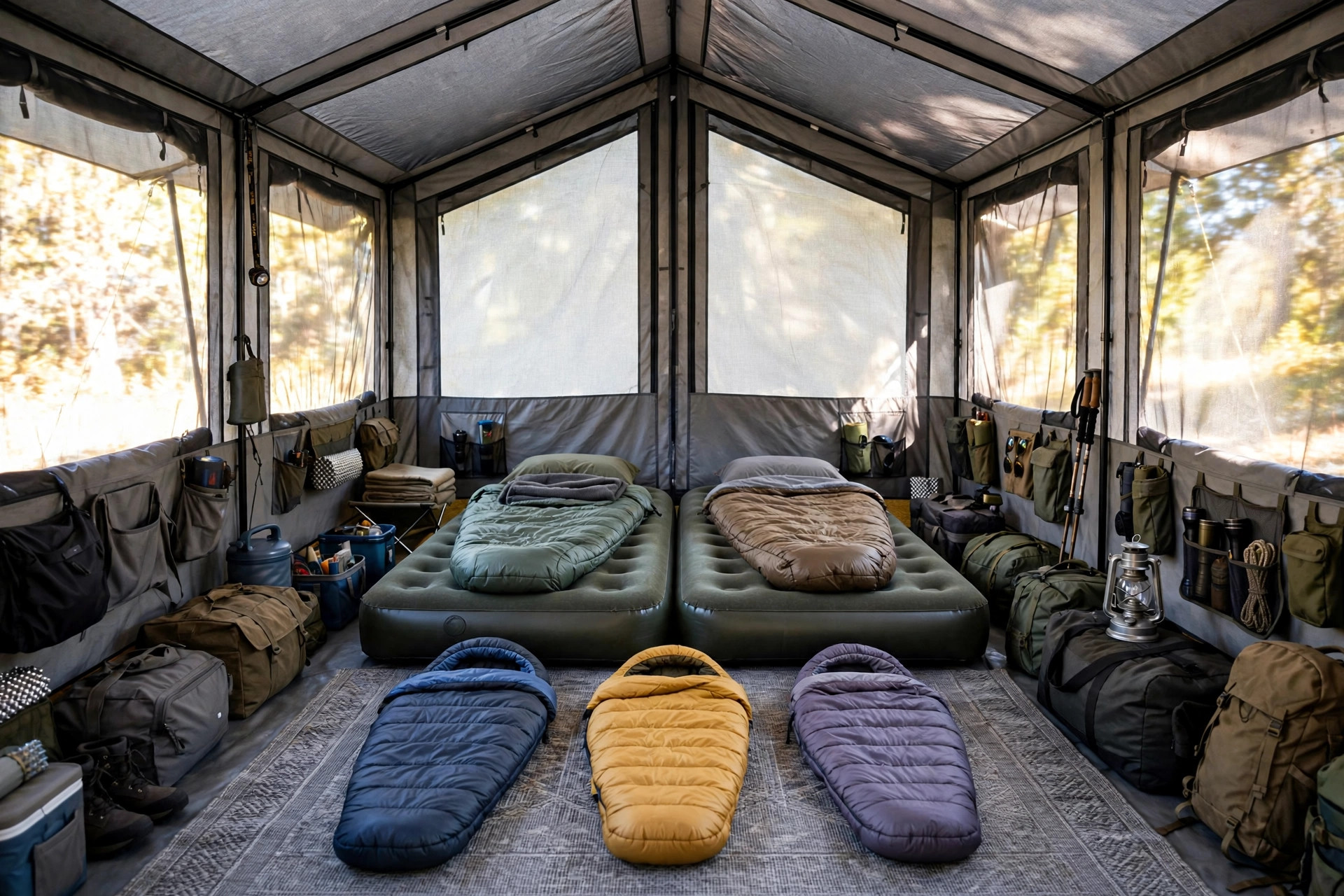
- Room for real beds: most 8-person floors (110–150 sq ft) fit two queen air mattresses, with space left for kids’ sleeping bags.
- One-parent setup: instant designs pitch in 5–10 minutes, even with kids running around.
- Weather buffer: wet gear, muddy shoes, and a restless toddler stay inside instead of crowding the sleeping area.
What “8-Person” Really Means (The Capacity Lie)
Tent capacity is measured by laying sleeping pads edge to edge across the floor. Nobody camps that way — divide the advertised capacity roughly in half for comfortable family camping with gear.
| Advertised capacity | Comfortable for | Typical floor area | Fits |
|---|---|---|---|
| 6-person | 2 adults + 1 small child | 80–100 sq ft | 1 queen mattress + 1 kids’ bag |
| 8-person | 2 adults + 2–3 kids | 110–150 sq ft | 2 queen mattresses + kids’ bags |
| 10-person | 2 adults + 3–4 kids | 140–180 sq ft | 2 queen mattresses + gear zone |
| 12-person | Large groups / basecamp | 180+ sq ft | 3 queen mattresses |
Before you buy, measure your sleeping setup. A queen air mattress is about 60 × 80 inches (roughly 33 sq ft), so two queens need 66 sq ft before a single bag enters the tent. Add a gear pile and a walkway, and you can see why 110 sq ft is the practical minimum for a family of five — 130+ sq ft if your kids are older.
How to Choose an 8-Person Tent for Your Family
1. Floor area and peak height
Look for at least 110 sq ft of floor and 6 feet of peak height. Cabin-style tents with near-vertical walls feel much bigger than domes with the same square footage, because usable space extends to the edges.
2. Cabin vs. dome shape
Cabin tents give you standing room, straight walls, and dividers — ideal for families. Domes handle wind better and weigh less, but sloping walls eat usable space. For car camping with kids, cabin style wins.
3. Weather protection
Check the waterproof rating (in millimetres, or “mm”). Budget tents sit around 1,000mm — fine for light showers. For real rain, look for 1,500mm or higher, a full-coverage rainfly, and taped seams. A bathtub floor (curved up the sides) keeps ground water out.
4. Setup time — with kids underfoot
Manufacturer setup times assume an experienced adult with no interruptions. With kids, double the number. Instant tents with pre-attached poles genuinely cut pitching to a few minutes, which matters when you arrive at camp at dusk with tired children.
5. Room divider and dark-room features
A divider curtain turns one big tent into two rooms — one for early-to-bed kids, one for parents. Dark-room fabric blocks early-morning light, buying you an extra hour of sleep. Both are worth real money for families with toddlers.
6. Ventilation, vestibule, and packed size
Big tents trap warm, moist air. Look for mesh roof panels, ground vents, and windows that open. A vestibule gives you a dry spot for muddy shoes. Check packed size too — an 8-person tent typically weighs 20–30 pounds and packs to roughly the size of a large duffel.
The 6 Best 8-Person Tents for Large Families (2026)
These picks cover the main family needs: fastest setup, best weather protection, best budget value, and best for kids’ sleep.
1. CORE 9-Person Instant Cabin Tent — Best Overall for Families
Pre-attached poles and a hub system let one person pitch it in about two minutes. The 6’6″ centre height lets most adults stand upright, the floor fits two queen air mattresses, and a room divider splits the space for kids’ bedtime.
Best for: families who arrive late and want the fastest setup. Not for: serious storms — the tall cabin walls catch wind. Pros: fastest setup here; huge interior; divider included. Cons: heavy and bulky when packed. Price range: roughly $200–$300.
2. Coleman Skydome XL 8-Person Tent — Best Value
At 16 × 7 feet (112 sq ft), it is one of the roomiest 8-person floors available — independent measurements put its usable interior at over 114 sq ft. Its WeatherTec system and roughly 3,000mm waterproof rating handle moderate rain well, and setup takes about five minutes.
Best for: families on a budget who still want real space and decent rain protection. Not for: multi-day trips in heavy rain, or families who need a divider (none included). Pros: huge floor for the price; strong waterproof rating. Cons: no room divider; dark-room version costs more. Price range: roughly $150–$250.
3. Coleman 8-Person Dark Room Skydome Tent — Best for Kids’ Sleep
If your kids wake at the first hint of sunrise, this is the tent to look at. The dark-room fabric blocks most daylight, keeping the interior darker and cooler on hot mornings. Same roomy Skydome floor — two queen mattresses fit — but the sleep quality is the real selling point.
Best for: families with early risers, light sleepers, or toddlers who nap at camp. Not for: hot, still nights — the dark fabric runs warmer. Pros: blocks morning light; cooler interior on sunny days. Cons: slightly heavier; costs more than the standard version. Price range: roughly $200–$300.
4. Eureka Copper Canyon LX 8 — Best for Real Weather
The premium cabin tent for families who camp in shoulder seasons or unpredictable mountain weather. Tall, near-vertical walls, a full-coverage rainfly, and a sturdy frame give it a more solid feel than budget cabins, and reviewers praise its storm performance and huge windows.
Best for: families who camp in spring and fall, or where afternoon storms are normal. Not for: budget shoppers, or anyone who wants a sub-5-minute pitch — setup takes closer to 15 minutes. Pros: excellent weather protection; tall walls; divider included. Cons: premium price; heavier than budget options. Price range: roughly $400 and up.
5. The North Face Wawona 8 — Best Premium Family Basecamp
The tent for families who treat camp as a base for a week, not a weekend. Two rooms, vertical walls, a full-coverage rainfly, and a massive vestibule give you a genuine living space plus a dry gear zone — the most expensive tent here, but the most likely to last a decade.
Best for: long trips and basecamping. Not for: occasional campers, or anyone watching weight and packed size. Pros: two-room layout; huge vestibule; lifetime warranty. Cons: premium price; heavy. Price range: roughly $500 and up.
6. CAMPROS CP 8-Person Tent — Best Budget Pick
The cheapest way into a genuinely roomy 8-person tent. Double-layer construction, a room divider curtain, and straight cabin walls give it a family-friendly layout at a fraction of the premium price, and the 72-inch centre height lets most adults stand.
Best for: first-time family campers and tight budgets. Not for: heavy rain or high wind — the waterproofing and frame are basic. Pros: lowest price here; divider included. Cons: basic weather protection; thinner materials. Price range: roughly $130–$200.
Sleeping Layouts That Actually Work for 2 Adults + 3 Kids
The tent is only half the puzzle. How you arrange the inside decides whether everyone sleeps or everyone complains.
Layout A: Two queens + kids’ corner
Put two queen air mattresses side by side along one long wall, and the kids’ sleeping bags along the opposite wall. Best in tents with 130+ sq ft and a divider, so the kids’ zone feels like its own room. Keep a walkway down the middle for midnight bathroom trips.
Layout B: One queen + three kids in a row
One queen mattress for the parents on one side, three kids’ sleeping bags in a row on the other. This leaves a gear zone in the middle — useful on rainy days when everything comes inside. Best for younger kids who are happy in sleeping bags.
Layout C: Divider split — parents one side, kids the other
Use the room divider to split the tent in two: parents and gear on one side, all the kids on the other. Best for early bedtimes — the kids’ room goes dark and quiet while the parents’ side stays usable — and teenagers get privacy.
Whichever layout you choose, match your sleeping gear to it — our kids’ sleeping bag guide explains temperature ratings in plain language.
Setup Tips: Pitching a Big Tent with Kids Underfoot
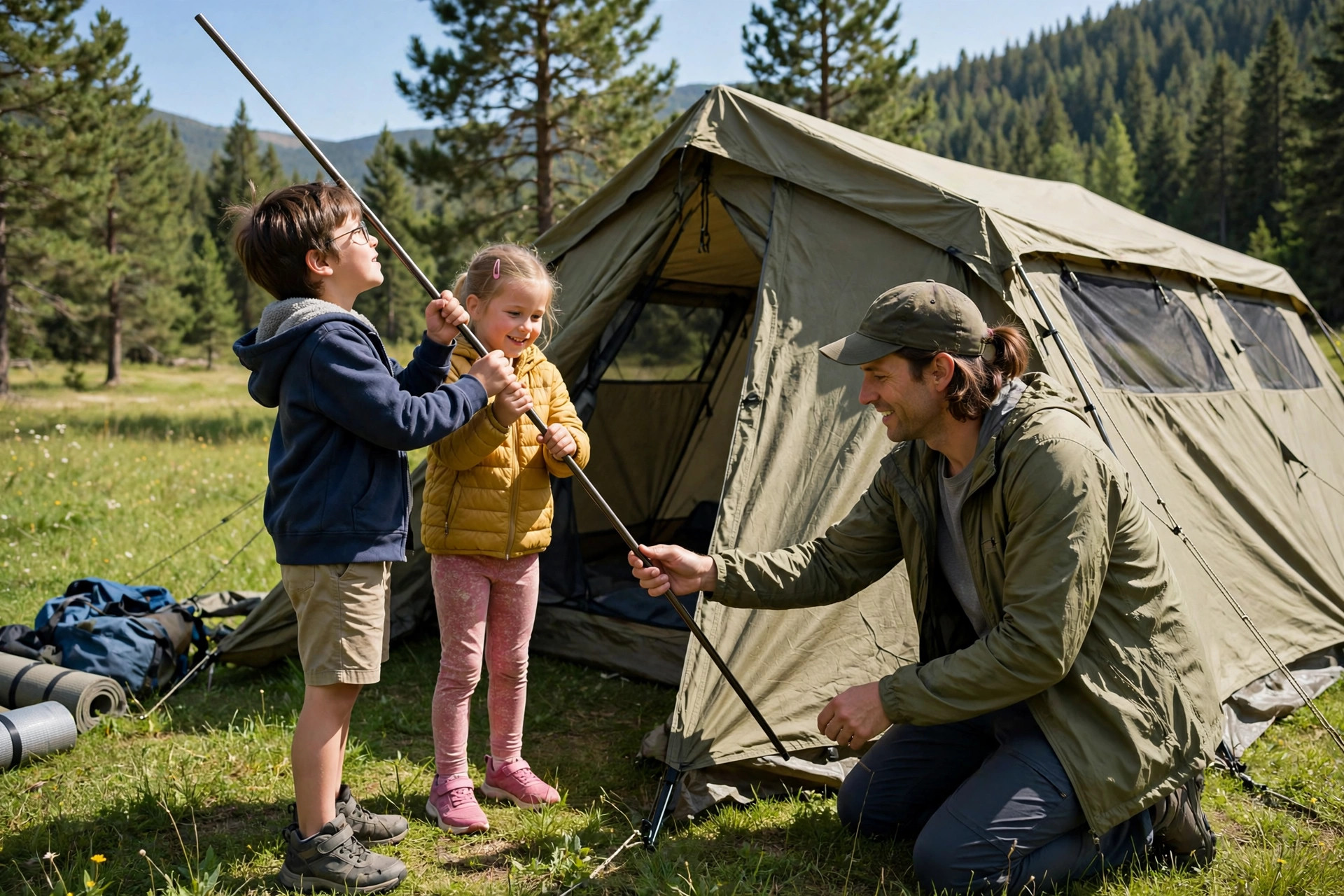
- Practice once at home. Pitch the tent in the backyard before the trip — once. You will learn the pole order, and the kids will learn their jobs.
- Give every child a job. Younger kids hold stakes and hand over poles; older kids can stake corners. A child with a job is not wandering toward the road.
- Stake the corners first. On a big cabin tent, staking two opposite corners before raising the poles stops it blowing away in a gust.
- Pitch the rainfly early. If clouds are building, get the fly on before you inflate mattresses — a dry interior is much easier to keep dry than to dry out.
- Check the wind direction. Point the door away from the prevailing wind — our tent-in-wind guide covers this in detail.
- Pack the tent last, unpack it first. First out of the car, last back in.
8-Person vs. 10-Person: When to Size Up
Size up if you have four or more kids, teenagers, a dog that sleeps inside, or week-long basecamps. The extra 30–40 sq ft gives you a real gear zone and breathing room on rainy days. Otherwise, an 8-person tent is the better buy — cheaper, lighter, faster to pitch, and fits more campsites. Some sites limit tent footprints, so check your site’s details on Recreation.gov before you book, and read the National Park Service camping pages for what to expect at park campgrounds. If you are still deciding, our family tent buying guide walks through the sizing math, and our best family camping tents roundup compares options across all sizes. For a family of exactly five, see our best tents for a family of 5.
Frequently Asked Questions
Can a family of 5 fit comfortably in an 8-person tent?
Yes — a family of five is the ideal use case. Two adults and three kids fit with two queen air mattresses or one queen plus three kids’ sleeping bags, with room left for gear. Look for at least 110 sq ft — 130+ if your kids are older.
How long does it take to set up an 8-person tent?
Instant cabins pitch in about 2–5 minutes with one adult; standard pole tents take 10–20 minutes. With kids helping (or distracting), add 5–10 minutes to any manufacturer claim.
Are 8-person tents good in rain?
It depends on the model. Look for a waterproof rating of 1,500mm or higher, a full-coverage rainfly, taped seams, and a bathtub floor. Budget tents with 1,000mm ratings handle light showers but can leak in sustained heavy rain — the Eureka Copper Canyon LX 8 and Coleman Skydome XL are among the stronger rain performers here.
Do I need a 10-person tent instead?
Only if you have four or more kids, teenagers, a dog that sleeps inside, or week-long basecamps. For a family of four to six on weekend trips, an 8-person tent is the best balance of space, weight, and price.
Can one person pitch an 8-person tent alone?
Yes, with the right design. Instant tents with pre-attached poles are one-person jobs; standard cabin tents are harder solo, but doable in calm weather if you stake the corners first.
The Bottom Line
For a large family, the best 8-person tent matches how you actually camp: the CORE instant cabin for the fastest setup, the Coleman Skydome XL for the most space for the money, the dark-room Skydome if your kids wake at sunrise, and the Eureka Copper Canyon or North Face Wawona for real weather or week-long stays. Measure your sleeping setup, check the floor area — not the headcount — and practise the pitch once at home.
