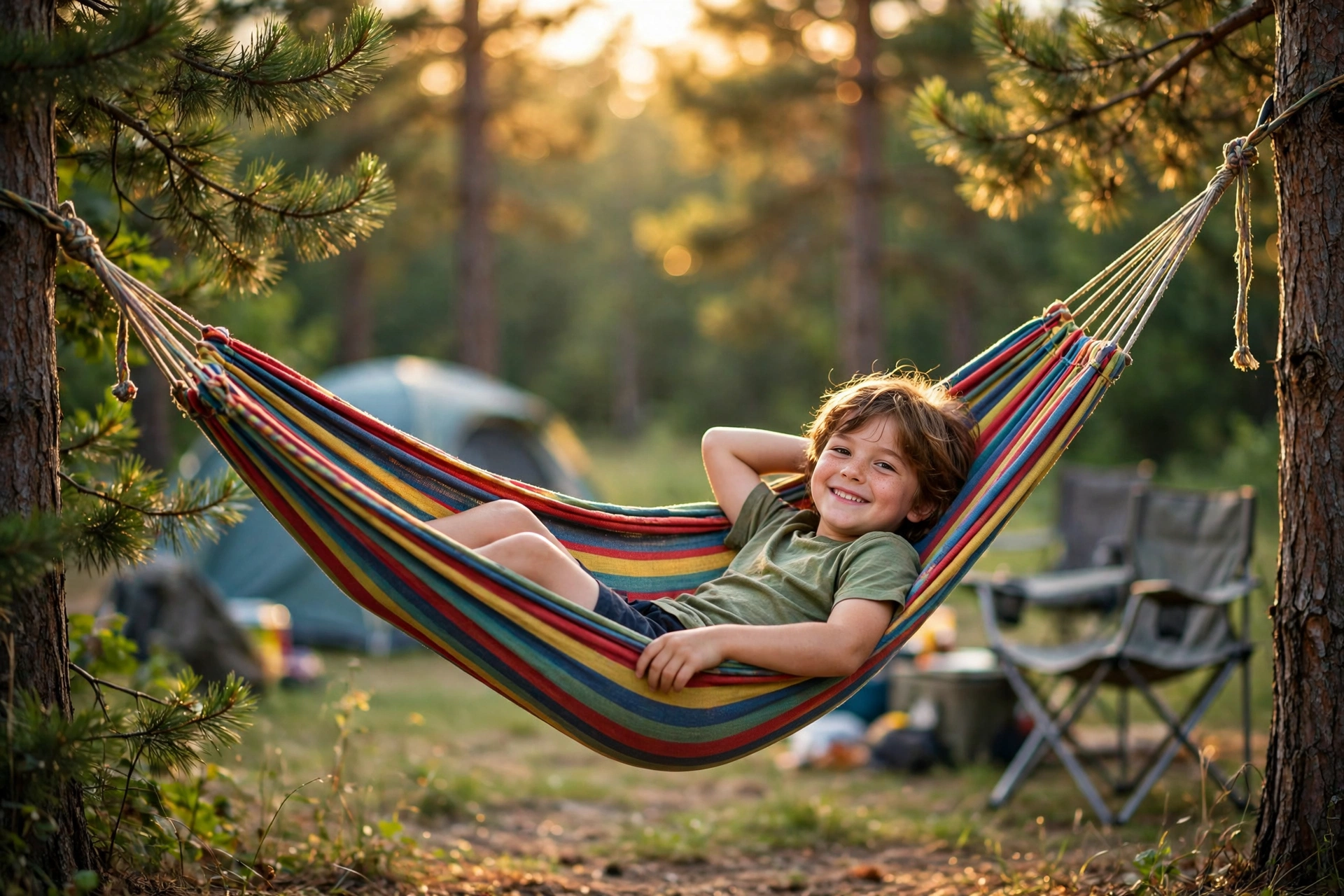
A kid in a hammock is a happy kid. Give a child a little nylon nest strung between two trees and you solve family camping’s two hardest problems: mid-afternoon restlessness and the bedtime battle. The best hammock for kids camping is light enough for them to carry, low enough to climb into alone, and strong enough that you never worry.
But not every hammock is a good kids’ hammock. Adult models are too long, hang too high, and come with straps a small child cannot manage. This guide covers what to look for, the safest setup, and the best kid-friendly hammocks for 2026 — with honest pros and cons, so you can pick the right one for your child’s age and campsite.
Why Kids Love Hammocks at Camp
A hammock does three jobs at once. It is a play space: kids swing, read, and invent games in it for hours, buying parents quiet time at the picnic table. It is a nap spot — the gentle rocking settles overtired kids, so no dinner meltdown. And for older kids and teens, it is a private corner that feels like their own room.
It also packs smaller than almost any other camp gear. Most kid-sized hammocks compress to the size of a water bottle and weigh under a pound, so your child can carry their own — which matters on a hike-in site, and builds real independence.
Are Hammocks Safe for Kids?
Yes — with firm rules. Hammocks are safe for children old enough to climb in and out alone, which for most kids means age 4 and up:
- Never put a baby in a hammock. The U.S. Consumer Product Safety Commission has recalled infant hammocks for suffocation risk, and adult hammocks are no safer for babies. Babies sleep in a crib, bassinet, or on a flat pad — never in a hammock.
- Hang it low. The bottom should sit at about chair height — roughly 18 inches (45 cm) off the ground. If your child falls out, it is a bump, not a trip to urgent care.
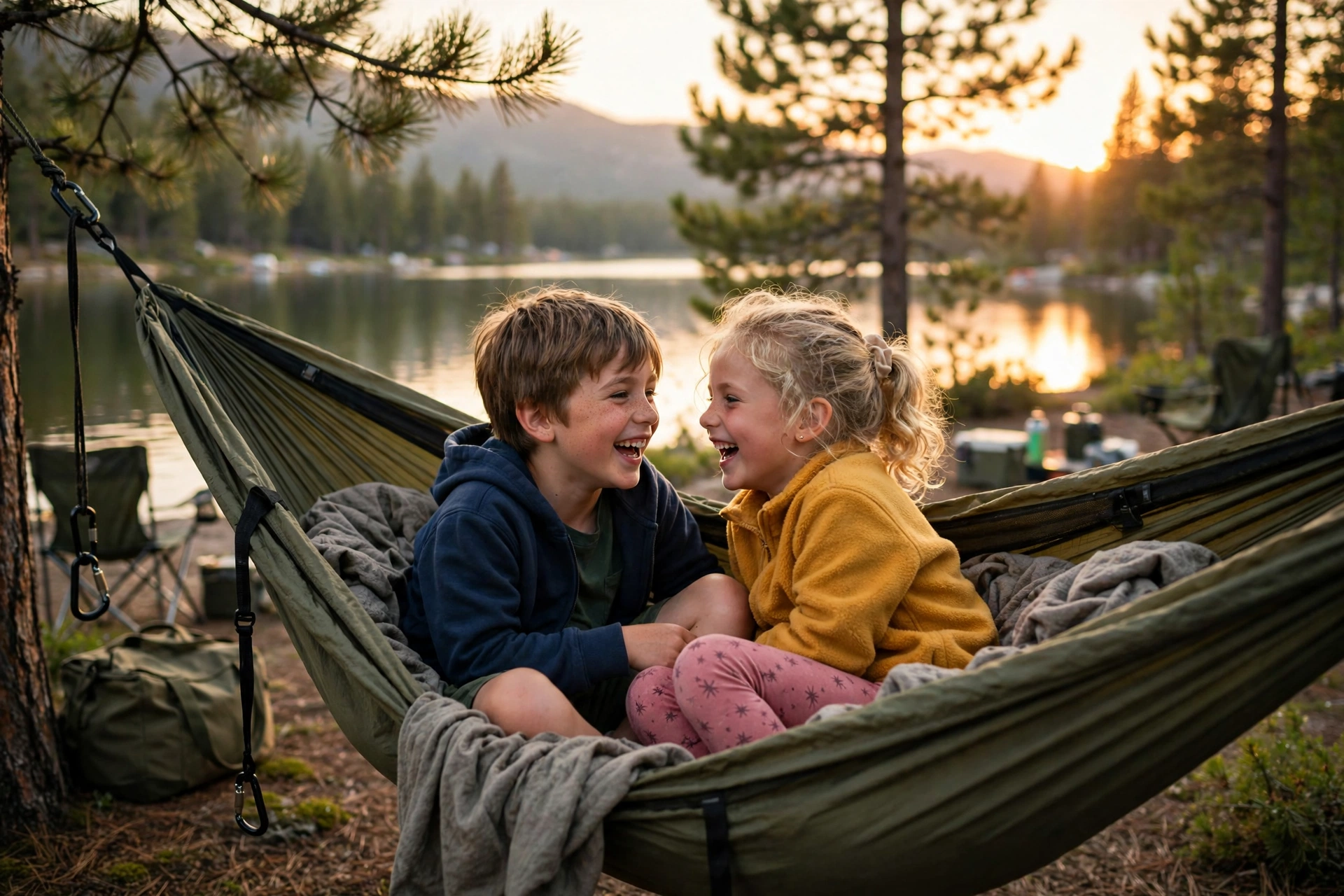
- One child at a time for sleeping. Two kids can lounge together in the daytime with an adult nearby, but overnight, each sleeper gets their own hammock.
- Always supervise swinging. Hammocks are not swings — standing up in one, flipping it, or spinning it can tip a child out headfirst.
- Leave a margin on the weight limit. Never load a hammock to its rated maximum.
- Inspect straps and trees before every use. Look for frayed stitching, cracked carabiners, and dead or damaged trees. Use wide tree straps (at least 1 inch) so the bark is not damaged.
For the full picture, read our family camping first aid kit checklist before your trip — a hammock is only relaxing when you are prepared for small accidents.
How to Choose a Hammock for Kids: 6 Things That Matter
1. Size: kid-sized beats adult-sized
A full-size adult hammock (10–11 feet) swallows a small child — the fabric wraps around them, they cannot see out, and getting in and out is a struggle. Look for 6–8 feet for younger kids. Older kids and teens (about 10 and up) can use a standard single hammock, about 9 feet long. A double works for a parent reading with a child, or two siblings lounging together in the daytime.
2. Weight limit
Most kids’ hammocks are rated for 200–400 pounds, far more than any single child needs. The number matters when siblings share or a parent climbs in — buy a hammock rated for at least double the user’s weight.
3. Straps and suspension
Rope suspension digs into tree bark and is fiddly to adjust. Wide, flat tree straps with multiple loops are faster, kinder to trees, and easier for a child to help with. Check whether straps are included — many budget hammocks sell them separately.
4. Fabric and comfort
Parachute nylon (usually 210T) is the standard: light, strong, quick-drying, and soft against bare arms. Cotton stays damp at camp and weighs far more, so skip it. Breathable fabric matters most on humid nights, when a sweaty child in a non-breathable hammock wakes up clammy and cold.
5. Packed size and weight
Good kids’ hammocks weigh 12–20 ounces and pack to about grapefruit size. Bigger than a water bottle, and it is probably an adult or backyard model.
6. Extras: bug net, rain tarp, and stuff sack
A bug net is worth its weight in mosquito country, and a rain tarp turns a hammock into a real shelter. For a first hammock, buy the hammock and straps first — add a net or tarp later. Every hammock should come with an attached stuff sack, so it never gets lost.
Best Hammocks for Kids Camping (2026)
These picks are organized by who they suit best, not ranked as a single “winner” — the right hammock depends on your child’s age, size, and how you camp. Specs come from the manufacturers; check the current price before buying, as prices change often.
| Hammock | Best for | Size | Weight limit | Weight |
|---|---|---|---|---|
| AYAMAYA Kids Camping Hammock | Younger kids (ages 4–11) | 6.5 ft | 220 lbs | ~20 oz |
| Wise Owl Outfitters Single Hammock | Best all-rounder | 9 ft | 400 lbs | ~26 oz |
| ENO SingleNest Hammock | Older kids & teens | 9 ft 4 in | 400 lbs | ~16 oz |
| Kootek Camping Hammock | Best value / siblings sharing | 9 ft | 500 lbs | ~28 oz |
| Grassman Kids Hammock | Smallest pack size | 6 ft | 220 lbs | ~16 oz |
Best for younger kids: AYAMAYA Kids Camping Hammock
A true kid-sized hammock, about 6.5 feet long, for children up to about 4.5 feet tall (roughly ages 4–11). It packs to about the size of an orange and comes with tree straps and carabiners in the box. Who it is for: first-time hammock campers and younger children who need to get in and out by themselves. Who it is not for: kids over about 4.5 feet tall, who will outgrow it quickly — and it is a lounge and nap hammock, not an overnight sleep system.
Best all-rounder: Wise Owl Outfitters Single Hammock
A 9-foot parachute-nylon hammock rated to 400 pounds, holding a child, a parent, or two kids lounging together. It is the hammock we see most often at family campgrounds: roomy without being heavy, with straps and carabiners included. Who it is for: families who want one hammock that grows with the child from age 7 into the teen years. Who it is not for: ultralight backpackers — at 26 ounces with straps, lighter options exist.
Best for older kids and teens: ENO SingleNest Hammock
The SingleNest is ENO’s lightest single model at about 16 ounces. The 400-pound rating and soft, breathable nylon taffeta suit kids aged 10 and up, and it pairs with ENO’s bug nets and rain tarps for overnight hammock camping. One honest caveat: straps are sold separately. Who it is for: older kids and teens, and parents who already own ENO accessories. Who it is not for: younger kids, who will find the 9-foot length harder to manage.
Best value: Kootek Camping Hammock
The budget pick that refuses to feel cheap: 500-pound capacity, two-person width, packing to about the size of a six-pack of cans. Best when two siblings share a daytime lounge spot, or a parent reads with a child. Who it is for: families on a budget and siblings who share. Who it is not for: solo younger kids — a child sinks into the wide middle and struggles to climb out alone.
Smallest pack size: Grassman Kids Hammock
At 6 feet by 3.5 feet, the Grassman is the most compact dedicated kids’ hammock here, with adjustable straps and carabiners included — a good fit for backpacking families, where the hammock must earn its place in a small child’s pack. Who it is for: hiking families and kids who carry their own gear. Who it is not for: taller kids — children over about 4.5 feet will feel cramped.
How to Hang a Kid’s Hammock Safely: Step by Step
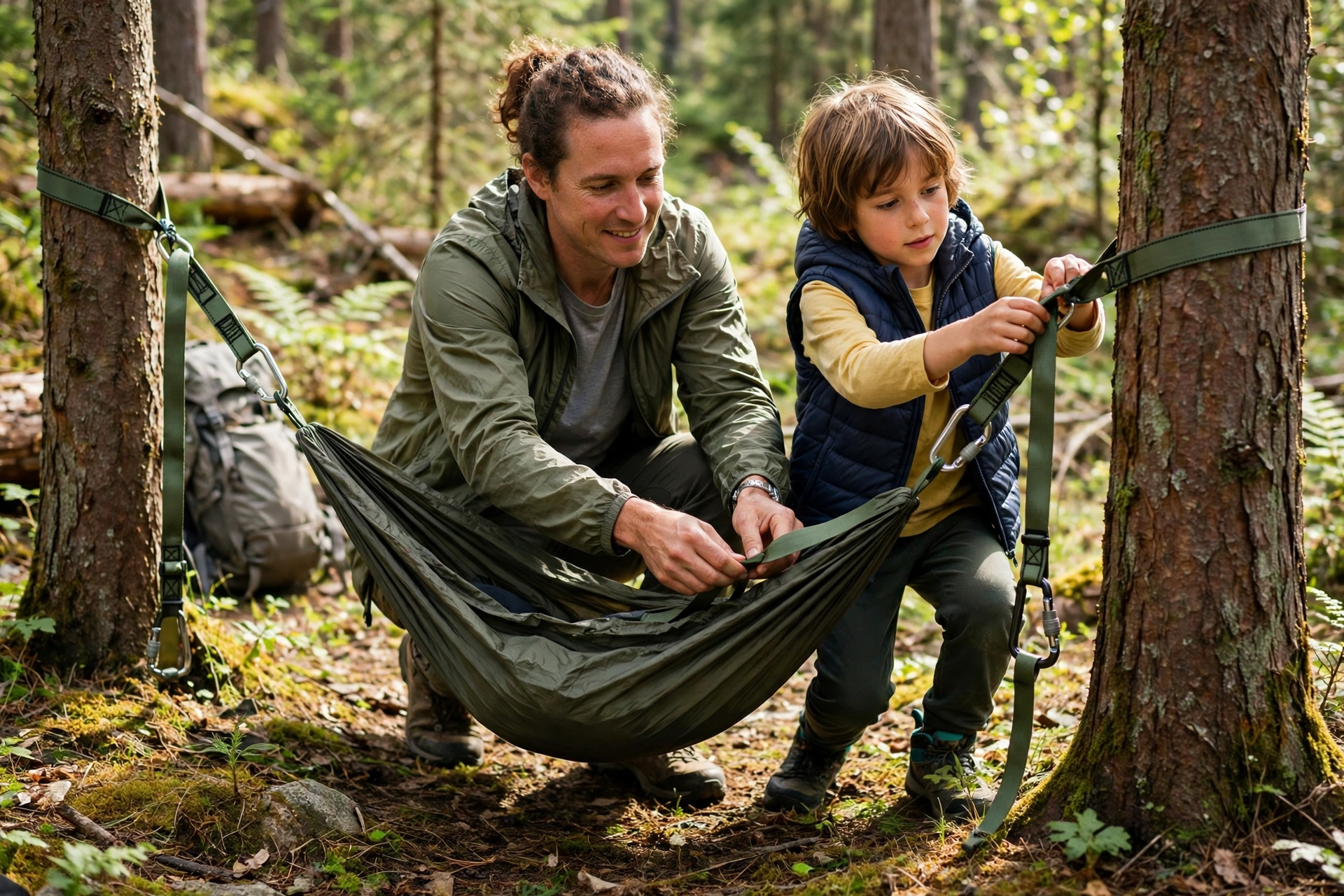
A hammock hung wrong is uncomfortable at best and unsafe at worst. Follow this sequence every time, and let your child help.
- Pick two healthy, living trees about 10–15 feet apart and at least 6 inches thick, with no dead branches overhead. Never hang from dead trees, fence posts, or playground equipment.
- Wrap a wide tree strap around each tree at about shoulder height (5–6 feet up). Keep straps flat against the bark — never twist them into a rope.
- Clip the hammock’s carabiners to the straps. Start with a middle loop on each strap, then adjust up or down after the first sit test.
- Aim for a 30-degree sag. The hammock should hang in a gentle smile shape, not drum-tight. Sitting in the middle, your feet should still touch the ground, and the lowest point should sit about 18 inches off the ground.
- Sit test first. Sit in the center, bounce gently, and check the straps hold and the trees do not flex.
- Teach the entry move: sit in the middle first, then swing legs in — never dive in headfirst or jump in from a run.
- Add a tarp if rain is possible. A simple rain tarp on its own ridgeline keeps your child dry. In mosquito country, a bug net is the difference between a nap and a scratching session.
For a deeper look, the Scouts’ how to hammock camp guide is a great read-along for kids, and the National Park Service’s Leave No Trace principles explain why wide tree straps matter — protecting bark is part of camping responsibly.
What to Pack for Hammock Camping with Kids
A hammock is only one piece of a comfortable camp setup. If your child will nap or sleep in one, pack these too:
- A sleeping pad or underquilt. Air under a hammock steals body heat fast — a child gets cold from below even on a mild night. A foam pad or underquilt fixes it. Our kids’ sleeping bag guide explains temperature ratings.
- A sleeping bag rated for the night’s low, not the daytime high.
- A small pillow or a stuff sack of soft clothes.
- A headlamp clipped to the ridgeline, so your child is never fumbling in the dark.
- Bug spray and a bug net in mosquito country — see our guide to keeping bugs away from kids at camp.
- A ground tarp underneath for midnight climb-outs — wet grass and bare feet are a bad combination.
Never store snacks in or near a hammock. In bear country, food stays in a bear canister or hung away from sleeping areas — our bear country food storage guide covers the rules.
Hammock Camping Checklist for Families
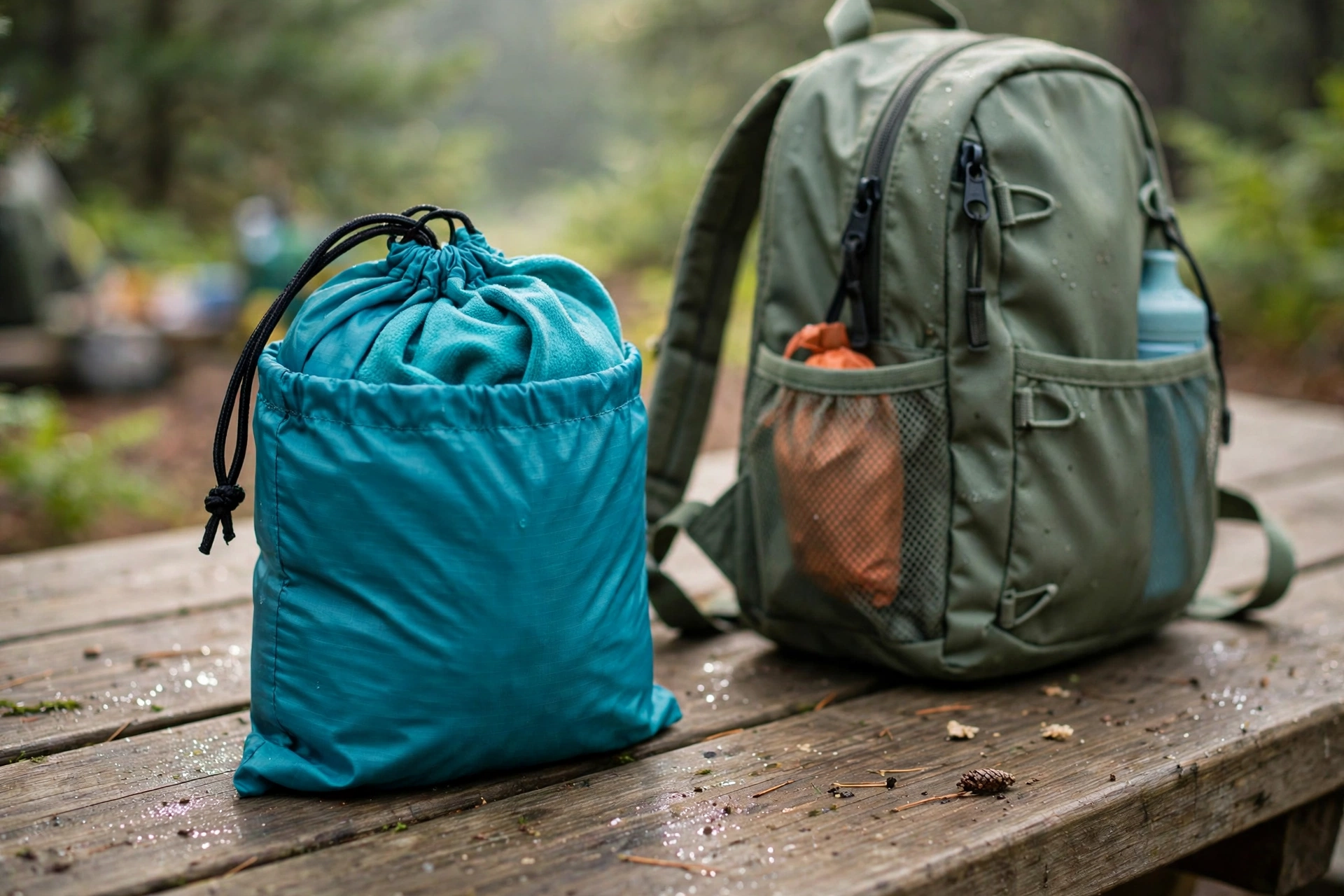
- Hammock (kid-sized under 10, single for older kids)
- Wide tree straps (1 inch+) + carabiners — check they are in the box
- Sleeping pad or underquilt for insulation
- Sleeping bag rated for the night’s low
- Bug net and rain tarp (if showers are forecast)
- Headlamp for the ridgeline
- Ground tarp under the hammock
- Quick safety check: straps, carabiners, tree health, hang height
If your child sleeps better in a hammock than in a tent, you are not alone — the gentle rocking settles many restless sleepers. See our 15 tips for getting kids to sleep while camping.
Frequently Asked Questions
What age can a child use a camping hammock?
Most kids can safely use a hammock from about age 4, once they can climb in and out alone and follow the “sit first, then swing your legs in” rule. Babies and toddlers should never use one. Kids aged 4–9 do best in a kid-sized hammock; from about age 10, a standard single fits well.
Can kids sleep overnight in a hammock?
Yes, older kids and teens can sleep overnight with the right setup: a pad or underquilt underneath, a sleeping bag rated for the night’s low, and a tarp plus bug net as needed. Younger kids (under about 8) usually do better napping in a hammock and sleeping in the tent, where parents can check on them easily.
Do I need a bug net and rain tarp for a kids’ hammock?
Not always. For daytime lounging in fair weather, the hammock alone is fine. For naps, overnights, mosquito country, or rain, a bug net and tarp make the difference between a good experience and a miserable one. Buy the hammock first and add accessories once your child likes it.
Are double hammocks safe for two kids?
For daytime lounging with an adult nearby, yes — as long as the combined weight stays well under the rated limit. For sleeping, each child needs their own hammock: two sleepers roll into the middle and can tip it if one climbs out suddenly.
What is the best hammock for a 5-year-old?
A kid-sized hammock around 6–6.5 feet long, such as the AYAMAYA or Grassman models, fits a 5-year-old best: short enough to climb into alone, light enough to carry, and low enough to be safe. Skip adult 9–11 foot hammocks until your child is about 10 or taller than 4.5 feet.
