Your first camping trip should feel like an adventure, not a survival test. The good news: you do not need to hike miles into the wilderness or own a garage full of gear to camp in some of the most beautiful places in the United States. Developed campgrounds in national parks give beginners exactly what they need — a flat spot for the tent, nearby restrooms, a picnic table, a fire grate, and rangers nearby if something goes wrong.
This guide covers five of the best camping destinations in the USA for beginners: Great Smoky Mountains, Acadia, Joshua Tree, Zion, and Yosemite. Each one is beginner-friendly for a different reason, and each one rewards a little advance planning. Pick the landscape your family will love, book early, and keep your first trip short — one or two nights is plenty to fall in love with camping.
Quick Comparison: Which Beginner Camping Destination Fits You?
| Destination | Best For | Best Season | Reservations |
|---|---|---|---|
| Great Smoky Mountains | Classic forest camping, families | Spring and fall | Recreation.gov, required |
| Acadia | Coast + forest, easy trails | Late spring to early fall | Recreation.gov, required |
| Joshua Tree | Desert stars, unique landscapes | Fall through spring | Recreation.gov, mostly required |
| Zion | Canyon scenery, easy shuttle access | Spring and fall | Recreation.gov, required |
| Yosemite | Iconic valleys and waterfalls | Late spring to early fall | Recreation.gov, plan months ahead |
Before you commit to a date, check our guide to the best time to book campsites in the USA — reservation windows open months in advance at the most popular parks, and knowing the exact release dates is the difference between getting a site and missing out.
1. Great Smoky Mountains National Park, Tennessee and North Carolina
Great Smoky Mountains is the most visited national park in the country, and it is also one of the easiest places for a first camping trip. The park maintains 10 developed frontcountry campgrounds, so you camp close to your car instead of hiking in with everything on your back. Sites generally include restrooms with cold running water, toilets, picnic tables, and fire grates.
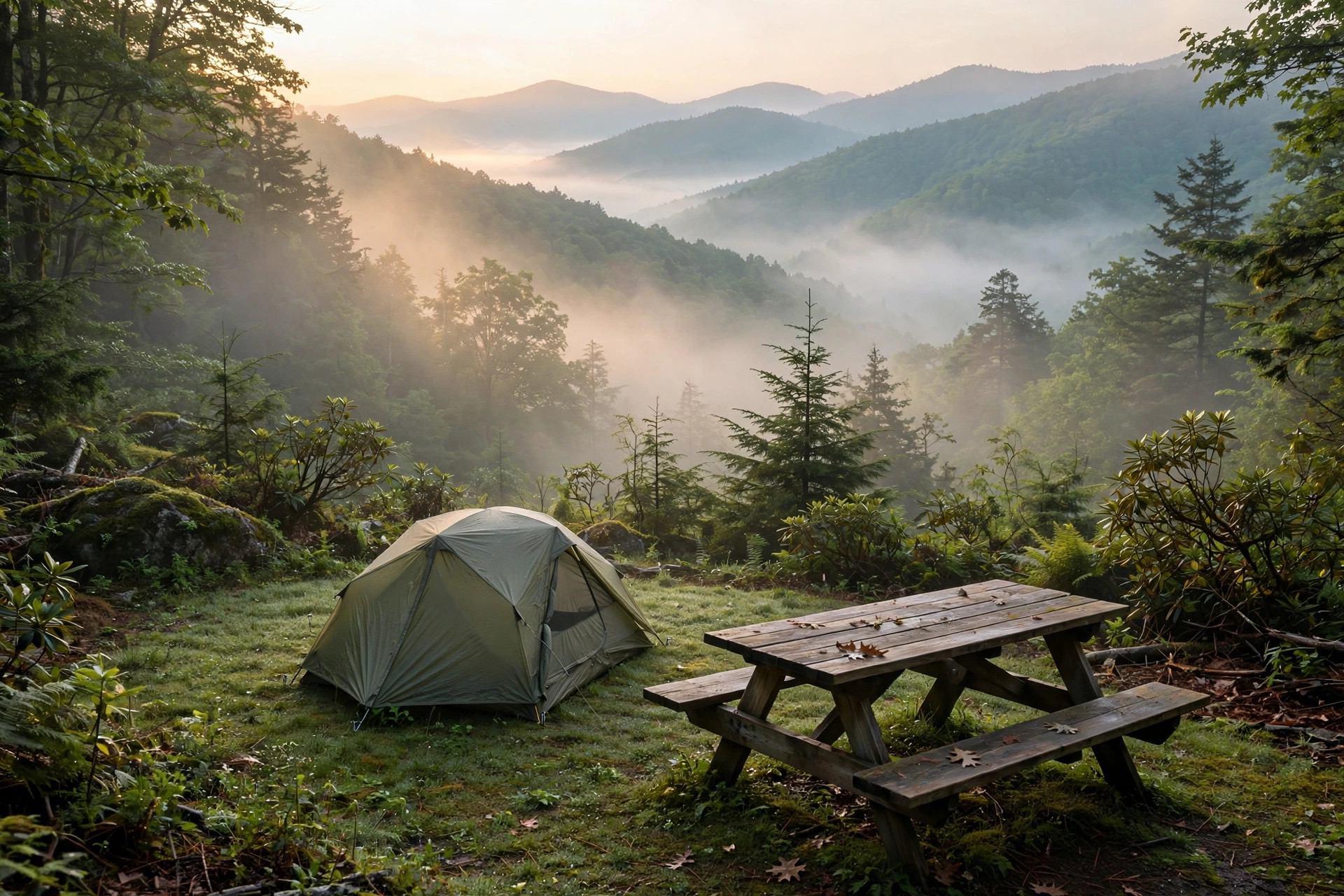
Where to camp: Cades Cove and Smokemont are open year-round and are the safest bets for beginners. Cades Cove sits in a wide valley with wildlife viewing and an 11-mile scenic loop road; Smokemont is quieter and closer to Cherokee, North Carolina. Elkmont, near Gatlinburg, is another family favorite when it is open seasonally. Check the official Smokies camping page for current campground status and fees before you book.
Best time to go: Late April through June for wildflowers and mild weather, and September through October for fall color and cooler nights. Summer is beautiful but busy, with afternoon thunderstorms — pack rain gear either way.
Beginner tips: Advance reservations are required for all frontcountry camping, booked through Recreation.gov. This is black bear country, so food storage rules are strict: use the provided food-storage boxes or keep everything in a locked vehicle, and never leave food out at your site. If you are camping with little ones, read our Great Smoky Mountains with toddlers guide for what actually works with young kids.
2. Acadia National Park, Maine
Acadia packs coastline, forest, lakes, and mountains into a compact park that is easy to navigate — ideal when you are still learning the ropes. The park has campgrounds on Mount Desert Island and the Schoodic Peninsula, plus lean-to shelters on Isle au Haut for a later trip.
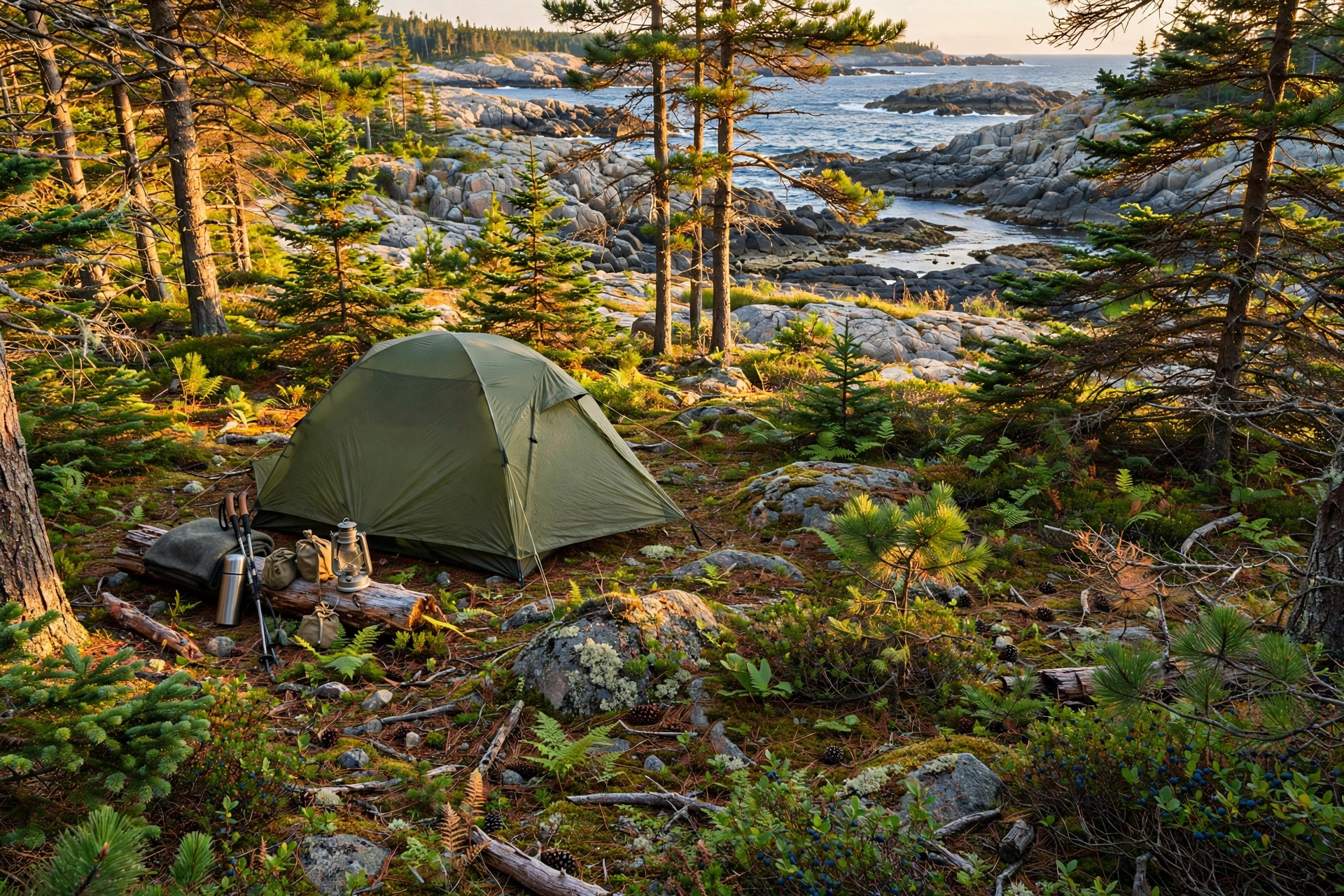
Where to camp: Blackwoods Campground is the classic choice — wooded sites, close to Bar Harbor and the Park Loop Road. Seawall Campground on the quieter western side of the island suits families who want fewer crowds. Schoodic Woods, across the bay, is the most peaceful option of all.
Best time to go: Late May through September. July and August are warmest but busiest; September brings thinner crowds, crisp air, and the start of fall color. Confirm dates and fees on the official Acadia camping page before you travel.
Beginner tips: All camping requires advance reservations through Recreation.gov — Acadia does not allow backcountry camping or overnight parking, so you always know exactly where you will sleep. That certainty is a gift for first-timers. Book as early as your window allows; Blackwoods fills fast. For a ready-made plan, see our 3-day Acadia itinerary with kids.
3. Joshua Tree National Park, California
Joshua Tree is the wildcard on this list — and for many beginners, the most memorable. Camping among twisted Joshua trees and giant boulders under some of the darkest skies in the US park system feels nothing like a normal campground, yet the park’s developed sites keep it very manageable.
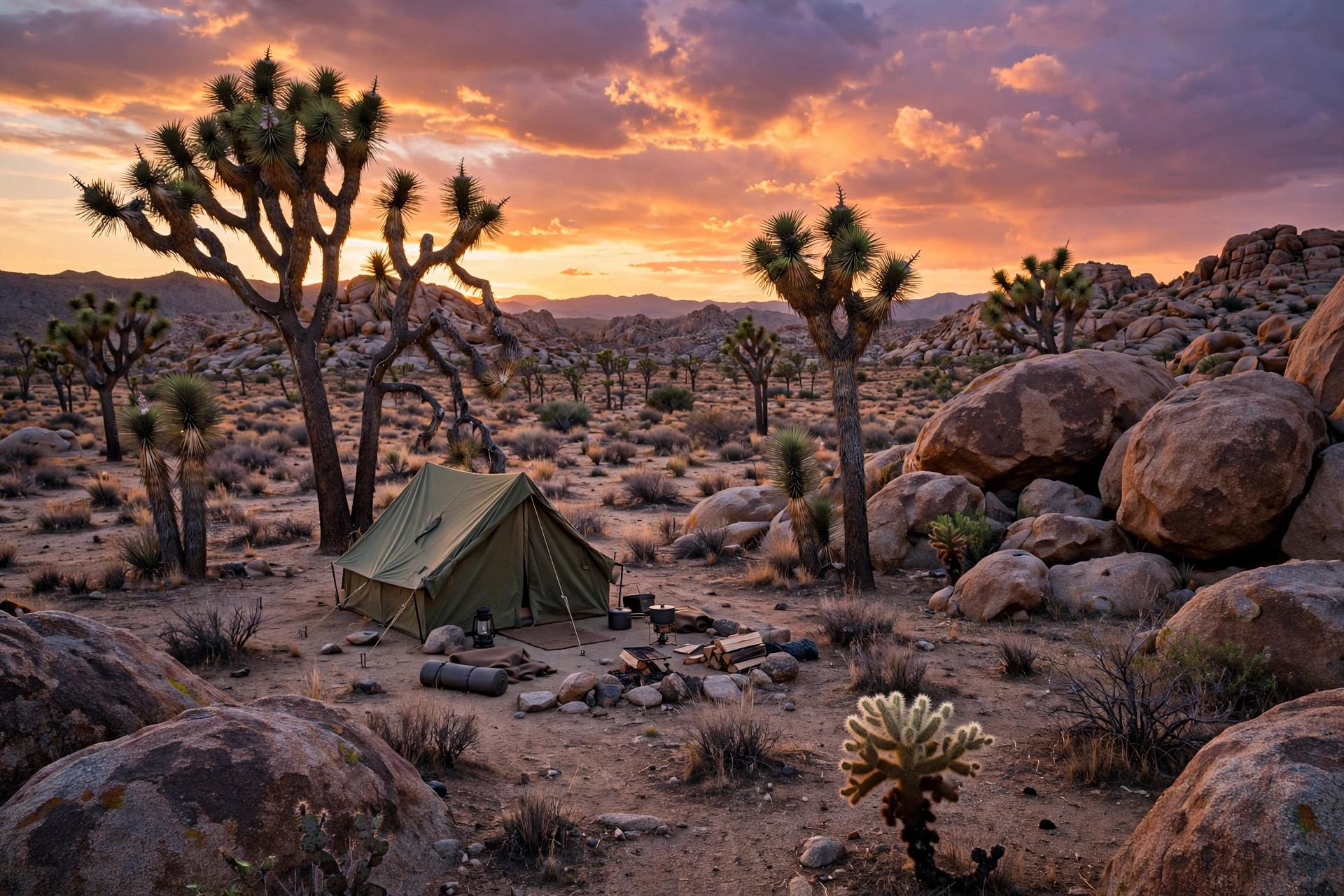
Where to camp: Hidden Valley is the classic first-timer choice — sheltered sites tucked between rock formations, with easy access to short trails. Jumbo Rocks is equally scenic and great for families. White Tank is smaller and quieter. Most sites are reservable on Recreation.gov, and some can be booked the same day when available.
Best time to go: October through April. Summer daytime temperatures regularly pass 100°F, so treat June through September as off-limits for a first desert trip. Winter nights are cold — often near freezing — so bring a properly rated sleeping bag.
Beginner tips: Water is the big one: several campgrounds have pit toilets but no drinking water, so bring all the water you will need (plan at least one gallon per person per day, plus extra for cooking). Cell service is limited inside the park, so download offline maps before you arrive. Go in with a plan and the desert is very beginner-friendly — go in unprepared and it is not.
4. Zion National Park, Utah
Zion pairs dramatic canyon scenery with one of the most beginner-friendly setups in the park system. Campgrounds sit near the South Entrance, the town of Springdale is a short shuttle ride away for supplies, and the park’s free shuttle makes getting around simple without a car.
Where to camp: Watchman Campground is open year-round and is the best first-timer base — electric hookups at some sites, shade trees, and walking access to the visitor center and shuttle stop. South Campground is seasonal and first-come, first-served in some periods, so confirm its status before you plan around it. Lava Point is a primitive alternative for a second trip, not a first.
Best time to go: March through May and September through November. Summer brings serious heat — daytime temperatures in the canyon often exceed 95°F (35°C) with limited shade in some campground areas — and flash-flood risk in narrow canyons after storms.
Beginner tips: Reservations are required and Watchman books out quickly; sites are released on Recreation.gov in rolling windows, so set a reminder for your dates. Plan hikes for early morning in warm months, carry more water than you think you need, and check the park’s alerts page the day before you leave — trail and campground conditions change with the weather.
5. Yosemite National Park, California
Yosemite is the most famous name on this list, and the one that demands the most advance planning. The reward is camping beneath granite cliffs and waterfalls in Yosemite Valley — an experience that converts plenty of first-timers into lifelong campers.
Where to camp: Upper Pines, Lower Pines, and North Pines in Yosemite Valley are the classic developed campgrounds and the best starting point for beginners. Camp 4 is a walk-in campground popular with climbers and less suited to a first family trip. Outside the valley, Wawona and Hodgdon Meadow are quieter and easier to book.
Best time to go: May through June for waterfalls at their peak, and September for thinner crowds and mild weather. July and August are busy and hot in the valley; winter camping is possible at some campgrounds but is a different skill set entirely.
Beginner tips: This is the park where planning matters most. Valley campgrounds are released on Recreation.gov months ahead and sell out in minutes — check the official Yosemite camping page for the exact release schedule and have your dates ready. A vehicle reservation may also be required to enter the park during peak season, so confirm entry requirements as well as your campsite. If the valley is booked, check how to find last-minute campsite cancellations before giving up — sites open up constantly.
What Should Beginners Look for in a Campground?
The easiest first camping trip is usually one where basic facilities and access are predictable. Before booking, check whether the campground has drinking water, toilets, fire facilities, parking, food-storage requirements, and other services you may need. The National Park Service specifically recommends checking campground facilities and regulations before traveling.
A few practical things to check include:
- Road access: Choose a site that can be reached by vehicle if you are not experienced with backpacking.
- Restrooms: Confirm whether flush toilets, vault toilets, or no toilets are available — and whether showers exist anywhere nearby.
- Water: Never assume drinking water is available at every campground. Joshua Tree is the classic example, but always verify.
- Reservations: Check whether the site requires advance booking or operates on a first-come, first-served basis.
- Weather: Look at current conditions and seasonal temperatures before traveling — desert heat and mountain cold catch beginners out every year.
- Food storage: Follow the park’s rules for storing food, particularly in bear country. Use bear boxes where provided.
- Cell service: Download offline maps and your reservation confirmation before you lose signal.
How to Book a Beginner Camping Trip
Start with the official website of the park you want to visit. The National Park Service says many federal campgrounds use Recreation.gov for reservations, although not every campground follows the same system. Select a developed campground and check its operating dates, facilities, rules, and reservation requirements. After booking, review the park’s current alerts and conditions again shortly before your trip.
For your first outing, a one- or two-night stay is usually easier to manage than a long camping trip. Take only the equipment you understand how to use, and test your tent and cooking equipment at home before departure. If you want a full walkthrough of that first weekend, our stress-free first family camping trip plan covers the timeline hour by hour.
Common Mistakes First-Time Campers Should Avoid
One common mistake is arriving without checking whether the campground has water or whether reservations are required. Another is choosing a remote campsite before learning basic camping skills. A third is overpacking: beginners often bring far more gear than they use, which makes setup and teardown stressful.
Weather is another major consideration. Desert parks can become extremely hot, while mountain and coastal areas can experience rapidly changing conditions. Always check the current official park information rather than relying only on older travel advice. And finally, follow campground rules and leave the site clean — national parks protect natural areas for other visitors, so responsible camping is part of having a good first experience.
For the full list of rookie errors — and how to dodge each one — see 11 beginner camping mistakes to avoid.
FAQs
What is the easiest type of camping for beginners?
Developed frontcountry camping is generally the simplest starting point because you can usually reach the campsite by vehicle and have access to basic facilities like restrooms, water, and a fire grate.
Do national park campgrounds require reservations?
Most do now. Many federal campgrounds use Recreation.gov, while certain sites may operate on a first-come, first-served basis. Always check the specific park’s official website before traveling — and book as early as your reservation window allows.
Which national park is best for a first camping trip?
Great Smoky Mountains is the easiest overall pick: year-round campgrounds, mild seasons, and full facilities. If your family prefers coast over forest, Acadia is equally beginner-friendly. Choose the landscape you will enjoy most — enthusiasm covers a lot of rookie mistakes.
Is Joshua Tree suitable for first-time campers?
It can be, but beginners need to prepare carefully for desert conditions. Some campgrounds have no water, and cell service may be limited, so checking the specific campground’s facilities is essential. Go between October and April, not in summer.
Is Zion good for beginners?
Zion has developed campgrounds and an established reservation system, but summer heat can be significant. Beginners should check weather and campground conditions before visiting — spring and fall are the sweet spot.
Should beginners start with backcountry camping?
It is usually easier to begin with a developed campground. Backcountry camping can involve permits, longer hikes, limited facilities, and additional safety preparation. Build your skills at a frontcountry site first.
Conclusion
The best first camping destination depends on the type of experience you want and how comfortable you are with outdoor conditions. Great Smoky Mountains offers developed campgrounds and basic facilities, Acadia provides organized camping near coastal scenery, Joshua Tree offers desert camping under dark skies, Zion combines developed camping with dramatic canyon landscapes, and Yosemite provides a classic national-park experience with advance planning.
Pick one, book it early, keep the trip short, and test your gear at home first. Your first night under the stars does not need to be perfect — it just needs to happen. Before choosing any destination, check the park’s official website for current campground availability, rules, weather, and reservation requirements.

2 comments
[…] Camping stove and appropriate fuel […]
[…] advance. Book a specific site so you are not driving loops at dusk with a fussy baby. Many of the best camping destinations in the USA for beginners take reservations and have beginner-friendly […]