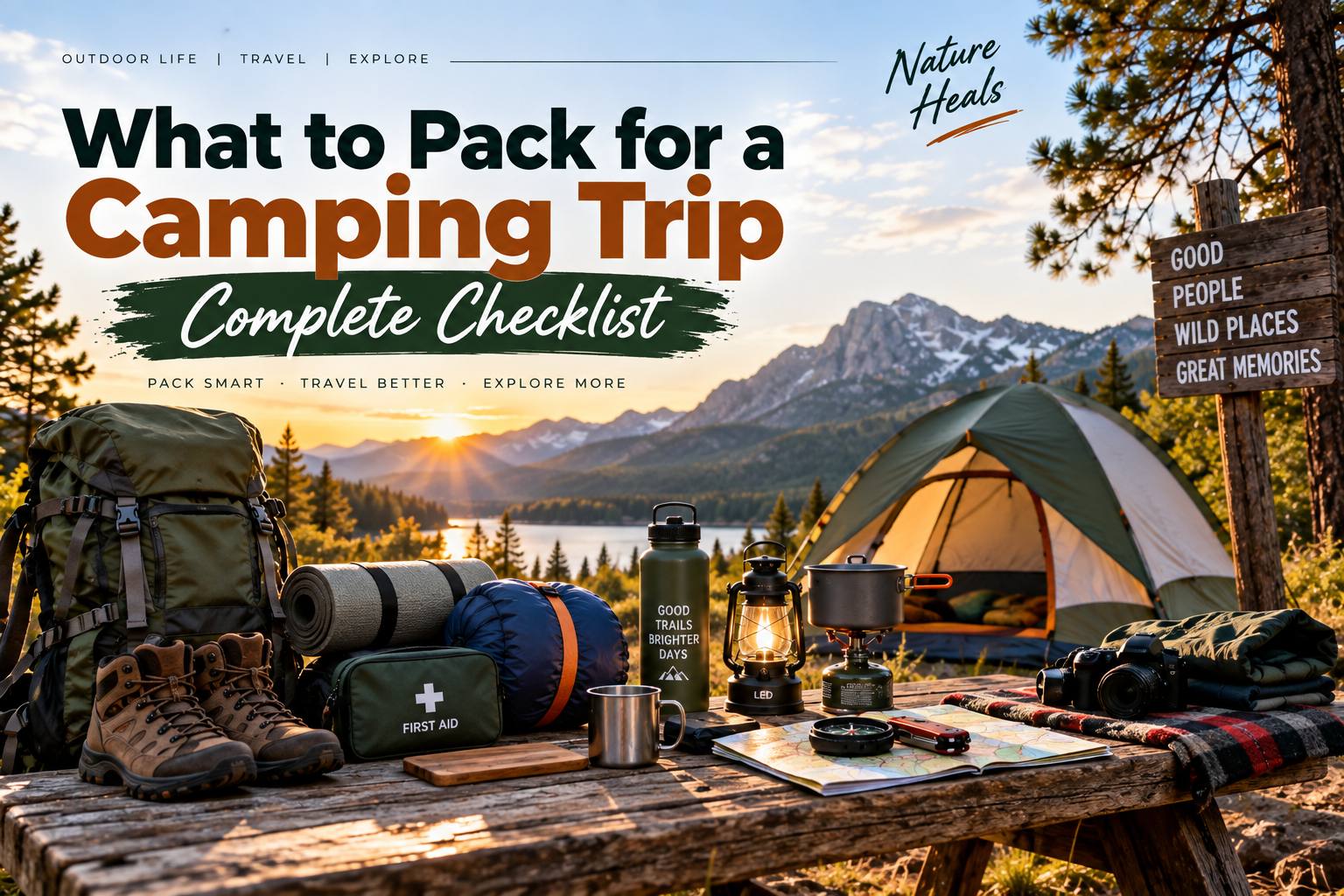
What to Pack for a Camping Trip: Complete Checklist
Packing for a camping trip becomes much easier when you focus on the essentials rather than taking everything you own. For most trips, you need shelter, sleeping gear, enough food and water, suitable clothing, cooking supplies, personal items, and basic safety equipment. The exact list depends on the destination, season, weather, trip length, and whether you are camping at a developed campground or hiking into a remote area. The National Park Service recommends adjusting your equipment to the conditions and activities planned for the trip.
1. Tent and Shelter
Your tent is usually the most important piece of camping equipment. Choose one that is suitable for the number of people using it and appropriate for the expected weather. Pack the tent, poles, stakes, and any required footprint or groundsheet.
Before leaving, set up the tent at home at least once. This helps you check that all parts are present and that you know how to assemble it. For car camping, a rain shelter or tarp can also be useful for protecting the cooking or sitting area from sun and rain.
2. Sleeping Gear
A comfortable night’s sleep depends heavily on the right sleeping equipment. Your basic sleeping kit should include:
- Sleeping bag suitable for the expected temperature
- Sleeping pad or camping mattress
- Pillow or compact alternative
- Extra blanket for colder conditions
- Dry clothes for sleeping
A sleeping pad is useful not only for comfort but also because it creates insulation between your body and the ground. The National Park Service recommends choosing sleeping equipment according to the location, season, and expected weather.
3. Food and Water
Water should be one of the first things you plan. Check whether your campground has potable drinking water before leaving. If you are traveling into an area without a reliable water supply, you may need to carry additional water or use a suitable filtration or purification method.
For food, choose meals that are simple to prepare and easy to store. Dry foods, rice, pasta, packaged meals, snacks, and other foods that require little preparation can reduce the amount of equipment you need.
If you bring meat, dairy products, or other foods that need refrigeration, use a suitable cooler. Keep food and scented items properly stored because food odors can attract insects and wildlife. Specific food-storage rules vary by park, particularly in bear country, so check the regulations for your destination.
4. Cooking Equipment
For a basic camping trip, you do not need a complete kitchen. Pack only the cooking equipment required for your planned meals.
Useful items include:
- Camping stove and appropriate fuel
- Lighter or waterproof matches
- Pot or pan
- Knife
- Cutting board
- Cups, plates, and utensils
- Tongs or cooking tool
- Small cleaning sponge
- Biodegradable soap
If you are using a new camping stove, test it at home before the trip. The National Park Service also recommends keeping cooking areas clean and storing food securely after meals.
5. Clothing and Weather Protection
Pack clothes according to the actual forecast and expected conditions rather than simply the time of year. Bring extra socks and at least one additional warm or protective layer.
A practical clothing list can include:
- Comfortable base clothing
- Extra socks
- Warm jacket or fleece
- Waterproof jacket or rain gear
- Comfortable hiking shoes or boots
- Hat
- Sunglasses
- Gloves for cold-weather trips
Dressing in layers makes it easier to adjust to changing temperatures. Sunscreen and insect repellent are also useful for many outdoor trips.
6. First-Aid and Emergency Gear
Even on a short camping trip, basic safety equipment should not be forgotten. The National Park Service recommends carrying the “Ten Essentials,” which include navigation equipment, sun and insect protection, extra insulation, emergency shelter, illumination, and first-aid supplies.
Your safety kit can include:
- First-aid kit
- Flashlight or headlamp
- Extra batteries
- Map, compass, or GPS device
- Whistle
- Emergency blanket or lightweight tarp
- Personal medicines
- Basic repair tools
- Multi-tool or pocketknife
For remote trips, consider the additional equipment appropriate for the environment and activity. Do not rely entirely on a mobile phone if you are traveling somewhere with limited coverage.
7. Personal and Hygiene Items
Camping does not mean you need to leave basic hygiene behind. Pack a small personal kit containing the items you actually use.
Useful items include:
- Toothbrush and toothpaste
- Soap
- Small towel
- Toilet paper
- Hand sanitizer
- Tissues
- Personal medicines
- Any required hygiene products
Keep these items inside a waterproof bag when rain or water exposure is possible.
8. Important Extras for a Comfortable Trip
Some items are not essential for survival but can make camping considerably easier. Depending on your trip, you may want to bring a camping chair, small table, power bank, reusable water bottle, cooler, trash bags, rope or cord, and a dry bag for protecting electronics.
Do not automatically pack every optional item. If you are backpacking, weight and space matter much more than they do at a drive-in campground. The National Park Service recommends considering the weight and usefulness of every item, particularly when equipment must be carried over a distance.
Complete Camping Checklist
Use this quick checklist before leaving home:
- Shelter: Tent, poles, stakes, groundsheet
- Sleeping: Sleeping bag, sleeping pad, pillow, extra blanket
- Water: Water bottles, water container, filtration or purification equipment when needed
- Food: Meals, snacks, cooler if required
- Cooking: Stove, fuel, lighter, pot, pan, utensils
- Clothing: Extra socks, warm layer, rain gear, suitable footwear
- Safety: First-aid kit, flashlight, batteries, map, compass, whistle
- Personal: Toiletries, medicines, sunscreen, insect repellent
- Cleaning: Soap, sponge, towel, rubbish bags
- Emergency: Extra clothing, emergency shelter, repair supplies
- Optional: Chair, power bank, camera, dry bags, camping table
Check the Campsite Before You Leave
A packing list cannot replace checking the rules for your actual destination. Before your trip, visit the official website of the campground or park and check current weather, fire restrictions, water availability, reservation requirements, food-storage rules, and any equipment restrictions.
Some parks have specific requirements for storing food, trash, toiletries, and other scented items. These rules can change depending on wildlife activity and the location, so do not assume that the same storage method is allowed everywhere.
It is also worth checking your equipment before departure. Test your tent, stove, flashlight, batteries, and other important gear at home. A few minutes of preparation can prevent much bigger problems after you arrive.
Common Packing Mistakes to Avoid
One of the most common mistakes is taking too much unnecessary equipment. Extra weight makes hiking and transportation harder without necessarily improving the trip.
Another mistake is forgetting weather protection. A sunny forecast does not mean conditions will remain comfortable throughout the night, especially in mountainous or exposed areas. The National Park Service recommends carrying extra insulation and emergency shelter because conditions can change unexpectedly.
Finally, never leave food, rubbish, or scented products unsecured. Proper food storage protects both campers and wildlife and is particularly important in areas with bears and other animals.
