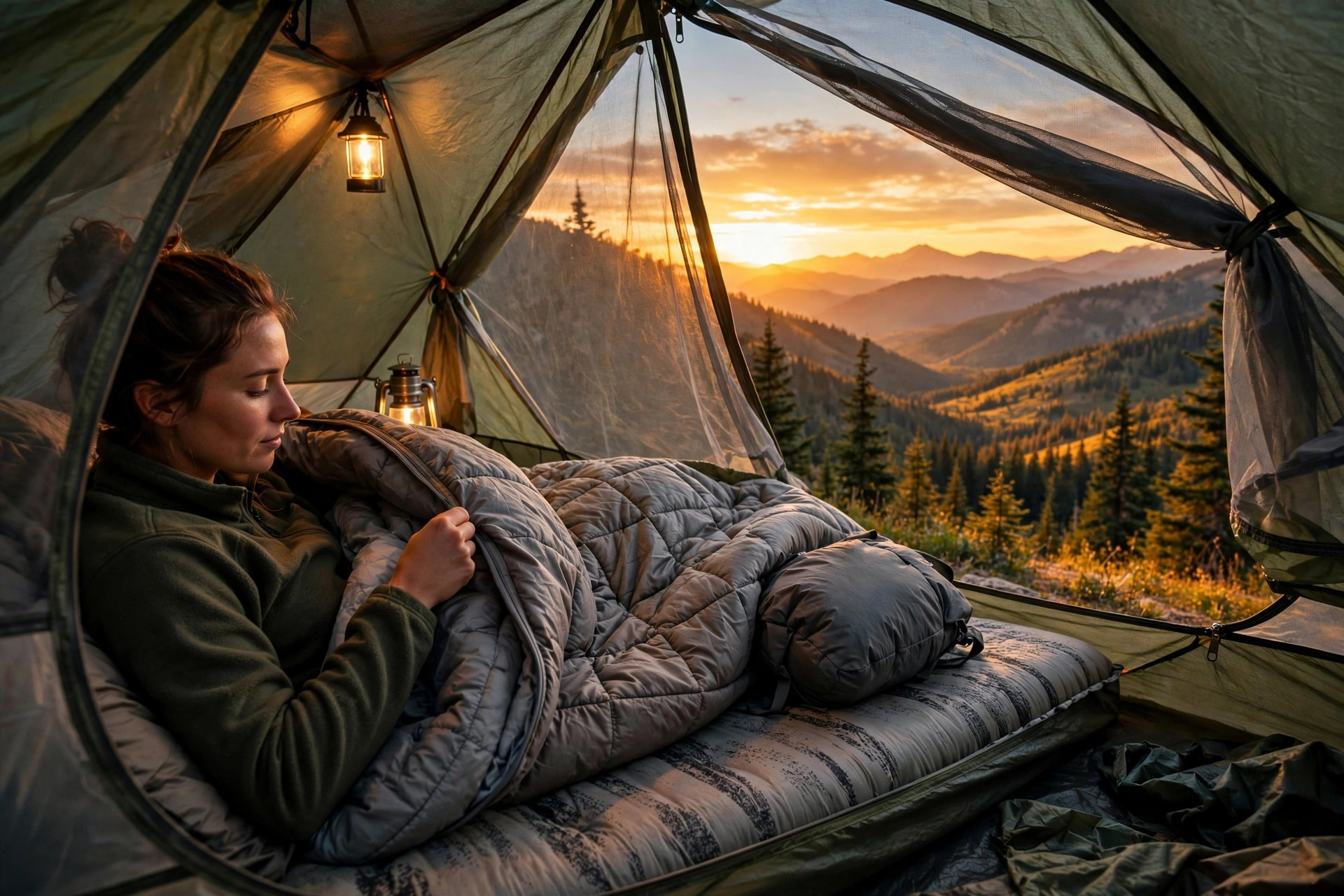
Transform Your Backpacking Nights: Sleep Setup Secrets
Your sleep system is one of the most important parts of your backpacking kit. After years of testing everything from traditional mummy bags to ultralight quilts — in deserts, alpine basins, and rainy Pacific Northwest forests — I have learned that lighter, well-matched systems do not just save weight: they genuinely improve sleep. That matters even more when you camp with toddlers, because kids bring extra gear and the weight has to come from somewhere.
One of the best upgrades I have made is the twin quilt system for couples or friends sharing a tent. It is the backcountry equivalent of a double bed: you can roll over or switch sides without disturbing your partner. If you are still deciding between bags and quilts, start with my guide to choosing a sleeping bag for camping to understand temperature ratings and fill types first.
There are caveats, of course. A twin quilt has to be wide enough or you will get drafts on cold nights, and for solo hikers or extreme cold, a conventional bag still has its place. Below is the full breakdown of my current setup — pad, bedding, pillow, twin quilts, temperature ratings, and how to save money — updated with what I have learned through the 2026 season.
Backpacking Sleeping Setup – Short Answer
For the best backpacking sleep setup, pair a quality insulated sleeping pad with a quilt instead of a sleeping bag for more freedom of movement. Do not skip the pillow — it makes a bigger difference than most people expect. For couples, a twin quilt saves money and pack bulk; look for a wide footbox, vertical baffles, and a thick neck baffle. Trusted quilt makers include Enlightened Equipment and Zpacks.
The Key to Great Sleep Outdoors
Backpacking is an incredible adventure, but let us be honest: sleep in the backcountry is often unpredictable. No matter how tired you are after a long day on the trail, quality rest outdoors can be hard to come by. After many seasons of trial and error, I have found that great sleep comes down to three things: preparation, the right gear, and treating rest as part of the adventure rather than an afterthought.
It is not just about owning a comfortable bag or pad — it is about building a small sleep environment that feels closer to home. Here is how each piece works, starting with the most underrated one.
1. Sleeping Pad: The Foundation of a Good Night’s Rest
The sleeping pad is arguably the most critical piece of your sleep system, and I learned that the hard way after years of restless nights. If you are still using a thin foam pad, an upgrade is the single best investment you can make. Insulated air pads are not only more comfortable, they are warmer and pack smaller than ever — modern designs make them a clear choice for most backpackers.
But do not assume the most expensive pad automatically guarantees better sleep. Fit matters more than price. As a side sleeper, switching to a thicker, wider pad was a game-changer: on a standard 20-inch pad my knee hung off the edge all night. Even back sleepers suffer on narrow pads, with arms dangling off the sides into an awkward position. Pads in the 25-inch “wide” size have become much easier to find in recent years, and the weight penalty is small. Also pay attention to the R-value — the standardized warmth rating. As a rule of thumb, aim for R-2 or lower for summer, R-2 to R-4 for three-season use, and R-4.5+ for winter. A warm pad matters just as much as a warm quilt; cold ground will steal your heat all night.
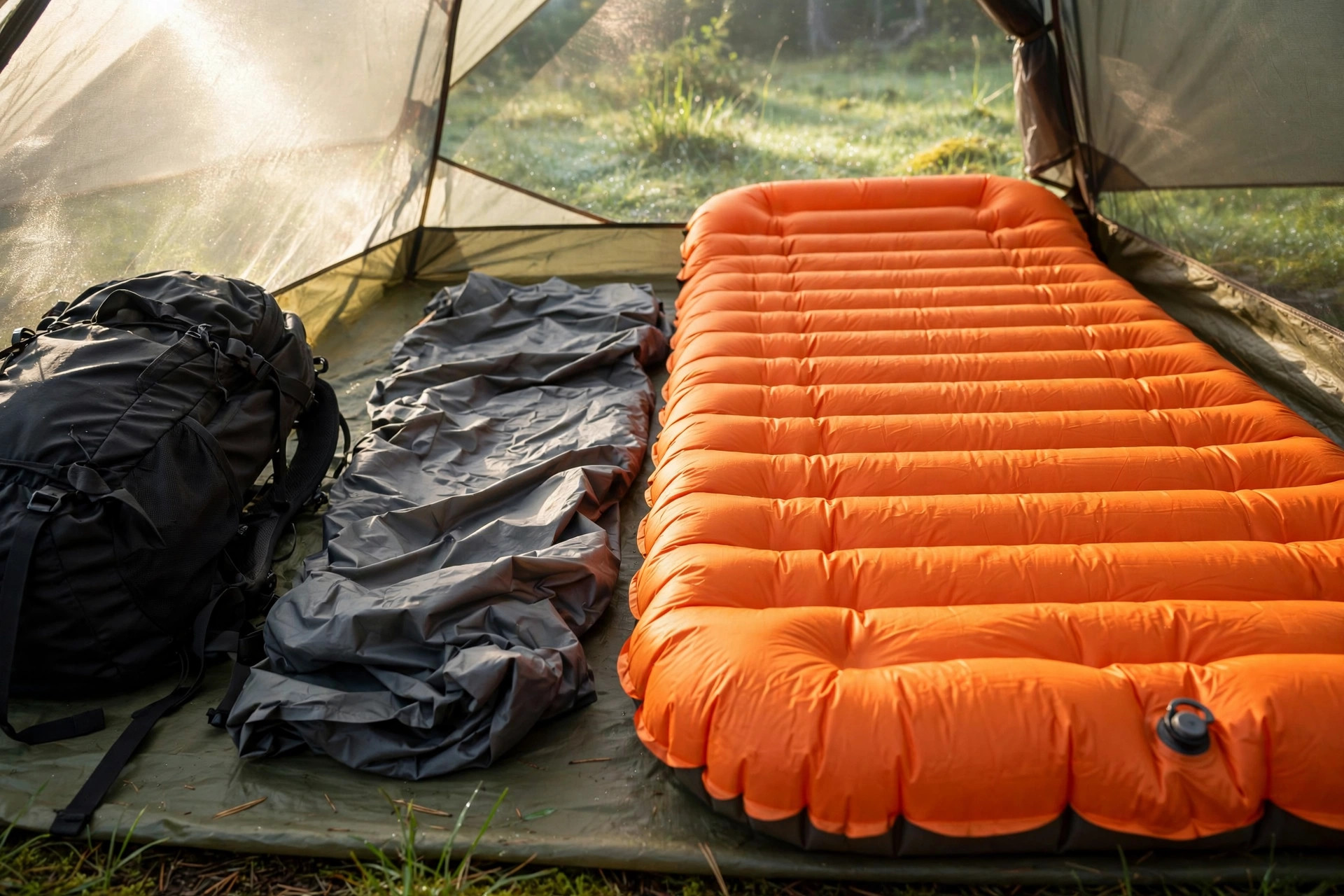
2. Why Your Bedding Choice Matters
Many backpackers default to a sleeping bag, but I have come to see bags as far from ideal for actual sleep. A mummy bag locks you into a cocoon: turning, stretching, or sleeping on your side becomes a wrestling match. And roughly half of a sleeping bag — the insulation compressed underneath you — contributes almost nothing, since your pad does the insulating work below. That is wasted weight on your back.
That is why I switched to a quilt. A quilt lets you move, toss, turn, and stretch out without feeling constricted, much like the blankets on your bed at home, and it drops meaningful weight from your pack. The trade-off is that you sleep directly on your pad, which can feel less cozy — and that is where a system like the Zenbivy Light Bed earns its place. It is not just a quilt: a fitted sheet wraps your air mattress so you are not lying on bare pad fabric, and the integrated hood holds your pillow in place and keeps your head warm. Hooks and loops around the edges seal out drafts on colder nights. For sleep quality per ounce, a quilt-plus-sheet system is hard to beat.
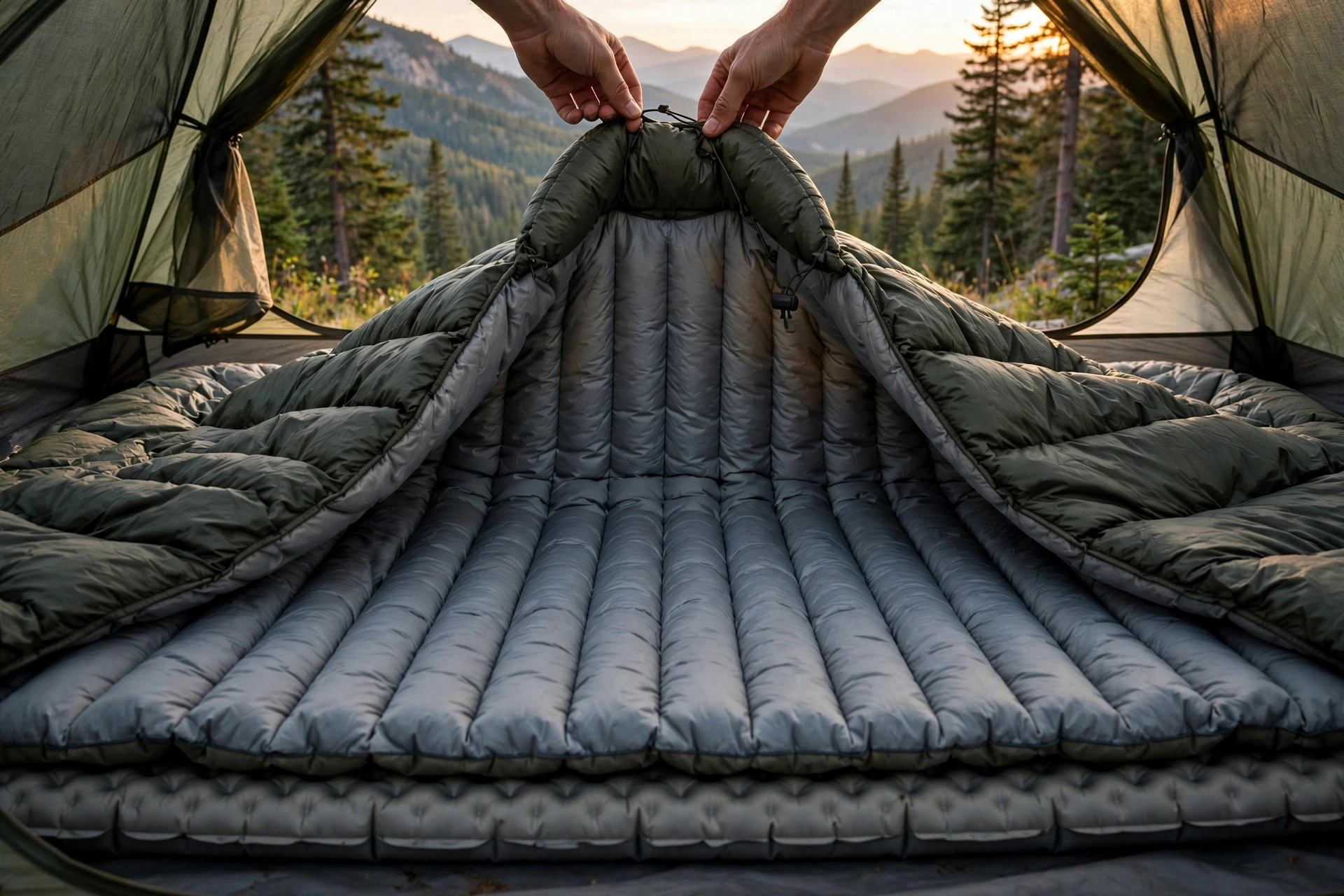
3. The Pillow: Your Secret to Good Sleep in the Backcountry
Most people obsess over pads and quilts and treat the pillow as an afterthought. After years of testing, I am convinced the pillow is the piece that ties the whole system together. At home we take a real pillow for granted; in the backcountry, proper head and neck support is what turns “tolerable” into “restful.”
For years I made do with a stuff sack of spare clothes or cheap inflatable pillows, and honestly, most of them are mediocre — too flat, too squishy, or shaped so your ears get pinched. Upgrading changed my nights. After testing options from Nemo, Sea to Summit, Therm-a-Rest, and Zenbivy, my favorite remains a hybrid design like the Nemo Fillo: an inflatable core with a plush top layer that does not bottom out under your head. Purely inflatable pillows can feel like a balloon, and purely compressible ones flatten by midnight. If you are dialing in your beginner hiking gear setup, put the pillow on the list — it is a small weight for a large comfort gain.
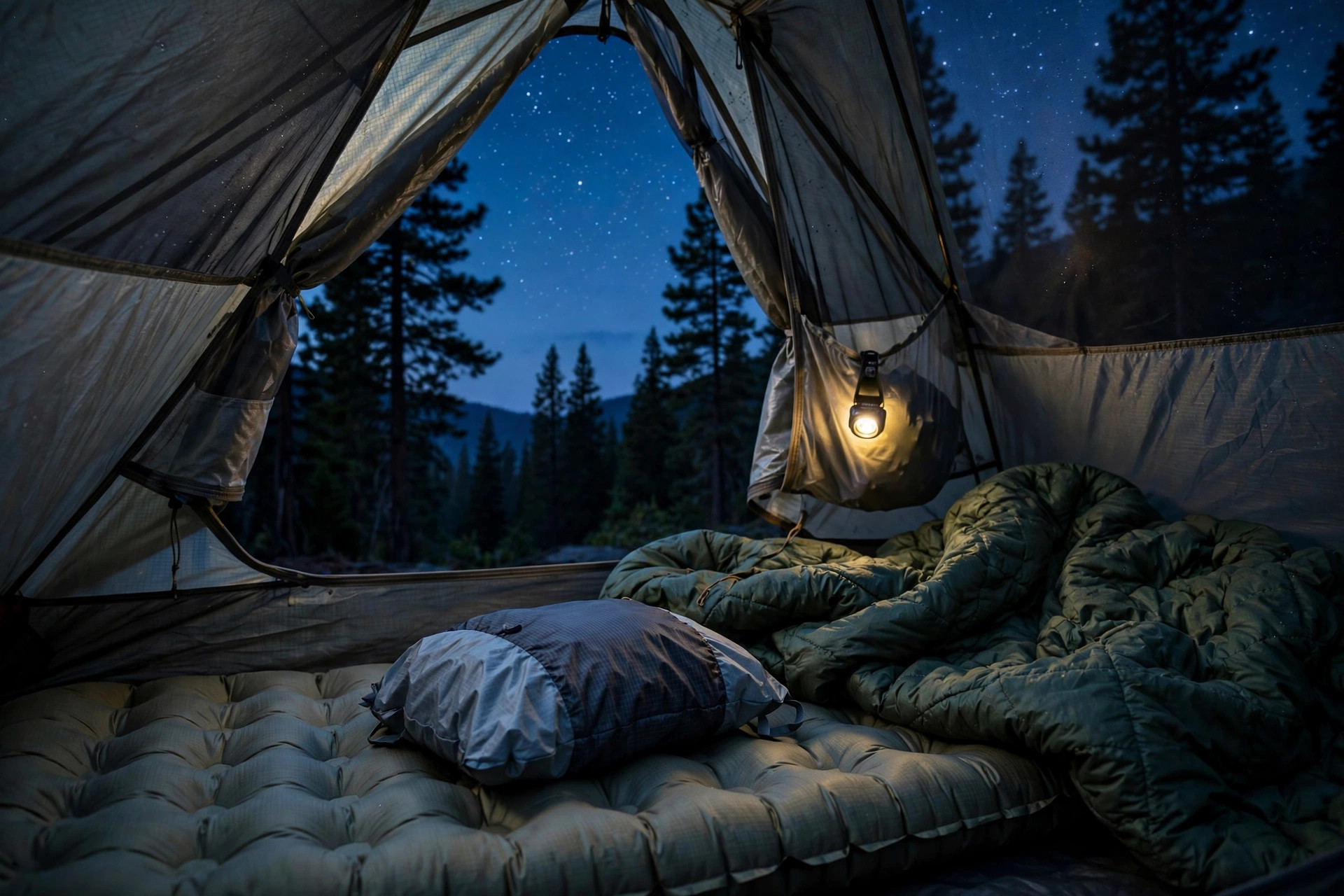
Choosing a Twin Quilt
If you hike with a partner, a twin quilt deserves serious consideration. One wide quilt shared between two sleepers replaces two individual bags or quilts — less weight, less bulk, and usually less money. It also solves the most annoying part of sharing a tent: midnight rollovers that used to jolt your partner awake. Here is what to know before you buy.
Down vs. Synthetic: Choosing the Right Quilt
Down remains the warmest insulation per gram, making it the top pick for cold, dry conditions. For extended trips in persistently wet weather, synthetic insulation is the safer bet: it keeps working when damp, costs less, but runs heavier and bulkier. That bulk matters less for couples, since the weight and volume split across two packs.
With down, the fill-power number (up to 950+) tells you about loft and quality — higher numbers mean more warmth per gram, typically from goose rather than duck down. Always look at the actual down weight in the quilt, not just the temperature rating, and be cautious of cheap quilts that hide their fill power, temperature rating, or down weight. If a listing is vague, treat that as your answer. Research on hiking forums and gear groups will quickly separate honest specs from marketing.
Hydrophobic Down: Now the Standard, Not the Novelty
Ordinary down has one famous weakness: when it gets wet, it clumps, loses loft, and stops insulating. Hydrophobic (DWR-treated) down was developed to fix exactly that. The treatment is applied at the fiber level so individual plumes resist moisture, stay separated, and dry faster.
When this technology first appeared, its long-term durability was an open question. Years on, it has proven itself: treated down now comes standard on most quality quilts and bags from major makers, and it holds up well over seasons of use. It does not make down waterproof — you still need a dry bag and sensible camp habits in real rain — but for condensation, damp tents, and humid nights, it is a meaningful upgrade over untreated down. If you are choosing between otherwise identical quilts, take the treated down.
Understanding Temperature Ratings for Your Sleeping Setup
Temperature ratings are the most misunderstood numbers in backpacking gear. Many ratings are closer to survival ratings than comfort ratings: they describe the temperature at which you will stay alive, not the temperature at which you will sleep well. Always check whether a maker publishes a comfort rating, a limit rating, or both.
A practical rule of thumb: add about 10°F (roughly 5–6°C) to a quilt’s rating to estimate true comfort — and 15–20°F if you sleep cold, as many women do. My summer quilt is rated to −7°C, but I would not count on comfortable sleep below about +5°C. My −15°C quilt is genuinely comfortable below freezing, though I rarely push it far past that. Remember that the rating assumes a proper pad underneath; an under-insulated pad will make any quilt feel colder than its label suggests. For real winter conditions, see my winter hiking gear list for the full cold-weather system.
Saving Money on Your Sleeping Setup
A twin quilt is one of the smartest money-saving moves in backpacking gear: one purchase replaces two individual bags or quilts, and you carry less bulk for it. If you later want to cover more seasons, adding a second twin quilt (say, a summer-weight one to complement a winter-weight one) still costs less than outfitting two people separately twice over.
Other ways to keep costs down: buy last season’s colors on clearance, watch cottage makers’ seconds sales, and resist upgrading everything at once. The pad is where your dollars buy the most sleep; the quilt is where they buy the most warmth per ounce.
Important Twin Quilt Features
Not all twin quilts are designed equally. When comparing models, check for these features:
- Wide footbox: gives both sleepers room for their feet without that cramped, tangled feeling.
- Generous width: lets the quilt tuck naturally around two bodies instead of leaving gaping edges.
- Vertical baffles: along the body and thigh area keep down from migrating, preventing cold spots.
- Wide, thick neck baffle: blocks the triangular draft gap that forms between two sleepers — arguably the most important feature on a shared quilt.
- Individual cinch: each sleeper should be able to cinch the neck area to their own preference.
- Correct length: too short exposes shoulders; too long bunches against tent walls and invites condensation.
- Understraps or pad attachment: keeps the quilt tucked at the sides, a blessing for restless sleepers.
Enlightened Equipment and Zpacks both make twin quilts that check these boxes; Enlightened Equipment’s wide neck baffle and roomy footbox stand out in particular. A few smaller cottage makers also offer excellent options — it is worth browsing current offerings, as the twin-quilt market has grown noticeably in the last couple of seasons.
FAQs
What Weight Sleep System Should I Aim For?
For lightweight backpacking, target a quilt or bag around 1.5–2.5 pounds and a pad around 12–20 ounces, keeping the total sleep system under about 4 pounds. Every ounce matters on steep climbs, but do not chase ultralight numbers at the cost of sleep — a slightly heavier pad you actually sleep on beats a featherweight one that leaves you exhausted.
What R-Value Sleeping Pad Do I Need?
Match the pad’s R-value to your season: R-2 or below for summer, R-2 to R-4 for three-season backpacking, and R-4.5 or higher for winter. If you sleep cold, go one step warmer than the chart suggests. Remember that your quilt’s temperature rating assumes an appropriately rated pad underneath.
Should I Wear Clothes Inside My Sleeping Bag or Quilt?
Wear clean, dry base layers to bed. They add warmth, protect the quilt’s fabric from body oils and sweat, and feel far better than climbing in wearing the damp hiking clothes you have been sweating in all day. Keep a dedicated dry sleep layer in your pack — it doubles as camp clothing on cold evenings.
Do Backpackers Still Use Sleeping Bags?
Absolutely — quilts are popular, but they are not the only answer. A sleeping bag remains the simplest, most foolproof option: no drafts to manage, no pad straps to fiddle with, and better performance for restless sleepers and extreme cold. Many backpackers own both and choose based on the trip. A bag is one of the true essentials of a backpacking sleep setup, and picking the right one for your conditions matters more than following any trend.

1 comment
[…] sleep well for years. And if your adventures lean more toward the trail than the campground, our backpacking sleeping setup guide pairs perfectly with this […]