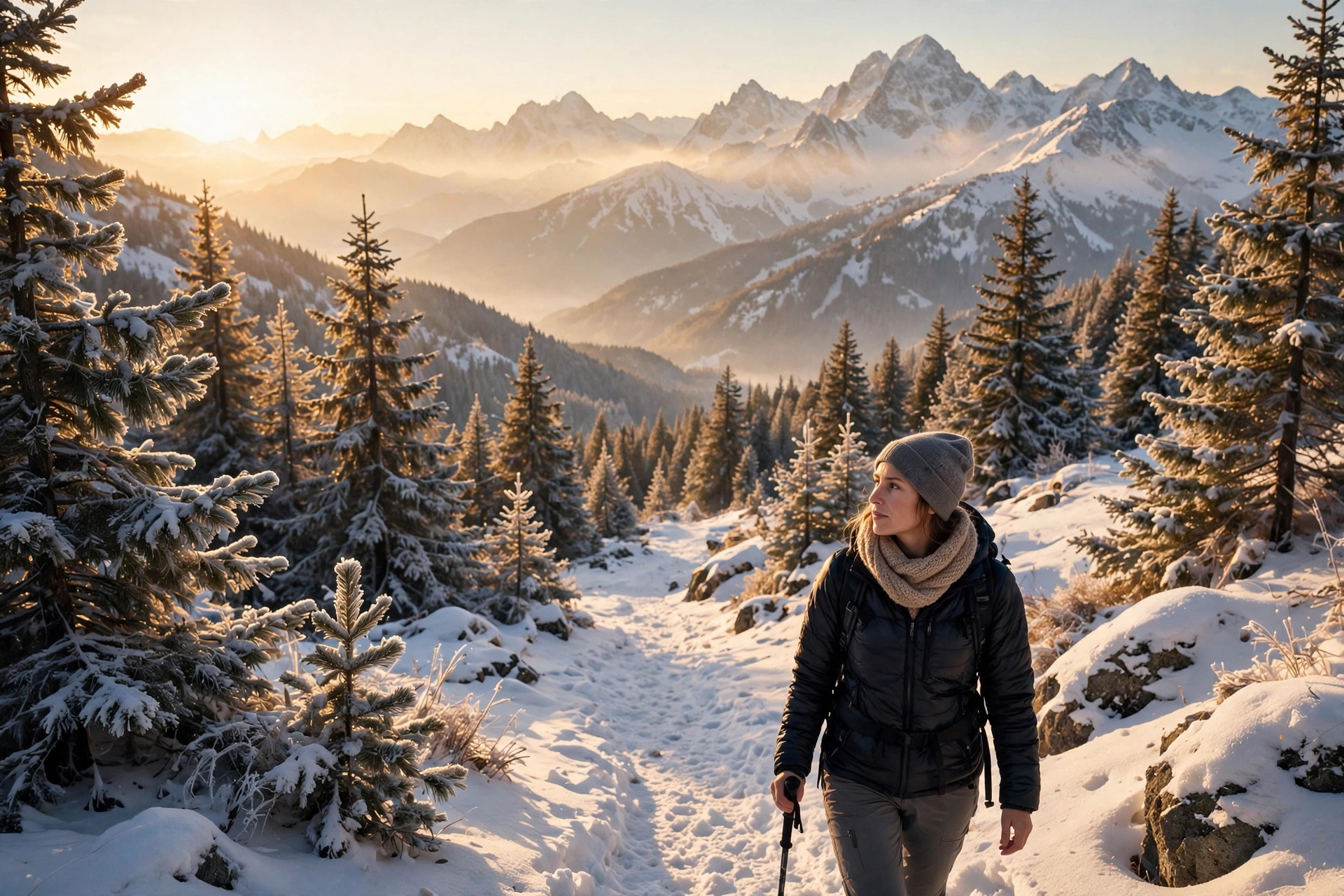
Winter hiking is one of the best-kept secrets of the trail world: quiet paths, crisp air, and snow-dusted views with none of the summer crowds. The one question that stops most women from trying it is a simple one: “What should I wear?” The answer is a system, not a single jacket — learn to layer correctly and you’ll stay warm, dry, and comfortable from the parking lot to the summit.
Layering works because it lets you regulate your temperature as you move. Climbing a steep hill in deep snow generates a surprising amount of heat, so you’ll shed a layer to avoid sweating; when you stop for a snack break on an exposed ridge, you add it back. The golden rule of winter hiking clothes for women is this: stay dry, because damp clothing in cold air pulls heat from your body fast — and that is how a pleasant hike turns uncomfortable, or even dangerous.
The 3-Layer System Every Winter Hiker Should Know
Think of your clothing as a system where each layer has one job. Get all three right and you’ll handle anything from a frosty forest walk to a windy alpine ridge.
1. Base Layer: Your Moisture Manager
Your base layer sits against your skin, so its job is moving sweat away from your body — not insulating you. Choose merino wool, polyester, or bamboo-blend tops and leggings. Merino is the favorite of most winter hikers because it regulates temperature, resists odor across multi-day trips, and keeps you feeling dry. What you must avoid is cotton: it absorbs moisture and holds it against your skin, and wet cotton in freezing temperatures is a fast track to hypothermia.
2. Mid Layer: Your Insulation
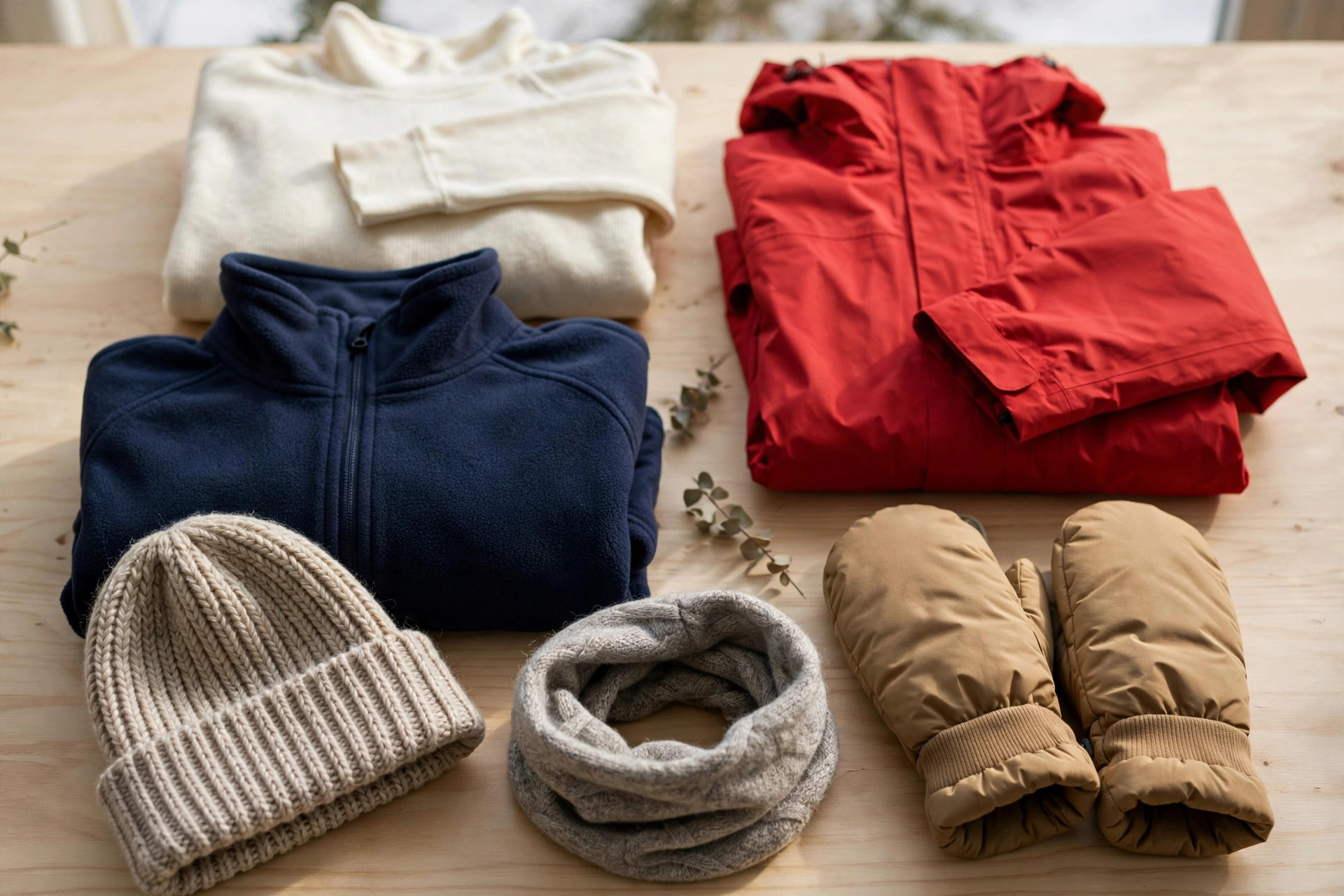
The mid layer traps warm air around you. A fleece quarter-zip or pullover is the classic choice — warm, breathable, and easy to vent by unzipping. On very cold days, swap the fleece for a lightweight puffy jacket with synthetic or down insulation. I’ve worn my trusty fleece for years of winter hikes; it fits neatly under a shell and keeps me comfortable on all but the coldest days.
3. Outer Layer: Your Weather Shield
This is the layer that stands between you and wind, rain, and snow. A waterproof-breathable shell jacket is the most versatile option — lighter and more packable than a heavy ski jacket. Rain jackets tend to breathe less than dedicated hiking shells, so if you run hot, look for pit zips, which let you dump heat on steep climbs without stopping to delayer. On calm, dry winter days you can sometimes hike in just a softshell, but always pack the shell — mountain weather changes fast.
Winter Hiking Pants: What Actually Works
Pants are where many winter hiking outfits fail. Regular hiking pants cut wind poorly and soak through in wet snow. Here are your best options:
- Softshell pants: The top pick for most winter day hikes. They resist wind and light snow, stretch for big strides, and breathe better than waterproof pants.
- Fleece-lined tights or leggings: Great for milder winter days or fast-paced hikes where you’ll generate lots of heat. Layer windproof rain pants over them when conditions turn.
- Waterproof hardshell pants: Keep a pair in your pack for stormy days, deep snow, or long exposed ridges. They weigh little and go on over anything.
Whatever you choose, add gaiters on snowy trails — they keep snow out of your boots and your lower legs dry, which makes a bigger comfort difference than most people expect.
Protecting Your Extremities: Head, Hands, and Feet
Cold extremities can ruin an otherwise perfect hike. Your body sends heat to your core first, so your head, hands, and feet need their own plan.
Head: Warm Without Overheating
A simple beanie covers most needs. But if you run hot, a merino wool neck gaiter worn as an ear band gives you warmth you can slide on and off in seconds. I always keep one in my pack — it weighs almost nothing and saves the day on windy ridgelines.
Hands: Mittens Beat Gloves
Mittens keep fingers together, sharing warmth, so they’re noticeably warmer than gloves of the same insulation. Look for insulated, water-resistant mittens — and consider a thin liner glove underneath so your hands aren’t bare when you need dexterity for your phone or a snack.
Feet: Waterproof Boots and Wool Socks
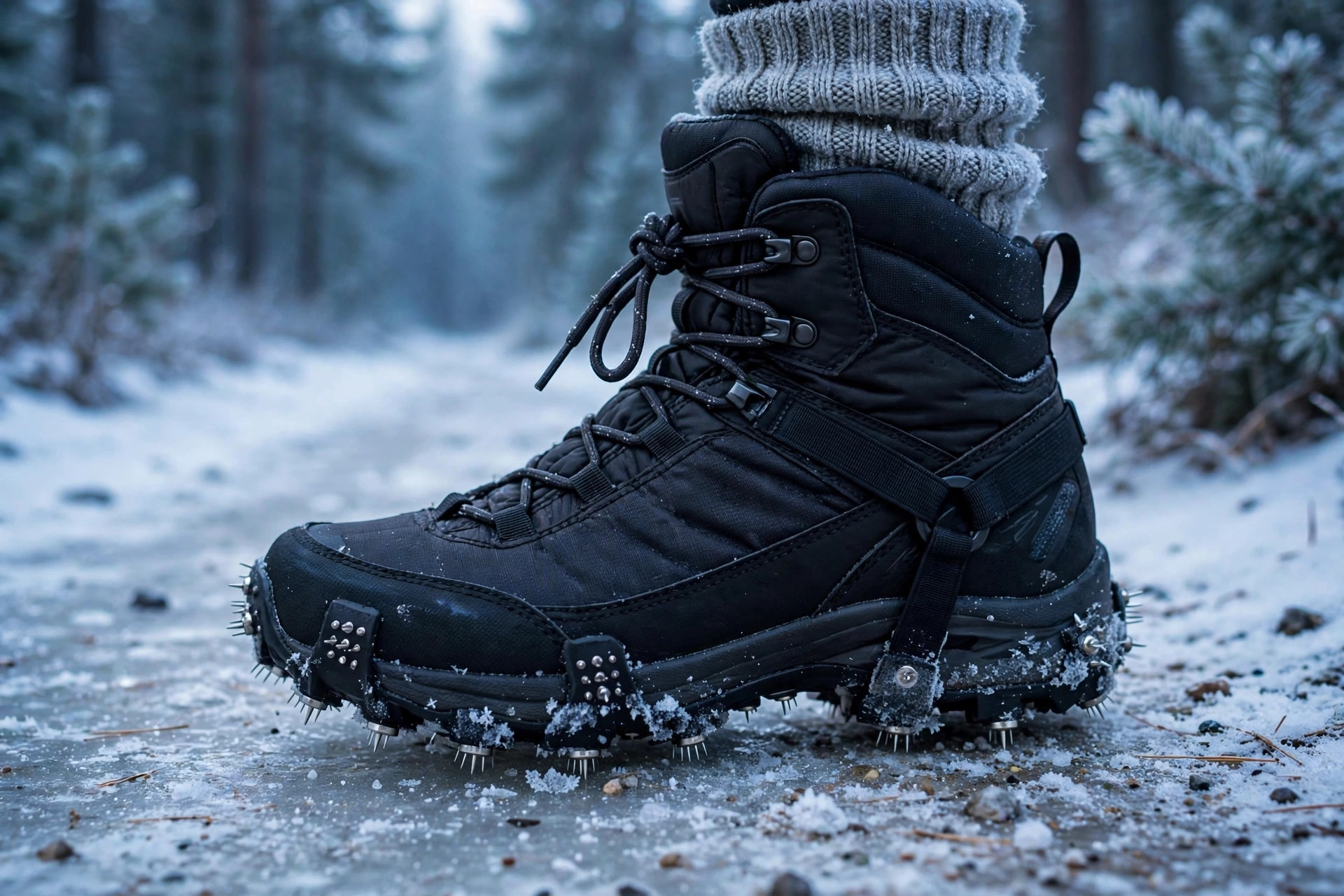
Waterproof boots with a mid or high rise keep snow out and feet dry. Pair them with wool socks (Smartwool or Darn Tough are the classics) — wool insulates even when damp, so a creek crossing or snow sneaking over your cuff won’t end your day. Bring a spare dry pair of socks in your pack; changing into them at lunch feels like a fresh start. And fit matters more in winter: feet shaped by bunions or wide forefeet need room without pressure points, so try boots with your actual winter socks before buying.
Traction: Staying Safe on Icy Trails
Clothing keeps you comfortable; traction keeps you safe. The right tool depends on the surface:
- Microspikes: The winter day-hiker’s best friend. These stretch over your boots and bite into packed snow and ice. I consider them essential gear from December through March.
- Snowshoes: For deep, fresh snow where you’d otherwise posthole. They spread your weight so you can walk on top of the snowpack.
- Trekking poles: Four points of contact on slippery trails is no small thing — and poles double as tent poles for some ultralight shelters.
If you’re hiking with little ones, our guide to realistic trail distances by age for hiking with toddlers will help you pick a route that matches their stamina — and yours.
10 Cold-Weather Hiking Essentials to Pack
| Category | What to Bring | Why It Matters |
|---|---|---|
| Navigation | Map, compass, charged phone, portable charger | Cold drains batteries fast; bring a backup |
| Sun protection | Sunglasses, sunscreen, lip balm | Snow reflects UV and can cause snow blindness |
| Insulation | Extra puffy jacket or fleece | For stops, when your body cools quickly |
| Light | Headlamp + spare batteries | Winter days end early — often by 4:30 pm |
| First aid | Blister kit, hand warmers, personal meds | Small problems escalate in the cold |
| Fire | Waterproof matches or lighter | Emergency warmth if plans go sideways |
| Food | Extra high-energy snacks | Hiking in snow can burn nearly double the calories |
| Water | Insulated bottle or bottle in a wool sock | Prevents water from freezing mid-hike |
| Shelter | Emergency bivy or space blanket | Lightweight insurance on remote trails |
| Socks | Spare dry wool socks | Dry feet change everything at midday |
5 Tips for a Great Cold-Weather Hike
1. Protect Your Eyes and Skin
Snow reflects sunlight brutally — sunglasses are as essential in January as in July. Add sunscreen on exposed skin and lip balm for your lips. Snow blindness is real and miserable.
2. Eat More Than You Think You Need
Walking a mile in snow can cost you the energy of two miles on dry trail, and your body burns extra fuel just staying warm. Pack dense, easy-to-eat snacks — and keep them in an inside pocket so they don’t freeze solid.
3. Plan Around Short Daylight
In winter, darkness can fall by mid-afternoon. Start early, know your turnaround time, and carry a headlamp even on “short” hikes. Booking popular trailhead parking in advance helps too — see our guide on when to book campsites and parking by state.
4. Check Weather and Trail Conditions
Check the forecast the night before and the morning of. Read recent AllTrails reviews for your trail — other hikers will mention ice, deep snow, or whether snowshoes are needed. Mountain forecasts at weather.gov cover winter hazards specifically.
5. Keep Your Phone Warm and Charged
Cold weather drains phone batteries shockingly fast. Keep your phone in an inside pocket against your body and bring a portable charger. REI’s winter hiking basics guide has more cold-weather gear tips worth reviewing before your first snowy hike.
FAQs: Women’s Winter Hiking Clothes
What should a woman wear for winter hiking?
A three-layer system: a moisture-wicking base layer (merino wool or polyester), an insulating mid layer (fleece or puffy), and a waterproof outer shell — plus softshell pants, a beanie, insulated mittens, and waterproof boots with wool socks.
Can I wear leggings for winter hiking?
Yes, if they’re the right kind. Fleece-lined or thermal leggings work for milder winter days and high-output hikes. In deep cold or wet snow, wear them under windproof or waterproof shell pants. Regular cotton-blend leggings are a no — they hold sweat and lose all warmth when damp.
Do I really need microspikes?
If you hike anywhere trails freeze, yes — they’re the single best safety upgrade for winter hiking. They pack small, weigh almost nothing, and turn terrifying icy descents into non-events.
How do I keep kids warm on winter hikes?
The same layering principles apply: no cotton, wool or synthetic base layers, and frequent checks since kids won’t always say they’re cold. Our detailed guide on keeping kids warm with a layering system walks through it step by step.
What is the biggest winter hiking clothing mistake?
Wearing cotton — it traps sweat against your skin and strips heat in cold air. Second biggest: overdressing at the trailhead. Start a touch cool; you’ll warm up within ten minutes, and staying dry from the start matters more than starting toasty.
The Bottom Line
Winter hiking clothes for women aren’t about buying the most expensive gear — they’re about a system that manages moisture, traps warmth, and blocks weather. Master the three layers, protect your head, hands, and feet, bring traction for icy trails, and winter stops being the off-season. It might just become your favorite one.

2 comments
[…] hiking clothing should match the weather rather than simply look like outdoor clothing. Lightweight, […]
[…] enormously in winter. Bring microspikes for packed trail or snowshoes for fresh powder, dress in proper winter layers, and pack more insulation than you think you will need. Our guide to keeping kids warm outdoors […]